



















Mikaël Kingsbury’s Silver in Men’s Moguls | Women’s Moguls and Team Canada | VIDEOS
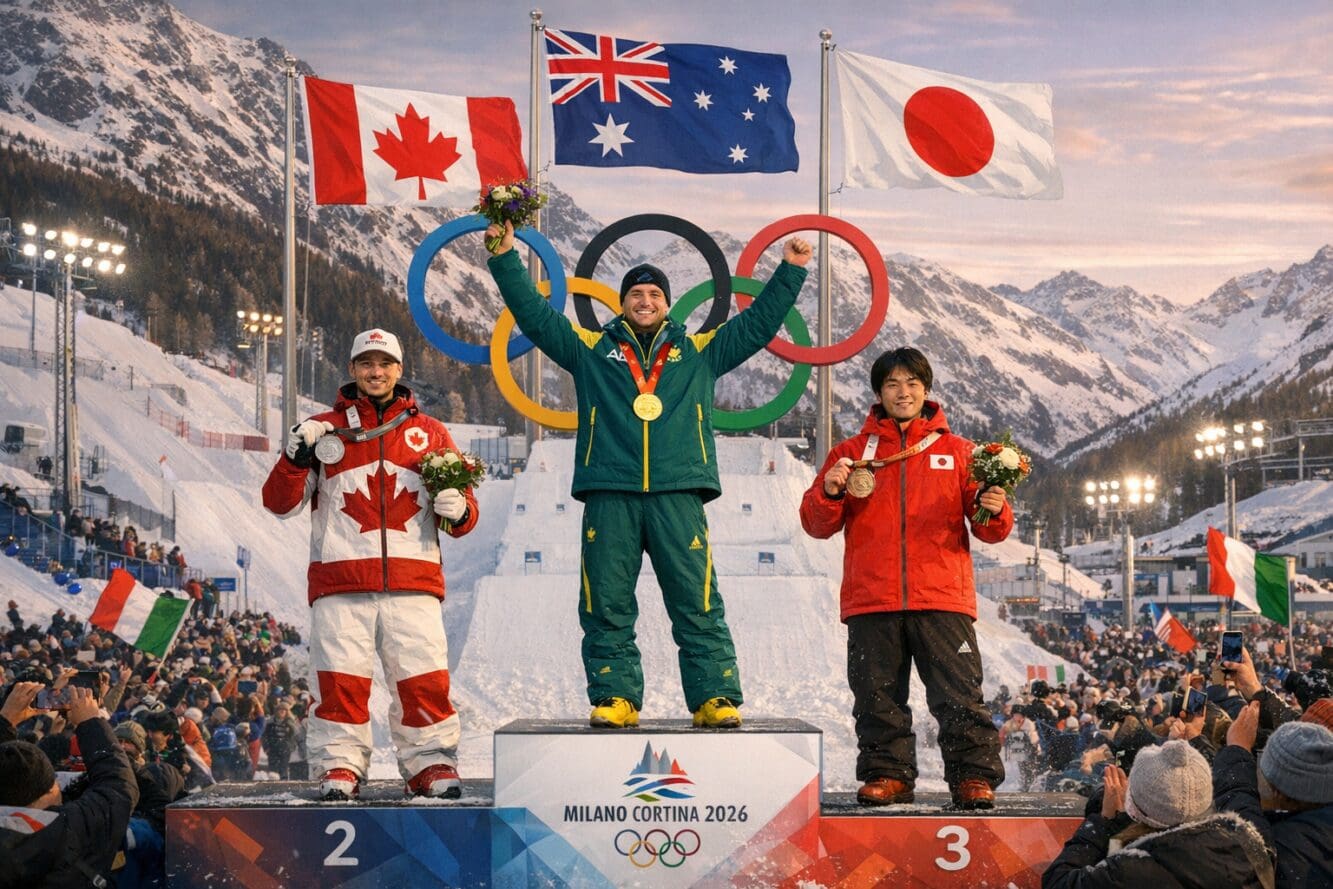
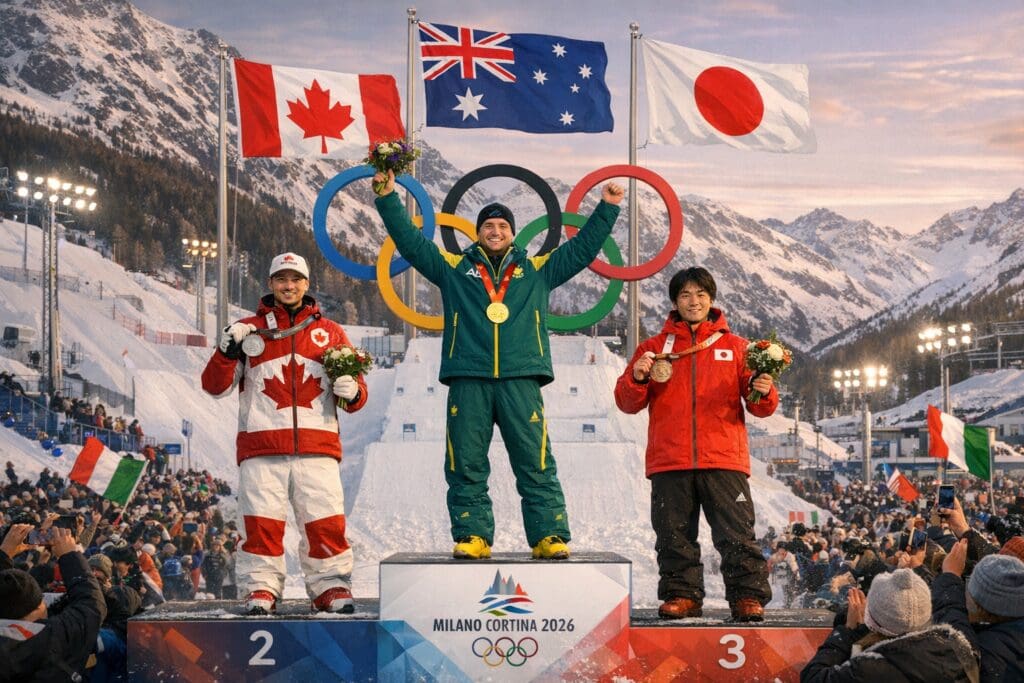
When the scoreboard at Livigno Aerials & Moguls Park flashed 83.71 for both Mikaël Kingsbury and Cooper Woods, the crowd held its breath. In a sport where hundredths of points separate triumph from heartbreak, the 2026 men’s moguls final came down to the most dramatic tiebreaker imaginable. How Canada’s Freestyle Skiing King Reclaimed Olympic Glory in 2026 tells the story of a champion who, at 33 years old and competing through injury, delivered a performance that cemented his legacy as freestyle skiing’s greatest competitor.
The Milano Cortina 2026 Olympics represented more than just another competition for Kingsbury—it marked his final Olympic appearance and his first Games as a father. Despite battling a groin injury sustained in September 2025, Canada’s moguls maestro carved his way to a historic fourth consecutive Olympic medal, a feat no freestyle skier had ever achieved.[1]
Key Takeaways
⛷️ Historic Fourth Medal: Kingsbury became the first freestyle skier to win medals at four consecutive Olympic Games (2014, 2018, 2022, 2026)[1]
🥈 Dramatic Tiebreaker Loss: Both Kingsbury and Australia’s Cooper Woods scored identical 83.71 points, with Woods winning gold via superior turn score (48.4 vs 47.7)[1][3]
💪 Comeback Through Injury: Competed despite a groin injury from September 2025 that forced him to miss early-season World Cup events[1]
🏆 Career Milestone: Celebrated his 100th World Cup victory at Val Saint-Côme before the Olympics[1]
👨👧👦 Competing as a Father: First Olympic Games since becoming a parent to son Henrik, born in 2024[1]
The Technical Mastery Behind Kingsbury’s Performance
Breaking Down the 83.71 Score
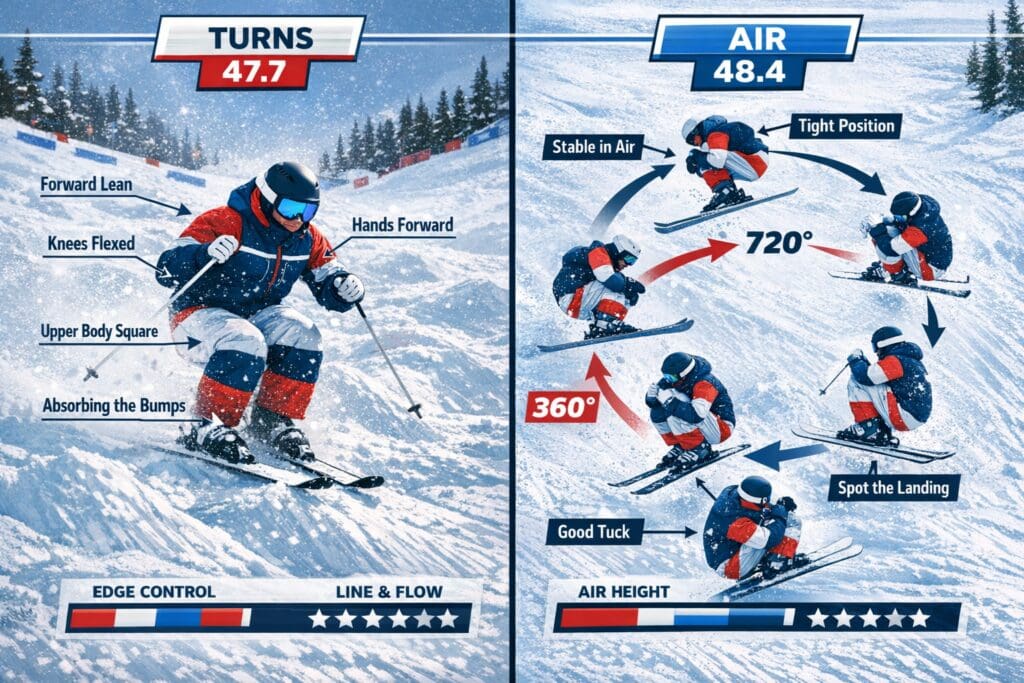
Moguls skiing demands a perfect blend of speed, technical precision, and aerial innovation. Judges evaluate three critical components: turns (60% of total score), air (20%), and time (20%). Kingsbury’s performance at Milano Cortina 2026 showcased why he’s dominated the sport for over a decade.
His turn execution earned him 47.7 points—just 0.7 points shy of Woods’ winning 48.4. This razor-thin margin represents the difference between maintaining perfect line control through 20-25 moguls while absorbing massive G-forces with every compression and extension. Kingsbury’s signature technique involves:
- Aggressive absorption patterns that allow maximum speed retention
- Precise edge control through tight radius turns
- Consistent rhythm maintenance despite changing snow conditions
- Lower body independence from upper body stability
The air component proved equally crucial. Kingsbury’s aerial repertoire has evolved throughout his career, incorporating increasingly complex rotations and grabs. At Milano Cortina, his jump selections balanced risk with execution certainty—a strategic decision given the injury concerns he’d managed throughout the season.[1]
Aerial Innovations That Define a Champion
What separates Kingsbury from competitors isn’t just technical proficiency—it’s his constant innovation in aerial maneuvers. Over his Olympic career spanning from Sochi 2014 to Milano Cortina 2026, he’s introduced variations that have become standard in the sport:
Cork 720 Variations: Kingsbury perfected multiple grab positions during his signature double rotation, adding style points while maintaining landing consistency.
Back Double Full: His execution of this high-difficulty trick combines height, rotation speed, and landing precision in ways that maximize judge scoring.
Strategic Jump Selection: Unlike younger competitors who often prioritize difficulty over execution, Kingsbury’s maturity shows in choosing jumps he can land flawlessly under pressure.
The time component, while worth only 20% of the total score, cannot be overlooked. Kingsbury’s ability to maintain aggressive speed while executing technical turns represents years of strength conditioning and line optimization. His racing background—he competed in alpine skiing before specializing in moguls—gives him an innate understanding of fall-line efficiency.
The Road to Silver: Overcoming Injury and Competition
Battling Through Physical Adversity
Mikaël Kingsbury’s Silver in Men’s Moguls: How Canada’s Freestyle Skiing King Reclaimed Olympic Glory in 2026 becomes even more remarkable when considering the physical challenges he overcame. The groin injury sustained in September 2025 forced him to skip the FIS World Cup opener in Ruka, Finland in December—a rare absence for someone who’s been the sport’s most consistent performer.[1]
Kingsbury described experiencing pain throughout the entire 2025-2026 season, requiring careful management between competitions. This included:
- Modified training protocols to reduce strain
- Intensive physiotherapy sessions
- Strategic competition scheduling
- Pain management strategies during events
Despite these limitations, he achieved his 100th career World Cup victory on home snow at Val Saint-Côme—a milestone that speaks to both his technical superiority and mental resilience.[1] This achievement placed him in rarified air among winter sports athletes, joining an elite group who’ve reached triple-digit World Cup wins.
The Rivalry Battle: Woods, Horishima, and Graham
The 2025-2026 moguls season featured the most competitive field in recent memory. In the four FIS Freestyle Ski World Cup moguls events preceding the Olympics, three different athletes claimed victories:
| Athlete | Country | World Cup Wins | 2025 World Champion |
|---|---|---|---|
| Ikuma Horishima | Japan | 2 | ✓ |
| Mikaël Kingsbury | Canada | 1 | |
| Matt Graham | Australia | 1 |
Ikuma Horishima entered Milano Cortina as the reigning World Champion and had demonstrated exceptional form throughout the season. His bronze medal finish represented his second consecutive Olympic podium, matching his Beijing 2022 result.[3] Horishima’s aggressive style and technical consistency made him a constant threat throughout qualification and finals.
Cooper Woods emerged as the surprise gold medalist, requiring the second qualification round just to advance to the finals. His maiden Olympic medal—and gold at that—represented one of the Games’ most unexpected outcomes. Woods’ turn score of 48.4 proved decisive in the tiebreaker, demonstrating superior technical execution through the mogul field.[1][3]
The identical 83.71 scores between Kingsbury and Woods created a moment of high drama rarely seen in Olympic competition. When scores are tied, moguls rules dictate that the turn score serves as the primary tiebreaker—a fitting resolution given that turns comprise 60% of the total evaluation.
Qualification Strategy and Finals Execution
The men’s moguls competition at Milano Cortina 2026 unfolded across three days at the Livigno Aerials & Moguls Park in Valtellina:
February 10: Qualification Round 1
February 12: Qualification Round 2 and Finals[3]
Kingsbury’s qualification strategy reflected his veteran status. Rather than expending maximum energy in early rounds, he qualified efficiently while conserving physical resources for the final. This approach proved essential given his injury management requirements.
Canadian teammate Julien Viel, competing in his first Olympic Games at age 24, finished sixth in the finals—a respectable result that demonstrates the depth of Canada’s moguls program.[1] Viel’s performance highlighted the mentorship role Kingsbury has assumed within the national team.
The Legacy of Four Consecutive Olympic Medals
A Historic Achievement in Freestyle Skiing
Mikaël Kingsbury’s Silver in Men’s Moguls: How Canada’s Freestyle Skiing King Reclaimed Olympic Glory in 2026 represents the capstone of an unprecedented Olympic journey:
🥈 Sochi 2014: Silver medal (age 21)
🥇 PyeongChang 2018: Gold medal (age 25)
🥈 Beijing 2022: Silver medal (age 29)
🥈 Milano Cortina 2026: Silver medal (age 33)[1]
This four-medal streak makes Kingsbury the first freestyle skier in history to medal at four consecutive Olympic Games. The achievement places him among winter sports’ most decorated athletes and cements his status as moguls skiing’s greatest competitor.[1]
Beyond Olympic success, Kingsbury’s career statistics are staggering:
- 100+ World Cup victories
- Multiple World Championship titles
- Longest winning streaks in moguls history
- Highest career earnings in freestyle skiing
Competing as a Father: A New Perspective
Milano Cortina 2026 marked Kingsbury’s first Olympics as a parent, with son Henrik born in 2024. He described fulfilling this personal goal alongside his athletic objectives as deeply meaningful.[1] The perspective shift that comes with fatherhood often changes athletes’ approaches to competition—adding motivation while also providing healthy distance from the all-consuming nature of elite sport.
Kingsbury’s ability to maintain world-class performance while navigating new parental responsibilities demonstrates the maturity and life balance he’s developed throughout his career. At 33 years old and having indicated that Milano Cortina represents his final Olympic Games, he’s shown that athletic excellence and personal fulfillment need not be mutually exclusive.[1]
Technical Innovations That Changed Moguls Skiing
Evolution of Aerial Difficulty
When Kingsbury entered international competition, moguls aerials featured primarily single rotations with occasional doubles. His career has coincided with—and driven—a dramatic increase in aerial difficulty:
Early Career (2010-2014): Standardization of back double full and cork 720 as high-difficulty options
Peak Years (2015-2020): Introduction of grab variations and improved amplitude that increased style scores
Later Career (2021-2026): Focus on execution consistency and strategic jump selection based on conditions
This evolution reflects broader trends in freestyle skiing, where athletes continually push boundaries while judges refine scoring criteria to reward both difficulty and execution quality.
Training Methods and Preparation
Kingsbury’s longevity at the sport’s highest level stems from innovative training approaches:
Dryland Training: Extensive trampoline work for aerial development, strength training for mogul absorption, and cardiovascular conditioning for race speed
On-Snow Preparation: Strategic use of training venues worldwide to maximize snow time while managing injury risk
Video Analysis: Detailed review of run footage to identify technical improvements and optimize line selection
Mental Preparation: Visualization techniques and pressure management strategies developed over 15+ years of elite competition
These methods have become templates for younger moguls athletes worldwide, with Kingsbury’s influence extending far beyond his competitive results.
The Tiebreaker: Understanding Moguls Scoring
How 0.7 Points Determined Gold vs. Silver
The dramatic tiebreaker between Kingsbury and Woods provides insight into moguls scoring intricacies. With identical 83.71 total scores, officials turned to the turn score as the decisive factor:
Cooper Woods: 48.4 turn score
Mikaël Kingsbury: 47.7 turn score
Difference: 0.7 points[1][3]
This 0.7-point margin represents approximately 1.5% of the total turn score—an almost imperceptible difference to casual observers but significant to trained judges evaluating:
- Line precision through the mogul field
- Edge control and pressure management
- Rhythm consistency across the entire run
- Recovery from minor bobbles or line deviations
Woods’ superior turn score suggests slightly cleaner line execution through the mogul field, though both athletes delivered world-class performances. The tiebreaker scenario, while rare, demonstrates why turns comprise 60% of the total score—they represent the fundamental skill that defines moguls skiing.
Air and Time Components
While turns proved decisive, Kingsbury’s air and time scores also contributed to his 83.71 total:
Air Score: Evaluation of jump difficulty, execution, amplitude, and landing quality. Kingsbury’s aerial selections balanced risk with consistency, choosing jumps he could execute flawlessly despite physical limitations.
Time Score: Speed component measured against a pace time established by course conditions. Kingsbury’s racing background gives him advantages here, though the 20% weighting means time alone rarely determines outcomes.
The scoring system’s complexity ensures that moguls champions must excel across multiple disciplines—turn technique, aerial ability, and racing speed—making it one of winter sports’ most demanding events.
Conclusion: A Champion’s Farewell
Mikaël Kingsbury’s silver medal at Milano Cortina 2026 represents far more than a second-place finish. It’s the culmination of a career that redefined moguls skiing, established new standards for consistency and excellence, and inspired a generation of athletes worldwide. His historic fourth consecutive Olympic medal, achieved while battling injury and competing as a first-time father, demonstrates the resilience and dedication that separate good athletes from all-time greats.
The dramatic tiebreaker loss to Cooper Woods, decided by mere 0.7 points in turn score, doesn’t diminish Kingsbury’s achievement—it highlights the razor-thin margins at the sport’s highest level and the exceptional quality required to compete for Olympic medals. At 33 years old and having indicated this was his final Olympics, Kingsbury exits the Olympic stage having achieved everything possible in his sport and more.
Next Steps for Moguls Skiing Fans
🎿 Follow World Cup Action: Continue watching FIS Freestyle Ski World Cup events to see the next generation of moguls athletes
📺 Study Technical Excellence: Review footage of Kingsbury’s runs to understand the technical mastery that defined his career
🏔️ Support Canadian Freestyle: Follow athletes like Julien Viel who represent Canada’s continued moguls excellence
🥇 Celebrate Legacy: Recognize Kingsbury’s contributions to freestyle skiing and his role as one of Canada’s greatest winter athletes
Mikaël Kingsbury’s Silver in Men’s Moguls: How Canada’s Freestyle Skiing King Reclaimed Olympic Glory in 2026 will be remembered as a fitting conclusion to an extraordinary Olympic journey—one that combined technical mastery, competitive resilience, and personal growth into a legacy that transcends medals and podiums.
References
[1] So Close To Gold Kingsbury Delivers A Historic Performance At Milano Cortina 2026 – https://olympic.ca/2026/02/12/so-close-to-gold-kingsbury-delivers-a-historic-performance-at-milano-cortina-2026/
[2] Watch – https://www.youtube.com/watch?v=ts_GADDtpzU
[3] Watch – https://www.youtube.com/watch?v=JgrI3PcAql4
Some content and illustrations on GEORGIANBAYNEWS.COM are created with the assistance of AI tools.
GEORGIANBAYNEWS.COM shares video content from YouTube creators under fair use principles. We respect creators’ intellectual property and include direct links to their original videos, channels, and social media platforms whenever we feature their content. This practice supports creators by driving traffic to their platforms.