





















Pam Bondi makes an ABSOLUTE FOOL 🎭 of herself Evading Epstein questions
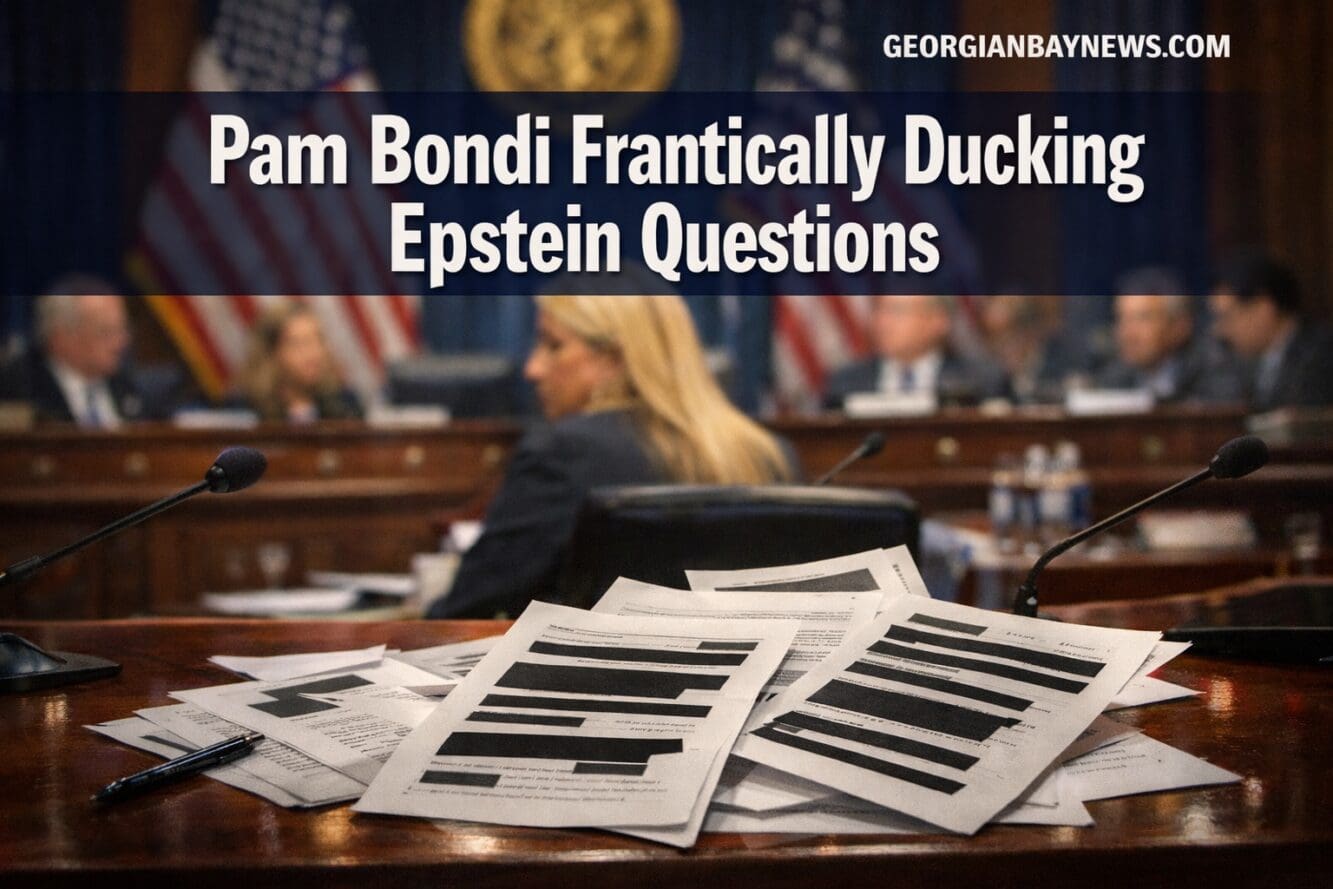
When Attorney General Pam Bondi stepped before the House Judiciary Committee in February 2026, she faced what should have been a straightforward accountability session about the Justice Department’s handling of the Jeffrey Epstein files. Instead, the hearing devolved into a masterclass in evasion, deflection, and what critics are calling one of the most embarrassing performances by a sitting Attorney General in recent memory. As lawmakers pressed Bondi on frantically ducking Epstein questions, survivors of abuse watched in dismay while the nation’s top law enforcement official seemed more interested in defending the administration’s litigation record than addressing serious failures in protecting victim identities and releasing mandated documents.
UPDATED: ‘A political calamity’: Pam Bondi faces massive backlash for behavior over Jeffrey Epstein questions – MS Now
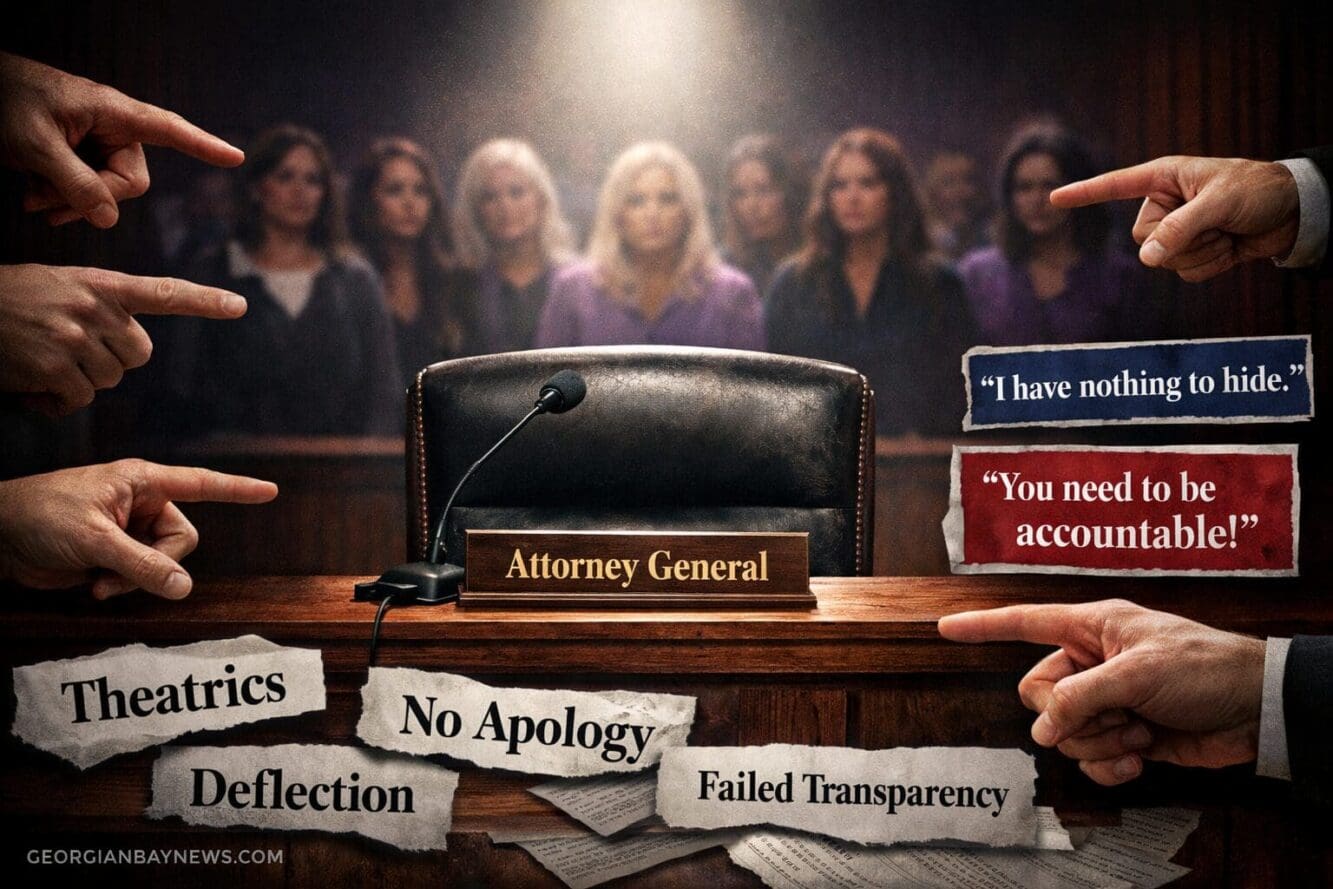
The scene was striking: behind Bondi sat survivors of Jeffrey Epstein’s abuse, their faces reflecting a mixture of hope and skepticism. Before her sat members of Congress armed with evidence of what they characterized as a “massive cover-up” by the Department of Justice. What unfolded over the next several hours would become a defining moment—not for transparency and accountability, but for political theater and the art of the non-answer.
Key Takeaways
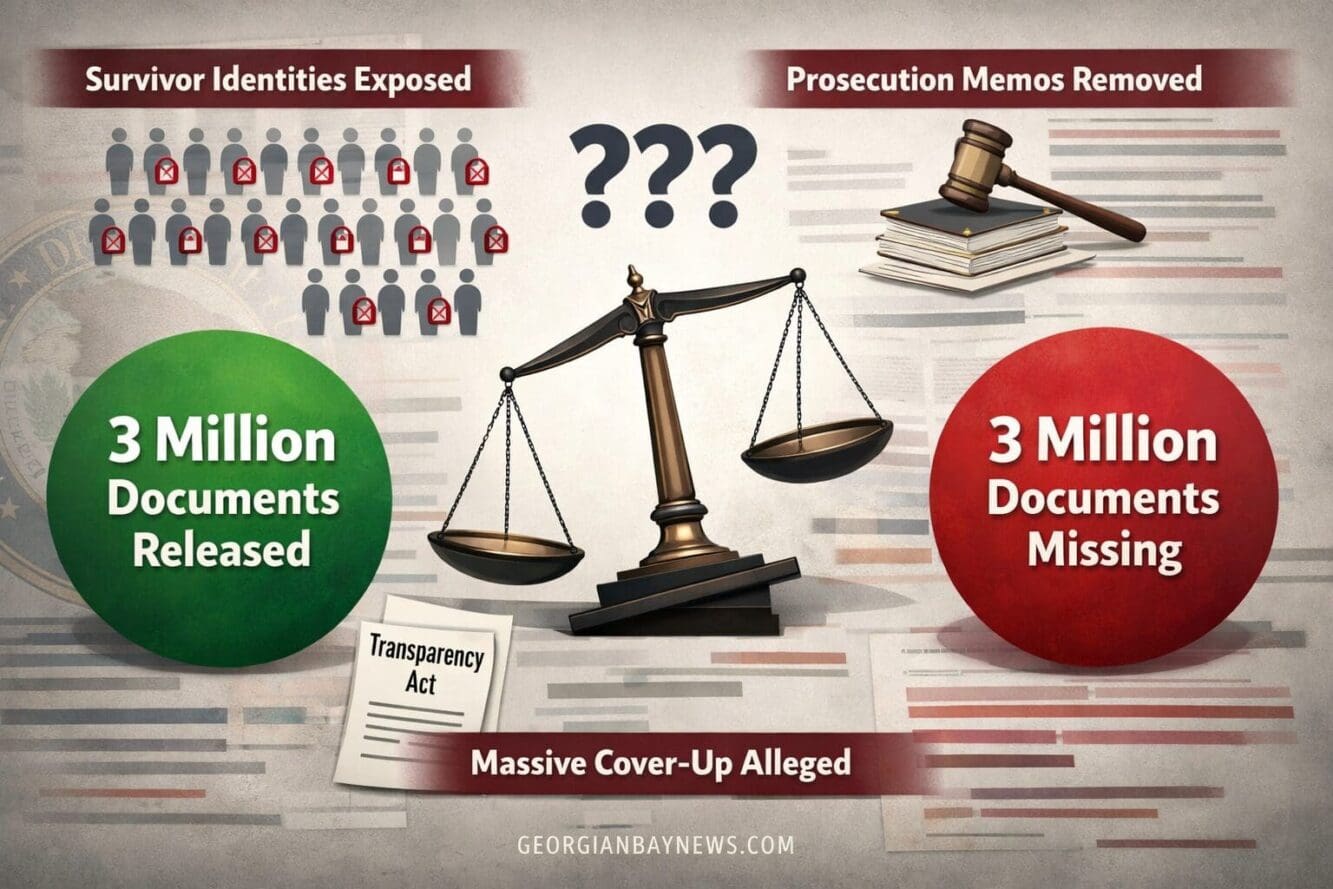
- 🚨 The DOJ released only 3 million of 6 million mandated Epstein documents, with the remaining files allegedly being “duplicative”—a claim contradicted by evidence of missing victim statements and prosecution memos
- 👥 At least 31 survivors had their identities improperly exposed in the released documents due to inadequate redaction practices by the Justice Department
- 🎭 Bondi repeatedly deflected substantive questions about Epstein co-conspirators, instead referencing unrelated topics like the Dow Jones hitting 50,000 and Trump’s transparency record
- ⚖️ Representative Pramila Jayapal directly accused the DOJ of a “massive cover-up” and demanded Bondi apologize to survivors, which the Attorney General refused to do
- 📋 A federal grand jury declined to indict six Democratic lawmakers the DOJ sought to prosecute for a video about refusing illegal military orders, highlighting potential politicization concerns
The Document Release Debacle: Half a Story Told
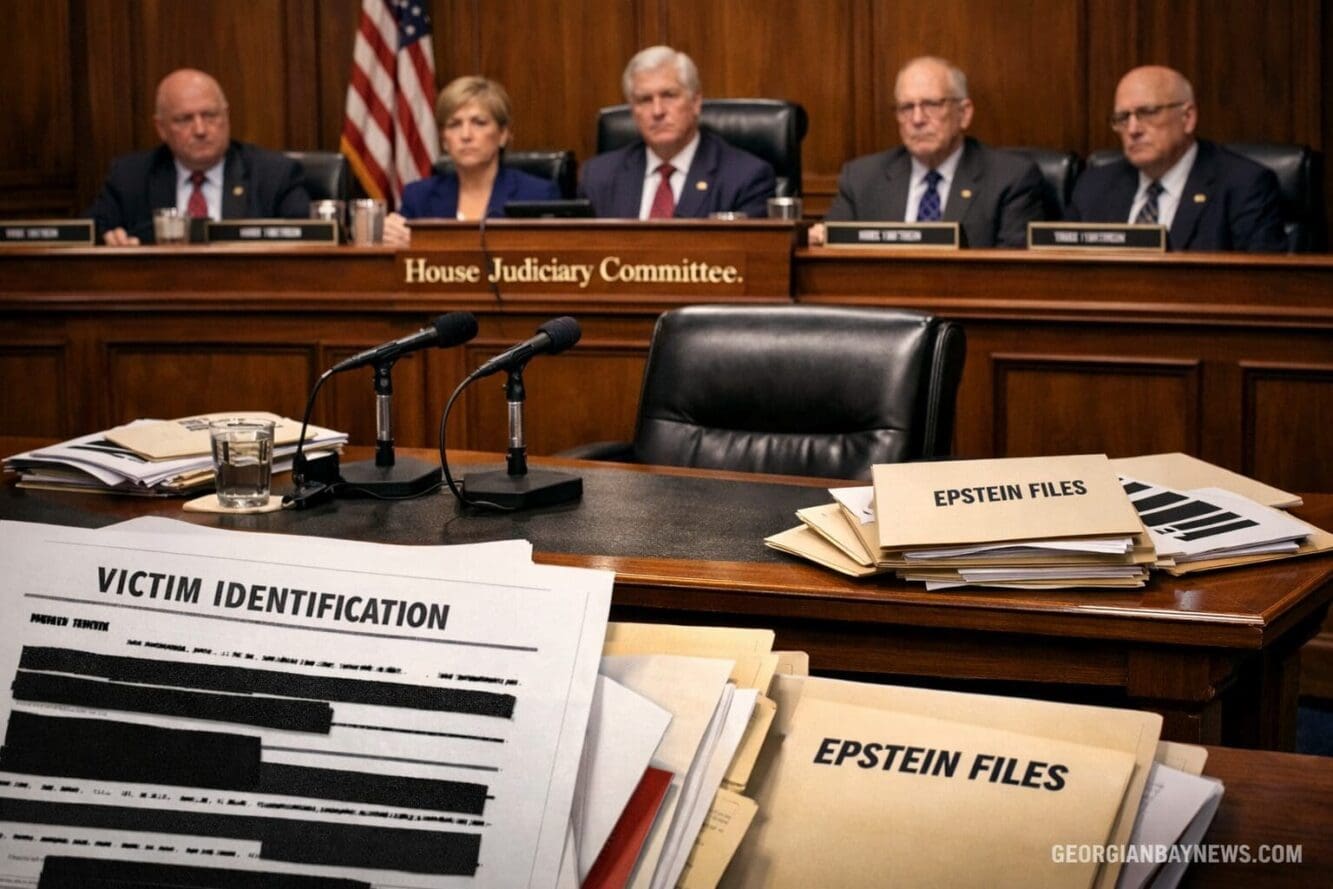
What Was Promised vs. What Was Delivered
The Epstein Files Transparency Act represented a rare moment of bipartisan agreement in Congress. Lawmakers from across the political spectrum recognized that the American people—and especially the survivors of Epstein’s horrific crimes—deserved full transparency about what the government knew, when they knew it, and who else might have been involved in one of the most disturbing criminal conspiracies in modern history.
The law was clear: the Department of Justice was mandated to release 6 million documents, photographs, and videos related to the Epstein investigation. These materials were expected to shed light on the full scope of Epstein’s network, potential co-conspirators, and how the justice system had previously failed to hold him accountable.
What survivors and the public received instead was something quite different.
By the time of the February 2026 hearing, the DOJ had released only 3 million documents—exactly half of what was required.[1] When questioned about the missing materials, department officials offered an explanation that strained credibility: the remaining 3 million documents were simply “duplicative” of materials already released.
The Missing Pieces That Matter Most
This explanation might have been acceptable if not for one inconvenient truth: lawmakers had concrete evidence that critical, non-duplicative materials were missing from the release.
According to testimony during the hearing, the missing materials included:
- Victim statement memos that had been documented in DOJ databases
- A 2019 prosecution memo that had mysteriously been removed from department systems
- Potentially thousands of photographs and videos that had never seen the light of day
Representative Jayapal didn’t mince words, directly accusing the Justice Department of executing a “massive cover-up” and demanding that Bondi apologize to the survivors standing directly behind her during the hearing.[1] The tension in the room was palpable as Bondi frantically ducked Epstein questions about these specific missing documents, instead pivoting to talk about the administration’s broader legal battles.
For those following issues of government accountability, this pattern of evasion and deflection has become increasingly familiar in recent years.
Frantically Ducking Epstein Questions: A Pattern of Evasion
The Art of the Non-Answer
Throughout the multi-hour hearing, a clear pattern emerged. When pressed on substantive questions about Epstein co-conspirators, the status of ongoing investigations, or the department’s failures in protecting victim identities, Bondi employed what observers described as a systematic strategy of deflection.
According to commentary on the hearing, when asked direct questions about the Epstein case, Bondi would:
- Pivot to unrelated administration achievements (such as mentioning the Dow Jones being over 50,000)
- Reference Trump’s supposed transparency record on other matters
- Characterize the questioning as “theatrics” and “unprofessional”
- Talk over questioners until Chairman Jim Jordan had to intervene[2]
This approach to congressional oversight represents a troubling departure from the traditional expectation that executive branch officials will provide substantive answers to legitimate questions from the people’s representatives.
When the Chairman Has to Play Referee
Perhaps most telling was the dynamic between Bondi and Chairman Jim Jordan, a Republican who had praised her for “returning the Justice Department to its core missions.”[1] Despite this political alignment, even Jordan found himself in the uncomfortable position of having to gently block Bondi from shouting over Democratic questioners during their allotted time.[2]
This wasn’t a case of partisan Democrats badgering a Republican appointee with gotcha questions. These were serious inquiries about:
- Why half the mandated documents remained unreleased
- What happened to the missing prosecution memos
- How the department would ensure no additional victim identities would be compromised
- Whether any co-conspirators would face prosecution
The fact that Bondi seemed unable or unwilling to provide direct answers to these fundamental questions of justice and accountability speaks volumes about the priorities driving her tenure as Attorney General.
The Human Cost: 31 Survivors Re-Victimized
A Failure of Basic Competence
Among all the troubling revelations from the hearing, perhaps none was more disturbing than the disclosure that the Justice Department had failed to properly redact the identities of at least 31 people who were victimized as children in the released Epstein files.[1]
Let that sink in for a moment. These individuals had already suffered unimaginable trauma at the hands of Jeffrey Epstein. They had bravely participated in the justice process, providing statements and cooperating with investigators. And now, because of what can only be described as gross negligence, their identities had been exposed to the world.
For survivors of sexual abuse, privacy isn’t just a preference—it’s often essential for healing and moving forward with their lives. The exposure of their identities can lead to:
- 📱 Unwanted media attention and harassment
- 💼 Professional and personal relationship complications
- 🧠 Re-traumatization and setbacks in therapy
- 🔒 Safety concerns if perpetrators or their associates learn their identities
Bondi’s Response: Too Little, Too Late
When confronted with this catastrophic failure, Bondi and Deputy Attorney General Todd Blanche committed to “identifying, reviewing, and redacting potential victim-identifying information.”[1] But this promise rang hollow to many observers—and especially to the survivors themselves.
The damage had already been done. The identities had already been exposed. Committing to review the process going forward did nothing to undo the harm that 31 survivors had already experienced.
What survivors wanted—what they deserved—was a genuine apology and concrete steps to make things right. Instead, they got what one survivor described to NBC News as a “refusal to take responsibility.”[3]
Speaking to reporters immediately following the hearing, Epstein survivors expressed profound frustration over Bondi’s handling of the case and her refusal to apologize for the Justice Department’s management failures.[3] Their testimony provides a stark reminder that behind the political theater and partisan point-scoring are real human beings whose lives have been forever altered by both Epstein’s crimes and the government’s subsequent failures.
Those interested in understanding how institutions sometimes fail vulnerable populations might find parallels in coverage of systemic accountability issues.
Frantically Ducking Epstein Questions While Pursuing Political Prosecutions
The Failed Indictment That Revealed Priorities
One of the most revealing moments in the hearing came when lawmakers questioned Bondi about the Justice Department’s attempt to indict six Democratic lawmakers who had participated in a video reminding military members about their right to refuse illegal orders.
The DOJ had sought indictments against these legislators, but on February 10, 2026—just days before the hearing—a federal grand jury declined to indict them.[1] This outcome was significant for several reasons:
- It demonstrated that even grand juries—which typically defer to prosecutors—found the case lacking merit
- It raised serious questions about whether the DOJ was being weaponized for political purposes
- It highlighted a stark contrast in priorities: aggressive pursuit of political opponents versus reluctance to pursue Epstein co-conspirators
The Litigation Scorecard
Bondi spent considerable time during the hearing discussing what she termed “coordinated judicial opposition” to the Trump administration. She noted that the administration had been sued 627 times since taking office and accused federal judges of issuing a “flood of bad faith, temporary restraining orders.”[1]
While these points may have resonated with the Republican members of the committee, they did nothing to answer the fundamental questions about Epstein. In fact, they served as yet another example of Bondi frantically ducking Epstein questions by redirecting attention to grievances about judicial oversight.
The pattern was clear: when it came to pursuing political enemies or complaining about judicial checks on executive power, Bondi was forceful and detailed. When it came to explaining failures in the Epstein case or committing to pursue co-conspirators, she was evasive and vague.
This disparity in engagement didn’t go unnoticed by survivors or their advocates, who have spent years fighting for accountability in a case that implicates powerful individuals across multiple sectors of society.
The Redaction Problem: Transparency or Cover-Up?
Extensive Redactions Fuel Suspicion
Beyond the question of missing documents, the materials that were released presented their own problems. The millions of pages of Epstein-related documents published by the DOJ have been subject to extensive redactions, fueling allegations that the department failed to fulfill its obligations under the transparency law.[1]
Redactions in government documents serve legitimate purposes:
- ✅ Protecting ongoing investigations
- ✅ Safeguarding national security information
- ✅ Preserving victim privacy
- ✅ Protecting the rights of individuals not charged with crimes
However, the sheer volume and scope of redactions in the Epstein files have led many to question whether these legitimate purposes are being used as cover for protecting powerful individuals who may have been part of Epstein’s network.
The Transparency Act’s Promise Unfulfilled
The entire purpose of the Epstein Files Transparency Act was to ensure that the American people could see the full scope of what happened—not a sanitized, heavily redacted version that protects the reputations of the well-connected.
When Bondi claimed that the department had done its “very best in the time frame allotted” and had “fulfilled its obligations” under the act,[1] she was directly contradicting the assessment of both survivors and lawmakers who had examined the materials.
This disconnect between the DOJ’s self-assessment and the evaluation of those actually reviewing the documents represents either:
- A fundamental misunderstanding of what the law required
- A deliberate attempt to minimize compliance while claiming to have met obligations
- A prioritization of protecting powerful individuals over serving justice for survivors
None of these options reflects well on Bondi’s leadership of the Justice Department.
For readers interested in how transparency issues affect government accountability, our coverage of institutional oversight challenges provides additional context.
Bondi’s Defense: Career Prosecutor or Political Operative?
The “Deeply Sorry” That Wasn’t an Apology
At one point during the hearing, Bondi stated that she was “deeply sorry” for the abuse suffered by Epstein survivors and emphasized her career prosecuting victims’ cases.[1] On the surface, this might sound like the kind of empathetic statement survivors deserved.
But context matters. Bondi made this statement while:
- Refusing to apologize for the specific failures of her department in protecting victim identities
- Declining to commit to pursuing co-conspirators with the same vigor applied to political opponents
- Defending the incomplete document release as adequate
- Characterizing legitimate congressional oversight as “theatrics”
Expressing sympathy for abuse that occurred years ago, perpetrated by someone else, is easy. Taking responsibility for failures that happened under your watch is much harder—and it’s what Bondi consistently refused to do.
The Partisan Divide
Chairman Jim Jordan’s praise for Bondi’s work “rolling back policies from the Garland era” and ending “lawfare”[1] highlighted the deeply partisan lens through which many were viewing the hearing.
For Republican members, Bondi represented a welcome change from what they viewed as a politicized Justice Department under the Biden administration. For Democratic members, Bondi’s performance represented the worst kind of political hackery—prioritizing partisan loyalty over justice for survivors.
This partisan divide obscured what should have been a straightforward matter: ensuring that survivors receive justice, that all relevant information is made public, and that anyone who participated in or enabled Epstein’s crimes is held accountable.
The fact that these goals have become partisan issues speaks to a broader dysfunction in American governance that extends far beyond this single hearing.
What Survivors and the Public Deserve
Accountability Beyond Political Theater
The survivors who stood behind Bondi during the hearing didn’t come for political theater. They came seeking:
- Complete transparency about what the government knows regarding Epstein’s network
- Protection of their identities and privacy
- Prosecution of co-conspirators who enabled or participated in Epstein’s crimes
- Acknowledgment and apology for the government’s failures
- Assurance that future victims will be better served by the justice system
On every single one of these points, Bondi’s performance was found wanting.
The Questions That Still Need Answers
As of early 2026, critical questions remain unanswered:
- Who were the co-conspirators that enabled Epstein’s operation for decades?
- What did powerful individuals know about Epstein’s crimes, and when did they know it?
- Why were the 2019 prosecution memos removed from DOJ databases?
- What’s in the 3 million documents that haven’t been released?
- How will the 31 survivors whose identities were exposed be protected going forward?
- Will anyone beyond Epstein and Ghislaine Maxwell ever face criminal charges?
Until these questions receive substantive answers, the Epstein case will remain a symbol of a two-tiered justice system where the powerful escape accountability while the vulnerable pay the price.
Those following developments in justice system reform might find our coverage of accountability mechanisms informative.
The Broader Implications for Justice and Democracy
When the Nation’s Top Lawyer Won’t Answer Questions
The Attorney General occupies a unique position in American government. Unlike other Cabinet members who serve primarily as advisors and administrators, the Attorney General is the nation’s chief law enforcement officer—responsible for ensuring that justice is served impartially and that the rule of law is upheld.
When an Attorney General appears before Congress and frantically ducks Epstein questions while aggressively defending partisan political positions, it undermines public confidence in the entire justice system.
If survivors of one of the most notorious criminal conspiracies in modern history can’t get straight answers from the Attorney General, what hope do ordinary Americans have when they seek justice?
The Erosion of Institutional Credibility
Every time a government official evades accountability, institutional credibility erodes a little further. The cumulative effect of these erosions is a public that increasingly views government institutions as serving the interests of the powerful rather than delivering justice for all.
This erosion has real consequences:
- 📉 Decreased cooperation with law enforcement investigations
- ⚖️ Reduced faith in judicial processes
- 🗳️ Lower civic engagement and voter participation
- 🔍 Increased susceptibility to conspiracy theories (ironically, because actual conspiracies go unpunished)
The Bondi hearing will likely be remembered as a case study in how not to rebuild institutional trust.
What Comes Next?
As 2026 progresses, several developments bear watching:
Will the remaining 3 million documents be released? And if so, will they contain the victim statements and prosecution memos that lawmakers say are missing?
Will any co-conspirators face charges? Or will Epstein and Maxwell remain the only individuals held criminally accountable?
How will the DOJ protect the 31 survivors whose identities were exposed? Beyond promises to “review processes,” what concrete steps will be taken?
Will Congress exercise its oversight powers to compel more complete answers than Bondi provided in the February hearing?
How will survivors continue to advocate for justice and transparency in the face of official stonewalling?
The answers to these questions will determine whether the Epstein case ultimately serves as a catalyst for greater accountability or simply another example of justice denied.
Conclusion: The Fool’s Errand of Evasion
Pam Bondi’s performance before the House Judiciary Committee in February 2026 will not be remembered as a triumph of transparency or a moment of accountability. Instead, it will stand as a textbook example of how frantically ducking Epstein questions and prioritizing political loyalty over justice serves no one—except perhaps those who would prefer that certain names never see the light of day.
The survivors who stood behind Bondi during the hearing deserved better. They deserved an Attorney General who would look them in the eye and commit to pursuing every lead, releasing every document, and holding every co-conspirator accountable. Instead, they got deflection, evasion, and what many characterized as a continuation of the cover-up they’ve been fighting against for years.
For the American public, the hearing served as a stark reminder that the promise of equal justice under law remains just that—a promise, not yet fully realized. When the nation’s top law enforcement official can’t or won’t answer basic questions about one of the most significant criminal cases in recent history, it raises profound questions about whose interests the Justice Department actually serves.
What You Can Do
If you’re troubled by what you’ve learned about the handling of the Epstein files, here are concrete steps you can take:
- Contact your representatives in Congress and demand complete transparency in the Epstein case
- Support survivor advocacy organizations that are fighting for accountability
- Stay informed about developments in the case and share accurate information to counter misinformation
- Demand accountability from elected officials who prioritize partisan politics over justice
- Vote for candidates who demonstrate a genuine commitment to equal justice under law
The Epstein case is about more than one man’s crimes or one Attorney General’s evasions. It’s about whether we as a society are willing to hold the powerful accountable or whether we’ll continue to accept a two-tiered justice system that protects the well-connected while leaving survivors to fight for scraps of justice.
The choice, ultimately, is ours to make—through our voices, our votes, and our refusal to accept evasion as an acceptable substitute for accountability.
For more insights into issues of governmental accountability and transparency, explore our coverage of institutional oversight and democratic safeguards.
References
[1] Pam Bondi Hearing Epstein Files Justice Department Congress – https://www.cbsnews.com/live-updates/pam-bondi-hearing-epstein-files-justice-department-congress/
[2] Watch – https://www.youtube.com/watch?v=JK_fbC042e8
[3] Watch – https://www.youtube.com/watch?v=Lkzt-sua33M