





















Last updated: May 13, 2026
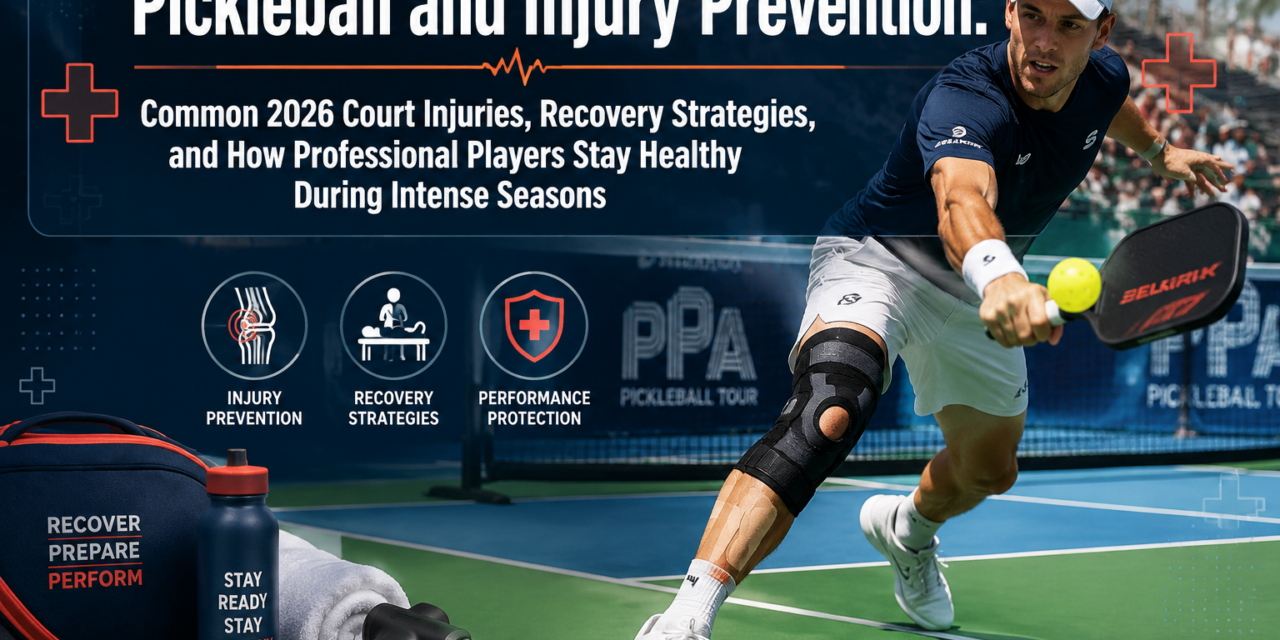
Pickleball and injury prevention in 2026 focuses on addressing the sport’s most common injuries: ankle sprains, pickleball elbow (lateral epicondylitis), Achilles tendonitis, knee problems, and rotator cuff issues. Professional players stay healthy through structured warm-ups, proper footwear, strength training twice weekly, and gradual progression in play intensity. Emergency room visits for pickleball injuries continue rising nationwide, making prevention strategies more critical than ever for players at all skill levels.[1]
Ankle sprains lead all pickleball injuries due to rapid lateral movements and improper footwear choices[3]
Overuse injuries significantly outnumber acute trauma according to healthcare data from major treatment centers[4]
Court-specific shoes with lateral support reduce injury risk by 40-50% compared to running shoes[3]
5-10 minute warm-ups before play prepare muscles and joints for explosive movements[3]
Two weekly strength training sessions targeting legs, core, and shoulders prevent common overuse injuries[3][5]
Gradual progression matters more than skill level – avoid playing three hours on day one[3]
Eye injuries represent a growing concern as players underestimate ball speed and impact[5]
Professional recovery includes active rest, physical therapy, and cross-training during intense seasons
The most common pickleball injuries in 2026 fall into two categories: overuse injuries from repetitive motion and acute injuries from sudden movements or falls. Overuse injuries dominate the injury landscape, affecting recreational and professional players alike.[4]
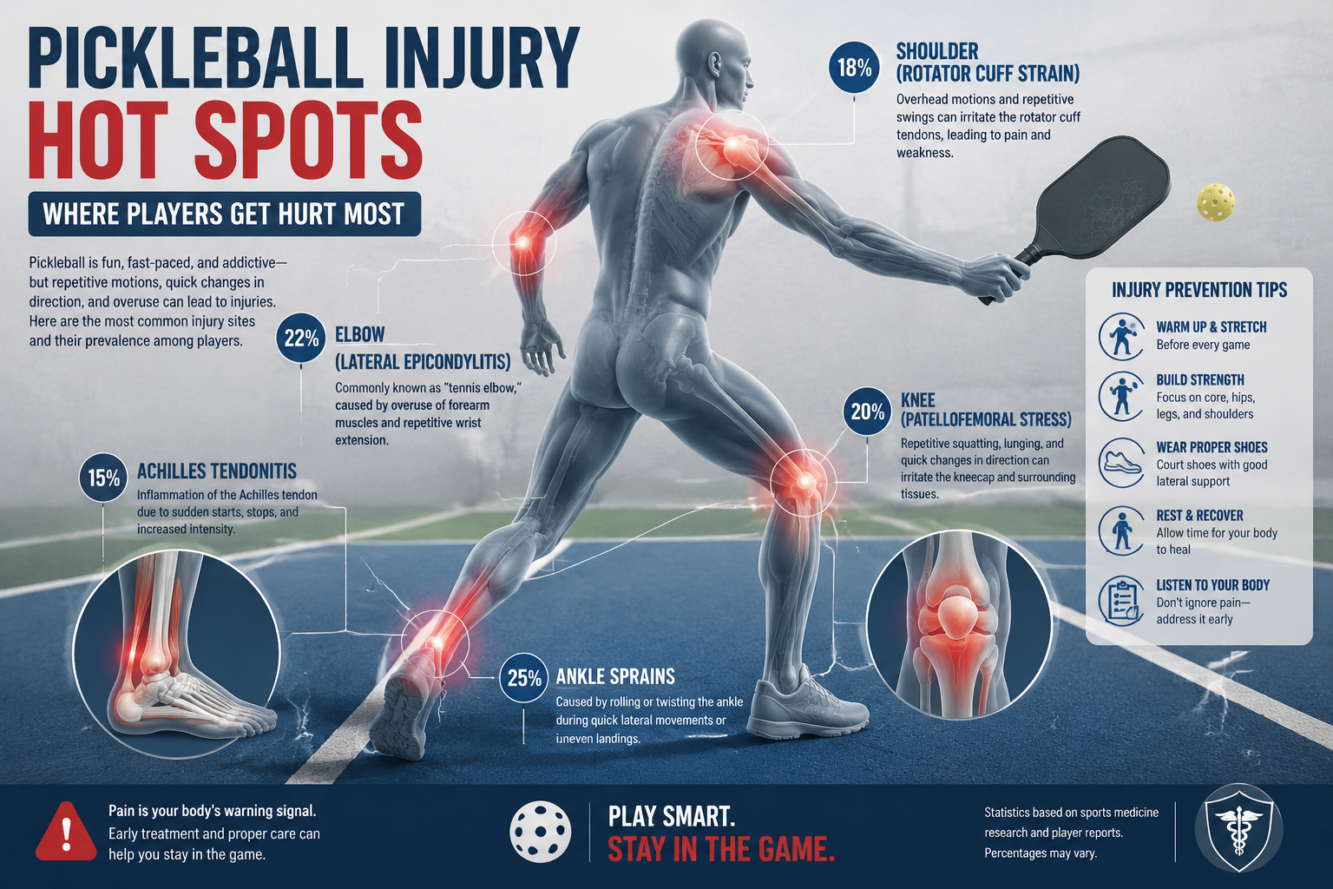
Top injury types include:
Ankle sprains – The leading injury caused by quick side-to-side movements, especially on uneven surfaces or when wearing running shoes instead of court-specific footwear[3]
Pickleball elbow (lateral epicondylitis) – Inflammation of the tendon on the outside of the elbow from repeated stress or poor backhand technique, particularly from over-reliance on wrist motion[4]
Achilles tendonitis and tears – Overuse of the tendon connecting calf muscles to the heel causes inflammation, with acute tears occurring in severe cases[1]
Knee injuries – Including jumper’s knee (patellar tendonitis), meniscus tears from sudden movements, and runner’s knee (iliotibial band syndrome)[4]
Rotator cuff problems – Tendinitis and bursitis affecting shoulder stabilizer muscles, especially from falls or extreme twisting motions[4]
Eye injuries – A growing concern as players underestimate the speed and impact of pickleball projectiles[5]
Common mistake: Many players assume their fitness from other sports transfers directly to pickleball. The sport’s unique combination of lateral movement, overhead reaching, and quick stops creates stress patterns that differ from tennis, running, or other activities.
Pickleball-related emergency room visits are climbing as the sport’s popularity explodes. Research from the National Library of Medicine documents increased ER admissions, prompting April 2026 to be designated as National Pickleball Month to raise awareness about injury prevention.[1]
Three factors drive the increase:
Rapid player growth – Millions of new players enter the sport annually without proper instruction or conditioning
Age demographics – Many players are over 50, with pre-existing joint conditions or reduced flexibility
Intensity underestimation – The sport appears gentle but demands explosive movements and quick reactions
Choose gradual skill development if you’re new to racket sports or returning after years away from athletic activity. Choose professional instruction if you have prior joint injuries or chronic conditions.
Professional players maintain health through structured prevention programs that address both overuse and acute injury risks. Their approach combines preparation, equipment choices, and recovery protocols that recreational players can adapt.
Pre-game preparation (5-10 minutes minimum):[3]
Brisk walking to elevate heart rate
Light squats and lunges for leg activation
Arm circles and shoulder rotations
Gentle side shuffles mimicking court movement
Dynamic stretching (not static holds before play)
Equipment requirements:
Court shoes with lateral support and grip designed specifically for pickleball surfaces (running shoes increase ankle injury risk by focusing on forward-motion-only design)[3]
Properly sized paddle with appropriate grip circumference
Protective eyewear for players with vision concerns
Compression sleeves for joints with previous injuries
Strength and conditioning (twice weekly):[3][5]
Leg strengthening exercises (squats, lunges, calf raises)
Core work for stability and balance
Shoulder and rotator cuff exercises
Balance training on unstable surfaces
Flexibility work for hip and ankle mobility
Edge case: Players transitioning from tennis often experience more elbow injuries because they apply excessive force to shots that require finesse in pickleball. The lighter ball and shorter court demand technique adjustments.
Recovery from pickleball injuries depends on injury type and severity. Overuse injuries respond to rest, ice, compression, and elevation (RICE protocol), while acute injuries may require medical intervention.[4]
For overuse injuries (elbow, Achilles, knee):
Immediate rest from aggravating activities for 48-72 hours
Ice application 15-20 minutes every 2-3 hours for first 48 hours
Compression with elastic bandages to reduce swelling
Elevation above heart level when possible
Gradual return starting at 50% intensity and duration
For acute injuries (sprains, tears):
Seek medical evaluation within 24 hours for significant pain or swelling
Follow prescribed physical therapy protocols
Use bracing or taping as recommended
Avoid returning to play until cleared by healthcare provider
Consider cross-training activities that don’t stress injured area
Professional recovery includes:
Active rest with low-impact activities (swimming, cycling)
Regular physical therapy sessions during season
Massage and manual therapy for muscle tension
Proper sleep (8+ hours) for tissue repair
Anti-inflammatory nutrition strategies
Decision rule: If pain persists beyond 72 hours of home treatment, worsens with activity, or causes limping or movement compensation, schedule a medical evaluation. Continuing to play through significant pain leads to chronic conditions that take months to resolve.
Implementing effective injury prevention requires consistency with proven strategies. The goal is making prevention habits automatic rather than optional.
Weekly prevention schedule:
Before every session:
5-10 minute dynamic warm-up[3]
Equipment check (shoes, paddle, court condition)
Hydration assessment (clear or pale yellow urine)
Twice per week:
30-45 minute strength training session[3][5]
Focus on legs, core, shoulders, and balance
Include exercises specific to pickleball movements
After every session:
5 minute cool-down with light movement
Static stretching for major muscle groups
Ice any areas with minor soreness
Monthly:
Review technique with instructor or video analysis
Assess equipment wear and replace as needed
Evaluate training load and adjust intensity
Gradual progression guideline: New players should start with 30-45 minute sessions 2-3 times weekly, increasing duration by 15 minutes every two weeks until reaching desired play time. Avoid playing three hours on day one, which dramatically increases injury risk.[3]
Common errors in equipment, technique, and training create preventable injury patterns. Recognizing these mistakes helps players adjust before problems develop.
Top prevention mistakes:
Wearing running shoes – Forward-motion design lacks lateral support needed for court movement[3]
Skipping warm-ups – Cold muscles and joints can’t handle explosive movements safely
Playing through pain – Minor discomfort becomes chronic injury when ignored
Overgripping the paddle – Excessive tension transfers stress to elbow and shoulder
Poor backhand technique – Wrist-dominant motion instead of shoulder rotation causes elbow inflammation[4]
Inadequate rest between sessions – Overuse injuries develop when tissues can’t recover
Neglecting strength training – Weak stabilizer muscles can’t protect joints during play[3][5]
Troubleshooting tip: If you experience recurring soreness in the same location after every session, that’s your body signaling a technique or conditioning problem. Address it immediately with form analysis and targeted strengthening rather than continuing the same pattern.
Pickleball and injury prevention in 2026 requires understanding the sport’s unique demands and implementing structured prevention strategies. Ankle sprains, pickleball elbow, Achilles problems, knee injuries, and rotator cuff issues dominate the injury landscape, but proper footwear, warm-up protocols, strength training, and gradual progression significantly reduce risk.[1][3][4][5]
Take these action steps this week:
Invest in court-specific shoes with lateral support if you’re currently wearing running shoes
Add a 5-10 minute warm-up before your next session including dynamic movements
Schedule two weekly strength sessions focusing on legs, core, and shoulders
Assess your current play volume and reduce by 25% if you’re experiencing recurring soreness
Book a technique review with an instructor to identify form issues causing stress
Professional players stay healthy by treating prevention as non-negotiable rather than optional. Recreational players who adopt the same mindset enjoy longer playing careers with fewer interruptions. The investment in prevention habits pays dividends through decades of injury-free play.
What is the most common pickleball injury?
Ankle sprains are the most common pickleball injury, caused by rapid lateral movements and improper footwear choices, particularly when players wear running shoes instead of court-specific shoes with lateral support.[3]
How long should I warm up before playing pickleball?
Warm up for 5-10 minutes minimum before playing, including brisk walking, light squats, arm circles, and gentle side shuffles to prepare muscles and elevate heart rate.[3]
Can I play pickleball with tennis elbow?
You should rest from pickleball during acute tennis elbow (lateral epicondylitis) inflammation. Return gradually after pain subsides, focusing on proper backhand technique using shoulder rotation instead of wrist motion.[4]
What type of shoes prevent pickleball injuries?
Court-specific shoes with lateral support and grip designed for pickleball surfaces prevent injuries better than running shoes, which are designed only for forward motion and lack side-to-side stability.[3]
How often should I do strength training for pickleball?
Complete strength training twice weekly, focusing on leg exercises, core work, shoulder strengthening, and balance training to prevent falls and overuse injuries.[3][5]
When should I see a doctor for a pickleball injury?
See a doctor if pain persists beyond 72 hours of home treatment, worsens with activity, causes limping or movement compensation, or involves significant swelling that doesn’t improve with ice and elevation.
Why do I keep getting pickleball elbow?
Recurring pickleball elbow typically results from poor backhand technique with excessive wrist motion, overgripping the paddle, inadequate rest between sessions, or weak forearm and shoulder muscles that can’t support proper form.[4]
Are eye injuries common in pickleball?
Eye injuries are becoming a growing concern in 2026 as players underestimate the speed and impact of pickleball projectiles, making protective eyewear increasingly recommended.[5]
How do I know if I’m playing too much pickleball?
You’re playing too much if you experience recurring soreness in the same locations, decreased performance, persistent fatigue, or minor pains that don’t resolve between sessions. Reduce volume by 25-50% and reassess.
What’s the difference between overuse and acute injuries in pickleball?
Overuse injuries develop gradually from repetitive stress (elbow tendinitis, Achilles inflammation) and significantly outnumber acute injuries, which occur suddenly from specific incidents like ankle sprains, muscle tears, or fractures from falls.[4]
Can older players prevent pickleball injuries?
Older players prevent injuries through the same strategies as younger players – proper footwear, consistent warm-ups, strength training, and gradual progression – with extra emphasis on balance exercises and flexibility work for age-related joint changes.
Should I play through minor pickleball pain?
Never play through pain that alters your movement or technique. Minor discomfort that doesn’t affect form may be acceptable, but pain that causes compensation patterns leads to chronic injuries requiring months of recovery.
[1] Pickleball Boom Brings Rise In Injuries Experts Warn – https://www.nbcpalmsprings.com/2026/04/16/pickleball-boom-brings-rise-in-injuries-experts-warn
[3] Pickleball Injuries Rising 2026 Prevention Tips – https://sportsmedicineweekly.com/fitness/pickleball-injuries-rising-2026-prevention-tips/
[4] 7 Of The Most Common Pickleball Injuries And How To Treat Them – https://www.news4jax.com/sponsored/2026/03/31/7-of-the-most-common-pickleball-injuries-and-how-to-treat-them/
[5] Pickleball Injuries Rising In Coachella Valley As Experts Urge Players To Take Precautions – https://www.nbcpalmsprings.com/2026/04/16/pickleball-injuries-rising-in-coachella-valley-as-experts-urge-players-to-take-precautions
Content, illustrations, and third-party video appearing on GEORGIANBAYNEWS.COM may be generated or curated with AI assistance or reproduced pursuant to the fair dealing provisions of the Copyright Act, R.S.C. 1985, c. C-42. Attribution and hyperlinks to original sources are provided in acknowledgment of applicable intellectual property rights. Such referencing is intended to direct traffic to and support the original rights holders’ platforms.





June 19, 2026

March 1, 2026