





















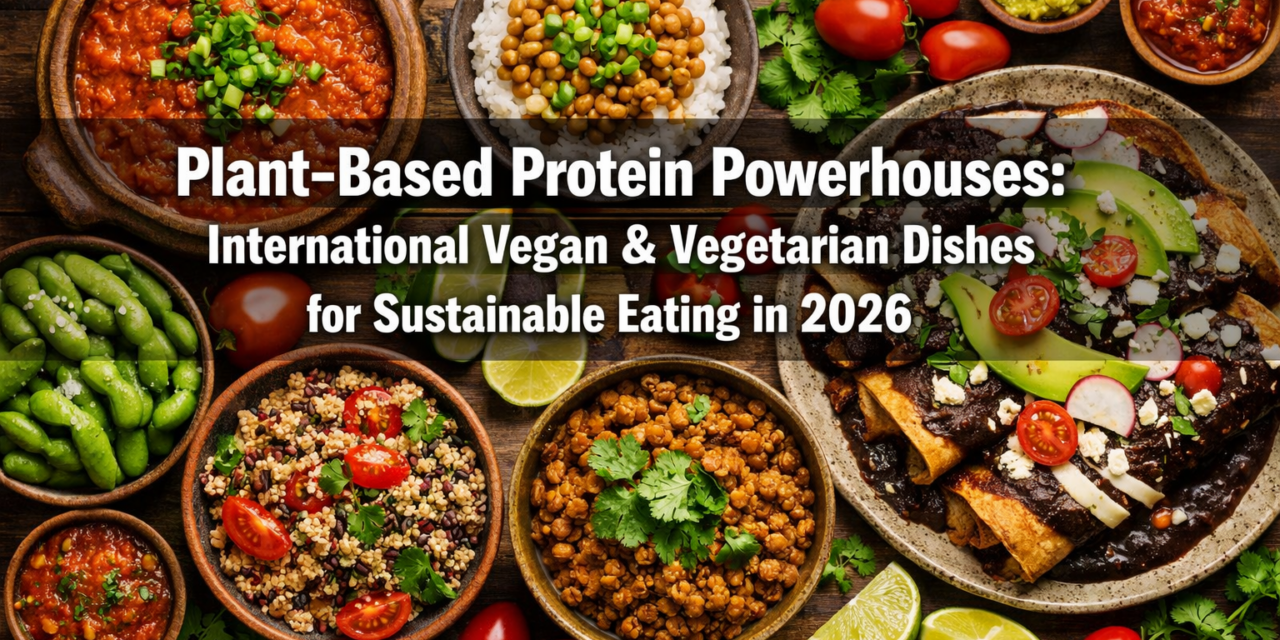
Plant-Based Protein Powerhouses: International Vegan & Vegetarian Dishes for Sustainable Eating in 2026

Sharing is SO MUCH APPRECIATED!


By 2026, the global plant-based food market is projected to reach $21.23 billion — yet the most exciting shift is not about imitation meat. It is about the world rediscovering what billions of people have always known: legumes, nuts, seeds, and fungi from Ethiopia to Japan deliver extraordinary protein, flavor, and nutrition without a single gram of animal product [1].

Plant-Based Protein Powerhouses: International Vegan & Vegetarian Dishes for Sustainable Eating in 2026 is not a trend — it is a return to ancient culinary wisdom, now backed by modern science and driven by urgent environmental need. This guide explores the world’s most protein-rich vegan and vegetarian dishes, the ingredients powering them, and why they matter more than ever.
Key Takeaways 🌱
- A plant-based diet can reduce your carbon footprint by approximately 46% compared to meat-heavy diets [2]
- 64% of global consumers now demand plant-based products made with minimal processing [3]
- International cuisines — Ethiopian, Mexican, Japanese — have long mastered high-protein vegan cooking
- Tofu, tempeh, lentils, edamame, and fava beans are among the most powerful and accessible plant proteins available [2]
- Clean-label, whole-food plant proteins are the primary drivers of consumer trust and purchase decisions in 2026 [3]

Why the World Is Turning to International Plant-Based Protein Powerhouses
The numbers tell a clear story. 55% of global consumers now agree that plant-based foods should stand as their own category — not as substitutes for meat [3]. This is a profound shift. Instead of chasing the taste of a beef burger, consumers in 2026 are embracing black bean enfrijoladas, lentil stews, and natto bowls on their own terms.
“The most powerful plant-based meals are not trying to be meat — they are confidently, deliciously themselves.”
Health is a major driver. A well-structured plant-based diet reduces the risk of type 2 diabetes, cardiovascular disease, and several cancers [2]. Meanwhile, fermentation-based proteins — a cornerstone of Japanese and Korean cuisines — are projected to grow from $3.46 billion in 2026 to $7.16 billion by 2035 [6].
For those interested in broader sustainability conversations, exploring how paradigm shifts are needed to address climate change and biodiversity loss provides essential context for why food choices matter at a planetary scale.
The World’s Most Protein-Rich Vegan Dishes 🌍
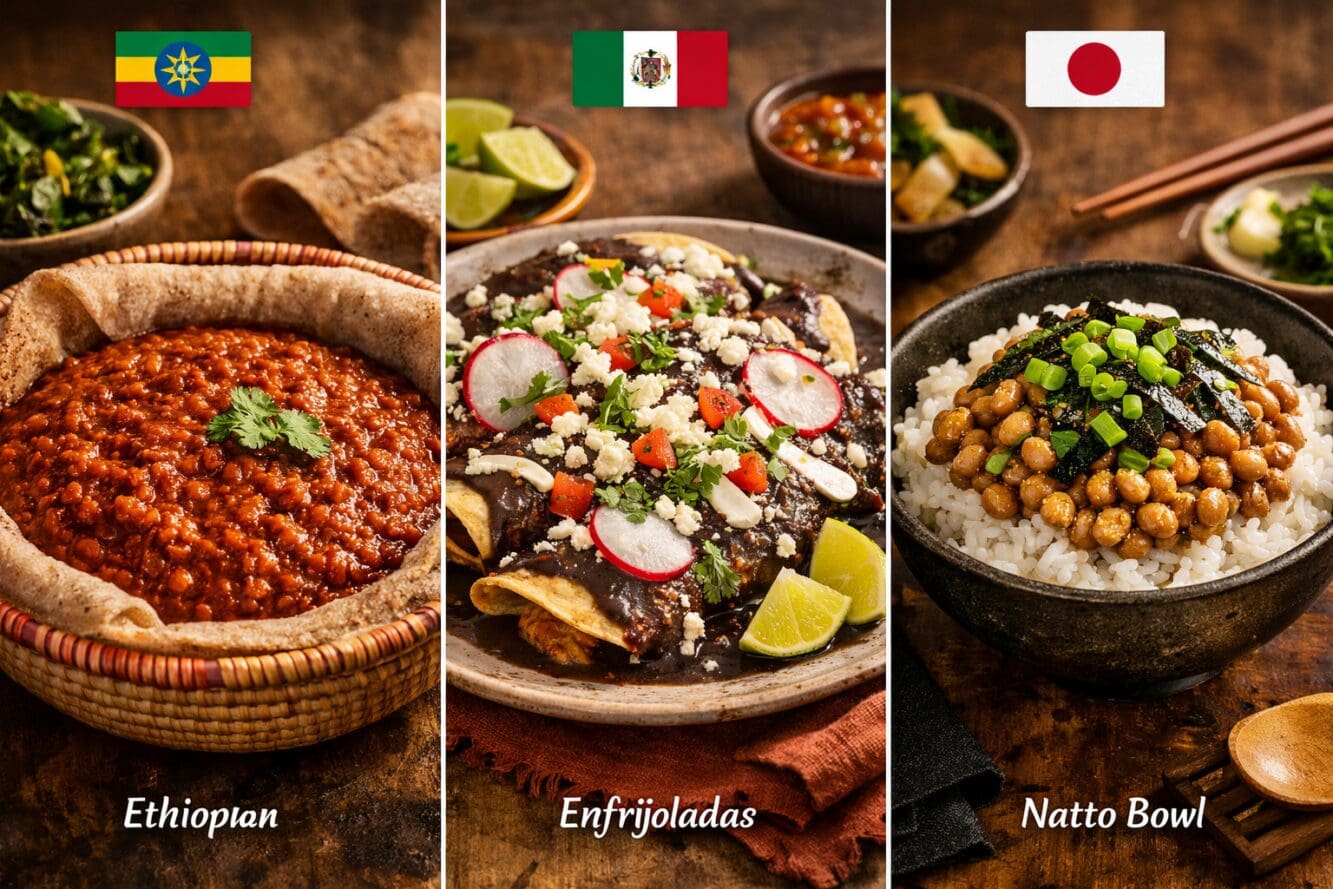
🇪🇹 Ethiopian Misir Wot (Red Lentil Stew)
Misir Wot is one of Africa’s greatest plant-based protein gifts. Made with red lentils simmered in a bold berbere spice blend, this dish delivers approximately 18g of protein per serving.
Key ingredients:
- Red lentils (split masoor dal)
- Berbere spice blend (chili, fenugreek, coriander, ginger)
- Onion, garlic, niter kibbeh (or vegan butter)
- Served on injera flatbread
How to cook lentils from scratch: Rinse red lentils thoroughly, simmer in 2:1 water ratio for 15–20 minutes until soft. No soaking required. Add berbere paste and caramelized onions for authentic depth.
🎥 Search YouTube for “Ethiopian misir wot vegan recipe” to find excellent step-by-step cooking demonstrations.
🇲🇽 Mexican Enfrijoladas (Black Bean Enchiladas)
Enfrijoladas are corn tortillas smothered in a silky black bean sauce — a protein-packed alternative to cheese-heavy enchiladas. Black beans provide roughly 15g of protein per cup and are rich in fiber and iron.
Key ingredients:
- Dried black beans (cooked from scratch for best flavor)
- Dried ancho or pasilla chilies
- Corn tortillas, garlic, cumin, epazote herb
- Toppings: avocado, pickled jalapeños, fresh cilantro
Cooking beans from scratch: Soak dried black beans overnight, then simmer for 60–90 minutes. Blend half the cooked beans with soaked chilies for a rich, velvety sauce.
🎥 YouTube searches for “enfrijoladas vegan” reveal dozens of regional Mexican variations worth exploring.
🇯🇵 Japanese Natto Bowl
Natto — fermented soybeans — is one of the most nutritionally complete plant foods on Earth. It delivers complete protein (all essential amino acids), vitamin K2, and powerful gut-supporting probiotics. One serving contains approximately 17g of protein.
Key ingredients:
- Natto (available at Asian grocery stores)
- Steamed Japanese short-grain rice
- Soy sauce, Japanese mustard, green onions, nori strips
- Optional: raw quail egg (omit for fully vegan version)
Preparation tip: Stir natto vigorously before serving — the sticky strands develop a creamier texture with mixing.
🎥 Search YouTube for “how to eat natto for beginners” for honest taste tests and preparation guides.
The Fastest-Growing Plant Proteins to Watch in 2026
| Protein Source | Protein per 100g | Growth Status |
|---|---|---|
| Fava beans | ~26g | 🔥 Fastest growing |
| Edamame | ~11g | 📈 Rapid expansion |
| Mycelium/Fungi | ~15–20g | 🍄 Leading innovation |
| Quinoa | ~14g | ✅ Established staple |
| Lentils | ~25g | ✅ Global mainstay |
| Almond protein | ~21g | 🔥 Fastest growing |
Fava beans and almond proteins are the fastest-growing plant-based proteins in new product launches, while pea, soy, and wheat remain the highest-volume options [3]. Mycelium-based proteins — derived from fungi — use significantly less land and water than conventional beef while delivering complete protein and gut-supporting fiber [1].
This connects directly to broader environmental conversations. Just as ditching the lawn for natural landscaping reduces environmental impact at home, choosing whole-food plant proteins reduces it at the dinner table.
Sustainability: The Environmental Case Is Undeniable 🌎
Switching to a plant-based diet reduces an individual’s carbon footprint by approximately 46% and demands far less water and agricultural land than meat production [2]. With climate pressure intensifying, food choices have become one of the most direct forms of personal environmental action.
Those curious about the broader energy and sustainability picture may find value in reading about how fossil fuel honesty is reshaping environmental conversations — a topic deeply connected to the food system.
Additionally, for those growing their own ingredients at home, avoiding common beginner raised bed garden mistakes can make growing legumes and herbs far more rewarding.
Building a Balanced Plant-Based Plate: Practical Tips
The best plant-based protein sources for daily eating include [2]:
- ✅ Tofu & tempeh — versatile, high-protein soy foods
- ✅ Seitan — wheat gluten with meat-like texture
- ✅ Edamame — snackable complete protein
- ✅ Beans & lentils — affordable global staples
- ✅ Nuts & seeds — healthy fats plus protein
- ✅ Fortified plant milks — reliable B12 and calcium sources
Protein interest in conventional meat is growing 3x faster than plant-based alternatives, which is pushing brands to prioritize authenticity and whole-food formats over ultra-processed imitation products [1]. This means the future belongs to dishes like misir wot and natto bowls — not laboratory-engineered substitutes.
For readers also focused on personal wellness alongside dietary changes, exploring stress-relieving somatic chair yoga practices can complement a whole-food plant-based lifestyle beautifully.
Conclusion: Start Your Global Plant-Based Journey Today
Plant-Based Protein Powerhouses: International Vegan & Vegetarian Dishes for Sustainable Eating in 2026 represent the most exciting, flavorful, and environmentally responsible way to eat right now. The evidence is clear: whole-food plant proteins from global cuisines nourish the body, protect the planet, and satisfy the palate without compromise.
✅ Actionable Next Steps:
- Cook one international dish this week — start with misir wot (easiest) or a natto bowl (most adventurous)
- Buy dried legumes in bulk — lentils and black beans are cheaper and more nutritious than canned
- Watch YouTube demos for visual guidance on cooking legumes from scratch
- Swap one meat-based meal per week with a whole-food plant-based alternative
- Explore fava beans and edamame as emerging protein stars in your weekly rotation
The world’s oldest cuisines have always known what modern science is now confirming: plants are powerful. The table is set — it is time to dig in. 🌿
References
[1] Plant Based Eating In 2026 What S Next For Food Lovers – https://www.meati.com/blogs/news/plant-based-eating-in-2026-what-s-next-for-food-lovers
[2] Healthy Plant Based Eating Tips 2026 – https://www.farmsanctuary.org/news-stories/healthy-plant-based-eating-tips-2026/
[3] Plant Based Trends 5 Top Global Trend For 2026 – https://www.innovamarketinsights.com/trends/plant-based-trends-5-top-global-trend-for-2026/
[4] How Plant Based Brands Can Win In 2026 – https://www.vegpreneur.org/blog/how-plant-based-brands-can-win-in-2026
[5] Top Vegan Trends To Watch In 2026 – https://rickhay.co.uk/blog/f/top-vegan-trends-to-watch-in-2026?blogcategory=Nutrition
[6] Top 4 Alt Protein Predictions 2026 – https://www.pall.com/en/food-beverage/blog/top-4-alt-protein-predictions-2026.html
Content, illustrations, and third-party video appearing on GEORGIANBAYNEWS.COM may be generated or curated with AI assistance or reproduced pursuant to the fair dealing provisions of the Copyright Act, R.S.C. 1985, c. C-42. Attribution and hyperlinks to original sources are provided in acknowledgment of applicable intellectual property rights. Such referencing is intended to direct traffic to and support the original rights holders’ platforms.
Sharing is SO MUCH APPRECIATED!