


















Elon Musk and Sam Altman Are About to Face Off in Court: What You Need to Know in 2026

Sharing is SO MUCH APPRECIATED!


Last updated: April 27, 2026
Quick Answer: Elon Musk and Sam Altman are about to face off in court in a high-stakes legal dispute centered on OpenAI’s mission, governance, and Musk’s claims that the organization betrayed its founding nonprofit principles. The case raises fundamental questions about who controls the future of artificial intelligence and whether a nonprofit can legally convert to a for-profit structure.
Key Takeaways
- Elon Musk sued OpenAI and Sam Altman alleging breach of contract, fraud, and violations of charitable trust law.
- The core claim is that OpenAI abandoned its original mission to develop AI for the benefit of humanity, not shareholders.
- Musk was a co-founder and early donor to OpenAI before departing from its board in 2018.
- OpenAI’s planned conversion from a nonprofit to a capped-profit and now fully for-profit structure is central to the dispute.
- Sam Altman and OpenAI have denied all major allegations and filed counterclaims.
- The case has broad implications for AI governance, nonprofit law, and the $300+ billion AI industry (based on reported OpenAI valuation estimates from 2025 funding rounds).
- A federal judge allowed key claims to proceed, signaling the case has legal merit worth examining.
- The outcome could reshape how AI companies are structured and regulated.
Why Are Elon Musk and Sam Altman About to Face Off in Court?
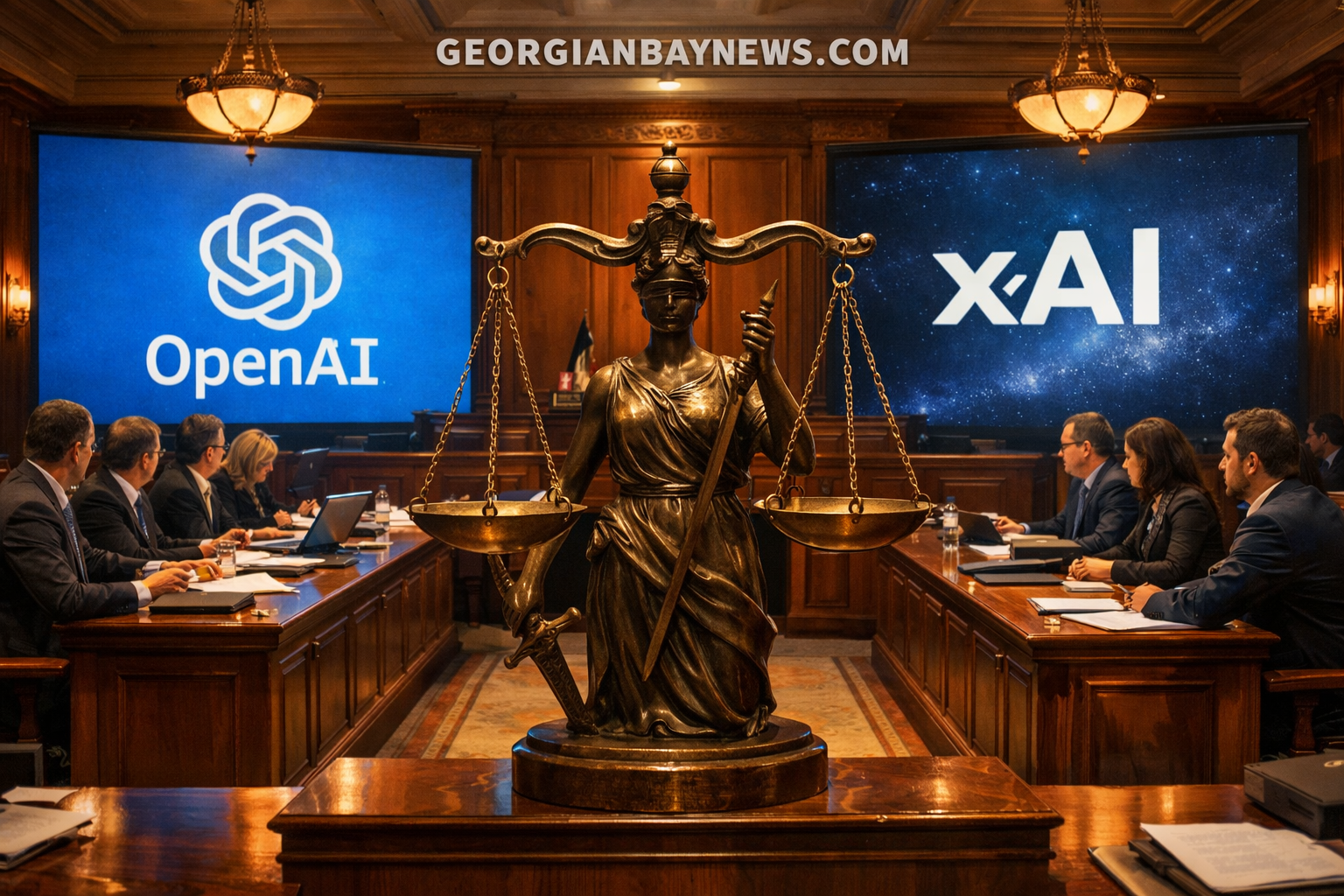
Elon Musk and Sam Altman are about to face off in court because of a fundamental disagreement about what OpenAI was always supposed to be. Musk argues he donated time, money, and credibility to an organization that promised to keep powerful AI out of corporate control. OpenAI and Altman say Musk’s claims misrepresent the organization’s history and his own motivations.
Musk filed his initial lawsuit in early 2024, withdrew it, then refiled an expanded federal complaint in late 2024. The suit names Sam Altman, OpenAI co-founder Greg Brockman, and Microsoft as defendants. Key allegations include:
- Breach of contract: Musk claims a founding agreement obligated OpenAI to develop AI openly and for public benefit.
- Fraud: The suit alleges Altman misled Musk about OpenAI’s direction to secure his early support.
- RICO violations: Musk’s legal team argues the defendants engaged in a pattern of deceptive conduct.
- Breach of fiduciary duty: Targeting OpenAI board members for allegedly abandoning their nonprofit obligations.

For deeper context on the broader tensions surrounding Musk’s business empire and public behavior, see this analysis of the problem with Elon Musk and how his decisions continue to generate controversy.
What Is the Core Legal Dispute?
The heart of the case is a question of nonprofit law: can an organization founded with a charitable mission legally convert to a for-profit entity and enrich its executives and investors?
OpenAI was incorporated as a nonprofit in 2015. Its stated mission was to ensure artificial general intelligence (AGI) benefits all of humanity. In 2019, it created a “capped-profit” subsidiary to attract investment, with returns to investors limited to 100x their investment. By 2025, OpenAI announced plans to restructure further into a conventional for-profit company.
Musk’s legal team argues this conversion:
- Violates California charitable trust law
- Breaches the original founding agreement with early donors
- Personally enriches Altman at the expense of the public mission
- Gives Microsoft, a major investor, undue influence over a technology with global consequences
OpenAI counters that the structure was always intended to evolve, that Musk was fully informed, and that his lawsuit is motivated by competitive interests since he founded his own AI company, xAI, in 2023.
What Has the Court Decided So Far?
A federal judge allowed several of Musk’s claims to move forward, which is legally significant. Courts dismiss weak cases early, so surviving initial motions suggests at least some claims have a plausible legal basis.
Key rulings to date (as of April 2026):
| Legal Claim | Status |
|---|---|
| Breach of contract | Allowed to proceed |
| Fraud allegations | Partially allowed |
| RICO claims | Status contested, narrowed |
| Injunction to halt for-profit conversion | Denied initially, appealed |
| Microsoft as defendant | Included in active claims |
The California Attorney General’s office has also been monitoring OpenAI’s nonprofit conversion, adding a regulatory layer beyond Musk’s private lawsuit.
Who Has the Stronger Legal Argument?
Neither side has a clear-cut advantage, and legal experts are divided. Here is how the arguments stack up:
Musk’s position is stronger when:
- Founding documents or communications show an explicit promise to remain nonprofit
- Evidence shows Altman or the board concealed the for-profit pivot from early donors
- California courts apply strict charitable trust standards
OpenAI’s position is stronger when:
- Governing documents gave the board discretion to restructure
- Musk’s own communications show he understood and accepted the evolving model
- Courts view his lawsuit as a competitive tactic rather than a genuine legal grievance
The ex-OpenAI employee who revealed concerns about the company’s future direction adds a layer of insider perspective that aligns, at least thematically, with some of Musk’s concerns about organizational drift.
What Are the Broader Stakes for the AI Industry?
The outcome of this case extends well beyond two billionaires. The AI sector is watching closely because the verdict could:
- Set legal precedent for how nonprofit-to-for-profit conversions are handled in tech
- Affect Microsoft’s $13 billion investment in OpenAI and its contractual rights
- Reshape AI governance standards at a time when governments worldwide are drafting AI regulations
- Influence how future AI labs are structured from day one
This connects to a larger conversation about whether AI development can be trusted to private companies at all. For a related look at wealth, power, and AI’s economic consequences, this piece on America’s collision course with AI and wealth inequality offers useful context.
Musk’s own ventures, including Neuralink and xAI, are also part of this story. His vision for AI and humanity’s future makes clear this is not just a legal dispute but an ideological one.
What Happens Next?
The trial is expected to move through discovery in 2026, with a potential trial date later in the year or in 2027. Key milestones to watch:
- Discovery phase: Both sides exchange internal documents, emails, and financial records. This alone could produce damaging revelations for either party.
- OpenAI’s for-profit conversion: If completed before a court ruling, it may become irreversible, weakening Musk’s injunction arguments.
- California AG involvement: State regulators could intervene independently of the private lawsuit.
- Settlement possibility: High-profile cases like this often settle. A negotiated outcome could include structural concessions from OpenAI.
Given that Musk’s legal battles have a pattern of complexity and public drama, as seen in his blocked $56 billion Tesla pay package, this case is unlikely to resolve quickly or quietly.
FAQ
Q: When did Musk first sue OpenAI?
Musk filed his first lawsuit in February 2024 in California state court, withdrew it, then filed an expanded federal complaint in August 2024.
Q: What does Musk want from the lawsuit?
Musk is seeking to block OpenAI’s conversion to a for-profit company, recover damages, and potentially force the organization to return to its original nonprofit structure.
Q: Is Sam Altman personally named in the lawsuit?
Yes. Altman is a named defendant along with Greg Brockman, OpenAI’s board, and Microsoft.
Q: Has OpenAI filed any counterclaims?
Yes. OpenAI has countersued Musk, alleging he is using litigation to harm a competitor and that his conduct amounts to tortious interference.
Q: Does Musk’s ownership of xAI create a conflict of interest in this lawsuit?
OpenAI argues yes. Musk’s team argues his concerns about OpenAI’s mission are genuine and predate xAI’s founding.
Q: Could this case affect OpenAI’s valuation?
Potentially. Legal uncertainty, especially around the for-profit conversion, could complicate future fundraising or an IPO.
Q: What role does Microsoft play?
Microsoft invested approximately $13 billion in OpenAI and is named as a defendant. Musk alleges Microsoft benefited from and encouraged the mission drift.
Q: Is there a jury trial?
Some claims may go to a jury; others will be decided by a judge. The mix depends on which claims survive further legal motions.
Conclusion
The fact that Elon Musk and Sam Altman are about to face off in court is more than a celebrity tech feud. It is a legal stress test for how AI companies govern themselves, honor their founding commitments, and balance public benefit against private profit.
Actionable next steps for readers:
- Follow court filings through PACER (the U.S. federal court records system) for real-time updates on motions and rulings.
- Watch OpenAI’s conversion timeline: If the for-profit restructuring completes before a court ruling, the legal landscape shifts significantly.
- Pay attention to the California AG’s office: A state-level intervention could move faster than the federal civil case.
- Consider the policy implications: Contact elected representatives if you believe AI governance should include stronger public accountability standards.
This case will define, at least in part, who gets to shape the most consequential technology of the 21st century and whether founding promises mean anything in Silicon Valley.
References
- Reuters. (2024). Musk sues OpenAI and Altman, alleging abandonment of nonprofit mission. https://www.reuters.com
- The New York Times. (2024). OpenAI’s for-profit conversion and the legal battle ahead. https://www.nytimes.com
- Bloomberg Law. (2025). Federal judge allows key Musk claims against OpenAI to proceed. https://www.bloomberglaw.com
- The Verge. (2024). A timeline of Elon Musk vs. OpenAI. https://www.theverge.com
- California Attorney General’s Office. (2025). Statement on OpenAI nonprofit conversion review. https://oag.ca.gov
Content, illustrations, and third-party video appearing on GEORGIANBAYNEWS.COM may be generated or curated with AI assistance or reproduced pursuant to the fair dealing provisions of the Copyright Act, R.S.C. 1985, c. C-42. Attribution and hyperlinks to original sources are provided in acknowledgment of applicable intellectual property rights. Such referencing is intended to direct traffic to and support the original rights holders’ platforms.
Sharing is SO MUCH APPRECIATED!