



















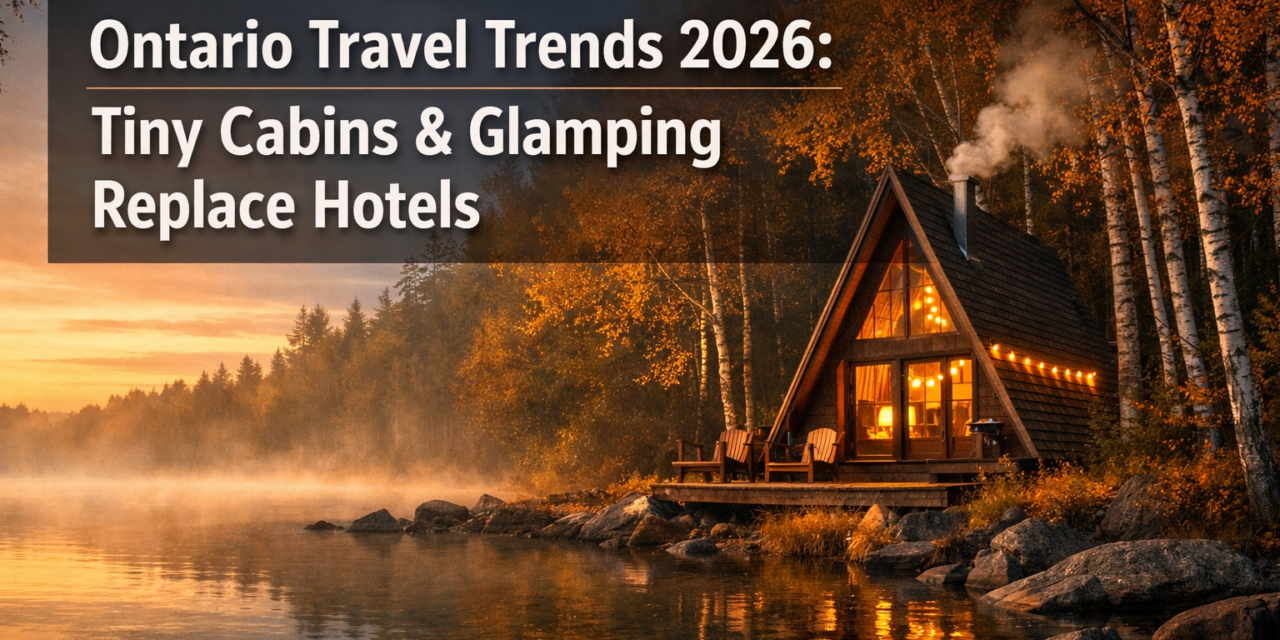
Seasonal Ontario Travel Trends 2026: Why Tiny Cabins and Glamping Are Replacing Traditional Hotels
Last updated: April 27, 2026
Quick Answer
Ontario’s travel landscape in 2026 is shifting decisively toward tiny cabins, glamping sites, and eco-lodges, with travelers choosing nature-based stays over conventional hotels at a rate that operators can no longer ignore. Demand is driven by a desire for authentic outdoor experiences, sustainable choices, and social-media-worthy moments. Seasonal patterns still matter, but shoulder seasons are gaining ground as flexible travelers spread their trips beyond peak summer months [1][3].
Key Takeaways
- 🌲 Cabins and glamping are the top accommodation preference for Ontario travelers seeking off-the-beaten-path experiences that blend adventure with comfort [3]
- 📅 August is the strongest travel month (32% intent), followed by June (28%) and July (26%), making summer the core booking window [2]
- 🍂 Fall and early winter are no longer true off-seasons — shoulder-season visitation is rising as repeat travelers extend their trips [1]
- 💚 Sustainability is a booking driver, not just a bonus — eco-friendly accommodations and locally sourced experiences are actively sought [3]
- 📱 Photogenic, design-forward stays convert browsers into bookers, with visual appeal on social platforms directly influencing accommodation choices [3]
- 🔄 Repeat visitors are outpacing new visitor growth, meaning experience quality and retention matter more than volume [1]
- ⚡ Last-minute bookings are surging, with value-conscious travelers watching for deals on short getaways [3]
- 🏙️ Same-day and short trips from nearby cities represent the largest growth opportunity for rural Ontario operators [1]
What’s Actually Driving Ontario’s Shift Away from Traditional Hotels?
Travel experts confirm that Ontario visitors in 2026 are not simply looking for a place to sleep — they want an experience that feels intentional, restorative, and shareable. Traditional hotels, while still functional, struggle to deliver on all three counts.
Several forces are converging at once:
- Value-driven decision-making: Travelers are scrutinizing what they get for their money. A well-designed cabin with a wood stove, private dock, and forest views often wins over a generic hotel room at a comparable price point [1][3].
- Nature as the amenity: Post-pandemic habits have stuck. Guests want fresh air, starry skies, and quiet — things no urban hotel can manufacture.
- Wellness and regenerative travel: Stays that help guests slow down, reconnect with nature, and feel good about their environmental footprint are gaining clear momentum [3].
- Social media influence: A photogenic A-frame cabin or a canvas bell tent beside Georgian Bay generates organic content that a standard hotel room simply cannot compete with [3].
“Travelers are shifting from chasing volume to designing experiences — and the accommodations they choose reflect that shift entirely.” [1]
How Are Seasonal Ontario Travel Trends 2026 Reshaping the Booking Calendar?
Summer remains the anchor season, but the booking calendar is spreading out in ways that matter for operators. According to RTO 9’s January 2026 summary, August leads travel intent at 32%, with June at 28% and July at 26% [2]. That concentration means summer cabins and glamping sites book out fast — often weeks or months in advance for peak weekends.
What’s changing in 2026:
| Season | Trend Direction | Key Driver |
|---|---|---|
| Summer (June–Aug) | Strong, concentrated demand | Highest intent; book early |
| Fall (Sept–Oct) | Growing steadily | Repeat visitors, foliage tourism |
| Winter (Nov–Jan) | Declining intent since mid-2025 | Fewer bookings, more selective |
| Spring (Mar–May) | Flattening after earlier growth | Value-seekers, shoulder deals |
Fall is the clearest opportunity. Repeat visitors — who are growing faster than new arrivals — tend to return in shoulder seasons when crowds thin and rates soften [1]. Operators who market fall cabin experiences with confidence (rather than treating them as a consolation prize) are seeing stronger retention.
Choose a shoulder-season stay if: you want lower rates, less competition for bookings, and the kind of quiet that summer rarely delivers in popular areas like Muskoka, Haliburton, or the Blue Mountains. For summer events and activities around Collingwood, the Shipyards Amphitheatre concert lineup is worth pairing with a nearby cabin booking.
Where Are Ontario’s Best Tiny Cabin and Glamping Destinations in 2026?
Ontario’s geography makes it exceptionally well-suited to the tiny cabin and glamping boom. The province has over 250,000 lakes and vast stretches of boreal and mixed forest within a few hours of major urban centres.
Top regions to watch in 2026:
- Georgian Bay and Blue Mountains corridor — strong infrastructure, four-season appeal, and proximity to Collingwood’s growing arts and food scene. The region’s multi-use recreation trails add year-round value for active travelers.
- Muskoka and Haliburton Highlands — classic cottage country now hosting a new wave of design-forward glamping operators
- Prince Edward County — wine, farm-to-table dining, and lakeside glamping in one compact destination
- Algonquin Park fringe — eco-lodges and off-grid cabins for travelers who want genuine wilderness without sacrificing comfort
- Kawartha Lakes — growing inventory of tiny cabin rentals targeting Toronto day-trippers and weekend visitors
Same-day visitors from Toronto, Ottawa, and Hamilton represent the largest single growth segment for these regions — meaning operators within a two-to-three hour drive of major cities are positioned best [1].
What Makes Glamping Different from Camping — and Why Does It Matter?
Glamping (glamorous camping) sits between traditional camping and hotel accommodation. It matters because it captures travelers who want outdoor immersion without sacrificing basic comforts.
Glamping typically includes:
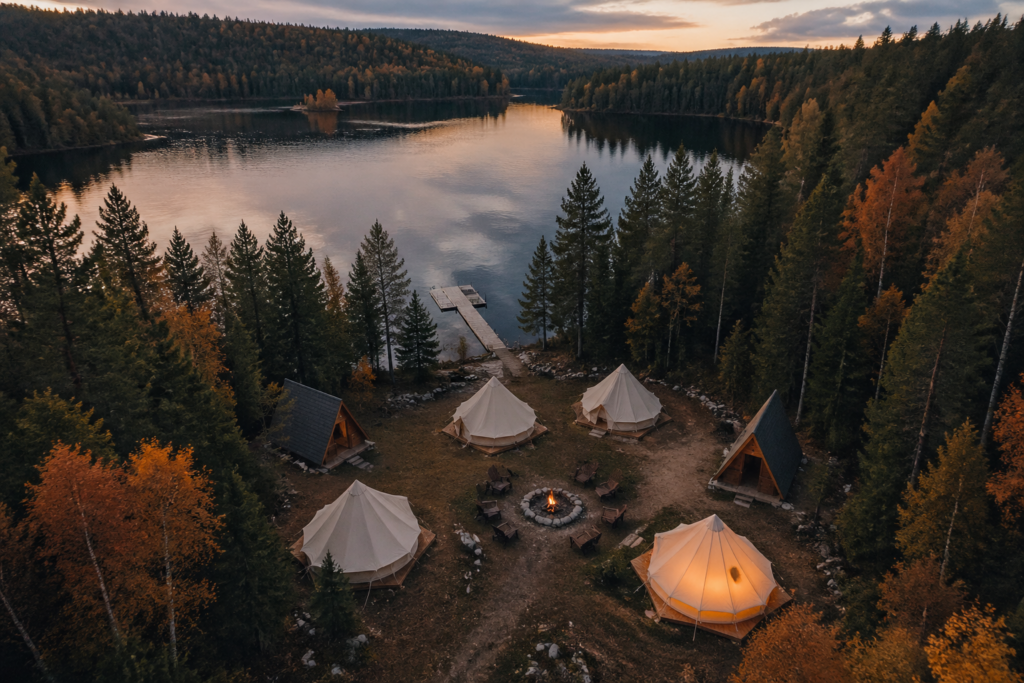
- A permanent or semi-permanent structure (bell tent, yurt, Airstream, A-frame, treehouse)
- A real bed with quality linens
- Climate control or a wood-burning stove
- Private or semi-private bathroom access
- Curated outdoor surroundings — fire pit, hammock, stargazing deck
Common mistake: Assuming glamping is just “fancy camping.” The best operators treat it as hospitality — with welcome packages, local food provisions, and thoughtful design that photographs beautifully [3]. That last point is not vanity; it drives direct bookings through social sharing.
How Is Sustainable Travel Shaping Accommodation Choices in Ontario?
Sustainability has moved from a marketing tag to an actual booking filter for a growing share of Ontario travelers. Guests are actively seeking accommodations that minimize environmental impact [3].
What this looks like in practice:
- Solar-powered or off-grid cabins with composting toilets and rainwater systems
- Locally sourced welcome baskets featuring regional food producers
- No single-use plastics and refillable amenity stations
- Leave-no-trace policies with operator-led education on local ecosystems
- Carbon-offset partnerships for guests who want to balance travel emissions
Operators who communicate these choices clearly — on booking pages, in confirmation emails, and on-site — are seeing stronger loyalty from repeat visitors [1]. The Summer Blast Off Party at Wasaga Beach and similar community events also reflect a broader regional push toward celebrating local, sustainable experiences.
What Do Travelers Actually Want from a Tiny Cabin Stay?
Based on current Ontario travel trends, the ideal tiny cabin experience in 2026 combines three things: comfort, connection, and authenticity.
Travelers prioritize:
- Privacy and quiet — no shared walls, no lobby noise
- Natural surroundings — water views, forest access, wildlife proximity
- Functional simplicity — a good kitchen, reliable Wi-Fi (even if rarely used), and a fire pit
- Photogenic design — interiors and exteriors that look great on Instagram without feeling staged
- Local experiences nearby — farmers markets, hiking trails, live music, or artisan shops [3]
The Arts and Crafts Walk in The Blue Mountains is a perfect example of the kind of local cultural touchpoint that makes a cabin stay feel complete rather than isolated.
Edge case: Travelers with young children or mobility considerations should confirm accessibility features before booking. Many glamping sites and tiny cabins are built on uneven terrain and may not suit all guests equally.
How Should Travelers Book Ontario Cabins and Glamping in 2026?
Last-minute deals are real, but popular properties in peak summer months fill weeks or months ahead [3]. Here’s a practical booking approach:
For summer (June–August):
- Book 6–10 weeks in advance for weekends
- Check cancellation policies carefully — many small operators have strict terms
- Look for mid-week openings if flexibility allows; rates are often 20–30% lower (estimate based on typical seasonal pricing patterns)
For fall and shoulder seasons:
- Watch operator newsletters and social channels for last-minute promotions
- Consider booking directly with the property to avoid platform fees and get better rates [1]
For winter:
- Demand is softer, so negotiating extended stays or package deals is more viable [2]
- Confirm heating systems and road access before committing
Conclusion: What to Do Next
The Seasonal Ontario Travel Trends 2026: Why Tiny Cabins and Glamping Are Replacing Traditional Hotels story is not a passing moment — it reflects a durable shift in what travelers value. Nature-based accommodations win because they deliver on experience, sustainability, and visual appeal in ways that standard hotels simply cannot match.
Actionable next steps:
- Travelers: Start your summer cabin search now — August inventory moves fast. Use shoulder seasons strategically for better value and fewer crowds.
- Operators: Invest in photogenic design, communicate sustainability credentials clearly, and build year-round marketing that treats fall and spring as real seasons rather than afterthoughts [1].
- Regional planners: Support trail infrastructure, local food networks, and event programming that gives cabin and glamping guests reasons to stay longer and return sooner.
Ontario’s wilderness is the product. The tiny cabin is just the delivery mechanism.
FAQ
What is glamping in Ontario?
Glamping in Ontario refers to upscale outdoor accommodations — bell tents, yurts, A-frames, or treehouses — that offer hotel-level comfort within natural settings. It’s designed for travelers who want outdoor immersion without sacrificing a real bed or private bathroom.
Why are tiny cabins more popular than hotels in Ontario in 2026?
Tiny cabins offer privacy, natural surroundings, and photogenic design that hotels can’t replicate. Travelers in 2026 are prioritizing experience quality and sustainability over standard amenities [3].
When is the best time to visit Ontario for a cabin stay?
August has the strongest travel intent (32%), but fall offers excellent value with fewer crowds and strong repeat-visitor demand [1][2].
Are glamping sites in Ontario eco-friendly?
Many are, but not all. Look for operators who specify solar power, composting systems, locally sourced provisions, and no single-use plastics. Ask directly before booking [3].
How far in advance should you book an Ontario glamping site?
For summer weekends, 6–10 weeks ahead is a safe target. Shoulder-season bookings can often be made with less lead time, and last-minute deals are more common in fall and winter [3].
What regions in Ontario have the most glamping options?
Georgian Bay, Muskoka, Haliburton Highlands, Prince Edward County, and Algonquin Park’s fringe areas have the highest concentration of glamping and tiny cabin properties in 2026.
Is Ontario glamping suitable for families with children?
Many sites welcome families, but terrain and amenities vary widely. Always confirm bed configurations, bathroom access, and site accessibility before booking with young children or guests with mobility needs.
What’s driving last-minute bookings in Ontario travel?
Value-conscious travelers are watching for deals and making shorter, more intentional trips. Same-day and weekend getaways from nearby cities are the fastest-growing booking category [1][3].
References
[1] 7 Tourism Data Takeaways 2026 And How Operators Can Act Them – https://ohto.ca/news-events/7-tourism-data-takeaways-2026-and-how-operators-can-act-them
[2] Summary Report Ontario Travel Tourism Monthly OTTM January 2026 – https://www.rto9.ca/images/Summary-Report-Ontario-Travel-Tourism-Monthly-OTTM-January-2026.pdf
[3] Ontario Travel Trends – https://wandernorth.co/north/ontario-travel-trends/
[4] Top 5 Travel Trends For 2026 What Canadian Travellers Need To Know – https://blog.tugo.com/en/blog/top-5-travel-trends-for-2026-what-canadian-travellers-need-to-know/
[5] Traveler Trends 2026 Key Takeaways – https://explorersedge.ca/resources/traveler-trends-2026-key-takeaways/
Content, illustrations, and third-party video appearing on GEORGIANBAYNEWS.COM may be generated or curated with AI assistance or reproduced pursuant to the fair dealing provisions of the Copyright Act, R.S.C. 1985, c. C-42. Attribution and hyperlinks to original sources are provided in acknowledgment of applicable intellectual property rights. Such referencing is intended to direct traffic to and support the original rights holders’ platforms.