



















The Billion‑Dollar Lottery Ticket: How Huge Jackpots Affect Provincial Revenues, and Gambling Addiction

Sharing is SO MUCH APPRECIATED!


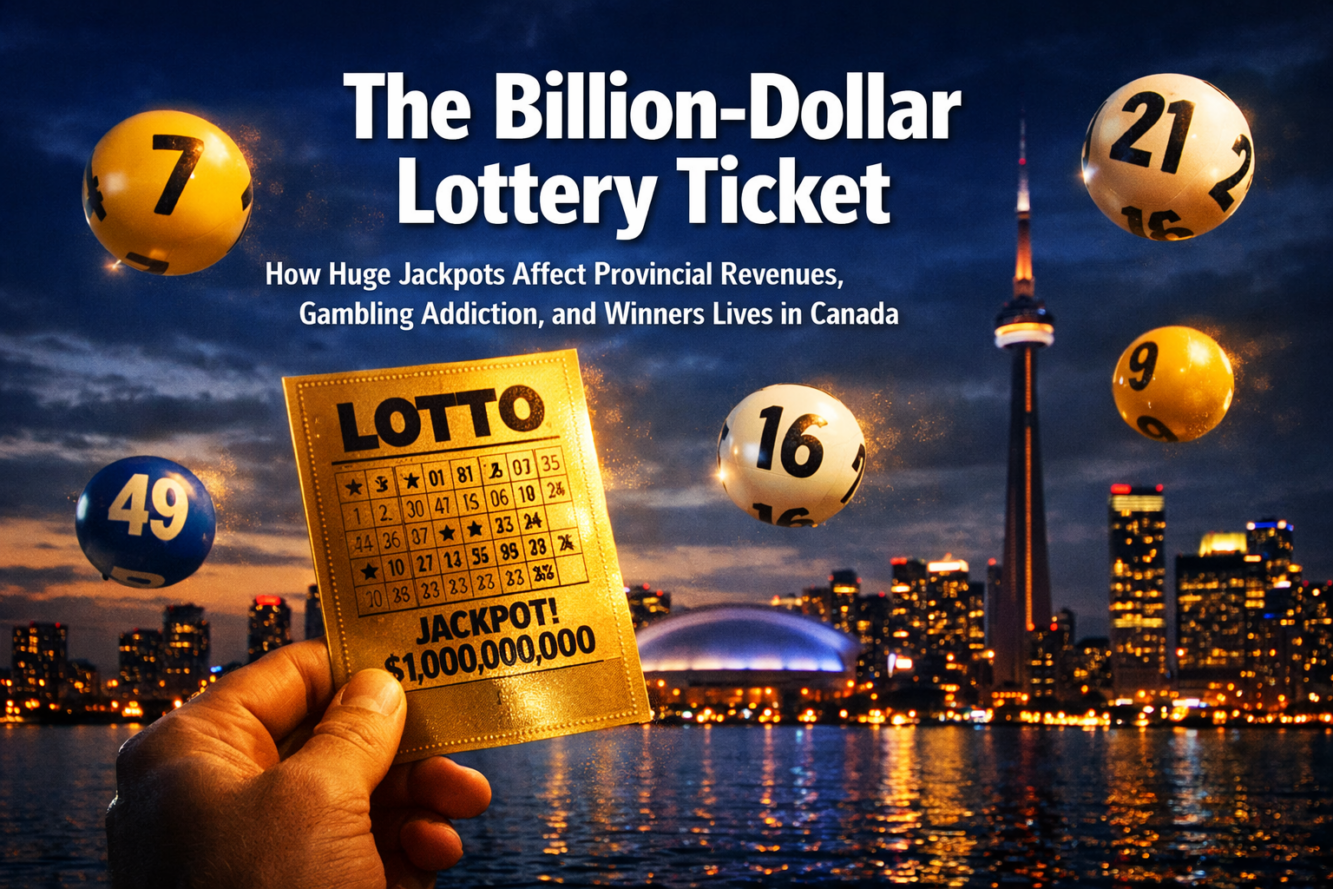
Somewhere in Ontario, a $75-million Lotto Max ticket sold on March 3, 2026, is waiting to be claimed [1]. The clock is ticking. If the winner never steps forward, those millions won’t simply vanish—they’ll be recycled back into future prize pools and, ultimately, into provincial coffers. This single unclaimed ticket opens a window into a much bigger story: the billion‑dollar lottery ticket—how huge jackpots affect provincial revenues, gambling addiction, and winners’ lives in Canada.
With Lotto Max jackpots set to rise to a record $90 million cap starting April 14, 2026, and ticket prices climbing from $5 to $6 per play [2], the stakes have never been higher. But who really wins when lottery fever grips the nation?
Key Takeaways 🎯
- Provincial governments depend on lottery revenue to fund healthcare, education, and community programs across Canada.
- Rising jackpot caps and ticket prices in 2026 are designed to generate bigger prizes—and bigger revenues.
- Gambling addiction rates increase when mega-jackpots dominate the news cycle, posing real public health risks.
- Most big winners face unexpected challenges, from financial mismanagement to strained relationships.
- Unclaimed prizes like the $75-million Ontario ticket follow strict legal timelines before funds are redistributed.
How Huge Jackpots Fuel Provincial Revenues Across Canada 💰

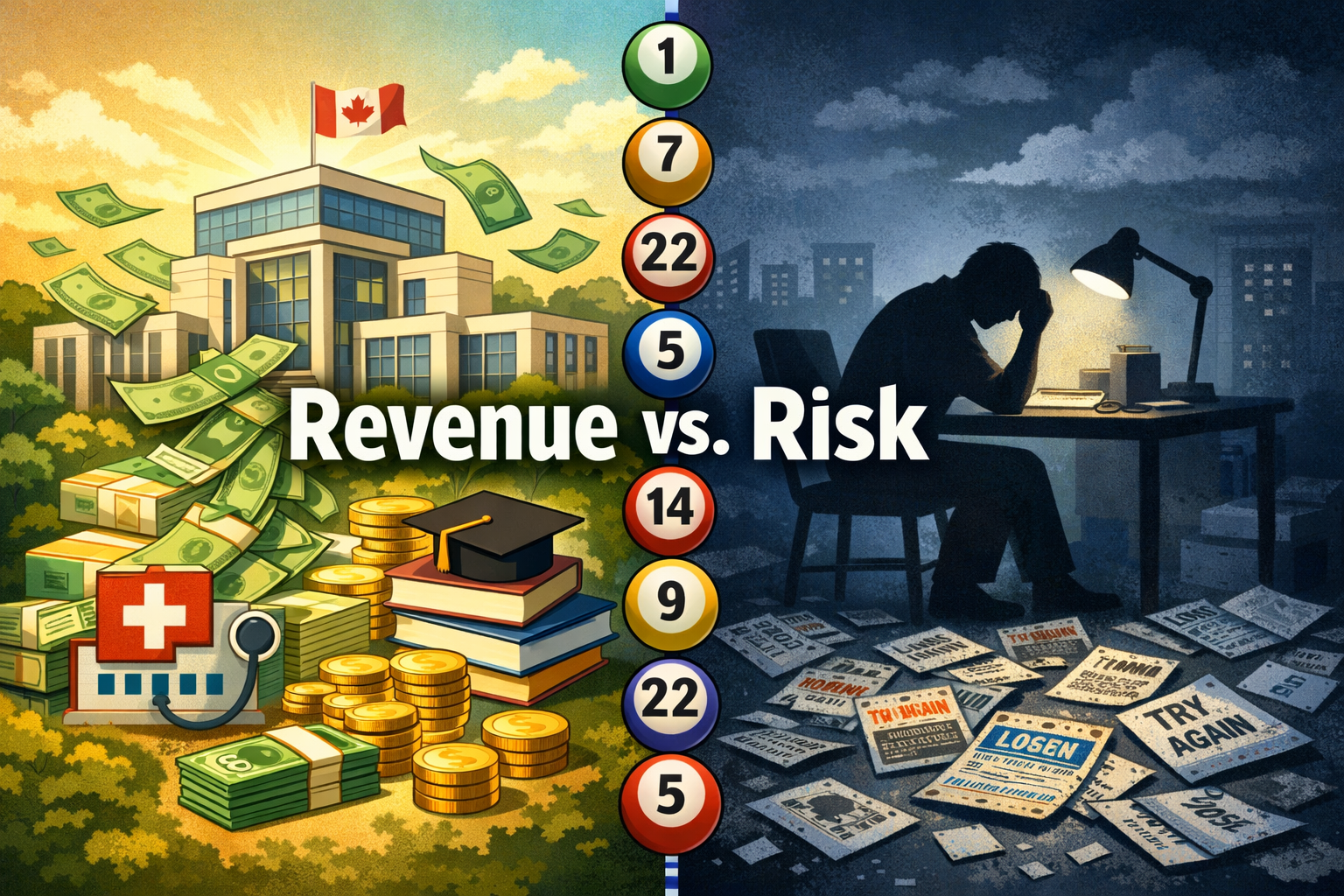
Lotteries are not just games—they are government revenue engines. Every province in Canada operates its lottery system through a Crown corporation (such as the Ontario Lottery and Gaming Corporation or the British Columbia Lottery Corporation). A significant portion of every ticket sold goes directly to provincial programs.
Here’s how the money typically breaks down:
| Revenue Category | Approximate Share |
|---|---|
| Prize payouts | 50–60% |
| Provincial government programs | 25–35% |
| Retailer commissions | 5–7% |
| Operating costs | 3–5% |
When jackpots balloon to $75 million or $80 million, ticket sales surge dramatically. The $80-million Lotto Max jackpot won on December 31, 2025, drove massive sales across the country [2]. Raymond Gubbins of St. George, Ontario, claimed a $15-million prize from the January 20, 2026 draw [1]—just one of several enormous payouts in recent months.
“Bigger jackpots don’t just create bigger winners—they create bigger revenue streams for every province in Canada.”
Starting April 2026, a new feature will offer multiple $100,000 prizes with every draw, scaling from 10 to 90 additional prizes depending on the jackpot size [2]. This change is expected to attract even more players, further boosting provincial income.
That revenue matters. Lottery proceeds help fund:
- 🏥 Healthcare infrastructure and programs
- 🎓 Education grants and scholarships
- 🌳 Parks and recreation facilities
- 🏘️ Affordable housing initiatives
- 🎭 Arts and culture programs, including local concert events that showcase emerging artists
Communities across Canada—from major cities to towns like Collingwood, which hosts vibrant festivals celebrating Canadian culture—benefit from these funds.
The Psychology of Chasing the Billion‑Dollar Lottery Ticket in Canada
Why do Canadians line up for hours when jackpots climb past $50 million? The answer lies in behavioral psychology.
The “What If” Effect
Researchers call it probability neglect. When a prize reaches life-changing levels, the human brain essentially ignores the astronomical odds (roughly 1 in 33.3 million for Lotto Max) and fixates on the potential reward. The emotional pull of imagining a new life overpowers rational calculation.
Jackpot Fatigue and Escalation
Lottery operators understand this psychology. That’s precisely why the Lotto Max jackpot cap is increasing to $90 million in April 2026 [2]. Smaller jackpots no longer generate the same excitement. Players need ever-larger numbers to feel motivated—a phenomenon known as jackpot fatigue.
The ticket price increase from $5 to $6 reflects this strategy: higher stakes create higher perceived value, even though the odds remain unchanged.
Media Amplification
Every record-breaking jackpot becomes front-page news. This media cycle creates a feedback loop:
- Jackpot grows → Media covers the story
- Coverage drives ticket sales → Jackpot grows faster
- More coverage → Even more sales
This cycle mirrors patterns seen in other high-stakes financial stories, such as the dramatic billion-dollar corporate payouts that capture public attention.
Gambling Addiction: The Hidden Cost of Huge Jackpots in Canada 🚨
While lottery revenues fund vital services, there is a darker side. Problem gambling affects approximately 3% of Canadian adults, and that number spikes during periods of lottery mania.
Who Is Most at Risk?
| Risk Factor | Details |
|---|---|
| Low income | Households earning under $30,000 spend a disproportionate share on lottery tickets |
| Youth (18–24) | Young adults are more susceptible to impulsive gambling |
| Previous addiction history | Those with substance use issues face higher gambling addiction risk |
| Social isolation | Lonely individuals may use lottery play as emotional escape |
The Normalization Problem
Unlike casino gambling or sports betting, lotteries are widely considered harmless fun. They’re sold at grocery stores and gas stations. This normalization makes it harder for people to recognize when casual play becomes compulsive behavior.
“The most dangerous thing about lottery addiction is that it doesn’t look like addiction.”
Managing emotional responses to high-pressure situations—whether financial or personal—is a skill worth developing. Resources on controlling emotional reactions can be surprisingly relevant for those who struggle with impulse-driven spending.
Provincial governments face a genuine tension: they benefit financially from increased lottery participation while simultaneously bearing responsibility for the social costs of gambling addiction. Most provinces allocate a small percentage of lottery revenue to problem gambling treatment, but critics argue these programs remain underfunded relative to the scale of the issue.
What Happens When Jackpots Go Unclaimed?
The $75-million Lotto Max prize from March 3, 2026, remains unclaimed as of this writing [1]. This raises an important question: what happens to unclaimed lottery money in Canada?
The Legal Timeline
- Winners have 12 months from the draw date to claim their prize in most provinces.
- After the deadline, unclaimed prizes are typically returned to the prize pool or directed to provincial programs.
- Some provinces use unclaimed funds for bonus draws or special promotions.
Why Tickets Go Unclaimed
It happens more often than most people think. Common reasons include:
- 🎫 Lost or damaged tickets
- 🤷 Winners don’t check their numbers
- 🏠 Tickets forgotten in drawers or wallets
- ⚖️ Legal disputes among group-play participants
Financial literacy and awareness remain critical, and staying informed about community programs and grants can help Canadians make better decisions about windfalls—whether from a lottery or other sources.
Winners’ Lives After the Billion‑Dollar Lottery Ticket: How Huge Jackpots Affect Winners’ Lives in Canada
Winning tens of millions sounds like a dream. The reality is far more complicated.
The “Lottery Curse” by the Numbers
Research consistently shows that a significant percentage of large lottery winners experience serious difficulties within five years of their win:
- 70% of big winners go broke within seven years (according to the National Endowment for Financial Education)
- Divorce rates among winners are substantially higher than the general population
- Estranged family members and strangers frequently pursue legal claims against winners
Common Pitfalls
- No financial plan — Many winners have never managed large sums and make impulsive purchases.
- Tax surprises — While Canadian lottery winnings are tax-free, investment income generated from winnings is fully taxable.
- Identity exposure — Some provinces require winners to go public, leading to unwanted attention and surveillance-like scrutiny.
- Lifestyle inflation — Spending rises to match (or exceed) the windfall.
- Mental health decline — Anxiety, depression, and isolation are common post-win experiences.
What Smart Winners Do Differently
The winners who thrive tend to follow a consistent playbook:
- ✅ Hire a financial advisor before spending anything
- ✅ Remain anonymous if provincial rules allow
- ✅ Set up trusts to protect assets
- ✅ Maintain routines and existing relationships
- ✅ Practice stress management techniques, such as mindfulness and breathing exercises
What the 2026 Lottery Changes Mean for Canadians
The April 2026 changes represent the most significant overhaul of Lotto Max since its launch. Here’s a quick summary:
| Change | Before April 2026 | After April 2026 |
|---|---|---|
| Ticket price | $5 per play | $6 per play |
| Maximum jackpot | $80 million | $90 million |
| Bonus prizes | MaxMillions ($1M each) | Additional $100,000 prizes (10–90 per draw) |
These changes will almost certainly increase both total revenue and player participation [2]. Whether they also increase problem gambling rates remains to be seen—and monitored.
Canadians interested in broader financial wellness and building wealth through disciplined strategies would do well to view lottery play as entertainment, not an investment strategy.
Conclusion
The billion‑dollar lottery ticket phenomenon in Canada is about far more than lucky numbers. It’s a complex ecosystem where provincial revenues, public health, and individual lives intersect in powerful ways.
Actionable next steps for Canadians:
- 🎟️ Check your tickets — Especially if you bought Lotto Max in Ontario around March 3, 2026.
- 📊 Set a lottery budget — Treat ticket purchases as entertainment, not investment.
- 📞 Know the resources — If gambling feels compulsive, contact ConnexOntario (1-866-531-2600) or your provincial helpline.
- 📝 Plan before you play — Have a financial advisor’s number ready before you win, not after.
- 🗳️ Stay informed — Understand how lottery revenues are used in your province and vote to keep Canada strong.
The next record jackpot is always around the corner. The question isn’t whether someone will win—it’s whether Canada is prepared for the consequences when they do.
References
[1] Lotto Max Canada Lottery March 3 2026 – https://dailyhive.com/canada/lotto-max-canada-lottery-march-3-2026
[2] First Lotto Max Jackpot Of 2026 Is 46 Million – https://islandsocialtrends.ca/first-lotto-max-jackpot-of-2026-is-46-million/
Content, illustrations, and third-party video appearing on GEORGIANBAYNEWS.COM may be generated or curated with AI assistance or reproduced pursuant to the fair dealing provisions of the Copyright Act, R.S.C. 1985, c. C-42. Attribution and hyperlinks to original sources are provided in acknowledgment of applicable intellectual property rights. Such referencing is intended to direct traffic to and support the original rights holders’ platforms.
Sharing is SO MUCH APPRECIATED!