



















The Cost for Care and Maintenance of Our Elderly Population in Canada and the United States 🏥

When 78-year-old Jane from Collingwood received her mother’s long-term care invoice, she nearly dropped the envelope. The monthly bill exceeded $7,200—more than her own mortgage payment. Across the border in Michigan, her cousin David faced a similar shock: his father’s nursing home care demanded $9,500 monthly, draining a lifetime of savings in mere months. These aren’t isolated incidents. The cost for care and maintenance of our elderly population has become one of the most pressing financial challenges facing North American families in 2026, with expenses doubling over the past decade and projections showing no signs of slowing.
As baby boomers age and life expectancy increases, both Canada and the United States confront an unprecedented elder care crisis. The numbers tell a sobering story: demand for long-term care is projected to surge 59% by 2031, while annual expenses balloon from billions to tens of billions.[1] Families scramble to understand their options, governments struggle to fund adequate services, and seniors worry whether their retirement savings will last.
Key Takeaways 📌
- Costs are doubling rapidly: Total projected elder care costs in Canada will reach $490.6 billion over the next decade, with annual expenses growing from $29.7 billion in 2019 to $58.5 billion by 2031[1]
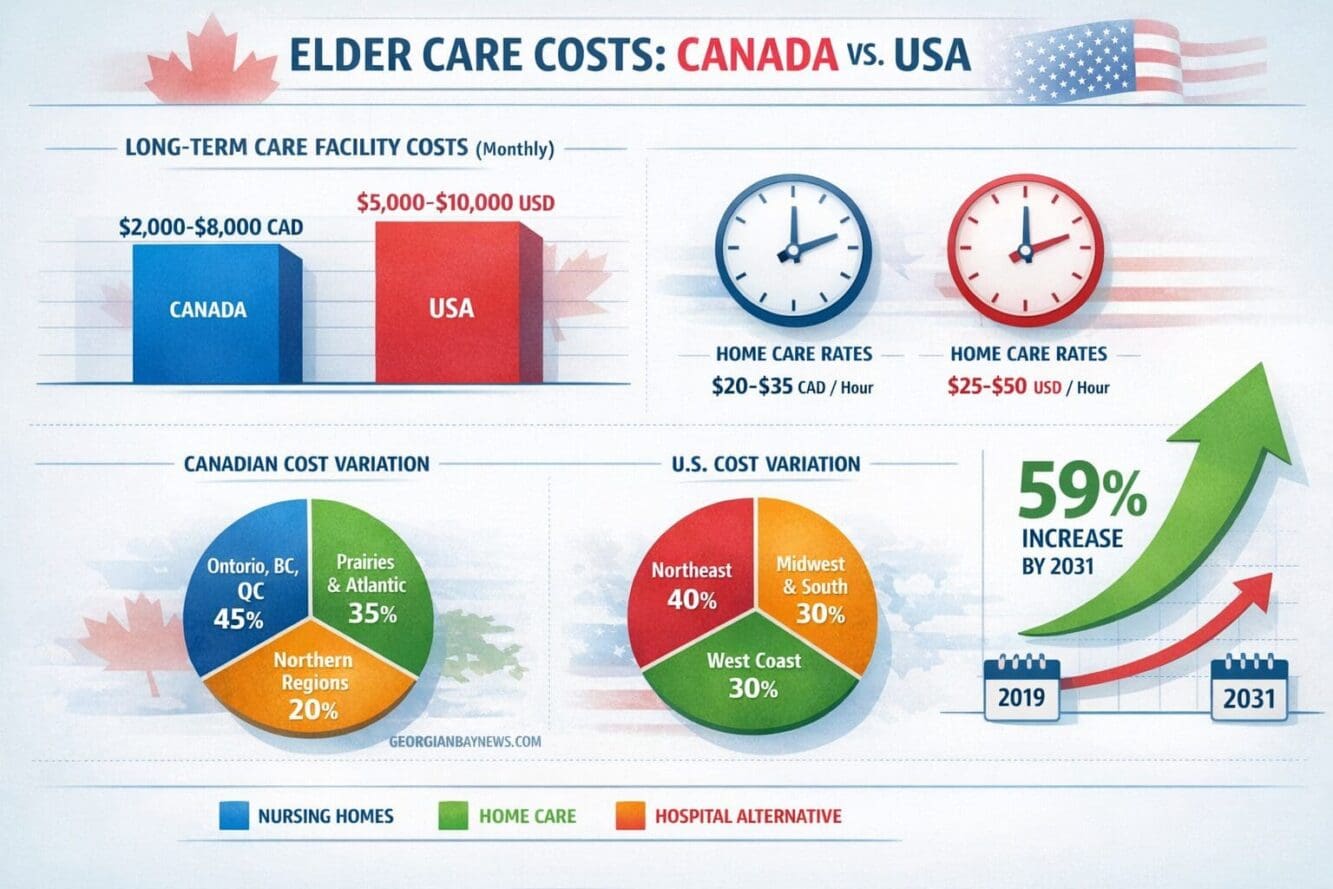
- Long-term care facilities vary dramatically: Canadian subsidized homes cost $1,300–$3,400 monthly, while private facilities exceed $6,000; U.S. nursing homes average significantly higher at $5,000–$10,000 monthly
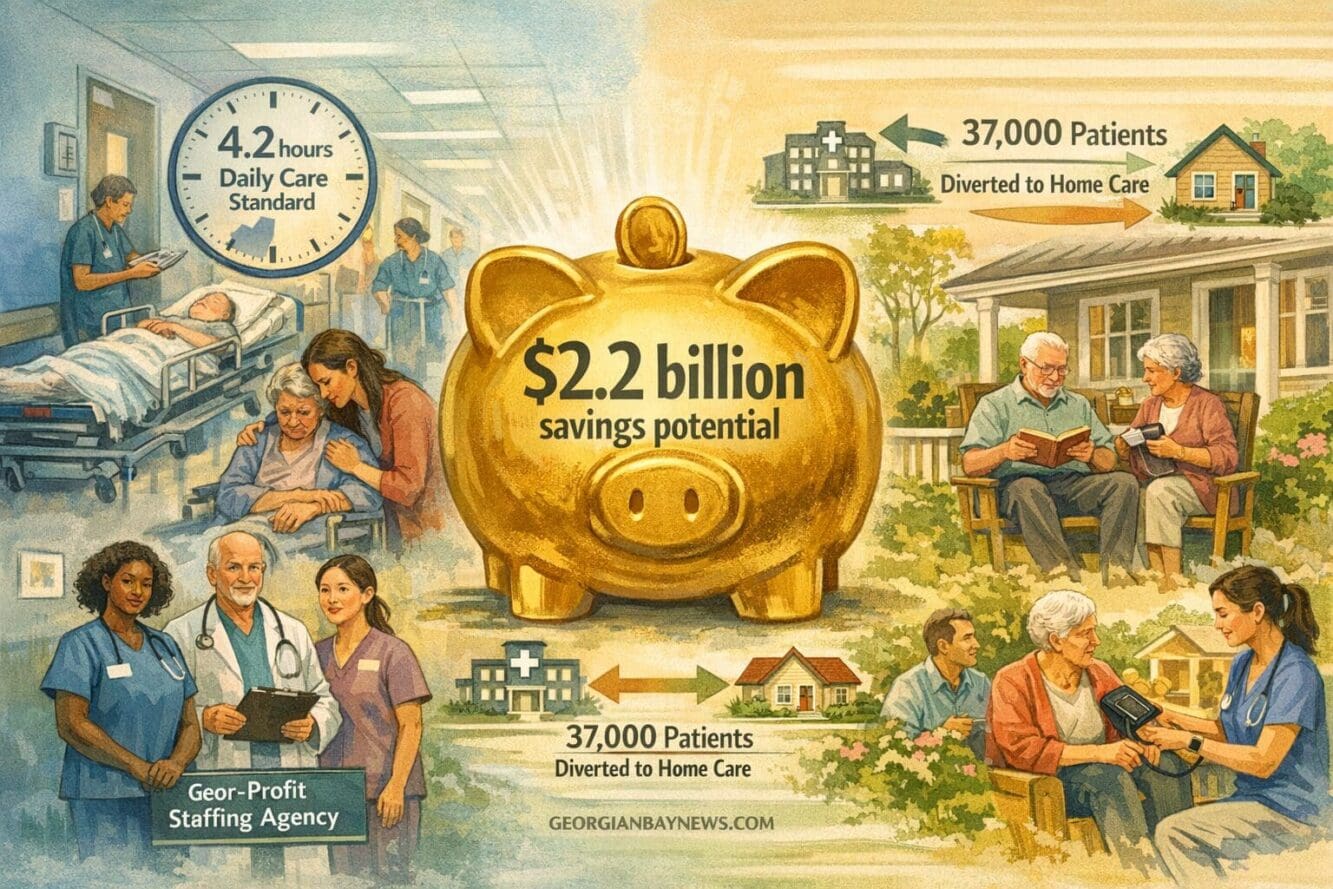
- Home care offers potential savings: Diverting 37,000 Canadians from institutional care to home care by 2031 could save the healthcare system $794 million annually[1]
- Demand is skyrocketing: Long-term care demand will increase from 380,000 patients in 2019 to 606,000 by 2031, while home care needs will rise to 1.8 million patients[1]
- Most families underestimate costs: Nearly half of Canadians believe home care costs under $1,100 monthly, when actual expenses significantly exceed this amount[3]
Understanding the Elder Care Landscape in North America
The cost for care and maintenance of our elderly population encompasses far more than simple nursing home bills. It includes a complex ecosystem of services: residential long-term care facilities, assisted living communities, home care support, medical equipment, medications, therapy services, and family caregiver time. Both Canada and the United States face similar demographic pressures, yet their approaches to funding and delivering elder care differ substantially.
The Demographic Time Bomb ⏰
North America’s population is aging faster than ever before. In Canada, seniors represent the fastest-growing demographic segment, with those aged 65 and older now comprising over 18% of the population. The United States mirrors this trend, with approximately 56 million Americans over 65 in 2026—a number expected to reach 73 million by 2030.
This demographic shift creates unprecedented demand. According to a comprehensive Deloitte study commissioned by the Canadian Medical Association, long-term care demand is projected to increase 59% from 380,000 patients in 2019 to 606,000 by 2031.[1] Meanwhile, home care demand will rise even more dramatically to 1.8 million patients by 2031, up from nearly 1.2 million—a 50% increase that challenges existing infrastructure.[1]
“We’re facing a perfect storm: more seniors needing care, fewer family caregivers available due to smaller family sizes, and costs rising faster than inflation. The system wasn’t built for this scale.” — Healthcare policy researcher, Canadian Medical Association
Provincial and State Variations Create Confusion
One of the most challenging aspects of understanding elder care costs involves navigating the patchwork of provincial and state systems. In Canada, healthcare falls under provincial jurisdiction, creating significant cost variations across the country.
Canadian Provincial Breakdown:
- Alberta: Nursing home care averages approximately $2,000 monthly for subsidized spaces[2]
- Ontario: Standardized maximum rates range from $2,000–$2,800 per month for long-term care homes, with accommodation type affecting final costs[2][3]
- Quebec: Public nursing homes cost approximately $2,000 monthly, while private options range from $5,000–$8,000[2][4]
- British Columbia: Subsidized care costs vary based on income assessment, with maximum rates around $3,400 monthly
In the United States, costs vary even more dramatically by state, with northeastern and western states typically charging premium rates while southern and midwestern states offer somewhat lower costs. However, even “affordable” U.S. nursing homes generally exceed Canadian private facility rates.
Breaking Down the Cost for Care and Maintenance of Our Elderly Population 💰
Understanding the true financial impact requires examining each care option separately. The choices families make profoundly affect both quality of life and financial sustainability.
Long-Term Care Facilities: The Traditional Option
Long-term care facilities—commonly called nursing homes—provide 24-hour supervised care for seniors who can no longer live independently. These facilities offer medical care, meals, personal care assistance, and social activities.
Canadian Long-Term Care Costs:
In Canada’s subsidized system, long-term care facilities cost $1,300–$3,400 per month depending on accommodation type (basic ward, semi-private, or private room) and province.[6] However, accessing these subsidized spaces often involves lengthy waiting lists—sometimes extending 2-3 years in urban centers.
Private long-term care facilities in Canada offer shorter wait times but dramatically higher costs, typically exceeding $6,000 per month and sometimes reaching $10,000 for premium facilities with enhanced amenities.[6] These private options appeal to families who cannot wait for subsidized spaces or desire higher staff-to-resident ratios and more personalized care.
American Nursing Home Costs:
The United States lacks Canada’s subsidized system, resulting in higher baseline costs. According to industry data, American nursing homes average $5,000–$10,000 monthly, with significant regional variation.[7] Premium facilities in major metropolitan areas can exceed $15,000 monthly.
Medicare provides limited nursing home coverage—only for short-term rehabilitative stays following hospitalization, not long-term custodial care. Medicaid covers long-term nursing home care for qualifying low-income seniors, but middle-class families often face devastating “spend-down” requirements, exhausting retirement savings before qualifying for assistance.
Home Care: The Growing Alternative
Home care allows seniors to age in place while receiving necessary support services. This option has gained popularity as both a quality-of-life preference and potential cost-saving measure.
Canadian Home Care Expenses:
In Canada, in-home care costs approximately $3,500–$5,550 per month for moderate care involving 22 hours of weekly support.[2][3][4] This typically includes personal support workers assisting with bathing, dressing, medication management, and light housekeeping.
For seniors requiring more intensive support, costs escalate quickly. Round-the-clock care can potentially reach $30,000 monthly, making it financially comparable to or exceeding private long-term care facilities.[2] Hourly rates for personal support workers reach $37 or more depending on province and service provider.[2][3]
OLDER VIDEO – Shocking cost today
Provincial home care programs provide some publicly funded services, but coverage varies dramatically. Some provinces offer generous nursing and personal care hours, while others provide minimal support, forcing families to supplement with private services. Many families discover that affordable housing challenges compound elder care difficulties, particularly when seniors live on fixed incomes.
American Home Care Costs:
American home care costs generally exceed Canadian rates, with hourly charges ranging from $25–$50 for basic personal care and $50–$100+ for skilled nursing services. A senior requiring 40 hours of weekly assistance might face $4,000–$8,000 in monthly expenses.
Medicare provides limited home healthcare coverage only for skilled services following hospitalization and under specific conditions. Long-term custodial home care remains largely a private expense unless families qualify for Medicaid waiver programs, which vary by state and often have lengthy waiting lists.
The Hidden Costs Families Often Miss
Beyond direct care expenses, families encounter numerous hidden costs:
- Home modifications: Installing grab bars, wheelchair ramps, stairlifts ($2,000–$15,000)
- Medical equipment: Walkers, wheelchairs, hospital beds ($500–$5,000)
- Transportation: Medical appointments, social activities ($200–$500 monthly)
- Medications: Prescriptions not covered by insurance ($100–$500 monthly)
- Adult day programs: Respite care and socialization ($50–$100 daily)
- Family caregiver opportunity costs: Lost wages, reduced work hours, career impacts
A recent study found that nearly half of Canadians underestimate home care costs, with survey respondents believing costs fall under $1,100 monthly when actual expenses significantly exceed this figure.[3] This dangerous misconception leaves families financially unprepared for the reality of elder care.
The Financial Impact on Families and Healthcare Systems
The escalating cost for care and maintenance of our elderly population creates ripple effects throughout society, affecting individual families, healthcare systems, and national economies.
Personal Financial Devastation
For many families, elder care costs represent the single largest expense of their lives—often exceeding mortgage payments or children’s education costs. Consider these real-world scenarios:
Case Study: The Johnson Family (Ontario)
Robert Johnson, 82, developed advanced dementia requiring 24-hour supervision. His daughter Sarah initially attempted home care, spending $6,500 monthly on personal support workers. After six months, the family’s savings depleted by $39,000, Sarah reduced her work hours (losing $1,200 monthly income), and family stress reached crisis levels. Transitioning Robert to a long-term care facility took 18 months on the waiting list. During that time, the family spent over $80,000 on care while waiting for a subsidized space.
Case Study: The Martinez Family (California)
Elena Martinez, 76, suffered a stroke requiring nursing home care. Her facility charged $8,500 monthly. Medicare covered only the first 20 days fully, then required $200 daily copayment for days 21-100. After 100 days, Medicare coverage ended entirely. Elena’s retirement savings of $180,000 lasted just 21 months before depletion. The family then faced Medicaid spend-down requirements, selling Elena’s home to qualify for coverage.
These stories repeat across North America daily. Middle-class families discover that decades of careful savings evaporate within months when confronting elder care costs.
System-Wide Healthcare Burden
The cost for care and maintenance of our elderly population strains entire healthcare systems. In Canada, total projected costs reach $490.6 billion over the next decade, with annual elder care expenses growing from $29.7 billion in 2019 to $58.5 billion annually by 2031—nearly doubling in a single decade.[1]
This explosive growth crowds out other healthcare priorities. Provincial governments struggle to balance elder care funding against acute care hospitals, mental health services, and preventive medicine. The competition for limited healthcare dollars intensifies as the senior population grows.
The Hospital Bed Crisis 🏥
One particularly costly problem involves “alternate level of care” (ALC) patients—seniors occupying expensive hospital beds while waiting for appropriate long-term care placements. These patients no longer require acute hospital services but cannot be safely discharged home and await nursing home availability.
Hospital beds cost healthcare systems approximately $1,000–$1,500 daily—far exceeding long-term care facility costs of $100–$200 daily. According to the Deloitte study, relocating hospital-waiting patients to appropriate care settings could generate an additional $1.4 billion in annual savings by 2031.[1]
This bed-blocking creates cascading problems: emergency departments become overcrowded, surgical procedures get delayed, and hospitals operate beyond capacity. The inefficiency costs both money and lives, yet solving it requires building adequate long-term care capacity—a massive infrastructure investment.
Policy Solutions and Potential Savings Opportunities
Addressing the cost for care and maintenance of our elderly population requires coordinated policy responses. Both Canadian and American jurisdictions are exploring innovative approaches to manage costs while improving care quality.
The Home Care Diversion Strategy
Research consistently shows that many seniors currently in long-term care facilities could safely live at home with adequate support services. This creates significant savings potential.
The Deloitte study found that diverting 37,000 Canadians from long-term care to home care by 2031 could save the healthcare system an estimated $794 million annually if current downward trends in institutional care use can be sustained.[1] This calculation assumes home care costs approximately 60-70% of institutional care costs for comparable needs.
However, realizing these savings requires substantial upfront investment in home care infrastructure:
- Expanding publicly funded home care hours
- Training and recruiting personal support workers
- Implementing technology-enabled remote monitoring
- Providing family caregiver supports and respite services
- Modifying housing stock for accessibility
Increasing Care Standards and Staffing
The COVID-19 pandemic exposed dangerous understaffing in long-term care facilities, particularly in for-profit homes. The Canadian Council of Policy Alternatives’ Alternative Federal Budget 2026 proposes $18.1 billion over three years to expand direct care hours to a minimum of 4.2 hours daily, compared to the current average of 3 hours daily across the country.[5]
This proposal recognizes that quality care requires adequate staffing ratios. Underfunded facilities cut corners on staffing, resulting in poor outcomes: pressure ulcers, malnutrition, medication errors, and preventable hospitalizations. While increasing staffing raises short-term costs, it potentially reduces expensive complications and hospital transfers.
The Alternative Federal Budget also proposes phasing out for-profit staffing agencies in long-term care and establishing a central non-profit agency for staff recruitment.[5] Private staffing agencies charge premium rates while paying workers less than direct employment, creating inefficiency. A coordinated recruitment approach could reduce costs while improving worker compensation and retention.
Supporting Family Caregivers 👨👩👧👦
Family members provide the vast majority of elder care in North America—an estimated 8 million Canadians and 53 million Americans serve as unpaid caregivers. This invisible workforce saves healthcare systems billions annually but often at tremendous personal cost.
Policy proposals to support family caregivers include:
- Expanding the Canada Caregiver Credit for those providing care to dependents over age 65[5]
- Creating paid family caregiver leave programs
- Offering caregiver training and education
- Providing respite care services
- Establishing caregiver support networks
The CCPA proposes $9 million annually to double Health Canada’s grant to Health Workforce Canada to address recruitment and retention crises in seniors’ care.[5] Attracting workers to elder care requires competitive wages, manageable workloads, and career advancement opportunities—investments that pay dividends through reduced turnover and improved care quality.
Technology and Innovation 💻
Emerging technologies offer potential cost savings while enhancing care quality:
- Remote monitoring systems: Sensors detecting falls, medication adherence, vital signs
- Telehealth consultations: Reducing transportation costs and enabling specialist access
- AI-powered care coordination: Optimizing scheduling and resource allocation
- Robotic assistance: Supporting mobility and reducing injury risk
While technology requires upfront investment, it can extend the period seniors safely live at home, delaying expensive institutional care. However, technology cannot replace human connection and compassionate care—it should augment, not replace, human caregivers. Those interested in healthcare innovation might explore AI tools transforming elder care delivery.
Comparing Canadian and American Approaches
The fundamental difference between Canadian and American elder care systems lies in their philosophical approach: Canada’s single-payer healthcare system extends (imperfectly) to elder care through subsidized long-term care and some home care coverage, while America’s market-based system leaves most elder care costs to individuals and families.
Canadian System Strengths and Weaknesses
Strengths:
- Subsidized long-term care spaces offer affordability for qualifying seniors
- Universal healthcare covers medical aspects of elder care
- Provincial home care programs provide some publicly funded services
- No risk of medical bankruptcy from acute care needs
Weaknesses:
- Lengthy waiting lists for subsidized long-term care (often 1-3 years)
- Limited publicly funded home care hours force private supplementation
- Significant provincial variation creates inequality
- Underfunding leads to staffing shortages and quality concerns
- Means-testing can penalize middle-class savers
American System Strengths and Weaknesses
Strengths:
- Greater facility availability reduces waiting times
- Market competition can drive quality improvements
- More options for specialized care needs
- Veterans Affairs provides benefits for qualifying veterans
Weaknesses:
- Prohibitively expensive for many families
- Medicare doesn’t cover long-term custodial care
- Medicaid requires impoverishment through spend-down
- Lack of price transparency complicates planning
- Significant disparities based on income and geography
- Medical bankruptcy risk remains high
Neither system adequately addresses the escalating cost for care and maintenance of our elderly population. Canada offers more financial protection but struggles with capacity and quality issues. America provides more immediate access for those who can afford it but leaves many families financially devastated.
Some policy analysts have even explored whether closer integration between Canadian and American healthcare systems might occur, though discussions around concepts like Canada as the 51st U.S. state remain largely theoretical and controversial.
Planning Strategies for Families 📋
Given the high costs and system limitations, families must proactively plan for elder care needs. Waiting until crisis strikes leaves families with limited options and maximum stress.
Start Conversations Early
The most important step involves having honest family discussions about elder care preferences, financial resources, and expectations. These conversations should occur while parents remain healthy and cognitively intact—ideally in their 60s or early 70s.
Key discussion topics include:
- Care preferences (home vs. facility)
- Financial resources (savings, pensions, property)
- Legal documents (power of attorney, advance directives)
- Family roles and responsibilities
- Geographic considerations
Financial Planning Approaches
For Canadians:
- Maximize TFSA and RRSP contributions to build tax-advantaged savings
- Consider long-term care insurance while still healthy and premiums remain affordable[8]
- Explore government benefits: Old Age Security, Guaranteed Income Supplement, provincial supplements
- Understand provincial programs: Home care eligibility, long-term care application processes
- Plan for waiting periods: Build emergency funds covering 1-3 years of private care
For Americans:
- Purchase long-term care insurance in your 50s or early 60s before health issues develop
- Maximize retirement accounts (401k, IRA) with elder care costs in mind
- Understand Medicare limitations: It does NOT cover long-term custodial care
- Research Medicaid planning: Consult elder law attorneys about asset protection strategies
- Consider hybrid life insurance/LTC policies combining death benefits with care coverage
Long-Term Care Insurance Considerations
Long-term care insurance can provide crucial financial protection, but policies vary dramatically in coverage, cost, and reliability. As costs of aging mount, long-term care insurance could be a financial lifeline for middle-class families.[8]
Key policy features to evaluate:
- Daily benefit amount: $150–$300+ daily coverage
- Benefit period: 2-5 years or lifetime coverage
- Elimination period: 30-90 day waiting period before benefits begin
- Inflation protection: Essential for policies purchased decades before use
- Coverage settings: Home care, assisted living, nursing homes
- Premium guarantees: Can premiums increase over time?
Purchase timing matters significantly. Buying in your 50s means lower premiums but paying longer before potential use. Buying in your 70s means higher premiums and possible health-based denial. Most experts recommend purchasing between ages 55-65 as the optimal window.
However, long-term care insurance isn’t suitable for everyone. Very low-income individuals will qualify for Medicaid regardless, while very wealthy individuals can self-insure. The middle class faces the greatest risk and potential benefit from coverage.
The Human Cost Beyond Dollars 💔
While this article focuses on financial aspects of the cost for care and maintenance of our elderly population, the human cost deserves recognition. Behind every statistic lives a person with dignity, history, and relationships.
Caregiver Burnout
Family caregivers experience extraordinary stress, with studies showing elevated rates of depression, anxiety, and physical health problems compared to non-caregivers. The demands of caregiving—often combined with employment and raising children—create a “sandwich generation” squeezed from multiple directions.
Maria, a 52-year-old from Atlantic Canada, describes her experience: “I work full-time, have teenagers at home, and spend 20 hours weekly caring for my mother who has Alzheimer’s. I’m exhausted constantly. I’ve gained 30 pounds, stopped exercising, and can’t remember the last time I saw friends. I love my mother, but this isn’t sustainable.”
Stories like Maria’s repeat millions of times across North America. Without adequate support systems, family caregivers sacrifice their own health, careers, and well-being.
Quality of Life in Care Settings
The quality of elder care varies dramatically between facilities and providers. Well-staffed, adequately funded homes provide compassionate care, engaging activities, and dignity-preserving support. Understaffed, profit-maximizing facilities warehouse seniors with minimal interaction and poor outcomes.
The COVID-19 pandemic tragically highlighted these disparities. Long-term care facilities accounted for a disproportionate share of deaths, with for-profit homes experiencing worse outcomes than non-profit and public facilities in many jurisdictions. Staffing levels, infection control practices, and physical infrastructure all influenced survival rates.
Seniors and families deserve care settings that honor dignity, provide meaningful engagement, and deliver competent medical support—not merely warehousing until death. Achieving this standard requires adequate funding, strong regulation, and societal commitment to valuing elder care work.
Social Isolation and Mental Health
Elder care costs intersect with broader social challenges. Financial constraints limit seniors’ ability to maintain social connections, participate in community activities, and access mental health support. Depression and anxiety rates among seniors have increased, particularly following pandemic isolation.
Community-based programs—senior centers, adult day programs, volunteer visitor services—provide crucial social connection but often operate on shoestring budgets. Investment in these preventive services could delay care needs and improve quality of life, yet they’re frequently first on the chopping block during budget cuts.
International Perspectives and Lessons 🌍
While this article focuses on Canada and the United States, examining international approaches offers valuable insights. Several countries have developed innovative elder care models worth considering.
The Nordic Model
Countries like Denmark, Sweden, and Norway invest heavily in elder care through high taxation. They emphasize aging in place with generous home care services, accessible housing modifications, and comprehensive support networks. Long-term care facilities maintain high staffing ratios and strong quality standards.
The trade-off involves significantly higher taxes—often 50%+ marginal rates—but citizens receive comprehensive cradle-to-grave social services. This approach reflects different cultural values around collective responsibility versus individual choice.
The Japanese Approach
Japan faces the world’s oldest population, with innovative responses including:
- Mandatory long-term care insurance for all citizens over 40
- Emphasis on community-based care and multi-generational housing
- Investment in robotics and technology to address caregiver shortages
- Cultural respect for elders integrated into care models
While not directly transferable to North American contexts, Japan demonstrates that societies can adapt to demographic aging through coordinated policy responses.
The German System
Germany implemented mandatory long-term care insurance in 1995, funded through payroll deductions. All citizens contribute regardless of age, creating a large risk pool. Benefits provide cash payments or services based on assessed need levels.
This universal approach avoids means-testing stigma while spreading costs across the entire population. However, benefits haven’t kept pace with rising costs, requiring supplementation with private savings or insurance.
Looking Ahead: The Next Decade of Elder Care 🔮
The cost for care and maintenance of our elderly population will continue escalating through 2031 and beyond as baby boomers age. Without significant policy changes, current trajectories point toward crisis.
Projected Scenarios
Optimistic Scenario:
Governments implement comprehensive reforms including expanded home care funding, improved long-term care standards, family caregiver supports, and technology integration. The shift toward home care accelerates, realizing projected savings. Quality improves while cost growth moderates. This requires political will and sustained investment.
Status Quo Scenario:
Incremental changes occur but fail to match demand growth. Waiting lists lengthen, family burden increases, and quality concerns persist. Costs continue doubling every decade, consuming growing shares of healthcare budgets and family savings. Middle-class families face the greatest squeeze.
Pessimistic Scenario:
Austerity measures cut elder care funding despite rising demand. Quality deteriorates further, preventable deaths increase, and families face impossible choices between financial ruin and abandoning loved ones. Social cohesion frays as generational tensions over resource allocation intensify.
The Role of Advocacy and Civic Engagement
Which scenario unfolds depends partly on civic engagement and advocacy. Elder care reform requires sustained political pressure from affected families, healthcare workers, and concerned citizens.
Effective advocacy strategies include:
- Contacting elected representatives about elder care priorities
- Supporting organizations advocating for seniors’ rights
- Sharing personal stories to humanize statistics
- Participating in public consultations on healthcare policy
- Voting for candidates prioritizing elder care funding
World leaders increasingly recognize demographic aging as a critical policy challenge, but translating recognition into action requires public pressure and political courage.
Building Age-Friendly Communities
Beyond healthcare system reforms, communities can take action to support aging populations:
- Housing: Developing accessible, affordable senior housing options
- Transportation: Providing accessible public transit and specialized services
- Social programs: Creating senior centers, volunteer programs, and intergenerational activities
- Urban planning: Designing walkable neighborhoods with accessible amenities
- Employment: Supporting older workers who wish to remain employed
Communities pursuing age-friendly recognition demonstrate that local action complements system-level reforms.
Conclusion: Taking Action in an Uncertain Future
The cost for care and maintenance of our elderly population represents one of the defining challenges of our generation. With demand projected to increase 59% by 2031 and costs potentially reaching $58.5 billion annually in Canada alone, the status quo proves unsustainable.[1]
Yet within this challenge lies opportunity. By shifting resources toward home care, improving long-term care standards, supporting family caregivers, and embracing innovation, North American societies can meet this challenge while honoring the dignity of aging citizens.
The path forward requires action at multiple levels:
For Individuals and Families:
✅ Start planning now: Don’t wait for crisis to consider elder care needs
✅ Have honest conversations: Discuss preferences, resources, and expectations with family
✅ Explore insurance options: Research long-term care coverage while healthy
✅ Build financial reserves: Save specifically for potential elder care costs
✅ Document wishes: Complete power of attorney and advance directive documents
✅ Research local resources: Understand available programs and services in your area
For Healthcare Professionals:
✅ Advocate for system improvements: Use professional expertise to inform policy debates
✅ Support care innovation: Embrace technologies and approaches improving efficiency
✅ Prioritize quality: Maintain high standards despite resource constraints
✅ Educate patients: Help families understand options and plan proactively
For Policymakers:
✅ Invest in home care infrastructure: Realize potential savings through care diversion
✅ Improve long-term care standards: Implement minimum staffing ratios and quality measures
✅ Support family caregivers: Provide financial assistance, training, and respite services
✅ Address workforce challenges: Improve compensation and working conditions for care workers
✅ Plan for demographic reality: Make elder care funding a budget priority
For Communities:
✅ Develop age-friendly initiatives: Create welcoming, accessible environments for seniors
✅ Build social connections: Reduce isolation through programs and volunteer services
✅ Support local care providers: Recognize and value elder care workers
✅ Advocate collectively: Organize community voices for system improvements
The aging of North America’s population is inevitable. How societies respond—whether with compassion and foresight or neglect and crisis management—remains a choice. The decisions made in 2026 will shape elder care for decades to come.
Every senior deserves care that honors their dignity, maintains their quality of life, and recognizes their contributions to society. Every family deserves protection from financial devastation when providing or arranging that care. Achieving these goals requires confronting uncomfortable truths about current systems, making difficult resource allocation decisions, and committing to sustained reform.
The cost for care and maintenance of our elderly population isn’t merely a financial challenge—it’s a moral test of societal values. How we care for our most vulnerable members reveals who we are as communities and nations. The time for action is now, before demographic pressures overwhelm systems already strained to breaking.
By working together—families, healthcare providers, policymakers, and communities—North Americans can build elder care systems worthy of the seniors who built the societies we enjoy today. The path forward demands courage, investment, and compassion, but the alternative—abandoning our elders to inadequate care and financial ruin—is simply unacceptable.
References
[1] New Study Cost And Demand Elder Care Double Next 10 Years – https://www.cma.ca/about-us/what-we-do/press-room/new-study-cost-and-demand-elder-care-double-next-10-years
[2] What Will It Cost To Age In Place – https://invested.mdm.ca/what-will-it-cost-to-age-in-place/
[3] Healthcare Costs In Canada Planning For Inflation Adjusted Care 2 – https://pietracupa.ca/healthcare-costs-in-canada-planning-for-inflation-adjusted-care-2/
[4] Older Canadians Savings Long Term Care – https://carleton.ca/news/story/older-canadians-savings-long-term-care/
[5] Alternative Federal Budget 2026 Seniors And Long Term Care – https://www.policyalternatives.ca/news-research/alternative-federal-budget-2026-seniors-and-long-term-care/
[6] How Much Does Long Term Care Cost – https://www.fairstone.ca/en/learn/budgeting-and-saving/how-much-does-long-term-care-cost
[7] Paying For Nursing Homes In The Us – https://normspier828307.substack.com/p/paying-for-nursing-homes-in-the-us
[8] As Costs Of Ageing Mount Long Term Care Insurance Could Be A Financial Lifeline – https://niageing.ca/media-releases/as-costs-of-ageing-mount-long-term-care-insurance-could-be-a-financial-lifeline/
Some content and illustrations on GEORGIANBAYNEWS.COM are created with the assistance of AI tools.
GEORGIANBAYNEWS.COM shares video content from YouTube creators under fair use principles. We respect creators’ intellectual property and include direct links to their original videos, channels, and social media platforms whenever we feature their content. This practice supports creators by driving traffic to their platforms.