




















The Great History of the Collingwood Ship Yards: A Canadian Maritime Legacy
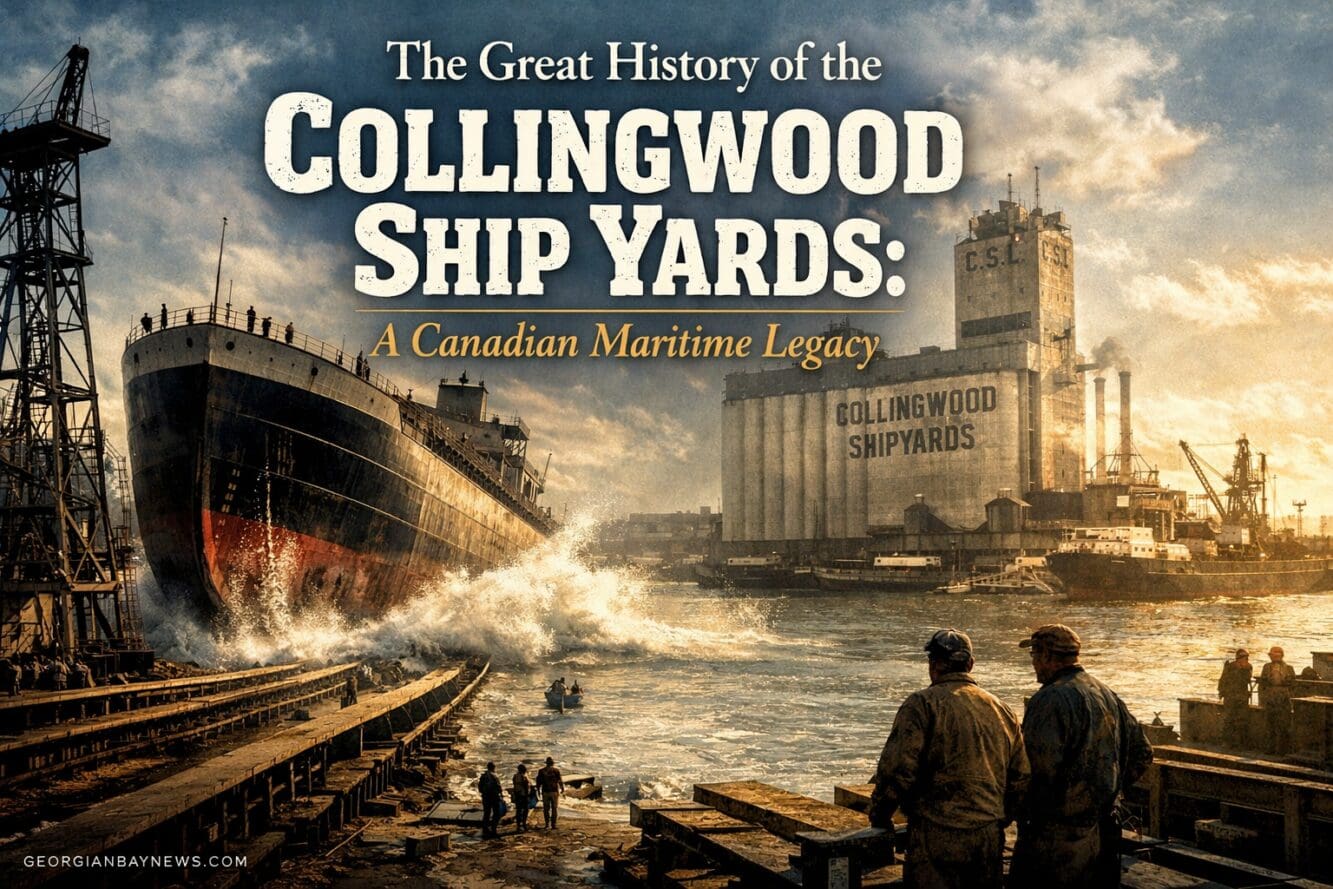
Imagine standing on the shores of Georgian Bay in 1901, watching as skilled craftsmen hammer steel plates into shape, building vessels that would dominate the Great Lakes for generations.
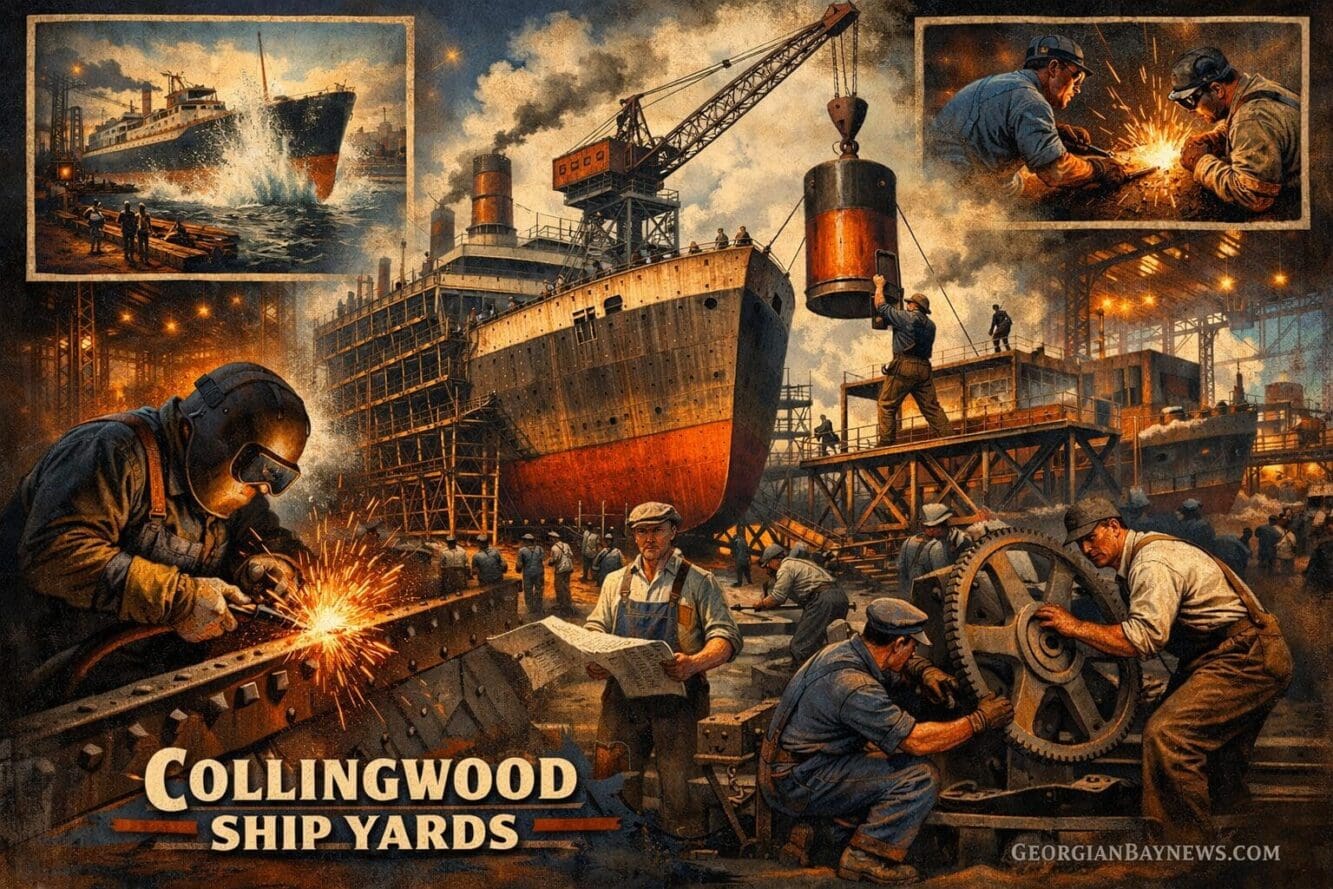
The Collingwood Ship Yards wasn’t just a workplace – it was the beating heart of a community, a symbol of Canadian industrial might, and a cornerstone of our nation’s maritime heritage. For nearly eight decades, this remarkable facility transformed a small Ontario town into one of North America’s premier shipbuilding centers, launching everything from elegant passenger steamers to battle-ready warships that helped secure Allied victory in two world wars.
Key Takeaways
- 🚢 The Collingwood Ship Yards operated from 1901 to 1986, building over 200 vessels including commercial freighters, passenger ships, and military vessels
- ⚓ During both World Wars, the shipyard became a critical defense contractor, constructing corvettes, minesweepers, and other naval vessels for Canada’s war effort
- 🏭 At its peak, the facility employed over 3,000 workers and was one of the largest employers in the Georgian Bay region
- 🇨🇦 The shipyard’s legacy continues to shape Collingwood’s identity as a maritime community, with museums and cultural institutions preserving this important chapter of Canadian history
- 📚 The closure in 1986 marked the end of an era but sparked renewed interest in heritage preservation and community storytelling
The Birth of a Shipbuilding Giant
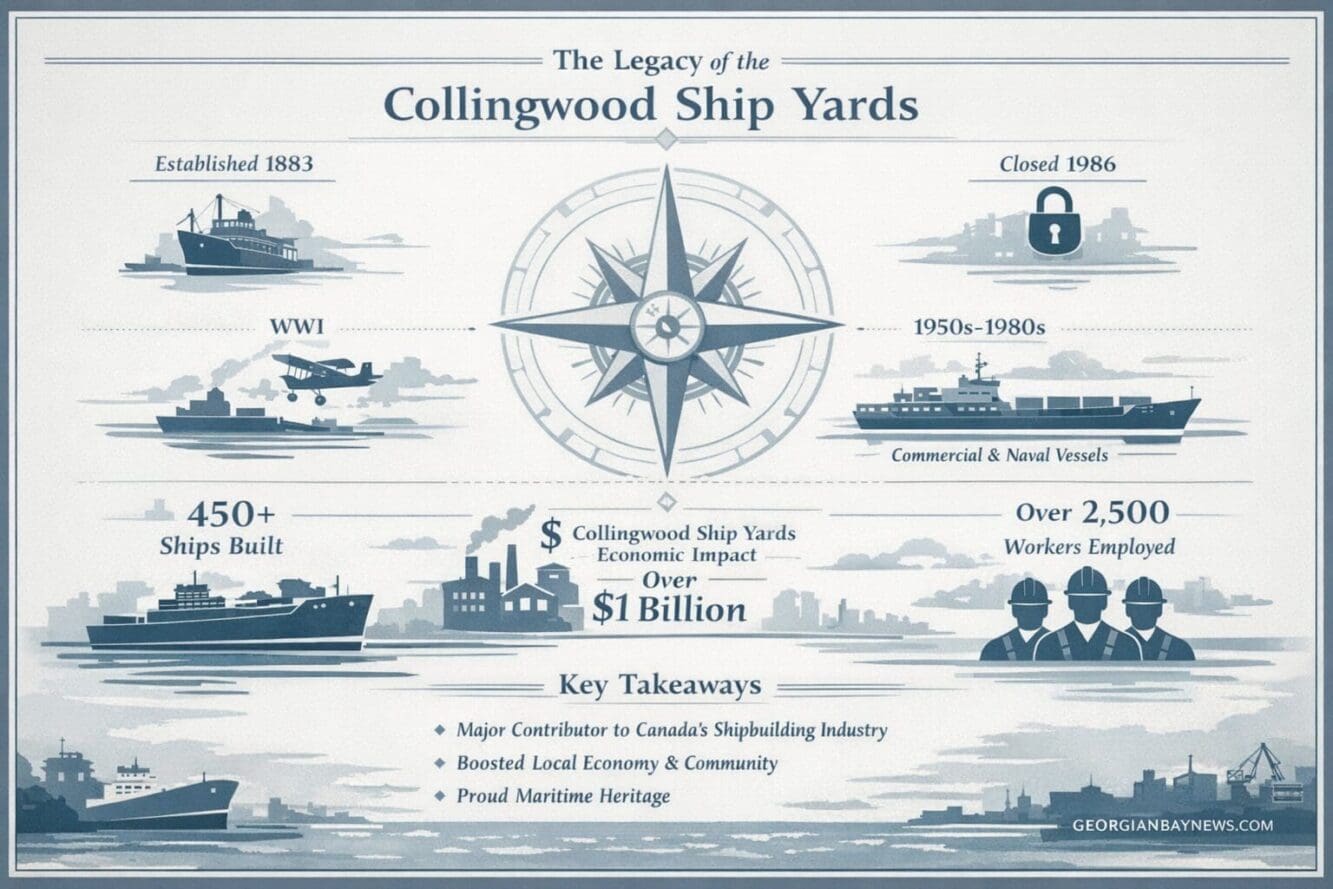
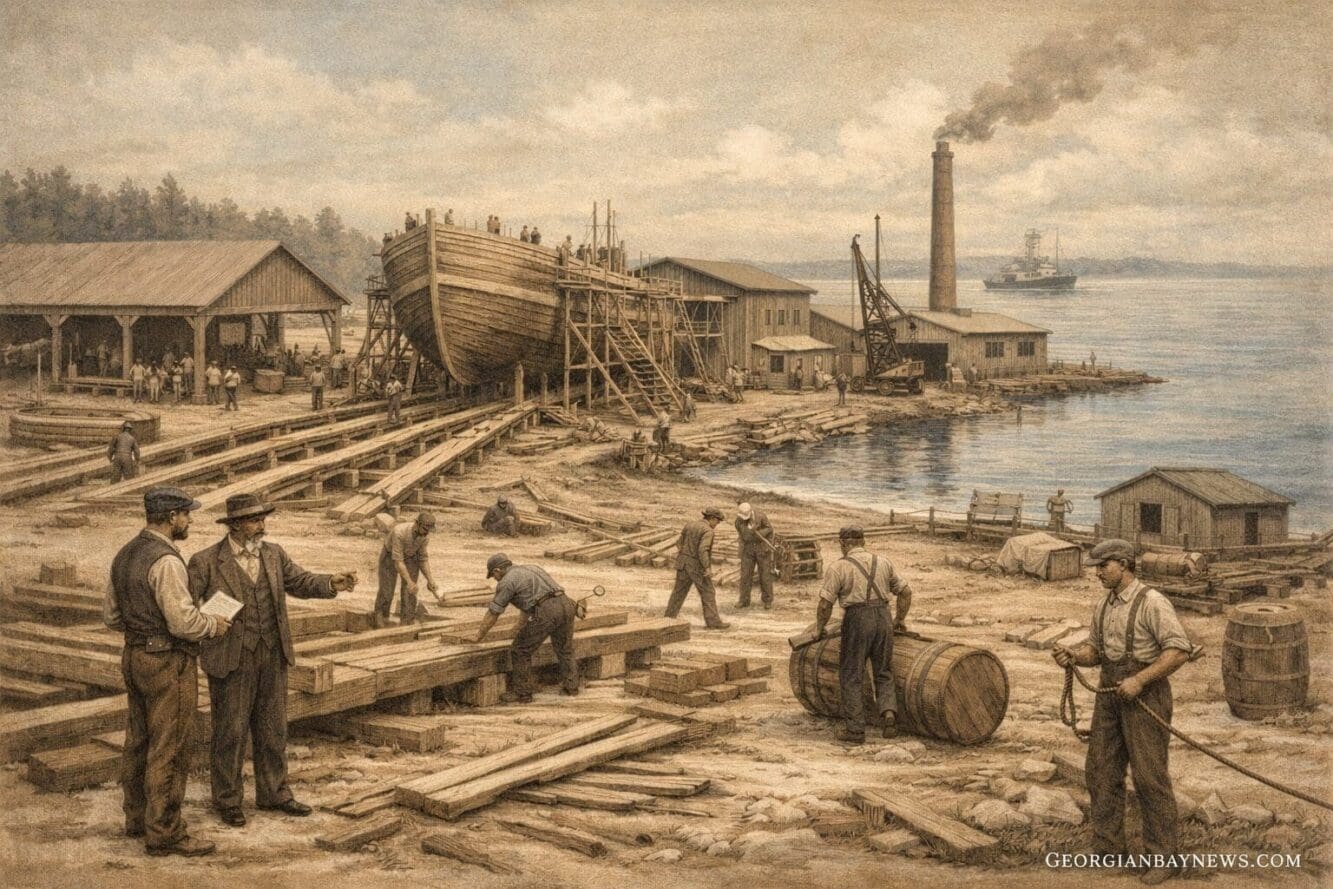
The story of the Collingwood Ship Yards begins at the dawn of the 20th century, when visionary entrepreneurs recognized the strategic importance of Georgian Bay’s deep harbor. In 1901, the Collingwood Shipbuilding Company was formally established, inheriting a maritime tradition that dated back to the 1880s when smaller boat-building operations dotted the waterfront.
Location was everything. Collingwood’s natural harbor provided sheltered waters perfect for launching massive vessels, while the town’s railway connections ensured steady supplies of steel, timber, and equipment. The Great Lakes shipping industry was booming, and the demand for reliable cargo vessels seemed limitless.
Early Innovations and Growth
The shipyard’s early years focused on constructing bulk carriers and package freighters—the workhorses of Great Lakes commerce. These vessels transported grain, coal, iron ore, and manufactured goods between Canadian and American ports, forming the economic backbone of the region.
What set Collingwood apart was its commitment to innovation. The facility invested heavily in modern equipment, including:
- Steam-powered cranes capable of lifting massive steel plates
- Precision welding equipment that replaced traditional riveting
- Dry docks that could accommodate vessels over 600 feet long
- Advanced design studios where naval architects planned increasingly sophisticated ships
By 1910, the Collingwood Ship Yards had earned a reputation for quality craftsmanship and on-time delivery. Ship owners from across North America placed orders, confident that Collingwood-built vessels would withstand the notorious storms of the Great Lakes.
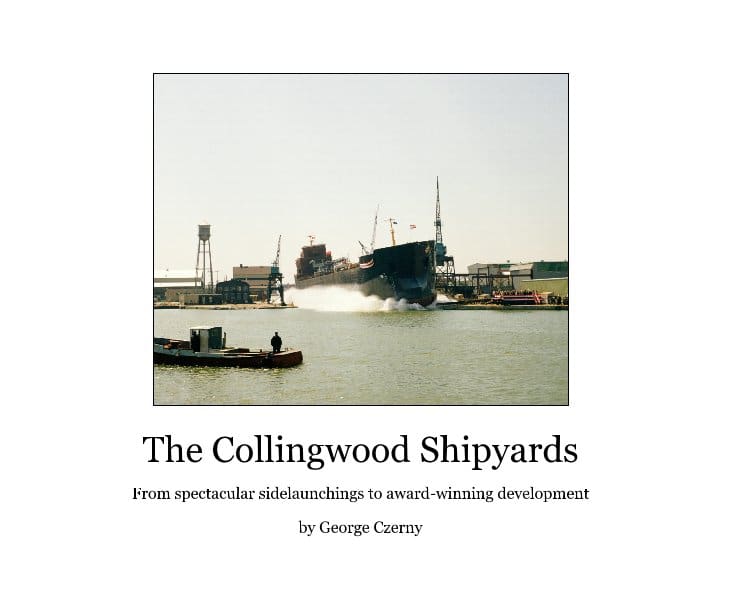
The Collingwood Shipyards, by Canadian writer-photographer, George Czerny, (also known as George Czerny-Holownia) tells the story of this industry which was the economic backbone of Collingwood and district for 103 years. This book also explains the unique sidelaunching method used at this Georgian Bay shipyards which closed in 1986. The author wants this 48-page book to stand as a tribute to the women and men who worked at the Collingwood Shipyards. He goes on to tell about the transition of the former shipyards property to the award-winning residential development which is happening at this downtown Collingwood (Ontario) waterfront property. Collingwood’s “Walk of History” is also mentioned because of its proximity to the former shipyards property and the fact that memorial plaques, which carry the names of Collingwood-built ships, are embedded in a sidewalk which parallels Heritage Drive. The Collingwood Shipyards book features 67 photographs, many in colour, which can never be taken again, including historic, sequential photographs of sidelaunchings. The book, which features technical information and diagrams, also has aerial views of the shipyards; as that area of Collingwood harbour looked back then and now.
To purchase the book CLICK HERE
The Golden Age: 1920s-1940s
The interwar period marked the Collingwood Ship Yards’ golden age. The facility expanded dramatically, adding new construction bays, warehouses, and worker facilities. The workforce grew from a few hundred to several thousand, transforming Collingwood into a true company town where nearly every family had someone working at the yards.
Passenger Ships and Luxury Vessels
While cargo ships remained the bread and butter, the 1920s and 1930s saw Collingwood build elegant passenger steamers that offered luxurious Great Lakes cruises. These floating palaces featured ornate dining rooms, spacious staterooms, and polished brass fittings—a far cry from the utilitarian bulk carriers.
One worker’s grandson later recalled: “My grandfather used to tell stories about building the passenger ships. He said they’d install mahogany paneling and crystal chandeliers. It was like constructing a hotel that could sail.”
The War Years: Canada’s Arsenal of Democracy
When World War II erupted in 1939, the Collingwood Ship Yards underwent a dramatic transformation. The facility became a vital defense contractor, pivoting from commercial vessels to military production. The Canadian government designated Collingwood as a primary builder of:
- Corvettes – small, agile warships designed for convoy escort duty
- Minesweepers – specialized vessels that cleared naval mines from shipping lanes
- Frigates – larger combat ships for anti-submarine warfare
- Landing craft – essential for amphibious operations
The shipyard operated around the clock, with three shifts working seven days a week. Women joined the workforce in unprecedented numbers, mastering welding, riveting, and other skilled trades traditionally reserved for men. The community rallied behind the war effort, with local organizations supporting workers and their families.
Between 1939 and 1945, Collingwood launched dozens of warships that served with distinction in the Battle of the Atlantic and other theaters. These vessels helped protect vital supply convoys, hunt German U-boats, and support D-Day landings.
Post-War Prosperity and Challenges
The end of World War II brought both opportunity and uncertainty. Military contracts dried up overnight, forcing the Collingwood Ship Yards to pivot back to commercial production. Fortunately, the post-war economic boom created massive demand for new cargo vessels.
The Lakers Era
The 1950s and 1960s became known as the “Lakers era”—named after the massive Great Lakes bulk carriers that dominated production. These specialized ships, some stretching over 700 feet, were designed specifically for the unique challenges of Great Lakes navigation: shallow channels, narrow locks, and unpredictable weather.
Collingwood-built Lakers became legendary for their durability and efficiency. Many vessels launched in this era continued operating well into the 21st century, a testament to the shipyard’s engineering excellence.
Economic Headwinds
By the 1970s, however, storm clouds gathered. Several factors threatened the shipyard’s viability:
- Foreign competition from Asian and European shipbuilders offering lower prices
- Declining Great Lakes shipping as railroads and highways captured freight traffic
- Aging infrastructure that required massive capital investment
- Economic recessions that reduced demand for new vessels
- Changing trade patterns that favored ocean-going container ships
Despite efforts to modernize and diversify, the Collingwood Ship Yards struggled to compete in an increasingly global marketplace. The facility’s remote location, once an advantage, became a liability as shipping patterns shifted.
The Final Chapter and Lasting Legacy
In 1986, after 85 years of continuous operation, the Collingwood Ship Yards closed its gates for the final time. The announcement devastated the community, eliminating thousands of jobs and ending a defining chapter of local identity.
Preserving the Heritage
Rather than allowing this history to fade, Collingwood residents mobilized to preserve the shipyard’s legacy. The Collingwood Museum became a repository for artifacts, photographs, and oral histories. Former workers donated tools, blueprints, and personal memorabilia.
Today, visitors can explore exhibits featuring:
- Scale models of famous Collingwood-built vessels
- Original shipbuilding tools and equipment
- Photographs documenting daily life at the yards
- Personal stories from workers and their families
- Technical drawings showing the evolution of ship design
Community Impact in 2026
Nearly four decades after closure, the shipyard’s influence remains palpable. The waterfront area where ships once launched has been redeveloped, but historical markers and public art installations commemorate the site’s significance. Community events often incorporate maritime themes, celebrating this shared heritage.
Former shipyard workers and their descendants form a tight-knit community, gathering annually to share memories and honor colleagues who’ve passed. These reunions serve as living history lessons, connecting younger generations to their industrial roots.
Lessons from the Collingwood Ship Yards
The rise and fall of the Collingwood Ship Yards offers valuable insights for communities facing economic transitions:
Adaptability matters. The shipyard successfully pivoted from commercial to military production during wartime, demonstrating organizational flexibility.
Quality builds reputation. Collingwood-built vessels earned respect worldwide, creating a brand that outlasted the company itself.
Community investment pays dividends. The shipyard didn’t just employ workers—it supported schools, infrastructure, and civic institutions that strengthened the entire region.
Heritage preservation enriches communities. By documenting and celebrating this history, Collingwood has created tourism opportunities and strengthened local identity.
Economic diversification is essential. Over-reliance on a single industry left the community vulnerable when market conditions changed.
Collingwood’s Maritime Identity Today
While the shipyard itself is gone, Collingwood remains deeply connected to its maritime heritage. The town has successfully reinvented itself as a four-season resort destination, but shipbuilding history permeates the local culture.
Local leaders frequently reference the shipyard when discussing community values like craftsmanship, innovation, and resilience. Educational programs teach students about this industrial legacy, ensuring future generations understand their hometown’s contribution to Canadian history.
The Georgian Bay waterfront, once dominated by industrial cranes and steel hulls, now features parks, marinas, and cultural venues. Yet historical interpretive signs and preserved structures remind visitors of the thousands who once labored here, building vessels that connected communities across the Great Lakes.
Conclusion: Honoring the Past, Building the Future
The Collingwood Ship Yards represents more than industrial history—it embodies the spirit of Canadian innovation, the resilience of working-class communities, and the enduring importance of skilled craftsmanship. From its founding in 1901 through its closure in 1986, this remarkable facility launched over 200 vessels, employed generations of workers, and helped secure Allied victory in two world wars.
Take Action
Want to explore this fascinating history further? Here’s how:
- Visit the Collingwood Museum to see authentic artifacts and exhibits documenting the shipyard’s 85-year history
- Take a waterfront walking tour following the historical markers that identify former shipyard locations
- Connect with local historical societies that preserve oral histories and archival materials
- Share family stories if your relatives worked at the yards—these personal narratives are invaluable historical resources
- Support heritage preservation efforts through donations or volunteer work with community organizations
The ships may be gone, but the legacy of the Collingwood Ship Yards continues to inspire. In an era of rapid technological change and economic uncertainty, this story reminds us that communities built on craftsmanship, innovation, and mutual support can weather any storm—and emerge stronger on the other side.
Whether you’re a history enthusiast, a proud Canadian, or simply someone who appreciates stories of human achievement, the Collingwood Ship Yards saga offers lessons that resonate far beyond Georgian Bay’s shores. It’s a testament to what’s possible when vision, skill, and determination come together—and a reminder that our industrial heritage deserves celebration and preservation for generations to come.
Some content and illustrations on GEORGIANBAYNEWS.COM are created with the assistance of AI tools. Images are for illustrative purposes.
GEORGIANBAYNEWS.COM shares video content from YouTube creators under fair use principles. We respect creators’ intellectual property and include direct links to their original videos, channels, and social media platforms whenever we feature their content. This practice supports creators by driving traffic to their platforms.