





















The Impact of Climate Change on Canadian Agriculture: Extreme Weather, Food Security, and Adaptation Strategies for Farmers

Sharing is SO MUCH APPRECIATED!


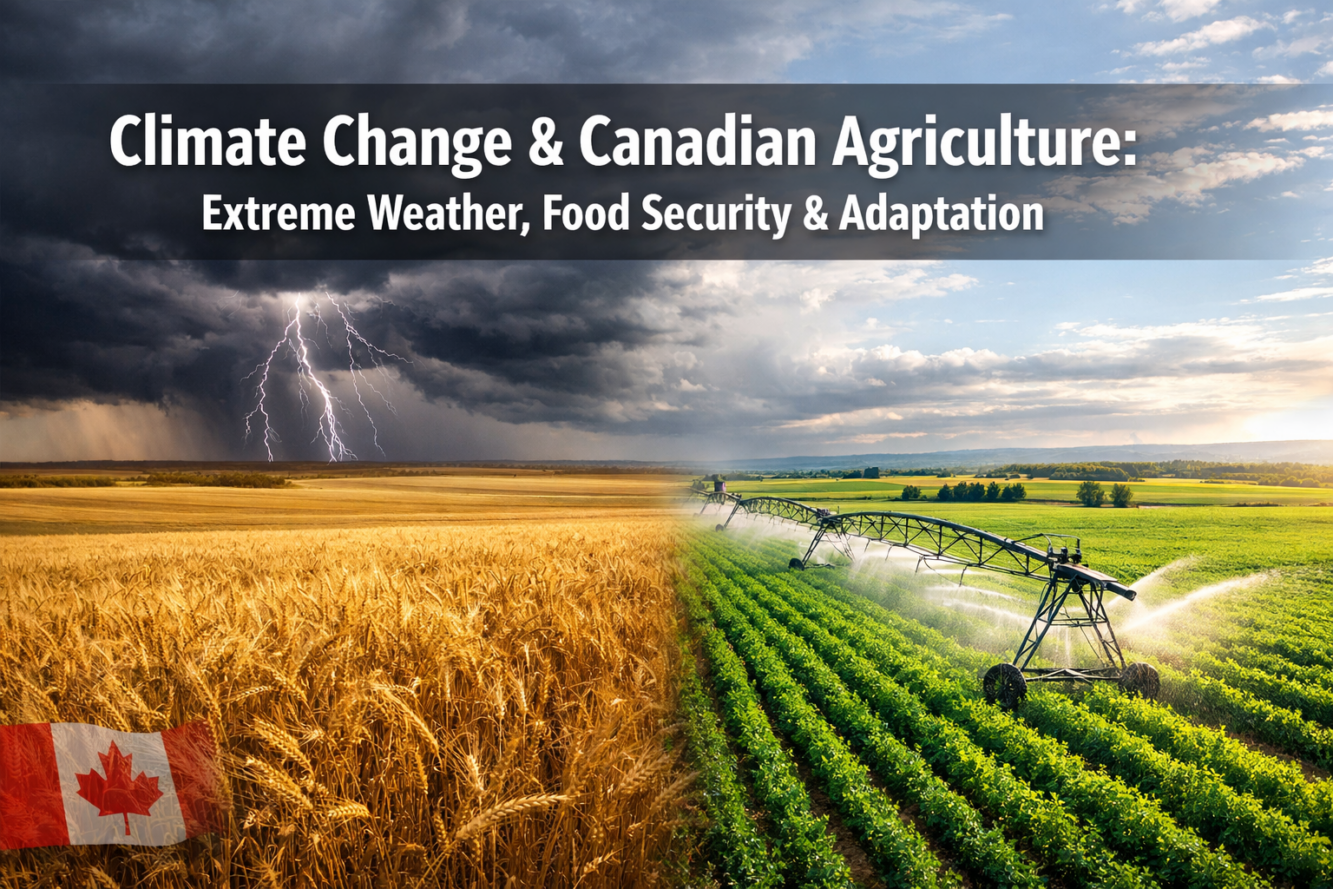
Canada’s breadbasket is under siege. From the drought-scorched prairies of Saskatchewan to the flood-ravaged fields of Ontario, the impact of climate change on Canadian agriculture: extreme weather, food security, and adaptation strategies for farmers has never been more urgent to understand. With 2026 forecast to be among the hottest years on record [1], and 75 percent of Canadian farmers viewing this season as riskier than the last [3], the country’s food system faces a defining challenge. How farmers, policymakers, and communities respond in the coming years will shape what ends up on dinner tables across the nation—and beyond.
Key Takeaways
- 🌡️ Canada is warming at twice the global rate, and 2026–2030 is projected to be the hottest five-year period ever recorded for the country [1][2].
- 📉 75% of Canadian farmers see 2026 as riskier than 2025, with low crop prices and rising costs creating a painful cost-price squeeze [3].
- 🌾 Food security is directly threatened as extreme weather disrupts planting, growing, and harvesting cycles.
- 🏛️ New federal proposals, including a Canadian Farm Resilience Agency and reformed risk management programs, aim to support adaptation [4].
- 🌱 Farmers are adopting innovative strategies such as diversified crop rotations, soil health practices, and climate-smart technologies to build resilience.
Understanding the Climate Crisis Facing Canadian Farms in 2026
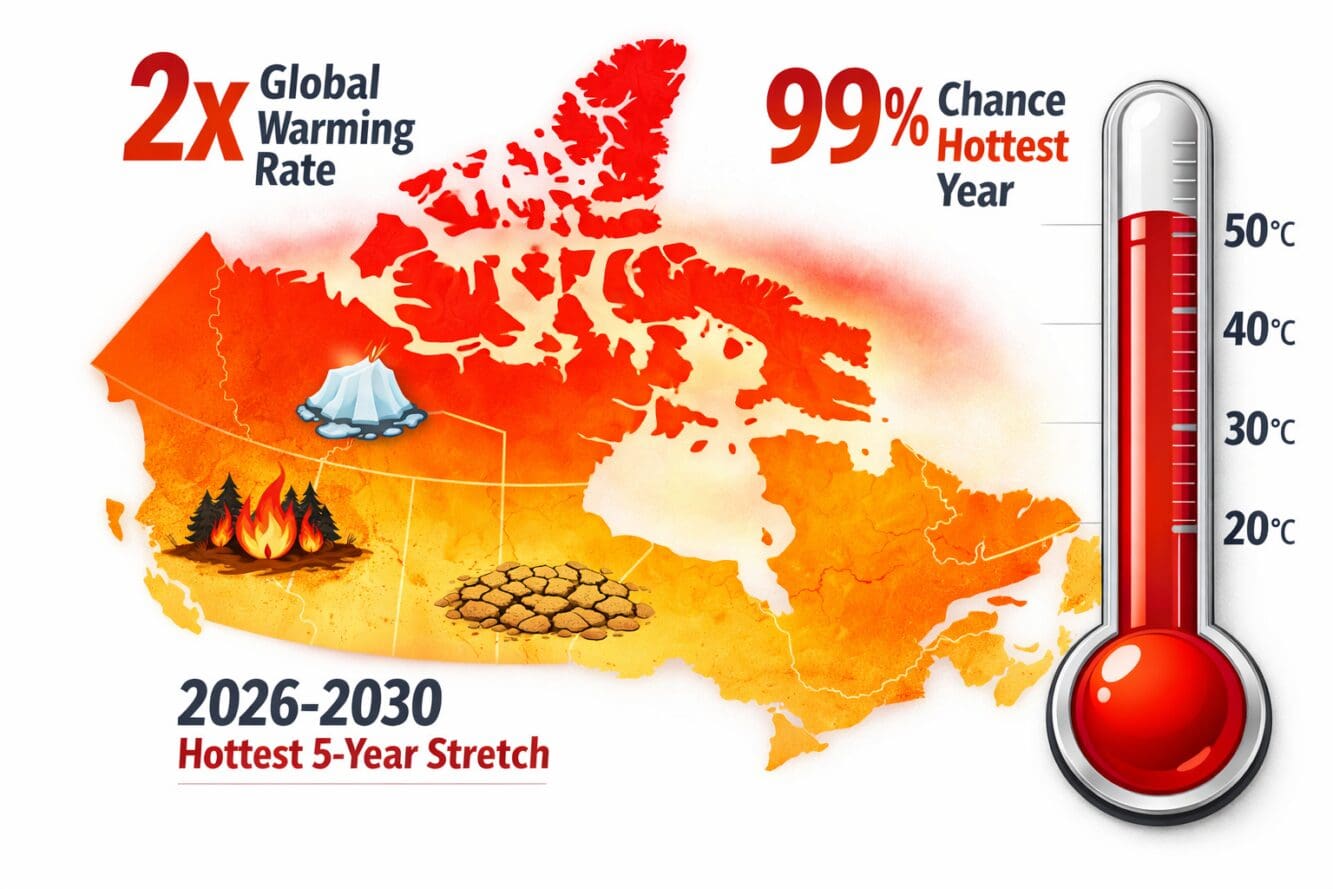
The numbers paint a stark picture. Environment and Climate Change Canada forecasts a 99 percent chance that 2026 will be hotter than every year on record prior to 2023 [2]. The 2026–2030 window is projected to be the hottest five-year stretch ever recorded for the country [1]. This accelerated warming is driven largely by Arctic ice loss, which reduces surface reflectivity and causes the land and ocean to absorb more solar radiation [2].
Canada is warming at approximately twice the global average rate [2]. For farmers, this translates into real, on-the-ground consequences:
| Climate Trend | Agricultural Impact |
|---|---|
| Rising average temperatures | Shifted growing seasons, heat stress on crops and livestock |
| More frequent droughts | Reduced yields, depleted water reserves |
| Intense rainfall events | Flooding, soil erosion, delayed planting |
| Unpredictable frost patterns | Crop damage, uncertain planting windows |
| Increased wildfire risk | Destroyed pastureland, poor air quality for workers |
These aren’t distant projections. They are happening now. As concerns about environmental sustainability and resource management grow, so does the urgency to act.
How Extreme Weather Events Threaten Food Security
Extreme weather is the most visible way climate change hits agriculture. Droughts, floods, hailstorms, and unseasonable frosts can wipe out an entire season’s work in a matter of days. When crops fail or livestock suffer, the ripple effects reach grocery store shelves, food banks, and export markets.
The Cost-Price Squeeze
According to the Canadian Agri-Food Policy Institute, crop prices for corn, beans, wheat, and canola remain persistently low [3]. At the same time, rising expenses—fuel, equipment, labour—continue to climb. Even when fertilizer costs dip slightly, the savings are not enough to offset the broader financial pressure. This cost-price squeeze leaves farmers with shrinking margins and fewer resources to invest in climate adaptation.
💬 “Approximately half of Canadian agricultural stakeholders expect 2026 to be resilient but under sustained pressure, while over one-third view it as a challenging year constrained by risks and fiscal limitations.” — Canadian Agri-Food Policy Institute [3]
The farm sentiment index sat at just 42 as of January 2026, remaining essentially flat over the previous 12 months [3]. Investment sentiment among both agribusinesses and producers has dropped to historically low levels, with trade and policy uncertainty making stakeholders reluctant to commit capital [3].
This matters for food security because farms that cannot invest in better infrastructure, technology, or practices become more vulnerable to the next extreme weather event. It’s a cycle that, left unchecked, could erode Canada’s ability to feed itself and maintain its role as a major food exporter. Conversations about the future of food and resource scarcity are becoming impossible to ignore.
The Impact of Climate Change on Canadian Agriculture: Extreme Weather, Food Security, and Adaptation Strategies for Farmers — Policy Responses
Recognizing the scale of the challenge, the federal government has put forward several significant policy proposals aimed at strengthening the agricultural sector.
The Canadian Farm Resilience Agency (CFRA)
One of the most notable proposals is the creation of a Canadian Farm Resilience Agency (CFRA) [4]. This would be a federal institution where farmers, scientists, and agronomists collaborate to solve climate adaptation problems and share practical knowledge. Think of it as a hub for turning research into real-world farming solutions.
Key goals of the CFRA include:
- 🔬 Accelerating climate-adapted crop research
- 🤝 Connecting farmers with agronomists for tailored advice
- 📊 Reducing annual Business Risk Management (BRM) program costs by preventing losses before they happen [4]
Reforming Business Risk Management
Current BRM programs are being overhauled to better support agricultural multifunctionality [4]. Critics have long argued that the existing system favours large, single-commodity operations and discriminates against smaller and diversified farms. New programs under the banner of “Cultivating Food Sovereignty” aim to:
- Increase Canada’s capacity to produce, process, store, and distribute food domestically
- Reduce greenhouse gas emissions from farming
- Support farms that contribute to biodiversity and community food systems [4]
A New Grain Marketing Board
There is also a proposal for a new grain marketing board modeled on the former Canadian Wheat Board [4]. The goal is to give smaller grain companies better market access and return a greater share of grain sales value directly to farmers. This could create opportunities to diversify crop rotations—a key climate adaptation strategy.
Land Conservation Set-Asides
Perhaps the most ambitious environmental proposal involves converting approximately five million acres of cropland into wildlife habitat, wetlands, and treed land over the next decade [4]. This set-aside program would support biodiversity and carbon sequestration, helping to offset agricultural emissions while protecting the ecosystems that farms depend on. Understanding how industries must adapt to environmental realities is essential context for these policy shifts.
Adaptation Strategies Farmers Are Using Right Now
While policy frameworks take shape, Canadian farmers are not waiting. Across the country, producers are adopting practical strategies to protect their operations.
Soil Health and Water Management
Healthy soil acts like a sponge—it absorbs more water during heavy rains and retains moisture during droughts. Farmers are increasingly using:
- Cover cropping 🌿 to protect soil between growing seasons
- No-till or reduced-till farming to preserve soil structure
- Improved drainage and irrigation systems to manage water extremes
Communities are also exploring stormwater management planning as part of broader regional resilience efforts.
Crop Diversification
Planting a wider variety of crops spreads risk. If one crop fails due to heat or drought, others may still thrive. Diversification also improves soil health and can reduce pest and disease pressure.
Climate-Smart Technology
From precision agriculture tools that optimize water and fertilizer use to weather monitoring systems that provide hyper-local forecasts, technology is helping farmers make better decisions in an unpredictable climate.
Building Community Resilience
Farming doesn’t happen in isolation. Local networks, cooperative models, and community-supported agriculture programs help farmers share knowledge, pool resources, and access markets. The growing interest in alternative community living models reflects a broader trend toward collective resilience.
During heat waves, communities are also stepping up with cooling centres and emergency support for vulnerable populations, including farmworkers.
What’s at Stake: A Summary
| Challenge | Current Status (2026) | Proposed Solution |
|---|---|---|
| Record-breaking heat | 99% chance 2026 hotter than pre-2023 years [2] | CFRA research, climate-adapted crops |
| Low crop prices | Corn, wheat, canola under market pressure [3] | New grain marketing board [4] |
| Rising farm costs | Cost-price squeeze persists [3] | Reformed BRM programs [4] |
| Low investment confidence | Sentiment at historic lows [3] | Policy certainty, trade stability |
| Biodiversity loss | Ongoing habitat degradation | 5 million acre set-aside program [4] |
Conclusion
The impact of climate change on Canadian agriculture is not a future problem—it is a present reality reshaping every aspect of farming, from seed selection to market access. With 2026 on track to be one of the hottest years in history and farmer confidence at historic lows, the need for bold action has never been clearer.
Here are actionable next steps for stakeholders at every level:
- Farmers: Explore diversified crop rotations, invest in soil health practices, and connect with local agricultural extension services for climate adaptation support.
- Policymakers: Accelerate the establishment of the Canadian Farm Resilience Agency and ensure reformed BRM programs reach small and diversified farms.
- Consumers: Support local food systems, buy from Canadian producers, and advocate for policies that strengthen domestic food security.
- Communities: Build local resilience networks, support cooperative farming models, and plan for extreme weather events.
Canada’s agricultural future depends on collaboration between farmers, scientists, governments, and communities. The strategies exist. The research is clear. What matters now is the speed and scale of the response. 🌾
References
[1] Canada Forecasts 2026 To Be Among The Hottest Years On Record – https://www.canada.ca/en/environment-climate-change/news/2026/01/canada-forecasts-2026-to-be-among-the-hottest-years-on-record.html
[2] 2026 To Be A Scorcher Environment And Climate Change Canada Says – https://m.farms.com/ag-industry-news/2026-to-be-a-scorcher-environment-and-climate-change-canada-says-468.aspx
[3] Canadian Agri-Food Policy Institute — Farm Sentiment and Risk Survey 2026 – https://www.youtube.com/watch?v=msTyCbmnJEk
[4] Alternative Federal Budget 2026: Agriculture – https://www.policyalternatives.ca/news-research/alternative-federal-budget-2026-agriculture/
Content, illustrations, and third-party video appearing on GEORGIANBAYNEWS.COM may be generated or curated with AI assistance or reproduced pursuant to the fair dealing provisions of the Copyright Act, R.S.C. 1985, c. C-42. Attribution and hyperlinks to original sources are provided in acknowledgment of applicable intellectual property rights. Such referencing is intended to direct traffic to and support the original rights holders’ platforms.
Sharing is SO MUCH APPRECIATED!