



















The Iran Deal: What We Know, What We Don’t

Sharing is SO MUCH APPRECIATED!


Last updated: June 15, 2026
Quick Answer
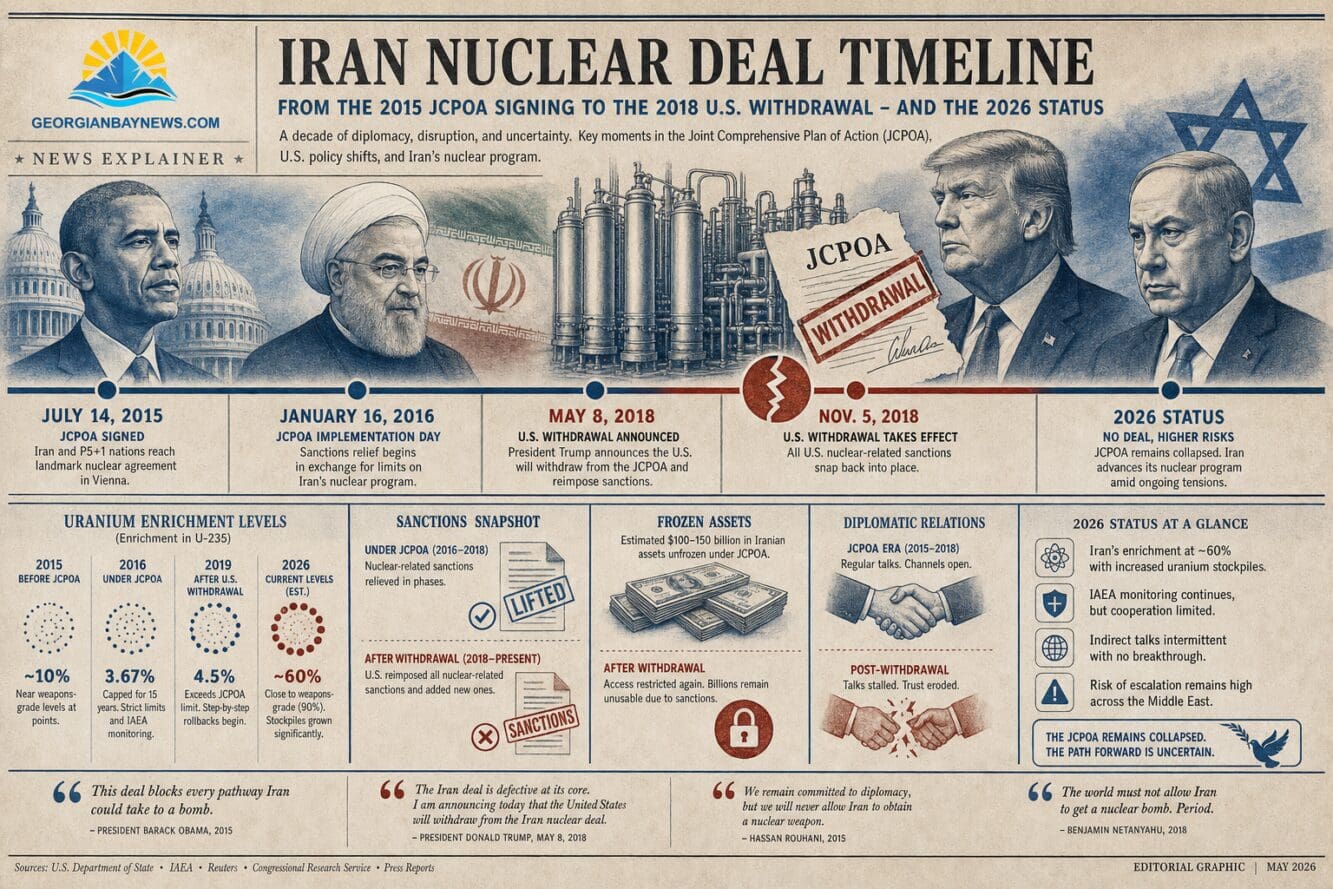
The Iran Deal, formally known as the JCPOA, was a 2015 agreement that traded sanctions relief for limits on Iran’s nuclear program. The United States exited in 2018, Iran began exceeding limits in 2019, and by 2026 the original framework is effectively dead. Both sides accuse each other of bad faith, the truth sits somewhere in between, and verifying who is lying depends heavily on which intelligence agency you trust.

Key Takeaways
- The Joint Comprehensive Plan of Action (JCPOA) was signed in July 2015 by Iran, the US, UK, France, Germany, Russia, China, and the EU.
- Iran received roughly $100 billion in unfrozen assets, not the $150 billion often cited in political speeches (US Treasury, 2016).
- President Trump withdrew the US from the deal in May 2018, reimposing sweeping sanctions.
- By 2026, Iran has enriched uranium to 60% purity, close to the 90% needed for a weapon (IAEA, 2024).
- Israel has consistently opposed the deal; most European nations have supported keeping it alive.
- Independent verification remains the single biggest gap, and both Tehran and Washington have stretched the truth at different points.
What Exactly Was the Iran Nuclear Deal?
The Iran nuclear deal was a 2015 agreement that capped Iran’s uranium enrichment at 3.67%, limited its centrifuge count, and opened its facilities to International Atomic Energy Agency (IAEA) inspections. In exchange, the US, EU, and UN lifted nuclear-related sanctions.
Core terms included:
- A 15-year cap on enrichment levels
- A reduction of Iran’s stockpile of low-enriched uranium by 98%
- Redesign of the Arak heavy-water reactor so it couldn’t produce weapons-grade plutonium
- Continuous IAEA monitoring at declared sites
The deal did not cover Iran’s ballistic missile program or its regional proxy activity, a gap critics still point to.
How Did Trump Change the Iran Deal?
In May 2018, President Donald Trump withdrew the United States from the JCPOA and reimposed sanctions under a “maximum pressure” campaign. He argued the deal was too weak, expired too soon, and ignored Iran’s missile work and regional behavior.
The consequences:
- European companies pulled out of Iran to avoid US secondary sanctions
- Iran’s oil exports dropped from 2.5 million barrels a day to under 500,000
- Iran began openly exceeding JCPOA limits starting in 2019
- Tensions escalated, including the 2020 killing of General Qassem Soleimani
The Biden administration tried to revive talks in 2021–2023 but never reached a new agreement. By 2026, the original framework is essentially a historical document.
How Much Money Did Iran Get From the Original Deal?
Iran regained access to roughly $100 billion in previously frozen overseas assets, according to the US Treasury Department. The often-quoted “$150 billion” figure was an overstatement that ignored debts Iran owed to China and other creditors.
Crucially, this was Iran’s own money, not a US payment. A separate $1.7 billion settlement involved a decades-old arms deal dispute and was paid in cash, which Trump and others used to frame the deal as “ransom.”
What Sanctions Were Lifted for Iran?
Nuclear-related sanctions were lifted, including:
- Oil export bans
- Restrictions on Iran’s central bank
- Limits on shipping, insurance, and metals trade
- Asset freezes tied to nuclear activities
Sanctions tied to terrorism, human rights abuses, and ballistic missiles stayed in place. This distinction matters: critics often imply Iran got a clean slate. It didn’t.
Who Benefits Most From the Iran Nuclear Agreement?
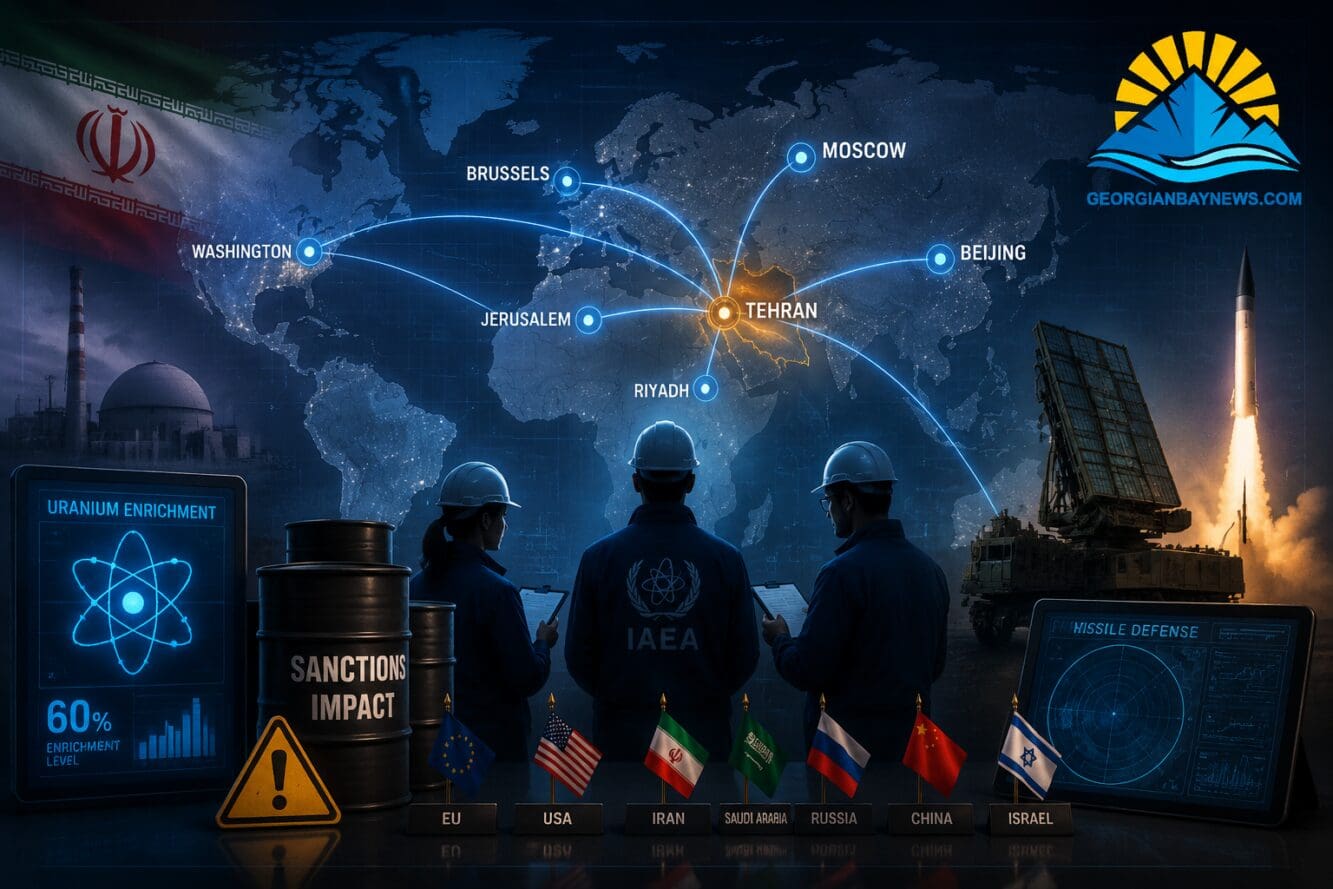
The biggest beneficiaries of a working deal are European economies, global oil markets, and ordinary Iranians. Russia and China benefit strategically by weakening US leverage. The deal’s main losers, in geopolitical terms, are Israel and Saudi Arabia, which view a normalized Iran as an existential threat.
StakeholderPositionMain InterestUSMixedNonproliferation, regional stabilityIsraelOpposedPrevent Iranian nuclear capabilityEUSupportiveTrade, diplomacy, refugee preventionRussia/ChinaSupportiveReduce US dominanceSaudi ArabiaOpposedRegional power balanceIranConditionalSanctions relief, sovereignty
For broader context on regional tensions, see coverage of strike Iran developments.
What Are the Biggest Risks if Iran Develops Nuclear Weapons?
A nuclear-armed Iran would likely trigger a regional arms race, with Saudi Arabia, Turkey, and possibly Egypt seeking their own weapons. It would also embolden Iranian proxies and complicate any future military action against Tehran.
Key risk categories:
- Nuclear proliferation across the Middle East
- Direct military conflict with Israel
- Disruption of global oil supplies through the Strait of Hormuz
- Weakened global nonproliferation norms
How Close Is Iran to Actually Making a Nuclear Weapon?
As of early 2026, Iran has enriched uranium to 60% purity and possesses enough material for several weapons if further enriched, according to the IAEA. The technical “breakout time” is estimated at weeks, not years. Building a deliverable warhead would take longer, possibly 1–2 years.
This is the single most important shift since 2018: the deal extended breakout time to roughly 12 months. Without it, that buffer has collapsed.
Which Countries Support or Oppose the Iran Deal?
Supporters: France, Germany, UK, EU, Russia, China, most non-aligned states.
Opponents: Israel, Saudi Arabia, UAE, Bahrain, and a significant portion of the US political establishment.
The split isn’t ideological so much as geographic. Countries far from Iran tend to favor diplomacy; countries within missile range tend to favor pressure.
How Do Israeli Leaders View the Iran Deal?
Israeli leaders, across political parties, have overwhelmingly opposed the JCPOA. Prime Minister Benjamin Netanyahu called it a “historic mistake” in 2015 and has argued that any deal that doesn’t permanently dismantle Iran’s nuclear infrastructure is dangerous.
Israeli intelligence has shared documents alleging Iran maintained a covert weapons program after 2003, claims partially corroborated by the IAEA but disputed in scope. Israel has also conducted sabotage operations, including the 2020 assassination of nuclear scientist Mohsen Fakhrizadeh.
What Are the Economic Impacts of Iran Being Under Sanctions?
Sanctions have shrunk Iran’s economy by an estimated 30% since 2018, with inflation regularly above 40% and the rial losing more than 90% of its value against the dollar (IMF, 2023). Ordinary Iranians have borne the brunt through unemployment, medicine shortages, and brain drain.
Iran has adapted by deepening trade with China, expanding sanctions-evasion networks, and selling discounted oil to gray markets. The regime has survived, but the population has suffered.
Can Iran Be Trusted to Follow International Nuclear Agreements?
Honestly, the record is mixed. Between 2016 and 2018, the IAEA repeatedly confirmed Iran was complying with the JCPOA. After the US withdrawal, Iran began violating limits, arguing it was responding to American bad faith. Both sides have a point.
What the evidence shows:
- Iran complied while the deal held
- Iran has hidden past weapons work (confirmed by 2018 Israeli archive seizure)
- The US broke its commitments by withdrawing
- Verification, not trust, is what made the deal function
What Would Happen if Iran Violates the Nuclear Agreement?
The original JCPOA included a “snapback” mechanism allowing any signatory to reimpose UN sanctions within 30 days. With the deal effectively expired, that mechanism is now largely symbolic. Real consequences would come from unilateral US, EU, or Israeli action, ranging from new sanctions to military strikes.
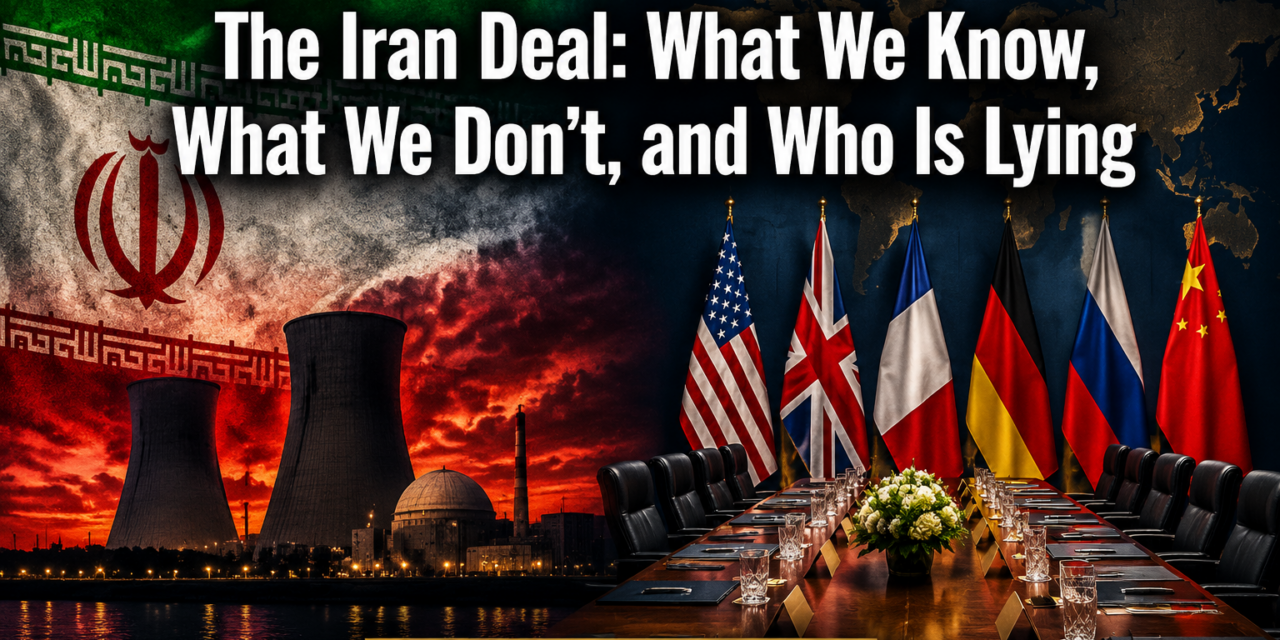
The Iran Deal: What We Know, What We Don’t, and Who Is Lying
What we know: The deal worked while it was enforced. Iran is now closer to a weapon than at any point in history. Sanctions hurt civilians more than the regime.
What we don’t know: Whether Iran has made a political decision to actually build a bomb, or how much covert work continues at undeclared sites.
Who is lying: Everyone, selectively. US politicians inflate the cash figures. Iran downplays enrichment levels. Israel exaggerates imminence. Russia and China understate their workarounds. The truth requires triangulating multiple sources, including the IAEA, independent analysts, and leaked intelligence.
For more on global policy debates, explore our coverage of sovereignty issues and states of emergency.
FAQ
Is the Iran Deal still in effect in 2026?
Technically yes between Iran and the remaining signatories, but in practice the framework is broken. The US is out, Iran exceeds limits, and inspections are restricted.
Did Iran get $150 billion from the deal?
No. The actual figure was around $100 billion in unfrozen assets, and it was Iran’s own money, not US funds.
Why did Trump leave the Iran Deal?
He argued it was weak, temporary, and ignored Iran’s missiles and proxy activity.
Has Iran built a nuclear weapon?
Not as of June 2026, but it has the material and technical knowledge to do so quickly.
Does Israel have nuclear weapons?
Israel maintains a policy of ambiguity but is widely believed to possess them.
What is the IAEA?
The International Atomic Energy Agency, the UN body that inspects nuclear facilities worldwide.
Could a new deal be reached?
Possibly, but political conditions in both Washington and Tehran make it unlikely in the short term.
Conclusion
The Iran Deal: What We Know, What We Don’t, and Who Is Lying is ultimately a story about verification, trust, and the limits of diplomacy. The 2015 agreement was imperfect but functional. Its collapse has left the world less safe, not more.
Actionable next steps for readers:
- Follow primary sources like IAEA reports rather than political speeches.
- Compare claims across at least three outlets with different biases.
- Track Iran’s enrichment percentage as the clearest factual indicator.
- Watch for any renewed multilateral talks in late 2026.
For related reporting, see our pieces on stakeholders in international policy and Steve Clemons’ geopolitical analysis.
Sources
- International Atomic Energy Agency, Iran Verification Reports (2015–2024)
- US Department of the Treasury, JCPOA Implementation Statements (2016)
- International Monetary Fund, Iran Country Report (2023)
- Council on Foreign Relations, JCPOA Backgrounder (2023)
Sharing is SO MUCH APPRECIATED!