


















VIDEOS | Fake Car Crash Insurance Fraud Busted: Toronto 407 Scheme, Peel Ring, and How Scammers Defraud Canadians
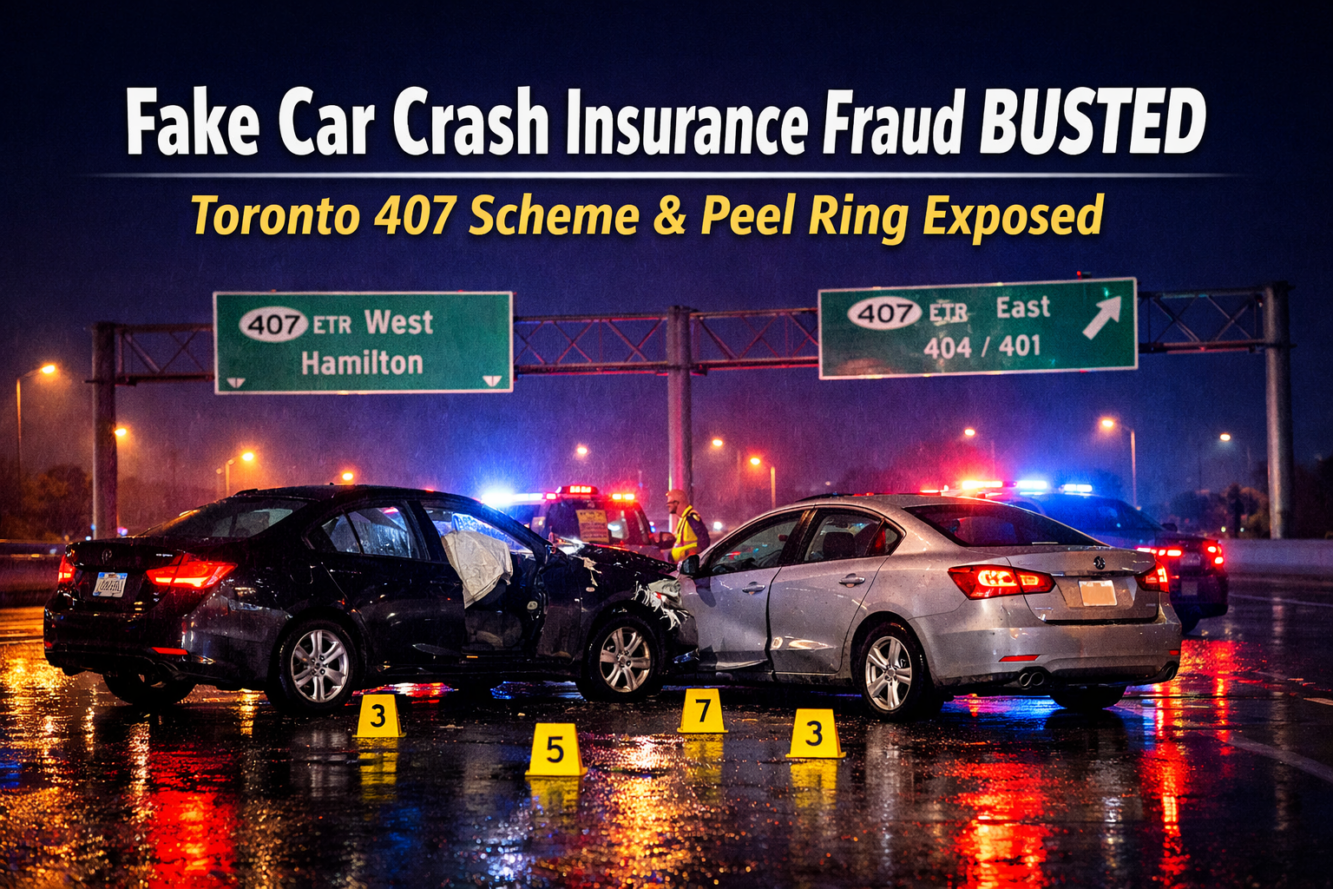
Every year, insurance fraud costs Canadian drivers billions of dollars — and the schemes are getting bolder. From staged collisions on busy GTA highways to counterfeit pink slips sold by fake brokers, organized crime rings are targeting everyday Canadians in 2026 at an alarming rate. The latest wave of fake car crash insurance fraud busted by police and investigators exposes the Toronto 407 scheme, the Peel ring, and a web of deception that touches every driver’s wallet. Here’s what you need to know to protect yourself.
W5’s Jon Woodward investigates whether fraudsters are staging car collisions and driving up premiums across Canada. Subscribe to W5 to watch more videos: / @officialw5
Key Takeaways
- 🚨 Toronto police have uncovered a fake insurance broker scam that sold counterfeit policies from May 2025 through February 2026, leaving victims uninsured after crashes [1].
- 🛣️ 407 ETR’s cybersecurity team took down over 1,100 fraudulent domains impersonating the toll highway company to steal customer data [3].
- 💰 Auto insurance fraud costs Canadians hundreds of millions annually, with Manitoba alone losing $50 million per year [2].
- 🎥 Staged car crashes are a growing trend, with dashcam evidence now playing a key role in RCMP and insurer investigations [2].
- ✅ Ontario’s 2026 budget introduces new anti-fraud tools, including an excluded provider list and mandatory fraud reporting to FSRA [2].
How the Toronto 407 Scheme and Peel Ring Defraud Canadians
The Greater Toronto Area has become a hotbed for auto insurance fraud. Two major schemes have dominated headlines in 2026: fake insurance broker operations and staged accident rings operating across Peel Region and along the Highway 407 corridor.
The Fake Broker Operation
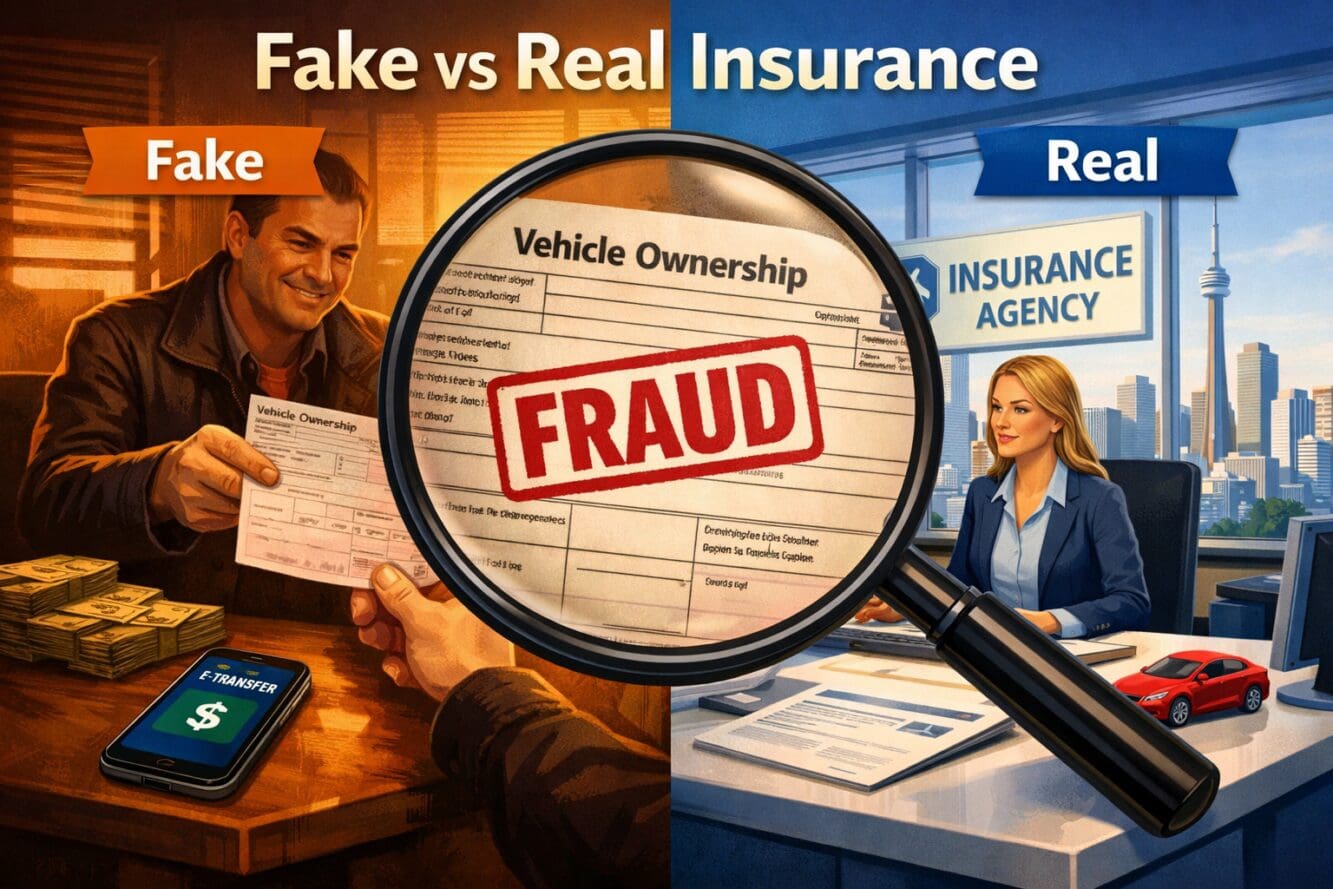
Between May 2025 and February 2026, Toronto police identified fraudulent insurance brokers who sold counterfeit auto insurance policies to unsuspecting drivers [1]. These criminals provided realistic-looking pink slips complete with policy numbers from legitimate insurance companies. Victims believed they were fully covered — until they were involved in a crash or pulled over by police and discovered their policies didn’t exist.
“Victims only discovered the fraud after crashes or police stops — by then, they were driving uninsured and facing serious legal consequences.” [1]
The scam was sophisticated. Brokers offered suspiciously low rates, accepted cash or e-transfer payments, and operated outside legitimate insurance channels [1]. This kind of organized fraud mirrors large-scale financial deception seen globally, where criminals exploit trust and create convincing forgeries.
The 407 ETR Impersonation Scam
Alongside fake broker schemes, criminals have been impersonating 407 ETR, Ontario’s electronic toll highway. In 2026, 407 ETR’s cybersecurity teams identified and took down more than 1,100 fraudulent domains designed to look like the company’s official website [3].
These fake sites and phishing messages use urgent language — claiming overdue toll payments or threatening penalties — to trick customers into handing over personal information and payment details [3]. One Ontario woman even discovered her licence plate had been duplicated by another driver, resulting in multiple 407 bills for trips she never made [2].
| Scam Type | How It Works | Who’s Targeted |
|---|---|---|
| Fake Insurance Brokers | Sell counterfeit pink slips with real policy numbers | Drivers seeking affordable coverage |
| 407 ETR Phishing | Fake websites/texts demanding toll payments | 407 ETR customers |
| Licence Plate Duplication | Clone plates to avoid tolls; bills go to real owner | Random vehicle owners |
| Staged Accidents | Deliberately cause collisions for benefit claims | Other drivers on the road |
Staged Car Crashes: The Growing Threat Behind Fake Car Crash Insurance Fraud Busted Across Canada
Staged collisions represent one of the most dangerous forms of auto insurance fraud in Canada today. Criminal rings deliberately cause or fabricate car accidents to file fraudulent claims for accident benefits, vehicle repairs, and injury compensation [2].
How Staged Crashes Work
Organized fraud rings typically follow a playbook:
- The Setup — Criminals recruit participants (sometimes unknowing) to drive vehicles into planned collisions.
- The Crash — Accidents are staged at intersections, parking lots, or highways to look legitimate.
- The Claim — Multiple participants file claims for injuries, physiotherapy, and vehicle damage that never occurred.
- The Payout — Corrupt clinics, tow truck operators, and legal professionals may be involved to process fraudulent claims.
Dashcam footage has become a critical tool for investigators. RCMP and private insurer teams like those at Aviva Canada now use video evidence to identify inconsistencies in staged crash claims — vehicles braking unnecessarily, participants appearing uninjured, or the same individuals appearing in multiple “accidents” [2].
This trend is not unlike other forms of organized criminal activity that require coordinated law enforcement responses to dismantle.
Project Eleanor: A Major Crackdown
Law enforcement hasn’t been sitting idle. Project Eleanor, a major operation targeting vehicle theft and fraud rings, resulted in:
- 🚗 556 stolen vehicles recovered
- 👮 119 arrests
- 📋 314 total charges filed
- 💵 $2.2 million in vehicles recovered in just two days of search warrant executions [2]
Criminal search warrants were executed at a Toronto residence and a Mississauga shipping yard, revealing the scale of organized auto crime in the GTA [2].
The Real Cost: How Fraud Impacts Every Canadian Driver
Insurance fraud isn’t a victimless crime. Every fraudulent claim drives up premiums for honest drivers. The numbers are staggering:
- Manitoba alone loses approximately $50 million per year to auto insurance fraud [2].
- Manitoba Public Insurance’s special investigations unit closed over 3,000 investigations in 2023, saving customers more than $10.5 million [2].
- Nationally, the Insurance Bureau of Canada estimates fraud adds $1.6 billion or more to annual insurance costs.
“Auto insurance fraud costs Manitoba customers approximately $50 million annually.” [2]
For context, this kind of systemic financial drain affects communities at every level. Just as industries sometimes deny uncomfortable truths about their impact, the true scope of insurance fraud is often underestimated by the public.
Ontario’s 2026 Crackdown: New Laws and Fraud Prevention Measures
Ontario’s provincial government is fighting back. The 2026 Ontario Budget includes significant new anti-fraud measures [2]:
- Excluded Provider Lists — Fraudsters will be “delisted,” preventing them from billing insurers for services.
- Mandatory Fraud Reporting — Insurers will be required to report fraud data to the Financial Services Regulatory Authority of Ontario (FSRA).
- Standardized Reporting Tool — FSRA will lead a consultation on a new industry-wide tool for collecting and sharing fraud data [2].
These measures aim to close loopholes that organized crime rings have exploited for years. The push for transparency echoes broader accountability efforts, much like legal verdicts that hold powerful figures accountable.
How to Protect Yourself from Fake Car Crash Insurance Fraud
Knowledge is your best defense. Follow these essential tips from Toronto police and 407 ETR [1][3]:
✅ Insurance Protection Tips
- Never buy insurance from third-party sellers or individuals you find on social media.
- Contact insurers directly using official phone numbers from their websites to verify any policy.
- Be suspicious of rates that seem too good to be true — they usually are.
- Never pay cash or e-transfer for insurance. Legitimate insurers don’t operate this way [1].
- Check your pink slip by calling the insurer listed on it before driving.
✅ 407 ETR & Phishing Protection
- Never click links in unexpected texts or emails about toll payments [3].
- Go directly to 407etr.com by typing the address into your browser.
- Report suspicious messages to 407 ETR’s fraud team immediately.
✅ On the Road
- Install a dashcam — it’s your best evidence if you’re involved in a staged crash.
- Call police immediately after any collision, no matter how minor.
- Document everything — photos, witness information, and the other driver’s details.
If something feels wrong after an accident — like the other driver seems overly calm or insists on using a specific tow company or clinic — trust your instincts and report it. You can also stay informed about local law enforcement activity to understand how police are tackling crime in your area.
Being proactive about personal safety extends beyond fraud. Whether it’s watching for traffic-related incidents or protecting your financial information, awareness is key.
Conclusion
The wave of fake car crash insurance fraud busted across the Toronto 407 corridor, Peel Region, and beyond in 2026 reveals just how sophisticated and costly these schemes have become. From counterfeit pink slips to staged collisions and phishing scams, organized criminals are targeting Canadian drivers from every angle.
Here’s what to do right now:
- Verify your current insurance policy by calling your insurer directly.
- Install a dashcam in your vehicle today.
- Report any suspicious insurance offers or phishing messages to police and the relevant company.
- Share this article with friends and family — awareness is the first line of defense.
Ontario’s new anti-fraud legislation is a step in the right direction, but individual vigilance remains essential. Don’t become the next victim. Stay informed, stay skeptical, and always verify before you trust. 🛡️
References
[1] Auto Insurance Scam Toronto – https://toronto.citynews.ca/2026/03/11/auto-insurance-scam-toronto/
[2] Public News – https://www.casiu.ca/usersc/public_news.php
[3] 2026 03 05 407 Etr Highlights Fraud Prevention Month With Tips To Help Customers Spot And Avoid Scams – https://newsroom.407etr.com/2026-03-05-407-ETR-highlights-Fraud-Prevention-Month-with-tips-to-help-customers-spot-and-avoid-scams
Content, illustrations, and third-party video appearing on GEORGIANBAYNEWS.COM may be generated or curated with AI assistance or reproduced pursuant to the fair dealing provisions of the Copyright Act, R.S.C. 1985, c. C-42. Attribution and hyperlinks to original sources are provided in acknowledgment of applicable intellectual property rights. Such referencing is intended to direct traffic to and support the original rights holders’ platforms.