




















By David Suzuki
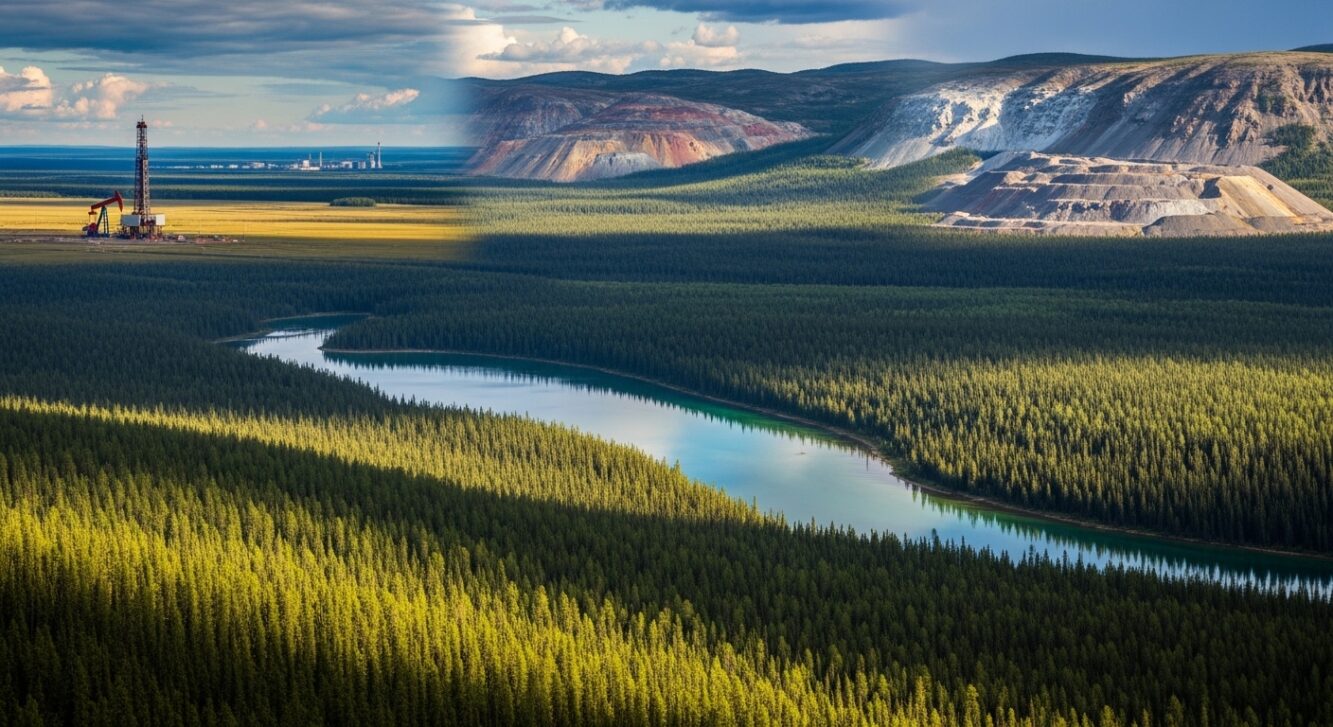
Canada is among the world’s most resource-rich countries. Forty per cent of its land is covered in forests. It holds 20 per cent of the world’s freshwater reserves. It’s the fourth-largest crude oil exporter. It produces more than 60 minerals and metals and ranks in the top five for 14 of them — critical to the global clean energy transition.
Our natural resources sector is important to communities throughout the country, and to the national economy. Beyond economics, nature provides essential ecosystem services, including climate regulation, carbon storage, flood mitigation, air filtering and biodiversity support.
But who owns the sector, and why aren’t we talking about it more?
There’s been more talk about how organizations trying to protect and restore these valuable life-supporting necessities — including the David Suzuki Foundation — are “foreign-funded.” The (false) accusation is that environmental groups are undermining sovereignty and putting outside interests first. These allegations are unfounded but not surprising.
What is surprising is the lack of scrutiny around foreign ownership of this country’s natural resources. Who owns and controls Canada’s natural wealth has implications far beyond a balance sheet. It affects who benefits and who bears the risk in an increasingly volatile world.
The share of foreign-controlled assets outside the financial sector sits at 22.9 per cent. In the oil and gas industry, that rises to 33 per cent. In forestry and logging, foreign-controlled enterprises have been reported as accounting for up to 40 per cent of revenues, though lack of transparent reporting makes accountability difficult.
It’s hard to notice ownership structures when companies have deceptive names such as “LNG Canada,” which has no Canadian ownership but is a massive joint venture between five multinational corporations, some state-owned, including PetroChina and Korea Gas Corporation.
This is not an argument for xenophobia or economic isolation. Canada’s participation in global markets is vital to its economy, while foreign companies bring capital and expertise and employ countless people who live here.
Ownership matters, as does the long-term accountability that follows.
Companies not headquartered here direct more profit out of the country with little concern or accountability for the ecological consequences of their actions.
With climate change intensifying wildfires and floods, people here are stuck with the bill. Climate impacts are estimated to be slowing Canada’s economic growth by $25 billion per year. Last year, extreme weather–related losses surpassed $2.4 billion. That doesn’t include the cost of cleaning up industrial events like oil spills, air pollution and abandoned wells — which live on long after corporations leave.
On top of that, habitat loss and fragmentation from industrial activity threaten at-risk species. More than half of wildlife species in this country are currently declining, mainly because of human activity. Industrial activity alters ecosystems in ways that communities in Canada — not the home countries of the companies involved — must live with for generations.
Where does this leave Indigenous nations, whose territories are home to most of Canada’s natural resources? When we prioritize multinational corporations over Indigenous stewardship models rooted in ecological responsibility and community benefits, we undermine reconciliation and the potential for a sustainable future.
A leadership candidate in British Columbia recently claimed Coastal First Nations is a foreign-funded advocacy group and suggested he would ban foreign-funded organizations seen to influence B.C. politics. Silencing Indigenous nations under the guise of sovereignty while allowing multinational corporations to actively reshape policy decisions and entire ecosystems is hypocritical and far more concerning. Indigenous sovereignty is itself critical because their relationship with nature is built around reciprocity.
Most Canadians want limits on foreign ownership. A recent survey found almost 60 per cent believed outside possession of Canada’s critical minerals was a greater threat than “missing out on development and jobs because of a lack of investment.”
Where are the loud warnings? Where are the critics?
If industry supporters see supposed foreign funding of environmental organizations as a threat to sovereignty, why doesn’t foreign ownership of Canada’s natural resources ring alarm bells? Do those working to protect ecosystems actually pose a greater risk than the multinational companies working to extract and profit from them?
Sovereignty can’t matter in one context and be dismissed in another.
We should all be asking the important questions: Who makes decisions around Canada’s natural wealth? Who benefits? And who is left holding the bag?
David Suzuki is a scientist, broadcaster, author and co-founder of the David Suzuki Foundation. Written with David Suzuki Foundation Communications Manager Stefanie Carmichael.
Learn more at davidsuzuki.org.
REFERENCES:
Covered in forests:
https://www.statcan.gc.ca/o1/en/plus/5777-climbing-data-tree-international-day-forests
20 per cent of the world’s freshwater reserves:
https://www.canada.ca/en/environment-climate-change/services/environmental-indicators/water-use.html
Fourth-largest crude oil exporter:
https://natural-resources.canada.ca/energy-sources/fossil-fuels/crude-oil-industry-overview
60 minerals and metals:
Foreign-funded:
https://davidsuzuki.org/story/alberta-inquiry-steps-into-a-past-eras-dark-denial
Share of foreign-controlled assets:
https://www150.statcan.gc.ca/n1/daily-quotidien/251002/dq251002a-eng.htm
Slowing Canada’s economic growth:
Extreme weather–related losses in Canada:
Leadership candidate in British Columbia recently claimed:
A recent survey found:
https://www.junonews.com/p/most-canadians-oppose-foreign-ownership