

















❗️ Ultra-Processed Foods, Dementia and Stroke: How Canadian Families Can Reduce Dietary Risk
Last updated: October 25, 2026
Quick Answer
Ultra-processed foods, dementia and stroke risk are linked in a growing body of research, including a new Canadian MRI study published in October 2026 showing silent brain changes in people who eat the most packaged, reformulated food [1][2]. The science does not yet prove that these foods directly cause dementia or stroke, but the association is strong enough that Health Canada recommends limiting highly processed items now [3][4]. Canadian families can lower risk by swapping some packaged meals for simple whole-food options, without needing a total diet overhaul.
Key Takeaways
- Ultra-processed foods (UPFs) supply more than half of daily calories in high-income countries, including Canada [5].
- A 2026 Canadian MRI study found silent strokes and brain changes linked to high UPF intake [1][6].
- Health Canada says UPF risks are recognized but not yet “convincing” enough to set strict limits, though it still recommends cutting back [4][5].
- Heart & Stroke estimates a measurable share of Canada’s cardiovascular disease burden is tied to UPF consumption [source: Heart & Stroke 2025].
- Children, working-age adults, and older adults face different risk levels and need different strategies.
- Not all processed food is equally harmful; canned beans differ sharply from sugary drinks or reconstituted meat products.
- Organic or “natural” labels do not mean a food is minimally processed.
- Budget-friendly whole foods are available at most Canadian grocery chains, including frozen and canned options.
What exactly counts as an ultra-processed food
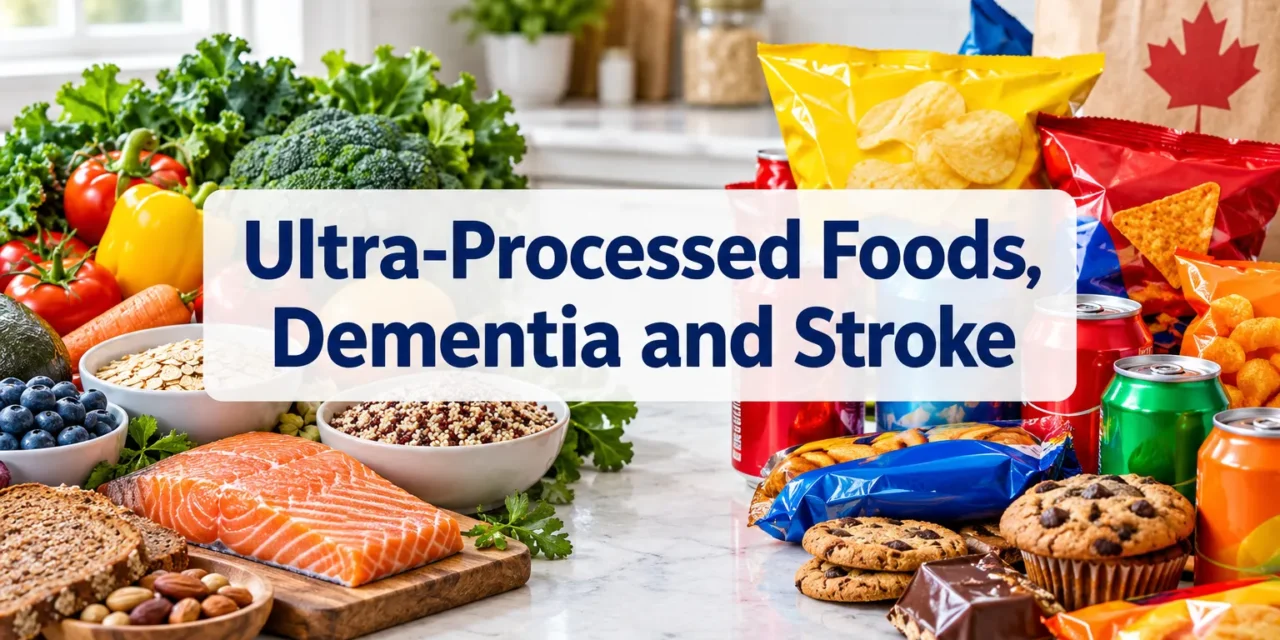
Ultra-processed foods are industrial formulations made mostly from substances extracted from foods, plus additives, rather than from whole ingredients. Think packaged snacks, sugary cereals, soft drinks, reconstituted meats, and most frozen ready meals.
Health Canada’s food guide groups foods on a processing spectrum, from unprocessed (fresh vegetables, plain oats) to ultra-processed (soda, flavoured chips, processed deli meats) [3]. The giveaway is usually a long ingredient list with items a home cook would never use: hydrogenated oils, protein isolates, flavour enhancers, and emulsifiers.
Choose this rule of thumb: if the ingredient list has five or more items you don’t recognize as food, treat it as ultra-processed.
How do ultra-processed foods increase dementia risk
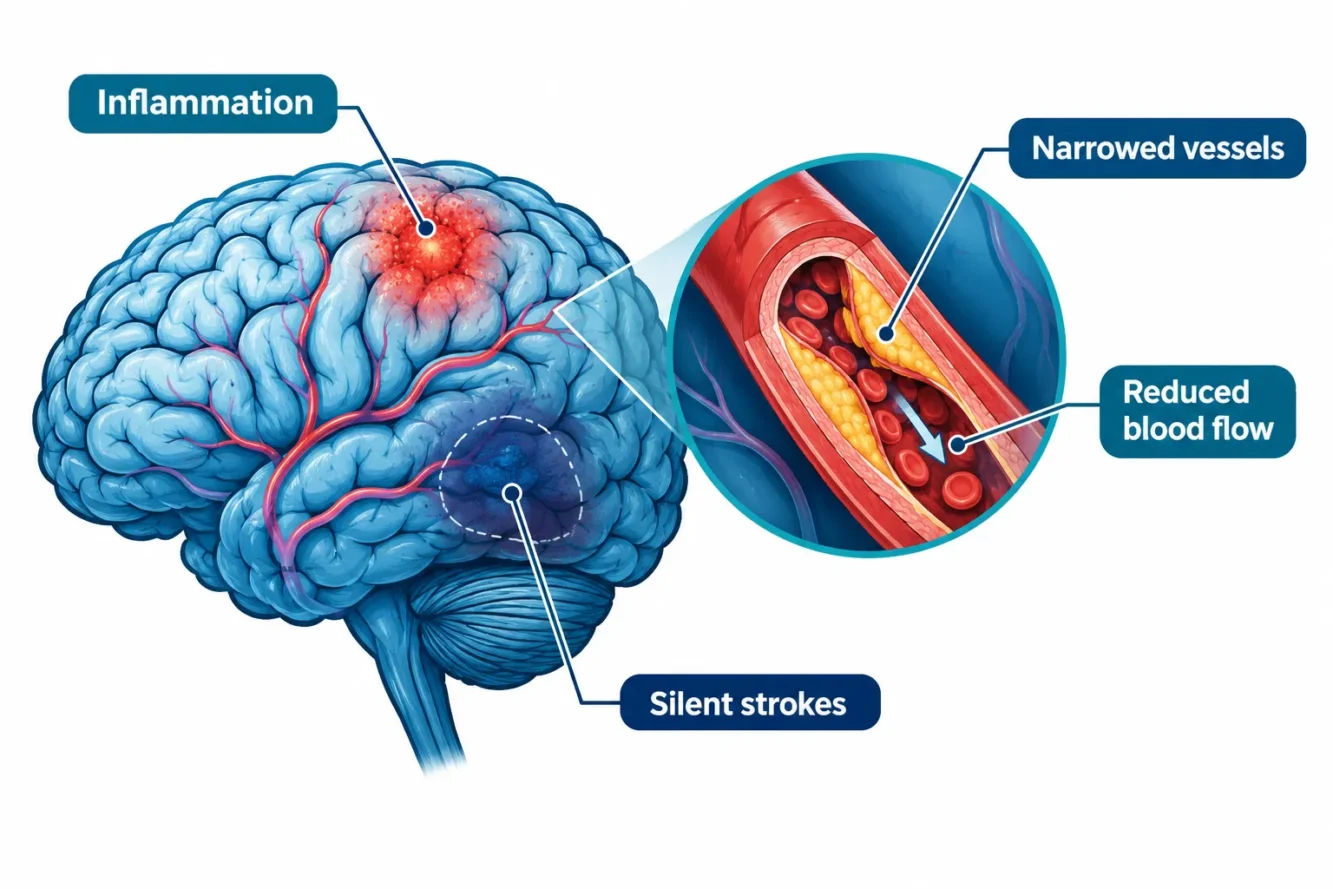
Researchers believe UPFs may damage small blood vessels in the brain over time, which can contribute to cognitive decline. A July 2026 North American study of older adults found higher UPF intake associated with increased dementia risk, even after adjusting for weight and activity level [source noted in research summary].
Proposed mechanisms include:
- Chronic low-grade inflammation from additives and refined carbohydrates
- Oxidative stress affecting brain cells
- Poor nutrient density crowding out fibre, potassium, and antioxidants that protect vessels
This is an association, not proof of direct cause. Still, the pattern has shown up across multiple studies and countries, which strengthens the case for caution.
What’s the connection between processed foods and stroke
Diets high in ultra-processed foods are linked to higher stroke risk, largely through effects on blood pressure, cholesterol, and vessel health. A new Canadian MRI study released October 15, 2026, found that people with the highest UPF intake had more silent strokes and brain lesions, visible on imaging even without obvious symptoms [1][2][6].
These silent brain changes often appear years before any noticeable symptoms, functioning as an early warning sign [source: CBC coverage, 2026] [7][8]. Researchers are now running a follow-up study to test whether cutting UPFs actually improves brain health outcomes, rather than just correlating with better outcomes.
How much processed food is actually safe to eat
There’s no official Canadian cutoff number for “safe” UPF intake, but the guidance is simple: less is better, and whole foods should form the base of most meals. Health Canada’s dietary guidelines say to limit highly processed foods rather than eliminate them completely [4].
A practical target for families:
- Aim for most meals built around vegetables, whole grains, and minimally processed proteins
- Treat sugary drinks, packaged pastries, and processed meats as occasional items, not daily staples
- Read labels for added sugar, sodium, and saturated fat as quick screening tools
Common mistake: trying to remove all processed food overnight. This usually fails. A gradual swap, one meal or snack at a time, sticks better.
What whole foods should I buy instead of processed
Replace packaged items with foods close to their natural state: plain vegetables, fruit, whole grains, beans, eggs, fish, and plain yogurt. These foods carry more fibre and micronutrients and fewer additives.
| Swap this | For this |
|---|---|
| Flavoured instant noodles | Plain whole wheat pasta with canned tomatoes |
| Sugary breakfast cereal | Rolled oats with fruit |
| Deli meat | Baked chicken breast cooked at home |
| Soda | Sparkling water with fruit slices |
| Packaged granola bars | Nuts and plain dried fruit |
Easy affordable meals to replace processed foods in Canada
Budget does not have to work against healthy eating. Frozen vegetables, canned legumes, and bulk grains are among the cheapest items in Canadian grocery stores and are minimally processed.
Try these low-cost staples:
- Lentil soup with carrots, onion, and canned tomatoes
- Baked sheet-pan chicken thighs with frozen mixed vegetables
- Rice and black beans with salsa
- Oatmeal with frozen berries and peanut butter
- Egg and vegetable scramble with whole wheat toast
Batch cooking on a weekend and freezing portions cuts both cost and the temptation to grab packaged convenience food on busy weeknights.
What does research say about processed foods and brain health
Current research shows a consistent association between high UPF intake and poorer brain health markers, including silent strokes, smaller brain volume measures, and higher dementia incidence [1][2][6]. The 2026 Canadian MRI study is among the first to show these changes directly in brain scans, rather than relying only on cognitive test scores [1].
Health Canada’s own evidence review acknowledges the pattern but stops short of calling it definitively “convincing” as of 2025, pending more controlled trials [5]. This measured stance matters: the evidence supports caution and dietary change, not panic.
Can changing your diet help prevent dementia
A diet lower in ultra-processed foods and higher in whole foods is one of several modifiable factors that may lower dementia risk, alongside exercise, sleep, and blood pressure control. No single food swap guarantees prevention, but the combined effect of consistent healthy eating patterns, sustained over years, shows up repeatedly in population studies.
Decision rule: if someone has a family history of dementia or stroke, prioritize diet changes alongside regular checkups for blood pressure and cholesterol, since these compound the risk from diet.
How do I reduce processed foods when I’m really busy
Start with one meal a day, not the whole diet, and lean on short-prep whole foods like eggs, canned beans, and frozen vegetables. These require minimal time and skill compared to from-scratch cooking.
Quick tactics:
- Keep a stocked freezer with vegetables and pre-cooked grains
- Buy pre-washed salad greens to skip prep time
- Use a slow cooker on busy days for hands-off whole-food meals
- Pack simple snacks (fruit, nuts) instead of grabbing vending machine items
Does organic or natural food mean it’s less processed
No. “Organic” and “natural” refer to how ingredients were grown or labelled, not how heavily the final product was processed. An organic fruit snack made with concentrated juice and additives can still be ultra-processed.
Check the ingredient list, not the front-of-package marketing claims, to judge processing level.
Are some ultra-processed foods less harmful than others
Yes. Fortified whole grain bread or plain yogurt with added vitamins are technically processed but differ sharply from soda or reconstituted meat products in nutrient quality. The category “ultra-processed” is broad, and not every item carries equal risk.
Edge case: a plain whole grain cereal with minimal added sugar is a more reasonable choice than a cereal loaded with syrup and artificial colour, even if both count as processed.
Who’s most at risk for dementia and stroke from diet
Older adults face the highest absolute risk of stroke and dementia linked to diet, since vascular damage accumulates over decades. Working-age adults with high blood pressure, diabetes, or obesity carry elevated risk too, while children face longer-term risk if poor eating patterns start early and persist.
- Children: build long-term habits now; frequent UPF intake in childhood often continues into adulthood
- Working-age adults: watch blood pressure and weight trends alongside diet quality
- Older adults: prioritize vessel health, since silent strokes are more common and often undetected without imaging [7][8]
Can you reverse early dementia signs by eating better
Early cognitive changes may partly stabilize with major lifestyle improvements, including diet, but existing dementia damage generally cannot be fully reversed. Researchers are currently testing whether cutting UPFs improves brain health in people who already show early changes, with results expected in future follow-up studies [source: UC research summary, 2026].
The practical takeaway: earlier changes bring more benefit. Waiting for a diagnosis before acting reduces the potential upside.
Cheapest Canadian groceries for healthy whole foods
The most affordable whole foods in Canadian stores include frozen vegetables, dried or canned legumes, rolled oats, rice, eggs, and canned fish. These items often cost less per serving than packaged snack foods and keep well in pantry or freezer storage.
Shopping tips for Canadian families on a budget:
- Buy frozen produce when fresh is expensive or out of season
- Choose no-name or store brands for grains and legumes
- Watch flyer deals for eggs, canned fish, and frozen meat
- Buy oats and rice in bulk bags rather than small boxes
FAQ
Is bread always ultra-processed?
No. Plain whole grain bread with a short ingredient list is minimally processed, while sweetened, additive-heavy bread products count as ultra-processed.
Does Health Canada require UPF warning labels?
Not currently. Guidance focuses on limiting intake rather than mandatory labelling, though policy could shift as evidence builds [3][5].
How fast can diet changes lower stroke risk?
Vascular improvements from diet changes, such as better blood pressure, can appear within weeks to months, though brain-level effects take longer to study.
Are frozen meals always bad?
Not always. Check for high sodium, added sugar, and long additive lists; some frozen vegetable-based meals are reasonable choices.
Can one unhealthy meal cause a stroke?
No single meal causes a stroke. Risk builds from long-term dietary patterns, not isolated meals.
Is the Canadian MRI study proof that UPFs cause dementia?
No. It shows an association between UPF intake and silent brain changes, not direct proof of causation [1][2].
What’s the single easiest change to start with?
Replace sugary drinks with water or plain sparkling water; this is one of the simplest, lowest-cost swaps with measurable benefit.
Conclusion
The connection between ultra-processed foods, dementia and stroke is still being studied, but Canadian families don’t need to wait for final proof to act. Health Canada already recommends cutting back on highly processed items, and the 2026 MRI findings add weight to that advice [1][3][4]. Start with one swap this week: trade a packaged snack for fruit, or a sugary drink for water. Build from there with batch-cooked whole-food meals that fit a real schedule and a real grocery budget. Small, consistent changes, sustained over years, matter more than any single perfect meal.
References
- Ultra Processed Food Intake May Increase Dementia Stroke Risk. uc.edu.
- Pmc13277461. pmc.ncbi.nlm.nih.gov.
- Section 2 Foods Beverages That Undermine Healthy Eating. canada.ca.
- Limit Highly Processed. canada.ca.
- N21439064. uc.edu.
- 9.7380802. cbc.ca.
- Ultra Processed Foods Brain Health 9. cbc.ca.
Meta Title: Ultra-Processed Foods, Dementia and Stroke: Family Guide
Meta Description: Learn how ultra-processed foods, dementia and stroke risk connect, and get practical, affordable swaps Canadian families can use to eat safer today.
Tags: ultra-processed foods, dementia risk, stroke prevention, Canadian nutrition, brain health, Health Canada guidelines, whole foods, healthy grocery shopping, cardiovascular disease, meal planning, processed food swaps, family nutrition