
















🧩 What Do Puzzles do to Your Brain? A 2026 Guide to Cognitive Fitness | georgianbaynews.com
Last updated: August 26, 2026
A 2018 study from the University of Exeter and King’s College London found that adults who regularly solve word puzzles have brain function equivalent to someone ten years younger. When asking “What Do Puzzles do to Your Brain?”, the short answer is that puzzles provide a structured workout for neural pathways. They improve memory, enhance processing speed, and build cognitive reserve while lowering stress through focused engagement.
Key Takeaways
- Puzzles stimulate both the left and right hemispheres of the brain simultaneously.
- Regular puzzle-solving builds a “cognitive reserve” that can delay dementia symptoms.
- Dopamine is released every time you place a piece or solve a clue, boosting mood and focus.
- Physical puzzles offer tactile benefits, but digital puzzles still provide strong cognitive stimulation.
- Kids use puzzles to develop foundational spatial and logic skills, while adults use them to maintain mental sharpness.
- Spending just 15 to 30 minutes a day on a puzzle can yield noticeable cognitive benefits within a few weeks.
What Do Puzzles do to Your Brain? The Cognitive Benefits Explained
Puzzles improve cognitive function by forcing the brain to process information in new ways, strengthening the connections between brain cells. This mental exercise enhances problem-solving abilities, spatial reasoning, and logical thinking.
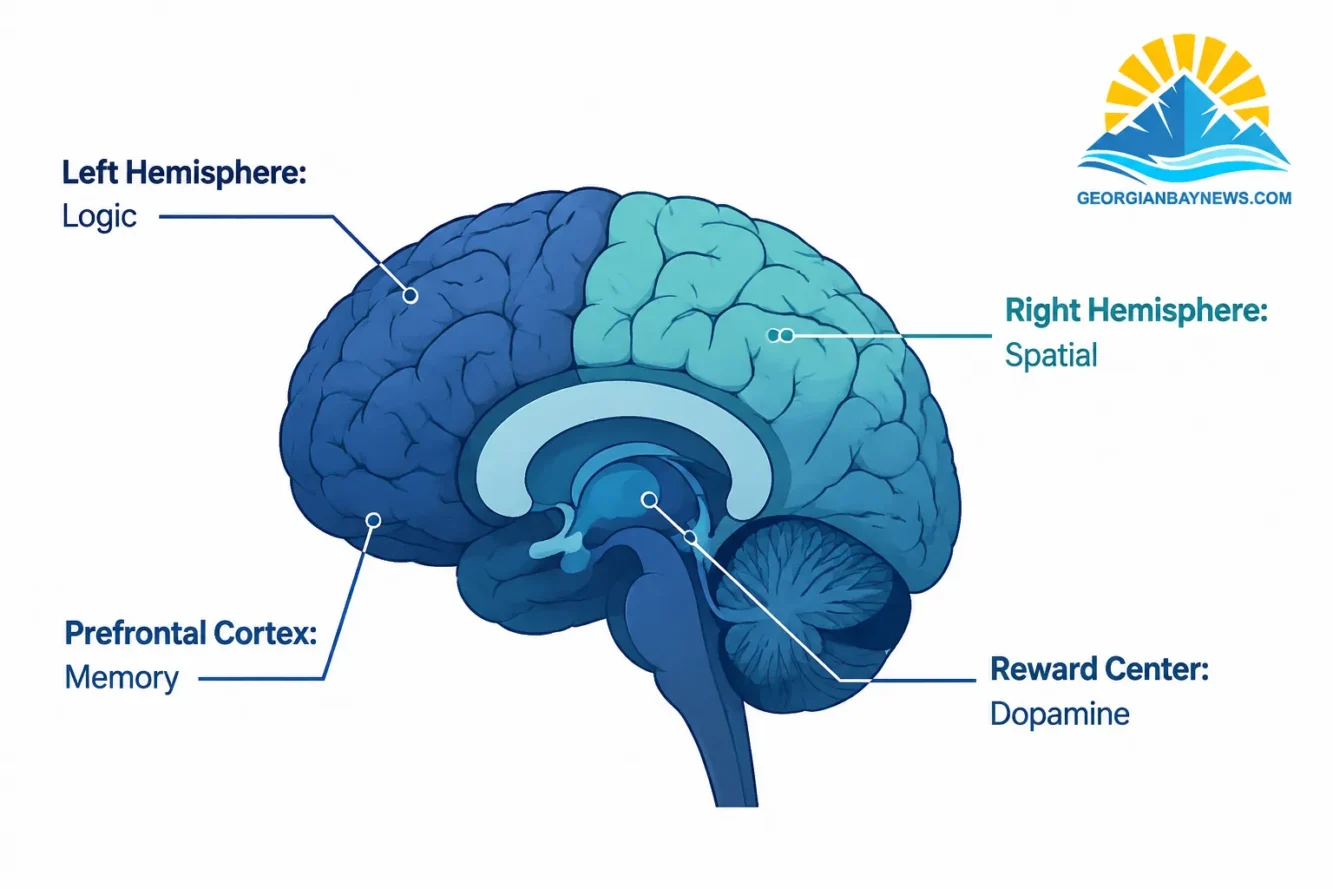
When you solve a puzzle, your brain uses multiple cognitive domains at once. You rely on memory to recall shapes and patterns, logic to deduce where pieces fit, and spatial reasoning to visualize the final image. This multi-domain activation promotes neuroplasticity, allowing the brain to adapt and form new connections. Maintaining these connections is a core component of overall Longevity Secrets for long-term health.
How Do Puzzles Improve Memory and Focus?
Puzzles improve memory by reinforcing the neural connections responsible for recalling information, and they enhance focus by requiring sustained attention to detail. Working through a complex puzzle trains the brain to filter out distractions and concentrate on a single task.
During a jigsaw puzzle, you constantly compare the piece in your hand to the image on the box, testing your short-term memory. Over time, this repetitive recall strengthens synapses. The focused attention required to solve puzzles also trains the brain to sustain concentration, a skill that transfers to daily tasks. Being Smart about your daily routine means incorporating activities that build this focus.
Can Puzzles Help Prevent Dementia and Cognitive Decline?
Puzzles cannot completely prevent dementia, but they help build a “cognitive reserve” that delays the onset of symptoms and cognitive decline. A strong cognitive reserve allows the brain to adapt to damage by using alternative pathways.
Research indicates that keeping the brain active with mentally stimulating activities can push back the onset of cognitive decline by several years. Puzzles act as a protective factor. However, they are most effective when combined with physical exercise, a healthy diet, and social interaction, rather than used as a standalone shield.
How Do Puzzles Affect Dopamine and Brain Chemistry?
Solving puzzles triggers the release of dopamine, a neurotransmitter that regulates mood, memory, and concentration. Every small success during a puzzle, like fitting a tricky piece or solving a crossword clue, creates a micro-burst of this feel-good chemical.
This dopamine release encourages the brain to keep working toward the final goal. It creates a positive feedback loop that improves motivation and focus. The mood-boosting effects of dopamine are similar to the psychological benefits of practicing Gratitude, fostering a sense of accomplishment and well-being.
Can Puzzles Help With Anxiety and Stress Relief?
Puzzles help with anxiety and stress relief by inducing a meditative “flow state” where the brain focuses entirely on the present task, pushing aside intrusive thoughts. The structured nature of a puzzle provides a sense of control and predictability.
When concentrating on a puzzle, the brain shifts from a beta state (active, alert, sometimes anxious) to an alpha state (relaxed, reflective). This shift lowers heart rate and blood pressure. For those looking to manage stress, combining puzzle-solving with practices like Soul Expression or Square Foot Gardening can provide a well-rounded mental health routine.
What Do Puzzles do to Your Brain? The Best Types for Brain Health
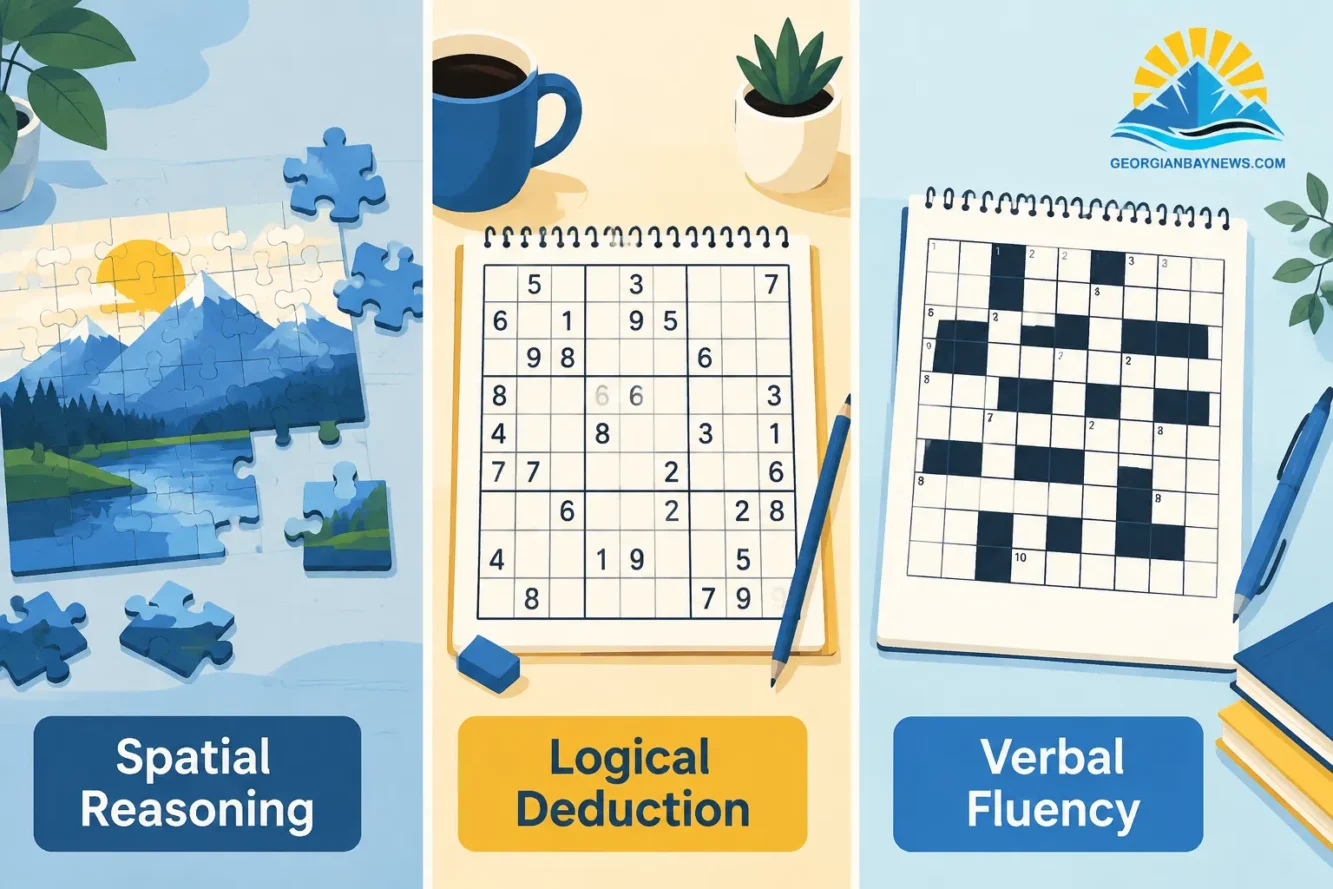
The best puzzles for brain health are those that challenge different cognitive skills, such as crosswords for verbal fluency, sudoku for logic, and jigsaw puzzles for spatial reasoning. Rotating between different types provides the most comprehensive brain workout.
A diverse puzzle diet prevents the brain from getting too comfortable with one type of problem.
- Crosswords: Build vocabulary and verbal recall.
- Sudoku: Enhances logical deduction and pattern recognition.
- Jigsaw puzzles: Improve visual-spatial reasoning and fine motor skills.
- Logic puzzles: Challenge executive function and planning.
Are Jigsaw Puzzles Better Than Sudoku for Your Brain?
Jigsaw puzzles are not inherently better than sudoku; they simply target different areas of the brain. Jigsaw puzzles excel at visual-spatial processing, while sudoku strengthens mathematical logic and deductive reasoning.
Choose jigsaw puzzles if you want to improve visual memory and hand-eye coordination. Choose sudoku if you want to enhance your ability to spot patterns and follow logical sequences. Doing both is better than sticking to just one, as variety challenges the brain more effectively.
Do Digital Puzzles Have the Same Brain Benefits as Physical Ones?
Digital puzzles provide similar cognitive benefits as physical puzzles, but they lack the tactile feedback that enhances fine motor skills and spatial memory. Screen-based puzzles are still highly effective for logic and memory training.
Physical jigsaw puzzles allow you to physically sort pieces by shape and texture, engaging the somatosensory cortex. Digital puzzles are more accessible and convenient, making them a good option for travel or quick mental breaks, but they miss the tactile element.
What’s the Difference Between Puzzle Benefits for Kids vs Adults?
For kids, puzzles build foundational neural pathways and develop spatial awareness, while for adults, puzzles maintain existing connections and slow age-related decline. The best age to start doing puzzles is toddlerhood, but adults gain significant benefits by starting at any age.
Children’s brains are highly plastic, meaning new connections form rapidly. Simple peg puzzles teach toddlers shapes and coordination. For adults, puzzles act as maintenance, keeping the mind agile. It is never too late to start experiencing the cognitive benefits.
How Often Should You Do Puzzles to See Mental Benefits?
You should do puzzles for about 15 to 30 minutes a day to see mental benefits, with noticeable improvements in focus and processing speed appearing within a few weeks. Consistency matters more than the duration of each session.
Short, daily sessions keep the brain engaged without causing fatigue. If you only puzzle once a week for two hours, you may experience diminishing returns due to mental exhaustion. A daily habit builds stronger, lasting neural pathways.
Do Puzzles Actually Make You Smarter or Just Keep Your Brain Sharp?
Puzzles generally keep your brain sharp rather than raising your baseline intelligence quotient (IQ). They improve the efficiency of your existing cognitive processes rather than fundamentally altering your innate cognitive capacity.
Think of puzzles as a gym workout for the brain. Lifting weights makes you stronger and fitter, but it doesn’t change your genetic potential. Similarly, puzzles improve cognitive fitness, making you better at problem-solving and memory tasks.
What Do Puzzles do to Your Brain? Downsides of Overdoing It
The main downside to doing too many puzzles is the risk of neglecting other important brain-healthy activities, such as physical exercise and social interaction. Overdoing puzzles can also lead to eye strain and frustration.
If puzzle-solving replaces physical activity, you lose out on the cardiovascular benefits that directly support brain health. Also, spending money excessively on new puzzles, rather than swapping or borrowing, can strain your budget. Mindful Spending on hobbies is key to a balanced lifestyle.
Conclusion
Puzzles are a powerful, accessible tool for maintaining cognitive health, reducing stress, and improving memory. They do not make you inherently smarter, but they keep your brain functioning at its best by building cognitive reserve and releasing mood-boosting dopamine.
To get started, choose a puzzle type that you enjoy, whether it is a daily crossword or a 500-piece jigsaw. Dedicate 15 to 30 minutes a day to the activity, and rotate between different types of puzzles to challenge various parts of your brain. Remember to balance your mental workouts with physical exercise and social activities for complete cognitive wellness in 2026.
Frequently Asked Questions
Do puzzles increase IQ?
No, puzzles do not increase your baseline IQ. They improve cognitive efficiency, memory, and problem-solving speed, which helps you perform at your maximum potential.
Can puzzles cure anxiety?
Puzzles cannot cure clinical anxiety, but they can help manage mild anxiety by inducing a relaxed, meditative flow state that distracts the brain from stressors.
How long should I do puzzles each day?
Aim for 15 to 30 minutes a day. Short, consistent sessions are more effective for building neural pathways than occasional, hours-long marathon sessions.
Are digital puzzles bad for your brain?
Digital puzzles are not bad for your brain and offer similar logic and memory benefits. However, they lack the tactile feedback of physical puzzles, which helps engage fine motor skills.
Do puzzles help with ADHD?
Puzzles can help individuals with ADHD by providing a structured, engaging task that improves sustained attention and dopamine regulation, though they are not a replacement for medical treatment.
What is the best puzzle for older adults?
Jigsaw puzzles and crosswords are excellent for older adults. Jigsaw puzzles maintain fine motor skills and spatial reasoning, while crosswords preserve verbal memory and recall.
Content, illustrations, and third-party video appearing on GEORGIANBAYNEWS.COM may be generated or curated with AI assistance or reproduced pursuant to the fair dealing provisions of the Copyright Act, R.S.C. 1985, c. C-42. Attribution and hyperlinks to original sources are provided in acknowledgment of applicable intellectual property rights. Such referencing is intended to direct traffic to and support the original rights holders’ platforms.