

















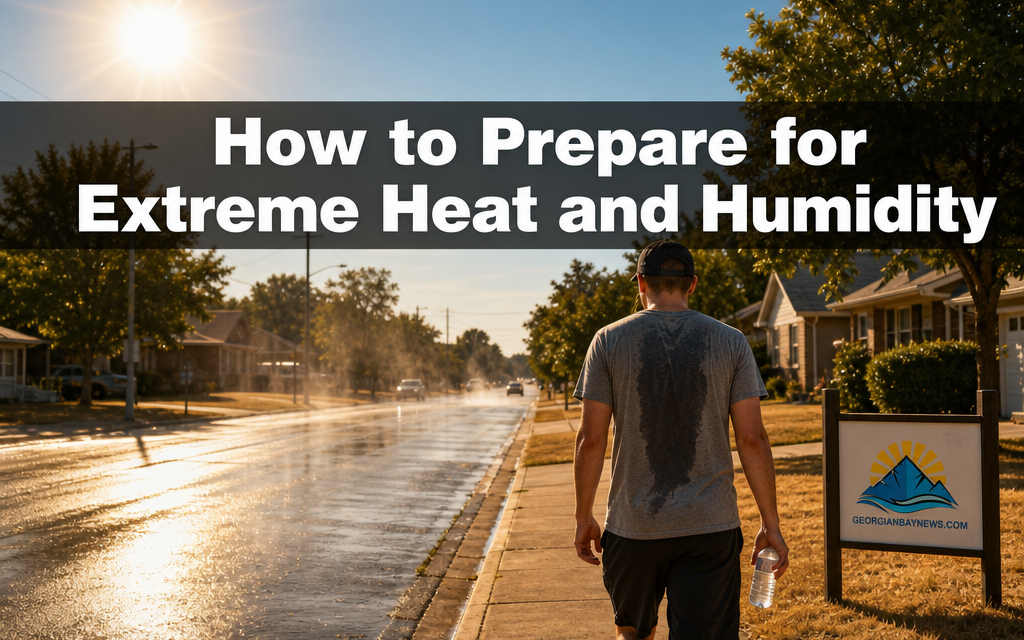
☀️ How to Prepare for Extreme Heat and Humidity: A Complete Survival Guide | Including Pets 🦮
Last updated: June 5, 2026
Quick Answer: Knowing how to prepare for extreme heat and humidity can prevent serious illness and even save lives. The key steps are staying hydrated with water and electrolytes, wearing breathable clothing, identifying cool spaces, protecting vulnerable people and pets, and stocking emergency supplies before a heat wave arrives.
Key Takeaways
- Extreme heat is officially defined as temperatures that exceed a region’s historical average by a significant margin, typically above 32C (90F) with high humidity.
- The combination of heat and humidity is more dangerous than heat alone because the body cannot cool itself through sweating as effectively.
- Drink at least 2 to 3 litres of water per day during a heat wave, more if you are active outdoors.
- Seniors, young children, and people with chronic illness face the highest risk and need extra monitoring.
- Pets can develop heat stroke quickly and should never be left in parked vehicles or without shade and fresh water.
- Cooling centres, wet towels, and fans with open windows are effective strategies when air conditioning is not available.
- Light-coloured, loose-fitting, moisture-wicking clothing significantly reduces heat stress in high humidity.
- Emergency supplies should include water, electrolyte packets, a battery-powered fan, a thermometer, and a first-aid kit.
What Temperature Counts as Extreme Heat?
Extreme heat is not a fixed number. Environment and Climate Change Canada defines an extreme heat event as temperatures that are 10C or more above the historical average for a region, sustained over two or more days. In practical terms, most public health agencies issue heat warnings when temperatures reach 32C to 35C (90F to 95F) with high humidity, or when the humidex (the “feels like” temperature) exceeds 40C.
In Southern Ontario and the Georgian Bay region, a heat warning is typically issued when daytime temperatures hit 31C or higher with a humidex of 40 or above for two consecutive days. Residents in South Georgian Bay should monitor local alerts closely during summer months.
How Dangerous Is Heat and Humidity Combined?
High humidity is what turns a hot day into a life-threatening one. When relative humidity is above 60%, sweat cannot evaporate efficiently from the skin, which is the body’s primary cooling mechanism. The result is a rapid rise in core body temperature.
According to Health Canada, heat is the leading weather-related cause of death in the country. A humidex above 45 is considered dangerous for all people, regardless of age or fitness level.
- Below 29 humidex: Little to no discomfort
- 30 to 39 humidex: Some discomfort, limit strenuous activity
- 40 to 45 humidex: Great discomfort, avoid exertion
- Above 45 humidex: Dangerous, risk of heat stroke
Symptoms of Heat Exhaustion vs. Heat Stroke
These two conditions are not the same, and the difference matters for how you respond.
Heat exhaustion is serious but treatable with rest and fluids. Signs include heavy sweating, cool or pale skin, nausea, dizziness, headache, and a rapid weak pulse. Move the person to a cool area, give water, and apply cool wet cloths.
Heat stroke is a medical emergency. The body temperature rises above 40C (104F), sweating may stop, and the person may become confused, lose consciousness, or have a seizure. Call 911 immediately and cool the person with ice packs or cold water while waiting for help.
Never wait to see if heat stroke resolves on its own. Every minute without cooling increases the risk of organ damage or death.
How Much Water Should You Drink in Extreme Heat?
During a heat wave, the standard advice of eight glasses per day is not enough. Most adults need 2.5 to 3.5 litres of water daily in extreme heat, and more if working outdoors or exercising.
Hydration strategies that work:
- Drink water before you feel thirsty. Thirst is already a sign of mild dehydration.
- Add electrolyte packets or a pinch of salt and a squeeze of lemon to water to replace minerals lost through sweat.
- Eat water-rich foods: watermelon, cucumber, strawberries, celery, and oranges all contribute to fluid intake.
- Avoid alcohol, sugary sodas, and excessive caffeine, as these increase fluid loss.
- Set a reminder to drink every 30 to 60 minutes if you tend to forget.
Best Ways to Stay Cool Without AC
No air conditioning is not a reason to panic. Several low-cost methods can meaningfully reduce indoor temperatures.
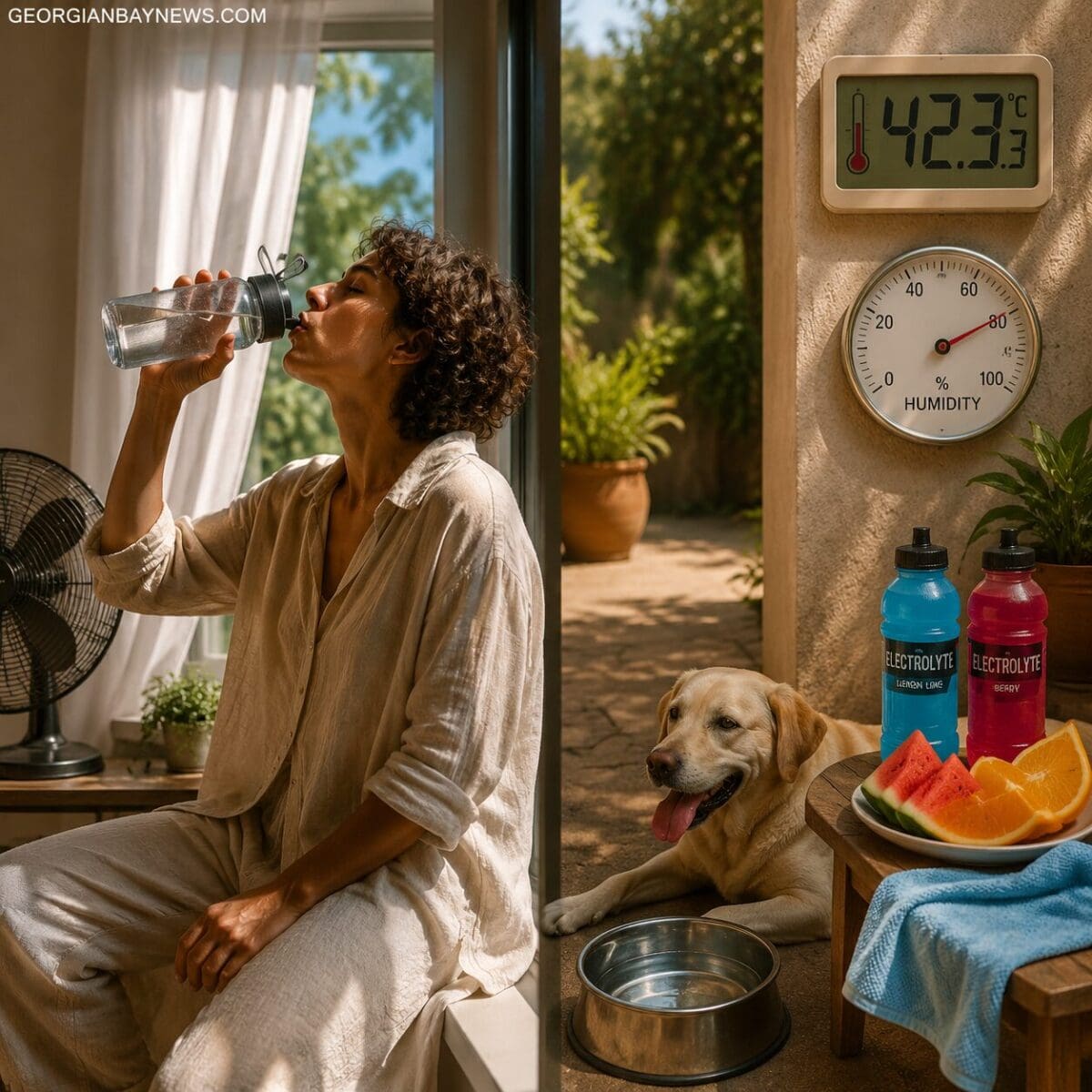
Cheap cooling strategies for low-income homes and anyone without AC:
- Close blinds and curtains on sun-facing windows during the day to block radiant heat.
- Open windows on opposite sides of the home at night to create cross-ventilation.
- Place a shallow pan of ice in front of a fan to cool the air moving through the room.
- Sleep on the lowest floor of the home, as heat rises.
- Use a damp sheet or cooling towel on the neck, wrists, and ankles.
- Visit free public cooling centres, libraries, or shopping centres during peak heat hours (11 a.m. to 4 p.m.).
- Take cool (not ice cold) showers to lower body temperature.
For residents who rely on social programs for support, many municipalities operate free cooling centres during declared heat emergencies. Check with your local municipality for locations.
What Should Seniors Do During Heat Waves?
Seniors face the highest risk during extreme heat because the body’s ability to regulate temperature decreases with age, and many medications impair sweating or increase dehydration. People over 65 should treat every heat warning as a serious event.
Specific steps for older adults:
- Check in with a neighbour, friend, or family member at least twice daily during a heat wave.
- Avoid going outdoors between 11 a.m. and 4 p.m.
- Keep a list of medications that may increase heat sensitivity and discuss them with a doctor before summer.
- If living alone, register with local emergency services or a friendly visits program that checks on vulnerable residents.
- Keep a thermometer indoors. If the room temperature exceeds 32C, move to a cooler location.
Can Pets Get Heat Stroke?
Yes, and it happens faster than most owners expect. Dogs and cats cannot sweat through their skin and rely almost entirely on panting to cool down. A dog left in a parked car on a 29C day can experience fatal heat stroke within 10 minutes.
Signs of heat stroke in pets:
- Excessive panting or drooling
- Bright red or pale gums
- Vomiting or diarrhea
- Stumbling or collapse
- Glazed eyes
What to do: Move the pet to a cool area immediately, apply cool (not cold) water to the paw pads and neck, and get to a veterinarian as fast as possible. Never leave pets in parked vehicles, even with windows cracked. Always provide shade and fresh water outdoors. Pets with flat faces (bulldogs, Persian cats) and thick coats are especially vulnerable.
What Clothing Helps Most in High Humidity?
Loose-fitting, light-coloured, moisture-wicking fabrics are the best choice for high humidity. Dark colours absorb more radiant heat, and tight clothing traps heat against the skin.
Best fabric choices:
- Linen: Highly breathable, absorbs moisture, dries quickly
- Cotton: Comfortable but holds moisture longer than linen
- Moisture-wicking synthetics: Designed to pull sweat away from skin
- Avoid: Polyester blends that trap heat, denim, and dark colours in direct sun
A wide-brimmed hat reduces sun exposure to the face and neck, which are high-heat areas. UV-protective sunglasses also reduce eye strain from glare-intensified heat.
Emergency Supplies for Heat Wave Survival
Preparing before a heat event is far easier than scrambling during one. Keep a dedicated heat emergency kit accessible.
Essential heat wave supplies:
ItemPurposeWater (4L per person per day)Core hydrationElectrolyte packets or sports drinksReplace lost mineralsBattery-powered or hand fanCooling without electricityCooling towelsRapid skin temperature reductionIndoor thermometerMonitor room temperatureFirst-aid kit with thermometerDetect heat illness earlySunscreen (SPF 30 or higher)Prevent sunburn, which worsens heat stressLightweight clothing and hatReduce heat absorptionList of local cooling centresKnow where to go if home becomes unsafe
For broader emergency preparedness, staying safe resources from local authorities are a reliable starting point.
Signs Your Home Might Not Be Heat Safe
Not every home handles heat the same way. Older buildings, top-floor apartments, and homes with poor insulation can become dangerously hot even when outdoor temperatures are moderate.
Warning signs your home is a heat risk:
- Indoor temperature consistently exceeds outdoor temperature by 5C or more
- No cross-ventilation (windows only on one side)
- Dark roof or no attic insulation
- Rooms above 32C by early afternoon
- No shading on south- or west-facing windows
If your home regularly becomes unsafe during heat waves, consider whether a small home or living arrangement with better passive cooling is a longer-term option.
How to Protect Electronics During Extreme Heat
Heat damages electronics by degrading battery cells, warping components, and causing thermal shutdowns. Most consumer electronics are rated to operate safely up to 35C to 40C. Sustained temperatures above that range can cause permanent damage.
- Keep laptops, phones, and tablets out of direct sunlight and away from hot car interiors.
- Do not charge devices in enclosed spaces during a heat wave, as charging generates additional heat.
- Store backup batteries in a cool, dry location.
- If a device feels unusually hot, power it off and move it to a cooler area before restarting.
How Long Can Humans Survive in 100% Humidity?
At 100% relative humidity, survival time depends almost entirely on temperature. At 35C (95F) with 100% humidity, the human body reaches its maximum sustainable “wet-bulb temperature” and can no longer cool itself through sweating. Research published in Science Advances (2020) found that a wet-bulb temperature of 35C is the upper limit for human survivability, even for healthy adults at rest. At that threshold, death can occur within hours without cooling intervention.
In practical terms, 100% humidity at moderate temperatures (below 25C) is uncomfortable but not immediately dangerous. The risk escalates sharply as temperature rises above 30C.
Food Options That Help During Extreme Heat
What you eat during a heat wave matters as much as what you drink. Heavy, high-protein meals increase metabolic heat production and stress the digestive system.
Best foods during extreme heat:
- Cold fruit: watermelon, grapes, peaches, berries
- Chilled soups and gazpacho
- Yogurt and smoothies
- Salads with cucumber, tomato, and leafy greens
- Cold whole-grain wraps with light fillings
Foods to limit:
- Red meat and large protein-heavy meals (increase body heat during digestion)
- Spicy foods (raise body temperature)
- Alcohol and sugary drinks (dehydrating)
- Hot meals cooked on a stove or oven (raises indoor temperature)
Conclusion
Knowing how to prepare for extreme heat and humidity is a practical skill that every household needs, especially as summer heat events become more intense across Canada. The core actions are straightforward: hydrate consistently with water and electrolytes, dress in breathable fabrics, keep your home as cool as possible, and know the warning signs of heat exhaustion and heat stroke before they happen.
Actionable next steps:
- Build a heat emergency kit this week, before temperatures rise.
- Identify the nearest public cooling centre in your community.
- Check in on elderly neighbours and family members at the start of every heat warning.
- Make a plan for your pets that includes shade, water, and a cool indoor space.
- Review your home for heat risk factors and address ventilation gaps now.
For ongoing local updates and community safety news, visit Georgian Bay News regularly throughout the summer season.
FAQ
What is the humidex and why does it matter?
The humidex combines temperature and humidity into a single “feels like” number. A humidex of 40 means the body experiences conditions equivalent to 40C in dry heat, even if the thermometer reads lower. It is a more accurate measure of heat stress than temperature alone.
How do I know if I am dehydrated during a heat wave?
Dark yellow or amber urine is the clearest sign. Other indicators include dry mouth, headache, dizziness, and reduced urination. Pale yellow urine generally indicates adequate hydration.
Is it safe to exercise outdoors during a heat wave?
Strenuous outdoor exercise should be avoided when the humidex exceeds 40. If you must exercise, do so before 9 a.m. or after 7 p.m., carry water, and stop immediately if you feel dizzy or nauseous.
Can a regular household fan prevent heat stroke?
A fan alone is effective when temperatures are below 35C. Above that threshold, fans circulate hot air and may accelerate dehydration. In very high temperatures, a fan combined with a wet cloth on the skin is more effective.
What medications increase heat risk?
Diuretics, antihistamines, antidepressants, beta-blockers, and antipsychotics can all impair the body’s ability to regulate temperature. Anyone on these medications should consult their doctor about heat precautions.
How can I help a neighbour during a heat wave?
Check in by phone or in person at least once daily. Offer to share a cool space, bring water, or help them locate a cooling centre. Elderly and isolated residents are most at risk.
At what age do children become vulnerable to heat illness?
Infants and children under four are highly vulnerable because their bodies heat up three to five times faster than adults. Never leave children in parked vehicles and ensure they drink fluids regularly even if they do not ask.
Should I wet my pet’s fur during a heat wave?
Yes, cool water on a dog’s paw pads, belly, and neck helps lower body temperature. Avoid ice-cold water, which can cause shock. Always provide a shaded, ventilated resting area with fresh water.
References
- Health Canada. (2011). Extreme Heat Events Guidelines: Technical Guide for Health Care Workers. Government of Canada. https://www.canada.ca/en/health-canada/services/environmental-workplace-health/reports-publications/climate-change-health/extreme-heat-events-guidelines-technical-guide-health-care-workers.html
- Raymond, C., Matthews, T., & Horton, R.M. (2020). The emergence of heat and humidity too severe for human tolerance. Science Advances, 6(19). https://doi.org/10.1126/sciadv.aaw9461
- Environment and Climate Change Canada. (2022). Heat Warnings and Advisories. Government of Canada. https://www.canada.ca/en/environment-climate-change/services/weather-general-tools-resources/warnings-advisories.html
- Public Health Agency of Canada. (2020). Extreme Heat and Your Health. Government of Canada. https://www.canada.ca/en/public-health/services/health-promotion/environmental-workplace-health/extreme-heat.html