











⚖️ Indigenous rights mean justice for all | georgianbaynews.com
By David Suzuki
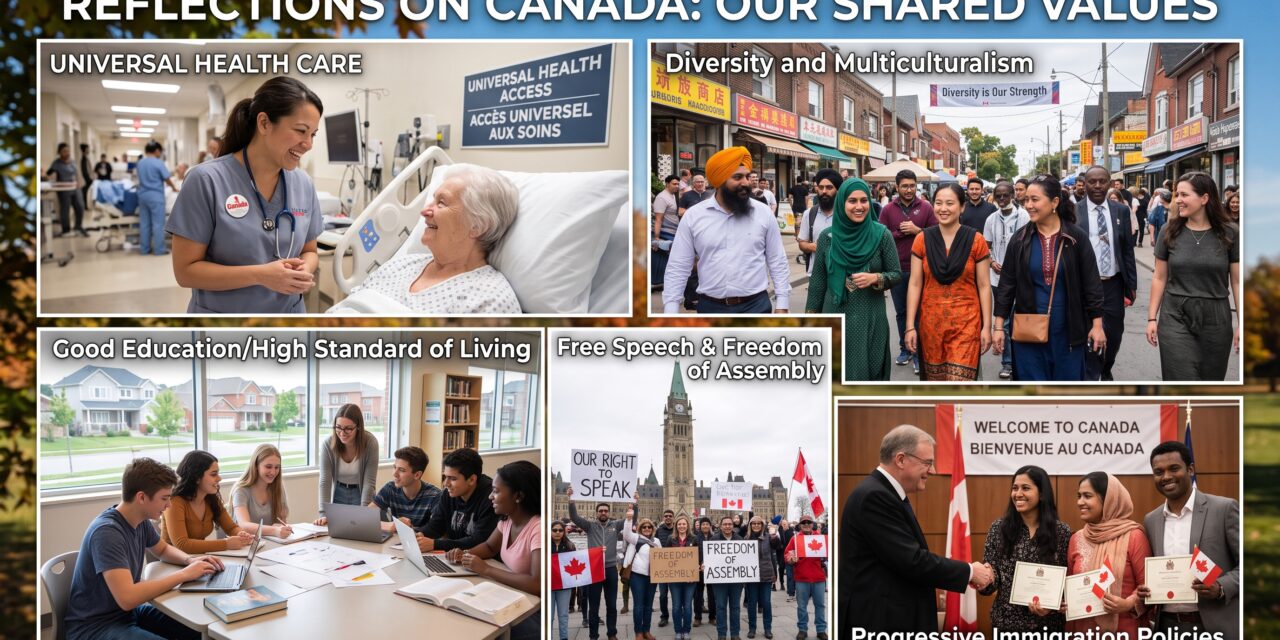
We have much to be proud of in this country we call Canada. Universal health care. Diversity and multiculturalism. A high standard of living. Good education. Free speech, freedom of assembly and progressive immigration policies.
But we can’t take it for granted, and we still have far to go. We can’t forget that European colonizers took the land from people who had lived here for millennia, moving them onto reservations, outlawing their traditional practices and forcing them into residential schools whose stated purpose was to “kill the Indian in the child.”
This attempted annihilation of Indigenous Peoples and their cultures was based on a misguided theory of superiority — the idea that the might of weapons and the “science” and technology to exploit people, land and “resources” worldwide meant European culture was best.
They saw those who understood their environments and their place in nature as primitive savages. The planet and everything on it were theirs for the taking.
We’re now seeing the consequences: climate disruption, pollution, species extinction, water shortages, overpopulation, deepening inequities between Indigenous and non-Indigenous communities, rampant racism, conflict over increasingly scarce resources, global warfare, human misery…
The recently concluded 57thsession of the international Permanent Peoples’ Tribunal, on Missing and Disappeared Indigenous Children and Unmarked Graves in Canada, shone a spotlight on this ongoing and intentional attempt to destroy Indigenous communities, through genocidal acts such as forcibly separating Indigenous children from their homes. Canada’s last residential school, in Rankin Inlet, closed in 1997!
Convened by request from the Native Women’s Shelter of Montreal, the tribunal’s panel of five judges from seven countries detailed the “continuing impacts of genocide and crimes against humanity.”
“The panel heard from several witnesses about the profound harms caused to children, parents and communities by forced separation and the denigration and destruction of their language and culture; how the brutality and sexual abuse by clergy and school staff taught children to dissociate; how children punished for helping other children learned to become unkind; how abused children became abusive parents; how victims of sexual abuse were fearful as parents of showing affection to their children; how disruption of identity, and unmooring from culture and family have led to an epidemic of suicide and other mental health issues.”
These harms continue, through “forced removal of children from their parents, in many cases without attempting culturally appropriate placement” and “continuing encroachment on Indigenous lands for extractive activities that pollute lands, render lands uninhabitable and cause illness,” among other practices, including surveillance and prosecution of Indigenous land defenders.
Residential schools didn’t just separate children from their families; they severed relationships with language, culture and land. When you break a people’s connection to the land, you disrupt generations of ecological knowledge and stewardship that science can’t duplicate because it’s distilled from thousands of years of observation and experience.
Indigenous land care offers a blueprint for sustainability based on respect, humility and reciprocity. Those systems were intentionally damaged through colonial policies based on human supremacy and resource exploitation.
After centuries of abuse and exploitation, Indigenous Peoples are speaking up and taking back their power. It’s up to us all to do our part.
Following the hearing and in anticipation of its final decision, the tribunal offered 11 recommendations, from respecting Indigenous self-determination consistent with the United Nations Declaration on the Rights of Indigenous Peoples to condemning residential school denialism and hate speech, which still exist throughout the country.
The tribunal’s final recommendation is one we must all heed: “Develop Indigenous-led public education on Indigenous law and culture, Canadian colonial history and genocide.”
Decolonization means rectifying these serious issues, but it also means understanding our own prejudices and the ways in which we have been complicit. It means analyzing the often-misguided beliefs that have been ingrained in us through media, politics and education.
Healing isn’t only about acknowledging the past; it’s about restoring land relationships and Indigenous rights. Environmental justice can’t happen without Indigenous justice. And reconciliation isn’t real unless it includes land back, stewardship and respect for Indigenous law.
If you care about climate, conservation or justice, support Indigenous voices, learn the history and challenge the systems that created this harm.
Repairing relationships — with communities and with the land — is how we build a future that’s just for everyone.
David Suzuki is a scientist, broadcaster, author and co-founder of the David Suzuki Foundation. Written with David Suzuki Foundation Senior Writer and Editor Ian Hanington.
Learn more at davidsuzuki.org.
– END –
EXCERPT: If you care about climate, conservation or justice, support Indigenous voices, learn the history and challenge the systems that created this harm.
KEY WORDS: residential schools, Permanent Peoples’ Tribunal, decolonization, climate disruption, genocide, Indigenous law,
REFERENCES:
Residential schools:
Kill the Indian in the child:
Permanent Peoples’ Tribunal:
Genocidal acts:
https://www.un.org/en/genocide-prevention/definition
Land back:
https://davidsuzuki.org/what-you-can-do/what-is-land-back
Learn the history and challenge the systems:
https://davidsuzuki.org/story/environmental-justice-cannot-happen-without-indigenous-justice