














⚽️ 🇨🇦 ⚽️ What Are the First Games Scheduled in Canada and the USA for the 2026 FIFA World Cup: Complete Host City Guide
Last updated: June 10, 2026
Quick Answer
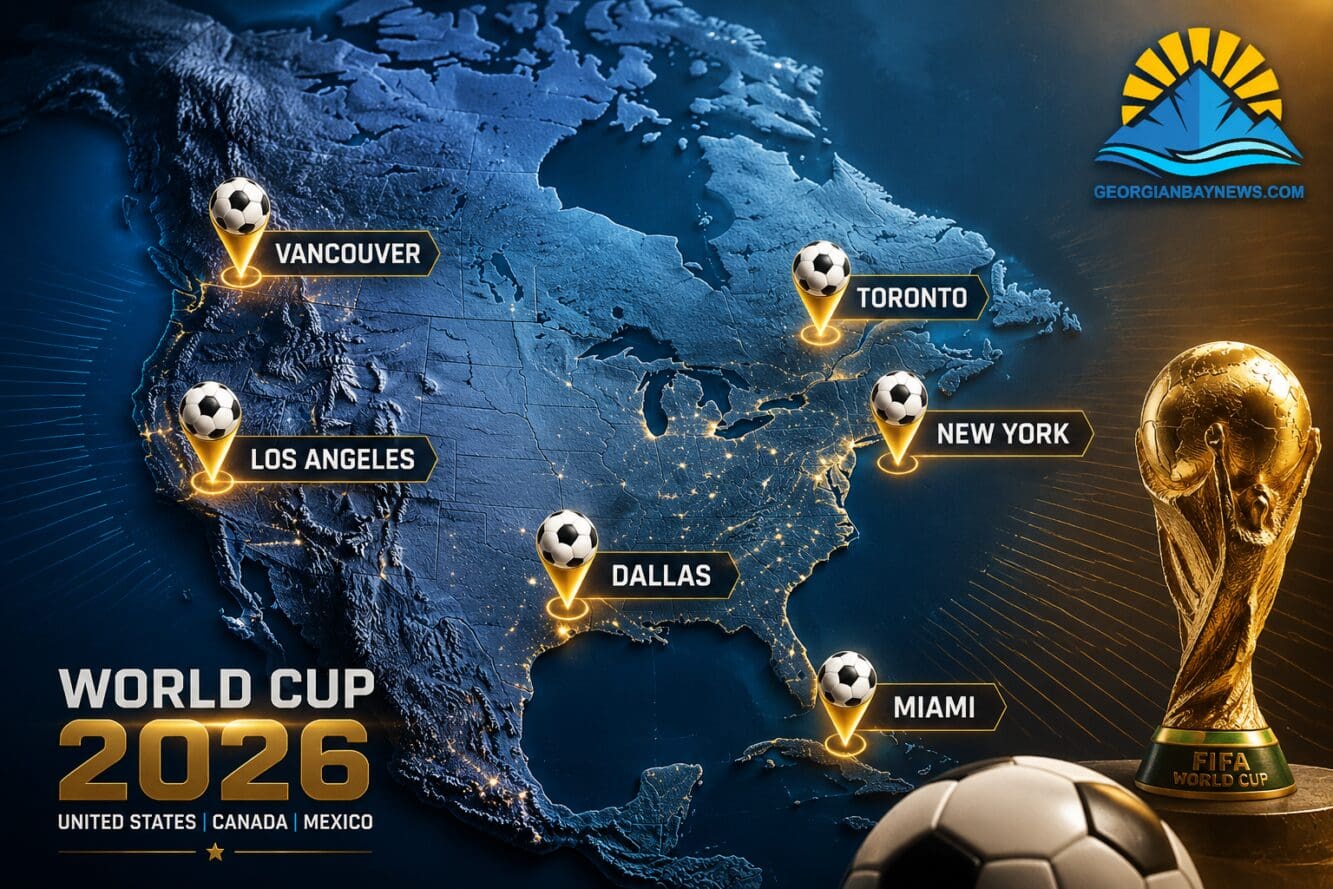
The 2026 FIFA World Cup kicks off on June 11, 2026, with Mexico hosting the opening match at Estadio Azteca. Canada’s first game takes place June 12 at BMO Field in Toronto, while the USA’s opening match happens the same day at SoFi Stadium in Los Angeles. The tournament features 104 matches across 16 host cities, with 13 cities in the United States, 2 in Canada (Toronto and Vancouver), and 3 in Mexico.
Key Takeaways
- The first games scheduled in Canada and the USA for the 2026 FIFA World Cup begin on June 12, 2026, one day after Mexico’s opener.
- Toronto’s BMO Field and Vancouver’s BC Place are Canada’s only two host venues, hosting 13 matches combined.
- SoFi Stadium (Los Angeles) and MetLife Stadium (New Jersey) anchor the USA’s marquee fixtures, including the final on July 19, 2026.
- This is the first World Cup with 48 teams and three co-host nations.
- Ticket prices range from roughly USD $60 for group-stage seats to USD $6,730 for premium final tickets, per FIFA’s official pricing tiers.
- Canada qualifies automatically as a co-host and will play its opener in Toronto.
- Fan zones, called FIFA Fan Festivals, will operate in every host city throughout the tournament.
Which Cities Will Host the First World Cup Matches in 2026
Mexico City hosts the tournament opener on June 11, 2026, followed by Toronto and Los Angeles on June 12. These three cities anchor the first 48 hours of competition across all three host nations.
The full host city list includes:
United States (11 cities): Atlanta, Boston, Dallas, Houston, Kansas City, Los Angeles, Miami, New York/New Jersey, Philadelphia, San Francisco Bay Area, and Seattle.
Canada (2 cities): Toronto and Vancouver.
Mexico (3 cities): Guadalajara, Mexico City, and Monterrey.
Each city was selected based on stadium capacity, infrastructure, and FIFA’s logistical requirements. Toronto and Vancouver represent Canada’s first World Cup hosting role since the country has never previously staged a men’s tournament.
How Many Games Are Happening in Canada and USA in the Opening Round
The USA will host 78 of the tournament’s 104 matches, while Canada hosts 13 matches across two cities. In the opening round (group stage), Toronto stages 5 group games and Vancouver hosts 5, with the remaining Canadian matches coming in the knockout rounds.
Here’s the breakdown:
CountryGroup Stage MatchesTotal MatchesUSA6078Canada1013Mexico913
The USA also hosts every match from the quarterfinals onward, including both semifinals and the final at MetLife Stadium.
What Stadiums Are Confirmed for the First FIFA World Cup Games
The confirmed opening venues are Estadio Azteca (Mexico City), BMO Field (Toronto), and SoFi Stadium (Los Angeles). All three are FIFA-approved with expanded capacities for the tournament.
Key venues at a glance:
- BMO Field (Toronto): Expanded to roughly 45,000 seats for the World Cup.
- BC Place (Vancouver): Capacity around 54,500, retractable roof.
- SoFi Stadium (Los Angeles): 70,000+ capacity, fixed roof.
- MetLife Stadium (New Jersey): 82,500 capacity, hosts the final on July 19, 2026.
- AT&T Stadium (Dallas): 80,000+ capacity, hosts 9 matches.
- Mercedes-Benz Stadium (Atlanta): 71,000 capacity.
Toronto’s BMO Field underwent significant expansion to meet FIFA’s minimum capacity threshold, making it Canada’s smallest World Cup venue but among its most atmospheric.
When Exactly Do the First Matches Kick Off in North America
Mexico’s opener kicks off at approximately 11:00 a.m. local time on June 11, 2026, at Estadio Azteca. Canada’s first match at BMO Field is scheduled for the afternoon of June 12, with the USA’s opener at SoFi Stadium also on June 12 in the evening slot.
Exact kickoff times vary by broadcast region. FIFA typically schedules group-stage matches in three daily windows to maximize global viewership: noon, 3:00 p.m., and 6:00 p.m. local time at each venue.
Will Canada Play in the Opening Matches of the 2026 Tournament
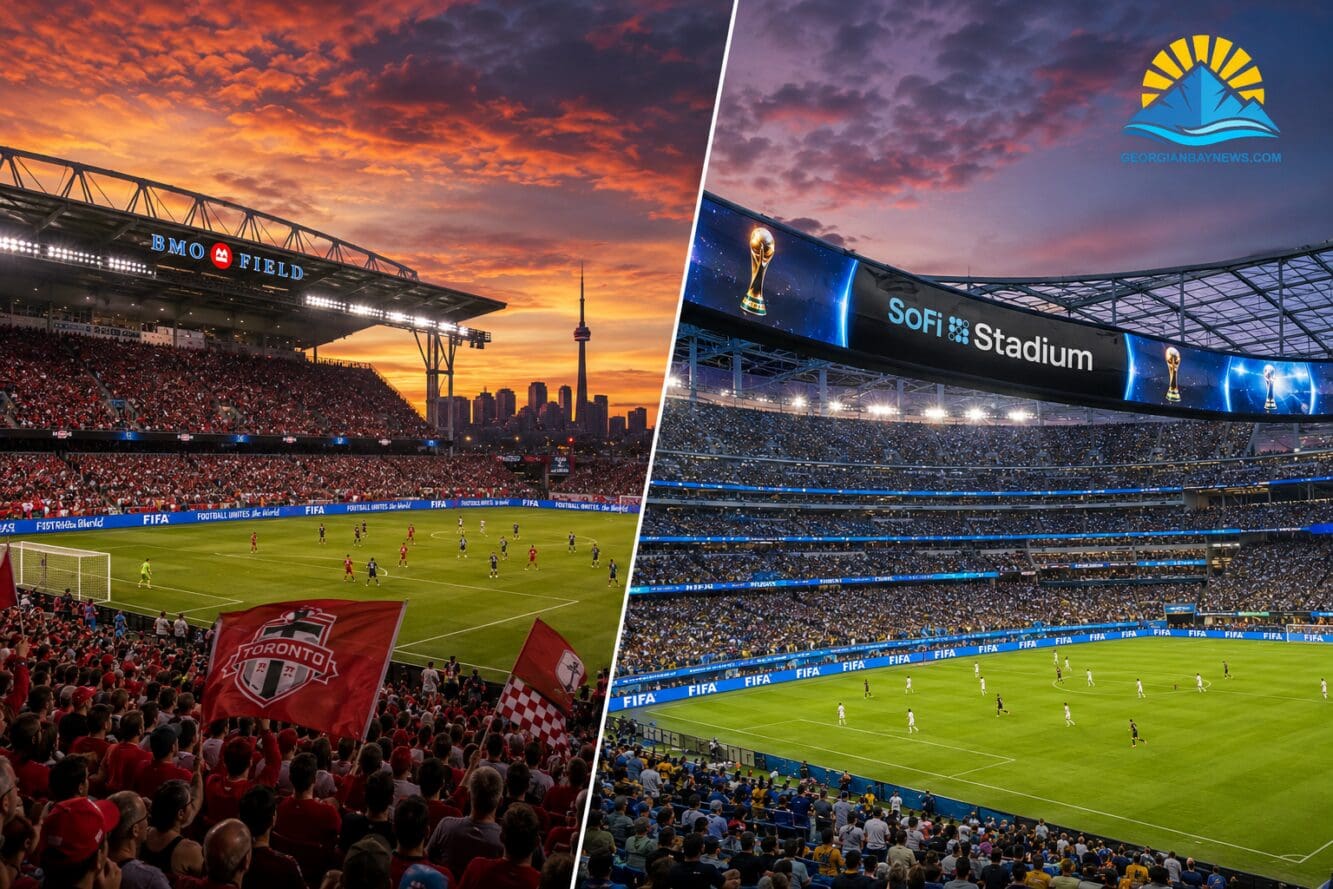
Yes. Canada qualifies automatically as a co-host and will play its opening group-stage match at BMO Field in Toronto on June 12, 2026. This will be the men’s national team’s first home World Cup match in history.
Canada’s recent rise — fueled by Alphonso Davies and the country’s CONCACAF success — has built genuine expectations. The team reached the 2022 World Cup in Qatar after a 36-year absence, and home-soil advantage gives them a credible chance of advancing past the group stage.
Ticket Prices for the Initial World Cup Games in North America
FIFA released official pricing in tiers. Group-stage tickets start at approximately USD $60 for Category 4 (the lowest tier, reserved for host-country residents) and climb to USD $735+ for Category 1 seats. The final at MetLife Stadium ranges from USD $2,030 to USD $6,730.
Pricing tiers (per FIFA’s official 2024 release):
- Group stage: $60–$735
- Round of 32 and 16: $80–$1,025
- Quarterfinals: $200–$2,030
- Semifinals: $455–$4,210
- Final: $2,030–$6,730
Hospitality packages and resale-market prices run substantially higher. Demand for Canada’s opener in Toronto and any USA matches involving high-profile teams will likely push secondary-market prices well past face value.
How to Watch the First FIFA World Cup Matches Live
In the USA, Fox Sports and Telemundo hold English and Spanish broadcast rights. In Canada, TSN and CTV share coverage in English, with TVA Sports in French. Streaming options include Fubo, Sling TV, and the Fox Sports app.
For international viewers, BBC and ITV cover the UK, while broadcasters like beIN Sports, SBS (Australia), and various regional networks carry matches globally. FIFA+ may also offer select streams depending on territory rights.
Tip: Group-stage matches often air mid-day in North America. Set calendar reminders for Canada’s and USA’s opening matches if you want to catch them live.
Which Teams Are Most Likely to Play in the Opening Games
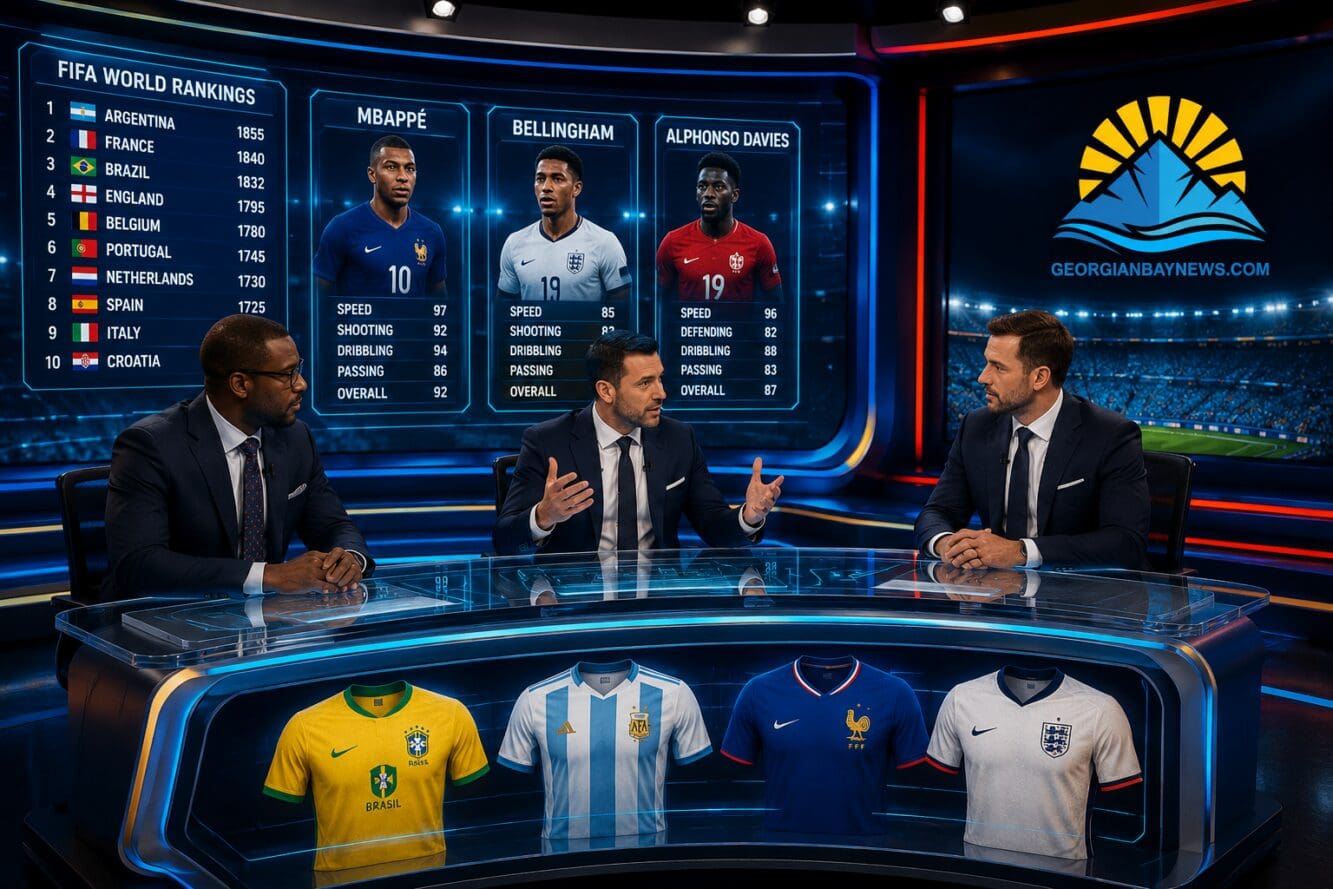
Expert consensus places Argentina, France, Brazil, England, Spain, and Germany as tournament favorites. Co-hosts Canada, USA, and Mexico will each play in opening-round group matches at their home venues. The full draw determines exact matchups, but co-hosts traditionally play in their home cities for the opener.
Top contender breakdown:
- Argentina: Defending champions led by Lionel Messi (likely his final World Cup). Strong squad depth and tactical flexibility.
- France: Kylian Mbappé enters his prime years; deep talent pool across every position.
- Brazil: Vinícius Jr. and Rodrygo lead a creative front line. Pressure to end the title drought since 2002.
- England: Jude Bellingham’s emergence and Harry Kane’s finishing make them genuine contenders.
- Spain: Won Euro 2024; young core including Lamine Yamal and Pedri.
- USA: Christian Pulisic and a generation of European-based players offer real upside on home soil.
- Canada: Alphonso Davies (Bayern Munich) and Jonathan David anchor a fast, counter-attacking side.
Georgian Bay News and columnist John Malloy have followed World Cup soccer for decades, and our team rates this tournament as the most wide-open in recent memory thanks to the expanded 48-team format and unfamiliar North American conditions.
“A World Cup on home soil only happens once in a generation for Canada. This is the moment.” — John Malloy, Georgian Bay News
What Are the Travel Requirements for World Cup Fans in 2026
International fans need a valid passport plus, in many cases, an ESTA (USA), eTA (Canada), or SRE tourist card (Mexico). FIFA has also confirmed a Fan ID program that simplifies cross-border travel for ticket holders moving between host countries.
Quick checklist:
- Passport valid at least 6 months past travel date
- ESTA for USA (visa-waiver countries) or B-2 visitor visa
- eTA for Canada (visa-exempt travelers) or Temporary Resident Visa
- Proof of accommodation and return travel
- Match tickets linked to your FIFA ID
Cross-border drives between Toronto/Buffalo or Vancouver/Seattle are common for fans attending matches in both countries. Allow extra time at land borders during match days.
Differences Between Hosting Venues in Canada Versus USA
Canadian venues are smaller and more compact, with both BMO Field and BC Place seating under 55,000. USA stadiums skew larger, with several NFL venues exceeding 70,000. The atmosphere differs accordingly — Canada’s venues offer tighter, more intimate crowds, while USA stadiums deliver scale and spectacle.
Climate is another factor. June and July weather in Toronto and Vancouver tends to be milder than Dallas, Houston, or Miami, where heat and humidity will be significant variables for players and fans alike. Several USA venues have closed or retractable roofs to manage this.
How Early Should I Book Travel for the First World Cup Matches
Book flights and accommodation immediately if you haven’t already. Hotel inventory in Toronto, Vancouver, and major USA host cities tightened by early 2025, with prices for match-week stays already 3–5x normal rates. Last-minute booking risks both availability and budget.
Booking priorities:
- Match tickets (confirmed first)
- Flights (book 6+ months out for best fares)
- Accommodation (consider Airbnb, short-term rentals, or stays in nearby cities)
- Ground transit and intercity travel
- Travel insurance covering match cancellation or schedule changes
For fans following Canada’s matches across Toronto and Vancouver, planning ground travel and regional logistics early avoids the worst pricing spikes.
Are There Any Special Fan Zones for the Opening Games
Yes. Every host city operates an official FIFA Fan Festival — a free, public viewing zone with large screens, food vendors, live entertainment, and family programming. Toronto’s Fan Festival is expected at Exhibition Place, and Vancouver’s at a downtown waterfront location.
These zones often hold 20,000+ fans and broadcast every match live. They’re a strong alternative for fans without match tickets, and a great pre-match gathering point for ticket holders. Local Canadian communities, including those across South Georgian Bay, are also planning regional watch parties.
FAQ
When does the 2026 FIFA World Cup start?
The tournament begins June 11, 2026, in Mexico City, with North American matches starting June 12.
Where is the final being played?
MetLife Stadium in East Rutherford, New Jersey, on July 19, 2026.
How many teams are in the 2026 World Cup?
48 teams — the largest field in World Cup history, up from 32 in previous editions.
Does Canada automatically qualify?
Yes, as a co-host, Canada qualifies automatically alongside the USA and Mexico.
Can I buy tickets directly from FIFA?
Yes. FIFA.com/tickets is the only official sales channel. Avoid unauthorized resellers.
What’s the cheapest way to attend a World Cup match?
Category 4 group-stage tickets (host-country residents only) start at roughly USD $60.
Will games be played in any other Canadian cities besides Toronto and Vancouver?
No. Edmonton was dropped from the original bid, leaving Toronto and Vancouver as Canada’s only host cities.
How long is the tournament?
39 days, from June 11 to July 19, 2026.
Are fan zones free?
Yes, FIFA Fan Festivals are free to enter, though some may require advance registration during peak matches.
Conclusion
The 2026 FIFA World Cup represents a generational sporting moment for North America, with Canada hosting its first men’s tournament matches in history. The first games scheduled in Canada and the USA for the 2026 FIFA World Cup — June 12 in Toronto and Los Angeles — mark the beginning of 39 days of historic soccer across three nations.
Your next steps:
- Register for FIFA ticket updates at FIFA.com
- Lock in flights and accommodation now if attending
- Bookmark the official match schedule once the full draw is released
- Follow Georgian Bay News for ongoing World Cup coverage from John Malloy and our editorial team
For Canadian fans especially, this is a once-in-a-lifetime opportunity to watch the national team compete on home soil against the best in the world.
Sources
- FIFA Official Tournament Information, FIFA.com (2024–2025)
- FIFA Ticket Pricing Release, FIFA (2024)
- CONCACAF World Cup Qualification Reports (2024)
- Host City Announcements, FIFA (2022)