



















🇨🇦 Canadian Forces Snowbirds: Canada’s Iconic Aerobatic Team | georgianbaynews.com
Last updated: September 10, 2026
Quick Answer: The Canadian Forces Snowbirds are Canada’s national aerobatic demonstration team, officially designated 431 Air Demonstration Squadron and based at 15 Wing Moose Jaw, Saskatchewan. They fly the Canadair CT-114 Tutor jet and have performed across North America since the 1970s. In 2026, the team is completing its final season before the CT-114 Tutor fleet retires, with the last scheduled show on October 11, 2026.
Key Takeaways
- The Canadian Forces Snowbirds are part of the Royal Canadian Air Force and serve as a recruitment and public-relations tool for the Canadian Armed Forces.
- The team flies nine Canadair CT-114 Tutor aircraft, the same airframe used since 1971, making the Tutors over 55 years old in active demonstration service.
- 431 Air Demonstration Squadron is based at CFB Moose Jaw in Saskatchewan, also known as Wing Moose Jaw.
- Defence Minister David McGuinty announced in May 2026 that the Snowbirds will be grounded after the 2026 season, with the CT-114 Tutor fleet retiring after 63 years of operation.
- The team is expected to transition to CT-157 Siskin II turboprop trainers, with a reconstituted demonstration squadron anticipated in the early 2030s.
- The final Snowbirds show in their current configuration is scheduled for October 11, 2026.
- Snowbirds pilots are experienced RCAF officers, typically with over 1,000 flying hours before joining the team.
- Admission to most air shows where the Snowbirds perform is free or covered by the general air show ticket price.
What Are the Canadian Forces Snowbirds?
The Canadian Forces Snowbirds are Canada’s official military aerobatic demonstration team, operating under the Royal Canadian Air Force as 431 Air Demonstration Squadron. The team’s primary mission is to demonstrate the skill of Canadian air force personnel, boost public awareness of the RCAF, and support recruiting efforts across Canada and North America. Based at CFB Moose Jaw in Saskatchewan, the snowbirds aerobatic team has been a defining symbol of Canadian aviation pride for more than five decades.
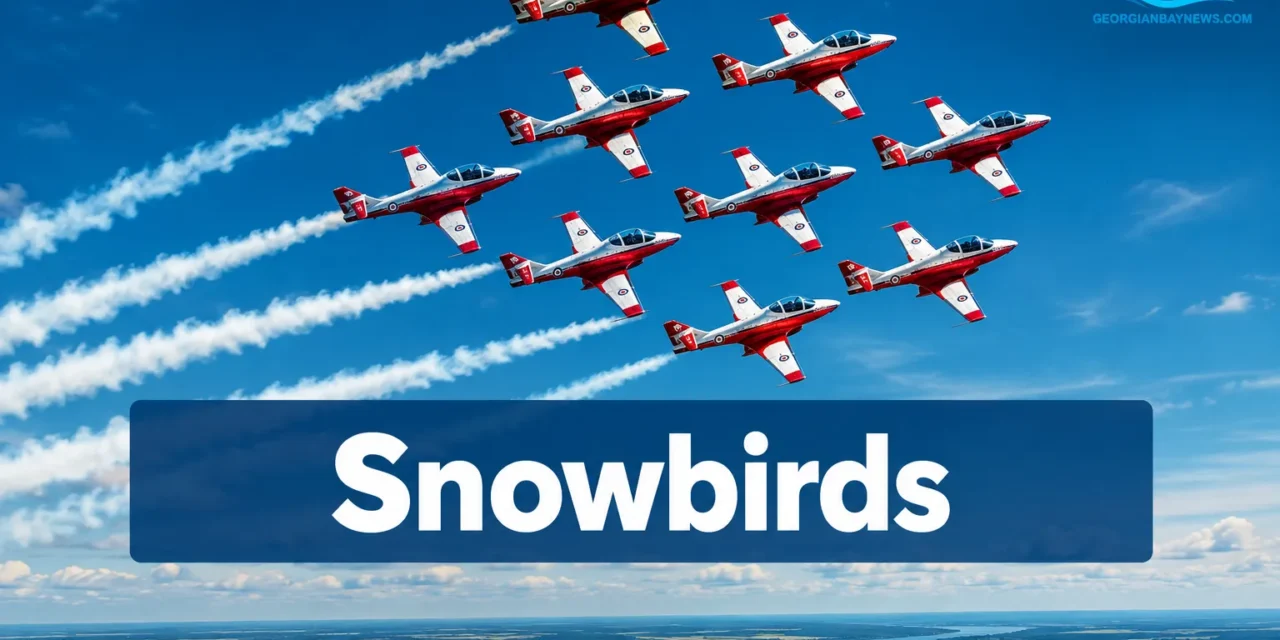
The forces snowbirds operate under the Canadian Armed Forces chain of command, with the RCAF overseeing all operational decisions. The air demonstration squadron typically fields nine aircraft during a show, with additional aircraft and support personnel forming the full team complement. The snowbirds aerobatic team’s red-and-white CT-114 Tutor jets are instantly recognizable at air shows from Toronto to British Columbia.
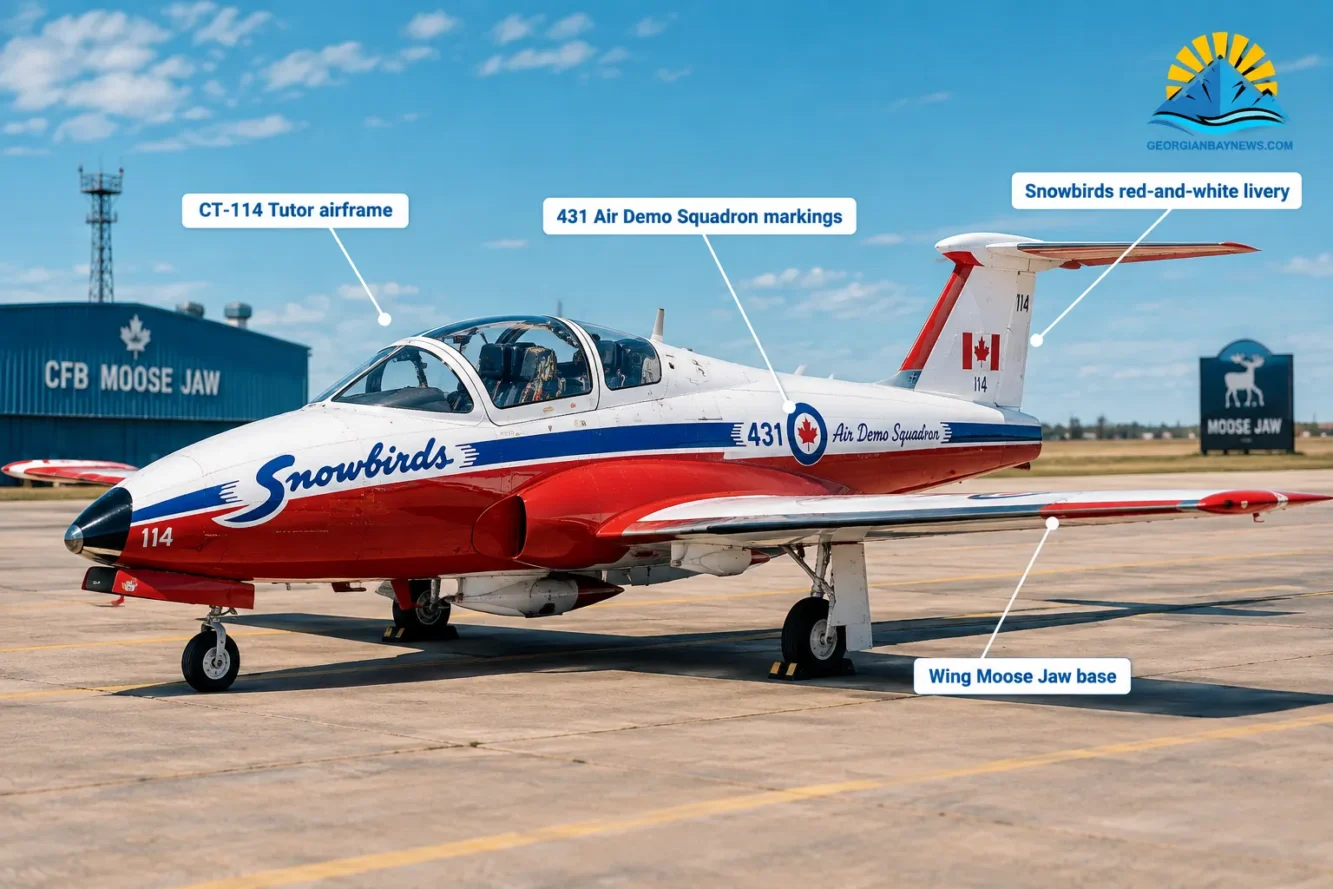
Key facts about the team at a glance:
- Official name: 431 Air Demonstration Squadron
- Branch: Royal Canadian Air Force (RCAF), Canadian Armed Forces
- Base: 15 Wing Moose Jaw, CFB Moose Jaw, Saskatchewan
- Aircraft: Canadair CT-114 Tutor (retiring after 2026 season)
- Active demonstration seasons: Since 1971 under the Snowbirds name
- Typical show aircraft: 9 CT-114 Tutor jets per demonstration
Squadron History: From the Second World War to the Snowbirds Name
The roots of the Canadian Forces Snowbirds trace back to 1942, when 431 (Iroquois) Squadron was formed in Burn, England, as a bomber unit under RAF Bomber Command during the Second World War. The squadron flew Wellingtons, Halifaxes, and Lancasters on combat missions over Europe, establishing a legacy of airmanship that would define the unit for generations.
After the Second World War, the squadron was disbanded and later reformed in various capacities. The postwar era saw the Royal Canadian Air Force invest heavily in jet aviation, and display flying evolved from informal Sabre demonstrations in the 1950s to more structured aerobatic performances through the 1960s. The Canadair CT-114 Tutor became the RCAF’s primary jet trainer in 1963, and the Snowbirds name was officially adopted in June 1971, marking the formal beginning of the forces flying demonstration tradition under that identity.
Key milestones in the squadron’s history:
- 1942: 431 (Iroquois) Squadron formed in England as a wartime bomber unit
- 1963: CT-114 Tutor enters RCAF service as primary jet trainer
- June 1971: “Snowbirds” name adopted; forces flying demonstration team established
- January 15, 1975: Formally designated the Canadian Forces Air Demonstration Team
- April 1, 1978: Awarded permanent squadron status as 431 Air Demonstration Squadron
- 2026: Final season before CT-114 Tutor fleet retirement
The history of the RCAF Snowbirds reflects Canada’s broader commitment to military aviation excellence, with the team serving as a living link between the wartime generation and today’s Canadian air force.
What Aircraft Do the Snowbirds Fly, and What Comes Next?
The Canadian Forces Snowbirds fly the Canadair CT-114 Tutor, a single-engine jet trainer that has been the team’s only aircraft since 1971. The CT-114 Tutor served as the RCAF’s primary jet trainer from 1963 until 2000, and the airframe is now over 55 years old. Approximately $31 million was recently invested in upgrading a fleet of around 20 CT-114 trainer jets, but RCAF officials have cited ongoing safety and maintenance concerns as justification for the fleet’s retirement.
The CT-114 Tutor’s age is central to the aircraft replacement discussion. The tutor airforce forces debate has intensified in 2026 as the final season draws to a close. The planned successor is the Swiss-made turboprop CT-157 Siskin II trainer, though the reconstituted air demonstration squadron is not expected to be operational until the early 2030s.
CT-114 Tutor vs. CT-157 Siskin II, Key Differences
| Feature | CT-114 Tutor (Current) | CT-157 Siskin II (Planned) |
|---|---|---|
| Engine type | Jet (turbojet) | Turboprop |
| In service since | 1963 | TBD (early 2030s for demo role) |
| Demonstration use | 1971-2026 | Planned post-2030 |
| Origin | Canada (Canadair) | Switzerland |
Snowbirds vs. Blue Angels: How Do They Compare?
The Canadian Forces Snowbirds and the US Navy Blue Angels are the two most prominent military aerobatic teams in North America, but they differ significantly in aircraft, scale, and mandate. The snowbirds fly nine CT-114 Tutor jets and emphasize precision formation flying accessible to general audiences across Canada, while the Blue Angels operate six Boeing F/A-18 Super Hornets and are funded by the US Navy as a dedicated full-time demonstration unit.
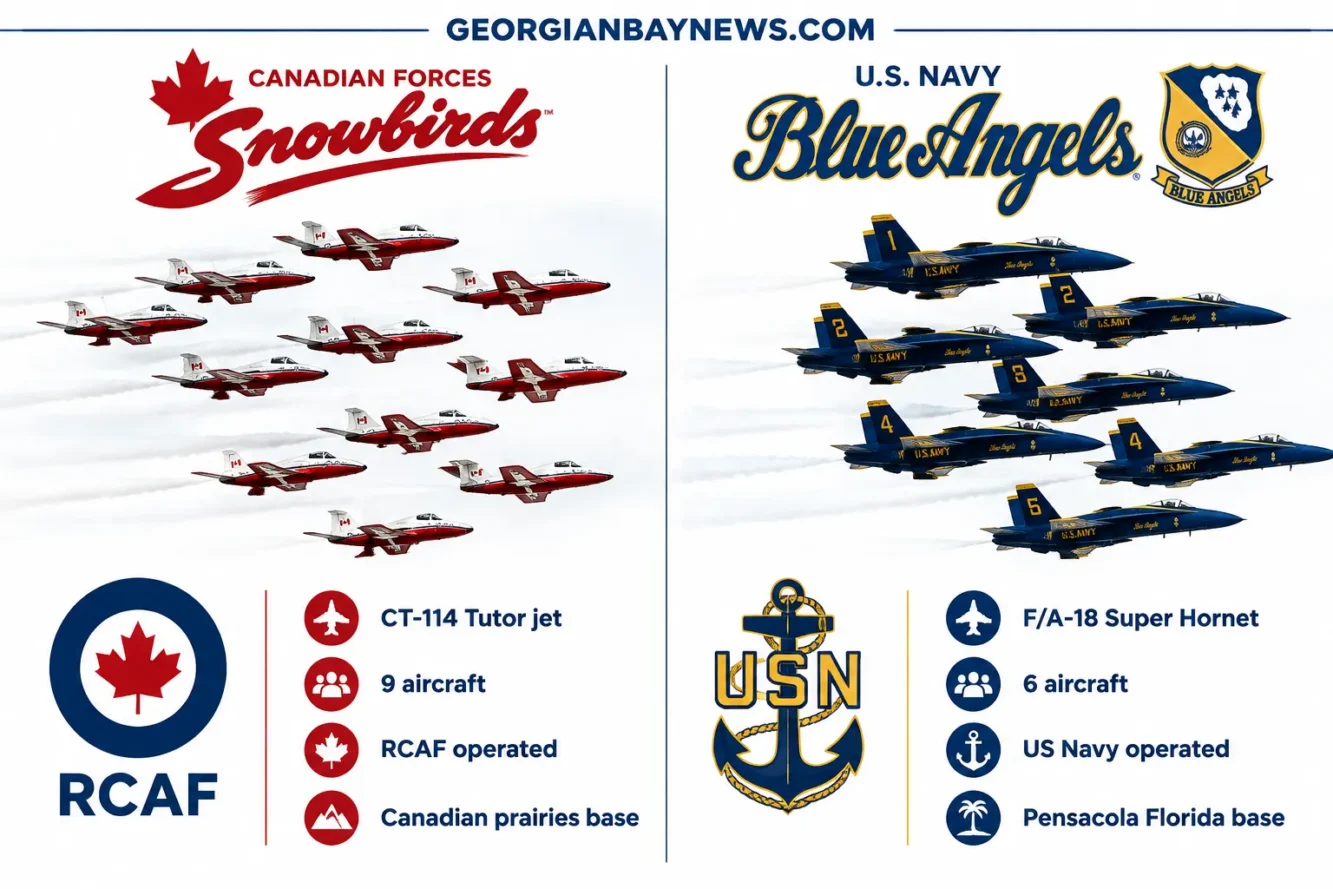
Key differences:
- Aircraft: Snowbirds use the CT-114 Tutor (turbine trainer); Blue Angels use the F/A-18 Super Hornet (frontline fighter)
- Number of display aircraft: Snowbirds field 9; Blue Angels field 6
- Team size: The full snowbirds team including support staff numbers around 80 personnel; the Blue Angels operate a comparable full-time unit
- Mandate: The Canadian forces snowbirds serve a dual recruitment and public-relations role for the RCAF; the Blue Angels operate similarly for the US Navy
- Base: Wing Moose Jaw, Saskatchewan vs. Naval Air Station Pensacola, Florida
Both teams perform at the Canadian International Air Show in Toronto and at major venues across North America, drawing millions of spectators annually.
The Snowbirds’ Show Routine, Formations, and Notable Performances
A standard Canadian Forces Snowbirds air demonstration lasts approximately 35 minutes and features up to 50 manoeuvres performed by nine aircraft. The show routine combines close formation passes, opposition manoeuvres, and solo sequences designed to showcase both team precision and individual pilot skill. The air demonstration squadron’s signature formations, including the Delta, the Big Diamond, and the Echelon, are rehearsed extensively at CFB Moose Jaw before each season.
Notable performances have included appearances at the Canadian International Air Show in Toronto, Expo 86 in British Columbia, and dozens of Canadian Forces Day events across Canada. The forces flight demonstration team has also performed internationally, representing Canada at air shows in the United States and Europe. In 2026, the RCAF announced expanded flypasts so the CT-114 Tutor could cover as much of Canada as possible before retirement.
A particularly notable 2026 performance is the Canadian Football League flyover scheduled as part of the snowbirds’ final season appearances. This CFL flyover represents one of the last major public demonstrations before the October 11 stand-down, giving football fans across Canada a rare chance to see the forces snowbirds in action over a stadium setting.
How to find the Snowbirds schedule:
- Visit the official RCAF Snowbirds page for the current schedule
- Follow the RCAF on social media for real-time updates and tracker information on where the snowbirds are performing today
- The Snowbirds website and the Canadian Forces website both list confirmed 2026 show dates through October
Snowbirds Accident History, Incidents, and Fatalities
The Canadian Forces Snowbirds have experienced a number of serious incidents over their history, reflecting the inherent risks of high-performance aerobatic flying. Since the team’s formation, there have been multiple fatalities and aircraft losses, each of which has prompted reviews by forces flight safety investigators and led to procedural changes.
Notable incidents include:
- 2002: A midair collision during a practice session resulted in aircraft damage and injuries; the 2002 incident remains one of the most studied events in forces flight safety records for the snowbirds
- August incidents: Several crashes have occurred during August training or show seasons, with flight safety reports leading to temporary groundings and aircraft modifications
- May 2020: A CT-114 Tutor crashed in Kamloops, British Columbia, during a community flyover intended to boost morale during the COVID-19 pandemic. Captain Jennifer Casey was killed and Captain Richard MacDougall was injured when the plane crashed shortly after takeoff. This 2020 tragedy intensified scrutiny of the aging CT-114 Tutor fleet
- October crashes: At least one aircraft has been lost during October show season operations, with flight safety investigations following each event
The forces flight safety branch reviews every incident involving the air demonstration squadron. The Dempsey report, an internal review associated with the name Dempsey in forces flight safety literature, examined structural and operational factors in snowbird incidents. References to Dempsey in aviation safety circles relate to the broader review of CT-114 Tutor airworthiness that has informed the 2026 retirement decision.
Each time a snowbird aircraft crashed, the team demonstrated resilience, with the squadron returning to flying after thorough safety reviews. The 2020 crash in British Columbia was among the most publicly visible, occurring during a period when Canadians were watching closely as the snowbirds flew tribute missions over communities across Canada.
Snowbirds Pilots: Training, Qualifications, and Pay
Becoming a Snowbirds pilot is one of the most competitive postings in the Royal Canadian Air Force. Candidates must be experienced RCAF fighter or multi-engine pilots with a minimum of approximately 1,000 flying hours before they are even considered for the air demonstration team. The selection process is rigorous, involving flight evaluations, interviews, and assessment by the existing team.
Snowbirds pilots serve a standard tour of two to three years with the air demonstration squadron before returning to regular RCAF duties. During their tour, they train intensively at Wing Moose Jaw through the winter months before the show season begins in the spring.
Training requirements at a glance:
- Minimum flying hours: approximately 1,000+ hours on RCAF aircraft
- Must hold a current RCAF pilot qualification
- Must pass a competitive selection process run by 431 Air Demonstration Squadron
- Winter training at CFB Moose Jaw, Saskatchewan, before each show season
- Ongoing forces flying training standards maintained throughout the tour
Regarding pay, snowbirds pilots are paid according to standard Canadian Armed Forces officer pay scales. A Captain in the RCAF, the typical rank of a snowbird pilot, earns a salary in the range of approximately CAD $80,000 to $110,000 per year depending on years of service and classification level, consistent with Canadian Armed Forces compensation guidelines. No special demonstration pay supplement is publicly documented beyond standard military compensation.
Awards, Honours, and Ambassadorship Role
The Canadian Forces Snowbirds have received numerous awards and honours recognizing their contribution to Canadian aviation and military public affairs. The team has been awarded the Vanier Trophy, Canada’s top aviation award, multiple times, reflecting the high standard of the air demonstration squadron’s flying and professionalism.
Beyond formal awards, the snowbirds serve as ambassadors for Canada and the Royal Canadian Air Force at every show. Their presence at events from Moose Jaw, Saskatchewan, to Toronto and across British Columbia reinforces the visibility of the Canadian armed forces and the RCAF among civilian audiences. The forces flying training school at Wing Moose Jaw also benefits from the team’s presence, as the snowbirds inspire the next generation of Canadian pilots training at CFB Moose Jaw.
The 2026 Final Season and What Comes After
On May 19, 2026, Defence Minister David McGuinty announced in Moose Jaw that the Canadian Forces Snowbirds will be grounded after the 2026 air-show season, with the CT-114 Tutor fleet retiring after 63 years of operation. The announcement confirmed that 431 Air Demonstration Squadron will be temporarily stood down, leaving Canada without a national aerobatic demonstration team until the early 2030s.
The last Snowbirds shows in Toronto until the 2030s drew enormous crowds as spectators turned out to see the CT-114 Tutor jets make their final passes over Lake Ontario. Local and national campaigns have emerged around Moose Jaw urging Ottawa to reconsider, with supporters arguing the hiatus will hurt tourism, regional identity, and RCAF visibility.
Key 2026 dates:
- May 19, 2026: Grounding announcement by Defence Minister McGuinty in Moose Jaw
- June 2026: Additional community flyovers announced to maximize Canadian coverage
- September 2026: Final Toronto appearances at the Canadian International Air Show
- October 11, 2026: Final scheduled show in current configuration
The planned transition to the CT-157 Siskin II means Canada will have no active forces snowbirds aerobatic team for several years. Aviation analysts note this multi-year gap is unusual among major air forces and may reduce RCAF public profile and recruiting effectiveness, though airworthiness concerns justify the pause.
How Much Does It Cost to See the Snowbirds Live?
Seeing the Canadian Forces Snowbirds perform is free at most public events, including military appreciation days and community flyovers. At major ticketed air shows such as the Canadian International Air Show in Toronto, admission covers the full show including the snowbirds demonstration. There is no separate charge to watch the forces snowbirds perform at any publicly accessible event.
For the 2026 final season, the RCAF has prioritized broad Canadian coverage, meaning many communities across Canada, including smaller cities and towns that rarely see the air demonstration squadron, have received scheduled flyovers at no cost to spectators. Check the official Snowbirds schedule for confirmed dates and locations near you.
Can You Book the Snowbirds for Private Events?
The Canadian Forces Snowbirds cannot be booked for private events. As a unit of the Canadian Armed Forces and the Royal Canadian Air Force, the air demonstration squadron’s schedule is managed by the Department of National Defence and the RCAF. Show requests are submitted through official channels and evaluated based on public benefit, geographic coverage, and operational feasibility, not commercial contracts.
Organizations wishing to request a snowbirds appearance at a public air show or community event can submit a formal request through the Government of Canada’s official channels. The RCAF prioritizes events that maximize public exposure across Canada, particularly in regions that have not recently hosted the forces snowbirds.
FAQ: People Also Ask About the Canadian Forces Snowbirds
Are the Snowbirds part of the Canadian military?
Yes. The Canadian Forces Snowbirds are an official unit of the Royal Canadian Air Force, which is part of the Canadian Armed Forces. They are formally designated 431 Air Demonstration Squadron and operate under the Department of National Defence. Their mission is to demonstrate RCAF excellence, support recruiting, and represent Canada at air shows across North America.
How old are the snowbird Tutor jets?
The CT-114 Tutor jets flown by the Canadian Forces Snowbirds entered RCAF service in 1963, making the airframe design over 60 years old. The specific aircraft used by the snowbirds aerobatic team have been in demonstration service since 1971. RCAF officials cited the Tutors’ age and ongoing maintenance challenges as primary reasons for the fleet’s retirement after the 2026 show season.
How old are the snowbird pilots?
Snowbirds pilots are typically in their late 20s to mid-30s. Because candidates must accumulate approximately 1,000 or more flying hours on RCAF aircraft before qualifying for the air demonstration team, most pilots joining the snowbirds are experienced officers who have already completed at least one or two operational tours. The competitive selection process means the average snowbird pilot has around eight to twelve years of military flying experience.
How much does a snowbird pilot make?
Snowbirds pilots are paid according to standard Royal Canadian Air Force officer pay scales. A Captain, the typical rank held by a snowbird pilot, earns approximately CAD $80,000 to $110,000 annually depending on years of service, consistent with Canadian Armed Forces compensation guidelines. There is no publicly documented special demonstration pay beyond standard military officer remuneration.
Conclusion
The Canadian Forces Snowbirds represent more than aerobatic skill, they are a symbol of Canadian identity, military pride, and the Royal Canadian Air Force’s commitment to public engagement. From their origins as a wartime bomber squadron in 1942 to their status as North America’s most beloved aerobatic demonstration team, the snowbirds have inspired millions across Canada and beyond.
With October 11, 2026, marking the final show of the CT-114 Tutor era, now is the time to act:
- Check the schedule: Visit the official RCAF Snowbirds page for remaining 2026 show dates and locations near you.
- Attend a show: Admission at most snowbirds events is free, bring your family and witness a piece of Canadian aviation history before the CT-114 Tutor retires.
- Follow the RCAF: Stay updated on the CT-157 Siskin II transition and the expected return of the air demonstration squadron in the early 2030s.
- Support the conversation: Community voices around Moose Jaw and across Canada are shaping how the RCAF approaches the gap years, staying informed matters.
The snowbirds will fly again. Until then, the 2026 season is a rare and final opportunity to see the CT-114 Tutor in its iconic red-and-white livery cutting across Canadian skies.
Content, illustrations, and third-party video appearing on GEORGIANBAYNEWS.COM may be generated or curated with AI assistance or reproduced pursuant to the fair dealing provisions of the Copyright Act, R.S.C. 1985, c. C-42. Attribution and hyperlinks to original sources are provided in acknowledgment of applicable intellectual property rights. Such referencing is intended to direct traffic to and support the original rights holders’ platforms.