


















🍲 Healthy Fall Comfort Foods: Nutritious Twists on Classic Dishes

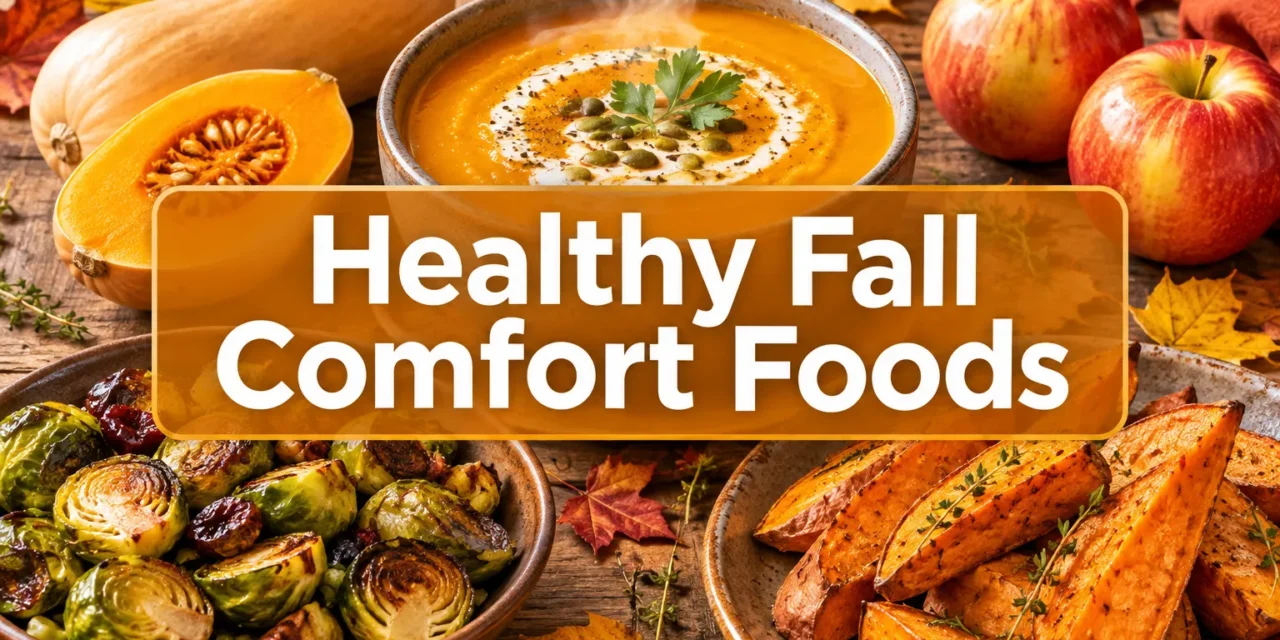
Soup season arrives earlier every year, and so does the collective craving for something warm, cheesy, and carb-loaded. But here’s the twist nobody expected: nutrition experts are now treating comfort food not as a guilty pleasure to avoid, but as a canvas for genuinely healthier cooking. Across the United States and here around Georgian Bay, dietitians and health systems are reframing fall favorites with simple, science-backed swaps rather than strict bans [1][2].
That shift matters because Healthy Fall Comfort Foods: Nutritious Twists on Classic Dishes are no longer a niche diet trend, they’re becoming the default way people cook through October and November. The goal isn’t deprivation. It’s smarter substitutions that keep the cozy factor intact while trimming saturated fat, added sugar, and refined carbs [3][4].
Key Takeaways
- Fall produce like pumpkin, sweet potatoes, squash, apples, and Brussels sprouts should anchor most comfort-food makeovers [3][5][6].
- Simple swaps, Greek yogurt for sour cream, applesauce for oil, whole grains for refined pasta, deliver big nutrition wins with minimal recipe disruption [6].
- Soup season is the easiest entry point: broth-based, bean-and-vegetable-forward soups outperform cream-heavy versions nutritionally [3][6].
- Lean and plant-based proteins can replace fattier cuts in casseroles, chilis, and stews without sacrificing heartiness [3][4][7].
- Dessert doesn’t have to disappear, fruit, nuts, and yogurt-based treats satisfy sweet cravings while supporting blood sugar balance [6].
Why Fall Produce Is the Foundation of Healthy Fall Comfort Foods
Seasonal vegetables and fruits are doing most of the heavy lifting in this year’s healthier comfort-food movement. Pumpkin, sweet potatoes, squash, apples, and Brussels sprouts aren’t just flavor-of-the-season ingredients, they’re fiber-rich, nutrient-dense stand-ins for less healthy fillers like white rice, heavy cream, and refined flour [3][5][6][8].


Think about a traditional pot pie loaded with butter and white flour. Swap in roasted squash, beans, and a whole-grain crust, and you get the same satisfying bite with far more fiber and micronutrients. Official nutrition resources specifically call out beans as an underused comfort-food upgrade, noting they add protein and fiber without changing the dish’s core identity [3][8].
A simple table illustrates the shift:
| Classic Ingredient | Healthier Fall Swap | Why It Works |
|---|---|---|
| White pasta | Whole-grain or legume pasta | More fiber, steadier blood sugar [3] |
| Heavy cream | Pureed squash or Greek yogurt | Lower saturated fat, added protein [6] |
| White rice | Farro or quinoa | More fiber and micronutrients [8] |
| Sour cream | Plain Greek yogurt | Higher protein, lower fat [6] |
This kind of ingredient-level thinking is the backbone of nearly every modern recipe making the rounds this fall, from pumpkin-studded casseroles to apple-and-carrot bakes [8][9].
Soup Season: The Easiest Entry Point for Nutritious Twists on Classic Dishes
If there’s one category where Healthy Fall Comfort Foods: Nutritious Twists on Classic Dishes show up most naturally, it’s soup. Health systems consistently point to soup season as the simplest opportunity to upgrade a meal without feeling like you’re “dieting” [3][6].
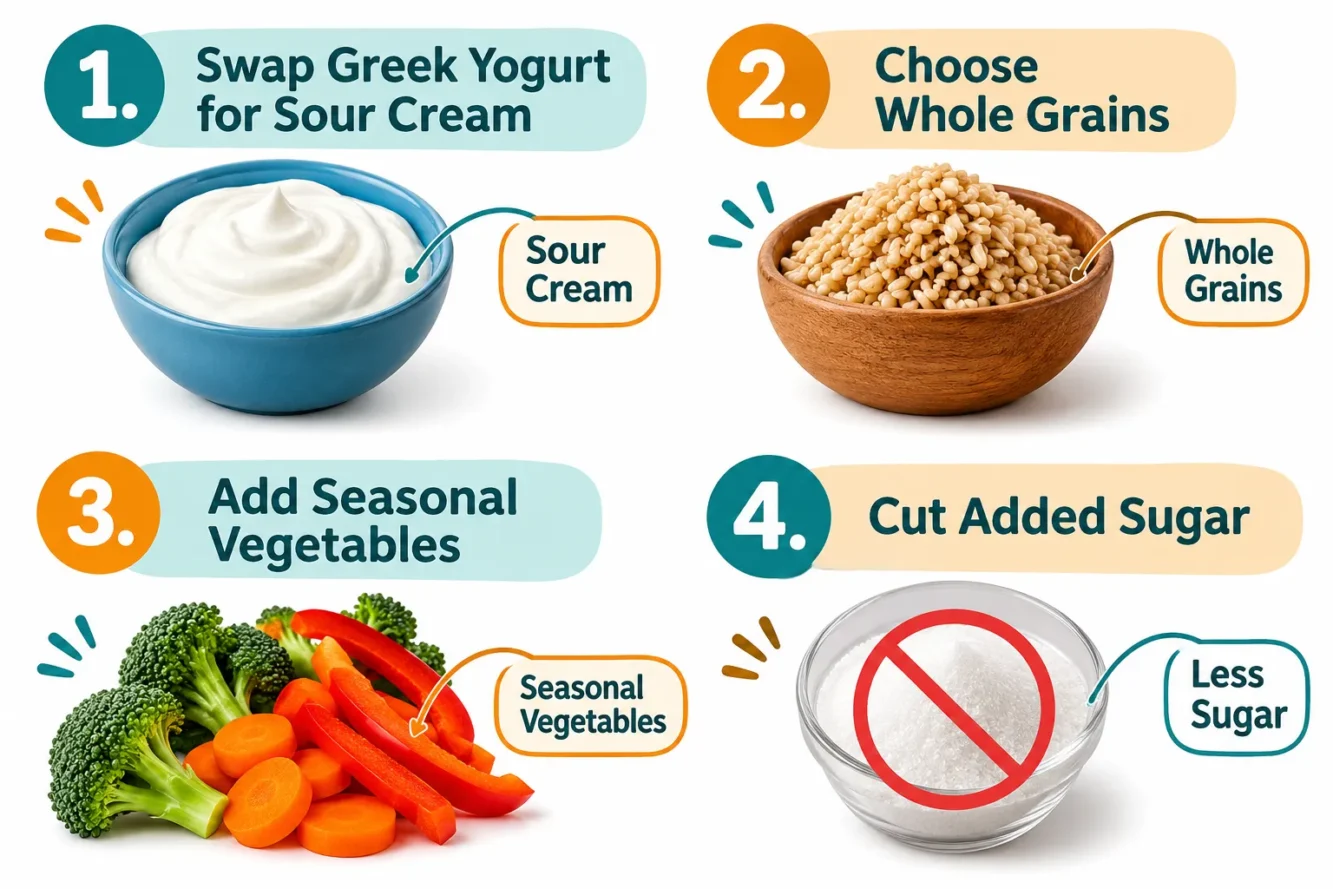
The formula is straightforward: start with a broth base instead of cream, load up on vegetables and beans, and use whole grains like barley or farro instead of white noodles. This approach keeps the dish hearty while slashing saturated fat and boosting fiber [3][6]. Dietitians featured in recent fall coverage also recommend small tweaks, like adding a scoop of pureed cannellini beans to thicken soup instead of cream, to avoid blood sugar spikes while preserving texture [2].
For readers who enjoy pairing home cooking with local food culture, it’s worth noting that seasonal menus around Collingwood and the Georgian Bay area often echo these same farm-fresh principles, something evident at the popular Collingwood Downtown Farmers Market, where fall squash, apples, and root vegetables are readily available for home soup-making.
Protein, Grains, and Dessert: Rounding Out Healthy Fall Comfort Foods
Beyond vegetables, protein choices matter enormously. Health systems and dietitians are urging cooks to replace fattier meats with lean proteins like turkey, chicken breast, or legumes in chilis, casseroles, and shepherd’s pies [3][4][7]. This single swap can meaningfully lower saturated fat intake without changing the dish’s comforting character.
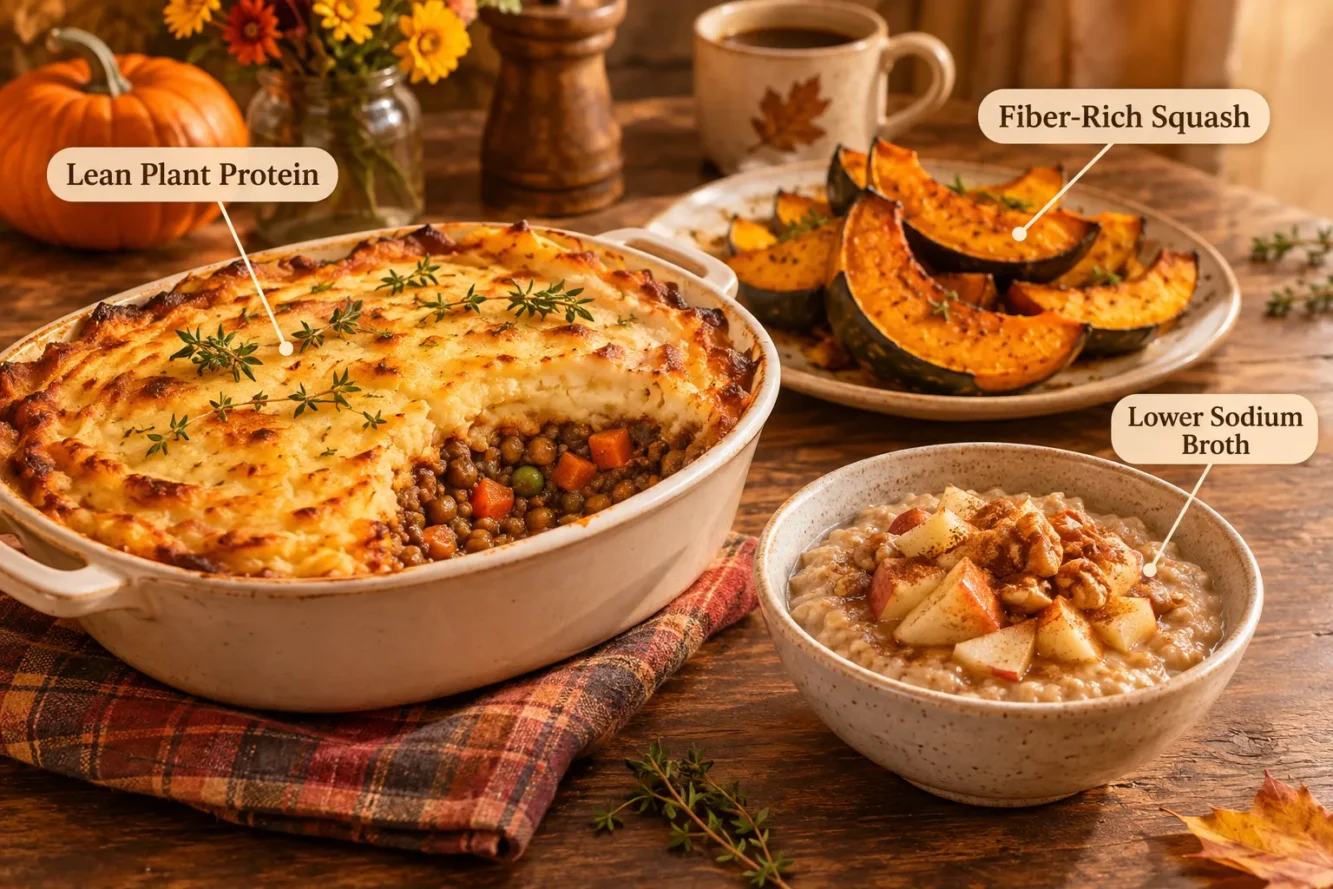
Whole grains and legume-based products are also reshaping pastas, breads, and even pizza crusts this season, giving classic dishes more fiber and a lower glycemic impact [3][6][8]. And fats and sodium deserve attention too, health system guidance stresses using herbs, spices, and smart seasoning instead of leaning on salt and butter for flavor [4].
Dessert hasn’t been left out of the makeover. Instead of pies loaded with refined sugar, 2026 coverage highlights fruit-based desserts, yogurt parfaits, and nut-topped baked apples as satisfying, metabolically friendlier alternatives [6]. These options let people enjoy a sweet ending to a fall meal without the blood sugar rollercoaster that often follows heavier desserts.
This isn’t about banning favorite dishes, it’s about reframing them. Several late-2026 features specifically push back against labeling comfort foods as “bad,” instead showing how small pairings and add-ins meaningfully shift their nutritional profile [1][2]. Given how consistently this message appears across dietitian-led coverage, blood sugar control, plant-forward eating, and simple ingredient swaps are likely to remain the dominant themes heading into next fall’s comfort-food conversation [1][2][3][6].
For those who enjoy exploring wellness topics alongside food, Georgian Bay News readers may also appreciate insights from Dr. Bridget McMaster, ND, or a broader look at intermittent fasting fundamentals from Ally Vitally, both of which complement a season of mindful eating. Those curious about food-related health claims circulating online might also find value in the fasting expert’s take on common food and cancer myths.
Conclusion
Healthy Fall Comfort Foods: Nutritious Twists on Classic Dishes prove that cozy and nutritious aren’t opposites, they’re complementary. By leaning on seasonal produce, choosing whole grains and lean proteins, and making a few anchor swaps like Greek yogurt or applesauce, home cooks can keep every classic fall dish on the table while giving it a meaningful nutritional upgrade.
The next step is simple: pick one recipe this week, a soup, casserole, or dessert, and try just one swap from this guide. Small, repeatable changes are exactly what nutrition experts recommend, and they’re far more sustainable than an all-or-nothing approach to fall eating.
References
- Asked Dietitians Best Comfort Foods 160000964. health.yahoo.com.
- Comfort Food Tweaks to Avoid Blood Sugar Spikes 12199203. eatingwell.com.
- News Detail. hartfordhospital.org.
- Comfort Food Healthy Makeovers. ucihealth.org.
- Healthy Fall Comfort Foods. everydayhealth.com.
- Fall Comfort Foods Made Healthier. shbp.georgia.gov.
- Best Fall Comfort Food Recipes. delish.com.
- Fall Comfort Food Recipes 12139039. bhg.com.
- Stories. post-gazette.com.
Content, illustrations, and third-party video appearing on GEORGIANBAYNEWS.COM may be generated or curated with AI assistance or reproduced pursuant to the fair dealing provisions of the Copyright Act, R.S.C. 1985, c. C-42. Attribution and hyperlinks to original sources are provided in acknowledgment of applicable intellectual property rights. Such referencing is intended to direct traffic to and support the original rights holders’ platforms.
Much Appreciate You Sharing This Post - It Helps MUCH!!!