



















🪫 Lithium-ion Batteries Safety Issues: What Everyone Needs to Know in 2026 | GEORGIANBAYNEWS.COM

Last updated: October 14, 2026
Quick Answer
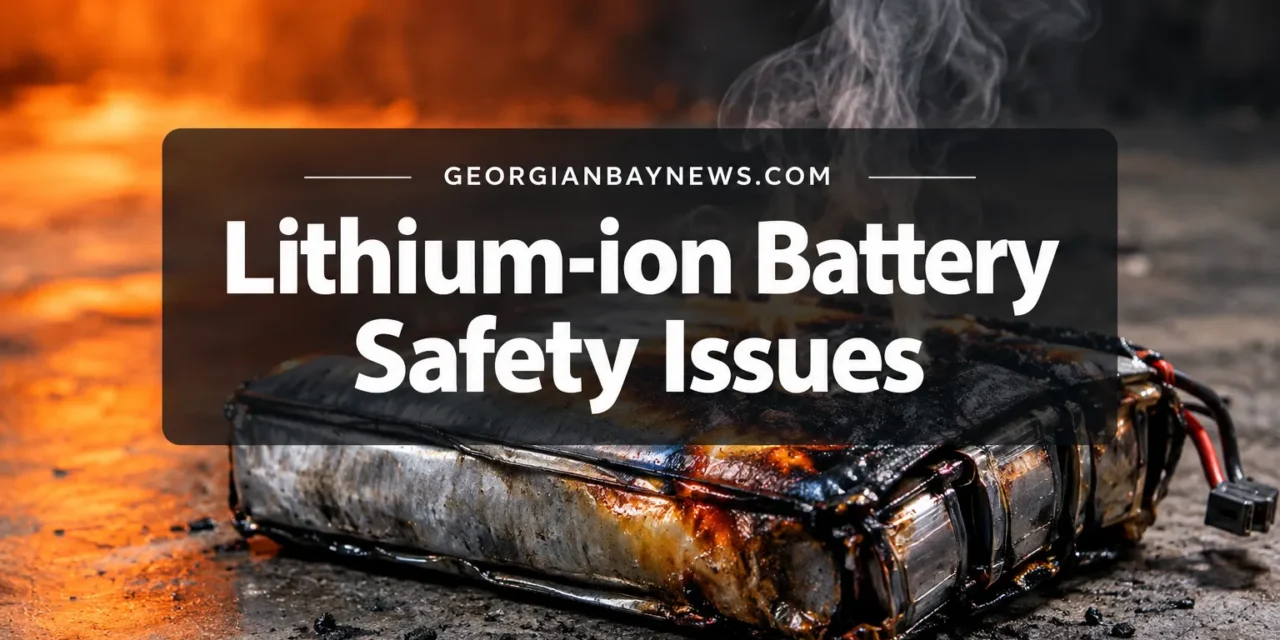
Lithium-ion batteries safety issues are a growing public concern in 2026, with fires up sharply in major cities and large-scale evacuations triggered by grid battery storage failures. These batteries can overheat, catch fire, or experience thermal runaway, an uncontrolled, fast-spreading internal heating process, if damaged, overcharged, or exposed to extreme temperatures. Understanding the risks and following basic safety practices can significantly reduce the danger.
Key Takeaways
- There have been 99 lithium-ion battery fires in Toronto so far this year.
- Thermal runaway is the most dangerous failure mode: it is self-sustaining, extremely fast, and very difficult to extinguish
- A grid-scale battery fire in La Verne, California in September 2026 forced multi-day neighborhood and school evacuations [3][4]
- The EPA launched cleanup operations following major battery storage fires in California in both January 2025 and September 2026 [9]
- Safe operating temperature for most lithium-ion batteries is between 0°C and 45°C (32°F to 113°F)
- Fireproof containment bags offer limited but real protection for e-bike batteries during charging, they can slow fire spread but will not stop a full thermal runaway
- Swollen batteries should never be charged or used, they indicate internal damage and a serious fire risk
- Solid-state and sodium-ion chemistries are emerging as safer alternatives; learn more about solid state batteries and sodium ion batteries
- Regulations are tightening in 2026, but implementation is lagging behind the pace of incidents
- Proper disposal at certified e-waste facilities is the only safe way to get rid of a damaged or end-of-life battery
What Are the Main Safety Risks of Lithium-ion Batteries
Lithium-ion batteries safety issues center on three core risks: fire, explosion, and toxic gas release. These risks are not theoretical, they are occurring at scale in homes, apartment buildings, and large energy storage facilities right now.
The main risks include:
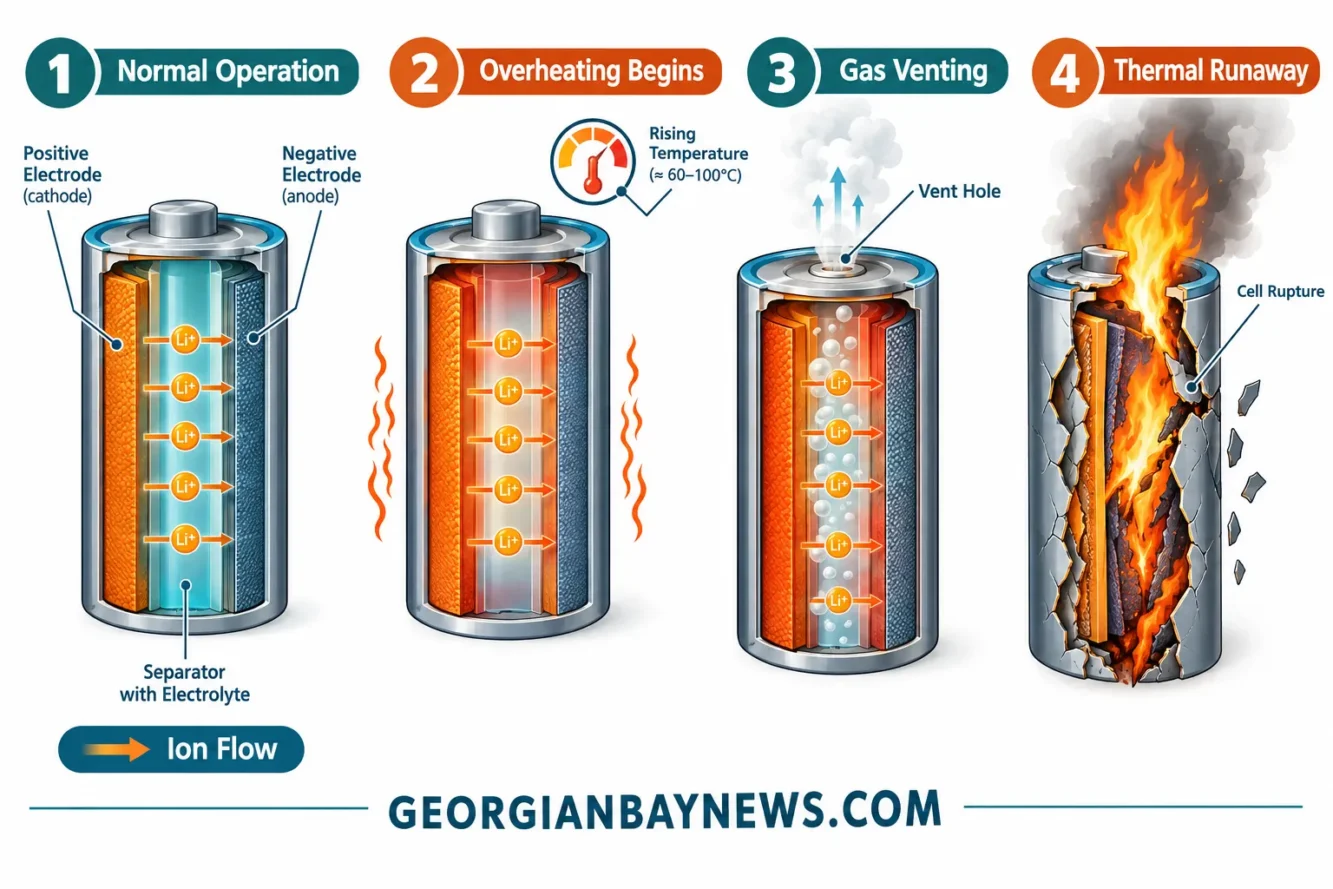
- Thermal runaway: An uncontrolled chain reaction inside the battery where heat generates more heat, often resulting in fire or explosion. Once started, it is nearly impossible to stop.
- Swelling (battery bloat): Caused by gas buildup from internal chemical breakdown, often a precursor to rupture or fire.
- Short circuit: Can be triggered by physical damage, manufacturing defects, or contact with metal objects.
- Overcharging: Pushes the battery beyond its designed voltage limit, generating excess heat.
- Toxic vapor release: Burning lithium-ion batteries release hydrogen fluoride and other harmful gases, creating serious air quality hazards. [3]

Micromobility devices, e-bikes and e-scooters, are currently the leading source of lithium-ion battery fires, ahead of power tools and electric vehicles. New York City data from 2026 shows battery fires up 41%, with the majority linked to these devices. [2]
Why Do Lithium-ion Batteries Catch Fire
Lithium-ion batteries catch fire when internal heat exceeds the battery’s ability to dissipate it, triggering thermal runaway. This can happen because of physical damage, overcharging, a manufacturing defect, or exposure to high ambient temperatures.
The chemistry inside a lithium-ion cell is inherently energetic. The electrolyte is flammable, and the separator, a thin membrane keeping the positive and negative electrodes apart, can melt or puncture under stress. When that happens, a short circuit occurs internally, generating rapid heat. That heat breaks down the electrolyte further, releasing flammable gases, which then ignite.
Common triggers:
- Dropping or crushing the battery
- Using a charger not designed for the specific battery
- Leaving a battery on charge overnight, especially in a hot environment
- Using a battery that is visibly swollen or damaged
- Storing batteries in direct sunlight or hot vehicles
The La Verne, California battery storage facility fire in September 2026 burned for days and required large-scale evacuations, demonstrating how difficult these fires are to control once started. [4][7]
What Is Thermal Runaway vs. Normal Battery Failure
Thermal runaway is a self-accelerating failure, while normal battery failure is a gradual performance decline. The distinction matters because thermal runaway can turn a battery into a fire hazard within seconds.
Normal battery failure looks like this: the battery holds less charge over time, takes longer to charge, or shuts off unexpectedly. This is a chemical aging process and is generally safe, though the battery should be replaced.
Thermal runaway is different:
- It is triggered by a sudden event (damage, overcharge, heat exposure)
- It escalates rapidly, temperatures inside a cell can exceed 700°C
- It can spread to adjacent cells in a battery pack, making large packs especially dangerous
- It releases flammable and toxic gases before or during ignition
- Water alone does not extinguish it effectively; large volumes of water are needed to cool the cells [5]
The Moss Landing Power Plant fire in Monterey County, California in September 2026 is a recent example of thermal runaway at scale, a grid storage facility that burned and required extensive EPA-led cleanup. [6][9]
How Do Lithium-ion Batteries Compare to Other Battery Types in Terms of Safety
Lithium-ion batteries carry a higher fire risk than traditional lead-acid or nickel-metal hydride batteries, primarily because of their flammable electrolyte and the thermal runaway phenomenon. However, they also offer far greater energy density, which is why they dominate consumer electronics and EVs.
| Battery Type | Fire Risk | Energy Density | Common Use |
|---|---|---|---|
| Lithium-ion (Li-ion) | Higher | Very high | EVs, phones, e-bikes |
| Lead-acid | Lower | Low | Car starters, UPS |
| Nickel-metal hydride | Low-moderate | Moderate | Older hybrids, tools |
| Lithium iron phosphate (LiFePO4) | Lower than standard Li-ion | High | EVs, storage |
| Solid-state (emerging) | Lowest | Very high | Next-gen EVs |
Lithium iron phosphate (LiFePO4) batteries are a safer sub-type of lithium-ion chemistry, they are more thermally stable and less prone to thermal runaway. Many e-bike manufacturers are moving toward this chemistry. Solid state batteries represent the next step, with non-flammable electrolytes, though they are not yet widely available in consumer products.
What Should I Do If My Lithium-ion Battery Is Swelling
A swollen battery is a warning sign of internal chemical breakdown and should be treated as a fire hazard. Stop using it and stop charging it immediately.
Steps to take:
- Disconnect the device from power right away
- Do not puncture, compress, or attempt to flatten the battery
- Place the device or battery in a cool, open area away from flammable materials
- Do not put it in a sealed container or a car’s glove box
- Contact the manufacturer or a certified e-waste facility for disposal guidance
- If the battery is in a laptop or phone, do not use the device until the battery is replaced by a professional
A swollen battery will not always catch fire immediately, but the risk is real and unpredictable. Do not leave it unattended indoors.
How Can I Prevent Lithium-ion Battery Explosions at Home
Most lithium-ion battery fires at home are preventable. The key is using the right charger, not leaving batteries charging unattended, and storing them properly.
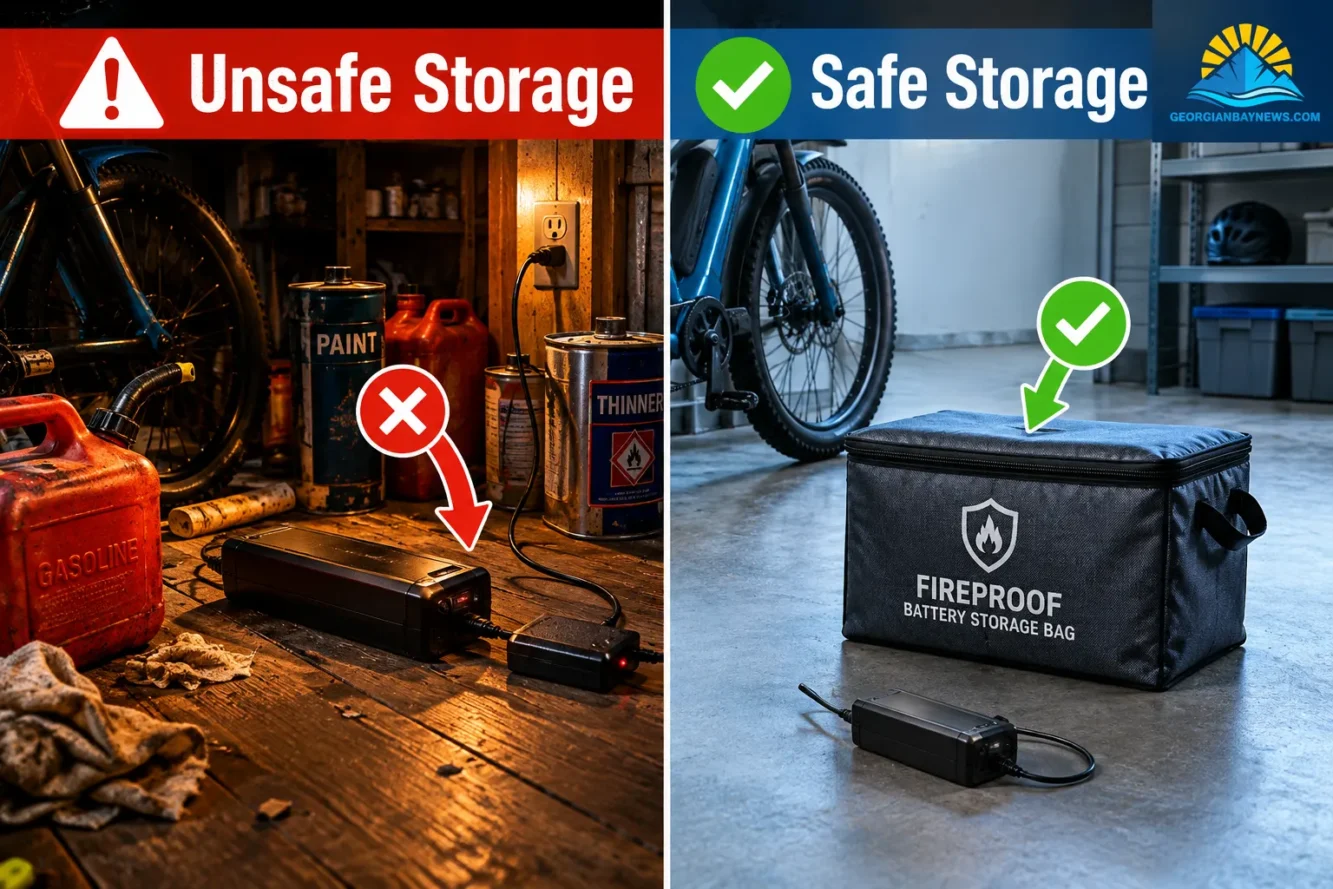
Practical prevention steps:
- Only use the charger that came with the device, or one certified for that specific battery
- Do not charge batteries overnight or while sleeping
- Charge on a hard, non-flammable surface, not on a bed, couch, or carpet
- Keep batteries out of direct sunlight and away from heat sources
- Inspect batteries regularly for swelling, cracks, or leaking
- For e-bike batteries, consider a fireproof containment bag (see below)
- Install a smoke detector in any room where batteries are regularly charged
For those staying safe at home with multiple battery-powered devices, creating a designated charging station away from sleeping areas is one of the most effective steps.
Do Fireproof Bags for E-bike Batteries Actually Work
Fireproof containment bags offer a genuine layer of protection, but they are not a complete solution. They can slow the spread of fire and contain some heat and sparks if a battery ignites during charging, but they cannot stop a full thermal runaway from eventually burning through.
What fireproof bags do well:
- Contain initial sparks and small flames
- Buy extra time for occupants to evacuate
- Reduce the chance of a battery fire spreading to nearby materials
- Provide peace of mind for overnight or unattended charging situations
What they cannot do:
- Permanently contain a full thermal runaway event
- Prevent toxic gas release
- Replace proper charging habits
The NFPA’s 2026 construction site safety guidance and consumer safety advocates consistently recommend fireproof bags as a supplementary measure, not a substitute for safe charging practices. For e-bike owners, the best approach is to use a fireproof bag in combination with a smoke detector and a charger that matches the battery’s specifications. Rad Power Bikes received a consumer product safety warning in 2026 related to e-bike battery risks, underlining that even reputable brands are not immune to these issues. [2]
Are Lithium-ion Batteries Safe for Everyday Use
Yes, lithium-ion batteries are safe for everyday use when handled correctly. Billions of people use them daily in phones, laptops, and other devices without incident. The risk is real but manageable with basic precautions.
The danger increases significantly when batteries are:
- Damaged or swollen
- Charged with incompatible chargers
- Left charging in hot environments
- Used in poorly regulated or counterfeit products
Counterfeit and low-quality batteries, often found in cheap e-bikes and replacement phone batteries, carry a disproportionately high risk. Buying from reputable manufacturers and avoiding heavily discounted battery replacements is a straightforward way to reduce exposure.
What Temperature Range Is Safe for Lithium-ion Batteries
Most lithium-ion batteries operate safely between 0°C and 45°C (32°F to 113°F) during use, and should be stored between -20°C and 25°C (-4°F to 77°F). Outside these ranges, performance drops and safety risks rise.
- Too cold: Below 0°C, battery capacity drops sharply and charging can cause lithium plating, which damages the cell and increases fire risk on subsequent use.
- Too hot: Above 45°C, the risk of thermal runaway increases. Leaving a battery in a parked car on a hot day can easily push temperatures past this threshold.
- Ideal storage: Around 15°C to 20°C (59°F to 68°F) at roughly 50% charge for long-term storage.
Can You Use Lithium-ion Batteries in Extreme Weather
Using lithium-ion batteries in extreme cold or heat is possible but requires caution. Cold reduces performance but is generally less dangerous than heat. Heat is the primary safety concern.
In winter conditions, relevant for those interested in snowmobiling or outdoor winter activities, batteries should be warmed gradually to room temperature before charging. Never charge a battery that is still very cold from outdoor use. In summer, avoid leaving battery-powered devices or vehicles in direct sunlight or hot vehicles.
How Do I Know If My Lithium-ion Battery Is Damaged
Signs of a damaged lithium-ion battery include swelling, unusual heat during charging, a hissing or crackling sound, a chemical smell, visible cracks or leaking, and a significant drop in charge capacity. Any of these signs means the battery should be removed from service immediately.
A battery that gets noticeably hot during normal use, not just warm, but hot to the touch, is also a warning sign, even without visible damage.
What Are Common Mistakes People Make With Lithium-ion Battery Storage
The most common storage mistakes are leaving batteries at full charge for extended periods, storing them in hot environments, and keeping damaged batteries “just in case.” Each of these shortens battery life and raises fire risk.
Mistakes to avoid:
- Storing a fully charged battery for months (aim for 40-60% charge for long-term storage)
- Keeping old or swollen batteries in a drawer instead of disposing of them properly
- Storing batteries loose in a bag where they can contact metal objects like keys or coins
- Leaving batteries in a hot garage or car during summer months
How Should I Safely Dispose of a Lithium-ion Battery
Never put lithium-ion batteries in household recycling or garbage. They must go to a certified e-waste or battery recycling facility. Many electronics retailers, municipal waste facilities, and fire stations accept them.
Damaged or swollen batteries require extra care: place them in a non-flammable container (a metal box or bucket of sand works) and transport them to a disposal facility as soon as possible. Do not seal them in an airtight container. The EPA has been involved in cleanup operations following large battery fires, underscoring the environmental hazard of improper disposal. [9]
Are Some Lithium-ion Batteries Safer Than Others
Yes. Lithium iron phosphate (LiFePO4) batteries are significantly more thermally stable than standard lithium cobalt oxide (LiCoO2) batteries. They are less prone to thermal runaway and are increasingly used in e-bikes and home energy storage.
Battery management systems (BMS) also play a major role in safety. A quality BMS monitors temperature, voltage, and current, cutting off charging if any parameter goes out of range. Cheap batteries often have minimal or no BMS protection, which is a leading cause of fires in budget e-bikes and power banks.
What Regulations Exist for Lithium-ion Battery Safety
Regulations are tightening in 2026, but enforcement and infrastructure are struggling to keep pace with the rapid spread of battery-powered devices. In the United States, the Consumer Product Safety Commission (CPSC) has issued warnings and recalls for specific products, including e-bike batteries. New York City passed legislation in 2023 requiring e-bike batteries sold in the city to meet UL certification standards, but implementation gaps remain. [2]
At the grid scale, California’s major battery storage fires in 2026 have prompted renewed scrutiny of siting, fire suppression systems, and emergency response protocols. [3][4] The EPA has been involved in post-fire environmental cleanup, signaling that regulatory attention is increasing. [9]
Internationally, the EU has introduced stricter battery regulations covering safety testing, labeling, and end-of-life recycling. Canada is in the process of aligning standards, though specific provincial rules vary.
The policy gap between regulation and real-world implementation remains a significant concern, particularly for micromobility devices sold through online marketplaces where certification enforcement is weak. [2]
FAQ
Q: Can a lithium-ion battery explode without warning?
A: It can appear sudden, but there are usually warning signs beforehand, swelling, unusual heat, or a chemical smell. Damage from a drop can cause a delayed failure hours or days later.
Q: Is it safe to charge an e-bike battery indoors?
A: Yes, with precautions: use the correct charger, charge on a hard non-flammable surface, do not charge overnight, and have a working smoke detector nearby.
Q: How long does thermal runaway take?
A: It can escalate from initial heating to full fire in seconds to minutes, depending on battery size and the trigger. Large battery packs (like e-bike batteries) can sustain a fire for much longer.
Q: Can water put out a lithium-ion battery fire?
A: Large volumes of water can cool the cells and slow the reaction, but water alone cannot quickly extinguish a lithium-ion fire the way it can a conventional fire. Specialized suppression agents are used in industrial settings.
Q: Are second-hand e-bike batteries safe to buy?
A: With caution. Inspect carefully for swelling, damage, or signs of heat stress. Ask for the battery’s age and charge cycle history. Avoid batteries from unknown brands or without a BMS.
Q: What should I do if my e-bike battery catches fire?
A: Evacuate immediately, call 911, and do not attempt to move the battery with your hands. Alert neighbors if in an apartment building. Do not use a standard fire extinguisher and expect it to fully resolve the situation.
Q: Do airlines allow lithium-ion batteries on board?
A: Most airlines allow small lithium-ion batteries (under 100Wh) in carry-on luggage but restrict or ban them in checked baggage. Large batteries (over 160Wh) are generally prohibited. Always check with the airline before flying.
Q: Is a warm battery after charging normal?
A: Slightly warm is normal. Hot to the touch is not. If the battery or charger is uncomfortably hot after charging, stop using that combination and have it inspected.
Q: What is UL certification for batteries?
A: UL (Underwriters Laboratories) certification means a battery has been independently tested and meets established safety standards for electrical and fire safety. It is one of the most reliable indicators of a safer product.
Q: Can solar power storage batteries have the same safety issues?
A: Yes. Home solar energy storage systems that use lithium-ion chemistry carry the same thermal runaway risks. LiFePO4 chemistry is strongly preferred for home storage applications because of its greater thermal stability.
Conclusion
Lithium-ion batteries safety issues are not a distant or abstract concern, they are happening in neighborhoods, apartment buildings, and large energy facilities right now. In 2026, the data is clear: fires are rising, evacuations are happening, and the gap between regulation and real-world safety is still wide.
The good news is that most risks are preventable. The practical steps are straightforward:
- Use the correct charger, always match the charger to the battery specification
- Never charge unattended or overnight, especially for e-bikes and scooters
- Inspect batteries regularly, replace any that are swollen, cracked, or unusually hot
- Store batteries properly, cool, dry, away from flammable materials, at partial charge for long-term storage
- Dispose of old batteries responsibly, take them to a certified e-waste facility
- Consider LiFePO4 chemistry when buying new e-bikes or home storage systems
- Use a fireproof containment bag for e-bike batteries as a supplementary safety measure
For those exploring the future of energy storage, solid state batteries and sodium ion batteries represent promising alternatives with improved safety profiles. Until those technologies become mainstream, understanding and respecting the limits of lithium-ion chemistry is the most effective protection available.
References
[1] September 2026 Fire – https://www.epa.gov/ca/september-2026-fire
[2] Everyone Should Be Furious Lithium Ion Battery Fires Are Up 41 As Public Fix Stalls – https://nyc.streetsblog.org/2026/10/14/everyone-should-be-furious-lithium-ion-battery-fires-are-up-41-as-public-fix-stalls
[3] Evacuations Drag On In La Verne Battery Fire How Is California Making Energy Storage Safer – https://www.latimes.com/california/story/2026-09-24/evacuations-drag-on-in-la-verne-battery-fire-how-is-california-making-energy-storage-safer
[4] Lithium Ion Battery Fire In La Verne Spurs Neighborhood School Evacuations – https://www.latimes.com/california/story/2026-09-22/lithium-ion-battery-fire-in-la-verne-spurs-neighborhood-school-evacuations
[5] nbclosangeles – https://www.nbclosangeles.com/news/local/lithium-battery-fire-la-verne/3947023/
[6] Flaming Batteries Burning Moss Landing – https://www.yahoo.com/news/weather-news/articles/flaming-batteries-burning-moss-landing-165000349.html
[7] Leave Now Evacuations Ordered In La Verne After Lithium Ion Battery Fire – https://www.ocregister.com/2026/09/22/leave-now-evacuations-ordered-in-la-verne-after-lithium-ion-battery-fire/
[8] nbclosangeles – https://www.nbclosangeles.com/news/local/la-verne-lithium-battery-fire-evacuation-order/3946431/
[9] Epa Begins Final Phase Post Fire Battery Cleanup Moss Landing – https://www.epa.gov/newsreleases/epa-begins-final-phase-post-fire-battery-cleanup-moss-landing
[10] Homes Evacuated After Fire Lithium Ion Battery Storage Area – https://www.wftv.com/news/trending/homes-evacuated-after-fire-lithium-ion-battery-storage-area/EUTJ4ZD37NCOVCGPJOV4ZNVWXM/?outputType=amp
Content, illustrations, and third-party video appearing on GEORGIANBAYNEWS.COM may be generated or curated with AI assistance or reproduced pursuant to the fair dealing provisions of the Copyright Act, R.S.C. 1985, c. C-42. Attribution and hyperlinks to original sources are provided in acknowledgment of applicable intellectual property rights. Such referencing is intended to direct traffic to and support the original rights holders’ platforms.
Much Appreciate You Sharing This Post - It Helps MUCH!!!