



















When federal agents arrested former CNN journalist Don Lemon at a Beverly Hills hotel on January 30, 2026, the news sent shockwaves through newsrooms across America and beyond. The arrest—ordered directly by Attorney General Pam Bondi—didn’t involve drugs, violence, or espionage. Instead, it stemmed from something far more unsettling: Don Lemon’s coverage of a protest at a Minnesota church. As cameras flashed and handcuffs clicked, one question echoed louder than any chant at that January protest: Can journalists be arrested simply for doing their jobs?

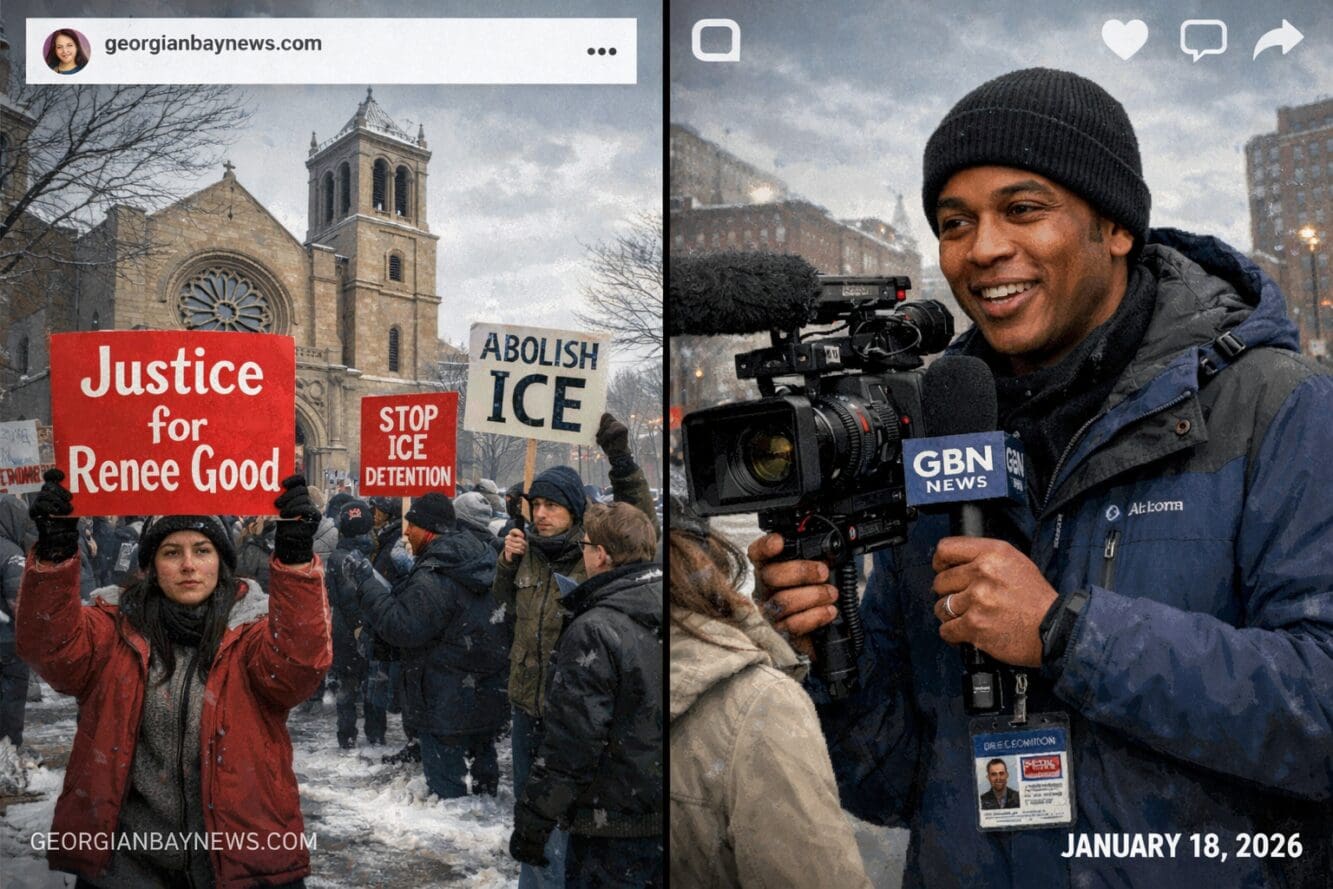
The story begins on a cold January Sunday in St. Paul, Minnesota, where protesters descended upon Cities Church with a specific grievance. They had discovered that one of the church’s pastors simultaneously served as the acting field director of the St. Paul ICE field office—a dual role that ignited fury among immigration rights activists.[3]
The protesters disrupted Sunday services, chanting “Justice for Renee Good” and demanding accountability. It was the kind of contentious, newsworthy event that draws journalists like moths to flame. Don Lemon, who had recently launched his independent media venture after departing CNN, arrived with his production team to document the unfolding drama.
📹 What Lemon actually did: According to his own Instagram post from that day, Lemon clearly stated: “We’re not part of the activists, but we’re here just reporting on them.” He conducted interviews with both protesters and churchgoers, capturing multiple perspectives on the controversy.[3]

Fast forward twelve days. Don Lemon was in Los Angeles covering the Grammy Awards—about as far removed from Minnesota church protests as one could imagine. That’s when federal agents arrived at his Beverly Hills hotel early Friday morning to place him under arrest.[3]
The timing raised eyebrows. The location raised more. But most troubling was what happened next—or rather, what didn’t happen. The specific charges against Lemon weren’t disclosed. Deputy Attorney General Todd Blanche confirmed “the case has not been unsealed,” leaving the public, legal experts, and Lemon himself in a fog of uncertainty.[3]
This wasn’t the Justice Department’s first attempt to prosecute Lemon. Just one week earlier, a magistrate judge had dismissed their preliminary filing, citing lack of adequate evidence. Minnesota Chief U.S. District Judge Patrick Schiltz wrote unambiguously that Lemon and his producer were “not protesters at all” and noted there was “no evidence that those two engaged in any criminal behavior.”[3]
Similar situations involving arrests and investigations have become increasingly common across various jurisdictions, as seen in recent local arrest cases that highlight evolving law enforcement priorities.
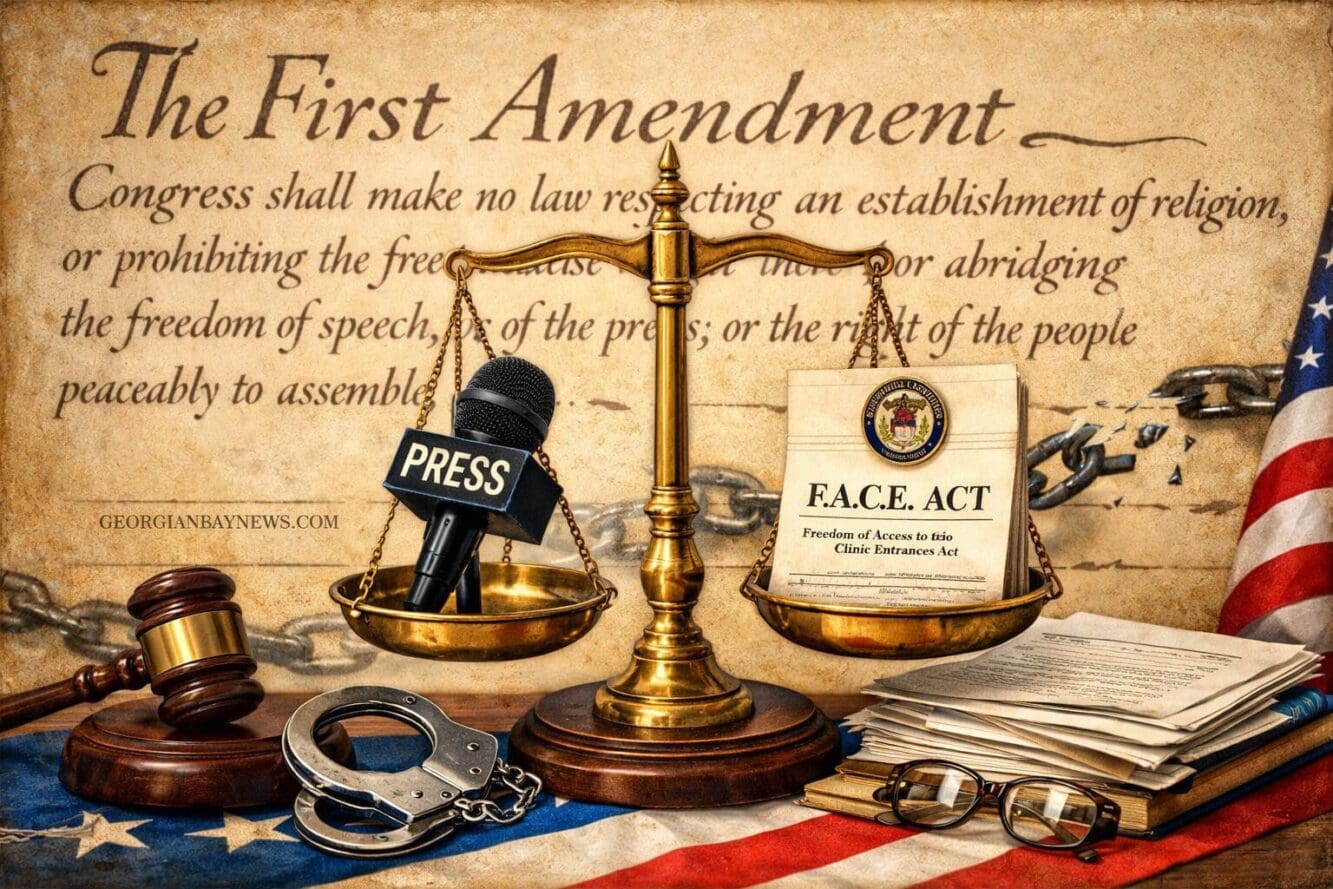
While charges remain officially sealed, legal experts and news reports suggest the Department of Justice may be attempting to prosecute Lemon under the Freedom of Access to Clinic Entrances (FACE) Act. Originally passed in 1994, this federal law was designed to protect abortion clinics and places of worship from violent obstruction.
The DOJ’s legal argument, revealed in an unsealed filing, states: “The FACE Act contains no exception that would permit journalists or their producers to use or threaten force or physically obstruct worshippers.”[3]
Here’s where things get complicated:
| DOJ Position | Defense Position |
|---|---|
| No journalist exception exists in FACE Act | First Amendment protects newsgathering activities |
| Lemon’s presence contributed to obstruction | Lemon was documenting, not participating |
| Physical presence equals participation | Journalism requires being present at newsworthy events |
| FACE Act violations are federal crimes | Charging journalists chills press freedom |
Abbe Lowell, Don Lemon’s high-profile attorney, didn’t mince words. He characterized the arrest as “an unprecedented attack on the First Amendment” and vowed that Lemon “will fight these charges” in court.[3]
Lowell’s statement highlighted a disturbing irony: the Trump Justice Department is “devoting its time, attention and resources to this case” instead of investigating federal agents allegedly responsible for the deaths of two peaceful Minnesota protesters.[3]
“When the government can arrest a journalist for covering a protest, we’ve crossed a line that threatens the very foundation of a free press.” — Legal experts commenting on the case
The constitutional implications extend far beyond one journalist’s arrest. If the government succeeds in prosecuting Don Lemon for simply being present at a newsworthy event, what precedent does that set? Could war correspondents be charged with conspiracy for documenting battles? Could investigative journalists face obstruction charges for witnessing corporate malfeasance?
Understanding the broader context of how investigations can lead to arrests helps illuminate the procedural aspects of this case, though the circumstances differ dramatically.
Don Lemon wasn’t alone in facing federal charges. Four other individuals were arrested in connection with the January 18 incident:[1][3]
The inclusion of another journalist (Georgia Fort) in the arrests reinforces concerns that this represents a coordinated effort to criminalize protest coverage rather than prosecute actual lawbreaking. When multiple media professionals face federal charges for documenting the same event, the chilling effect on press freedom becomes exponentially worse.
🚨 The message being sent: Cover controversial protests at your own legal peril.
This pattern of multiple arrests stemming from single incidents isn’t unprecedented in law enforcement, though applying such tactics to journalists raises unique constitutional concerns.
Perhaps nothing illustrated the political nature of this prosecution more than the White House’s official response. On Friday morning, the official White House X (formerly Twitter) account posted an image featuring Lemon’s arrest with the caption: “When life gives you lemons…” alongside a chains emoji.[3]
The post—widely condemned by journalism organizations and press freedom advocates—suggested the administration viewed the arrest not as a solemn exercise of law enforcement authority, but as a political victory worth celebrating.
For context, Don Lemon has been a vocal critic of former President Trump throughout his career at CNN and beyond. Whether this prosecution represents legitimate law enforcement or political retaliation remains hotly debated, but the optics are undeniably troubling.
If you’re a journalist—whether you work for a major network, run an independent YouTube channel, or write for a local newspaper—the Don Lemon arrested case should concern you deeply. Here’s why:
✅ Newsgathering requires presence — Journalists can’t cover protests from their living rooms. They must be where news happens.
✅ Observer vs. participant distinction — The line between documenting events and participating in them has historically been clear. This prosecution blurs that line dangerously.
✅ Federal prosecution power — If the DOJ can bring federal charges against journalists covering local protests, no reporter covering controversial topics is truly safe.
✅ Chilling effect — When journalists face arrest for doing their jobs, newsrooms will inevitably become more cautious, self-censoring coverage of government actions.
For Canadian readers and international audiences watching this unfold, the Don Lemon arrested case offers a troubling window into American press freedom in 2026. Canada’s Charter of Rights and Freedoms provides robust protections for journalists, and seeing a major American journalist arrested for covering a protest raises questions about democratic backsliding south of the border.
🇨🇦 Canadian context: While Canada has its own challenges with press freedom, the idea of federal prosecutors charging journalists for protest coverage would likely face immediate Charter challenges and public outcry.
The case also matters to world leaders and international observers who rely on American press freedom as a benchmark. When the United States—long considered a global standard-bearer for First Amendment protections—begins prosecuting journalists for newsgathering activities, it emboldens authoritarian regimes worldwide to crack down on their own media.
Much like fraud investigations that require careful examination of evidence, this case demands scrutiny of the government’s legal basis for prosecution.
The Don Lemon arrested incident doesn’t exist in isolation. It’s part of a broader pattern that has press freedom organizations deeply concerned:
📊 Recent trends affecting journalists:
According to the U.S. Press Freedom Tracker, 2025 saw a significant uptick in journalists detained while covering protests. The Don Lemon arrested case represents a potential escalation: moving from temporary detention to federal prosecution with potentially serious penalties.
Constitutional law scholars have weighed in with near-unanimous concern. While some acknowledge that journalists don’t enjoy absolute immunity from all laws, the consensus holds that prosecuting journalists for standard newsgathering activities violates fundamental First Amendment principles.
The Society of Professional Journalists, Reporters Committee for Freedom of the Press, and numerous other organizations have condemned the arrest and called for charges to be dropped immediately.
Similar to how authorities must carefully distinguish between suspicious behavior and lawful activity, prosecutors should distinguish between protest participation and journalistic observation.
As of early 2026, here’s what we can expect in the Don Lemon arrested case:
📅 Short-term (weeks):
📅 Medium-term (months):
📅 Long-term (year+):
🎯 Best case for press freedom: Judge dismisses charges on First Amendment grounds, establishing protective precedent for journalists covering protests.
⚖️ Middle ground: Case proceeds but results in acquittal, leaving legal questions unresolved.
🚨 Worst case for press freedom: Conviction stands, creating precedent that journalists can be prosecuted for covering controversial events.
You don’t need to be a journalist to care about the Don Lemon arrested case. Press freedom protects everyone’s right to receive information about their government. Here’s what concerned citizens can do:
✊ Stay informed — Follow reputable news sources covering the case developments
📧 Contact representatives — Let your senators and congressional representatives know you oppose prosecuting journalists
💬 Support press freedom organizations — Groups like the Reporters Committee for Freedom of the Press need public backing
🗣️ Speak up — Share accurate information about the case on social media to counter misinformation
If you work in media, consider these protective steps:
Understanding how law enforcement conducts investigations can help journalists anticipate and navigate interactions with authorities.
Older Americans who remember previous eras of press freedom challenges have valuable perspective to share. Community leaders can:
Resources like protecting seniors from fraud and misinformation emphasize the importance of reliable journalism in protecting vulnerable populations.
The United States has steadily declined in international press freedom rankings over the past decade. The Don Lemon arrested case provides ammunition for critics who argue American press freedom is more myth than reality in 2026.
Countries with authoritarian tendencies often point to American hypocrisy when criticized for their own media crackdowns. “If the United States can arrest journalists for covering protests,” they argue, “why can’t we?”
For world leaders navigating relationships with the United States, this case raises questions:
The Don Lemon arrested case represents far more than one journalist’s legal troubles. It’s a litmus test for American democracy in 2026, a referendum on whether the First Amendment retains its protective power, and a warning sign that press freedom cannot be taken for granted—even in nations with strong constitutional protections.
Whether you’re a tech worker in Silicon Valley, a senior in a small Canadian town, a community organizer in Minnesota, or a world leader watching from abroad, this case affects you. A free press serves as democracy’s immune system, identifying problems before they become fatal. When that immune system is attacked, everyone becomes vulnerable.
The Don Lemon arrested story is still being written. The ending—whether it strengthens press protections or establishes dangerous precedent—depends partly on public engagement and support for fundamental freedoms.
In the words of Judge Patrick Schiltz, who initially dismissed charges against Lemon: there was “no evidence” of criminal behavior.[3] The question now is whether that evidence-based standard will prevail, or whether journalism itself becomes criminalized when it documents uncomfortable truths.
The cameras that captured Don Lemon’s arrest are the same cameras that hold power accountable. Protecting those cameras—and the journalists behind them—protects us all. 📰⚖️
[1] Don Lemon Arrest Minnesota Church Ice Protest – https://www.axios.com/2026/01/30/don-lemon-arrest-minnesota-church-ice-protest
[2] Watch – https://www.youtube.com/watch?v=ZIgfruQBv8c
[3] Story – https://abcnews.go.com/US/don-lemon-arrested-connection-minnesota-protest-sources/story?id=129699476
[4] Watch – https://www.youtube.com/watch?v=CSpYidFENkk
GEORGIANBAYNEWS.COM shares video content from YouTube creators under fair use principles. We respect creators’ intellectual property and include direct links to their original videos, channels, and social media platforms whenever we feature their content. This practice supports creators by driving traffic to their platforms.
Some content and illustrations on GEORGIANBAYNEWS.COM are created with the assistance of AI tools.





January 30, 2025

September 24, 2026