

























The Surprising Benefits of Plants in the Home That Will Transform Your Living Space in 2026

Picture this: You walk into your home after a stressful day, and instead of stale air and artificial lighting, you’re greeted by vibrant green leaves, fresh oxygen, and an atmosphere that immediately calms your racing mind. That’s not just interior design magic—that’s the scientifically proven power of plants in the home. 🌿
Whether you’re a tech professional working from home in Collingwood, a senior looking to improve your living environment in Meaford, or a community leader seeking healthier spaces for your region, understanding the remarkable benefits of indoor plants has never been more relevant. In 2026, as we spend an estimated 90% of our time indoors and two-thirds of that time in our homes, the quality of our indoor environment directly impacts our health, productivity, and overall wellbeing.[2]
The good news? Adding even a single plant to your space can make a measurable difference. From purifying the air you breathe to boosting your mental health and even reducing your energy bills, houseplants offer benefits that extend far beyond their aesthetic appeal.
Key Takeaways
- A single indoor plant can improve air quality by 25%, with multiple plants providing exponentially greater benefits by removing harmful pollutants like formaldehyde, benzene, and volatile organic compounds.[1]
- Psychological benefits are the primary advantage of houseplants, including reduced stress, lower blood pressure, and improved mood—even more significant than physical air purification.[3]
- Plants boost productivity by 38% in workplace environments and increase memory retention by up to 20%, making them essential for home offices.[1][4]
- Humidity regulation from plants reduces dry skin, common colds, and sore throats while decreasing heating and cooling costs through natural climate control.[4]
- Major research initiatives in 2026 are establishing evidence-based guidelines for integrating indoor plants into building design to support Net Zero climate goals.[2]
How Plants in the Home Improve Your Air Quality

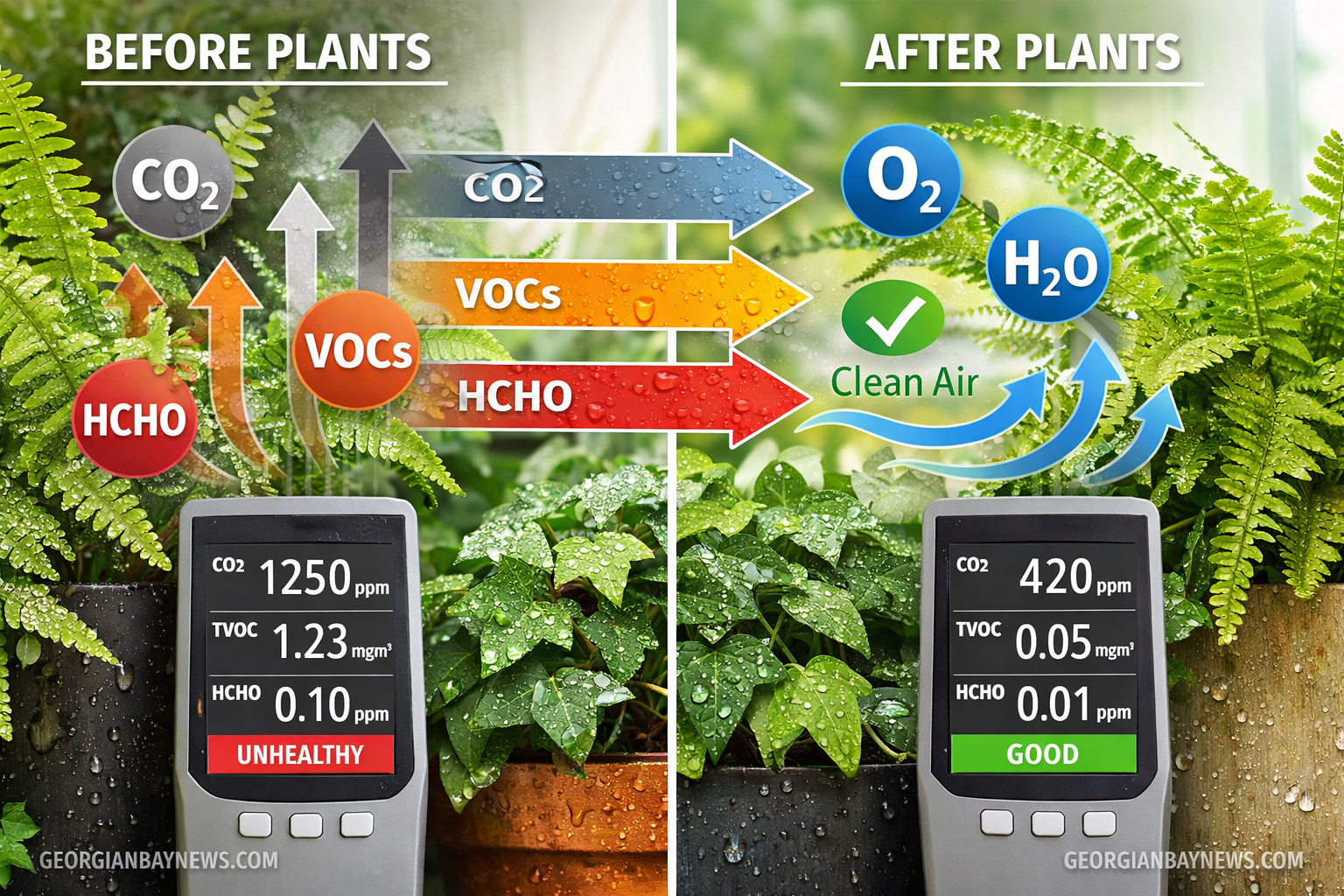
When Sarah, a software engineer from Vancouver, started experiencing frequent headaches while working from home, she never suspected her indoor air quality might be the culprit. After adding just three plants to her home office—a Boston fern, an English ivy, and a golden pothos—she noticed her symptoms diminishing within weeks. Her experience aligns with what researchers have been documenting for years.
The Science Behind Air Purification
Indoor plants are nature’s air filters, working around the clock to clean the air you breathe. A single plant can improve air quality by 25%, and the benefits multiply as you add more greenery to your space.[1] Plants accomplish this through several mechanisms:
- Carbon dioxide reduction: Through photosynthesis, plants absorb CO2 and release fresh oxygen
- Pollutant absorption: Leaves and roots filter harmful chemicals including formaldehyde, benzene, and trichloroethylene[5]
- VOC removal: Volatile organic compounds from furniture, paint, and cleaning products are neutralized
- Mould spore reduction: Certain plants like English ivy actively reduce airborne mould particles[5]
Top Air-Purifying Plants for Your Home
| Plant Name | Primary Benefit | Difficulty Level |
|---|---|---|
| Boston Fern | Formaldehyde absorption | Moderate |
| English Ivy | Mould spores & benzene removal | Easy |
| Golden Pothos | VOC elimination | Very Easy |
| Snake Plant | 24-hour oxygen production | Very Easy |
| Rubber Plant | Humidity regulation | Easy |
The timing couldn’t be better for this knowledge. In January 2026, UK Houseplant Week (January 8-14) emphasized the critical role of houseplants in creating healthier homes, with government councils actively promoting specific high-performing species.[5] For those considering expanding their living space with sustainable solutions, incorporating plants from the design phase ensures optimal air quality from day one.
Groundbreaking Research Shaping the Future
In October 2025, the GREENIN Micro Network Plus project launched with £600,000 in funding from UK Research and Innovation, bringing together six universities to investigate how indoor plants affect air quality, temperature regulation, and humidity control.[2] This represents the first coordinated effort to provide comprehensive, actionable guidelines for residential and workplace design—findings that will influence building codes and urban planning policy throughout 2026 and beyond.
Researchers emphasize that integrating plants into building design could help meet Net Zero climate goals while simultaneously improving energy efficiency and occupant wellbeing.[2] This dual benefit makes houseplants an essential consideration for anyone planning home improvements or new construction.
The Mental Health and Productivity Benefits of Plants in the Home
Mark, a 68-year-old retiree from Georgian Bay, discovered an unexpected companion during his transition to retirement: his growing collection of houseplants. “Taking care of them gives me purpose,” he explains. “Watering them, checking their growth, moving them to better light—it’s become my morning meditation.” His experience reflects what recent research confirms: psychological benefits represent the “real gains” from houseplants, according to authoritative guidance from RHS Science and the University of Reading.[3]
Stress Reduction and Emotional Wellbeing
The connection between plants and mental health goes deeper than you might expect. Scientific studies demonstrate that interacting with houseplants:
- Suppresses sympathetic nervous system activity, the body’s stress response mechanism[7]
- Reduces diastolic blood pressure, promoting cardiovascular health[4]
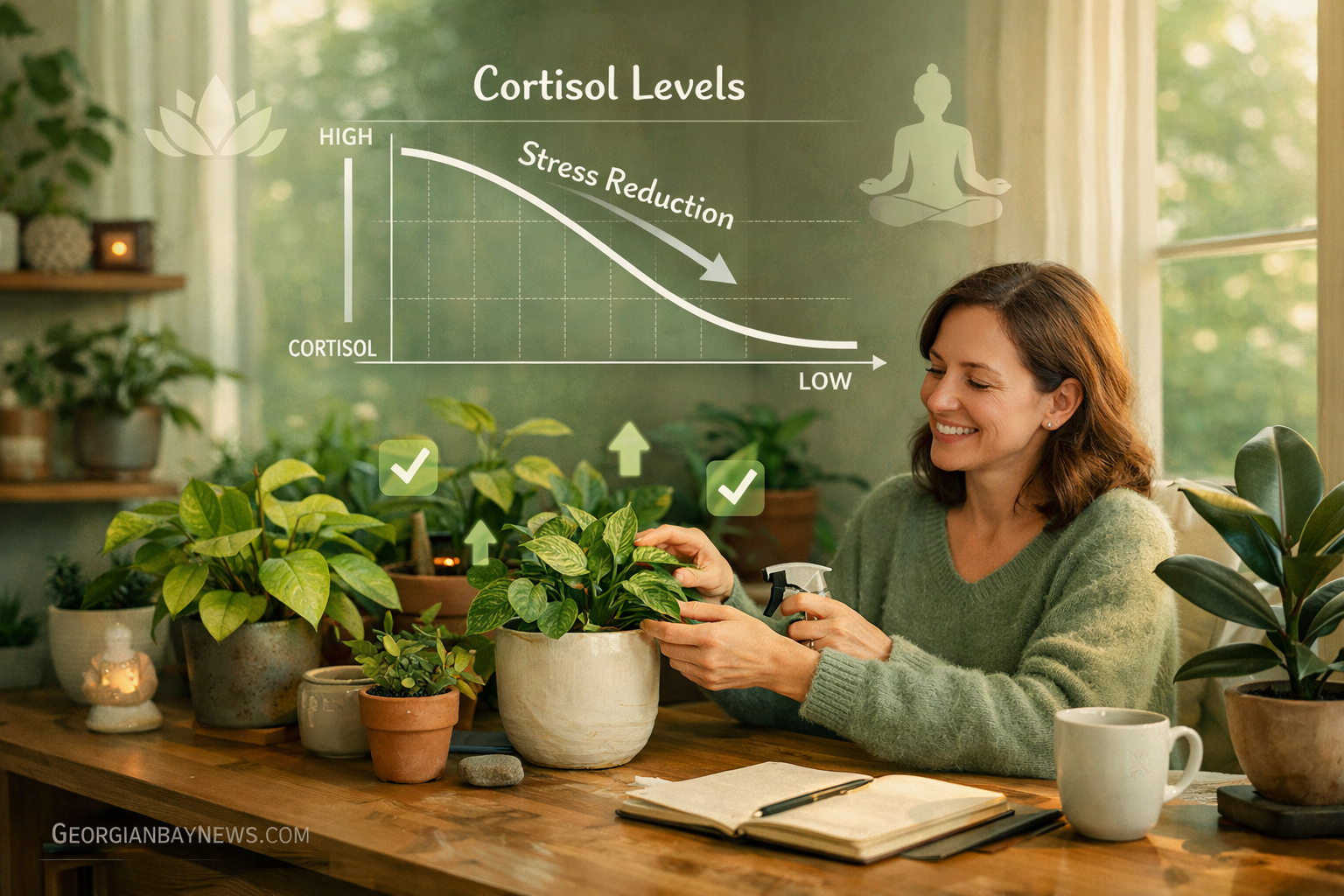
- Lowers cortisol levels, the primary stress hormone that contributes to anxiety and depression[4]
- Fosters mindfulness, as the act of caring for plants anchors you in the present moment[1]
For seniors looking to maintain mental acuity and emotional balance, houseplants offer a low-impact, rewarding activity. Those interested in additional wellness practices might also explore gentle exercise options designed specifically for seniors to complement the calming effects of plant care.
Workplace and Home Office Performance Boost
The productivity benefits of plants in the home are particularly relevant for the millions of people now working remotely. Research findings are impressive:
- 38% increase in productivity when plants are present in workplace environments[1]
- 20% improvement in memory retention, according to a University of Michigan study[4]
- Enhanced work quality and accuracy, demonstrated by Texas A&M research[4]
- Improved creativity and focus, making problem-solving tasks easier
Jennifer, a tech consultant who splits her time between Toronto and Collingwood, transformed her home office by adding six plants strategically placed around her workspace. “I thought it was just decoration,” she admits, “but I genuinely feel more focused during video calls and creative sessions. It’s like having a piece of the outdoors with me while I work.”
Creating Healthier Work Environments
Beyond individual benefits, houseplants contribute to overall workplace health. Offices containing plants experience:
- Reduced health complaints among employees[3]
- Lower sick leave rates, particularly during cold and flu season
- Higher perceived attractiveness of the workspace
- Increased job satisfaction across teams[3]
For those working from home or managing small teams, these benefits translate directly to better outcomes and improved quality of life. The connection between environment and wellbeing becomes even more apparent when you consider how self-sufficient living practices incorporate natural elements to create healthier, more sustainable lifestyles.
Energy Efficiency and Climate Control Through Plants in the Home
Here’s a benefit that surprises most people: plants can actually reduce your heating and cooling costs while making your home more comfortable year-round. This isn’t just feel-good environmentalism—it’s practical home economics backed by solid science.
How Plants Regulate Indoor Climate
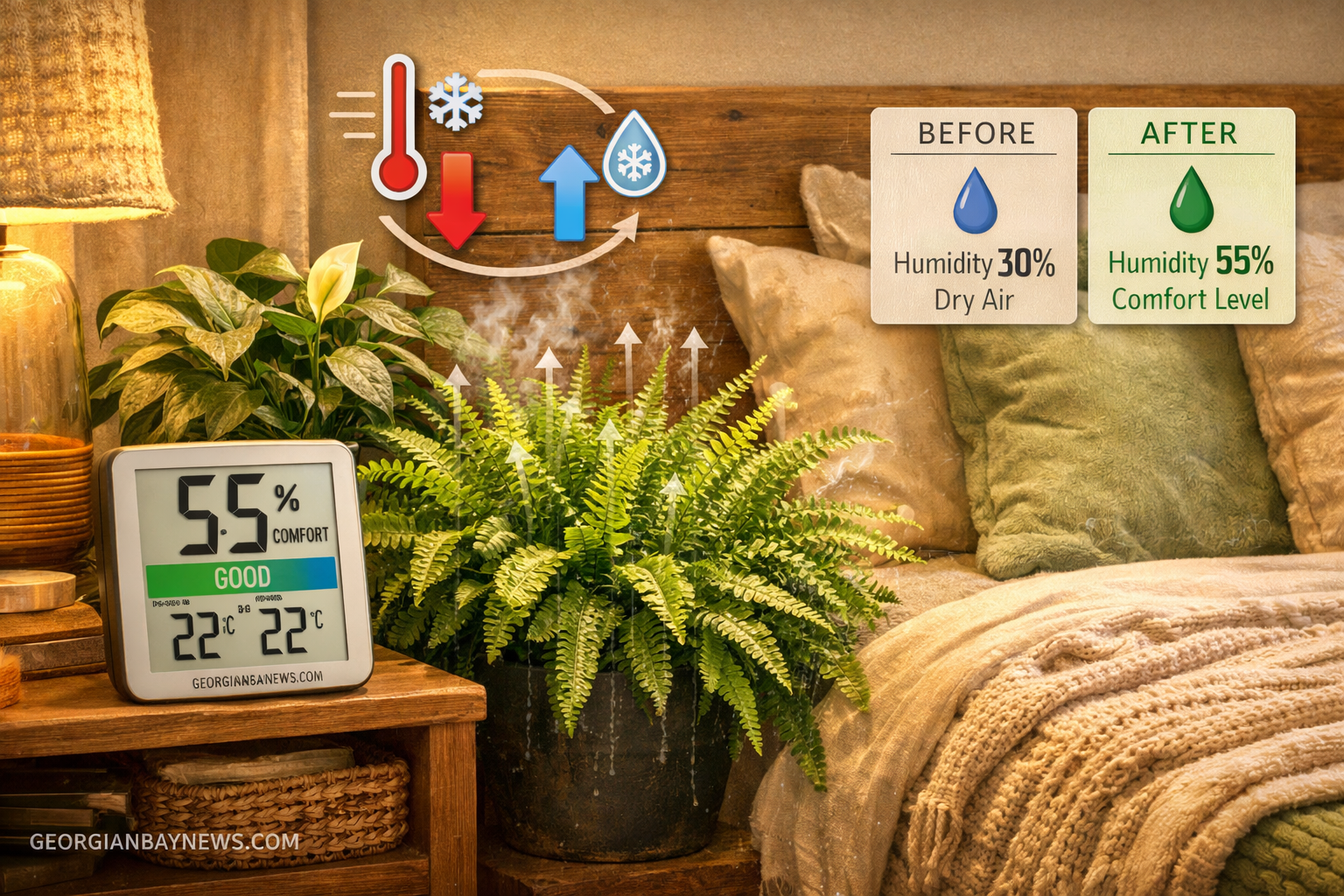
Through a process called transpiration, plants release nearly 97% of the water they absorb into the surrounding air.[4] This natural humidification process creates several tangible benefits:
✅ Increased humidity levels during dry winter months
✅ Reduced need for artificial humidifiers and associated energy costs
✅ More comfortable indoor temperatures requiring less HVAC adjustment
✅ Lower likelihood of dry skin, sore throats, and respiratory irritation[4]
When you group plants together, their collective transpiration creates a microclimate that significantly impacts your living space. The Rubber Plant and Boston Fern are particularly effective at humidity regulation, making them ideal choices for bedrooms and living areas.[5]
The Economic and Environmental Impact
Rachel, a homeowner in Collingwood exploring sustainable housing options, calculated that her strategic placement of 15 plants throughout her home reduced her winter humidifier usage by approximately 60%. “I was spending about $30 monthly on electricity for humidifiers,” she notes. “Now that’s down to maybe $12, and the air feels better—less artificial.”
The environmental benefits extend beyond individual homes:
- Reduced HVAC system demands mean lower carbon emissions
- Natural climate control supports Net Zero building initiatives[2]
- Decreased reliance on energy-intensive appliances reduces grid strain
- Improved building efficiency contributes to community sustainability goals
These advantages align perfectly with broader climate initiatives. As communities across Canada and the United States work toward ambitious environmental targets, incorporating plants into residential design represents a simple, accessible strategy that anyone can implement.
Practical Tips for Maximizing Climate Benefits
To get the most climate control benefit from your houseplants:
- Group plants together to create humidity zones in dry areas
- Place moisture-loving plants in bedrooms and living spaces where you spend the most time
- Choose larger-leafed varieties like Rubber Plants for maximum transpiration
- Position plants near heating vents (but not too close) to help distribute humidity
- Maintain proper watering schedules to ensure consistent transpiration rates
For those interested in comprehensive home improvement strategies, understanding how plants contribute to overall efficiency complements other sustainable practices. Whether you’re considering affordable homeownership options or optimizing your current space, plants offer an immediate, low-cost enhancement.
Choosing the Right Plants for Your Home
Not all plants are created equal when it comes to indoor benefits. Selecting the right varieties for your specific needs, lifestyle, and experience level makes the difference between thriving greenery and frustrating failures.
Best Plants for Beginners
If you’re new to indoor gardening, start with these nearly indestructible options:
🌱 Snake Plant (Sansevieria): Tolerates neglect, low light, and irregular watering while producing oxygen 24 hours a day
🌱 Pothos (Golden Pothos): Excellent VOC remover, thrives in various light conditions, grows quickly
🌱 Spider Plant: Safe for pets, prolific grower, effective air purifier
🌱 ZZ Plant: Extremely drought-tolerant, thrives in low light, modern aesthetic
For Specific Health Benefits
Match your plant selection to your primary goals:
For maximum air purification: Boston Fern, English Ivy, Peace Lily
For humidity regulation: Rubber Plant, Areca Palm, Boston Fern
For stress reduction: Lavender, Jasmine, Aloe Vera
For bedroom oxygen: Snake Plant, Areca Palm, Gerbera Daisy
Care Considerations for Different Lifestyles
Busy professionals: Choose low-maintenance varieties like Snake Plants, ZZ Plants, or Pothos that forgive occasional neglect
Seniors: Select plants with minimal care requirements and avoid those needing frequent repotting or complex maintenance schedules
Families with pets: Stick to non-toxic options like Spider Plants, Boston Ferns, and Areca Palms (avoid Peace Lilies and Pothos around curious pets)
Apartment dwellers: Focus on compact varieties and those thriving in indirect light
Tom, a retiree who found a forever home in Collingwood, started with just three snake plants after reading about their benefits. “I was worried I’d kill them,” he laughs, “but they’re practically immortal. Now I’ve got twelve different plants, and I’ve become the guy giving plant advice to my neighbors.”
Getting Started: Your Action Plan for Plants in the Home
Ready to transform your living space with the power of plants? Here’s your practical roadmap:
Week 1: Assess and Plan
- Evaluate your space: Note light levels in different rooms throughout the day
- Identify your goals: Air quality? Stress reduction? Humidity control?
- Consider your lifestyle: How much time can you realistically dedicate to plant care?
- Set a budget: Start small—even 2-3 plants make a difference
Week 2: Start Small and Strategic
- Purchase 2-5 beginner-friendly plants based on your assessment
- Choose appropriate containers with drainage holes
- Position plants thoughtfully: bedrooms for sleep quality, home office for productivity, living areas for air quality
- Establish a simple care routine: set phone reminders for watering
Week 3-4: Observe and Adjust
- Monitor plant health: yellowing leaves, drooping, or brown tips indicate care adjustments needed
- Track your own wellbeing: Notice changes in air quality, stress levels, or sleep quality
- Research and expand: As confidence grows, add more challenging varieties
- Join communities: Local gardening groups or online forums provide support and advice
Long-Term Integration
Think of plants as permanent residents in your home, just like finding the right forever home for a beloved pet. They require consistent care, but the returns—cleaner air, better mental health, lower energy costs—far exceed the modest investment of time and resources.
For those planning larger home projects, consider consulting with designers who understand how to integrate natural elements into modern living spaces from the ground up.
Conclusion: Growing a Healthier Future, One Plant at a Time
The benefits of plants in the home extend far beyond simple decoration. From the 25% improvement in air quality that a single plant provides[1] to the 38% productivity boost in work environments[1], from stress reduction and mental health support[3][7] to tangible energy savings through natural climate control[4]—houseplants represent one of the simplest, most cost-effective wellness investments you can make in 2026.
As groundbreaking research from the GREENIN Micro Network Plus project continues to establish evidence-based guidelines for indoor greening[2], we’re entering an era where plants will be recognized not as optional décor, but as essential components of healthy, sustainable living spaces. Whether you’re a tech professional optimizing your home office, a senior seeking meaningful daily activities, or a community leader looking to improve public spaces, the message is clear: bringing nature indoors transforms lives.
The best time to start was yesterday. The second-best time is today. Choose one plant—just one—and begin your journey toward a healthier, more vibrant home environment. Your lungs, your mind, and your energy bills will thank you. 🌿
References
[1] Why Grow Indoor Plants And How Care Them – https://ucanr.edu/blog/fresno-gardening-green/article/why-grow-indoor-plants-and-how-care-them
[2] Houseplant Human Health – https://www.york.ac.uk/news-and-events/news/2025/research/houseplant-human-health/
[3] Houseplants For Wellbeing – https://www.rhs.org.uk/science/articles/houseplants-for-wellbeing
[4] Benefits Having Houseplants – https://extension.sdstate.edu/benefits-having-houseplants
[5] Uk Houseplant Week 2026 Healthier Homes Indoor Air Quality – https://www.darlington.gov.uk/climate-change-and-sustainability/sustainability-blogs-and-films/uk-houseplant-week-2026-healthier-homes-indoor-air-quality
[7] Can House Plants Make You Happier – https://extension.unh.edu/blog/2025/02/can-house-plants-make-you-happier
Some content and illustrations on GEORGIANBAYNEWS.COM are created with the assistance of AI tools.
GEORGIANBAYNEWS.COM shares video content from YouTube creators under fair use principles. We respect creators’ intellectual property and include direct links to their original videos, channels, and social media platforms whenever we feature their content. This practice supports creators by driving traffic to their platforms.
Much Appreciate You Sharing This Post - It Helps MUCH!!!