



















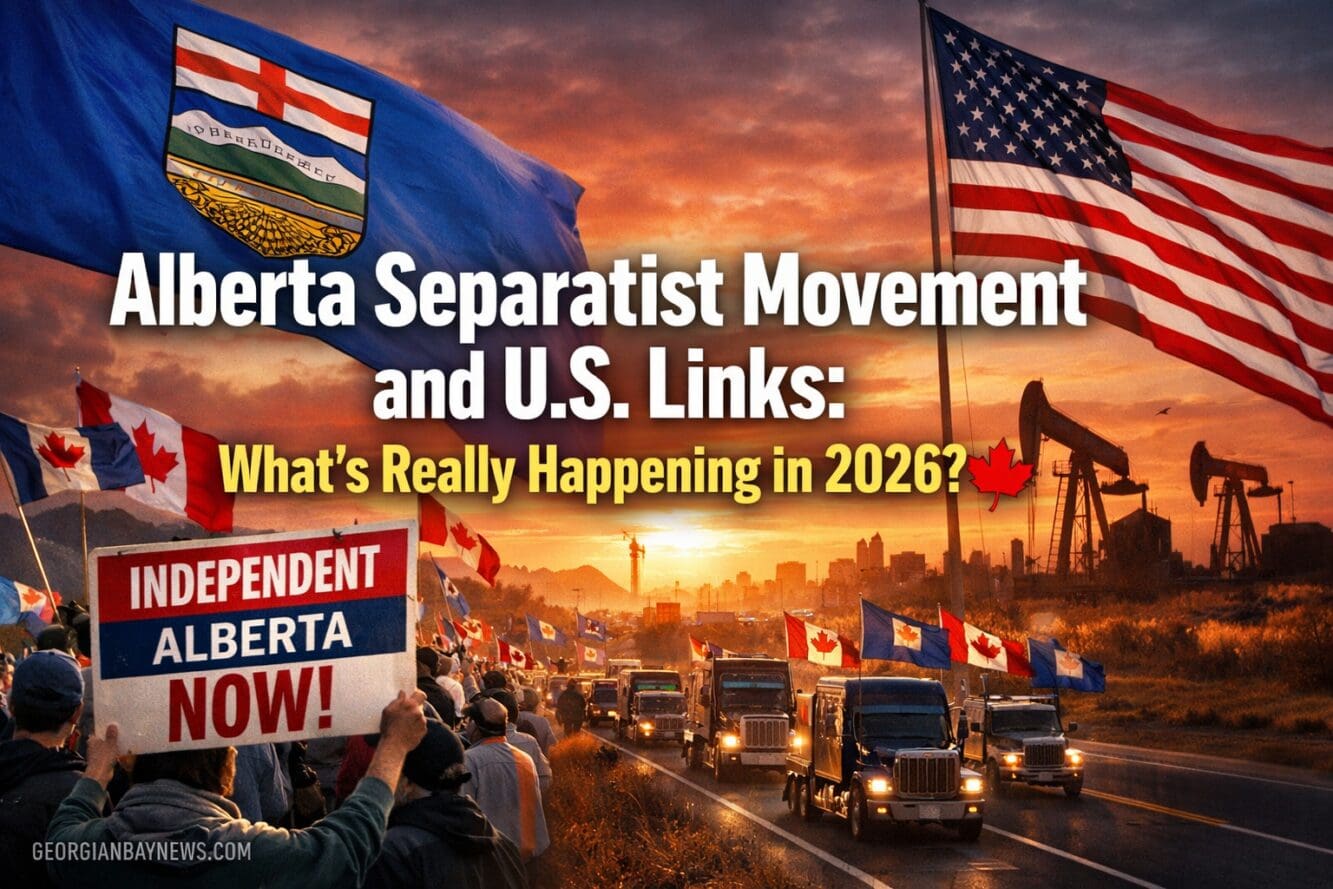
Imagine standing in line outside a community hall on a freezing January night in Alberta, waiting hours just to sign your name on a petition. This isn’t a scene from a political thriller—it’s happening right now across Canada’s westernmost prairie province.
The Alberta Separatist Movement has captured international attention in 2026, with nearly 178,000 signatures needed by May to trigger a referendum that could fundamentally reshape North America. But what’s driving this push for independence, and why are American politicians suddenly so interested in what happens north of the 49th parallel?
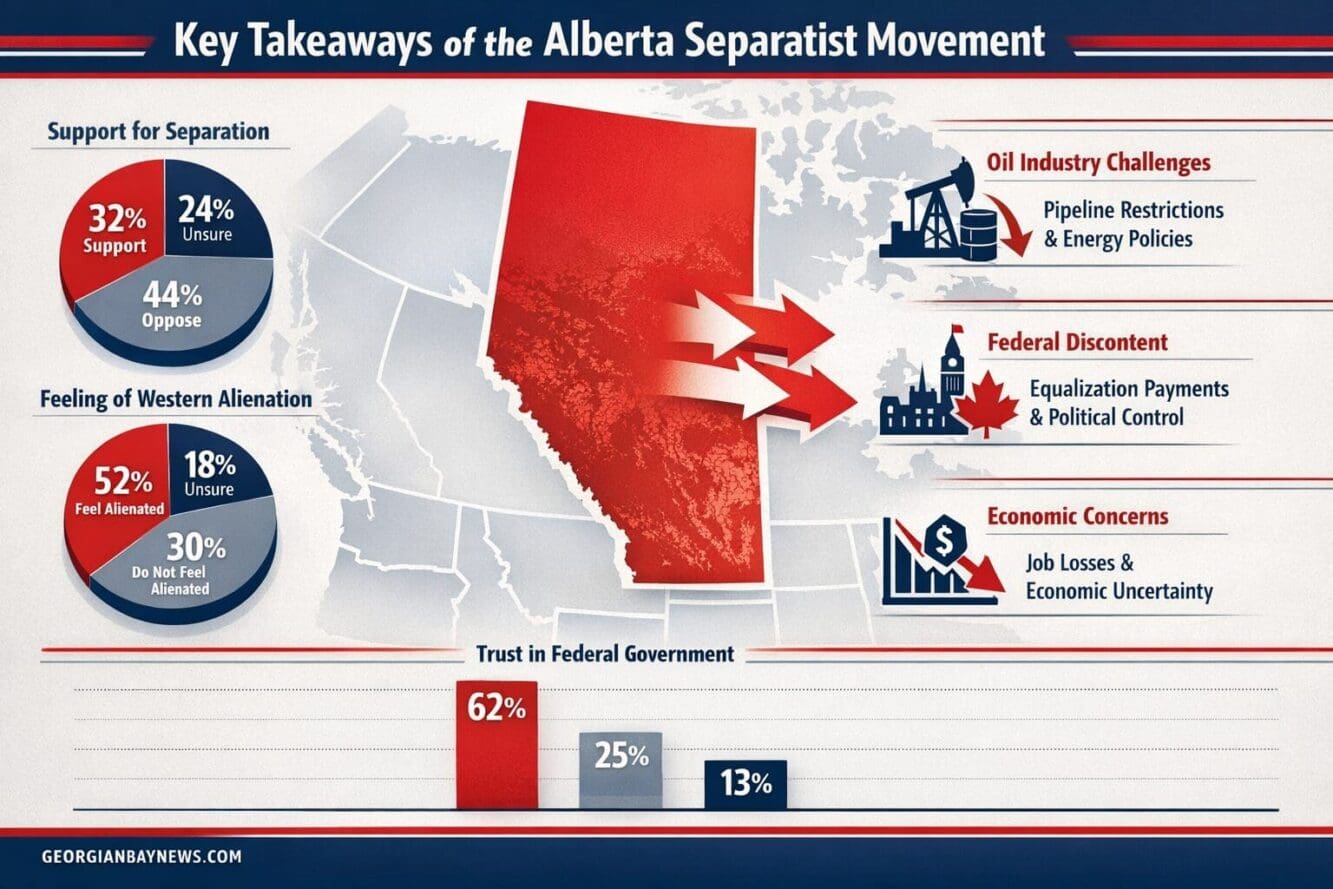
The Alberta Separatist Movement isn’t exactly new—frustrations with federal policies have simmered for decades. But 2026 has brought unprecedented momentum. The organization Stay Free Alberta, led by petition organizer Mitch Sylvestre (a UCP constituency association president), launched their referendum campaign in January with a clear goal: collect enough signatures to force a public vote on independence[1][2].
Jeff Rath, the lawyer serving as Stay Free Alberta’s public spokesperson, has been making the rounds explaining the petition process. Under Alberta law, if the petition reaches the required threshold, Premier Smith’s justice minister must refer it to the lieutenant-governor to call a referendum[1][2].
What’s striking isn’t just the numbers—it’s the passion. Reports describe Albertans standing outside in bitter cold, waiting their turn to sign. This level of grassroots engagement suggests the movement has tapped into something deeper than typical political discontent.
The leadership structure reveals interesting connections:
| Key Figure | Role | Significance |
|---|---|---|
| Mitch Sylvestre | Petition Organizer | UCP constituency president, insider access |
| Jeff Rath | Legal Spokesperson | Public face, handles media relations |
| Stay Free Alberta | Primary Organization | Coordinating signature collection province-wide |
| Anonymous UCP Caucus Members | Silent Supporters | Signed petition but won’t publicly confirm[1][2] |
The fact that sitting government caucus members have reportedly signed is perhaps the most explosive revelation. Rath confirmed this but refused to name names, citing confidentiality rules in Alberta’s petition process[1][2]. As of January 30, 2026, not a single UCP member had stepped forward publicly to confirm their support[2].
Here’s where things get complicated. The Alberta Separatist Movement isn’t happening in a vacuum—it’s unfolding against a backdrop of unprecedented tensions in Canadian-American relations.
Canadian Prime Minister Mark Carney has directly urged the United States not to meddle in Alberta’s independence movement[5]. Why would he need to make such a statement? Because American political figures have shown unusual interest in Alberta’s natural resources, particularly its massive oil reserves.
Alberta controls some of North America’s largest oil sands deposits. An independent Alberta—potentially more aligned with U.S. energy interests than federal Canadian policies—could reshape continental energy markets. Some observers worry that external actors might view Alberta’s separatist sentiment as an opportunity rather than an internal Canadian matter.
The ongoing trade disputes and tariff wars have only intensified these concerns. When economic relationships fray, political opportunism often follows.
The rhetoric around the Alberta Separatist Movement sometimes echoes American political language about sovereignty, state rights, and federal overreach. Whether this represents genuine ideological alignment or calculated messaging remains debatable. What’s undeniable is that political movements increasingly transcend borders in our interconnected world.
To understand the Alberta Separatist Movement, you need to understand what drives ordinary Albertans to consider such a dramatic step. The grievances aren’t abstract—they’re deeply personal.
“We send billions to Ottawa and get pennies back,” a common refrain at petition signing events, captures the essence of Alberta’s economic complaint. The province’s resource wealth flows into federal coffers through equalization payments, while Albertans feel their own infrastructure and services suffer.
During the oil boom years, this arrangement felt tolerable. But economic downturns have sharpened resentments. When families struggle while watching their tax dollars support programs in other provinces, separatist arguments gain traction.
Environmental regulations, pipeline approvals, and energy policy have created persistent friction between Alberta and Ottawa. Many Albertans believe federal climate policies unfairly target their energy sector while other provinces receive preferential treatment.
The UCP caucus statement—”Our United Conservative government is focused on building a strong and sovereign Alberta within a united Canada”[1][2]—attempts to thread this needle, acknowledging sovereignty concerns while maintaining commitment to confederation.
Let’s break down the mechanics. Stay Free Alberta needs almost 178,000 valid signatures by May 2026[1][2]. That’s not total signatures—that’s verified, legitimate signatures from eligible Alberta voters.
The organization hasn’t publicly disclosed current signature counts, but the crowds at collection events suggest significant progress. The large gatherings across the province in recent weeks[1][2] indicate momentum, though converting enthusiasm into verified signatures presents challenges.
If the petition succeeds:
Even if the referendum passes, the path to actual independence would involve complex constitutional negotiations, indigenous rights considerations, and international recognition questions. Quebec’s sovereignty referendums provide some precedent, but Alberta’s situation differs in crucial ways.
The Alberta Separatist Movement doesn’t exist in isolation. It’s part of broader tensions about Canadian federalism, regional identity, and how communities define themselves in changing times.
Saskatchewan and other western provinces share some of Alberta’s grievances, but haven’t shown equivalent separatist sentiment. The question becomes whether Alberta independence would inspire similar movements or serve as a cautionary tale.
Any discussion of Alberta independence must address indigenous sovereignty and treaty rights. Many First Nations have treaties with the Canadian Crown, not the province of Alberta. How would independence affect these relationships? The petition campaign has largely sidestepped these complex questions.
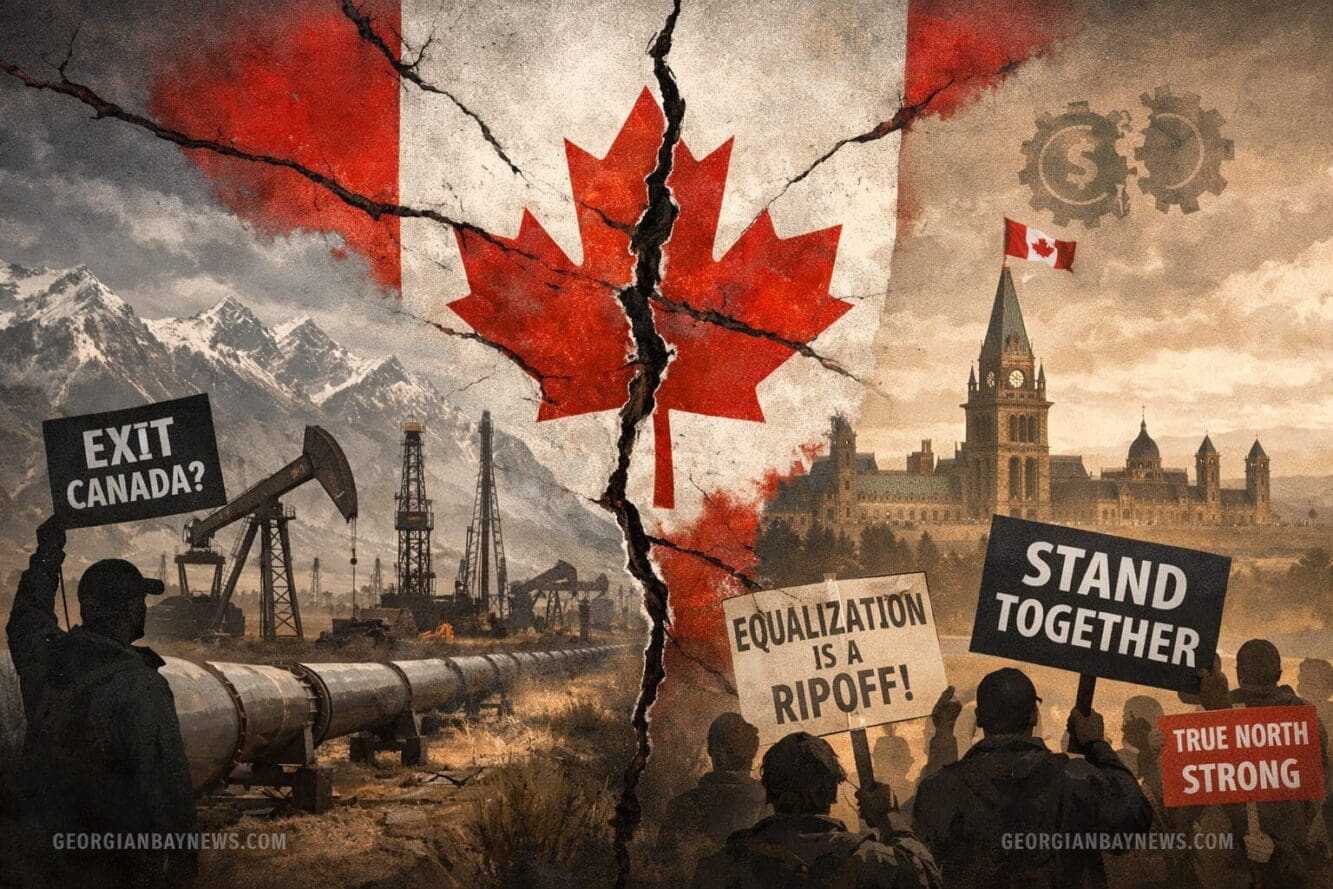
For international observers, the Alberta Separatist Movement represents more than regional politics—it signals potential continental realignment. World leaders and global readers watching these developments should consider several factors:
Energy Security: Alberta independence could reshape North American energy markets and supply chains.
Democratic Precedent: How Canada handles this movement may influence other separatist movements globally.
U.S.-Canada Relations: The situation tests diplomatic boundaries and raises questions about appropriate international involvement in domestic political movements[5].
Economic Stability: Uncertainty around confederation affects investment, trade agreements, and economic planning across the continent.
Not everyone waiting in line is signing the petition—some are there to observe, document, or counter-protest. Opposition to the Alberta Separatist Movement comes from diverse sources:
Economic pragmatists worry about currency questions, trade disruptions, and the costs of establishing independent institutions.
Cultural Canadians identify strongly with Canadian national identity and see separation as abandoning shared history and values.
Indigenous leaders express concerns about how independence might affect treaty rights and sovereignty.
Business communities fear uncertainty and potential economic isolation from Canadian markets.
The UCP’s official position—supporting a “strong and sovereign Alberta within a united Canada”[1][2]—reflects this internal division, even as some caucus members quietly sign the petition.
The Alberta Separatist Movement has reached a critical juncture in 2026. Whether the petition reaches its May deadline target of 178,000 signatures will determine immediate next steps, but the underlying tensions won’t disappear regardless of the outcome.
For Canadians across the country, this moment demands serious reflection about confederation’s future. For Americans and international observers, it’s a reminder that political upheaval can emerge quickly even in stable democracies.
For Albertans: Educate yourself on the petition process, referendum question, and potential consequences before making decisions. Seek diverse perspectives beyond social media echo chambers.
For Canadians: Engage with Alberta’s grievances seriously, whether you support separation or not. Dismissing concerns as fringe extremism misses the point—these frustrations reflect real policy failures.
For Americans: Respect Canadian sovereignty. Economic and political interference in another nation’s internal affairs rarely produces positive outcomes.
For World Leaders: Monitor developments as indicators of broader democratic trends. How established federations handle internal separatist movements may shape international norms.
The story of the Alberta Separatist Movement is still being written. Those long lines in the cold aren’t just about signatures—they’re about identity, economics, and what it means to belong. Whatever happens next, this moment has already changed the conversation about Canada’s future in ways that will resonate for years to come.
[1] Alberta Separatist Says Members Of Smiths Caucus Have Signed Referendum Petition – https://nationalnewswatch.com/2026/01/30/alberta-separatist-says-members-of-smiths-caucus-have-signed-referendum-petition
[2] Alberta Separatist Says Members Of Smiths Caucus Have Signed Referendum Petition – https://calgary.citynews.ca/2026/01/30/alberta-separatist-says-members-of-smiths-caucus-have-signed-referendum-petition/
[3] Who Are The Alberta Separatists And What Are Their Demands – https://economictimes.com/news/international/canada/who-are-the-alberta-separatists-and-what-are-their-demands/articleshow/127789976.cms
[4] Alberta Separatist Movement Discussion – https://www.youtube.com/watch?v=Q-HTcL-t5HA
[5] Carney Urges U.S. Not To Meddle In Alberta Independence Movement – https://www.politico.com/news/2026/01/29/carney-urges-u-s-not-to-meddle-in-alberta-independence-movement-00755701