























Canadian Astronaut Jeremy Hansen: First Non-American to Journey to the Moon

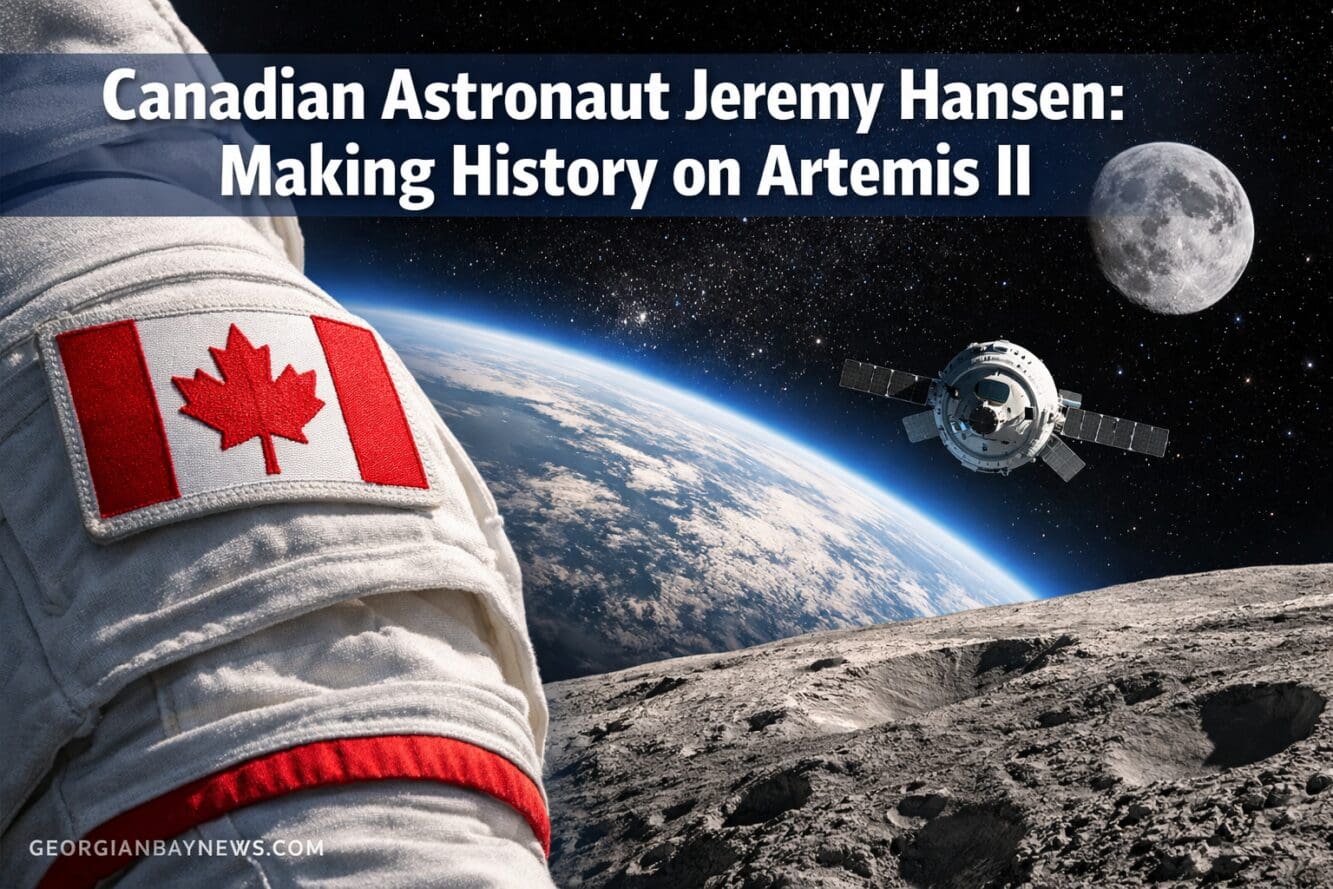
When the Orion spacecraft lifts off from Kennedy Space Center carrying the Artemis II crew, history will be made not just once, but twice.
Among the four astronauts aboard will be Canadian astronaut Jeremy Hansen, who will become the first person from outside the United States to venture beyond low Earth orbit and fly to the moon. This groundbreaking mission positions Canada as only the second nation ever to send one of its citizens into deep space—a remarkable achievement that has been more than five decades in the making.
Key Takeaways
- 🚀 Canadian astronaut Jeremy Hansen will be the first non-American to fly to the moon on NASA’s Artemis II mission
- 🇨🇦 Canada becomes only the second country in history to send an astronaut into deep space
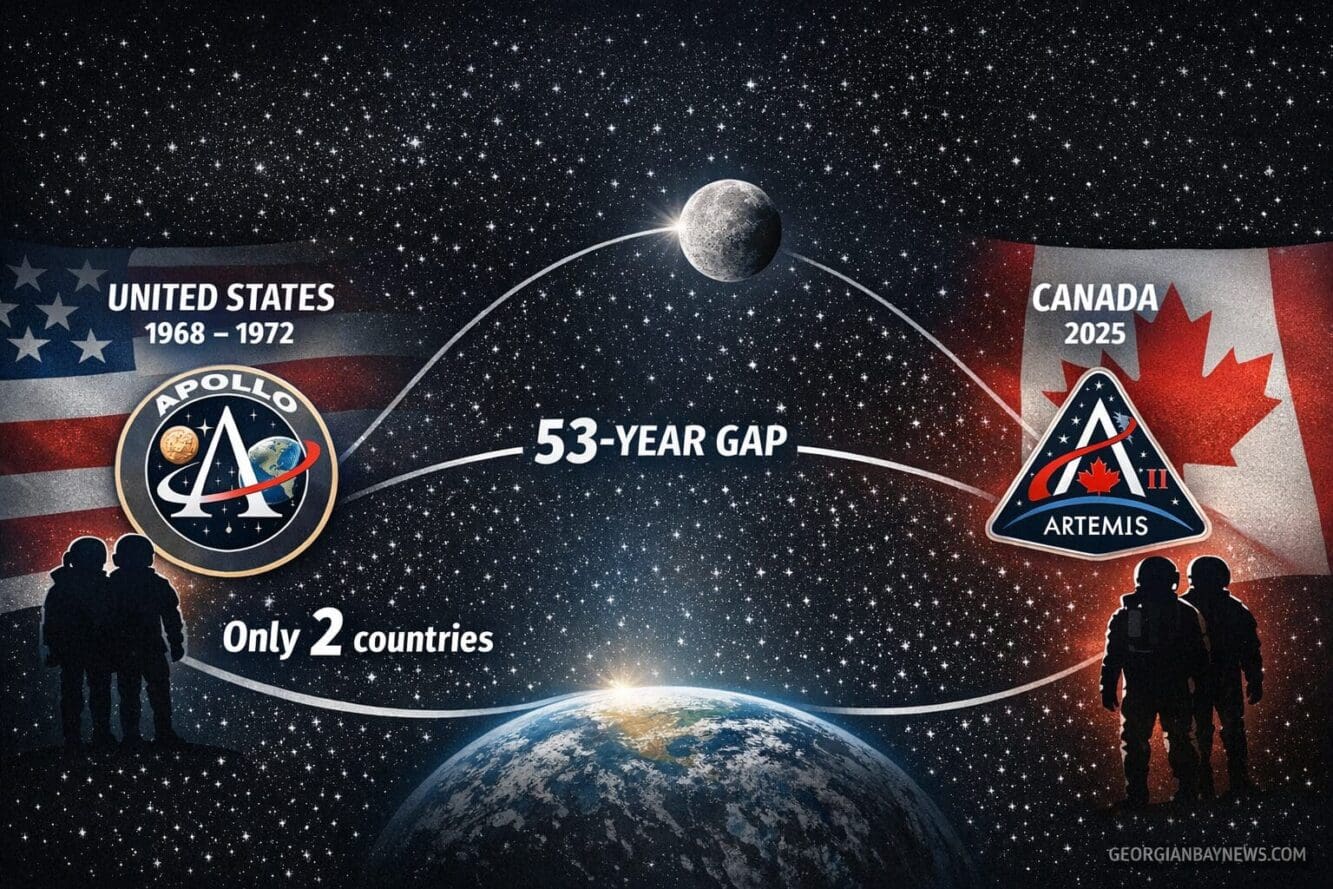
- 🌙 The mission marks a 53-year gap since the last time humans traveled to lunar orbit (Apollo 17 in 1972)
- 👨🚀 Hansen will join three NASA astronauts on a 10-day journey around the moon
- 🤝 This achievement highlights Canada’s critical partnership in international space exploration
Who is Canadian Astronaut Jeremy Hansen?
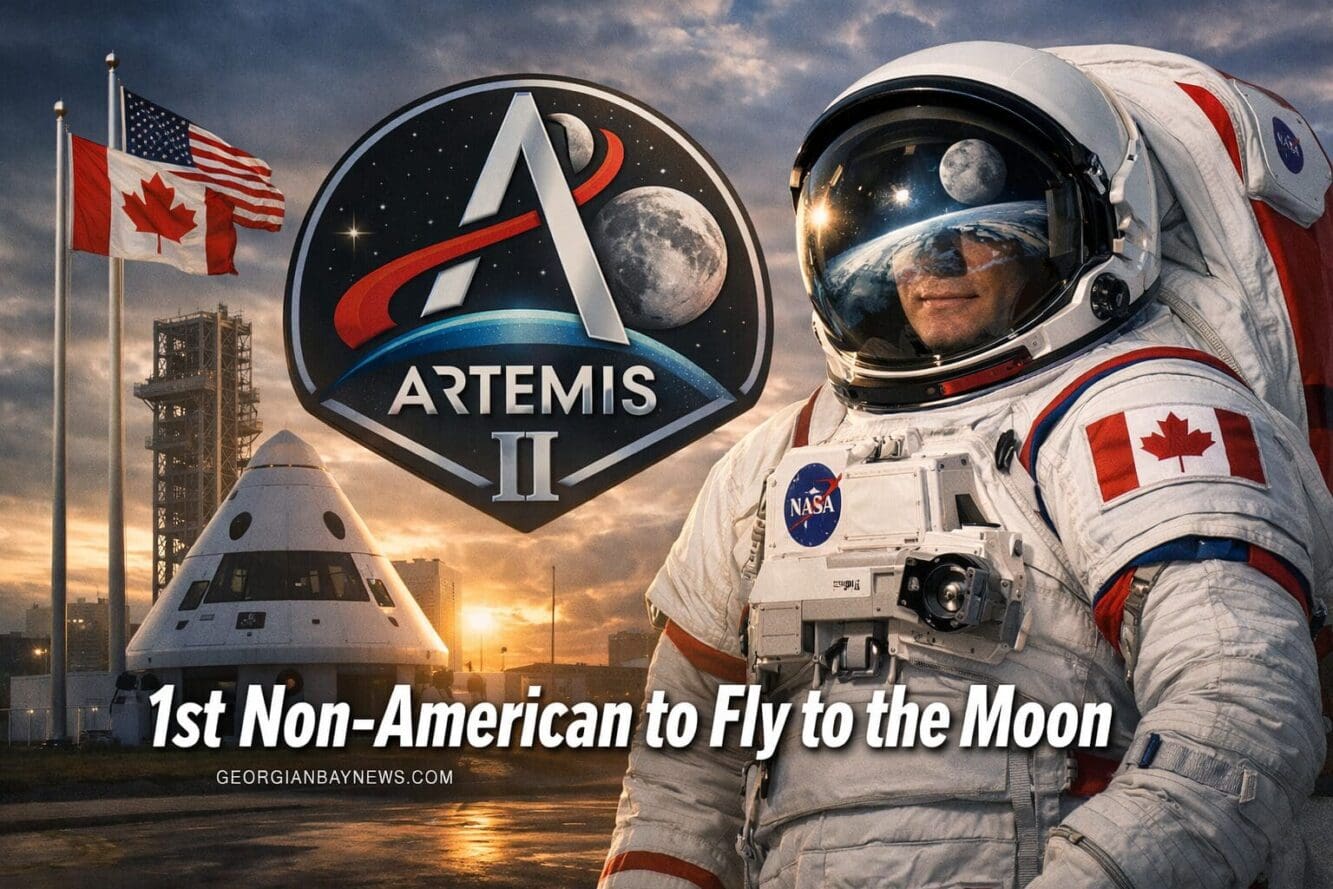
Jeremy Roger Hansen was born in London, Ontario, in 1976 and grew up with dreams that would literally take him to the moon. A former Royal Canadian Air Force CF-18 fighter pilot, Hansen joined the Canadian Space Agency (CSA) in 2009 as part of the third group of Canadian astronauts ever selected.
Before his selection, Hansen served as a Cold Lake Fighter Weapons Instructor and accumulated over 2,700 hours of flight time in various aircraft. His military background and exceptional piloting skills made him an ideal candidate for astronaut training—a rigorous process that tests both physical endurance and mental fortitude.
From Fighter Pilot to Moon-Bound Astronaut
Hansen’s journey to the Artemis II mission has been marked by patience and preparation. Unlike many of his astronaut colleagues, he has never flown to space before. This means his first journey beyond Earth’s atmosphere will take him farther than any Canadian has ever traveled—approximately 230,000 miles from home.
“I’ve been training for this moment my entire career,” Hansen has said in interviews. “To represent Canada on this historic mission is the honor of a lifetime.”
His selection for Artemis II wasn’t just about individual merit. It represents Canada’s significant contributions to space exploration, particularly the Canadarm technology that has been instrumental in building and maintaining the International Space Station. Canada’s leadership in innovation extends beyond Earth’s orbit, showcasing the nation’s technological prowess on the world stage.
The Historic Artemis II Mission: Canadian Astronaut Jeremy Hansen’s Journey
Mission Overview
| Mission Aspect | Details |
|---|---|
| Duration | Approximately 10 days |
| Crew Size | 4 astronauts (3 NASA, 1 CSA) |
| Spacecraft | Orion Multi-Purpose Crew Vehicle |
| Launch Vehicle | Space Launch System (SLS) |
| Distance | ~230,000 miles from Earth |
| Orbit | Lunar flyby (no landing) |
The crew will include Canadian astronaut Jeremy Hansen alongside NASA astronauts Reid Wiseman (Commander), Victor Glover, and Christina Hammock Koch. Together, they’ll test critical systems needed for future lunar landings, including life support, navigation, and communication technologies.
Why This Mission Matters
Artemis II serves as a crucial stepping stone toward establishing a permanent human presence on and around the moon. The mission will:
- ✅ Test the Orion spacecraft with a human crew in deep space conditions
- ✅ Validate life support systems for extended lunar missions
- ✅ Demonstrate international cooperation in space exploration
- ✅ Pave the way for Artemis III—the first moon landing since 1972
- ✅ Inspire a new generation of scientists and engineers worldwide
The inclusion of Canadian astronaut Jeremy Hansen symbolizes a shift in space exploration philosophy. No longer the exclusive domain of superpowers, deep space missions now reflect genuine international partnerships. This collaborative approach stands in contrast to recent geopolitical tensions, proving that humanity can still unite for extraordinary achievements.
Canada’s Space Legacy: More Than Just Astronauts
Canada’s contribution to space exploration extends far beyond sending Canadian astronaut Jeremy Hansen to the moon. The nation has been a key player in space technology development for decades.
The Canadarm Legacy
The Canadarm—officially known as the Shuttle Remote Manipulator System—revolutionized space operations when it first flew aboard Space Shuttle Columbia in 1981. This 15-meter robotic arm became essential for:
- Deploying and retrieving satellites
- Assembling the International Space Station
- Conducting repairs in orbit
- Supporting spacewalks
The technology evolved into Canadarm2 and Canadarm3, with the latter destined for the Lunar Gateway—a space station that will orbit the moon and support future Artemis missions.

Canadian Astronaut Pioneers
Before Hansen, Canada has sent several astronauts to space:
- Marc Garneau (1984) – First Canadian in space
- Roberta Bondar (1992) – First Canadian woman in space
- Chris Hadfield (2001, 2013) – First Canadian to walk in space and command the ISS
- Julie Payette (1999, 2009) – Later became Governor General of Canada
- David Saint-Jacques (2018-2019) – Most recent long-duration mission
However, none of these missions ventured beyond low Earth orbit. Canadian astronaut Jeremy Hansen will travel approximately 1,000 times farther from Earth than the International Space Station orbits.
What This Means for Canada and the World
The selection of Canadian astronaut Jeremy Hansen for Artemis II carries profound implications that extend well beyond the mission itself.
National Pride and Inspiration
For Canadians, Hansen’s journey represents a moment of immense national pride. In an era where Canada’s position on the world stage is frequently debated, this achievement demonstrates the country’s continued relevance in cutting-edge technology and international cooperation.
Schools across Canada are already incorporating the Artemis II mission into their curricula, using Hansen’s story to inspire students in STEM (Science, Technology, Engineering, and Mathematics) fields. The “Hansen Effect” is expected to boost enrollment in aerospace engineering programs and applications to the Canadian Space Agency.
International Cooperation Model
The mission showcases how nations can achieve more together than apart. Canada’s inclusion wasn’t charity—it was earned through decades of technological contribution and reliable partnership. This model of merit-based international collaboration offers a blueprint for tackling other global challenges, from climate change to pandemic response.
Economic and Technological Benefits
Space exploration drives innovation that filters into everyday life. Technologies developed for space missions have given us:
- 📱 Improved smartphone cameras
- 🏥 Advanced medical imaging devices
- 💧 Water purification systems
- 🔥 Fire-resistant materials
- ☀️ Solar panel efficiency improvements
Canada’s continued investment in space technology, exemplified by Hansen’s mission, ensures the nation remains at the forefront of these innovations, creating high-skilled jobs and economic opportunities.
Preparing for the Journey: Training and Challenges
Canadian astronaut Jeremy Hansen has undergone years of intensive preparation for Artemis II. The training regimen is grueling and comprehensive:
Physical Preparation
- Neutral Buoyancy Training: Practicing procedures underwater to simulate weightlessness
- Centrifuge Training: Building tolerance to the extreme G-forces during launch and re-entry
- Survival Training: Preparing for emergency landings in remote locations
- Physical Fitness: Maintaining peak cardiovascular and muscular health
Technical Training
- Spacecraft Systems: Mastering every aspect of the Orion vehicle
- Emergency Procedures: Preparing for potential malfunctions or medical emergencies
- Navigation: Understanding celestial navigation and backup systems
- Communication Protocols: Working seamlessly with mission control
Psychological Preparation
Perhaps most challenging is the mental preparation. The crew will spend 10 days in a confined space, traveling farther from Earth than any living person has been. Psychological resilience, team cohesion, and stress management are critical components of mission success.
Hansen has spoken about the importance of mental preparation: “Physical training gets you ready for the mission, but mental training keeps you focused when things don’t go according to plan.”
The Road Ahead: Beyond Artemis II
While Canadian astronaut Jeremy Hansen’s moon flyby represents a historic achievement, it’s just the beginning of a new era in space exploration.
Future Artemis Missions
- Artemis III (planned for 2026): First lunar landing since 1972, including the first woman and first person of color on the moon
- Artemis IV and beyond: Establishing the Lunar Gateway and building sustainable lunar infrastructure
- Mars Missions: Using lunar experience as a stepping stone to the Red Planet
Canada’s Continued Role
Canada has already committed to the Lunar Gateway project, contributing Canadarm3—an advanced robotic system that will maintain the station and support lunar surface operations. This ensures continued Canadian presence in deep space exploration.
The success of Hansen’s mission could pave the way for future Canadian astronauts to land on the moon or even participate in Mars missions. The Canadian Space Agency is already looking ahead to these possibilities, investing in next-generation technologies and training programs.
Inspiring the Next Generation
Perhaps the most important legacy of Canadian astronaut Jeremy Hansen’s mission will be the inspiration it provides to young people worldwide. When children see someone from a country of 38 million people traveling to the moon, it expands their sense of what’s possible.
Schools, museums, and science centers are preparing educational programs centered on the Artemis II mission. The goal is to create a “Hansen Generation” of scientists, engineers, and explorers who will push humanity even farther into the cosmos.
Conclusion: A Giant Leap for Canada
Canadian astronaut Jeremy Hansen’s selection for the Artemis II mission represents far more than one person’s achievement—it symbolizes Canada’s arrival as a major player in humanity’s greatest adventure. As only the second country to send an astronaut into deep space, Canada has earned its place in the history books alongside the United States.
This mission demonstrates that space exploration has evolved from a Cold War competition into a collaborative human endeavor. It shows that nations of any size can make meaningful contributions when they invest in education, technology, and international cooperation.
What You Can Do
Whether you’re in Canada, the United States, or anywhere else in the world, you can participate in this historic moment:
- Follow the Mission: NASA and the Canadian Space Agency will provide extensive coverage of Artemis II—watch launches, mission updates, and crew communications
- Support STEM Education: Encourage young people to pursue careers in science and engineering
- Learn About Space: Visit planetariums, read about space exploration, and stay informed about upcoming missions
- Celebrate Achievement: Recognize that human accomplishments in space belong to all of us
As we count down to launch day, Canadian astronaut Jeremy Hansen carries not just the hopes of 38 million Canadians, but the dreams of billions who look to the stars and wonder what’s possible. His journey to the moon reminds us that with dedication, cooperation, and vision, there are no limits to what humanity can achieve.
The moon awaits, and Canada is ready to answer the call. 🚀🇨🇦🌙
References
[1] Canadian Space Agency – Official Artemis II Mission Information
[2] NASA – Artemis II Mission Overview and Crew Assignments
[3] Royal Canadian Air Force – CF-18 Operations and Pilot Training
[4] International Space Station – Canadarm and Canadarm2 Technical Specifications
Some content and illustrations on GEORGIANBAYNEWS.COM are created with the assistance of AI tools.
Much Appreciate You Sharing This Post - It Helps MUCH!!!