






















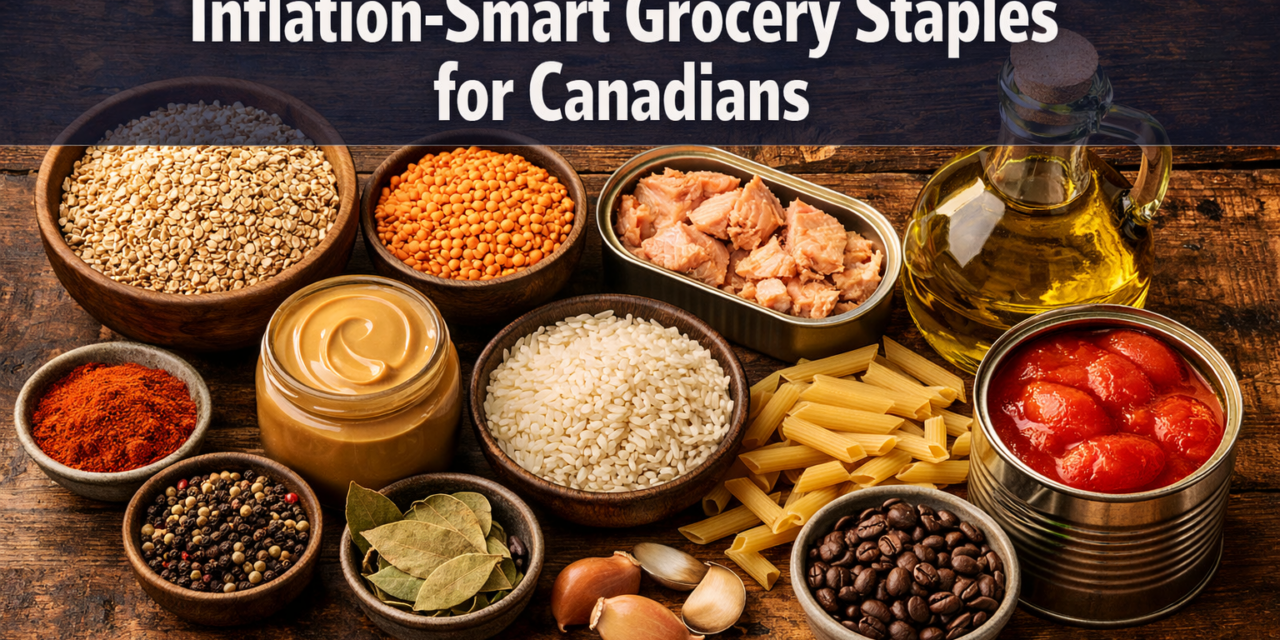
💰 Inflation-Smart Grocery Staples for Canadians: The Pantry Guide That Saves Real Money

Last updated: April 20, 2026
Quick Answer: The most effective inflation-smart grocery staples for Canadians are whole foods with long shelf lives, high nutritional value, and low cost per serving. Think dried beans, lentils, oats, white rice, canned fish, peanut butter, and quality cooking oils. Stocking these consistently reduces weekly grocery bills without sacrificing nutrition.
Key Takeaways
- Dried legumes and lentils cost a fraction of canned versions and deliver excellent protein per dollar
- Steel cut and rolled oats (not instant) offer more nutrition and better satiety than processed cereals
- Skipjack canned tuna has lower mercury than albacore — a safer, cheaper protein choice
- Whole spices ground at home last longer and cost less than pre-ground versions
- Olive oil, coconut oil, and ghee are more stable for cooking than corn or other seed oils
- Orzo and pasta are among the most affordable calorie-dense staples available year-round
- Canned tomatoes are a kitchen workhorse — versatile, cheap, and shelf-stable for months
- Honey and sugar serve as affordable sweeteners with long shelf lives
- Coffee bought as whole beans or ground stretches further than single-serve pods
- Building a core pantry of 15–20 staples dramatically reduces impulse buying and food waste

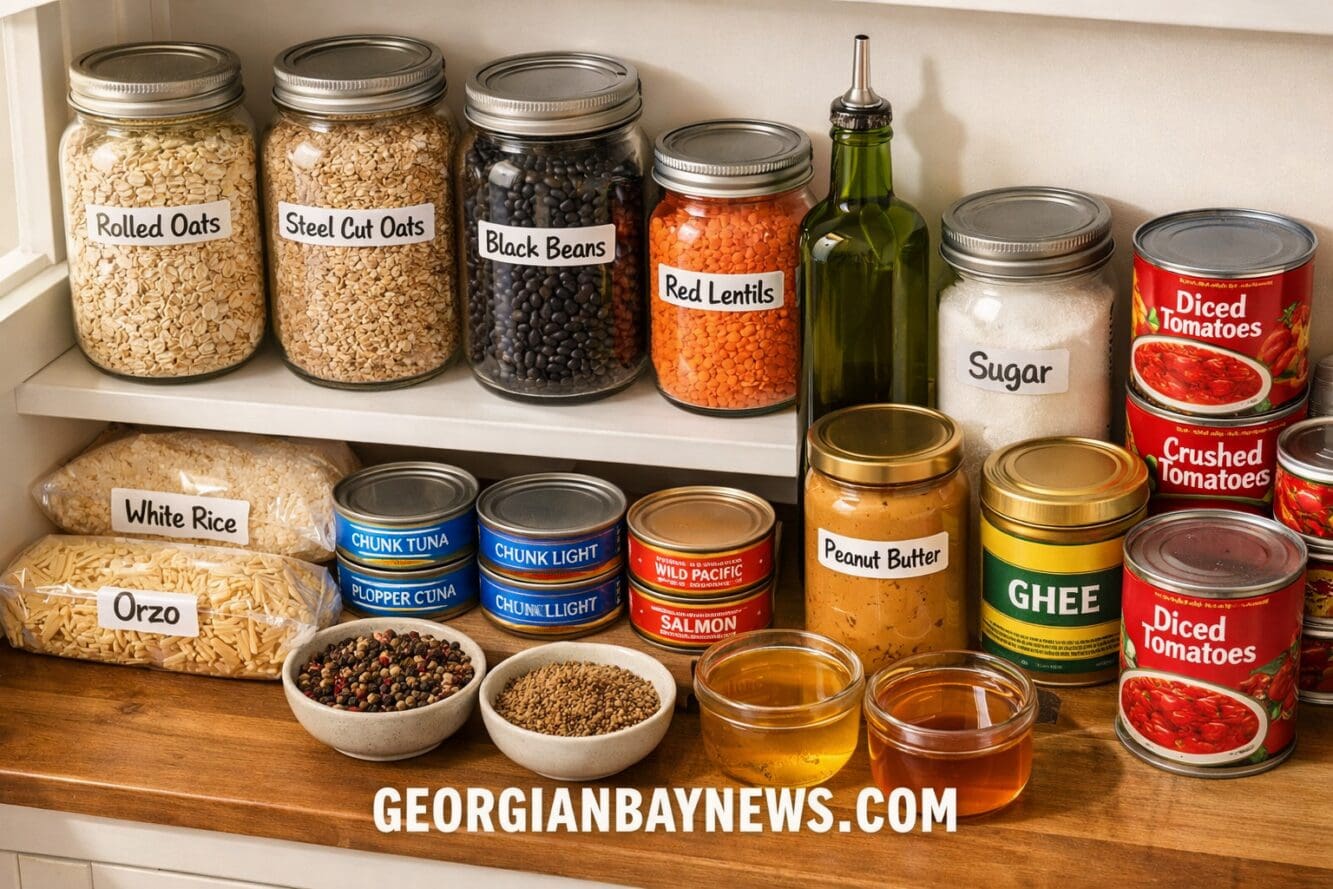
What Are the Best Inflation-Smart Grocery Staples for Canadians?
The best inflation-smart grocery staples for Canadians are whole, minimally processed foods that cost little per serving, store well, and form the base of dozens of meals. These aren’t trendy superfoods — they’re the same items that fed generations before grocery inflation became a dinner-table conversation.
Canadian grocery prices have risen sharply since 2021, with food purchased from stores increasing significantly faster than general inflation according to Statistics Canada’s Consumer Price Index data. The most reliable defense is a well-stocked pantry built around staples that don’t spoil quickly and don’t require a full paycheck.
Here’s the core list, organized by category:
Grains and Carbohydrates
| Staple | Why It Works |
|---|---|
| Steel cut oats | Slower digestion, more filling, lower glycemic impact than instant |
| Rolled oats | Versatile for oatmeal, baking, granola — not instant varieties |
| White rice | Extremely cheap per serving, long shelf life, pairs with almost anything |
| Orzo / pasta | Fast-cooking, affordable, and filling — orzo especially versatile in soups and salads |
Choose steel cut oats if you have time to cook in the morning or batch-cook overnight. Choose rolled oats for faster prep and baking. Avoid instant oats — they cost more, digest faster, and leave you hungry sooner.
Protein Staples That Won’t Break the Budget
Protein is where grocery bills often spike. These alternatives deliver solid nutrition at a fraction of the cost of fresh meat:
- 🐟 Canned skipjack tuna — Lower in mercury than albacore (white) tuna, and typically cheaper. Health Canada advises limiting albacore tuna consumption, especially for children and pregnant women, making skipjack the smarter regular-use choice.
- 🐟 Canned salmon — Excellent source of omega-3s, often wild-caught, and affordable in bulk
- 🥜 Peanut butter — One of the highest protein-per-dollar foods available; also provides healthy fats and keeps for months
- 🫘 Dried beans and lentils — Red lentils cook in 20 minutes without soaking; black beans, chickpeas, and kidney beans are filling and cheap
💡 Pull quote: “Dried lentils cost roughly $2–3 per kilogram and provide approximately 18 grams of protein per cooked cup — making them one of the most cost-effective proteins in any Canadian grocery store.”
Which Cooking Oils Are Worth Buying?
For inflation-smart grocery shopping, the right cooking oil matters both for health and for value. Olive oil, coconut oil, and ghee are better choices than corn oil, canola oil, or other seed oils for most cooking applications.
Here’s why:
- Olive oil is stable at moderate heat and well-studied for cardiovascular benefits. Buy a mid-range extra virgin for cold use and a lighter version for cooking.
- Coconut oil has a high smoke point and long shelf life — ideal for high-heat cooking and baking
- Ghee (clarified butter) has an even higher smoke point than butter, stores at room temperature for months, and adds rich flavor with a small amount
- Corn, soybean, and other seed oils oxidize more easily at high heat, producing compounds that are less desirable from a health standpoint
Choose olive oil for everyday sautéing and dressings. Choose coconut oil or ghee when cooking at higher temperatures. Buying larger containers of olive oil typically reduces the per-millilitre cost significantly.
How Do Salt, Spices, Sugar, and Honey Fit In?
These pantry basics are among the most overlooked inflation-smart grocery staples for Canadians — and among the highest value-per-dollar items in any kitchen.
- Salt is irreplaceable and costs almost nothing. Keep a large bag of kosher or sea salt on hand.
- Whole spices (cumin, coriander, peppercorns, cinnamon sticks, cardamom) last two to three times longer than pre-ground versions and cost less per use. Grind as needed with a small coffee grinder or mortar and pestle.
- Sugar stores indefinitely in a sealed container and is essential for baking, preserving, and cooking
- Honey has an indefinite shelf life, serves as a natural sweetener, and has mild antimicrobial properties
Common mistake: Buying pre-ground spice blends that include salt and fillers. Whole spices bought individually and ground at home deliver far more flavour and better value.
Why Canned Tomatoes and Dried Legumes Deserve Permanent Pantry Space
Canned tomatoes and dried legumes are the backbone of budget cooking worldwide — and they’re equally powerful as inflation-smart grocery staples for Canadians.
Canned tomatoes (whole, diced, or crushed) form the base of pasta sauces, soups, stews, curries, and shakshuka. A $1.50–$2.00 can serves four people. They’re available year-round at consistent prices, unlike fresh tomatoes, which spike in winter.
Dried beans and lentils require planning but reward it:
- Red lentils — no soaking needed, ready in 20 minutes, great in soups and dals
- Black beans — soak overnight, cook in 60–90 minutes, excellent in tacos, rice bowls, and salads
- Chickpeas — versatile for hummus, curries, and roasting as a snack
- Green or brown lentils — hold their shape well for salads and side dishes
Batch-cook beans on weekends and freeze in portions. This eliminates the convenience premium of canned beans while keeping prep time low on busy weeknights. For those interested in growing some of their own herbs or vegetables to complement these pantry staples, beginner raised bed garden tips can help reduce fresh produce costs further.

What About Coffee? Is It Still a Smart Buy?
Yes — coffee remains one of the most cost-effective daily pleasures in a budget pantry, provided it’s bought wisely. For those curious about the deeper relationship between coffee and wellbeing, this expert discussion on coffee and mental health is worth a read.
- Whole bean or ground coffee bought in 400–900g bags costs a fraction of single-serve pods or café purchases
- Avoid flavoured or pre-sweetened coffees — they cost more and offer less flexibility
- Store in an airtight container away from light; ground coffee stays fresh for 2–3 weeks, whole beans for 4–6 weeks
A daily home-brewed coffee costs roughly $0.25–$0.50 per cup versus $4–7 at a café. Over a month, that’s a meaningful saving.
How to Build a Complete Inflation-Smart Pantry: A Starter Checklist
Building this pantry doesn’t require a large upfront investment. Add a few items per week during regular shopping trips.
Core Pantry Checklist:
- Steel cut oats (large bag)
- Rolled oats (large bag)
- White rice (5–10 kg bag for best value)
- Orzo and/or pasta (multiple varieties)
- Dried red lentils
- Dried black beans and chickpeas
- Canned skipjack tuna (case of 12)
- Canned salmon (6–12 cans)
- Peanut butter (large jar)
- Canned tomatoes (diced and whole, case of 12)
- Olive oil (large bottle)
- Coconut oil or ghee
- Kosher or sea salt (large bag)
- Whole spices: cumin, coriander, peppercorns, cinnamon, turmeric
- Sugar (white and/or brown)
- Honey (large jar)
- Ground or whole bean coffee
Those living in smaller spaces may find that simple, intentional living principles — similar to those explored in tiny house community living — naturally align with a well-curated, waste-free pantry approach.
FAQ: Inflation-Smart Grocery Staples for Canadians
Q: Are dried beans really worth the extra prep time compared to canned?
Yes. Dried beans cost roughly 60–70% less than canned per serving. Batch cooking and freezing eliminates most of the inconvenience.
Q: Why is skipjack tuna recommended over albacore?
Skipjack tuna is a smaller fish with lower mercury accumulation. Health Canada advises limiting albacore tuna, especially for vulnerable groups. Skipjack is also typically cheaper.
Q: How long do whole spices last compared to pre-ground?
Whole spices retain potency for 3–5 years when stored properly. Pre-ground spices lose most of their flavour within 6–12 months.
Q: Is ghee worth the higher upfront cost compared to butter?
For high-heat cooking, yes. Ghee’s higher smoke point prevents burning, it stores at room temperature for months, and a small amount goes a long way. The cost per use is comparable to butter.
Q: What’s the best way to store white rice long-term?
Transfer to an airtight container or food-grade bucket. Stored properly in a cool, dry place, white rice lasts 25–30 years — making it one of the most shelf-stable foods available.
Q: Can peanut butter replace meat protein entirely?
It can supplement protein intake effectively but shouldn’t be the sole protein source. Pair it with lentils, canned fish, or eggs for a complete amino acid profile.
Q: Is olive oil safe for high-heat cooking?
Extra virgin olive oil has a smoke point of approximately 190–210°C, suitable for most stovetop cooking. For very high heat (stir-frying, searing), coconut oil or ghee are better choices.
Q: How much can a family realistically save by switching to these staples?
Estimates vary, but replacing processed and convenience foods with whole pantry staples can reduce a family’s weekly grocery spend by 20–40%, depending on current habits.
Conclusion: Start Small, Stock Smart
The most practical response to grocery inflation isn’t couponing or store-hopping — it’s building a pantry of reliable, nutrient-dense staples that anchor every meal. The inflation-smart grocery staples for Canadians outlined here aren’t exotic or difficult to find. They’re available at every major grocery chain and most bulk food stores across the country.
Actionable next steps:
- This week: Pick five items from the checklist above that aren’t already in your pantry and add them to your next shopping trip
- This month: Batch-cook a pot of lentils or beans and freeze in portions — notice the time and money saved
- Ongoing: Replace one convenience or processed item per week with a whole-food equivalent from this list
- Seasonally: Buy cooking oils, rice, and oats in larger quantities when they go on sale
A well-stocked pantry doesn’t happen overnight, but each staple added is a small buffer against the next price spike. The goal is resilience — meals that cost less, waste less, and nourish more.
References
- Statistics Canada. Consumer Price Index, food purchased from stores. Statistics Canada. (2024). https://www.statcan.gc.ca
- Health Canada. Mercury in fish — Consumption advice: Making informed choices about fish. (2021). https://www.canada.ca/en/health-canada
- Government of Canada. Canada’s Food Guide — Protein foods. (2022). https://food-guide.canada.ca
- Content, illustrations, and third-party video appearing on GEORGIANBAYNEWS.COM may be generated or curated with AI assistance or reproduced pursuant to the fair dealing provisions of the Copyright Act, R.S.C. 1985, c. C-42. Attribution and hyperlinks to original sources are provided in acknowledgment of applicable intellectual property rights. Such referencing is intended to direct traffic to and support the original rights holders’ platforms.
Content, illustrations, and third-party video appearing on GEORGIANBAYNEWS.COM may be generated or curated with AI assistance or reproduced pursuant to the fair dealing provisions of the Copyright Act, R.S.C. 1985, c. C-42. Attribution and hyperlinks to original sources are provided in acknowledgment of applicable intellectual property rights. Such referencing is intended to direct traffic to and support the original rights holders’ platforms.
Much Appreciate You Sharing This Post - It Helps MUCH!!!