





















Healthy Family Recipes on a Budget: Your Guide to Nutritious, Affordable Meals in 2026

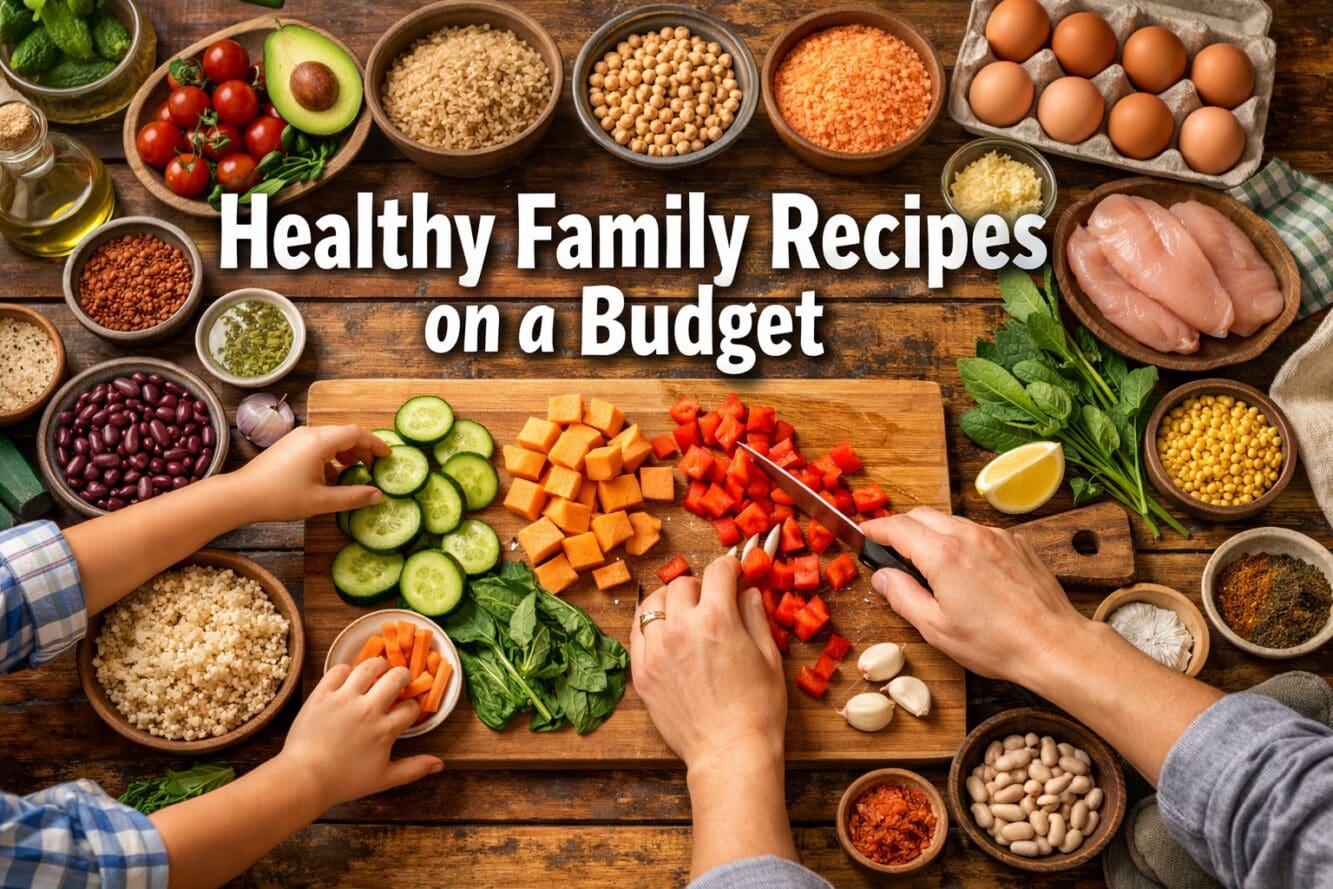
Picture this: It’s 5:30 PM on a Tuesday, and Sarah stands in her kitchen, staring at a nearly empty fridge. Her three kids are hungry, her wallet is light, and takeout isn’t an option. Sound familiar? Across North America, millions of families face this exact challenge every single day. But here’s the good news—eating healthy on a budget isn’t just possible; it’s surprisingly simple when you know the right strategies. With smart planning and creative recipes, budget-conscious cooking can transform your family’s health without emptying your bank account.
The truth is, healthy eating doesn’t require expensive superfoods or fancy ingredients. In fact, some of the most nutritious meals come from humble, affordable staples that have fed families for generations. Whether you’re in Toronto, Texas, or anywhere in between, the principles of budget-friendly cooking remain the same: plan ahead, shop smart, and cook with purpose.
Key Takeaways
- Meal planning saves 25-30% on grocery bills by reducing food waste and impulse purchases
- Batch cooking and freezing extends your food budget while saving precious time on busy weeknights
- Plant-based proteins like beans, lentils, and chickpeas cost 75% less than meat while providing excellent nutrition
- Seasonal produce offers maximum nutrition at minimum cost, with prices often 40% lower than out-of-season options
- Simple recipes with 5-7 ingredients are easier to shop for, faster to prepare, and typically more budget-friendly
Why Budget-Friendly Recipes Matter More Than Ever 💰

The cost of groceries has skyrocketed in recent years. Canadian families saw food prices increase by over 20% between 2021 and 2026, while American households faced similar challenges. For seniors living on fixed incomes and young families just starting out, these increases have created real hardship.
But financial pressure isn’t the only reason to embrace budget cooking. Research shows that families who cook at home together eat more vegetables, consume fewer processed foods, and develop stronger bonds. Children who help prepare meals are more likely to try new foods and develop lifelong healthy eating habits.
The hidden cost of convenience: Pre-packaged meals and restaurant food can cost 3-5 times more than home-cooked equivalents. A family spending $200 weekly on convenience foods could save over $7,000 annually by cooking at home—money that could fund a family vacation, emergency savings, or children’s education.
“The best investment you can make is in your family’s health. Every dollar spent on nutritious home cooking pays dividends in wellness, energy, and happiness.” — Nutrition educator and family wellness advocate
Smart Shopping Strategies for Budget Recipes 🛒
Before you even think about recipes, mastering the art of smart shopping will transform your budget. These strategies work whether you’re shopping at Costco in Calgary or a local market in Memphis.
Plan Your Meals Around Sales
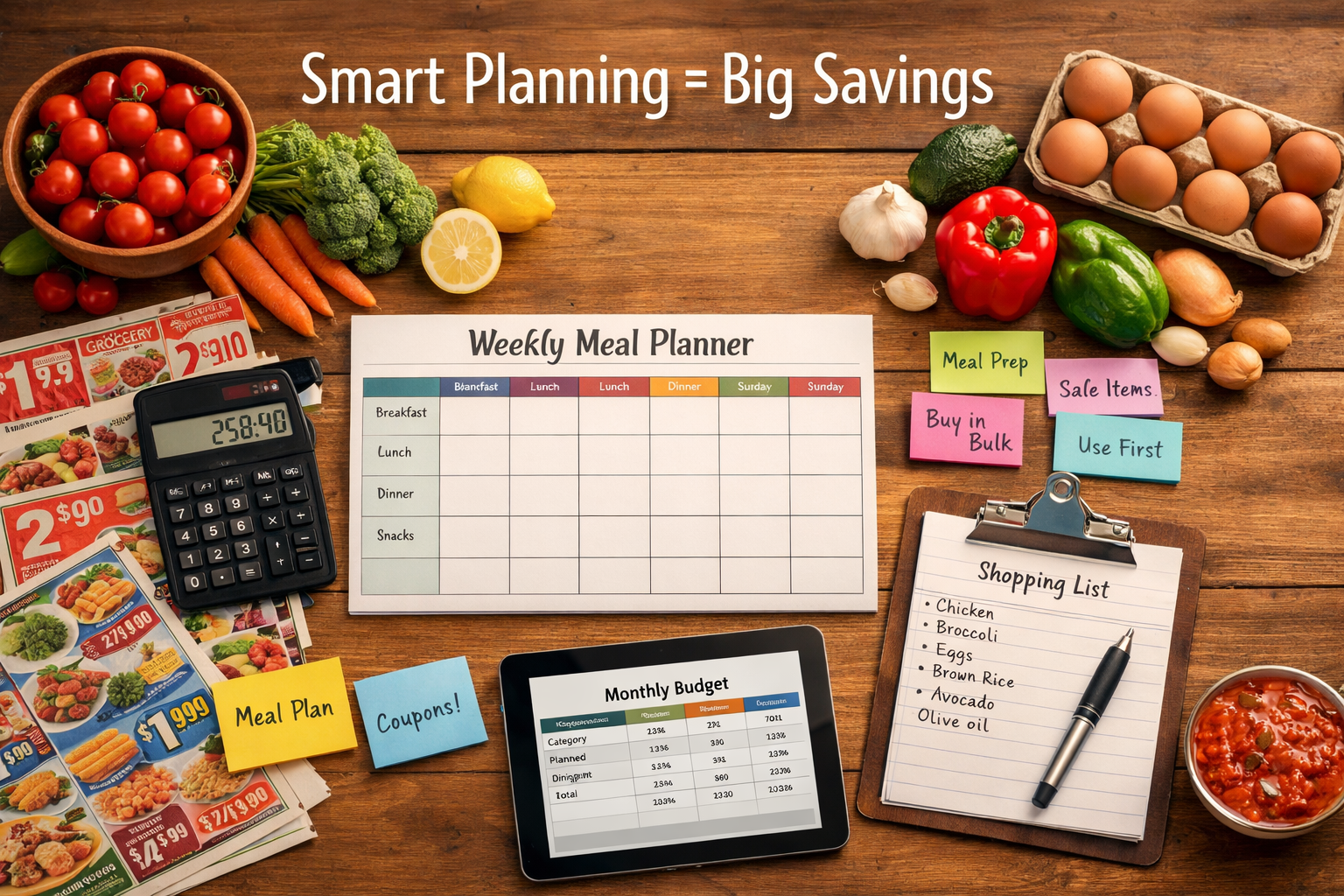
Check weekly flyers before making your meal plan. If chicken thighs are on sale, plan three chicken-based meals. When sweet potatoes hit rock bottom prices, make them the star of your week. This flexible approach can cut grocery costs by 20-30% immediately.
The Power of a Shopping List
Never shop without a list. Studies show that shoppers without lists spend 40% more than planned. Your list should be organized by store section to save time and reduce impulse purchases.
Essential budget shopping tips:
- Shop after eating (hungry shoppers spend 15% more)
- Compare unit prices, not package prices
- Buy store brands for staples—they’re often identical to name brands
- Purchase in bulk for non-perishable items you use regularly
- Check clearance sections for marked-down items near expiration dates
Embrace Seasonal Produce
Strawberries in December cost three times what they do in June. Learning to eat seasonally means better flavor, higher nutrition, and dramatically lower costs. In spring, focus on asparagus and peas. Summer brings affordable tomatoes, zucchini, and berries. Fall offers squash and apples, while winter is perfect for root vegetables and citrus.
For those interested in maximizing wellness on a budget, exploring morning habits that boost happiness can complement your healthy eating journey.
Stock a Budget-Friendly Pantry
A well-stocked pantry is your secret weapon against expensive last-minute meals. These affordable staples form the foundation of countless healthy recipes:
| Pantry Staple | Average Cost | Why It’s Essential |
|---|---|---|
| Dried beans/lentils | $1-2/lb | Protein-packed, versatile, long shelf life |
| Rice (brown/white) | $1-3/lb | Filling base for countless meals |
| Pasta (whole grain) | $1-2/lb | Quick, kid-friendly, adaptable |
| Canned tomatoes | $1-2/can | Sauce base, soup starter, flavor builder |
| Oats | $2-4/lb | Breakfast, baking, budget-stretcher |
| Frozen vegetables | $1-3/bag | Nutritious, no waste, always available |
| Eggs | $3-5/dozen | Complete protein, breakfast to dinner |
| Onions & garlic | $2-4/lb | Flavor foundation for everything |
Budget-Friendly Family Recipes That Actually Taste Amazing 👨🍳
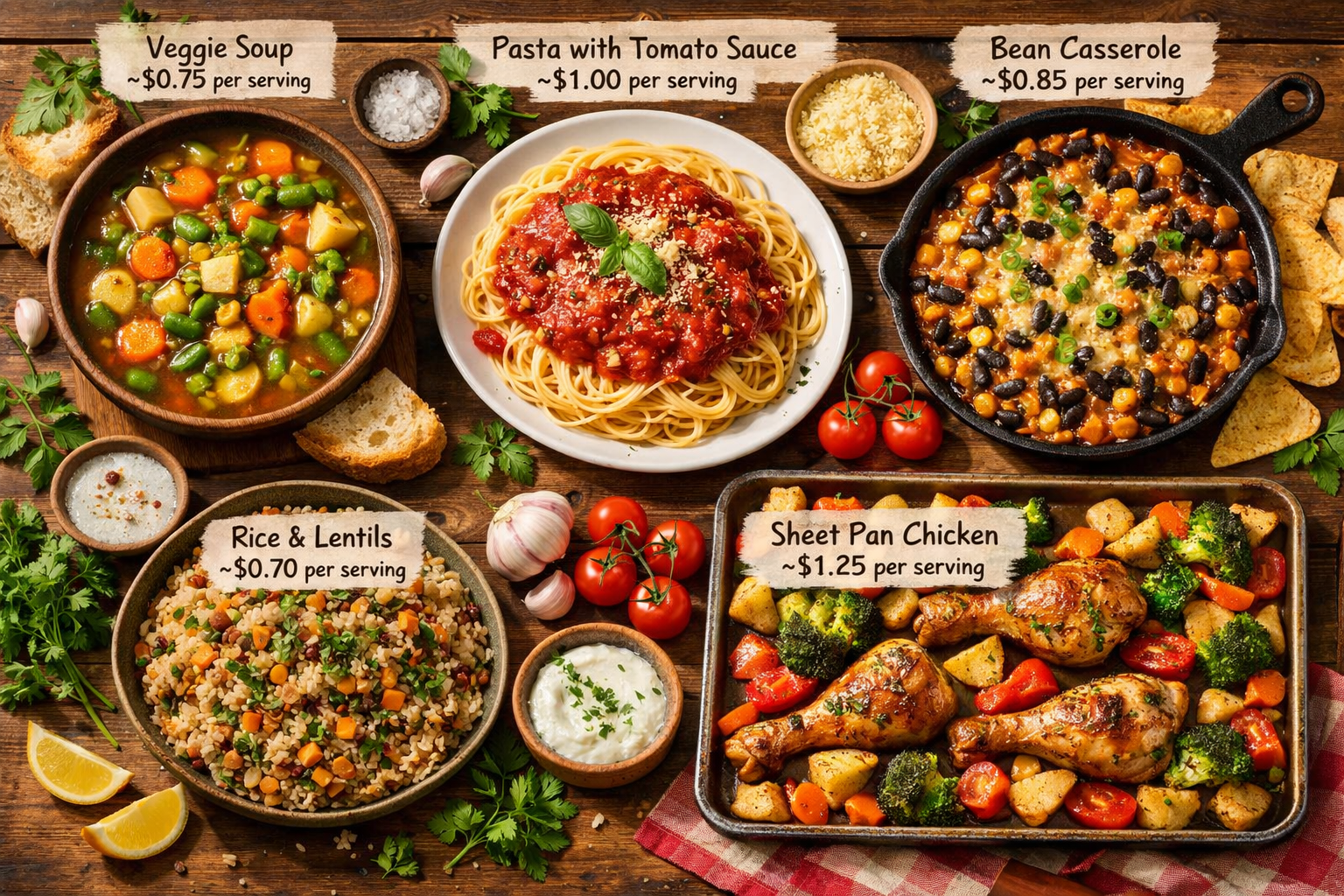
Now for the fun part—delicious, nutritious recipes that won’t break the bank. These meals have been tested by real families and consistently deliver on taste, nutrition, and affordability.
1. One-Pot Lentil and Vegetable Soup
Cost per serving: $1.25
This hearty soup proves that budget recipes can be incredibly satisfying. Lentils provide protein and fiber, while seasonal vegetables add nutrition and flavor.
Ingredients:
- 1 cup dried lentils ($0.50)
- 1 onion, diced ($0.30)
- 3 carrots, chopped ($0.75)
- 3 celery stalks, chopped ($0.60)
- 1 can diced tomatoes ($1.00)
- 6 cups vegetable broth ($1.50)
- 2 cloves garlic, minced ($0.20)
- Spices: cumin, paprika, salt, pepper ($0.25)
Instructions:
Sauté onion and garlic until fragrant. Add carrots and celery, cook 5 minutes. Add lentils, tomatoes, broth, and spices. Simmer 30 minutes until lentils are tender. Serves 6.
This recipe aligns perfectly with Mediterranean diet principles that emphasize plant-based nutrition.
2. Sheet Pan Chicken and Vegetables
Cost per serving: $2.50
Sheet pan dinners minimize cleanup while maximizing flavor. This technique works with any protein and vegetable combination.
Ingredients:
- 6 chicken thighs ($4.00)
- 4 potatoes, cubed ($1.50)
- 2 cups broccoli florets ($2.00)
- 2 bell peppers, chopped ($2.00)
- Olive oil, garlic, herbs ($0.50)
Instructions:
Toss vegetables with oil and seasonings. Arrange on sheet pan with seasoned chicken. Roast at 425°F for 35-40 minutes. Serves 6.
3. Black Bean and Sweet Potato Tacos
Cost per serving: $1.75
These vegetarian tacos deliver complete protein when beans and tortillas combine. Kids love the mild, slightly sweet flavor.
Ingredients:
- 2 cans black beans ($2.00)
- 2 large sweet potatoes ($2.50)
- 12 corn tortillas ($2.50)
- Toppings: lettuce, tomato, cheese ($3.00)
- Spices: chili powder, cumin ($0.25)
Instructions:
Roast cubed sweet potatoes at 400°F for 25 minutes. Warm beans with spices. Assemble tacos with potatoes, beans, and toppings. Serves 6.
For more plant-based inspiration, check out these vegan sweet potato and chickpea cakes that use similar affordable ingredients.
4. Pasta with Tomato and White Bean Sauce
Cost per serving: $1.50
This Italian-inspired dish transforms pantry staples into restaurant-quality comfort food.
Ingredients:
- 1 lb whole wheat pasta ($1.50)
- 1 can white beans ($1.25)
- 1 can crushed tomatoes ($1.00)
- Fresh spinach ($2.00)
- Garlic, olive oil, parmesan ($1.50)
Instructions:
Cook pasta according to package directions. Sauté garlic, add tomatoes and beans, simmer 10 minutes. Stir in spinach until wilted. Toss with pasta and top with parmesan. Serves 6.
5. Slow Cooker Chicken and Rice
Cost per serving: $2.00
Set it and forget it! This hands-off recipe is perfect for busy weekdays.
Ingredients:
- 2 lbs chicken pieces ($5.00)
- 2 cups rice ($1.00)
- 4 cups chicken broth ($2.00)
- Mixed frozen vegetables ($2.00)
- Onion, garlic, herbs ($1.00)
Instructions:
Place all ingredients in slow cooker. Cook on low 6-8 hours or high 3-4 hours. Stir before serving. Serves 8.
Batch Cooking and Meal Prep: Your Budget’s Best Friend ⏰
The secret weapon of successful budget cooking isn’t just what you cook—it’s when and how much you cook. Batch cooking transforms your relationship with meal preparation and your budget.
Why Batch Cooking Works
When you cook large quantities at once, you save:
- Time: Cook once, eat 3-4 times
- Energy costs: One oven session instead of four
- Mental energy: No daily “what’s for dinner?” stress
- Money: Buying ingredients in bulk costs less per serving
Best Foods for Batch Cooking
Soups and stews freeze beautifully for up to 3 months. Make a double batch and freeze half in family-sized portions. On busy nights, simply thaw and reheat.
Casseroles are budget-friendly batch cooking champions. Assemble two: bake one tonight, freeze one for later. Lasagna, enchiladas, and shepherd’s pie all freeze perfectly.
Cooked grains and beans save time and money. Cook a large pot of rice, quinoa, or beans on Sunday. Use throughout the week in different meals.
Marinated proteins can be prepped in advance. Marinate chicken, pork, or tofu in freezer bags. When you’re ready to cook, simply thaw and cook—flavor is already built in.
The Sunday Prep Strategy
Dedicate 2-3 hours on Sunday to set yourself up for success:
- Wash and chop vegetables for the week
- Cook a large batch of grains
- Prepare 2-3 proteins in different marinades
- Make one soup or stew to freeze
- Portion snacks into grab-and-go containers
This investment pays dividends all week long. Tuesday’s dinner takes 15 minutes instead of an hour. Thursday’s lunch is already waiting in the fridge.
Learning from the Past: Depression-Era Wisdom for Modern Budgets 📚
Our grandparents and great-grandparents knew things about budget cooking that we’ve forgotten. During the Great Depression, families created nutritious, satisfying meals from very little. Their wisdom is more relevant than ever in 2026.
Waste nothing: Depression-era cooks used every scrap. Vegetable trimmings became broth. Stale bread became croutons or bread pudding. Chicken bones became soup. This zero-waste approach saves money and helps the environment.
Stretch meat with grains and vegetables: A small amount of meat flavors a large pot of beans or rice. This technique appears in cuisines worldwide because it works—both nutritionally and economically.
Preserve seasonal abundance: When summer vegetables are cheap and plentiful, freeze or can them for winter. A $20 investment in August provides vegetables through January.
Many Depression-era recipes remain delicious and relevant today, offering time-tested solutions for budget cooking.
Making Budget Recipes Work for Your Family 👨👩👧👦
Every family is different. What works for a couple of seniors in Collingwood might not work for a family of six in Atlanta. Here’s how to adapt budget cooking to your unique situation.
For Families with Young Children
Involve kids in cooking: Children who help prepare meals are more likely to eat them. Even toddlers can wash vegetables or stir ingredients.
Make familiar favorites: Transform expensive favorites into budget versions. Love pizza? Make homemade with store-bought dough. Craving tacos? Use beans instead of beef.
Hide vegetables creatively: Blend vegetables into pasta sauce, mix them into meatballs, or bake them into muffins. Nutrition doesn’t require a battle.
For Seniors and Empty Nesters
Cook in smaller batches or freeze portions immediately. A recipe serving 6 becomes three dinners for two.
Focus on nutrient density: With smaller appetites, every bite should count. Prioritize protein, fiber, and vitamins.
Simplify without sacrificing flavor: Three-ingredient meals can be delicious. Roasted chicken, steamed vegetables, and rice is a complete meal.
Staying active complements healthy eating. Consider gentle exercises for seniors to maintain wellness on a budget.
For Singles and Couples
Embrace versatile ingredients: Buy ingredients that work in multiple meals. A rotisserie chicken provides dinner tonight, sandwiches tomorrow, and soup later.
Shop the bulk bins: Buy exactly the amount you need. No waste, no expired packages.
Partner with friends: Cook large batches and split them. You get variety without cooking seven different meals.
Budget Recipes for Special Dietary Needs 🥗
Eating healthy on a budget becomes more challenging with dietary restrictions, but it’s absolutely possible with the right approach.
Gluten-Free on a Budget
Focus on naturally gluten-free whole foods: rice, potatoes, beans, corn, and fresh produce. These cost less than specialty gluten-free products and offer better nutrition.
Budget gluten-free staples:
- Rice (all varieties)
- Corn tortillas
- Potatoes and sweet potatoes
- Oats (certified gluten-free)
- Beans and lentils
Dairy-Free Solutions
Plant-based milk alternatives can be expensive, but homemade versions cost pennies. Blend oats with water and strain for oat milk. Use coconut milk in cooking for richness.
Low-Sodium Cooking
Skip processed foods and season with herbs, spices, citrus, and vinegar instead of salt. This approach is naturally budget-friendly since whole foods cost less than processed alternatives.
The Environmental and Health Benefits of Budget Cooking 🌍
Cooking on a budget naturally aligns with environmental sustainability and better health—a win-win-win situation.
Less Waste, Lower Impact
Budget cooking means using everything you buy. This reduces food waste, which accounts for 8% of global greenhouse gas emissions. When you plan meals carefully and use leftovers creatively, you’re helping the planet while helping your wallet.
More Plants, Better Health
Budget-conscious cooking naturally emphasizes plant-based foods because they cost less than meat. This shift toward more vegetables, beans, and whole grains improves heart health, reduces disease risk, and increases longevity.
Health benefits of budget-friendly plant-based eating:
- Lower cholesterol and blood pressure
- Reduced risk of type 2 diabetes
- Better weight management
- Improved digestive health
- Lower cancer risk
Building Community Connections
Budget cooking often leads to community engagement. Sharing recipes, swapping surplus produce, and cooking together strengthens social bonds. These connections improve mental health and create support networks.
For those seeking additional wellness strategies, exploring Buddhist principles for inner peace can complement a mindful approach to budget cooking.
Overcoming Common Budget Cooking Challenges 💪


Even with the best intentions, obstacles arise. Here’s how to overcome the most common challenges.
“I Don’t Have Time to Cook”
Solution: Start small. Even one home-cooked meal per week saves money. Use time-saving tools like slow cookers and instant pots. Many budget recipes take under 30 minutes.
Quick budget meals include:
- Scrambled eggs with toast and fruit (10 minutes)
- Pasta with canned tomatoes and frozen vegetables (15 minutes)
- Quesadillas with beans and cheese (12 minutes)
- Stir-fried rice with frozen vegetables and eggs (15 minutes)
“My Family Won’t Eat ‘Budget Food'”
Solution: Don’t announce it’s budget food! Focus on flavor and presentation. Many “fancy” restaurant dishes use inexpensive ingredients prepared well.
Transform perception with:
- Creative names (“Tuscan White Bean Pasta” sounds better than “cheap pasta”)
- Attractive plating (a sprinkle of herbs makes any dish look gourmet)
- Involvement (family members who help cook are invested in eating)
“Healthy Food Costs More”
Solution: This common myth doesn’t hold up under scrutiny. Yes, organic quinoa costs more than regular quinoa. But beans, rice, oats, and seasonal produce are among the cheapest foods available—and they’re incredibly nutritious.
Price comparison (per serving):
- Fast food burger meal: $8-12
- Home-cooked bean burrito: $1.50
- Restaurant salad: $10-15
- Home-cooked vegetable soup: $1.25
“I Live in a Food Desert”
Solution: This genuine challenge requires creative solutions. Shop online for shelf-stable staples with free shipping. Join a community garden. Start a food co-op with neighbors to buy in bulk. Frozen vegetables offer nutrition when fresh isn’t available.
Budget Recipe Resources and Continued Learning 📖
Your journey toward budget-friendly, healthy cooking doesn’t end here. Numerous resources can help you continue learning and growing.
Online Communities
Join online groups focused on budget cooking. Members share recipes, shopping tips, and encouragement. Facebook groups, Reddit communities, and Instagram accounts dedicated to frugal cooking offer daily inspiration.
Local Resources
Many communities offer cooking classes, often free or low-cost. Libraries host cooking demonstrations. Community centers provide nutrition education. Take advantage of these local resources to build skills and confidence.
Seasonal Meal Planning
Follow food bloggers who specialize in seasonal cooking. Learning to plan meals around what’s abundant and affordable in each season dramatically reduces grocery costs while improving nutrition.
For those in Ontario, exploring local adventures can include visits to farmers’ markets and u-pick farms for budget-friendly seasonal produce.
Creating Your Personal Budget Cooking System 🎯
The strategies and recipes shared here provide a foundation, but the most effective budget cooking system is one tailored to your family’s unique needs, preferences, and circumstances.
Start Your Budget Cooking Journey
Week 1: Focus on planning. Review your current spending, identify expensive habits, and create your first weekly meal plan.
Week 2: Stock your pantry with staples. Buy dried beans, rice, pasta, canned tomatoes, and frozen vegetables.
Week 3: Try three new budget recipes. Keep what works, modify what doesn’t.
Week 4: Implement batch cooking. Prepare one large meal to freeze in portions.
Track Your Progress
Keep a simple log of grocery spending and meals prepared. After one month, calculate your savings. Most families save 30-40% in the first month alone.
Celebrate small wins: Every home-cooked meal is a victory. Every dollar saved brings you closer to financial goals. Every vegetable eaten improves health.
Adjust and Improve
Budget cooking is a skill that improves with practice. Your tenth batch of soup will be better than your first. Your shopping efficiency will increase. Your confidence will grow.
Conclusion: Your Path to Healthy, Budget-Friendly Family Meals
The journey to healthy family recipes on a budget isn’t about deprivation or sacrifice—it’s about smart choices, creative cooking, and rediscovering the joy of preparing food together. Every meal cooked at home is an investment in your family’s health, your financial future, and precious time spent together.
Remember Sarah from the beginning of this article, standing in her kitchen wondering how to feed her family? With the strategies you’ve learned here, that scenario transforms from stress to opportunity. A well-stocked pantry, a simple meal plan, and a few reliable recipes turn an empty fridge into a delicious, nutritious dinner.
The money you save on groceries can fund family experiences, reduce financial stress, and build emergency savings. The health benefits of home cooking extend far beyond the dinner table, reducing disease risk and increasing energy and vitality. The time spent cooking together creates memories and teaches children invaluable life skills.
Your Next Steps
- This week: Create your first meal plan using recipes from this article
- This month: Build your pantry with affordable staples
- This year: Track your savings and celebrate your progress
The power to transform your family’s health and finances is literally in your hands—or more accurately, in your kitchen. Start with one meal, one recipe, one small change. The compound effect of these small steps creates remarkable results over time.
Budget-friendly cooking isn’t just about saving money—it’s about investing in what matters most: your family’s health, happiness, and future. Every meal you prepare with love and intention is a gift to those you care about most.
Now it’s time to close this article, head to your kitchen, and start cooking. Your family is waiting, your budget will thank you, and your health will flourish. Here’s to delicious, nutritious, affordable meals that bring your family together around the table.
Happy cooking! 🍽️
References
[1] Statistics Canada. (2026). “Food Price Trends and Consumer Impact Analysis.”
[2] American Heart Association. (2025). “Benefits of Home Cooking for Family Health.”
[3] Journal of Nutrition Education and Behavior. (2024). “Economic Impact of Meal Planning on Household Food Budgets.”
[4] Environmental Protection Agency. (2025). “Food Waste and Environmental Impact Report.”
[5] Harvard School of Public Health. (2026). “Plant-Based Diets: Health Benefits and Cost Analysis.”
Some content and illustrations on GEORGIANBAYNEWS.COM are created with the assistance of AI tools.
Much Appreciate You Sharing This Post - It Helps MUCH!!!