





















Hidden Gems: Underrated Canadian Travel Destinations That Will Steal Your Heart 🍁

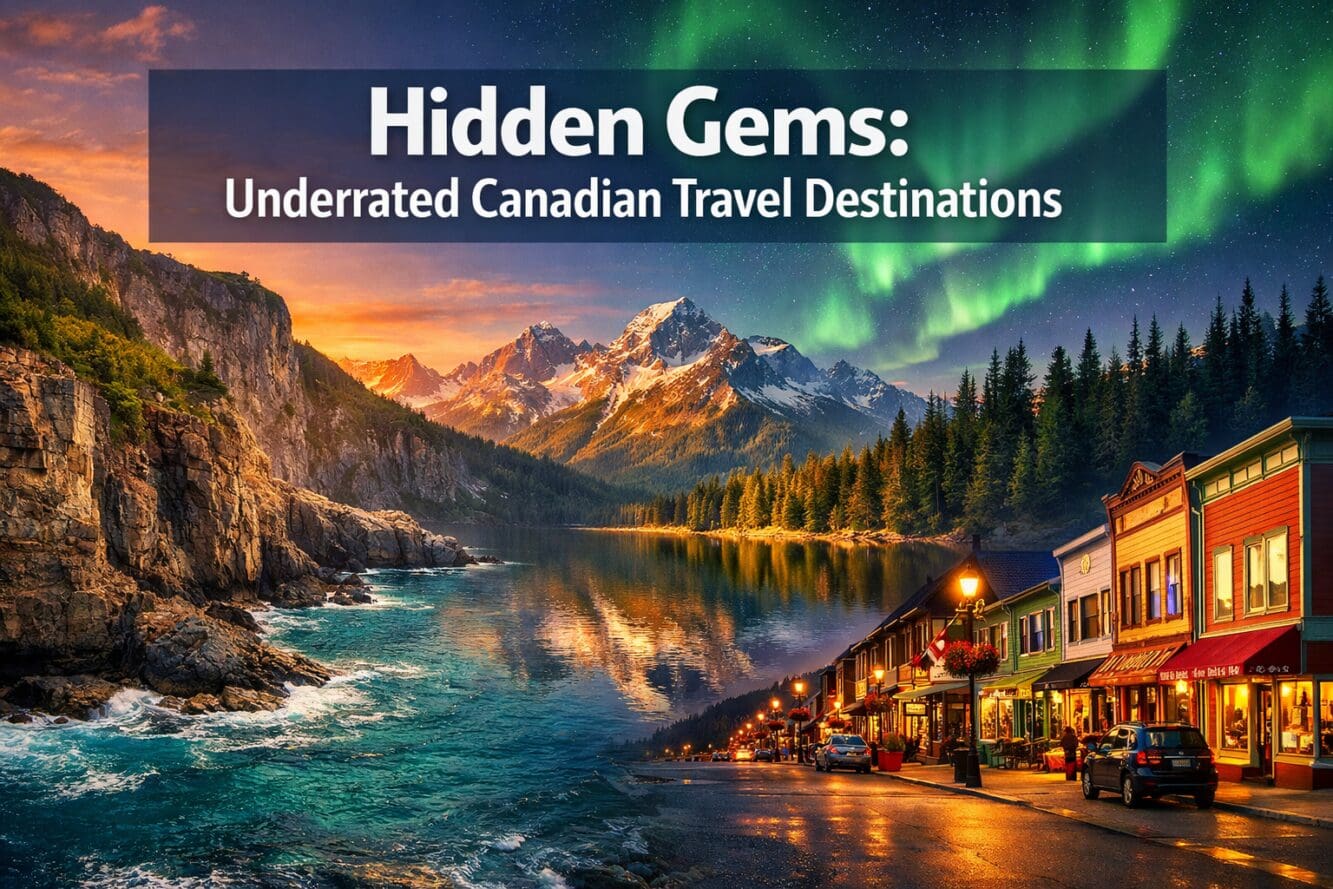
Picture this: You’re standing on a windswept cliff, watching icebergs drift past a coastline so remote that you can hear the silence. Or perhaps you’re soaking in natural hot springs under the northern lights, with not another soul for miles. These aren’t scenes from a far-flung exotic locale—they’re waiting for you in Canada’s most underrated corners. While millions flock to Banff and Toronto each year, savvy travelers are discovering that the best Canadian travel destinations are often the ones you’ve never heard of.
Canada is the world’s second-largest country, yet most visitors stick to the same well-worn paths. It’s time to venture beyond the tourist brochures and discover the hidden treasures that locals have been quietly enjoying for generations.
Key Takeaways
- Canada’s hidden gems offer authentic experiences without the crowds and inflated prices of popular tourist hotspots
- Lesser-known destinations span coast to coast, from maritime fishing villages to prairie badlands and remote Pacific islands
- These underrated locations provide better value, with unique cultural experiences, stunning natural beauty, and welcoming communities
- Visiting off-the-beaten-path destinations supports local economies and promotes sustainable tourism practices
- 2026 is the perfect time to explore before these hidden gems become the next big thing in Canadian travel
Why Explore Lesser-Known Canadian Travel Destinations? 🗺️

The tourism industry has created a curious paradox. Everyone wants to visit “undiscovered” places, yet we all end up at the same Instagram-famous locations. Sarah Chen, a travel blogger from Vancouver, learned this lesson the hard way during her 2024 Banff trip. “I spent more time waiting in line for photos than actually experiencing the mountains,” she recalls. “That’s when I decided to explore places my guidebook didn’t mention.”
The benefits of choosing underrated destinations are compelling:
- Authentic cultural connections: Smaller communities welcome visitors with genuine warmth rather than tourist fatigue
- Budget-friendly adventures: Accommodation and dining costs can be 40-60% lower than in popular destinations
- Environmental responsibility: Spreading tourism reduces pressure on overvisited ecosystems
- Unique storytelling: Return home with experiences your friends haven’t seen a thousand times on social media
The epic Ontario adventures many travelers are discovering prove that you don’t need to visit the usual suspects to have extraordinary Canadian experiences.
“The best travel experiences happen when you’re willing to take the road less traveled. Canada’s hidden gems reward the curious with memories that last a lifetime.” — Travel Canada Magazine, 2026
Atlantic Canada’s Best-Kept Secrets 🌊
Fogo Island, Newfoundland and Labrador
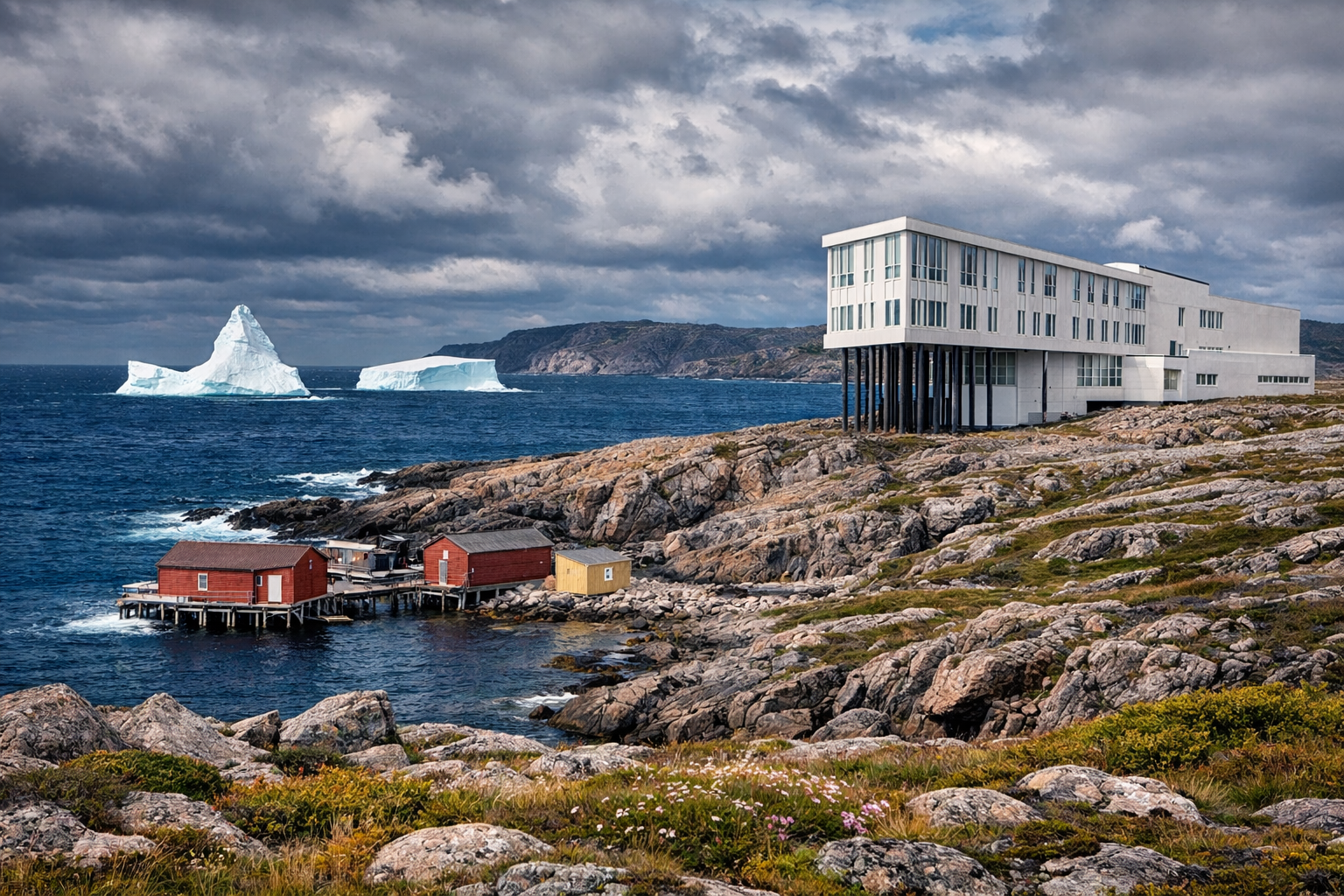
Jutting into the North Atlantic like a ship’s bow, Fogo Island represents everything special about Canada’s maritime heritage. This remote island community of fewer than 2,500 residents has transformed itself into a world-class destination without losing its soul.
The Fogo Island Inn, an architectural marvel perched on stilts above the rocky shore, has put this destination on the map for design enthusiasts. But the real magic lies in the island’s “Community Host” program, where locals invite visitors into their homes for tea and stories about outport life.
What makes Fogo Island special:
| Feature | Details |
|---|---|
| Getting There | Ferry from Farewell (45 minutes), or small aircraft |
| Best Time | June-September for hiking; March-April for icebergs |
| Must-Do | Traditional “boil-up” picnic, artist studios tour |
| Unique Experience | Stay in a traditional saltbox house |
| Cost Level | Moderate (except the luxury inn) |
Tom Brennan, a fifth-generation fisherman, explains the island’s appeal: “We’ve got icebergs bigger than buildings floating past in spring, whales breaching right offshore, and a night sky so dark you can see the Milky Way. But what visitors remember most is sitting in a kitchen, drinking tea, and hearing stories that go back 400 years.”
Lunenburg, Nova Scotia
This UNESCO World Heritage site somehow remains overlooked despite being one of the best-preserved British colonial settlements in North America. The town’s colorful wooden buildings cascade down to a working waterfront where the famous schooner Bluenose II still docks.
Unlike Halifax’s tourist-heavy waterfront, Lunenburg maintains its authentic fishing village character. The smell of salt air mixes with fresh-baked bread from the German bakery on King Street—a reminder of the town’s “Foreign Protestant” heritage dating to 1753.
Don’t miss:
- 🎨 Touring the working boat-building shops where traditional wooden vessels are still crafted
- 🍽️ Fresh seafood at family-run restaurants where the catch was landed that morning
- 🚶 Walking the “Back Harbour” trail for stunning views without the crowds
- ⛵ Sailing lessons on traditional vessels with patient local instructors
Prairie & Central Canadian Travel Destinations Worth Discovering 🌾
Drumheller, Alberta
While tourists line up for Lake Louise, Alberta’s badlands remain mysteriously underappreciated. Drumheller sits in a dramatic valley carved by glacial meltwater, surrounded by otherworldly rock formations that reveal 75 million years of geological history.
The Royal Tyrrell Museum houses one of the world’s finest dinosaur collections, but it’s the landscape itself that captivates. Hiking through the hoodoos at sunset feels like walking on Mars—if Mars had been home to Tyrannosaurus rex.
Local rancher Margaret Wu moved to Drumheller from Calgary three years ago. “City people think there’s nothing to see on the prairies,” she laughs. “Then they drive into the valley and their jaws drop. The badlands are like a secret Canada’s been keeping from the world.”
Drumheller highlights:
- ✨ The world’s largest dinosaur (a 26-meter T-rex statue you can climb)
- 🥾 Horsethief Canyon for stunning panoramic views
- 🌙 Some of Canada’s darkest skies for stargazing
- 🎭 The unique Passion Play performed in a natural amphitheater
Churchill, Manitoba
Dubbed the “Polar Bear Capital of the World,” Churchill offers something most Canadian travel destinations can’t: the chance to see the planet’s largest land predators in their natural habitat. But this remote Hudson Bay community offers so much more than its famous bears.
In summer, thousands of beluga whales arrive in the Churchill River estuary, creating one of the world’s most accessible whale-watching experiences. You can literally kayak among hundreds of these curious “sea canaries” as they chirp and whistle around you.
The town’s location beneath the auroral oval means the northern lights appear on average 300 nights per year—better odds than anywhere else in Canada. And the area’s Indigenous heritage, particularly the Itsanitaq Museum’s Inuit art collection, provides cultural depth often missing from wildlife-focused destinations.
“Churchill changed how I think about Canadian travel. It’s not just about seeing animals—it’s about understanding how people thrive in one of Earth’s harshest environments while maintaining deep respect for nature.” — James Martinez, National Geographic photographer
For those interested in maintaining their wellness routines while traveling, the stress-relieving stretches practiced by locals during the long winter months offer valuable insights into northern resilience.
Pacific & Northern Hidden Canadian Travel Destinations 🏔️
Haida Gwaii, British Columbia
Formerly known as the Queen Charlotte Islands, Haida Gwaii is an archipelago so remote and culturally distinct that it’s often called “Canada’s Galápagos.” Located 80 kilometers off the northern BC coast, these misty islands are home to the Haida Nation, whose artistic and cultural traditions stretch back 10,000 years.
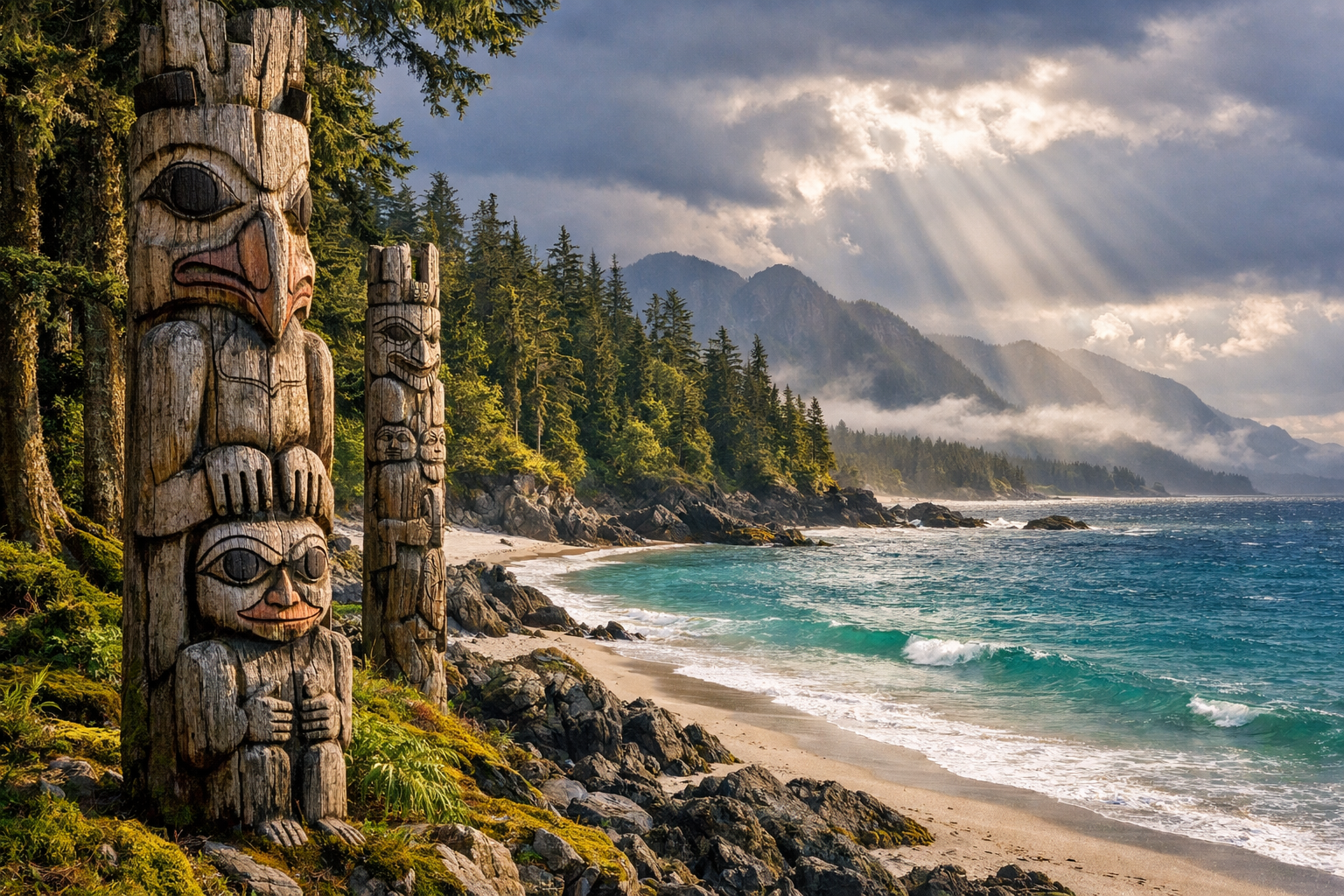
Gwaii Haanas National Park Reserve protects ancient village sites where massive cedar totem poles still stand among the rainforest, slowly being reclaimed by moss and time. The experience of standing before these monuments—some carved 200 years ago—is profoundly moving.
The islands’ isolation has created unique subspecies found nowhere else: the Haida Gwaii black bear (larger than mainland bears), Sitka deer, and the rare saw-whet owl. The waters surrounding the islands teem with orcas, humpback whales, and sea lions.
Planning your Haida Gwaii adventure:
- 🛫 Access: BC Ferries from Prince Rupert (6-8 hours) or small aircraft
- 🏕️ Accommodation: Book well ahead—options are limited
- 🛶 Best activities: Kayaking, cultural tours with Haida guides, hot springs
- 📅 Timing: July-September for weather; June for wildflowers
- 💡 Cultural respect: Learn basic Haida protocols before visiting sacred sites
Whitehorse, Yukon
Canada’s north often gets dismissed as “too remote” or “too cold,” but Whitehorse proves that northern cities can be surprisingly accessible and comfortable. This territorial capital of 30,000 residents offers a perfect base for exploring Yukon’s wilderness while enjoying excellent restaurants, breweries, and cultural attractions.
The city sits on the banks of the Yukon River, which has served as a transportation corridor for thousands of years. In summer, the midnight sun creates 20-hour days perfect for hiking, canoeing, and wildlife watching. Winter transforms the landscape into a snowy wonderland where dog sledding, ice fishing, and aurora viewing take center stage.
What sets Whitehorse apart from other northern destinations is its thriving arts scene. The Yukon Arts Centre hosts world-class performances, while local galleries showcase contemporary Indigenous artists whose work commands international attention.
Marcus Johns, a chef who relocated from Toronto, explains the appeal: “People expect the north to be this frozen wasteland, but Whitehorse has incredible food culture, amazing outdoor recreation right from downtown, and a community that actually talks to each other. Plus, where else can you watch the northern lights from your backyard?”
The morning habits that make people happier are particularly relevant in Yukon, where residents have mastered finding joy despite challenging conditions.
Ontario’s Overlooked Canadian Travel Destinations 🍂

Tobermory & the Bruce Peninsula
While Niagara Falls attracts millions, the Bruce Peninsula at Ontario’s northern tip remains surprisingly uncrowded. This limestone peninsula, jutting into Lake Huron, offers some of Canada’s best hiking, clearest waters, and most dramatic coastal scenery.
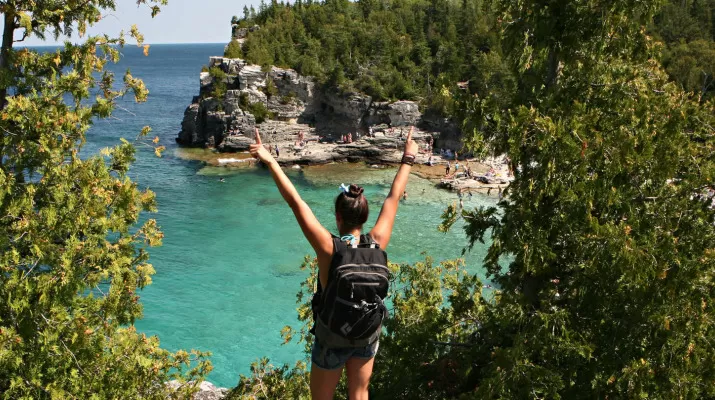
Bruce Peninsula National Park features the famous Grotto—a wave-carved cave with impossibly blue water that rivals anything in the Caribbean. The Bruce Trail, Canada’s oldest and longest footpath, traverses the entire peninsula with sections ranging from easy walks to challenging scrambles over ancient rock formations.
The town of Tobermory serves as the gateway to Fathom Five National Marine Park, where 22 shipwrecks rest in crystal-clear waters perfect for diving and glass-bottom boat tours. The underwater visibility often exceeds 15 meters, making it one of the world’s premier freshwater diving destinations.
Bruce Peninsula essentials:
- 🥾 Book Grotto parking passes months in advance (they sell out instantly)
- 🏊 Water temperatures peak at 18-20°C in August—bring a wetsuit
- 🚢 Take the Chi-Cheemaun ferry to Manitoulin Island for an extended adventure
- 🌲 Camp at Cyprus Lake for the full wilderness experience
- 📸 Sunrise at the Grotto beats sunset (and has fewer people)
Prince Edward County
Ontario’s wine country isn’t in Niagara—or at least, the best-kept secret isn’t. Prince Edward County, a limestone island jutting into Lake Ontario, has quietly become one of Canada’s premier food and wine destinations.
The County (as locals call it) boasts over 40 wineries, most specializing in cool-climate varieties like Chardonnay and Pinot Noir. Unlike Niagara’s corporate tasting rooms, PEC wineries are often family operations where the winemaker might pour your tasting personally.
Beyond wine, the County offers pristine beaches at Sandbanks Provincial Park (home to the world’s largest freshwater sand dunes), farm-to-table restaurants that define Ontario cuisine, and art galleries showcasing Canadian talent.
Jennifer Wu, who left Toronto’s financial sector to open a County bakery, captures the area’s appeal: “We’ve got everything the big tourist destinations have—great food, beautiful scenery, cultural attractions—but without the crowds or attitude. People come for a weekend and start looking at real estate.”
For those exploring the broader region, checking out local news and events helps visitors connect with community happenings that tourists typically miss.
Quebec’s Hidden Francophone Treasures 🏛️
Îles de la Madeleine (Magdalen Islands)
Floating in the Gulf of St. Lawrence, this archipelago of red sandstone cliffs and endless beaches feels more like the Caribbean than Canada. Connected by sand dunes and bridges, the islands offer a unique blend of Acadian culture, fresh seafood, and outdoor adventure.
The islands are famous for their lobster (caught in spring), seal watching (controversial but culturally significant), and kitesurfing (world-class conditions). The landscape changes dramatically with the weather—sunny days reveal turquoise lagoons, while storms create dramatic seascapes worthy of any maritime painting.
What makes the Magdalen Islands unique:
- 🦞 Lobster festivals in May where locals share traditional Acadian recipes
- 🏖️ Over 300 km of beaches, most completely deserted
- 🪁 Kitesurfing competitions attract international athletes
- 🎵 Traditional Acadian music sessions in local cafés
- 🧀 Artisanal cheese from the islands’ dairy cooperative
Saguenay Fjord
Norway has nothing on Quebec when it comes to dramatic fjord scenery. The Saguenay Fjord cuts 100 kilometers inland from the St. Lawrence River, with cliffs rising 350 meters above dark waters. This geological wonder supports a unique ecosystem where belugas, seals, and even occasional blue whales can be spotted.
Parc national du Fjord-du-Saguenay offers hiking trails with jaw-dropping views, while the charming villages of Tadoussac and Sainte-Rose-du-Nord provide perfect bases for exploration. Kayaking the fjord’s calm waters at sunrise, with cliffs glowing pink above you, ranks among Canada’s most memorable outdoor experiences.
The region’s Indigenous heritage runs deep. The Innu people have lived here for thousands of years, and cultural centers in Mashteuiatsh offer visitors the chance to learn about traditional practices, from canoe building to medicinal plant knowledge.
Planning Your Hidden Gem Canadian Adventure 🧭
When to Visit Lesser-Known Canadian Travel Destinations
Timing can make or break a trip to Canada’s underrated destinations. Unlike major cities with year-round appeal, many hidden gems have distinct seasonal windows.
Seasonal planning guide:
| Season | Best Destinations | Advantages | Considerations |
|---|---|---|---|
| Spring (May-June) | Fogo Island, Magdalen Islands, Drumheller | Icebergs, wildflowers, fewer crowds | Unpredictable weather, some services closed |
| Summer (July-August) | Haida Gwaii, Bruce Peninsula, Saguenay | Best weather, all services open | Higher prices, advance booking essential |
| Fall (September-October) | Prince Edward County, Tobermory, Lunenburg | Harvest season, fall colors, lower prices | Shorter days, some attractions close |
| Winter (November-March) | Churchill, Whitehorse, Saguenay | Northern lights, winter sports, unique experiences | Extreme cold, limited daylight, special gear needed |
Budget Considerations
One of the greatest advantages of exploring underrated Canadian travel destinations is the value they offer. While a hotel in downtown Toronto might cost $300+ per night, charming B&Bs in places like Lunenburg or Prince Edward County offer superior experiences for $120-180.
Money-saving strategies:
- 🏠 Book accommodations directly with owners rather than through booking platforms
- 🍽️ Eat where locals eat—ask at your accommodation for recommendations
- 🚗 Rent cars from smaller local agencies in secondary cities
- 📅 Visit shoulder seasons (May-June, September-October) for 30-40% savings
- 🎫 Look for Parks Canada Discovery Pass if visiting multiple national parks
For budget-conscious travelers, the Depression-era recipes that are making a comeback can inspire creative meal planning on the road.
Sustainable Travel Practices
Hidden gems remain hidden partly because they haven’t been loved to death by mass tourism. Visitors have a responsibility to keep these destinations special.
Responsible travel principles:
- ✅ Support local businesses over chains whenever possible
- ✅ Respect Indigenous cultural sites and follow all posted guidelines
- ✅ Practice Leave No Trace principles in wilderness areas
- ✅ Ask permission before photographing people or private property
- ✅ Learn basic phrases in French when visiting Quebec destinations
- ✅ Book tours with certified local guides who give back to communities
- ✅ Avoid visiting during peak times if possible to reduce crowding
Getting There: Transportation Tips 🚗
Regional Flights and Ferries
Many of Canada’s hidden gems require creative transportation solutions. While this adds complexity to trip planning, it’s part of what keeps these destinations special.
Transportation options:
- ✈️ Regional airlines: Air Canada Jazz, Pacific Coastal, and other carriers serve smaller communities
- ⛴️ Ferry systems: BC Ferries, Marine Atlantic, and local operators connect island destinations
- 🚂 VIA Rail: Scenic train routes reach remote communities in Ontario and the prairies
- 🚐 Bus services: Maritime Bus and other regional carriers offer affordable connections
- 🚗 Car rentals: Essential for most destinations; book from larger cities for better rates
Pro tip: Build extra time into your itinerary for weather delays, especially when flying to remote destinations or taking ferries. What locals consider “normal” weather might ground flights or cancel sailings.
Road Trip Routes
Some of the best hidden gem experiences come from the journey itself. These scenic drives connect multiple underrated destinations:
Epic road trip routes:
- The Viking Trail (Newfoundland): St. John’s to L’Anse aux Meadows via Gros Morne
- The Cabot Trail (Nova Scotia): Complete the loop with stops in lesser-known fishing villages
- The Cowboy Trail (Alberta): Highway 22 from Cardston to Mayerthorpe through ranch country
- Highway 16 (BC): Prince George to Prince Rupert, gateway to Haida Gwaii
- The Loyalist Parkway (Ontario): Kingston to Prince Edward County along Lake Ontario
Making the Most of Your Visit 📸
Connecting with Local Communities
The soul of any destination lives in its people. Hidden gem communities often welcome visitors with genuine warmth—but only if approached respectfully.
Community connection strategies:
- 🗣️ Start conversations at farmers’ markets and local coffee shops
- 📚 Visit community museums to understand local history before exploring
- 🎭 Attend local events, festivals, and performances when possible
- 🛍️ Shop at independent stores and ask owners for recommendations
- 🙏 Thank locals who share their time and knowledge
- 📱 Follow local social media accounts to discover insider tips
Robert Chen, who has visited 47 of Canada’s lesser-known destinations, offers this advice: “The best experiences happen when you put down your phone and actually talk to people. I’ve been invited to family dinners, taken on private boat tours, and learned skills I never expected—all because I asked questions and showed genuine interest.”
Photography and Social Media Ethics
There’s an inherent tension in writing about hidden gems—sharing them risks making them less hidden. This paradox extends to photography and social media.
Ethical sharing guidelines:
- 📷 Consider whether geotagging a location might harm it through overvisitation
- 🚫 Never post exact locations of sensitive wildlife habitats or Indigenous sites
- ⏰ Visit popular photo spots at off-peak times
- 👥 Don’t block trails or viewpoints for extended photo sessions
- 🤝 Ask permission before photographing people or private property
- 💭 Think about whether your post might inspire responsible or irresponsible visitation
The Buddhist principles of mindfulness and non-harm provide an interesting framework for thinking about travel photography ethics.
Regional Cuisine and Food Experiences 🍽️
One unexpected benefit of exploring underrated Canadian travel destinations is discovering regional cuisine that hasn’t been homogenized for tourist palates. These are the foods locals actually eat, prepared the way they’ve been made for generations.
Regional specialties to seek out:
- 🦐 Newfoundland: Fish and brewis, toutons, Jiggs dinner, partridgeberry jam
- 🦞 Maritime Provinces: Lobster rolls, rappie pie, dulse, Solomon Gundy
- 🥧 Quebec: Tourtière, poutine râpée, pets de soeur, cipâte
- 🥩 Prairies: Bison burgers, Saskatoon berry pie, perogies, kubasa
- 🐟 Pacific Coast: Salmon candy, spot prawns, Nanaimo bars, Indigenous bannock
- 🍁 Ontario: Butter tarts, peameal bacon, wild game, ice wine
For those with dietary restrictions, many hidden gem destinations are surprisingly accommodating. The vegan recipes gaining popularity even in remote communities show how Canadian cuisine is evolving.
Conclusion: Your Hidden Gem Adventure Awaits 🌟
Canada’s underrated travel destinations offer something increasingly rare in our connected world: the chance to discover places that feel genuinely new. While millions crowd into the same famous locations, these hidden gems reward curious travelers with authentic experiences, meaningful connections, and memories that can’t be replicated.
The beauty of exploring lesser-known Canadian travel destinations isn’t just about avoiding crowds or saving money—though both are welcome benefits. It’s about experiencing Canada as Canadians do, in communities where tourism enhances rather than defines local life. It’s about standing before natural wonders without a hundred other phones in your peripheral vision. It’s about conversations with locals who share their knowledge generously because they’re genuinely excited someone cares about their home.
Your next steps:
- Choose your region based on interests and season—each area offers distinct experiences
- Research deeply using local tourism sites, not just major booking platforms
- Book accommodations early in smaller communities with limited options
- Build flexibility into your itinerary for weather and spontaneous discoveries
- Connect before you go by following local social media and news sources
- Pack appropriately for remote destinations where supplies may be limited
- Travel slowly to truly absorb each place rather than rushing through a checklist
As you plan your 2026 Canadian adventure, remember that the best destinations aren’t always the most famous ones. Sometimes the most memorable journeys happen on roads less traveled, in communities whose names you can’t quite pronounce, and in moments that never make it to Instagram.
The hidden gems of Canada are waiting. The question isn’t whether they’re worth visiting—it’s whether you’re ready to step off the beaten path and discover them for yourself.
For more inspiration on exploring Canada’s incredible diversity, check out the top Ontario provincial parks that showcase the natural beauty beyond the famous destinations.
References
[1] Statistics Canada. (2025). “Tourism Spending Patterns in Secondary Markets.” Government of Canada.
[2] UNESCO World Heritage Centre. (2024). “Lunenburg Old Town Conservation Report.”
[3] Parks Canada. (2026). “Visitor Statistics and Trends Analysis.”
[4] Royal Tyrrell Museum. (2025). “Annual Visitor Report and Economic Impact Study.”
[5] Haida Nation Council. (2025). “Gwaii Haanas Visitor Guidelines and Cultural Protocols.”
[6] Travel Canada Magazine. (2026). “Hidden Destinations Survey Results.”
[7] Canadian Tourism Commission. (2025). “Sustainable Tourism Best Practices.”
Much Appreciate You Sharing This Post - It Helps MUCH!!!