



















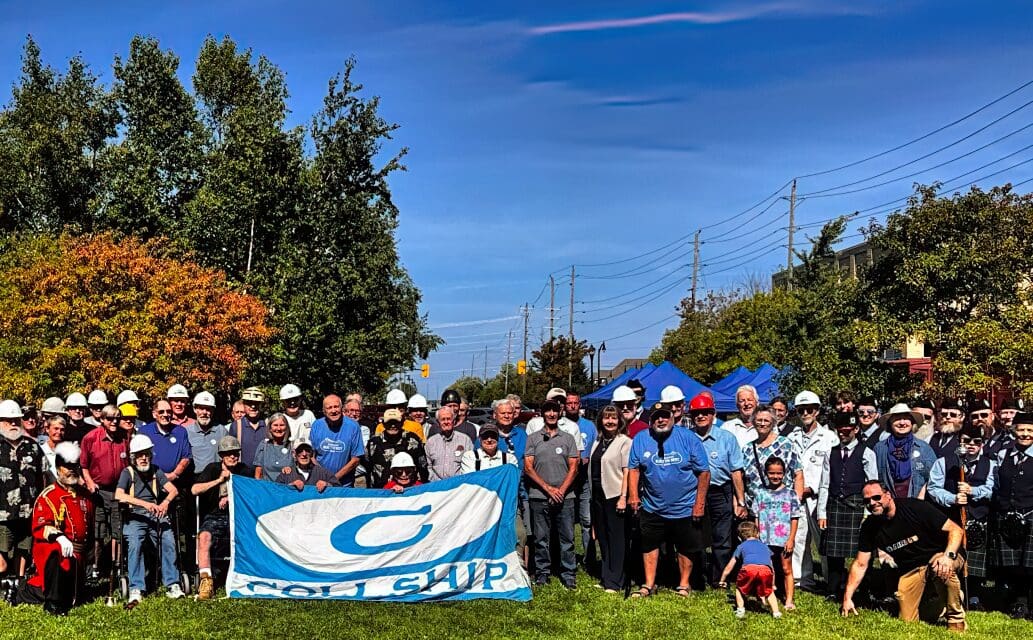


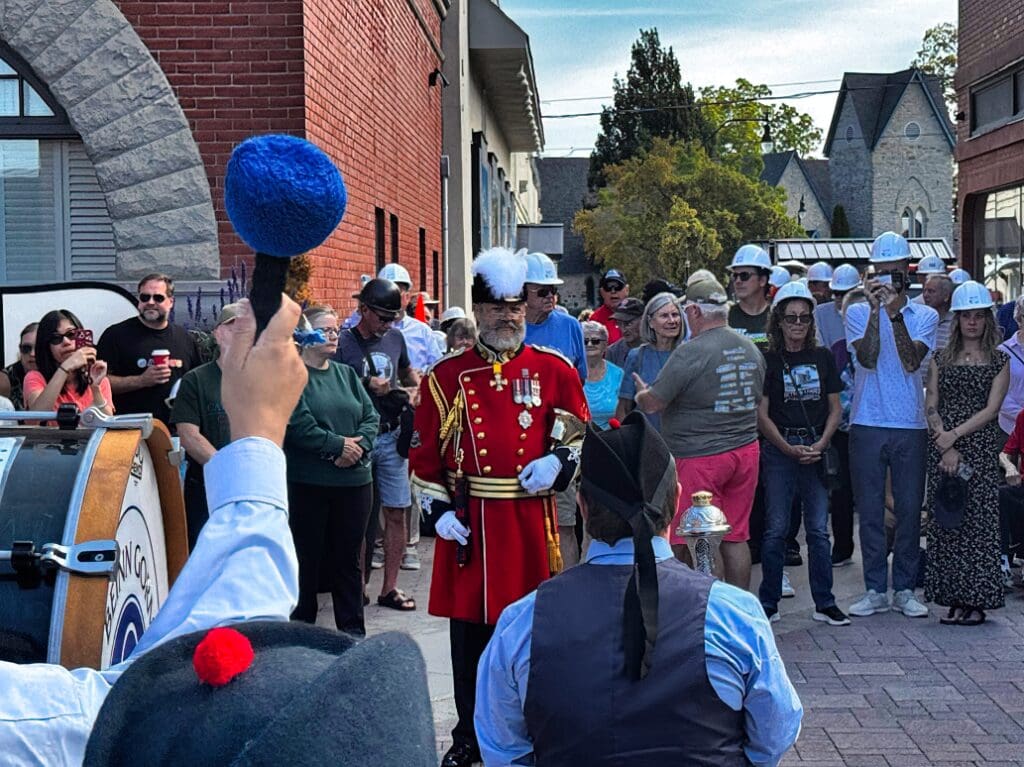
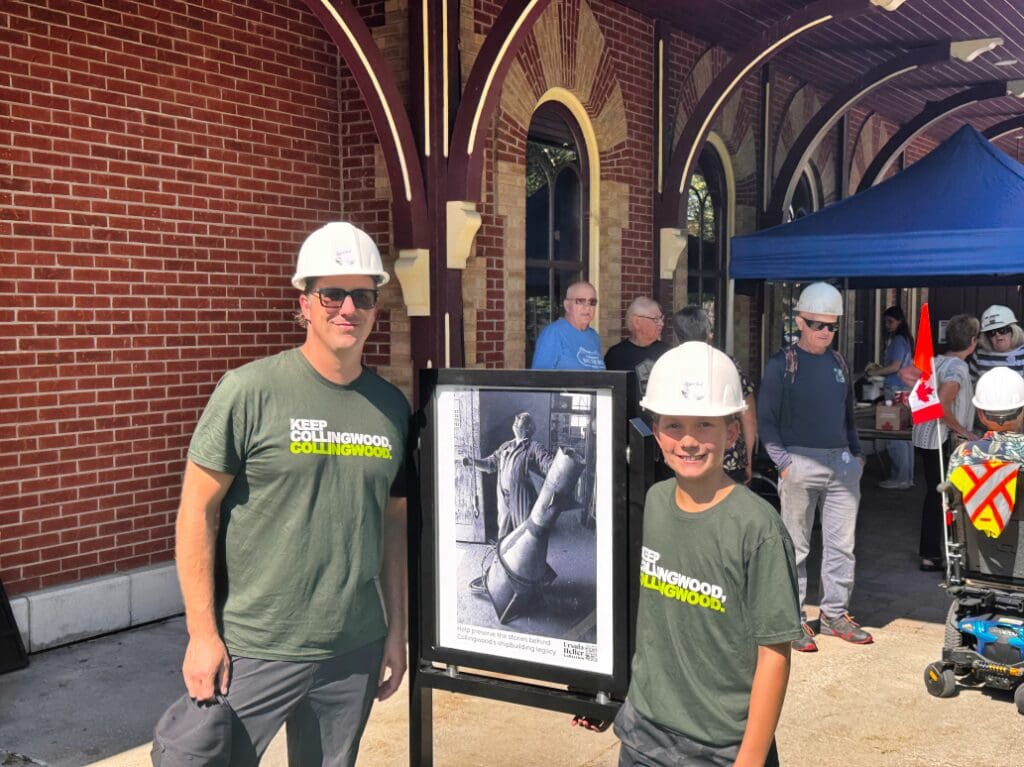
The sun cooperated beautifully as Collingwood turned out in force to mark 40 years since the Shipyard first set the pace for our town a milestone met by a great wave of former shipbuilders and neighbours alike, all coming together to celebrate the history we built, together.
More videos and photos on Sunday.






Last updated: September 12, 2026
Quick Answer: The Collingwood Shipyards operated on the southern shore of Georgian Bay in Collingwood, Ontario, from 1883 to 1986, a span of 103 years. Over that time, the yard built more than 200 vessels, including 23 Royal Canadian Navy warships during World War II, and at its peak employed roughly 800 workers. The shipyard closed on September 12, 1986, a date that now marks one of the most significant moments in the town’s industrial history.

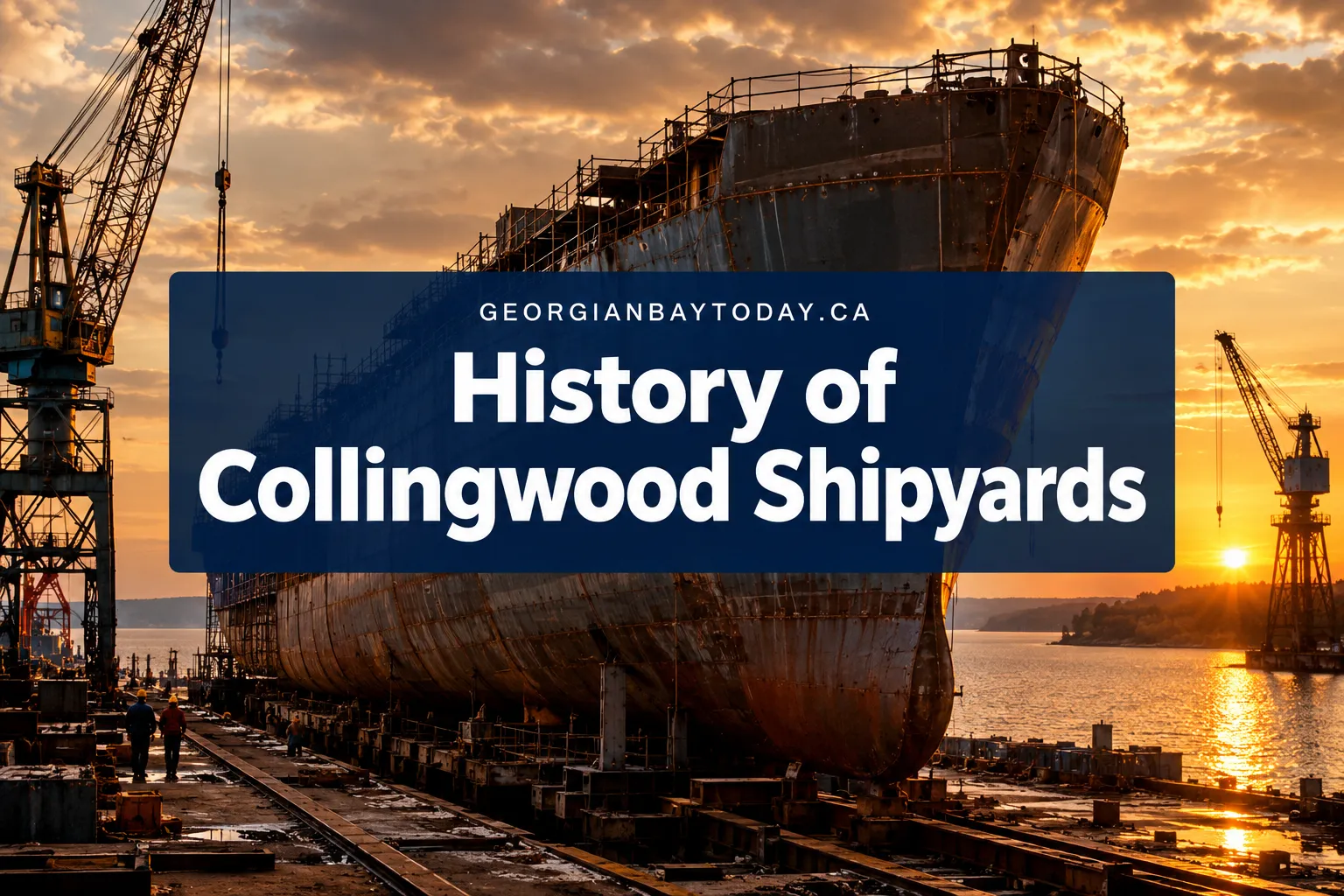
The Collingwood Shipyards represent one of Canada’s longest-running freshwater shipbuilding operations. Organized in 1882 as the Collingwood Dry Dock, Shipbuilding and Foundry Company, the yard opened for business on May 24, 1883, and went on to produce over 200 vessels across more than a century of continuous operation.
From its earliest days, the yard was central to life in Collingwood. It built the lake freighters and bulk carriers that moved grain, coal, and iron ore across the Great Lakes system, the commercial arteries of central Canada. As the yard grew, so did the town around it, creating a tight bond between industrial output and community identity that would define Collingwood for generations.
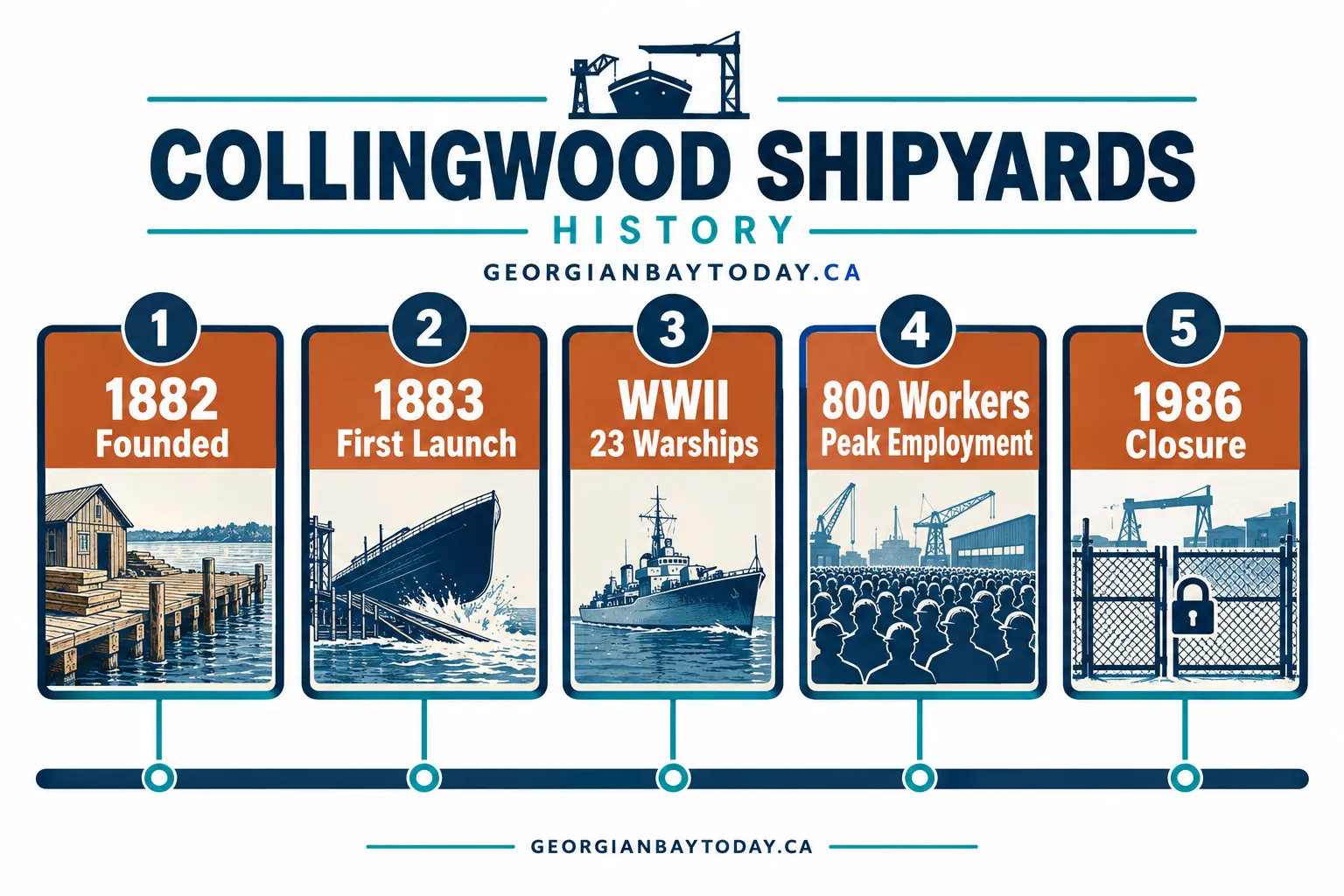
The shipyard opened on May 24, 1883, and closed on September 12, 1986, a run of 103 years. The founding company, the Collingwood Dry Dock, Shipbuilding and Foundry Company, was organized the year prior in 1882.
The closure date of September 12, 1986 is now a landmark in Collingwood’s civic memory. In 2026, that date carries even greater weight: it marks the 40th anniversary of the shutdown. The Collingwood Museum is hosting its 10th annual Shipyard Social on September 11-12, 2026 to honour the workers and families whose lives were shaped by the yard.
The Collingwood Shipyards built more than 200 vessels during their 103-year history, covering a wide range of ship types suited to Great Lakes and coastal service.
Key vessel categories included:
The yard was known for its side-launch technique, a method of launching ships sideways into the water rather than stern-first. This approach was well-suited to the relatively narrow waterfront at Collingwood and became a signature of the operation.
The Collingwood Shipyards sat on the southern shore of Georgian Bay, in the town of Collingwood, Ontario, roughly 150 kilometres north of Toronto. The site occupied prime waterfront land along what is now known as the Shipyards district, near 12 Sidelaunch Way.
Collingwood’s position at the base of Georgian Bay made it a natural fit for shipbuilding. The town had direct access to the Great Lakes shipping network, and the arrival of the railway in the mid-1800s made it a key transfer point for cargo moving between water and rail. That geographic advantage was a core reason the yard thrived for as long as it did.
The Collingwood Shipyards mattered to Canada for two reasons: wartime production and Great Lakes commerce. During World War II alone, the yard built at least 23 warships for the Royal Canadian Navy, making a direct contribution to Canada’s naval capacity at a critical moment in history.
Beyond the war years, the yard kept the Great Lakes shipping economy moving. The freighters built at Collingwood carried the raw materials that fed Canadian industry, grain heading east, coal and iron ore moving to steel mills. When the St. Lawrence Seaway opened and changed how cargo was transferred, Collingwood’s role as a transportation hub began to shift, but the yard continued to produce vessels that served the inland waterway system for decades.
“The closure, combined with changes to the St. Lawrence Seaway that reduced the need to transfer cargo from ships to trains, effectively ended Collingwood’s role as a transportation hub on the Great Lakes.”
During World War II, the Collingwood Shipyards shifted production to support the Canadian war effort, building at least 23 warships for the Royal Canadian Navy. This was a significant output for a single freshwater yard and placed Collingwood among the contributing industrial centres of wartime Canada.
The wartime period represented the yard at its most productive and its workforce at its most essential. Shipbuilding during the war required precision, speed, and scale, all of which the Collingwood operation delivered. This chapter of the yard’s history is a recurring focus of the Collingwood Museum’s programming and the annual Shipyard Social events.
At its peak, the Collingwood Shipyards employed approximately 800 workers. By the time the yard closed in September 1986, that number had fallen to roughly 50, a stark measure of the yard’s decline in its final years.
Those 800 peak workers represented a substantial share of Collingwood’s population at the time. Shipyard employment shaped the town’s economy, its neighbourhoods, and its social fabric. Families built their lives around the yard, and the loss of those jobs in 1986 had ripple effects that the community felt for years afterward.
The 1986 closure resulted from a combination of market and structural factors that left the yard unable to compete. The primary causes were:
These factors combined to make the yard economically unviable. The closure on September 12, 1986 was not a sudden event but the end of a gradual decline that had accelerated sharply in the two years prior.
After the 1986 closure, the shipyard lands sat largely dormant while the town worked through the economic and environmental aftermath. The site required soil remediation to address contamination left behind by more than a century of industrial activity.
Redevelopment has been a long, phased process. Key developments include:
The community has also been invited to provide input on a new waterfront public piazza park planned for the former shipyard area, reflecting a participatory approach to reshaping this historic land.
Yes, visitors can explore the shipyard’s legacy through the Collingwood Museum and the redeveloped waterfront. The Collingwood Museum is the central steward of shipyard history, holding photo collections that document workers, vessels, and the shipbuilding process in detail.
The museum’s annual Shipyard Social has become the flagship heritage event tied to the site. The 10th annual Shipyard Social, scheduled for September 11-12, 2026, marks the 40th anniversary of the closure and includes the “Hard Hats on Hurontario” march, a street procession that connects former shipyard workers with the present-day community.
A recent docuseries, The Last Launch: The Rise and Fall of Collship, created by local filmmaker Tom Stubbington, premiered on Bell Fibe TV1 on August 21, 2025, offering a multi-part visual history of the yard for those who want a deeper look.
The Collingwood Shipyards were the economic backbone of the town for most of their 103-year run. At peak employment, 800 workers drew wages that circulated through local businesses, housing, and services, a multiplier effect that made the yard’s health inseparable from the town’s prosperity.
The closure in 1986 triggered a period of economic restructuring that Collingwood navigated over subsequent decades by pivoting toward tourism, recreation, and waterfront redevelopment. The Strategic Directions Report from January 2025 identifies waterfront animation and public realm investment as central to the town’s ongoing economic development, a direct continuation of efforts to reimagine land the shipyard once occupied.
The yard’s legacy is also visible in the town’s identity. Collingwood still markets its shipbuilding heritage as a point of civic pride, and the annual Shipyard Social draws former workers, their families, and curious visitors who want to connect with that history.
The Collingwood Shipyards stand as one of Ontario’s most significant examples of freshwater industrial heritage. The site’s 103-year run, its wartime contributions, and its role in shaping a community make it a case study in how industrial history and civic identity become intertwined.
Heritage preservation efforts have taken several forms. The Collingwood Museum’s photo collections document the human side of shipbuilding, the workers, the processes, and the culture of the yard floor. Narrative histories, including the 2025 feature “Collingwood Shipbuilding, Tides of Change,” blend archival records with personal testimony to capture both the technical achievements and the social costs of the yard’s eventual closure.
The redevelopment of the physical site into a mixed-use waterfront neighbourhood is itself an act of heritage interpretation, keeping the memory of the yard alive through place names, public art, and programming even as the land takes on new uses. For readers interested in local stories and community identity, Georgian Bay News covers the region’s ongoing stories as Collingwood continues to evolve.
The Collingwood Shipyards built more than ships, they built a town’s identity over 103 years of continuous operation. From the first launch on May 24, 1883, through the wartime production of 23 Royal Canadian Navy vessels, to the quiet closure on September 12, 1986, the yard left a mark on Collingwood and on Canadian industrial history that has not faded.
As September 12, 2026 arrives, the 40th anniversary of that closure, the community has a concrete opportunity to engage with this history:
The story of the Collingwood Shipyards is ultimately a story about what communities build, what they lose, and how they choose to remember. Forty years on, Collingwood is still writing that chapter.
When did the Collingwood Shipyards open?
The Collingwood Shipyards opened on May 24, 1883, following the organization of the Collingwood Dry Dock, Shipbuilding and Foundry Company in 1882.
When did the Collingwood Shipyards close?
The shipyard closed on September 12, 1986, after 103 years of operation. September 12, 2026 marks the 40th anniversary of that closure.
How many ships did the Collingwood Shipyards build?
The yard built more than 200 vessels over its 103-year history, including lake freighters, ferries, and at least 23 Royal Canadian Navy warships during World War II.
How many people worked at the Collingwood Shipyards?
At peak employment, approximately 800 workers were employed at the yard. By the time of closure in 1986, that number had fallen to roughly 50.
Why did the Collingwood Shipyards close?
The closure resulted from a collapse in new vessel orders after 1984, global overcapacity in shipbuilding, lower-cost overseas competition, and the yard’s lack of a major dry dock for large ship repairs.
Where were the Collingwood Shipyards located?
The yard was located on the southern shore of Georgian Bay in Collingwood, Ontario, on land now known as the Shipyards district near 12 Sidelaunch Way.
Can you visit the Collingwood Shipyards today?
The original yard no longer operates, but the Collingwood Museum preserves its history and hosts annual Shipyard Social events. The waterfront site is being redeveloped with public spaces including Dry Dock Junction, which opened in July 2026.
What is the Shipyard Social?
The Shipyard Social is an annual event hosted by the Collingwood Museum to celebrate the town’s shipbuilding heritage. The 10th annual edition, held September 11-12, 2026, marks the 40th anniversary of the shipyard’s closure.
What is the significance of the Collingwood Shipyards in World War II?
During World War II, the yard built at least 23 warships for the Royal Canadian Navy, making a direct and measurable contribution to Canada’s wartime naval capacity.
What is happening to the former shipyard land?
The land is being redeveloped into a mixed-use waterfront neighbourhood with residential buildings, public plazas, cultural venues, and green space, while preserving references to the site’s industrial heritage.
Content, illustrations, and third-party video appearing on GEORGIANBAYNEWS.COM may be generated or curated with AI assistance or reproduced pursuant to the fair dealing provisions of the Copyright Act, R.S.C. 1985, c. C-42. Attribution and hyperlinks to original sources are provided in acknowledgment of applicable intellectual property rights. Such referencing is intended to direct traffic to and support the original rights holders’ platforms.