















🚶🏻♂️Staying Active: Low-Impact Exercise Programs Seniors Can Do at Home
Last updated: June 22, 2026
Quick Answer: Adults aged 65 and older need at least 150 minutes of moderate-intensity aerobic activity per week, plus muscle-strengthening on two or more days, according to the CDC [1]. Staying Active: Low-Impact Exercise Programs Seniors Can Do at Home makes that goal achievable without a gym membership, expensive equipment, or high injury risk. Chair exercises, resistance bands, walking routines, and tai chi are all proven options that build strength, balance, and flexibility on a realistic schedule.
Key Takeaways
- The CDC recommends 150 minutes of moderate aerobic activity weekly for adults 65 and older, plus two days of muscle-strengthening [1]
- Low-impact exercises reduce joint stress while still improving cardiovascular health, muscle tone, and flexibility [2]
- Chair-based workouts are effective for seniors with limited mobility or balance challenges and require no special equipment [3]
- Tai chi has strong evidence for improving balance and reducing fall risk in older adults [4]
- Resistance bands are affordable, portable, and effective for building functional strength at home [5]
- A simple weekly schedule can spread activity across the week without overloading any single day
- Social isolation is a real barrier to exercise for many seniors; online classes and community programs can help
- Consistency matters more than intensity, especially for beginners returning to activity after a long break
Why Low-Impact Exercise Is the Right Starting Point for Seniors
Low-impact exercise keeps at least one foot on the ground at all times, which dramatically reduces stress on the knees, hips, and spine. For seniors managing arthritis, osteoporosis, or post-surgical recovery, this distinction matters. Activities like walking, swimming, chair yoga, and tai chi deliver genuine cardiovascular and strength benefits without the collision forces that come with running or jumping [2].
The goal is not to avoid challenge. It is to match the challenge to the body’s current capacity and build from there.
What the Research Says About Senior Fitness at Home
The CDC’s physical activity guidelines for older adults are clear: 150 to 300 minutes of moderate-intensity aerobic activity weekly, muscle-strengthening on two or more days, and balance training to prevent falls [1]. These targets are achievable entirely at home.
Research consistently shows that low-impact movement improves cardiovascular health, maintains muscle mass, supports bone density, and reduces fall risk. For seniors dealing with social isolation, regular physical activity also supports mental health and cognitive function.
“Consistency matters more than intensity. A 20-minute chair workout done four times a week outperforms a single intense session that leads to soreness and avoidance.”
The Best Low-Impact Exercise Types for Home Use
Staying Active: Low-Impact Exercise Programs Seniors Can Do at Home works best when it draws from a variety of movement types. Each serves a different physical need.
| Exercise Type | Primary Benefit | Equipment Needed |
|---|---|---|
| Chair exercises | Strength, flexibility | Sturdy chair |
| Walking (indoor/outdoor) | Cardiovascular health | Supportive footwear |
| Tai chi | Balance, coordination | None |
| Resistance bands | Functional strength | Resistance bands |
| Gentle yoga / stretching | Flexibility, stress relief | Yoga mat (optional) |
| Low-impact HIIT (modified) | Endurance, calorie burn | None [7] |
Choose chair exercises if: mobility is limited, balance is a concern, or recovery from surgery is recent [3].
Choose tai chi if: fall prevention is the primary goal, or a meditative, low-stress approach is preferred [4].
Choose resistance bands if: building upper and lower body strength is the priority and gym access is not available [5].
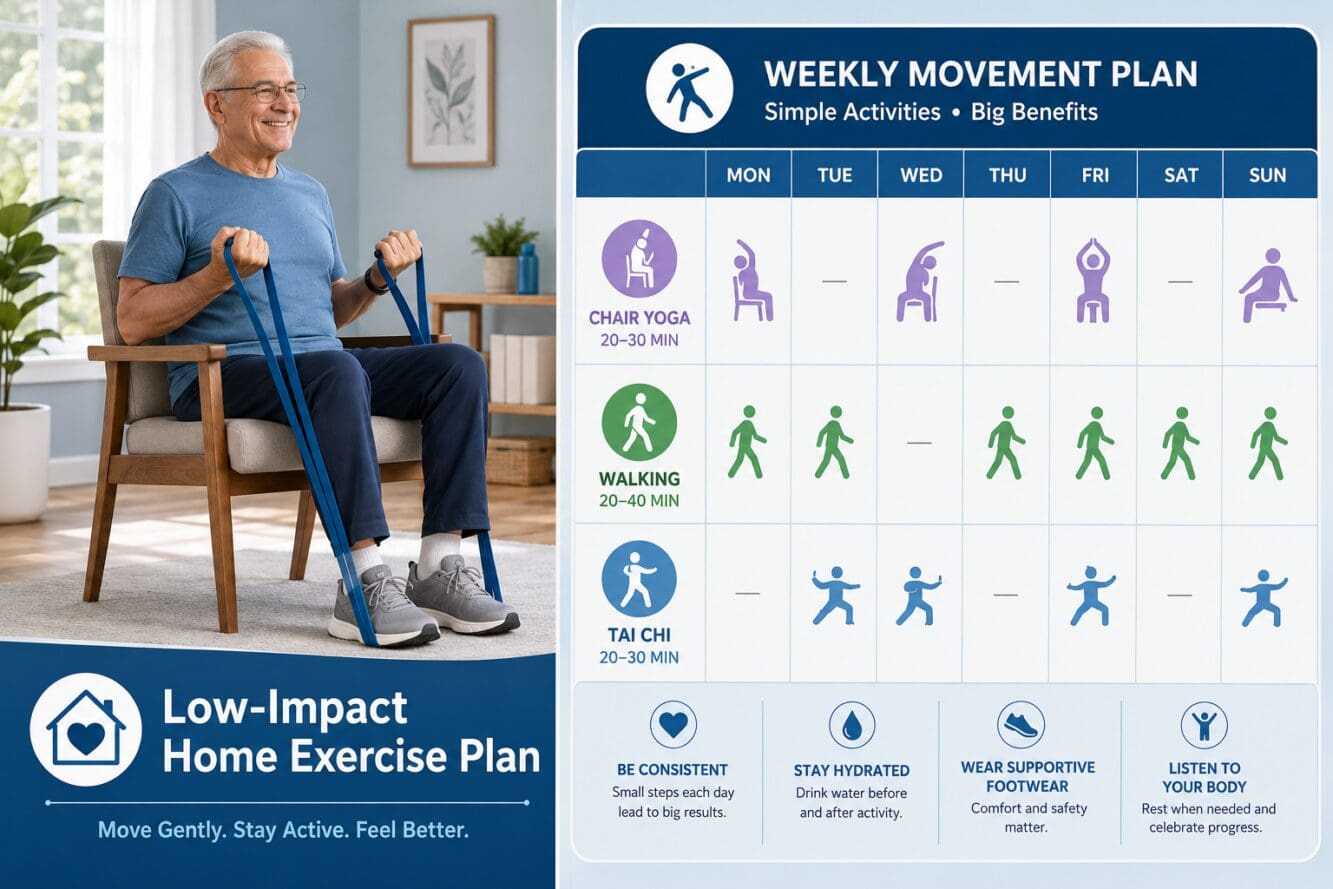
How to Build a Weekly Home Exercise Schedule
A practical weekly plan for seniors does not need to be complicated. The key is spreading activity across the week to allow recovery while still hitting the CDC’s targets [1].
Sample 5-Day Weekly Plan:
- Monday: 30-minute walk (outdoors or indoor laps) + 10 minutes of gentle stretching
- Tuesday: 20-minute chair exercise routine (seated leg lifts, arm circles, seated marching)
- Wednesday: 30-minute tai chi video session
- Thursday: 20-minute resistance band workout (banded foot activation, seated band pull-apart, standing rows) [5]
- Friday: 30-minute low-impact aerobic video or walking + 10 minutes balance exercises
- Saturday/Sunday: Light activity such as gardening, leisurely walking, or gentle yoga
This schedule delivers roughly 160 minutes of moderate activity, meeting the CDC’s minimum threshold [1].
Chair-Based Workouts: Staying Active When Mobility Is Limited
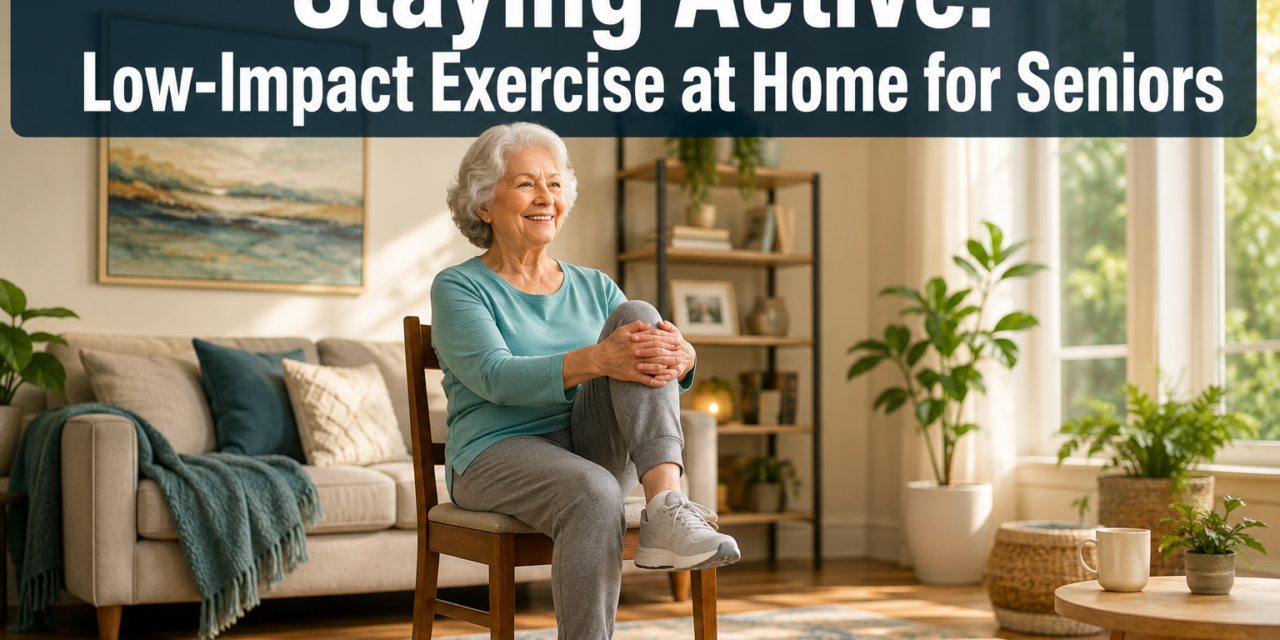
Chair exercises are one of the most accessible forms of staying active for seniors with limited mobility. They build strength and flexibility without requiring the participant to stand, balance, or bear full body weight [3].
Effective chair exercises include:
- Seated leg extensions (strengthens quadriceps)
- Seated marching (improves hip flexor strength and circulation)
- Seated arm raises with light weights or water bottles
- Seated torso twists (improves spinal mobility)
- Ankle circles and calf raises (supports circulation and ankle stability)
A sturdy, non-rolling chair placed against a wall is all the equipment needed. For seniors exploring longevity-focused lifestyle habits, chair workouts are a reliable daily anchor.
Resistance Bands and Simple Tools That Make a Difference
Resistance bands are among the most cost-effective tools for home-based senior fitness. A recent four-move routine highlighted by fitness experts focuses on exercises like banded foot activation and seated band pull-apart, which target functional movement patterns used in daily life [5].
Why resistance bands work well for seniors:
- Adjustable resistance levels suit beginners and experienced exercisers alike
- Low injury risk compared to free weights
- Can be used seated or standing
- Affordable (typically $10 to $30 for a set)
Emerging research is also exploring smart tools, such as pressure-sensitive mats and instrumented everyday objects, that provide real-time feedback during strength training at home, making it easier for seniors to track progress and stay motivated [6].
Free and Low-Cost Resources for Home Exercise Programs
Cost should not be a barrier. Many high-quality programs are available free or at low cost.
- YouTube: Channels dedicated to senior fitness offer guided sessions, including 30-minute low-impact HIIT workouts designed specifically for older adults [7]
- SilverSneakers: Seniors enrolled in Medicare Advantage or Medigap plans may have free access to SilverSneakers, which offers online classes including yoga and tai chi [4]
- Local community programs: Many municipalities offer free or subsidized fitness classes for older adults
For residents in the South Georgian Bay region, local community centres and online resources through South Georgian Bay Online may list fitness programs tailored to seniors.
Pickleball is another option gaining popularity among active older adults. For those interested in a social, low-impact sport, pickleball programs can complement a home exercise routine with structured outdoor activity.
Common Mistakes Seniors Make When Starting a Home Exercise Program
Starting too fast is the most common mistake. Muscles and joints need time to adapt, especially after a long period of inactivity.
Mistakes to avoid:
- Skipping warm-up and cool-down (increases injury risk significantly)
- Choosing exercises that cause sharp joint pain rather than mild muscle fatigue
- Exercising only once or twice a week and expecting rapid results
- Ignoring balance training, which is critical for fall prevention [1]
- Not consulting a doctor before starting if managing a chronic condition
Edge case: Seniors on blood pressure medication should monitor how exercise affects their readings, as some medications can affect heart rate response during activity.
FAQ
How much exercise do seniors need each week?
The CDC recommends at least 150 minutes of moderate-intensity aerobic activity weekly, plus muscle-strengthening on two or more days and balance exercises [1].
Can seniors exercise safely at home without supervision?
Yes, for most healthy older adults. Chair exercises, walking, and gentle stretching are low-risk. Those with heart conditions, recent surgeries, or severe balance problems should get medical clearance first.
What is the safest exercise for seniors with bad knees?
Chair-based exercises, swimming, and tai chi are among the safest options because they minimize knee joint loading [2][3].
How long should a senior exercise session last?
Sessions of 20 to 30 minutes are effective. Shorter sessions spread across the day also count toward weekly totals.
Do resistance bands really build strength for seniors?
Yes. Resistance band training has been shown to improve functional strength and mobility when performed consistently two or more times per week [5].
What is tai chi and why is it recommended for seniors?
Tai chi is a slow, flowing martial art practiced as a series of gentle movements. It is well-supported by research for improving balance, reducing fall risk, and supporting overall well-being in older adults [4].
Is low-impact HIIT safe for seniors?
Modified low-impact HIIT can be safe and effective for seniors who are already moderately active. Beginners should start with standard low-impact routines before progressing [7].
What equipment do seniors need to exercise at home?
Very little. A sturdy chair, a set of resistance bands, and supportive footwear cover most needs. A yoga mat is optional but helpful for floor-based stretching.
How do I stay motivated to exercise at home?
Scheduling workouts at the same time each day, using free online video classes, and tracking progress in a simple journal all help build consistency.
Can exercise reduce fall risk for seniors?
Yes. Balance training, tai chi, and lower-body strengthening are all associated with meaningful reductions in fall frequency and severity [1][4].
Conclusion
Staying Active: Low-Impact Exercise Programs Seniors Can Do at Home is not about dramatic fitness transformations. It is about maintaining independence, reducing fall risk, managing chronic conditions, and feeling better day to day. The barriers are lower than most people expect: a chair, a resistance band, and 30 minutes are enough to start.
Actionable next steps:
- Talk to a doctor or physiotherapist if managing a chronic condition before starting
- Pick one exercise type from the table above that matches current mobility
- Block three 30-minute slots in the weekly calendar and treat them as appointments
- Use a free YouTube session or SilverSneakers class for guided instruction
- Add a second exercise type after two to three weeks to build variety and prevent boredom
- Track activity in a simple notebook or phone app to stay accountable
Small, consistent steps taken today build the strength and balance that protect quality of life for years ahead.
References
[1] Older Adults – https://www.cdc.gov/physical-activity-basics/guidelines/older-adults.html?CDC_AAref_Val=https%3A%2F%2Fwww.cdc.gov%2Fphysicalactivity%2Fbasics%2Folder_adults%2Findex.htm&linkId=100000278884074&utm_source=openai
[2] Low Impact Exercises For Seniors – https://www.healthline.com/health/low-impact-exercises-for-seniors?utm_source=openai
[3] Low Impact Exercises For Seniors – https://www.centrum.com/learn/articles/health-and-lifestyle-tips/low-impact-exercises-for-seniors/?utm_source=openai
[4] Low Impact Exercises For Seniors – https://www.medicalnewstoday.com/articles/low-impact-exercises-for-seniors?utm_source=openai
[5] This Four Move Resistance Band Workout For Seniors Will Improve Mobility And Build Functional Strength – https://www.fitandwell.com/exercise/home-workouts/this-four-move-resistance-band-workout-for-seniors-will-improve-mobility-and-build-functional-strength/?utm_source=openai
[6] arxiv – https://arxiv.org/abs/2604.03241?utm_source=openai
[7] Watch – https://www.youtube.com/watch?v=TSpjo-_kX8Y&utm_source=openai
Content, illustrations, and third-party video appearing on GEORGIANBAYNEWS.COM may be generated or curated with AI assistance or reproduced pursuant to the fair dealing provisions of the Copyright Act, R.S.C. 1985, c. C-42. Attribution and hyperlinks to original sources are provided in acknowledgment of applicable intellectual property rights. Such referencing is intended to direct traffic to and support the original rights holders’ platforms.