













🇨🇦 Canadian Artists Who Found Their Voice Later in Life: Inspiring Stories of Creative Discovery After 50
Last updated: May 31, 2026
Quick Answer: Many Canadian artists — painters, musicians, sculptors, and writers — have built meaningful creative careers well after the age of 50. Late-blooming artists face real hurdles, from financial uncertainty to self-doubt, but Canada’s grant programs, community arts organizations, and growing online platforms make the path more accessible than ever. Age is not a disqualifier; for many, it’s an advantage.
Key Takeaways
- Several well-regarded Canadian artists did not gain wide recognition until their 50s, 60s, or beyond.
- Starting an artistic career later in life is challenging but not unusual; life experience often deepens creative work.
- Grants from the Canada Council for the Arts and provincial arts councils are available to artists of all ages, including mature emerging artists.
- Income from art started after 50 varies widely; most late starters begin part-time and scale gradually.
- Visual arts, writing, and craft-based disciplines tend to be the most welcoming fields for older entrants.
- Mental barriers, including fear of judgment and imposter syndrome, are the most commonly cited obstacles.
- Online platforms such as Etsy, Saatchi Art, and Bandcamp give mature Canadian artists direct access to buyers and audiences.
- Provinces like Ontario, British Columbia, and Quebec offer the strongest infrastructure for mature emerging artists.
Famous Canadian Artists Who Found Success After 50
Canadian artists who found their voice later in life are more common than popular culture suggests. Canada’s music and visual arts history includes figures who reached their stride in middle age or beyond, and their stories offer a credible counter-narrative to the “young genius” myth.
Painter William Kurelek, though he began painting earlier, did not achieve broad public recognition until his 40s and continued producing his most celebrated work into his 50s. In music, Canada has a long tradition of artists who reinvented themselves mid-career. Wikipedia’s list of Canadian musicians spans hundreds of names across genres, and a notable number built their most enduring work after decades of life experience rather than youthful breakout moments. [5]
Jazz and folk musicians in particular have often found that audiences respond more warmly to their work as they age, because the emotional depth of the material matches the performer’s lived experience. [6]
How Hard Is It to Start an Artistic Career When You’re Older?
Starting an artistic career after 50 is genuinely difficult, but the obstacles are different from what most people expect. The practical barriers, such as building an audience, pricing work, and finding exhibition or performance opportunities, are learnable. The harder challenge is internal.
Key practical challenges include:
- Building credibility without a formal portfolio or exhibition history
- Navigating arts grant applications, which often favor applicants with existing track records
- Pricing work appropriately when you’re new to the market but not new to life
- Finding time if you’re still working full-time or managing family responsibilities
The good news: older artists often bring discipline, professional networks, and financial stability that younger artists lack. Many report that decades of non-arts careers gave them subject matter, perspective, and work habits that accelerated their creative development once they committed.
What Challenges Do Late-Blooming Artists Face in Canada
Late-blooming artists in Canada face a specific combination of systemic and personal challenges. Grant programs sometimes prioritize “emerging” artists in ways that inadvertently disadvantage older applicants, even when those applicants are genuinely new to professional practice.
Common challenges include:
- Ageism in gallery and label representation, particularly in contemporary visual art and popular music
- Grant eligibility language that defines “emerging” by years of practice rather than age, which can help or hinder depending on the program
- Geographic isolation, especially for artists in rural Ontario or northern communities, where mentorship and peer networks are thinner
- Health and energy considerations that affect studio time and touring capacity for performing artists
That said, Canadian arts infrastructure is broader than many realize. Community arts organizations, regional arts councils, and local music foundations, such as those covered by the South Georgian Bay Music Foundation, actively support artists at all career stages.
Are There Grants or Support Programs for Older Emerging Artists
Yes. The Canada Council for the Arts offers grants that do not have age restrictions, and several programs explicitly define “emerging” based on years of professional practice rather than age. A 58-year-old who has been making art seriously for three years can qualify as an emerging artist under many federal and provincial definitions.
Key programs to explore:
- Canada Council for the Arts — Explore and Create grants: Open to individual artists regardless of age
- Ontario Arts Council — Emerging Artist grants: Defined by career stage, not birth year
- British Columbia Arts Council — Project Assistance: Available to artists at any career point
- Quebec’s Conseil des arts et des lettres du Québec: Offers creation grants with no upper age limit
Artists should also look at local business development resources. The South Georgian Bay Small Business Enterprise Centre and similar regional centers can help artists structure their practice as a business, which strengthens grant applications.
How Much Money Can You Realistically Make Starting Art Later in Life
Income from art started after 50 varies enormously and depends on the discipline, the artist’s existing network, and how much time they can invest. Most late starters should expect a part-time income trajectory for the first several years.
Realistic income benchmarks (estimates based on reported artist income surveys in Canada):
StageTypical Annual Art IncomeFirst 1-3 years$0 to $5,000Years 3-7 (building audience)$5,000 to $20,000Established practice (10+ years)$20,000 to $60,000+
These figures are rough estimates. Visual artists selling originals and prints, musicians licensing work, and writers with book deals can exceed these ranges. The Canada Council for the Arts has published surveys on artist income, and the data consistently shows that most professional artists in Canada earn under $30,000 annually from their art alone, regardless of when they started.
The practical advice: treat the first five years as an investment period, keep overhead low, and diversify income through teaching, workshops, or commissions.
What Creative Fields Are Most Welcoming to Artists Over 50
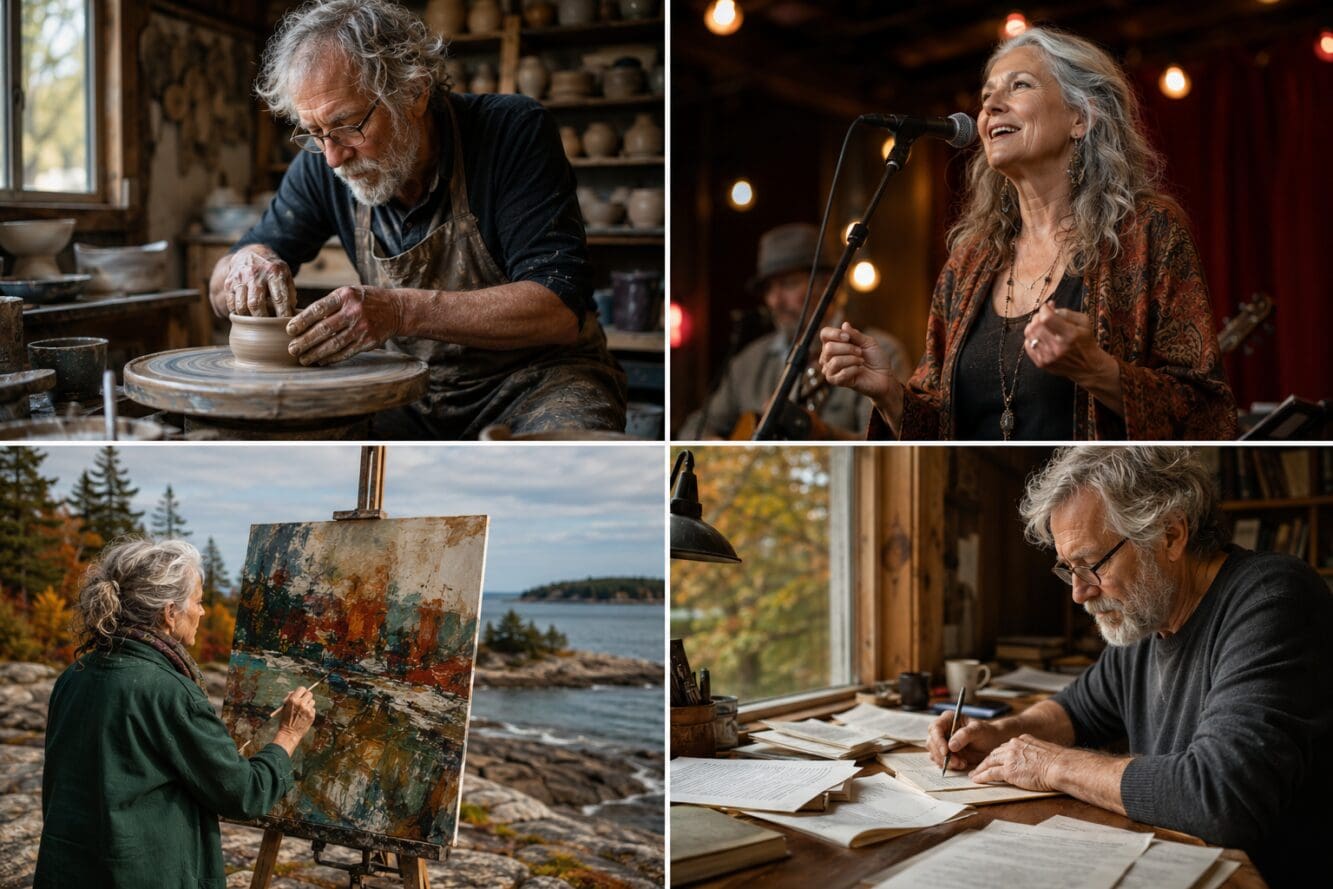
Visual arts, writing, and craft-based disciplines are the most accessible entry points for artists over 50. These fields have lower infrastructure costs, strong community networks, and audiences that genuinely value experience and maturity.
Most welcoming fields:
- Painting and drawing: Low startup cost, strong local gallery and juried show culture across Canada
- Ceramics and sculpture: Community studios reduce equipment costs; craft councils are active in most provinces
- Writing (fiction, memoir, poetry): Publishers and literary journals actively seek mature voices; memoir in particular is a genre where age is an asset
- Folk, jazz, and classical music: Audiences in these genres skew older and respond well to musicians with depth
More challenging fields for late starters:
- Commercial pop music, where youth and image are heavily weighted
- Competitive gallery representation in contemporary fine art, where career trajectory matters to dealers
Which Canadian Provinces Are Most Supportive of Mature Emerging Artists
Ontario, British Columbia, and Quebec offer the strongest combination of grant funding, arts infrastructure, and community support for mature emerging artists. Each province has an active arts council, a network of artist-run centers, and urban hubs with gallery, performance, and publishing ecosystems.
- Ontario: The Ontario Arts Council is one of Canada’s most active provincial funders. The Georgian Bay region specifically has a growing arts community, with organizations like those connected to the South Georgian Bay OPP area supporting community events that include arts programming.
- British Columbia: Strong craft and visual arts culture, particularly in the Okanagan and Gulf Islands, where many artists relocate after retirement.
- Quebec: Robust public arts funding and a strong tradition of valuing artists as cultural workers, with programs available in both French and English.
Smaller provinces like Nova Scotia and Prince Edward Island also punch above their weight, with tight-knit arts communities and lower cost of living that make sustained creative practice more financially viable.
Common Mistakes Artists Make When Launching a Career After Retirement
The most common mistake is treating art as a hobby while expecting professional results. Late-blooming artists who succeed tend to make a deliberate decision about which category they’re in and act accordingly.
Mistakes to avoid:
- Underpricing work out of insecurity, which signals low value to buyers
- Skipping professional development because “it’s just for younger artists”
- Waiting until the work is perfect before showing it publicly
- Ignoring the business side, including contracts, invoicing, and tax implications of art income
- Isolating instead of networking, which is the fastest way to stall momentum
The distinction between art as a hobby and art as a professional pursuit comes down to intention and infrastructure. A hobbyist makes art for personal satisfaction. A professional artist also does that, but builds systems around it: a portfolio, a pricing structure, a submission practice, and a financial plan.
Mental Barriers That Prevent Older Adults From Pursuing Creative Careers
Fear of judgment and imposter syndrome are the two most commonly reported mental barriers among older adults entering creative fields. Many describe a voice that says they “should have started earlier” or that they “don’t have the right to call themselves an artist.”
These barriers are real but not unique to older adults. What makes them sharper for people over 50 is the social expectation that creative identity should be established in youth. Overcoming this often requires:
- Community: Joining a class, studio, or writing group where peers are also starting out
- Reframing: Recognizing that decades of lived experience are creative raw material, not a deficit
- Small public steps: Submitting to a local juried show or open mic before aiming for major venues
- Mentorship: Connecting with artists who started late and can model a realistic path
Local arts programming, including events covered by Georgian Bay News through tags like connection and society, often provide exactly these kinds of entry points for adults returning to or discovering creative practice.
Is It Too Late to Go to Art School or Take Professional Training After 50
No. Canadian universities and colleges welcome mature students, and many offer part-time and online options that fit around existing commitments. OCAD University, Emily Carr University of Art and Design, and Concordia University all have continuing education programs with no upper age limit.
For those who don’t want a full degree, options include:
- Certificate programs in visual arts, creative writing, or music at community colleges
- Workshops through artist-run centers, which are often cheaper and more practically focused
- Online courses through platforms like Coursera, Domestika, or MasterClass
- Private instruction, which is often the fastest route to specific technical skills
Professional training after 50 is not about getting credentials for an employer. It’s about accelerating skill development and building a peer network, both of which have measurable impact on creative output and career momentum.
Best Online Platforms for Mature Canadian Artists to Showcase Their Work
Online platforms give mature Canadian artists direct access to buyers, audiences, and collaborators without requiring gallery representation or label deals. The best platforms depend on the discipline.
PlatformBest ForEtsyCraft, prints, handmade objectsSaatchi ArtOriginal paintings and sculptureBandcampIndependent musiciansSubmittableWriters submitting to journals and publishersInstagramVisual artists building an audienceYouTubeMusicians, educators, and process-focused artists
For artists in the Georgian Bay region, local digital presence matters too. Connecting with community platforms and regional news outlets, including those that cover busking applications and local arts events, can drive early visibility before a national online presence is established.
FAQ
Can someone with no formal training become a professional artist after 50?
Yes. Many successful Canadian artists are self-taught. Formal training helps with technique and networking, but it’s not required for professional practice or commercial success.
What is the Canada Council for the Arts, and does it fund older artists?
The Canada Council for the Arts is the federal arts funding body. It funds individual artists of all ages through grants based on artistic merit and career stage, not age.
How do I price my art when I’m just starting out?
Research comparable work by artists at a similar career stage in your region. Price based on materials, time, and market comparables, not on your confidence level.
Are there art communities specifically for adults over 50 in Canada?
Yes. Many community centers, arts councils, and continuing education programs run groups specifically for older adults. The Canadian Federation of Artists and regional craft councils are good starting points.
How long does it typically take to build an audience as a late-blooming artist?
Most artists report three to seven years before they have a consistent audience and sales. Consistency of output and public presence are the biggest factors.
Is memoir or life-writing a good starting point for older writers?
Memoir is one of the strongest entry points for writers over 50. Publishers and readers actively seek authentic voices with long perspective, and the genre rewards lived experience directly.
Do I need a business license to sell my art in Canada?
If you sell art regularly and earn income from it, you should register as a sole proprietor and report income. Requirements vary by province, but the threshold for registration is generally low.
What is the difference between an “emerging” and “established” artist in grant applications?
Most Canadian arts councils define “emerging” by years of professional practice (typically under five years), not by age. This means a 60-year-old new to professional art-making can qualify as emerging.
Conclusion
Canadian artists who found their voice later in life prove, repeatedly, that creative discovery after 50 is not an exception but a legitimate and well-supported path. The barriers are real: building an audience takes time, grant systems can be confusing, and internal doubt is a persistent companion. But Canada’s arts infrastructure, from federal grants to provincial councils to regional community organizations, does not discriminate by age.
Actionable next steps for anyone considering this path:
- Define your intention: hobby or professional practice. Both are valid, but they require different actions.
- Research one grant program relevant to your discipline and apply, even if the first attempt is unsuccessful.
- Join one community, whether a local studio, writing group, or online forum, within the next 30 days.
- Build a small public presence: a social media account, a local show submission, or a reading at a community event.
- Treat the first three years as skill-building and audience-building, not as a test of whether you “have what it takes.”
The stories of late-blooming Canadian artists are not anomalies. They are a pattern worth paying attention to, and in 2026, the tools and support systems available make this the most accessible moment in Canadian arts history to begin.
References
[5] List of Canadian Musicians – https://en.wikipedia.org/wiki/List_of_Canadian_musicians
[6] Six Musicians Who Have Helped Shape Canadian Music – https://www.fairmontpacificrim.com/blog/six-musicians-who-have-helped-shape-canadian-music/