



















🌲 Protected area targets face potential pitfalls


By David Suzuki
Alberta’s government recently claimed almost all Crown land in the province should be considered protected, even though caribou herds there are edging closer to local extinction as logging and oil and gas development continue to degrade and fragment their habitat.
Alberta’s claim comes in light of the federal commitment to meet an international target of 30 per cent land protection by 2030. As a Globe and Mail article reported, only 14 per cent of Canada’s land base is protected, so an additional 1.6 million square kilometres must be added over the next four years to meet the objective.
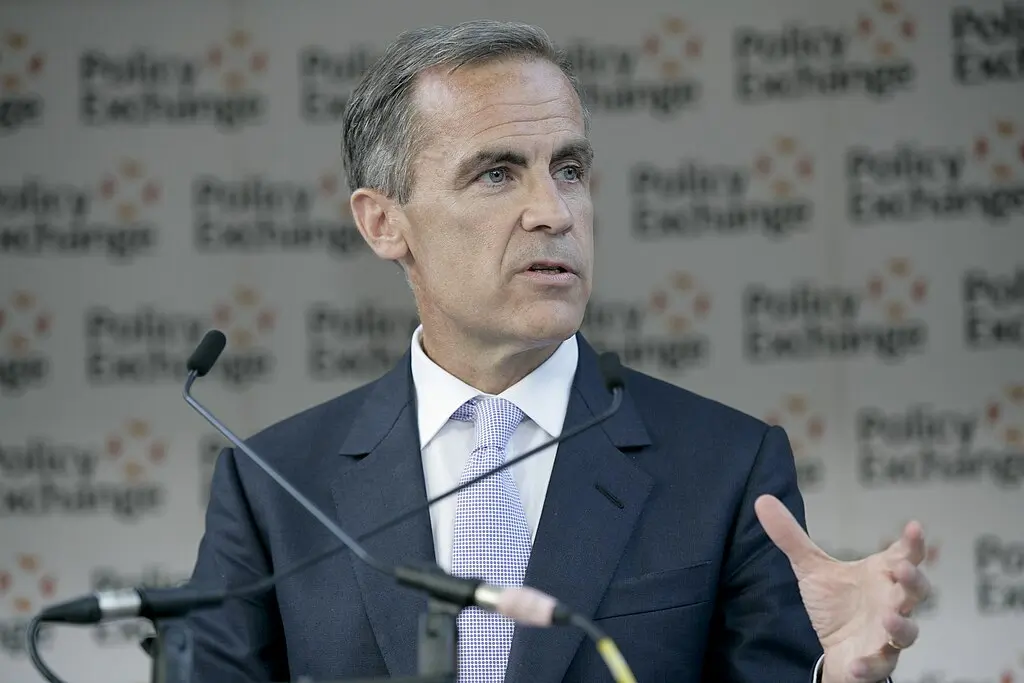
Alberta could be trying to take advantage of what some interpret as a grey area under the federal government’s vision: the category of “other effective conservation measures.” In March, Prime Minister Mark Carney recommitted to achieve Canada’s protected areas goal with a new nature strategy that identifies at least eight per cent of the target as OECMs.
“Nearly 60 per cent of the province’s land base is publicly managed Crown land,” Grant Hunter, Alberta’s environment and protected areas minister, said. “This represents about 40 million hectares that have been responsibly managed, stewarded and conserved for decades. Land use is regulated to protect watersheds, conserve wildlife habitat, support forestry and agriculture, enable outdoor recreation and allow for responsible, carefully managed resource development.”
OECM areas are managed for long-term conservation outside of traditionally regulated parks. Canada has clear criteria for them, including, “Conservation is year round and will be maintained in the long term,” and “conservation objectives are not threatened by other site objectives.”
They make sense in some places. Indigenous protected and conserved areas (many governed by Indigenous law) can be good examples. The muddying of OECMs comes in part from industry, which also proclaims “conservation” despite caribou declines and argues land under its purview should be designated as OECMs.
A 2019 article by Wilfrid Laurier University associate professor Christopher Lemieux and colleagues in Marine Policy outlined potential risks: “Ambiguous language used to define and prescribe application of OECMs is being used as the basis for a revisionist paradigm that promises to undermine national and international conservation standards, fracture partnerships, and jeopardize the integrity of Canada’s PA network.”
Other potential pitfalls hamper the path to securing Canada’s conservation objectives. Numbers-based targets contain inherent risks. An article by European scientist Piero Visconti and colleagues in Science notes, “percentage area targets disregard the quality of what is being represented, with degraded ecosystems given the same value as those that are still functionally intact.”
Protected areas are often too small to capture ecological processes. They can be islands of green in seas of development and extraction, lacking connectivity, often surrounded by deteriorated areas where wildlife that moves beyond the boundaries becomes threatened.
Nature is dynamic, constantly shifting and evolving over long periods that allow for adaptation. Climate change alters landscapes at a faster pace. As the international Wildlife Society points out, “Protected areas are havens of biodiversity across the globe, but under a warming climate, species using them may shift their niches to areas that are no longer protected.” So too might tree and plant species move outside of protected areas in response to a changing climate.
Parks are not panaceas for addressing the ecological crises we face, but they are a primary tool. The land outside of protected areas must also be managed for biodiversity outcomes. Landscape-level restoration is needed to repair damaged ecosystems. Buffer zones and connectivity corridors can create spaces for movement of wildlife and of ecosystems that migrate as the climate changes.
Ultimately, protected areas safeguard natural processes from deterioration as a result of development and industrial resource extraction, supporting resiliency. As a Frontiers in Science article recently underscored in response to the biodiversity crisis, “the top priority should be preventing the loss of intact biomes, ecosystems, natural processes, and species assemblages, as they are irreplaceable and cannot be quickly restored.”
Alberta’s grandstanding is just that; its announcement ignores its own protected areas legislation. The federal government must uphold OECM criteria and report on conservation outcomes, not just percentages. We must support Indigenous land governance and meet the land protection target by conserving healthy, resilient ecosystems — and pivot away from biodiversity loss and extinctions.
David Suzuki is a scientist, broadcaster, author and co-founder of the David Suzuki Foundation. Written with David Suzuki Foundation Boreal Project Manager Rachel Plotkin.
Learn more at davidsuzuki.org.
REFERENCES:
Globe and Mail article:
New nature strategy:
https://www.canada.ca/en/services/environment/nature/nature-strategy.html
Alberta’s environment and protected areas minister said:
https://www.alberta.ca/release.cfm?xID=9596714907BE7-A1DF-550E-9FE2EA8FD0B5510D
Clear criteria:
Make sense in some places:
Indigenous protected and conserved areas:
2019 article:
https://www.sciencedirect.com/science/article/abs/pii/S0308597X18304706
Article by European scientist Piero Visconti and colleagues:
https://www.science.org/doi/10.1126/science.aav6886
Wildlife Society points out:
Frontiers in Science article recently underscored:
https://www.frontiersin.org/journals/science/article-hubs/nature-positive-earth-system-stability
Support Indigenous land governance:
https://davidsuzuki.org/story/reconciliation-means-rethinking-parks-governance
Much Appreciate You Sharing This Post - It Helps MUCH!!!