



















Last updated: June 15, 2026
Quick Answer: Every year in Ontario, hundreds of young people age out of the foster care system, most between 18 and 21, often without a stable home, savings, or a support network. Yet a growing number of former foster youth in Ontario who built stable lives after aging out are doing so through a combination of targeted financial aid, post-secondary education programs, mentorship, and community supports. Their stories are not luck. They follow a pattern of practical steps and available resources that others can replicate.
Key Takeaways
Aging out of foster care in Ontario means losing structured housing, financial support, and adult guidance almost overnight. Most young people exit care at 18 with limited savings, no established credit history, and no guaranteed place to live.
Common challenges include:
Ontario’s foster home supply has dropped by 33.6% between 2020 and 2024, meaning fewer youth are even getting the foundational stability that a good foster placement provides [3][4]. The Ontario Association of Children’s Aid Societies launched the “There to Care” campaign in 2024 specifically to address this shortage [4].
Housing and education are the two biggest hurdles, but both are achievable with the right supports in place. Ontario has programs that directly address each barrier, though awareness of them remains low.
Housing options for former foster youth in Ontario include:
Education pathways include:
Julia, a former foster child in Ontario, pursued a four-year Interior Design Program at Humber College supported by a scholarship from the Catholic Children’s Aid Foundation. That financial backing let her focus on her studies rather than on survival [1]. Her story is a direct example of what structured support can accomplish.
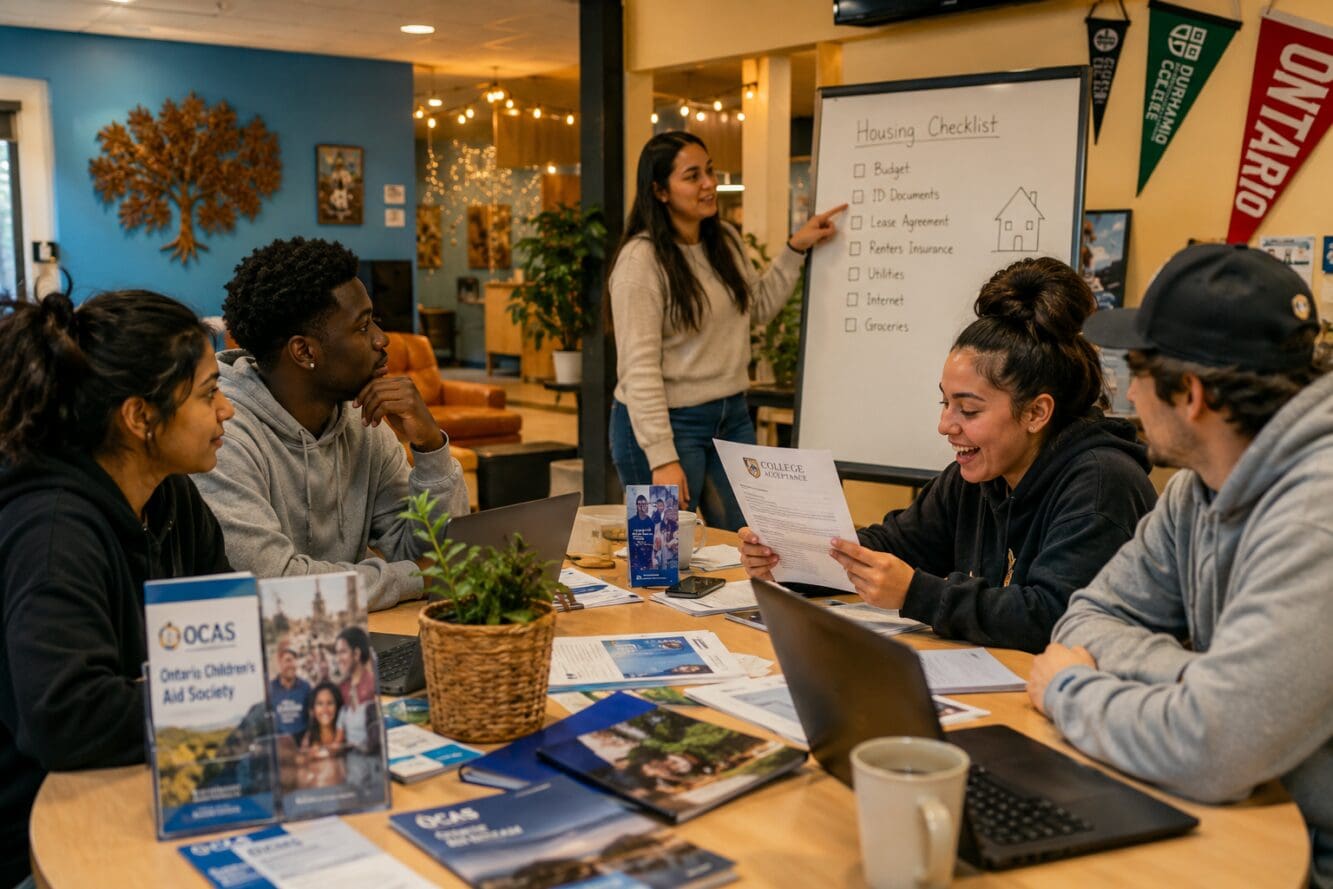
Former foster youth in Ontario who built stable lives after aging out share a common thread: at least one adult who stayed consistent, and at least one program that reduced financial pressure at a critical moment.
Meaghan entered foster care at 15 after leaving an unsafe home environment. Through the Kawartha-Haliburton Children’s Aid Society, she accessed extracurricular programs including horseback riding, which built her confidence and gave her structure during a vulnerable period. That foundation contributed directly to her long-term stability [2].
Organizations like Foster Care to Success have supported over 50,000 foster youth across North America, providing education funding and mentorship that bridge the gap between care and independence [5][7]. Their alumni include people working in healthcare, trades, technology, and social services.
What these success stories have in common:
Ontario has a range of programs, though navigating them requires knowing where to look. The most effective ones combine financial support with practical life skills.
ProgramWhat It OffersWho Provides ItExtended Care and Maintenance (ECM)Financial support up to age 21Children’s Aid SocietiesCrown Ward Tuition WaiverFree or reduced tuitionMany Ontario colleges/universitiesApprenticeship programsTrades training with incomeOntario governmentTransitional housingShort-term stable housingNonprofits (Covenant House, Eva’s)Mental health counsellingTrauma-informed therapyCAS-affiliated and community providers
Youth should connect with their CAS worker before turning 18 to plan the transition. Waiting until after aging out means losing access to some programs entirely.
Former foster youth who complete post-secondary education or skilled trades training reach income levels comparable to peers, though the path often takes longer. Without education or training, income outcomes are significantly lower on average.
Career paths that former foster youth in Ontario commonly pursue:
The key factor is not the field but whether the person had stable housing and financial support during their training period. Instability during school is the most common reason former foster youth drop out before completing credentials.
Mental health support is not a bonus for former foster youth. It is a core part of building a stable life. Unaddressed trauma from early childhood adversity, placement instability, and family separation directly affects employment, relationships, and physical healthy aging outcomes.
Ontario-specific mental health resources include:
Research published in December 2024 explored digital tools designed to increase social support for foster-involved youth, pointing to growing interest in tech-assisted mental health resources for this population [6]. For some youth, especially those in rural areas of Southern Georgian Bay and beyond, digital access to counselling is the most realistic option.
Overcoming childhood trauma is a long-term process, not a single event. Former foster youth who build stable lives typically engage in trauma-informed therapy, build consistent routines, and find community through peer groups or structured activities.
Practical steps that support trauma recovery:
Trauma does not disappear, but its impact on daily functioning decreases significantly with consistent support and safe environments.
The most common mistake is leaving care without a plan. Many youth assume supports will appear when needed, but Ontario’s programs require proactive enrollment.
Other frequent mistakes include:
The fix for most of these is early planning, ideally starting at age 16 or 17 with a CAS worker, a transition plan, and knowledge of available financial supports.
Former foster youth in Ontario have specific legal rights and financial entitlements that many do not know about. Under the Child, Youth and Family Services Act, young people who were Crown wards can access extended support up to age 21.
Key financial supports:
Legal rights include:
Former foster youth should request a copy of their transition plan in writing and keep documentation of all CAS correspondence. These records matter for housing applications, education funding, and legal identity documents.
Building a support network from scratch is one of the hardest parts of aging out. Former foster youth in Ontario who built stable lives after aging out consistently credit one or two key relationships as turning points.
Practical ways to build connections:
Consistency matters more than the number of connections. One reliable mentor or friend who shows up repeatedly has more impact than a large, loose network.
Former foster youth in Ontario who built stable lives after aging out did not do it alone, and they did not do it by accident. The pattern is clear: early transition planning, access to financial supports like tuition waivers and ECM funding, trauma-informed mental health care, and at least one consistent adult relationship make the difference between stability and crisis.
Actionable next steps:
The supports exist. The challenge is knowing about them and using them before the window closes.
Q: At what age do youth age out of foster care in Ontario?
Most youth age out at 18, but Ontario’s Extended Care and Maintenance program allows support to continue until age 21 for eligible former Crown wards.
Q: Can former foster youth in Ontario get free tuition?
Yes. Many Ontario colleges and universities offer tuition waivers for former Crown wards. Eligibility and coverage vary by institution, so contact the financial aid office directly.
Q: What is the “There to Care” campaign?
It is a 2024 recruitment campaign by the Ontario Association of Children’s Aid Societies aimed at increasing the number of foster caregivers in response to a 33.6% drop in available foster homes since 2020 [3][4].
Q: Are there mental health supports specifically for former foster youth?
Yes. ConnexOntario, CAS-affiliated counselling, and peer support networks are available. Many services are free or subsidized for former Crown wards up to age 21.
Q: What careers do former foster youth most commonly pursue?
Social work, child and youth care, healthcare support, skilled trades, and community services are common. Technology fields, including software roles, are also increasingly accessible through college programs.
Q: What is the biggest financial mistake former foster youth make?
Not applying for ECM funding and tuition waivers before aging out. These programs require proactive enrollment and are not automatically granted.
Q: How can former foster youth build a support network?
By joining alumni networks, engaging with mentorship programs, participating in community activities, and using college student services as a starting point for social connection.
Q: Is OSAP available to former foster youth in Ontario?
Yes. Former Crown wards qualify for enhanced OSAP grants. Foster care support payments are not counted as parental income, which increases grant eligibility.
Q: What legal rights do former foster youth have in Ontario?
They have the right to a written transition plan, the right to re-enter extended care before age 21, and the right to access records from their time in care under the Child, Youth and Family Services Act.
Q: Can digital tools help former foster youth access support?
Yes. Research from 2024 highlights growing development of digital platforms designed to increase social support and service access for foster-involved youth, particularly in rural areas [6].
[1] Julia’s Story: Designing A Fulfilling And Successful Life – https://www.ccafdn.ca/inspiring-story/julias-story-designing-a-fulfilling-and-successful-life/?utm_source=openai
[2] Testimonials Former Participants – https://www.khcas.on.ca/foundation/khcf/your-impact/testimonials-former-participants/?utm_source=openai
[3] Available Foster Homes In Ontario Have Dropped By 33.6% Since 2020 – https://www.peelcas.org/about-us/publications/news/peel-cas-news/2024/06/07/available-foster-homes-in-ontario-have-dropped-by-33.6–since-2020?utm_source=openai
[4] Available Foster Homes In Ontario Have Dropped 33.6% Since 2020 – https://www.yorkcas.org/news/available-foster-homes-in-ontario-have-dropped-33-6-since-2020/?utm_source=openai
[5] Success Stories – https://www.fc2success.org/success-stories/?utm_source=openai
[6] Digital Support Tools for Foster-Involved Youth – https://arxiv.org/abs/2412.09838?utm_source=openai
[7] Student Success Stories – https://www.fc2success.org/category/student-success-stories/?utm_source=openai

At CARE Foster Care, we’re so much more than just an organization—we’re a close-knit family of kind-hearted folks, all coming together to embrace and nurture the precious children who truly need our love and support the most.
If you’re in the Barrie, Orillia, or Stayner area, we’re extending a warm invitation to you: join our supportive team.