



















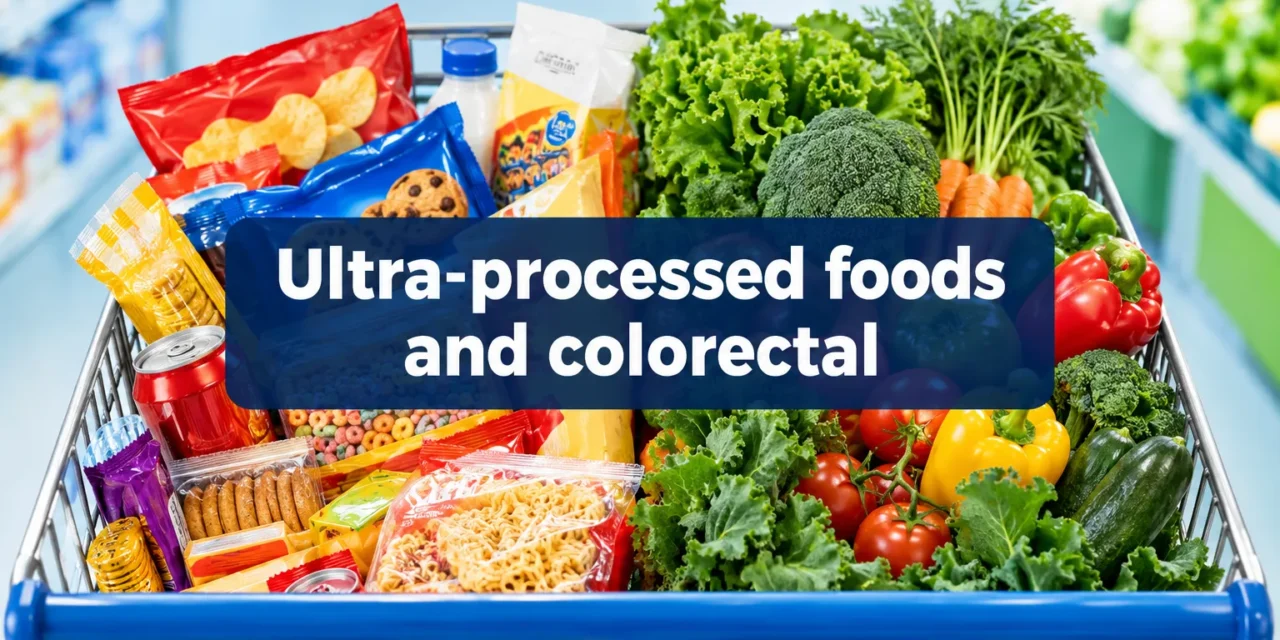
🥪 Ultra-Processed Foods and Colorectal Cancer Risk Re-Examined

Last updated: October 23, 2026
Quick Answer
A 2026 PLOS Medicine study of 461,682 U.S. adults found no overall link between total ultra-processed food intake and colorectal cancer over 18 years of follow-up, directly challenging earlier fears.[1] But the picture is not that simple: ultra-processed whole grains and dairy were tied to lower risk, while ultra-processed meats were tied to higher risk, and several other large cohorts still report modest overall increases.[1][2][3]
Key Takeaways
- The largest U.S. cohort to date found no overall association between ultra-processed foods and colorectal cancer when all UPFs were grouped together.[1]
- Subcategory matters more than the UPF label itself: processed meats raise risk, while ultra-processed whole grains and dairy appear protective.[1]
- European cohorts (Norway, EPIC) still show modest positive associations, around a 4% to 24% higher risk in top consumers.[2][3][4][5]
- A 2023 meta-analysis found a 26% higher risk in high versus low UPF consumers, though without a clear dose-response pattern.
- UPFs are linked to more colorectal adenomas and precancerous polyps, even after excluding processed meat.
- Young women eating roughly 10 daily UPF servings had 45% higher odds of adenomas tied to early-onset colorectal cancer.[6]
- Processed meat remains the most consistent dietary red flag for colorectal cancer across nearly all studies reviewed.[1]
What Exactly Counts as Ultra-Processed Food
Ultra-processed foods are industrially manufactured products made mostly from substances extracted from whole foods, plus additives like emulsifiers, flavorings, and preservatives rarely found in a home kitchen. Think packaged snack cakes, sugary cereals, instant noodles, soda, and most frozen ready meals.

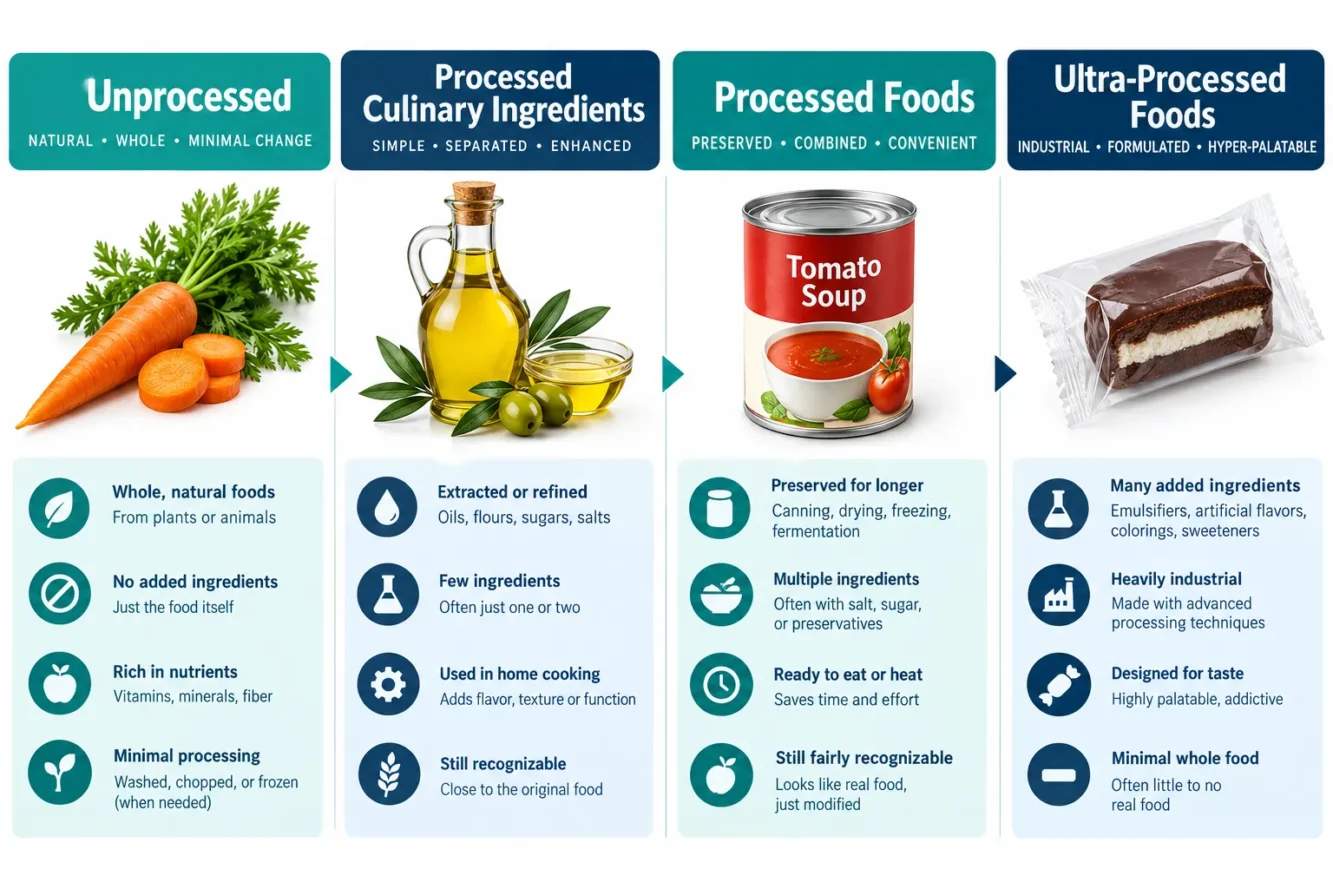
This differs from simple processing. Canned beans, frozen vegetables, and pasteurized milk are “processed” but not “ultra-processed” because they retain a recognizable whole-food structure. The NOVA classification system, used in most of the research cited here, separates foods into four tiers: unprocessed, processed culinary ingredients, processed foods, and ultra-processed foods.
Common UPF examples include:
- Packaged chips, cookies, and candy
- Sugary breakfast cereals and flavored yogurts with stabilizers
- Hot dogs, sausages, and deli meats
- Instant soups, noodles, and frozen entrees
- Soft drinks and sweetened “fruit” drinks
Decision rule: if a product has five or more ingredients you wouldn’t find in your own pantry, including things like hydrolyzed protein, maltodextrin, or artificial colors, it’s almost certainly ultra-processed.
Is the Link Between Ultra-Processed Foods and Colorectal Cancer Risk Re-Examined Actually Proven
No, it is not proven as a blanket claim. The 2026 PLOS Medicine analysis, which re-examined the question at massive scale, found no overall association between total UPF intake and colorectal cancer incidence.[1]
This matters because many public health messages had treated “ultra-processed foods cause cancer” as settled fact. The new data suggest the relationship is real but narrower than advertised, concentrated in specific food types rather than the UPF category as a whole. Earlier meta-analyses reporting a 26% higher risk were based on smaller, more heterogeneous study pools without the statistical power or subcategory detail the newest cohort offers.[1]
How Much Processed Food Would Increase My Cancer Risk
Risk estimates vary by study and food type, ranging from no measurable increase to roughly 24% to 29% higher colorectal cancer risk among the heaviest consumers compared to the lowest.[2][7] There is no single number that applies to everyone.
- Norwegian women in the top UPF quartile: 24% higher CRC risk (HR 1.24).[2]
- EPIC cohort: about 4% higher colon cancer risk per standard-deviation increase in UPF intake, with no rectal cancer link.[3][4][5]
- U.S. cohort of 290,000 adults: 29% higher CRC risk in the highest UPF quartile, strongest in men and distal colon cancer.[7]
- 2023 meta-analysis: 26% higher risk, highest versus lowest intake, without clear dose-response.
Common mistake: assuming any amount of UPF consumption carries the same risk. The data point toward a threshold or category effect, not a smooth line where every extra bite adds proportional danger.
What Foods Should I Eat Instead to Prevent Colon Cancer
Prioritize whole grains, legumes, vegetables, fruit, and minimally processed proteins, since these displace ultra-processed items linked to higher risk while adding fiber that supports gut health. Several studies specifically flag fiber and micronutrient loss as a mechanism behind UPF-related cancer risk.
Practical swaps:
- Replace packaged white bread with whole-grain bread or sourdough
- Swap deli meats for roasted chicken, beans, or fish
- Choose plain yogurt over flavored, additive-heavy versions
- Cook grains and legumes from scratch instead of instant mixes
- Snack on nuts or fruit instead of packaged cookies
For general wellness planning, some readers also explore structured eating patterns such as keto or focus on keto vegetable sides to reduce reliance on packaged convenience foods, though no single diet plan is a guaranteed cancer prevention strategy.
Why Do Different Studies Say Conflicting Things About Processed Foods and Cancer
Studies conflict because they measure UPF intake differently, study different populations, and often lump very different foods into one “ultra-processed” category. A packaged whole-grain loaf and a hot dog are both technically ultra-processed, yet they behave oppositely in colorectal cancer data.[1]
Other sources of disagreement:
- Population differences: Norwegian and EPIC cohorts (Europe) show modest positive links; the newest U.S. cohort shows none overall.[1][2][3]
- Site-specific effects: colon cancer links appear stronger than rectal cancer links in EPIC data.[3][5]
- Follow-up length and confounding adjustment vary significantly between studies.
- Self-reported diet data carries measurement error that can dilute or exaggerate associations.
Are All Processed Foods Equally Bad for Cancer Risk
No. The newest large-scale data show sharply different effects depending on subcategory, with processed meats raising risk and ultra-processed whole grains or dairy products associated with lower risk.[1]
This is the central re-examination finding: treating “ultra-processed” as one monolithic danger category oversimplifies the science. Processed meat consistently shows the most reliable harmful signal across nearly every study reviewed here, including mechanistic reviews pointing to nitrates, heme iron, and inflammatory pathways.[8]
Does This Apply to Vegetarian and Vegan Processed Alternatives Too
Plant-based meat substitutes and packaged vegan snacks are still ultra-processed by NOVA criteria, but current research has not isolated their colorectal cancer risk separately from whole-food plant diets. The available cohort data group them within general UPF categories rather than analyzing them individually.
Given that ultra-processed whole grains and dairy showed protective associations, it’s plausible that plant-based UPFs without processed meat analogs may behave more like the “lower risk” subcategory, but this remains an open research question rather than a confirmed finding. Choose whole, minimally processed plant foods when possible rather than assuming “vegan” automatically means low-risk.
Who Is Most at Risk From Eating Ultra-Processed Foods
Men, distal colon cancer patients, and younger adults under 50 appear to show stronger associations with UPF-related colorectal risk in several studies.[6][9] Early-onset cases are a particular concern given rising rates in people under 50.
- A Mass General Brigham study of nearly 30,000 female nurses under 50 found 45% higher adenoma risk among those eating about 10 UPF servings daily versus 3.[6]
- A JNCI Cancer Spectrum study found accelerated epigenetic aging in colorectal tissue tied to high UPF intake, especially in African American populations, at about 1.41 years of age acceleration between highest and lowest quartiles.[9]
- Men showed stronger associations than women in a large U.S. cohort focused on distal colon cancer.[7]
Edge case: colorectal cancer survivors eating high amounts of UPFs after diagnosis showed a 65% higher cardiovascular mortality risk but no significant change in cancer-specific mortality, suggesting UPFs may harm the heart more than drive cancer recurrence in this group.[10]
How Does Processed Food Compare to Other Colorectal Cancer Risk Factors
Ultra-processed food intake appears to carry a modest effect size compared to established risk factors like family history, inflammatory bowel disease, smoking, and obesity. A Nutrition Reviews meta-analysis pooled a relative risk of 1.13 for CRC tied to high UPF intake, smaller than risks typically attributed to strong genetic or inflammatory conditions.[8]
The same review found UPFs associated with a 33% higher risk of inflammatory bowel disease, with Crohn disease showing the strongest link, suggesting diet may act partly through gut inflammation rather than as a standalone cause.[8]
What’s the Science Behind Why Ultra-Processed Foods Cause Cancer
Researchers propose three main mechanisms: nutrient displacement (less fiber and protective micronutrients), adverse body composition from excess calories and poor satiety signals, and chemical exposure from additives, processing byproducts, and packaging materials.
Supporting evidence includes:
- Accelerated epigenetic aging detected in normal colorectal tissue linked to UPF intake.[9]
- Increased odds of conventional adenomas, serrated lesions, and high-risk polyps even after excluding processed meat specifically.
- Inflammatory pathway involvement shown through IBD associations.[8]
Quick example: a diet heavy in packaged snacks and low in fiber reduces short-chain fatty acid production in the gut, a process some researchers believe weakens the colon’s natural defense against abnormal cell growth.[8]
Can You Reverse Damage From Eating Processed Foods
Partial reversal is plausible through dietary change, though no study cited here directly tracks reversal of precancerous changes after reducing UPF intake. Improving fiber intake and reducing processed meat consumption is linked to lower future risk in observational data, even if past exposure cannot be fully erased.
Practical steps:
- Reduce processed meat first, since it has the most consistent harmful signal.[1]
- Add fiber-rich whole grains and legumes gradually.
- Increase fermented, minimally processed dairy if tolerated.
- Get recommended colorectal cancer screening starting at the appropriate age, since dietary change does not replace screening.
Should I Cut Out All Processed Foods or Just Some
Focus on cutting processed and ultra-processed meats first, since that subcategory shows the most consistent harmful association across nearly every study reviewed.[1] Total elimination of all ultra-processed foods is not supported by the newest evidence as a universal necessity.
Choose a targeted approach if: you want evidence-based priorities. Choose a stricter near-total elimination approach if: you have other risk factors like family history, inflammatory bowel disease, or existing precancerous polyps, where added caution carries little downside.
What Do People Get Wrong About Processed Foods and Cancer Risk
The most common mistake is treating “ultra-processed” as a single uniform risk category when the newest research shows sharply different effects by subcategory. Packaged whole-grain bread is not nutritionally or epidemiologically equivalent to a hot dog, even though both meet the technical UPF definition.[1]
Other common misconceptions:
- Assuming any UPF consumption guarantees harm, when effect sizes are often modest (4% to 29%) and inconsistent across populations.[2][3]
- Ignoring that rectal cancer shows weaker or no UPF association compared to colon cancer in EPIC data.[3][5]
- Overlooking that cardiovascular harm from UPFs may be more consistent than cancer-specific harm in survivors.[10]
Comparison of Major Studies
| Study | Population | Finding |
|---|---|---|
| PLOS Medicine (2026) | 461,682 U.S. adults | No overall UPF-CRC link; meat raises risk, whole grains/dairy lower it [1] |
| Norwegian Women and Cancer | Norwegian women | 24% higher risk, top vs bottom quartile [2] |
| EPIC cohort | European adults | 4% higher colon cancer risk per SD increase; no rectal link [3][5] |
| 2023 meta-analysis | 18,673 CRC cases | 26% higher risk, no dose-response |
| Mass General Brigham | ~30,000 nurses under 50 | 45% higher adenoma risk at high UPF intake [6] |
FAQ
Does eating ultra-processed food guarantee colorectal cancer?
No. Risk increases in some studies are modest, and the largest recent U.S. cohort found no overall link when all UPFs were combined.[1]
Which ultra-processed foods are the biggest concern?
Processed and ultra-processed meats show the most consistent association with higher colorectal cancer risk across studies.[1]
Can ultra-processed whole grains be healthy?
Yes, some ultra-processed whole-grain and dairy products were linked to lower colorectal cancer incidence in the 2026 PLOS Medicine study.[1]
Are young adults at risk from ultra-processed foods?
Emerging data link high UPF intake to increased adenoma risk in women under 50, relevant to rising early-onset colorectal cancer rates.[6][9]
Does cutting UPFs help cancer survivors?
Reducing UPFs after a colorectal cancer diagnosis was linked to lower cardiovascular mortality risk, not necessarily lower cancer-specific mortality.[10]
Is there a safe amount of ultra-processed food?
No universal safe threshold exists; risk appears tied more to food type and consistent high intake than to occasional consumption.
Do plant-based processed alternatives carry the same risk?
This hasn’t been studied separately from general UPF categories, so current evidence is inconclusive for vegan or vegetarian alternatives specifically.
Conclusion
The science on ultra-processed foods and colorectal cancer risk re-examined is more nuanced than headlines suggest. The largest U.S. cohort found no overall link, yet processed meats consistently raise risk while whole-grain and dairy UPFs may lower it.[1] European cohorts still show modest positive associations, and early-onset cancer data add urgency for younger adults.[2][3][6]
Next steps: cut back on processed meats first, add more whole grains and legumes, and don’t assume every packaged food carries equal risk. Keep up with recommended colorectal cancer screening regardless of diet changes, since nutrition is one risk factor among several, not a replacement for medical surveillance.
References
- 261020085014. sciencedaily.com.
- B2b8b0b12c5fc44c05c934d1521e2229. cambridge.org.
- S12889 026 27225 3. link.springer.com.
- Pmc13235047. pmc.ncbi.nlm.nih.gov.
- S12889 026 27225 3. link.springer.com.
- Ultra Processed Foods Early Onset Colorectal Cancer Study. news.massgeneralbrigham.org.
- Article. academic.oup.com.
- Nuaf283. academic.oup.com.
- Pkag092. academic.oup.com.
- Pmc10990709. ncbi.nlm.nih.gov.
Much Appreciate You Sharing This Post - It Helps MUCH!!!