

















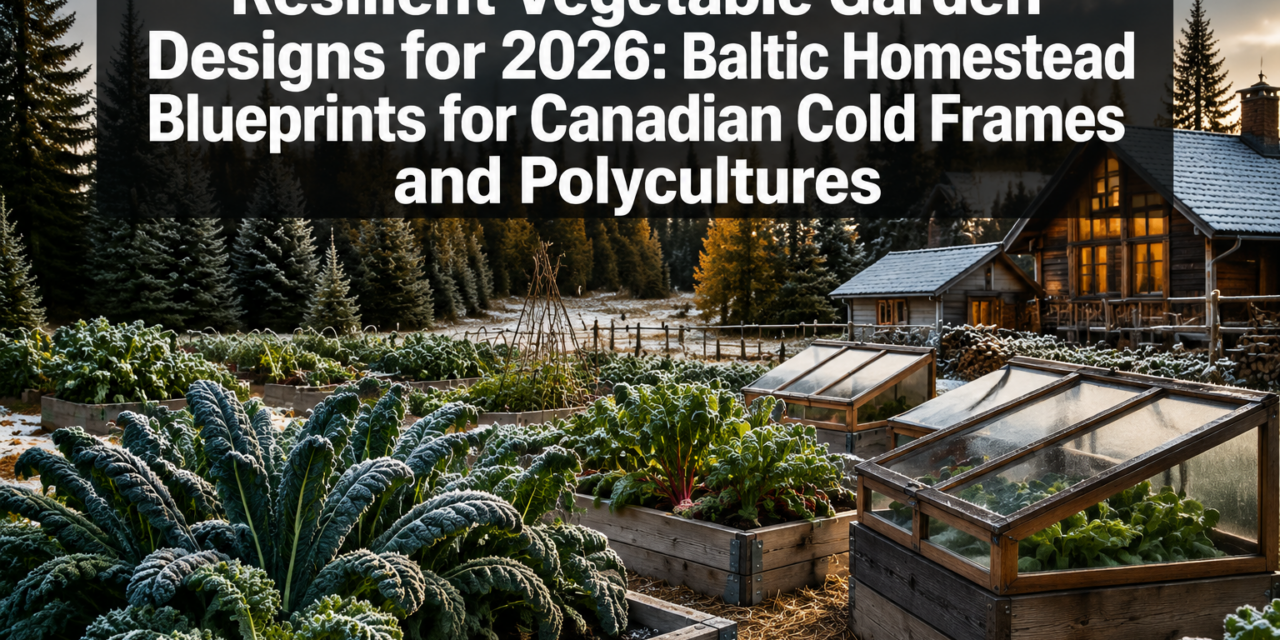
Resilient Vegetable Garden Designs for 2026: Baltic Homestead Blueprints for Canadian Cold Frames and Polycultures
Last updated: May 13, 2026
Quick Answer: Resilient Vegetable Garden Designs for 2026: Baltic Homestead Blueprints for Canadian Cold Frames and Polycultures combine modular raised beds, timber-framed cold frames, and diverse polyculture plantings drawn from Baltic homesteading traditions to help Canadian growers produce food year-round despite hard frosts, flooding, and unpredictable springs. The approach works best for USDA/NRC hardiness zones 3–6 and suits both rural homesteads and urban backyards with at least 20 square metres of growing space.
Key Takeaways
- Baltic homesteading principles — modular beds, perennial integration, and wind management — translate directly to Canadian cold climates.
- Cold frames extend the growing season by an estimated 6–10 weeks on either end of the calendar year (based on typical Canadian zone 4–5 frost dates).
- Polyculture plantings (mixing crops in one bed) reduce pest pressure and improve soil health without chemical inputs.
- Windbreak vegetables like Jerusalem artichoke and tall kale act as living barriers that also produce food.
- Modular bed layouts allow growers to adapt quickly after flood events or late-season freezes.
- Perennial vegetables — asparagus, lovage, sorrel — anchor the design and require less replanting each year.
- The most common mistake is building cold frames that trap too much moisture; ventilation gaps are non-negotiable.
- Start small: one 4×8 ft cold frame and two polyculture beds is enough to test the system before scaling.
What Makes Baltic Homestead Designs Different from Standard Canadian Garden Layouts?
Baltic homesteading prioritizes food security over aesthetic uniformity. Where a standard Canadian kitchen garden might plant crops in single-species rows, a Baltic-inspired design layers annuals, perennials, and self-seeders in the same bed — a practice that mirrors how traditional Estonian, Latvian, and Lithuanian smallholders managed short, intense growing seasons for centuries.
The key differences:
| Feature | Standard Canadian Layout | Baltic Homestead Design |
|---|---|---|
| Bed structure | Long single rows | Modular 1.2m × 2.4m blocks |
| Crop diversity per bed | 1–2 species | 4–8 species |
| Season extension | Occasional row cover | Permanent cold frames |
| Perennials | Rare | Integrated throughout |
| Wind management | Fencing | Edible windbreak plants |
Choose the Baltic approach if your site faces hard springs, wet summers, or early fall frosts — conditions that punish monoculture plantings but suit diverse, layered systems.
How Do Canadian Cold Frames Work in a Resilient Garden Design?
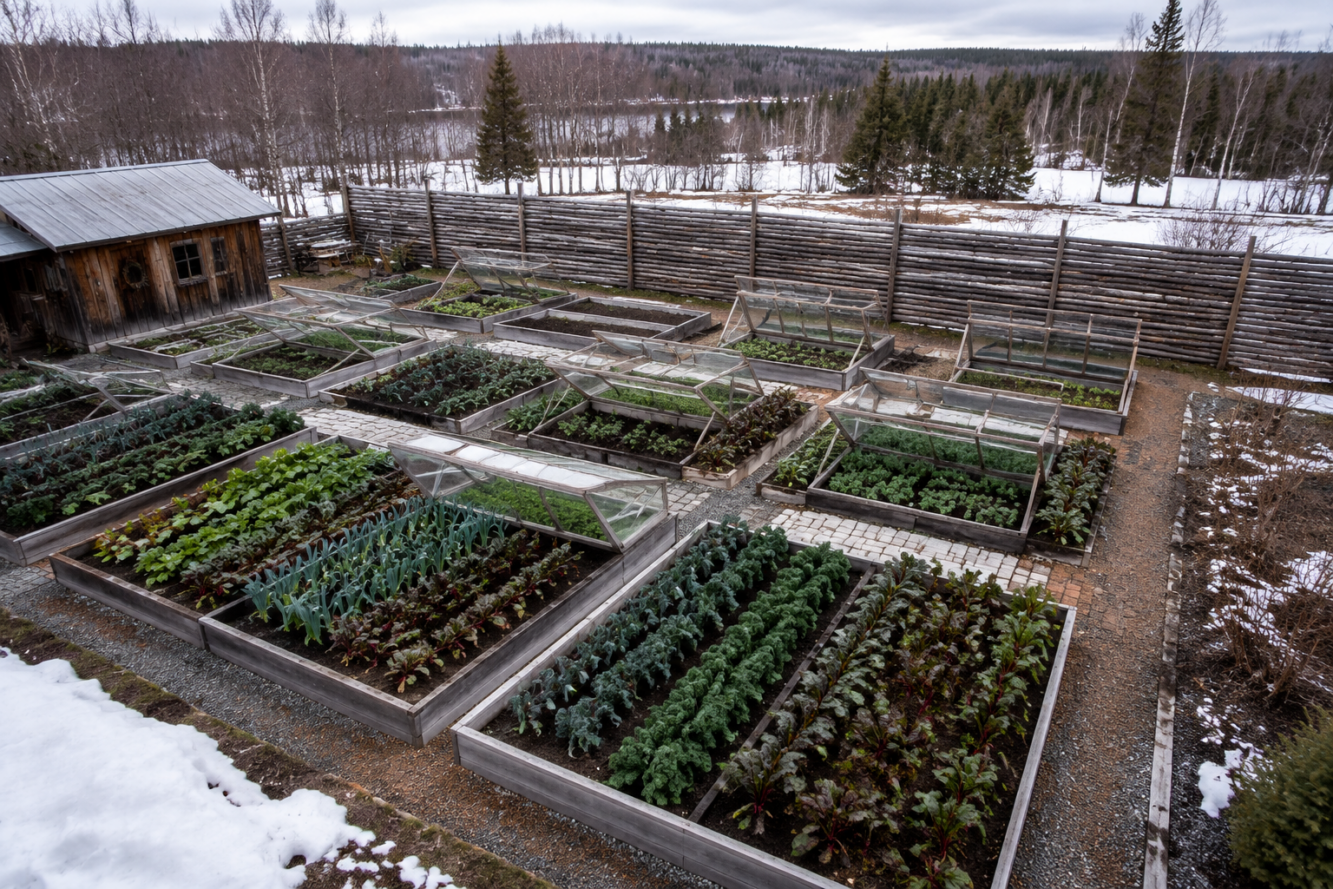
Cold frames are unheated, low-profile structures with transparent lids that trap solar heat and protect plants from frost. In the context of Resilient Vegetable Garden Designs for 2026: Baltic Homestead Blueprints for Canadian Cold Frames and Polycultures, they serve as the backbone of year-round production.
Basic cold frame specs for Canadian conditions:
- Frame material: Untreated cedar or recycled lumber (minimum 38mm thick for insulation)
- Lid material: Twin-wall polycarbonate (6mm) outperforms glass in freeze-thaw cycles
- Slope: Angle the lid 10–15° south-facing to maximize winter sun capture
- Ventilation: Install a prop stick or automatic vent opener; without airflow, plants cook on sunny February days even in zone 4
Seasonal use schedule (zone 4–5 estimate):
- March: Start spinach, mâche, and overwintered kale under closed frames
- April–May: Harden off transplants; open frames during the day
- October–November: Protect late carrots, leeks, and Asian greens
- December–February: Overwinter hardy varieties like ‘Vates’ kale and ‘Merveille de Quatre Saisons’ lettuce
“A cold frame is not a greenhouse — it’s a buffer. It buys you weeks, not months. Design your whole garden around those extra weeks and the math changes completely.”
Which Polyculture Combinations Work Best for Canadian Homesteads?
Polycultures pair crops that benefit each other through nutrient sharing, pest confusion, or physical support. For Canadian growers dealing with cold snaps and unpredictable weather, diverse plantings also mean that if one crop fails, others fill the gap.
Top Baltic-inspired polyculture combinations for Canada:
- Kale + Dill + Nasturtium — kale anchors the bed, dill attracts beneficial wasps, nasturtiums deter aphids and are fully edible
- Leek + Carrot + Lettuce — classic “three-layer” planting; leeks repel carrot fly, lettuce fills gaps and is harvested first
- Broad Bean + Borage + Spinach — broad beans fix nitrogen, borage attracts pollinators, spinach uses cool shoulder-season soil
- Jerusalem Artichoke + Climbing Bean + Squash — a tall-crop windbreak trio that also produces heavily
Common mistake: Planting too densely without accounting for mature plant size. Space polycultures based on the largest plant’s mature spread, not seedling size.
How Should Modular Bed Layouts Be Arranged for Flood and Frost Resilience?
Resilient Vegetable Garden Designs for 2026: Baltic Homestead Blueprints for Canadian Cold Frames and Polycultures treat the garden as a grid of independent modules, not one continuous plot. This matters enormously after a flood or late freeze: one damaged module doesn’t destroy the whole system.
Layout principles:
- Raise all beds at least 30cm above grade to improve drainage and warm soil faster in spring
- Leave 60cm paths between beds for wheelbarrow access and to prevent soil compaction
- Orient beds east–west to maximize sun exposure across the full bed width
- Place cold frames on the south edge of each module cluster so they don’t shade adjacent beds
- Position tall windbreak crops (Jerusalem artichoke, sunflower, tall kale) on the north and west edges
For homesteads near Georgian Bay or other flood-prone areas, growers can explore local land and property considerations when planning permanent raised infrastructure.
Which Perennial Vegetables Anchor a Baltic-Inspired Canadian Garden?
Perennials are the foundation of any truly resilient system. They return each year without replanting, build deep root systems that resist drought and compaction, and improve soil biology over time.
Best perennial vegetables for Canadian zones 3–6:
- 🌿 Asparagus (zones 3–8): Takes 3 years to establish but produces for 20+ years
- 🌿 Lovage (zones 3–9): Celery-flavoured leaves and stems; grows 1.5m tall and acts as a windbreak
- 🌿 Sorrel (zones 4–9): First green of spring; extremely cold-hardy
- 🌿 Horseradish (zones 3–9): Vigorous, pest-resistant, and productive
- 🌿 Rhubarb (zones 3–8): Doubles as a structural plant at bed edges
Integrating these into a polyculture design means dedicating one or two permanent beds that are never tilled. Annual crops rotate around them. This mirrors how Baltic smallholders historically structured their kitchen gardens — perennials at the edges, annuals in the centre.
Understanding biodiversity principles can also help growers appreciate why perennial integration supports long-term ecosystem health in the garden.
What Are the Biggest Mistakes Canadian Growers Make with Cold Frames and Polycultures?
Even well-planned gardens fail when a few basic rules are ignored. For anyone following Resilient Vegetable Garden Designs for 2026: Baltic Homestead Blueprints for Canadian Cold Frames and Polycultures, these are the errors that cost the most time and money.
Top mistakes and fixes:
| Mistake | Why It Fails | Fix |
|---|---|---|
| No cold frame ventilation | Plants overheat and bolt | Install auto vent openers |
| Monoculture beds next to polycultures | Pest pressure concentrates | Interplant every bed |
| Tilling perennial zones | Destroys root networks | Mark permanent beds clearly |
| Planting windbreak crops too late | No protection in year one | Plant Jerusalem artichoke in spring, year one |
| Ignoring drainage | Root rot after spring thaw | Raise beds, add gravel base |
Growers in Ontario’s cottage country and Georgian Bay region who want to understand winter hardiness and cold-weather planning for their properties will find the same principles apply to garden infrastructure.
Conclusion: Actionable Next Steps for 2026
Resilient Vegetable Garden Designs for 2026: Baltic Homestead Blueprints for Canadian Cold Frames and Polycultures offer a practical, proven framework for Canadian growers who want consistent harvests despite climate variability. The system works because it borrows from centuries of Baltic smallholder experience and applies it to Canadian realities: hard winters, wet springs, and short growing windows.
Start here in 2026:
- Map your site — identify north/west wind exposure, low flood-risk spots, and south-facing slopes
- Build one cold frame using cedar and twin-wall polycarbonate before the fall season
- Plant one polyculture bed this season using the kale + dill + nasturtium combination
- Add one perennial anchor — sorrel or rhubarb are the easiest starting points
- Plan your modular grid on paper before expanding; each module should be self-sufficient
For those interested in the broader benefits of sustainable food production at the homestead scale, this design system is a strong starting point. Growers who also keep bees will find that beekeeping alongside polyculture gardens creates a mutually reinforcing system where pollinators and diverse crops support each other throughout the season.
The goal is not a perfect garden. It’s a garden that keeps producing even when conditions aren’t perfect — and that’s exactly what the Baltic blueprint delivers.
FAQ
Q: What is a cold frame and do I need one in Canada? A cold frame is a low, unheated box with a transparent lid that protects plants from frost. In Canada’s zones 3–6, it’s one of the most cost-effective tools for extending the growing season by 6–10 weeks.
Q: What does “polyculture” mean in vegetable gardening? Polyculture means growing multiple crop species in the same bed at the same time. It reduces pest pressure, improves soil health, and increases total yield per square metre compared to single-crop rows.
Q: How is a Baltic homestead design different from permaculture? Both share perennial integration and diversity principles, but Baltic homestead design is more structured and production-focused, using modular beds and cold frames rather than food forest layers. It’s better suited to smaller urban or suburban plots.
Q: Can these designs work in zone 3 (e.g., northern Ontario or the Prairies)? Yes, with adjustments. Use double-walled cold frames, add straw insulation around frame bases in winter, and prioritize the hardiest perennials (asparagus, horseradish, sorrel). Avoid tender perennials like lovage below zone 4 without winter mulching.
Q: How much does a basic cold frame cost to build in Canada? A single 4×8 ft cedar cold frame with twin-wall polycarbonate lid costs an estimated $80–$150 CAD in materials (as of 2026, based on typical lumber and polycarbonate pricing). Pre-built units run $200–$400+.
Q: What is the best windbreak vegetable for a Canadian homestead? Jerusalem artichoke is the top choice: it grows 2–3 metres tall, spreads reliably, produces edible tubers, and returns every year without replanting. Plant it on the north and west edges of the garden.
Q: How many polyculture combinations should a beginner start with? One or two combinations in the first season. Master spacing and timing before adding complexity. The kale + dill + nasturtium trio is the most forgiving for beginners.
Q: Do raised beds need a bottom or can they sit directly on the ground? Most raised beds can sit directly on the ground. Add a layer of hardware cloth underneath if gopher or vole pressure is high. A gravel base layer (5–10cm) improves drainage significantly in clay-heavy Canadian soils.
Meta Title: Resilient Vegetable Garden Designs 2026: Baltic Cold Frame Blueprints
Meta Description: Discover Baltic homestead blueprints for Canadian cold frames and polycultures in 2026. Modular beds, windbreak crops, and perennials for year-round resilient harvests.