














Low-Input Vegetable Gardening: Why Cabbage and Brassicas Are the Smart 2026 Choice for Busy Gardeners
Last updated: May 1, 2026
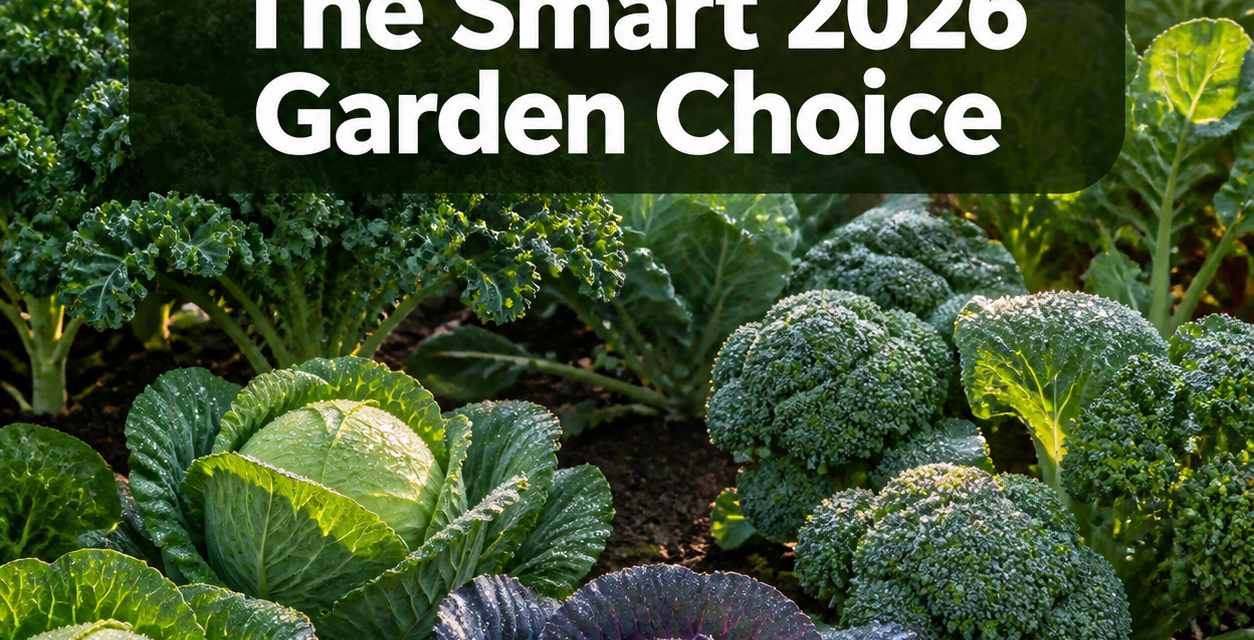
Quick Answer: Cabbage and brassicas are ideal for low-input vegetable gardening because they tolerate frost, mature in roughly 70 days, and need only about 1 inch of water per week [3]. For busy gardeners in 2026, these crops deliver reliable harvests without complex care routines, making them one of the most practical choices available this season.
Key Takeaways
- 🥬 Cabbage matures in approximately 70 days and tolerates late spring frosts, extending the growing window [3]
- 💧 Brassicas need only 1 inch of water per week, keeping irrigation simple and affordable [3]
- 🌱 Start seeds indoors 6 weeks before transplanting or buy disease-free transplants to skip nursery headaches [3]
- 📐 Space plants 12–16 inches apart in rows 30 inches wide; closer spacing simply produces smaller heads [3]
- 🧪 Maintain soil pH between 6.0 and 6.8 to block clubroot disease before it starts [3]
- 🔄 Rotate brassicas to a new bed every 2–3 years to break pest and disease cycles [3]
- 🐛 Use Bacillus thuringiensis (Bt) when caterpillar damage reaches 20% of plants — no harsh chemicals needed [2]
- 📌 The 2026 Pinterest cabbage trend signals mainstream gardener interest in simple, high-yield crops
Why Are Brassicas Trending for Low-Input Vegetable Gardening in 2026?
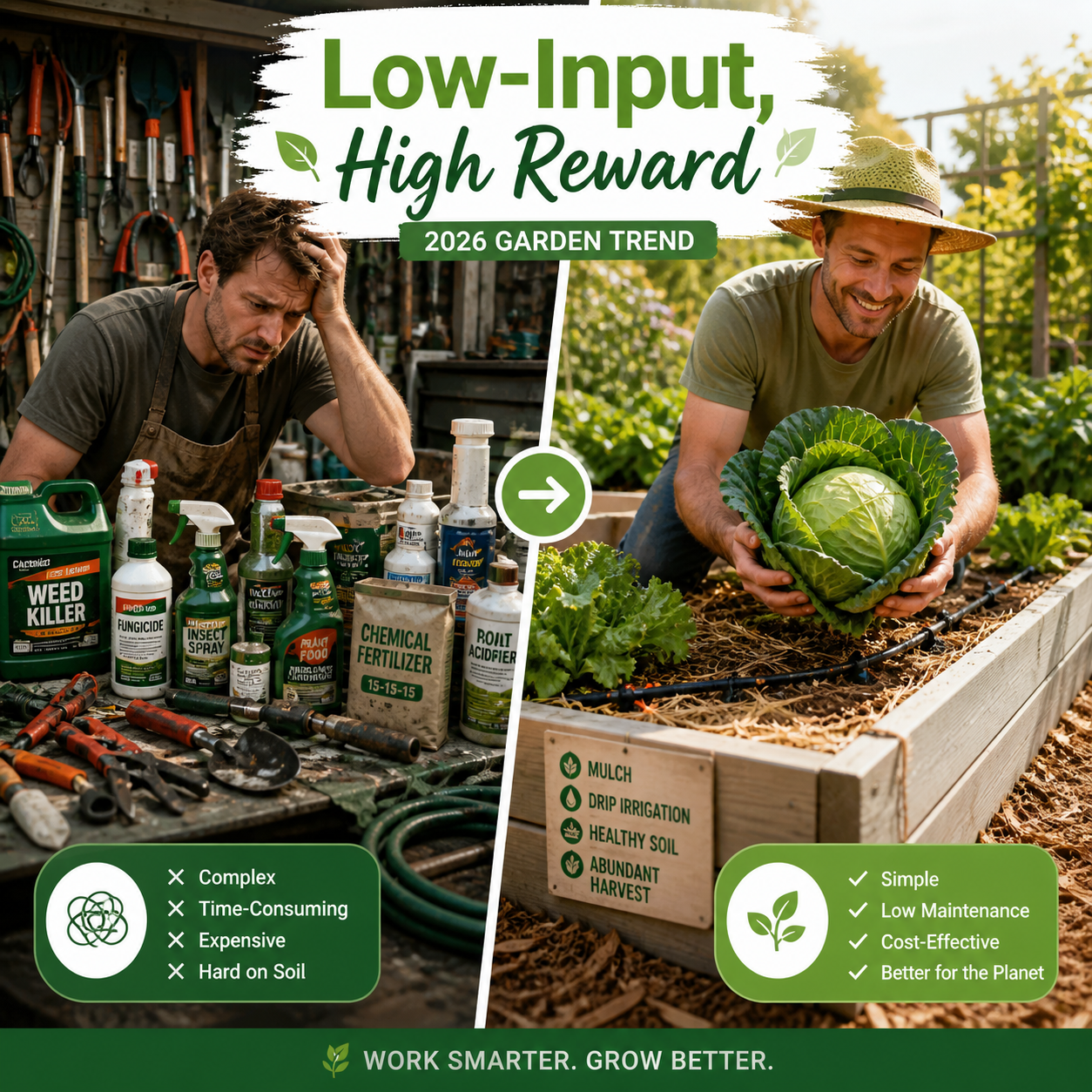
Cabbage searches on Pinterest surged heading into 2026, reflecting a broader shift: home gardeners want reliable food crops without elaborate systems. Low-input vegetable gardening — growing food with minimal water, fertilizer, and pest management — fits that demand exactly, and brassicas sit at the center of it.
The brassica family includes cabbage, broccoli, kale, Brussels sprouts, kohlrabi, and cauliflower. These crops share a cool-season preference, frost tolerance, and a relatively short path from seed to harvest. For anyone balancing work, family, and a garden plot, that combination is genuinely practical.
“The best garden crop for a busy schedule is one that keeps growing even when you can’t be there every day — and brassicas do exactly that.”
What Makes Cabbage Specifically a Smart 2026 Choice?
Cabbage grows best at average temperatures between 60–75°F and handles late spring frosts without significant damage [3]. That frost tolerance means gardeners can plant earlier in spring and harvest later into fall, stretching the productive season without any extra infrastructure.
Key advantages for busy gardeners:
- Fast turnaround: ~70 days from transplant to harvest [3]
- Flexible harvest window: Heads hold in the ground for several weeks after maturity
- Dual-season planting: Spring and fall crops are both viable in most Canadian and northern U.S. climates
- Minimal daily attention: No staking, trellising, or daily watering required
Choose cabbage if you want a crop that tolerates neglect for a few days, stores well after harvest, and works in cool climates like Ontario or the Canadian Shield region.
How Do You Set Up Soil and Spacing for Low-Effort Brassica Growing?
Proper soil prep is the single biggest factor in reducing ongoing maintenance. Get it right once, and the crop largely takes care of itself.
Soil setup checklist:
- Test pH and target 6.0–6.8 — below 6.0 invites clubroot, a destructive soilborne disease [3]
- Work in compost or aged manure to improve drainage and moisture retention [3]
- Apply mulch over the bed to keep soil cool and moist, reducing watering frequency [3]
- Avoid fields where any cole crop grew the previous year [3]
Spacing guide:
| Crop | In-Row Spacing | Between Rows | Head Size Result |
|---|---|---|---|
| Cabbage (large) | 16 inches | 30 inches | Full-size heads |
| Cabbage (small/baby) | 12 inches | 30 inches | Smaller, tender heads |
| Broccoli | 18 inches | 30 inches | Standard crowns |
| Kale | 12 inches | 24 inches | Continuous leaf harvest |
Closer spacing isn’t a mistake — it’s a deliberate choice for smaller heads or higher plant density [3].
What Is the Watering and Feeding Strategy for Minimal Work?
Brassicas have shallow root systems, so consistent moisture matters more than volume. Aim for 1 inch of water per week, either from rain or irrigation [3]. A simple drip line or soaker hose on a timer handles this with no daily effort.
On feeding: cabbage is a heavy feeder, meaning soil nutrition directly affects head size and quality [1]. The low-input approach here is to front-load nutrients at planting rather than applying repeated fertilizer doses mid-season.
- Add a balanced slow-release granular fertilizer at transplant time
- Side-dress with compost at 4 weeks if growth looks slow
- Avoid excess nitrogen late in the season — it encourages leafy growth over head formation
For gardeners interested in cauliflower soup and other brassica-based recipes, growing your own supply makes the economics even more compelling.
How Do You Start Plants Without Overcomplicating It?
Direct seeding cabbage outdoors is not recommended — germination is inconsistent and seedlings are vulnerable [3]. Two better options:
- Buy transplants: Purchase disease-free seedlings from a reputable nursery. Fastest path, lowest risk.
- Start seeds indoors: Sow seeds approximately 6 weeks before your planned transplant date under grow lights or in a sunny window [3].
Brassicas need cool nighttime temperatures during early development to trigger vernalization — the process that enables proper head formation [2]. Starting too late in warm conditions can disrupt this, so timing matters.
For gardeners in Canada and northern zones, a late March indoor start typically aligns with a May outdoor transplant, well within the cool-season window.
What Pests and Diseases Should You Watch For — and How Do You Handle Them Simply?
The main threats to brassicas are caterpillars (cabbage loopers, imported cabbageworm), aphids, and soilborne diseases like clubroot and black rot.
Low-input pest management:
- Caterpillars: Apply Bacillus thuringiensis (Bt) when roughly 20% of plants show feeding damage [2]. Bt is organic, safe for pollinators, and effective against the full caterpillar complex.
- Aphids: A strong spray of water knocks most colonies off. Introduce beneficial insects by planting nearby flowers.
- Bacterial spot and leaf blight: Use copper-based fungicides during cool, wet periods [1]. These are widely available and low-toxicity.
Disease prevention (easier than treatment):
- Rotate brassicas to a new bed every 2–3 years [3]
- Remove crop debris promptly after harvest
- Avoid overhead watering, which spreads fungal spores
The carbon cycle in healthy soil also plays a role — well-composted beds with active microbial life naturally suppress some soilborne pathogens.
Conclusion: Start Simple, Start with Brassicas
Low-input vegetable gardening in 2026 doesn’t mean low yields. Cabbage and brassicas prove that with the right crop selection, a gardener can spend less time managing and more time harvesting.
Actionable next steps:
- Test your soil pH this week — a basic kit costs under $15 and prevents the most common brassica problems
- Order or start seeds 6 weeks before your last frost date, or buy transplants locally
- Set up a soaker hose on a simple timer to automate the 1-inch-per-week watering requirement
- Plan your rotation now — mark which beds held brassicas in 2025 so you don’t repeat the same spot
- Keep Bt on hand before caterpillar season peaks — early treatment is far easier than late intervention
Brassicas reward preparation and punish neglect of the basics. Get the soil right, time the planting correctly, and rotate the crop — and the rest largely handles itself.
FAQ
Q: Can brassicas grow in containers?
Yes. Kale and smaller cabbage varieties work well in containers at least 12 inches deep and wide. Larger heads need more root space and do better in ground beds.
Q: How cold can cabbage tolerate?
Cabbage handles light frosts and temperatures down to around 28°F (-2°C) for short periods. It grows best between 60–75°F [3].
Q: Is brassica gardening suitable for beginners?
Yes, especially cabbage and kale. They’re forgiving of minor watering inconsistencies and don’t require staking or complex pruning.
Q: What’s the difference between low-input and organic gardening?
Low-input gardening focuses on minimizing all inputs — water, fertilizer, pesticides, and labor. Organic gardening focuses on avoiding synthetic chemicals. The two overlap but aren’t identical.
Q: How do I know when cabbage is ready to harvest?
Squeeze the head gently. A firm, dense head that doesn’t compress easily is ready. Most varieties mature around 70 days after transplanting [3].
Q: Can I grow brassicas in the same spot every year?
No. Repeat planting in the same location builds up clubroot and other soilborne diseases. Rotate to a new bed every 2–3 years [3].
Q: What’s the easiest brassica for a first-time gardener?
Kale is the most forgiving — it tolerates heat, cold, and irregular watering better than cabbage or broccoli. Cabbage is the best choice if you want a single harvestable head.
Q: Do brassicas attract butterflies?
Yes — butterflies like the cabbage white lay eggs on brassica leaves. The caterpillars that hatch are the primary pest. Row covers at transplant time prevent egg-laying without chemicals.
References
[1] Brassica Cabbage Management – https://www.greenlife.co.ke/brassica-cabbage-management/
[2] 2021 Considerations Brassica Bonanza – https://blog-fruit-vegetable-ipm.extension.umn.edu/2021/03/2021-considerations-brassica-bonanza.html
[3] Cabbage A Great Addition To A Spring Garden – https://www.newsandsentinel.com/opinion/local-columns/2026/04/cabbage-a-great-addition-to-a-spring-garden/
Content, illustrations, and third-party video appearing on GEORGIANBAYNEWS.COM may be generated or curated with AI assistance or reproduced pursuant to the fair dealing provisions of the Copyright Act, R.S.C. 1985, c. C-42. Attribution and hyperlinks to original sources are provided in acknowledgment of applicable intellectual property rights. Such referencing is intended to direct traffic to and support the original rights holders’ platforms.