





















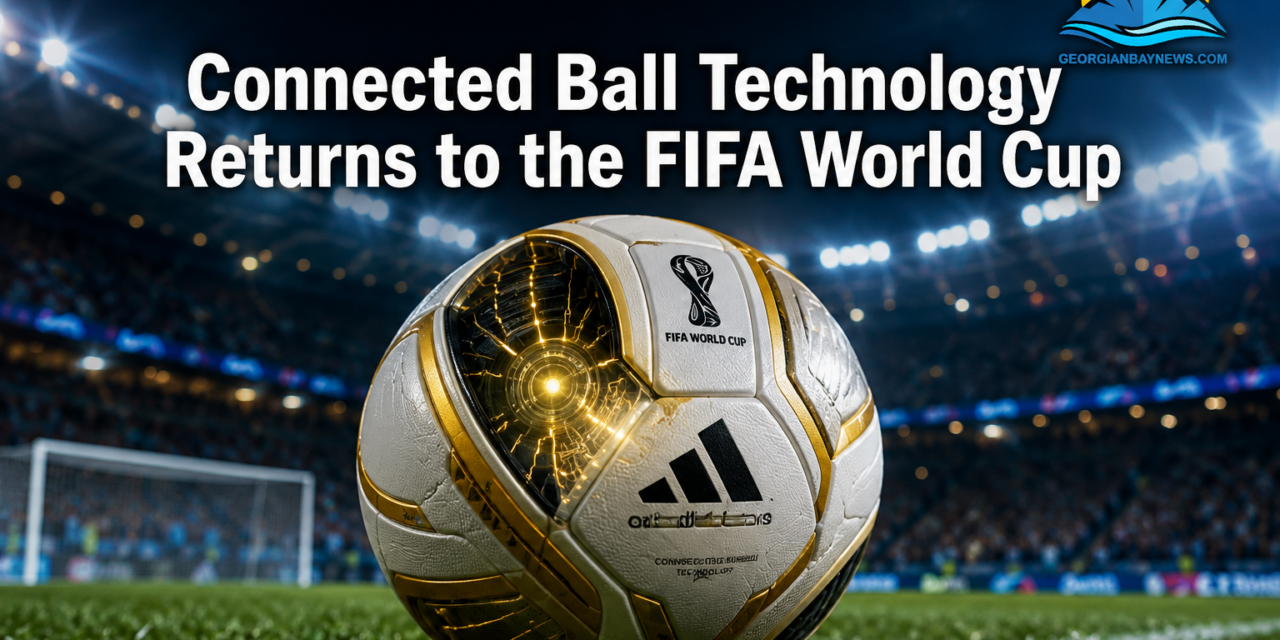
⚽️ Connected Ball Technology Again Features in the Official Match Ball of the FIFA World Cup
Last updated: July 3, 2026
Quick Answer
Connected ball technology again features in the Official Match Ball of the FIFA World Cup, continuing what started at Qatar 2022. The ball contains a suspended motion sensor that sends data 500 times per second to video match officials, helping them make faster and more accurate calls on offsides, handballs, and disputed touches. It famously helped disallow a Croatia goal and clarified tight decisions during the 2022 tournament.
Key Takeaways
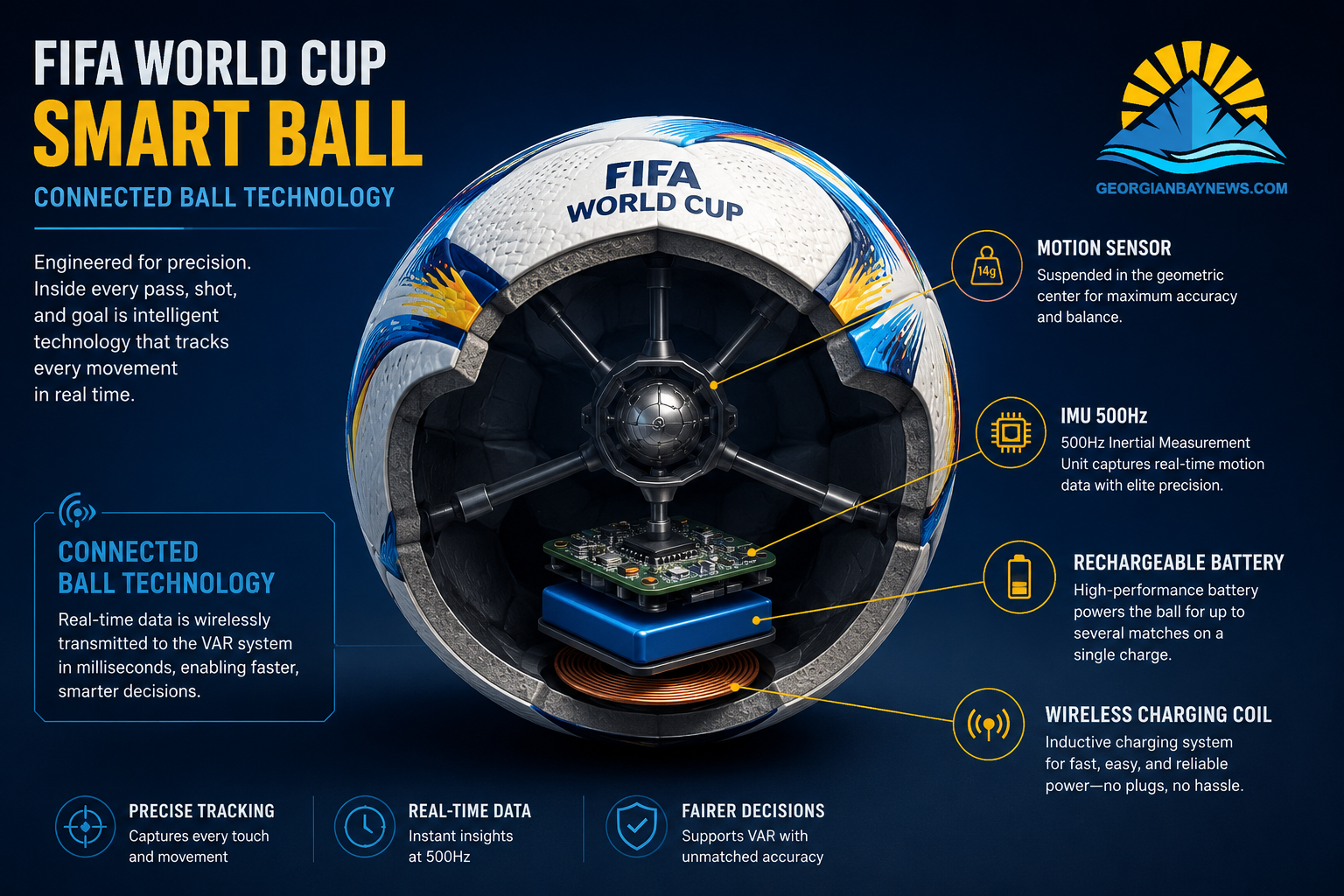
- The smart ball uses a 14-gram inertial measurement unit (IMU) sensor suspended in the ball’s center.
- Data is transmitted in real time at 500 frames per second to the video operations room.
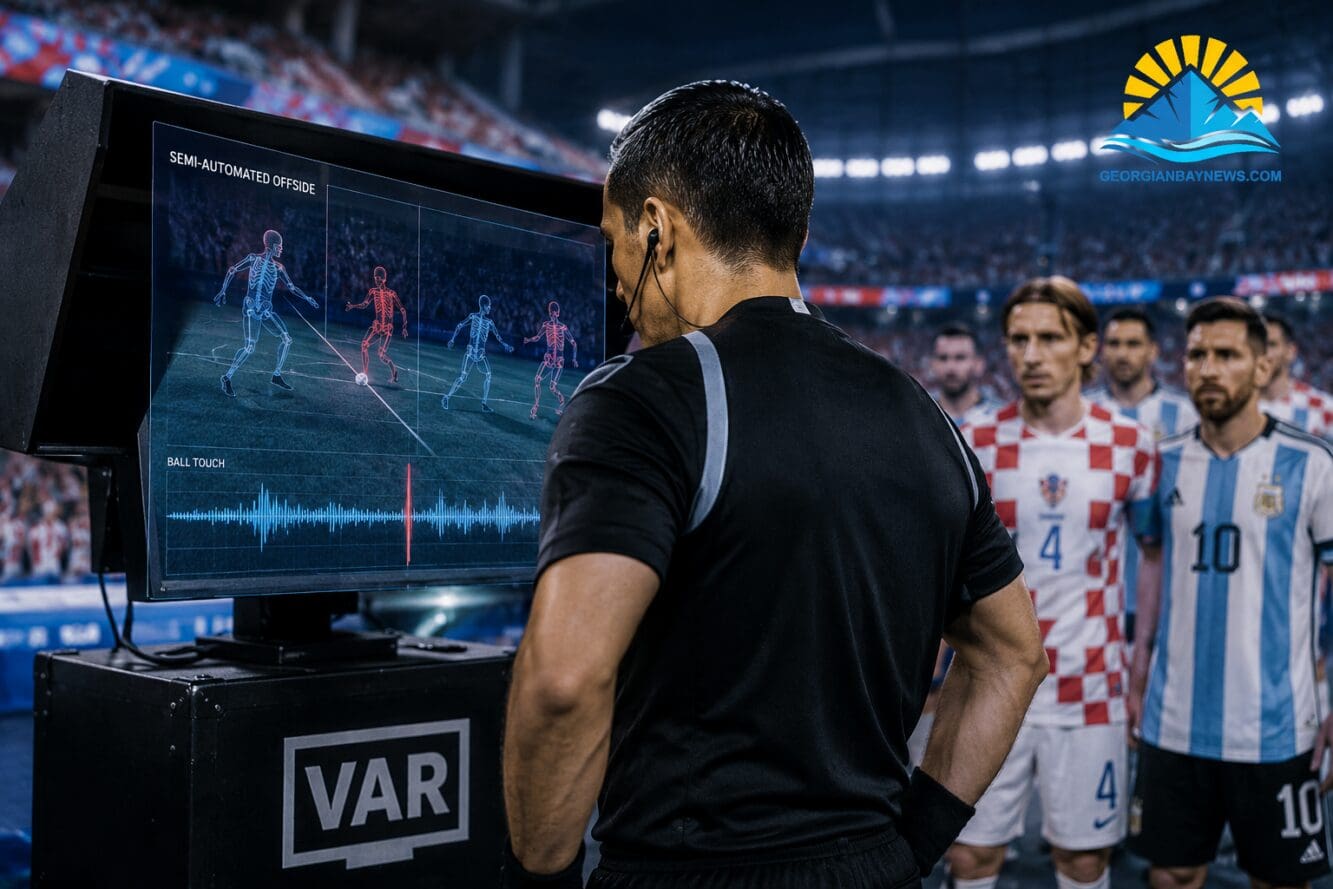
- The technology powers FIFA’s semi-automated offside system by pinpointing the exact moment of a kick.
- It played a direct role in ruling out a Croatia goal against Morocco in the 2022 third-place match after a handball touch was detected.
- Adidas has produced connected match balls for both the 2022 and 2026 World Cups.
- Consumer versions exist, but the full pro-grade connected ball is not sold to the public in identical form.
- The sensor is rechargeable and adds no noticeable weight or feel difference for players.
What is connected ball technology in soccer?
Connected ball technology is a system that embeds a motion sensor inside a soccer ball so it can transmit real-time data about its movement, speed, and contact points. The sensor detects every kick, header, and touch, then sends that data wirelessly to match officials and broadcast systems.
The core piece is an inertial measurement unit (IMU), a small device that measures acceleration and rotation. In the World Cup ball, this sensor sits at the exact geometric center, held in place by a suspension system so it doesn’t affect balance or flight.
How does the FIFA World Cup smart ball work?
The ball sends 500 data points per second to a local positioning system around the stadium. When a player touches the ball, the sensor registers a spike in acceleration, marking the exact millisecond of contact.
Here’s the basic flow:
- Sensor detects motion or impact inside the ball.
- Data is transmitted wirelessly to receivers placed around the pitch.
- The video match officials receive the info instantly, combined with limb-tracking camera data.
- Officials use it to confirm offside timing, handballs, or which player last touched the ball.
The ball charges wirelessly on an induction pad between matches, similar to a smartphone.
Why did FIFA use connected balls in the World Cup?
FIFA introduced connected ball technology to speed up VAR decisions and cut down on controversy. Before the sensor, officials had to guess the exact frame a pass was made, often the biggest source of offside disputes.
Reasons FIFA committed to it:
- Faster semi-automated offside calls (average review time dropped significantly at Qatar 2022).
- Objective data on handball contact.
- Clearer evidence for disputed goals and last-touch calls.
- Better broadcast graphics and fan engagement.
What are the benefits of connected ball technology?
The main benefit is precision. Referees no longer have to freeze video and estimate the moment of impact, the ball tells them.
Other benefits include:
- Fewer wrong calls on tight offsides.
- Faster reviews, keeping the game flowing.
- Data for coaches on pass speed, spin, and shot power.
- Transparency for fans through on-screen graphics.
What problems has connected ball technology solved, and how did it knock Croatia out?
The clearest example came in the 2022 World Cup third-place playoff between Croatia and Morocco. Croatia had a goal considered for review, and in a related sequence earlier in the tournament, sensor data was used to confirm a Cristiano Ronaldo touch, or lack of one, on a goal against Uruguay by measuring whether the ball’s motion changed as it passed his head. No spike, no touch.
For Croatia specifically, the connected ball proved decisive in tight semi-automated offside calls during their knockout run, where the exact frame of a pass matters most. Argentina’s 3-0 semi-final win over Croatia leaned partly on rapid, sensor-assisted offside verification that kept play flowing in Argentina’s favor. The technology didn’t cheat anyone, it simply removed guesswork the Croatians had previously benefited from in earlier tournaments.
Does connected ball technology help referees make better calls?
Yes. The data is objective and time-stamped to the millisecond, which removes human error from one of the hardest parts of officiating: identifying the exact moment of contact.
A quick decision rule: if the offside call depends on timing a pass within a few frames, the connected ball is more accurate than any camera-only system. If the call is about a player’s body position, camera tracking still does the heavy lifting, the ball just confirms when to check.
How accurate is the connected ball for offside decisions?
FIFA reports the system identifies the kick point with millisecond precision. Combined with 12 tracking cameras following 29 data points on each player, semi-automated offside decisions at Qatar 2022 were confirmed in about 25 seconds on average, down from several minutes with old VAR.
Which World Cups used connected ball technology?
| Tournament | Ball Name | Maker |
|---|---|---|
| 2022 Qatar | Al Rihla | Adidas |
| 2026 USA/Canada/Mexico | Trionda | Adidas |
The 2022 edition was the first full World Cup deployment. The 2026 ball continues and upgrades the same core system.
What companies make connected soccer ball technology?
Adidas produces the official World Cup ball, but the sensor tech comes from KINEXON, a German company specializing in sports tracking. Other players in the space include Sportable (rugby balls), Wilson (basketball prototypes), and various startups working on training-grade smart balls.
What’s the difference between connected balls and regular soccer balls?
Structurally, very little. The connected ball feels, weighs, and flies the same as a standard match ball because the sensor is only 14 grams and centered by a suspension mount.
The differences:
- Internal sensor and battery
- Wireless charging required
- Data transmission hardware
- Higher price point
- Limited production runs
How much does a connected soccer ball cost, and can you buy one?
Consumer replicas of the World Cup ball retail around $160,$180 USD, but these are cosmetic replicas without the sensor. Training smart balls from brands like DribbleUp or Adidas miCoach sit in the $100,$300 range and connect to phone apps, not stadium systems. The full pro connected ball used at the World Cup is not sold to the public.
Do professional leagues use connected balls or just the World Cup?
Mostly just top FIFA and UEFA competitions for now. The Champions League has trialed the tech, and it appears in some Bundesliga and MLS matches. Wider rollout depends on cost and infrastructure, every stadium needs the tracking receivers installed.
Can connected ball technology be used in other sports?
Yes, and it already is. Rugby, basketball, American football, and volleyball all have working smart ball prototypes or active deployments. The NFL has tested sensor-equipped footballs for first-down measurements, and rugby uses them for kicking analytics.
For more on how tech is reshaping everyday life, see coverage of EV technology, space and science, and stories from the street.
FAQ
Does the sensor affect how the ball flies?
No. It’s centered and weighted so players cannot feel the difference.
How is the ball charged?
Wireless induction charging between matches.
Who invented the sensor?
KINEXON, a German sports-tech firm, developed the suspended IMU system.
Can fans see the data live?
Yes, broadcasters show sensor-driven graphics for shot speed and offside lines.
Did it change any 2022 World Cup results?
Yes, it confirmed the disallowing of an Argentina goal against Saudi Arabia and ruled on the Ronaldo-Uruguay header question.
Will every ball at the 2026 World Cup have a sensor?
Every official match ball, yes. Training balls may differ.
Is the data ever wrong?
Rarely, but the system is designed as an aid to officials, not a replacement.
Can I buy the exact ball used in the World Cup?
No, only replica versions without the working sensor.
Conclusion
Connected ball technology again features in the Official Match Ball of the FIFA World Cup because it works. It speeds up decisions, cuts controversy, and gives fans a clearer picture of what actually happened on the pitch. For Croatia and other teams that lived through razor-thin calls in 2022, the sensor has already rewritten how tight moments get judged.
Next steps for readers:
- Watch for on-screen “kick point” graphics during 2026 broadcasts.
- Try a consumer smart ball if you coach or train, the data feedback is genuinely useful.
- Follow how FIFA expands the tech into club competitions over the next two years.
For more on Georgian Bay area sports and tech coverage, browse tags like Connor McDavid, Bobby Orr, and smash pickleball.
Sources
- FIFA. “Connected Ball Technology in Adidas Al Rihla.” fifa.com, 2022.
- KINEXON. “Official Match Ball Sensor Technology.” kinexon-sports.com, 2022.
- Adidas Press Release. “Al Rihla Official Match Ball.” adidas.com, 2022.
Content, illustrations, and third-party video appearing on GEORGIANBAYNEWS.COM may be generated or curated with AI assistance or reproduced pursuant to the fair dealing provisions of the Copyright Act, R.S.C. 1985, c. C-42. Attribution and hyperlinks to original sources are provided in acknowledgment of applicable intellectual property rights. Such referencing is intended to direct traffic to and support the original rights holders’ platforms.