













The Old World Order on Life Support: Understanding the Seismic Shifts Reshaping Our Future
Picture this: A 78-year-old grandmother in Collingwood sits at her kitchen table, scrolling through news on her tablet, and notices something unsettling. The institutions she trusted her entire life—governments, banks, international organizations—seem to be stumbling. Meanwhile, her grandson is explaining how he just bought property in a “metaverse” she’s never heard of. This isn’t science fiction. This is 2026, and the Old World order that shaped the last century is gasping for breath.
The systems that governed global affairs since World War II—from the United Nations to the World Bank, from traditional media to centralized banking—are experiencing unprecedented challenges. For Canadians, especially seniors who’ve witnessed decades of relative stability, these changes can feel both bewildering and concerning. But understanding what’s happening is the first step toward navigating this transformation with confidence.
Key Takeaways
- 🌍 The Old World order established after WWII is facing its greatest crisis due to technological disruption, shifting power dynamics, and loss of public trust
� Decentralization, digital currencies, and grassroots movements are challenging traditional hierarchies and institutional control
Canadians and local communities have unique opportunities to build resilient, community-focused alternatives during this transition
- 👴 Seniors possess invaluable wisdom and perspective that can guide younger generations through systemic change
- 🔮 The emerging system will likely be more distributed, transparent, and community-oriented than its predecessor
What Exactly Is the Old World Order?
The Post-War Architecture
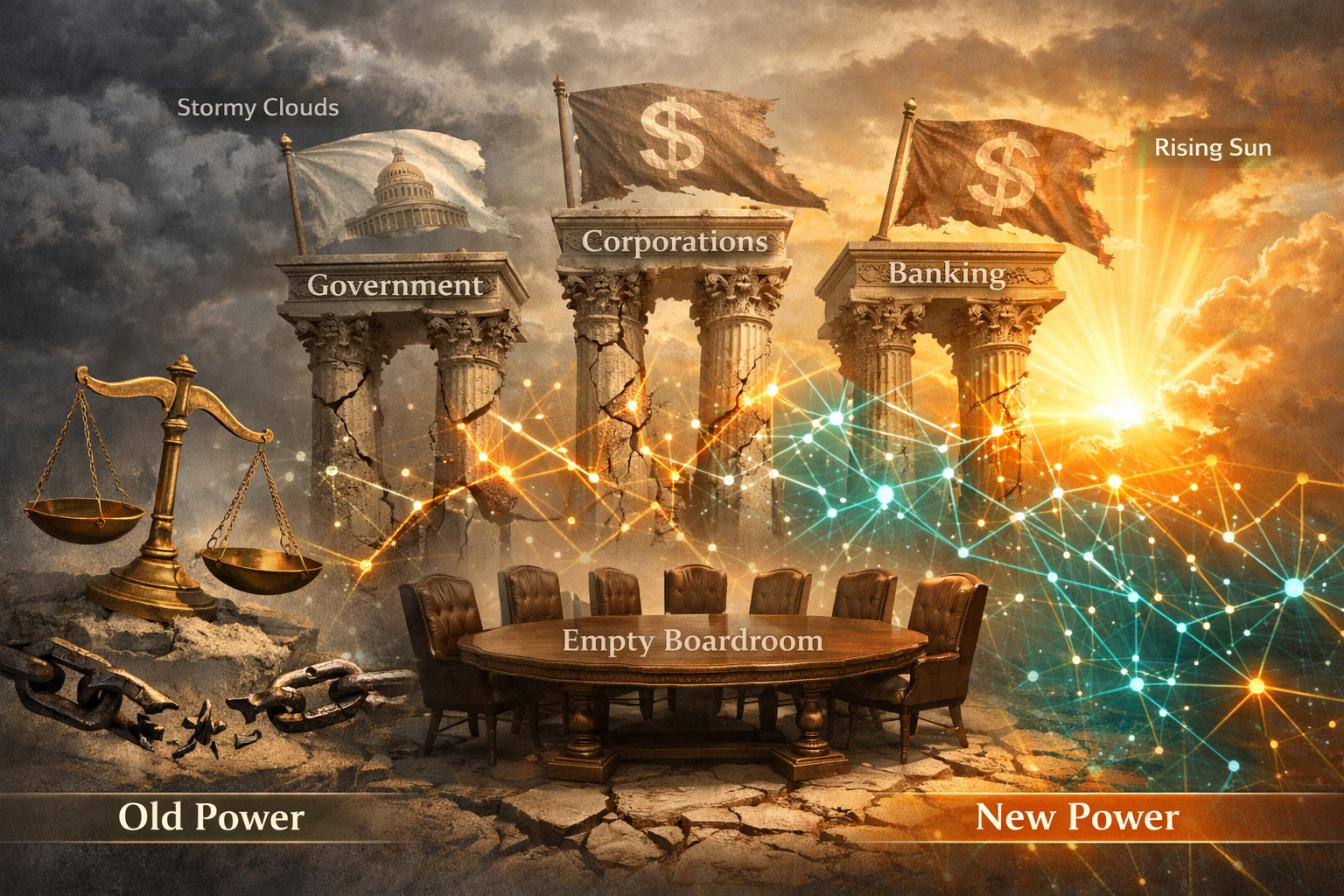
The term “Old World order” refers to the international system established primarily after 1945. Think of it as the rulebook that nations agreed to follow. This included:
- International institutions like the United Nations, International Monetary Fund (IMF), and World Bank
- Economic frameworks based on the U.S. dollar as the global reserve currency
- Power structures dominated by Western nations and traditional media gatekeepers
- Corporate hierarchies with centralized decision-making
- Information control through established news organizations and educational institutions
For decades, this system provided relative stability. A family in Georgian Bay could trust that their savings in Canadian dollars held value, that international agreements prevented major wars between superpowers, and that established institutions would maintain order.
Why “Life Support”?
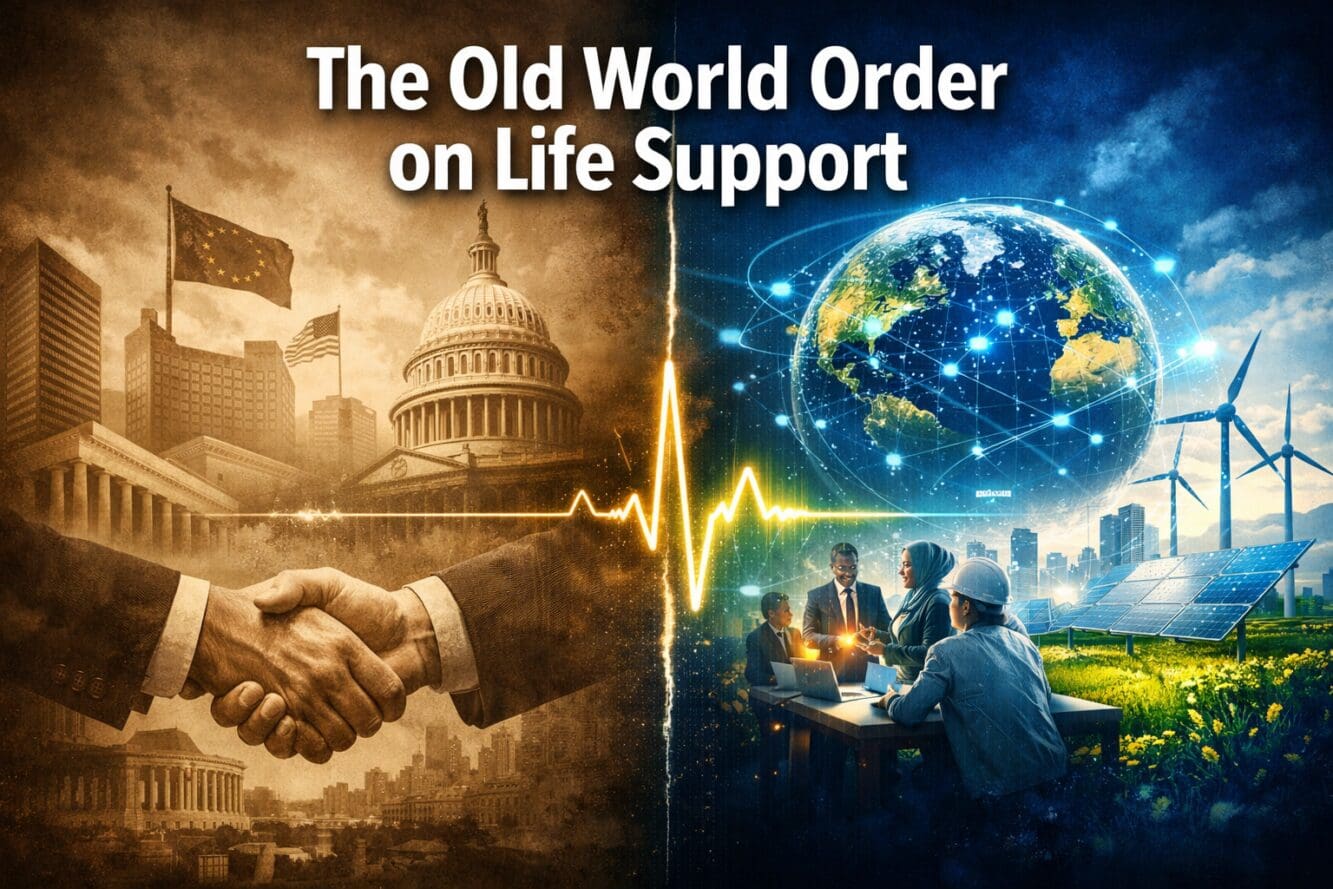
The metaphor isn’t meant to be alarmist—it’s descriptive. Just as a patient on life support can sometimes recover or transition to something new, the Old World order is experiencing critical failures in multiple organ systems simultaneously:
| System Component | Health Status | Primary Symptoms |
|---|---|---|
| Trust in Institutions | Critical | Record-low confidence in government, media, banks [1] |
| Economic Stability | Declining | Inflation, debt crises, wealth inequality |
| Information Control | Failed | Social media disruption, “fake news” proliferation |
| Geopolitical Unity | Weakening | Rising nationalism, trade wars, alliance fractures |
| Environmental Sustainability | Critical | Climate crisis exposing systemic failures |
The Forces Pulling the Plug on the Old World Order
💻 Technological Disruption
Remember when news came from three TV channels and the local newspaper? Those days are gone. Technology hasn’t just changed how we communicate—it’s demolished the gatekeepers who controlled information flow.
Blockchain and cryptocurrencies are challenging central banks’ monopoly on money. While financial wisdom still matters in managing household budgets, the very nature of currency is being reimagined. Decentralized finance (DeFi) allows people to lend, borrow, and invest without traditional banks as intermediaries.
Social media has broken the traditional media’s stranglehold on narrative. For better or worse, anyone can now broadcast to millions. This democratization of voice has exposed how much the old system relied on controlling who could speak and who would be heard.
Artificial Intelligence is automating tasks that once required institutional expertise, from legal research to medical diagnosis. The exclusive knowledge that justified hierarchical power structures is becoming accessible to everyone with an internet connection.
🌊 The Trust Tsunami
Perhaps nothing has weakened the Old World order more than the collapse of public trust. A grandmother who survived the Great Depression could tell her grandchildren to trust banks, work hard, and the system would provide. Today, that advice rings hollow for many.
Consider these trust-eroding events from recent years:
- 2008 Financial Crisis: Banks gambled with the economy, failed, got bailed out, while ordinary people lost homes
- Pandemic Response: Inconsistent messaging and policy failures exposed institutional incompetence
- Media Credibility: Partisan bias and “fake news” accusations from all sides
- Political Dysfunction: Gridlock, corruption scandals, and leaders who seem disconnected from regular people’s lives
A retired teacher in Thornbury shared this perspective: “I taught my students to respect authority and trust the system. Now my own children question everything, and honestly, I can’t blame them. The institutions I believed in have let us down repeatedly.”
🌍 Shifting Global Power
The Old World order was essentially a Western-dominated system, with the United States as the undisputed leader. That’s changing rapidly.
China’s rise has created a genuine alternative power center. Love it or hate it, Beijing offers a different model—one that challenges Western assumptions about democracy, capitalism, and individual rights.
Regional powers like India, Brazil, and Turkey are asserting independence, refusing to simply follow Washington’s lead. Canada itself is exploring new relationships and reconsidering old alliances.
Non-state actors—from tech billionaires to terrorist networks to multinational corporations—now wield power that rivals many nations. When Elon Musk can influence geopolitics through satellite internet or cryptocurrency tweets, traditional diplomatic channels seem almost quaint.
🌱 The Sustainability Crisis
Climate change isn’t just an environmental issue—it’s a legitimacy crisis for the Old World order. The system that promised progress and prosperity has led us to the brink of ecological catastrophe.
Younger generations look at melting glaciers and extreme weather and ask: “What good is your international order if it’s destroying the planet?” This existential challenge demands systemic transformation that the old institutions seem incapable of delivering.
Many communities are taking matters into their own hands, embracing sustainable practices and local resilience rather than waiting for top-down solutions.
What’s Emerging from the Chaos?
The Rise of Decentralization
If the Old World order was about centralization—power concentrated in capitals, wealth in banks, information in newsrooms—the emerging system is radically decentralized.
Cryptocurrency and blockchain technology enables peer-to-peer transactions without intermediaries. While volatile and imperfect, these technologies represent a fundamental challenge to centralized monetary control.
Local food systems are growing as people recognize the fragility of global supply chains. Community gardens, farmers’ markets, and local cooperatives are experiencing a renaissance, especially in regions like Georgian Bay.
Remote work has broken the geographic tyranny that concentrated power in major cities. A software developer can live in Collingwood and work for a company anywhere in the world, fundamentally changing economic geography.
Community governance models are emerging as alternatives to traditional top-down politics. Participatory budgeting, citizen assemblies, and local decision-making are gaining traction.
The Information Revolution
The Old World order controlled information through gatekeepers. The new system is drowning in information, creating different challenges and opportunities.
Citizen journalism means breaking news often comes from smartphones, not newsrooms. Local news sources play an increasingly vital role in cutting through national noise to deliver community-relevant information.
Open-source everything—from software to education to scientific research—is challenging proprietary knowledge systems. Wikipedia, once dismissed by academics, has become humanity’s most comprehensive encyclopedia.
Alternative education platforms are disrupting traditional universities. Why pay $100,000 for a degree when you can learn from world experts online for free or minimal cost?
The Wellness and Wisdom Movement
Interestingly, as institutional authority crumbles, many people are turning to ancient wisdom and holistic approaches. Buddhist principles and stress-relieving practices are experiencing renewed interest, especially among those seeking stability amid chaos.
This isn’t escapism—it’s a recognition that the Old World order’s materialistic, growth-obsessed paradigm has left people spiritually and emotionally depleted. The emerging system may integrate wellness, mental health, and community connection as core values rather than afterthoughts.
What This Means for Canadians and Communities
Opportunities in the Transition
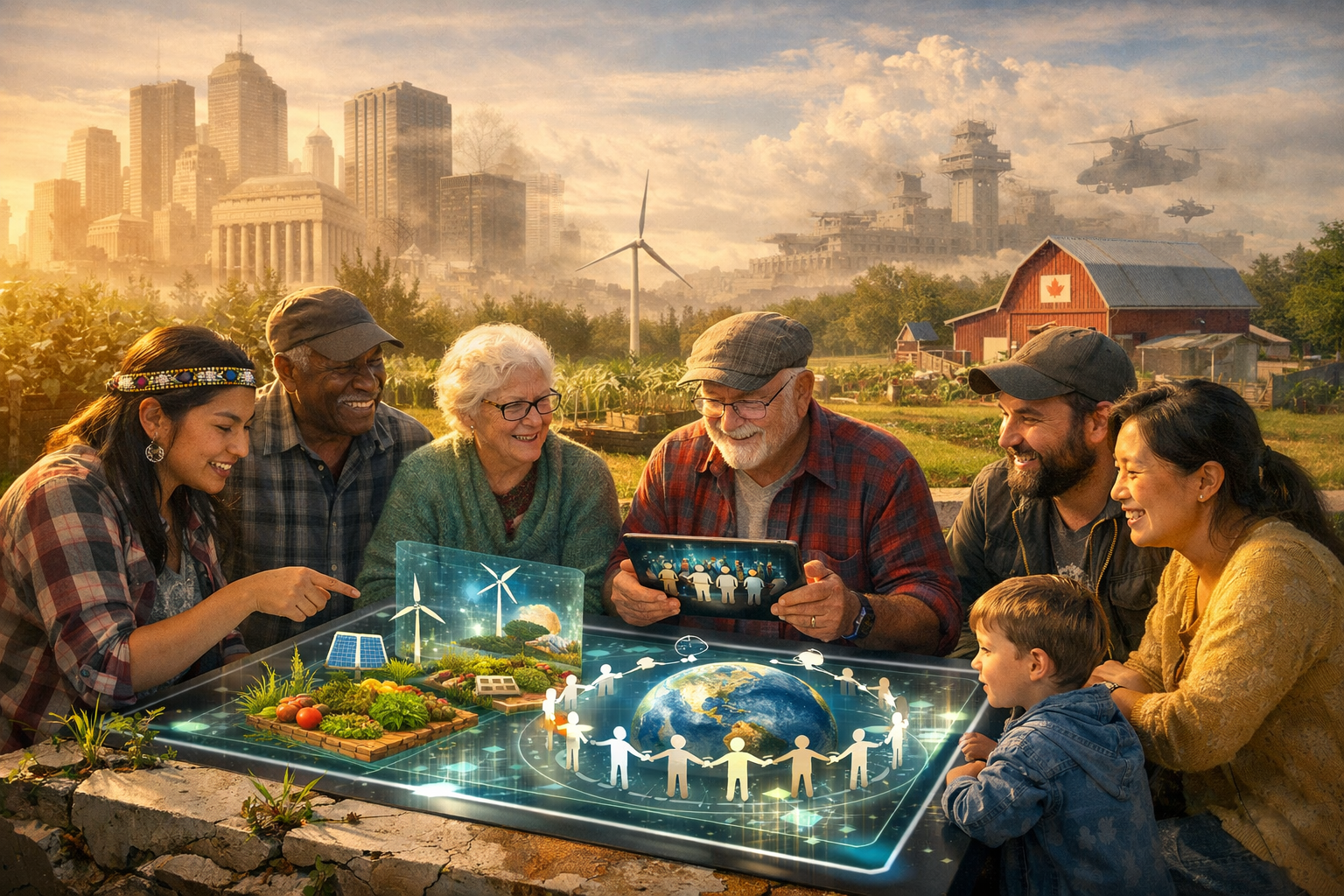
For Canadians, especially in communities like those around Georgian Bay, this transition presents unique opportunities:
🏡 Local resilience: Smaller communities can experiment with alternative systems more easily than massive cities. Local currencies, community-supported agriculture, and cooperative housing models are all more feasible at community scale.
🤝 Intergenerational knowledge transfer: Seniors who remember Depression-era resourcefulness have wisdom that’s suddenly relevant again. The skills our grandparents had—preserving food, repairing rather than replacing, building community bonds—are exactly what we need.
💪 Community strength: As national and international institutions falter, strong local communities become life rafts. Community programs and local organizations take on greater importance.
🌲 Natural resources: Canada’s abundance of fresh water, arable land, and natural resources positions the country well for an uncertain future. Regions like Ontario can become models of sustainable, community-focused development.
Challenges to Navigate
The transition won’t be smooth. Canadians should prepare for:
Economic volatility: As the old financial system struggles and new ones emerge, expect continued inflation, market instability, and currency fluctuations. Practical financial strategies become essential.
Information chaos: Distinguishing truth from fiction will remain challenging. Critical thinking and media literacy are survival skills.
Social division: As people respond differently to systemic change, communities may fracture along generational, ideological, or economic lines. Building bridges requires intentional effort.
Security concerns: Weakened institutions may struggle to provide basic services and security. Communities need to develop their own resilience plans.
Practical Steps for Individuals
So what can regular people do as the Old World order fades? Here are actionable steps:
- Build local connections: Join community organizations, attend town meetings, get to know your neighbors. Social capital will matter more than financial capital in the coming years.
- Develop practical skills: Learn to grow food, repair things, provide first aid. Skills that seemed obsolete are becoming valuable again.
- Diversify everything: Don’t put all your eggs in one basket—whether that’s savings, income sources, or information sources.
- Stay physically and mentally healthy: Regular exercise and mental wellness practices aren’t luxuries—they’re necessities for navigating uncertain times.
- Embrace lifelong learning: The pace of change demands continuous adaptation. Stay curious and open to new ideas.
- Contribute to alternatives: Support local businesses, credit unions, community organizations, and cooperative ventures that embody the values you want to see.
The Role of Wisdom in Uncertain Times
There’s a beautiful irony in this moment: as the Old World order built on industrial-age hierarchies crumbles, the wisdom of elders becomes newly relevant.
A 72-year-old veteran from Collingwood put it this way: “I’ve seen systems come and go. The Korean War, the Cold War, the tech boom, 9/11, the financial crisis. Each time, people said the world was ending. It doesn’t end—it changes. The question isn’t whether change will happen, but whether we’ll be wise enough to guide it toward something better.”
Seniors possess something invaluable: perspective. They remember when things were different and can testify that change, while uncomfortable, is survivable. They’ve developed resilience through decades of adaptation.
Intergenerational programs that connect elders with youth aren’t just feel-good initiatives—they’re essential for transmitting the wisdom needed to navigate transition.
A Story of Transformation
Let me share a story that illustrates this transition beautifully:
In 2023, a small town in Ontario faced a crisis when their only bank branch closed. The Old World order solution would have been to petition the bank or government for help. Instead, the community created a local currency and time-banking system.
Seniors who couldn’t physically work anymore could earn credits by tutoring kids, sharing recipes, or offering advice. Young people earned credits through physical labor. Local businesses accepted the currency alongside Canadian dollars. Within a year, the community was more economically resilient and socially connected than before the bank left.
When a national news crew came to cover the story, expecting to find struggling victims, they instead found a thriving community that had turned crisis into opportunity. The mayor, a 68-year-old former teacher, told them: “The bank leaving was the best thing that happened to us. We stopped depending on distant institutions and started depending on each other.”
That’s the future emerging from the Old World order’s decline—not dystopian chaos, but community-centered resilience.
Looking Forward: Building What Comes Next
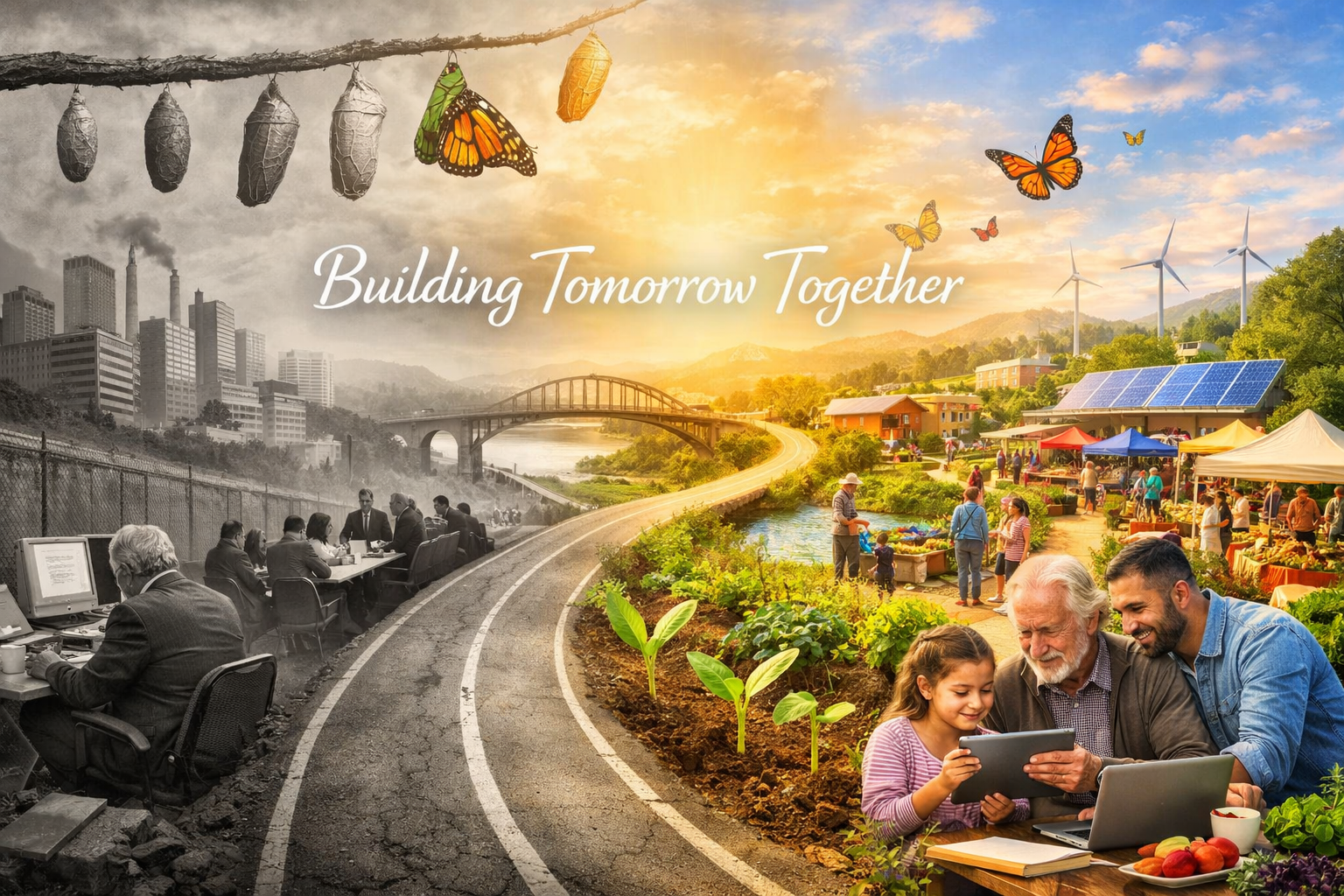
The Old World order is indeed on life support, but that’s not necessarily tragic. Every ending creates space for new beginnings.
The system emerging will likely be:
More distributed: Power, wealth, and decision-making spread across networks rather than concentrated in hierarchies.
More transparent: Blockchain and open-source technologies make hidden dealings harder to maintain.
More participatory: Direct democracy, citizen science, and community governance give regular people more voice.
More sustainable: Necessity will force alignment with ecological limits that the old system ignored.
More human-scale: Global systems will matter less; local and regional systems will matter more.
This doesn’t mean utopia is around the corner. The transition will be messy, with setbacks and suffering along the way. But for those willing to engage constructively, there’s unprecedented opportunity to shape what comes next.
Conclusion: Your Role in the Transition
The Old World order is on life support, and no amount of denial will revive it. But here’s the empowering truth: you don’t have to be a passive observer of this transformation. Every choice you make—where you shop, how you connect with neighbors, what skills you develop, how you spend your time—is a vote for the kind of world you want to live in.
For Canadians in communities like those around Georgian Bay, this moment offers a chance to model something better. We have the resources, the space, the diversity, and the democratic traditions to experiment with new ways of organizing society.
Action steps to take this week:
- Connect locally: Attend a community meeting, introduce yourself to a neighbor, or join a local organization
- Learn a practical skill: Start a small garden, learn basic repair skills, or take a wellness class
- Support alternatives: Move some money to a credit union, shop at farmers’ markets, or support community businesses
- Share your wisdom: If you’re a senior, find ways to mentor younger people; if you’re young, seek out elder wisdom
- Stay informed locally: Follow community news and get involved in local decision-making
The Old World order is dying. What we build to replace it depends on the choices we make today. Will it be more authoritarian or more democratic? More divided or more connected? More extractive or more sustainable?
The answer lies not in distant capitals or international forums, but in communities like yours, with people like you, making daily choices about how to live and work together.
The future isn’t something that happens to us—it’s something we create, one decision, one connection, one community at a time. The old order is fading. The new one is ours to build.
“The secret of change is to focus all of your energy not on fighting the old, but on building the new.” — Socrates
What will you build?
References
[1] Edelman Trust Barometer (2025). “Global Trust in Institutions Reaches Historic Low.” Edelman Research.
[2] International Monetary Fund (2025). “Global Economic Outlook: Navigating Uncertainty.”
[3] Pew Research Center (2025). “Public Trust in Government: 1958-2025.”
[4] World Economic Forum (2026). “The Future of Decentralized Systems.”