





















Extreme Cold Warning: Canada Faces Life-Threatening Arctic Conditions as Temperatures Plummet to -45°C
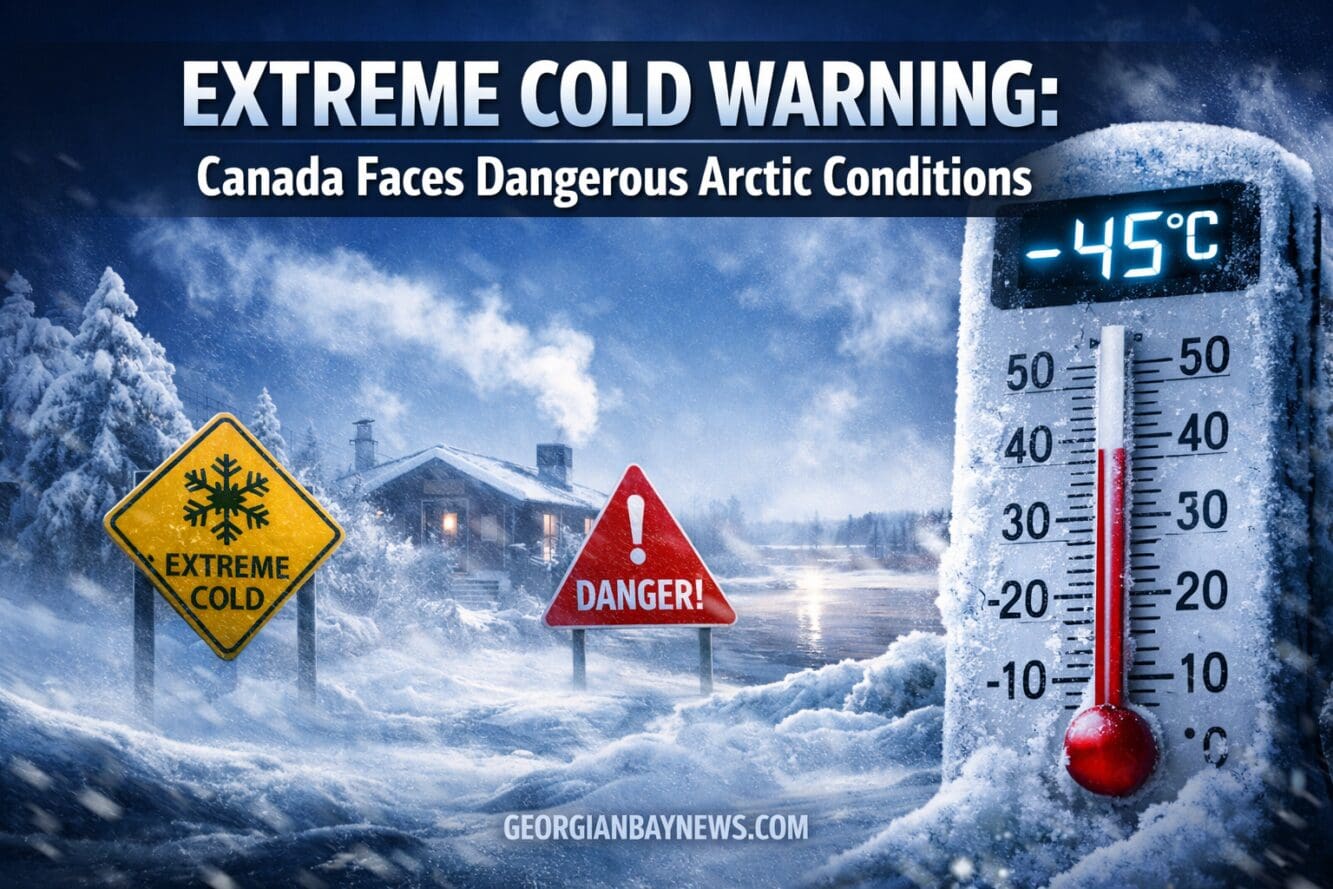
When Maria Kowalski woke up in her Kenora home on a frigid January morning in 2026, she heard a sound she’d never forgotten from her childhood in rural Manitoba—the sharp crack of trees splitting in the extreme cold. The thermometer outside her window read -42°C, but with the wind chill, Environment Canada warned it felt like -45°C. This wasn’t just cold weather; this was an Extreme Cold Warning that would test the resilience of communities across Northwestern Ontario and beyond.
Across Canada, millions of people are facing dangerously low temperatures that pose serious health risks and challenge even the most prepared communities. The Extreme Cold Warning issued for regions including Kenora and Thunder Bay represents more than just uncomfortable weather—it’s a potentially life-threatening situation that demands immediate attention and action.
Key Takeaways
- Extreme Cold Warnings are issued when temperatures or wind chills reach -40°C or colder, creating life-threatening conditions
- Northwestern Ontario regions including Kenora and Thunder Bay are experiencing wind chills as low as -45°C in 2026
- Frostbite can occur in minutes under these conditions, affecting exposed skin within 5-10 minutes
- Vulnerable populations including seniors, children, homeless individuals, and those with chronic health conditions face heightened risks
- Community warming centers, proper layering techniques, and emergency preparedness are essential for survival during extreme cold events
Understanding the Extreme Cold Warning System in Canada
Environment and Climate Change Canada (ECCC) doesn’t issue Extreme Cold Warnings lightly. These alerts represent the most severe tier of cold weather advisories, reserved for conditions that pose immediate danger to human life and health.
What Triggers an Extreme Cold Warning?
An Extreme Cold Warning is issued when:
- Temperature drops to -40°C or colder
- Wind chill values reach -40°C or lower
- Conditions are expected to persist for at least two hours
The wind chill factor is particularly critical because it measures how cold it actually feels on exposed skin when wind is factored into the equation. At -45°C wind chill, frostbite can develop on exposed skin in less than 10 minutes.
| Warning Level | Temperature/Wind Chill | Risk Level | Frostbite Time |
|---|---|---|---|
| Cold Weather Advisory | -30°C to -39°C | Moderate | 10-30 minutes |
| Extreme Cold Warning | -40°C or colder | Severe | 5-10 minutes |
| Extreme Danger | -50°C or colder | Critical | 2-5 minutes |
The Science Behind the Freeze
When temperatures plummet to -45°C, the physics of cold becomes genuinely dangerous. At these temperatures:
- Water freezes almost instantly when exposed to air
- Metal becomes brittle and can snap under stress
- Rubber and plastics lose flexibility and crack
- Vehicle fluids thicken dramatically, making engines difficult or impossible to start
- Human tissue begins freezing within minutes of exposure
Dr. James Peterson, a meteorologist with over 25 years of experience studying Canadian weather patterns, explains: “What we’re seeing in Kenora and Thunder Bay isn’t just cold—it’s Arctic air mass intrusion. These systems bring the same conditions you’d find hundreds of kilometers north, and they create genuinely life-threatening situations for anyone unprepared.”
Current Extreme Cold Warning Conditions Across Canada
The 2026 winter season has brought particularly harsh conditions to several Canadian regions, with Northwestern Ontario bearing the brunt of the Arctic assault.
Kenora and Thunder Bay: Ground Zero for Extreme Cold
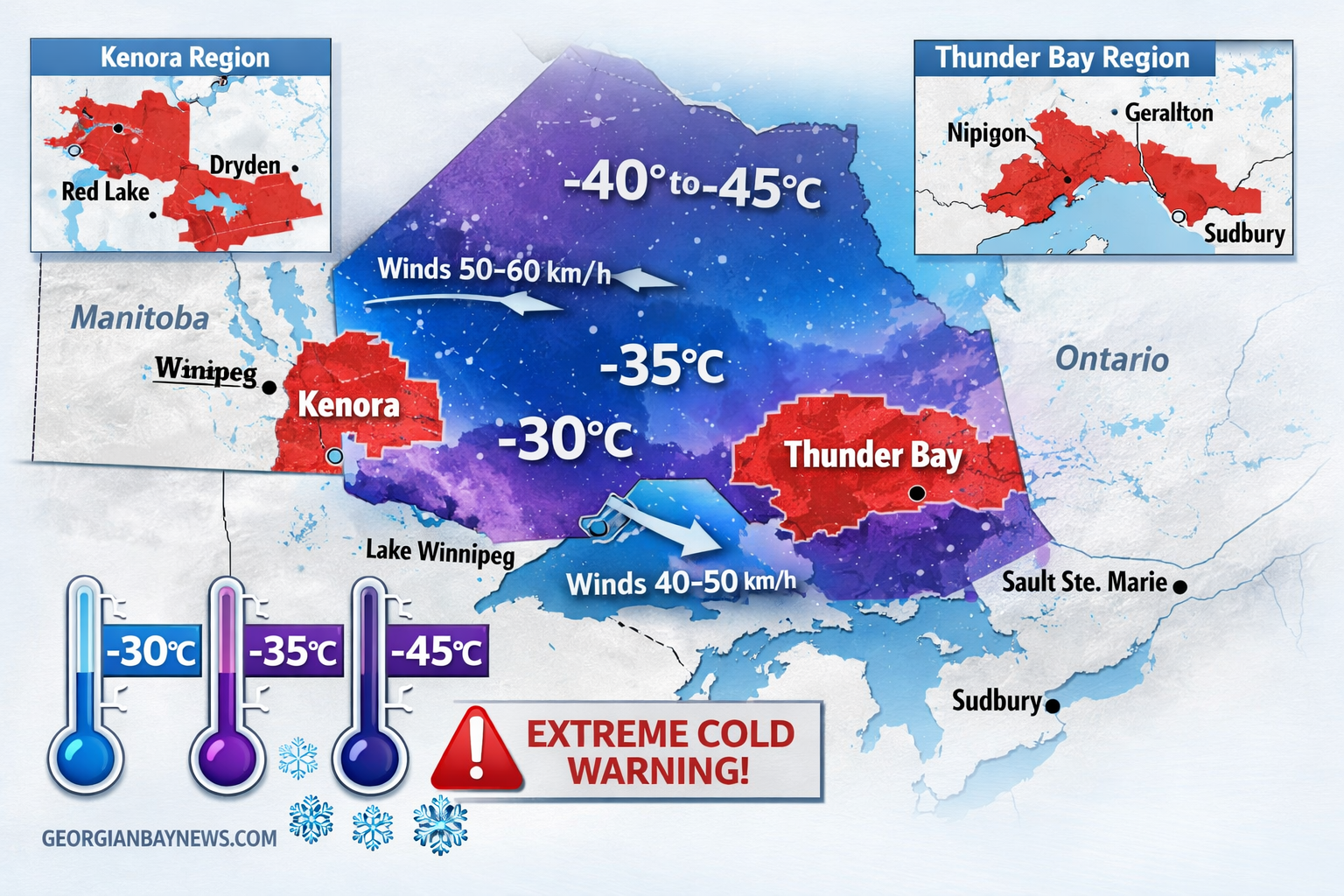
Kenora, situated on the Lake of the Woods, and Thunder Bay, Ontario’s largest city on Lake Superior, are experiencing some of the most severe conditions:
- 🌡️ Actual temperatures: -38°C to -42°C
- 💨 Wind chill values: -43°C to -45°C
- ⏱️ Duration: Expected to persist for 48-72 hours
- 🏘️ Population affected: Over 150,000 residents in the immediate region
Local emergency services report increased calls related to:
- Vehicle breakdowns and stranded motorists
- Frozen water pipes in residential and commercial buildings
- Carbon monoxide incidents from improper heating
- Frostbite and hypothermia cases requiring medical attention
Sarah Chen, a nurse at Thunder Bay Regional Health Sciences Centre, shares: “We’ve seen a 300% increase in cold-related injuries this week. People underestimate how quickly frostbite develops. We’ve treated construction workers, delivery drivers, and even people who just stepped outside for a few minutes without proper protection.”
Other Affected Regions
The Extreme Cold Warning extends beyond Northwestern Ontario:
- Northern Manitoba: Winnipeg and surrounding areas experiencing -40°C wind chills
- Northern Saskatchewan: Prince Albert region facing similar conditions
- Northern Alberta: Edmonton and Fort McMurray under extreme cold alerts
- Northern Quebec: Communities reporting -38°C to -42°C temperatures
This widespread pattern reflects a significant southward dip in the jet stream, allowing Arctic air to penetrate deep into southern Canada. For those looking to understand how extreme weather affects daily life, these conditions represent a significant disruption to normal activities.
Health Risks and Medical Emergencies During Extreme Cold
The human body is remarkably adaptable, but it has limits. When facing an Extreme Cold Warning with temperatures at -45°C, those limits are tested severely.
Frostbite: The Silent Danger ❄️
Frostbite occurs when skin and underlying tissues freeze. At -45°C wind chill, this can happen in as little as 5-10 minutes.
Stages of Frostbite:
- Frostnip (mild): Skin becomes pale, numb, and tingly
- Superficial frostbite: Skin feels hard but tissue beneath is soft; blisters may form
- Deep frostbite: All layers of skin freeze; tissue becomes hard and waxy; permanent damage likely
Most vulnerable areas:
- Fingers and toes
- Nose and ears
- Cheeks and chin
- Any exposed skin
Hypothermia: When Your Core Temperature Drops
Hypothermia develops when body temperature falls below 35°C (normal is 37°C). In extreme cold conditions, this can happen faster than most people realize.
Warning signs include:
- Uncontrollable shivering
- Slurred speech and confusion
- Drowsiness and exhaustion
- Weak pulse and shallow breathing
- Loss of coordination
“Hypothermia doesn’t just affect people who are outside for hours. We’ve seen cases where individuals developed hypothermia in their own homes due to heating failures during extreme cold events.” — Dr. Michael Torres, Emergency Medicine Physician
Vulnerable Populations at Greatest Risk
Certain groups face heightened danger during an Extreme Cold Warning:
Seniors (65+): Reduced ability to regulate body temperature, often living alone, may have mobility limitations that prevent proper preparation. For those interested in health and wellness for older adults, understanding cold weather risks is essential.
Children: Higher surface-area-to-body-mass ratio means they lose heat faster; may not recognize danger signs.
Homeless individuals: Lack of adequate shelter; highest mortality risk during extreme cold events.
People with chronic conditions: Heart disease, diabetes, and respiratory conditions are exacerbated by extreme cold.
Outdoor workers: Construction workers, delivery drivers, utility workers face prolonged exposure.
Protecting Yourself and Your Family During an Extreme Cold Warning
Survival during extreme cold conditions requires preparation, awareness, and decisive action. Here’s what Canadians need to know.
The Art of Layering: Dressing for -45°C 🧥
Proper clothing isn’t just about comfort—it’s about survival. The key is layering to trap warm air while allowing moisture to escape.
The Three-Layer System:
Base Layer (Next to Skin)
- Material: Merino wool or synthetic moisture-wicking fabric
- Purpose: Draws sweat away from skin
- Avoid: Cotton (retains moisture and loses insulating properties when wet)
Middle Layer (Insulation)
- Material: Fleece, down, or synthetic insulation
- Purpose: Traps warm air
- Multiple thin layers work better than one thick layer
Outer Layer (Protection)
- Material: Windproof and water-resistant shell
- Purpose: Blocks wind and precipitation
- Features: High collar, adjustable cuffs, longer back for coverage
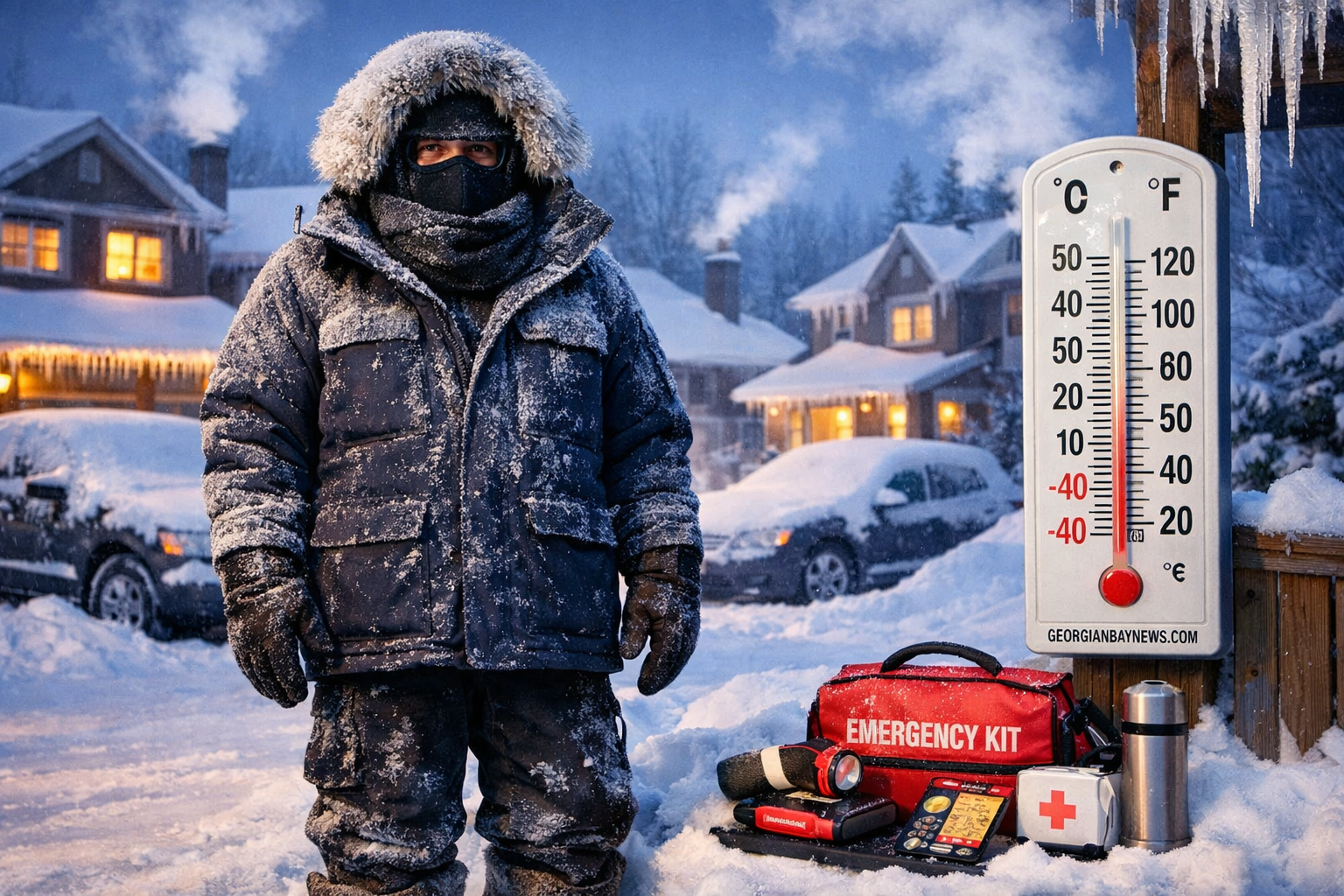
Critical accessories:
- ✅ Insulated, waterproof boots rated to -50°C
- ✅ Thermal socks (wool or synthetic, never cotton)
- ✅ Insulated gloves or mittens (mittens are warmer)
- ✅ Balaclava or face mask covering nose, mouth, and cheeks
- ✅ Warm hat covering ears
- ✅ Scarf or neck gaiter
Home Safety and Heating Precautions
When an Extreme Cold Warning is in effect, your home becomes your primary shelter. Ensure it’s safe and warm.
Heating system checks:
- Service furnace before extreme cold arrives
- Change filters regularly for optimal efficiency
- Keep vents and radiators clear of obstructions
- Have backup heating source (but never use BBQs or generators indoors)
Preventing frozen pipes:
- Let faucets drip slightly during extreme cold
- Open cabinet doors under sinks to allow warm air circulation
- Insulate pipes in unheated areas
- Know where your main water shut-off valve is located
Carbon monoxide safety:
- Install CO detectors on every floor
- Never use gas stoves or ovens for heating
- Ensure proper ventilation for all fuel-burning appliances
- Clear snow from outdoor vents and exhaust pipes
Robert MacDonald, a 68-year-old Kenora resident, learned this lesson the hard way: “During the last extreme cold snap, I used my gas oven to supplement the heating. Within hours, my CO detector went off. The fire department said I was lucky—carbon monoxide is odorless and deadly. Now I know better.”
Vehicle Preparedness and Winter Driving
Vehicles can become death traps during extreme cold if they break down in remote areas.
Winter vehicle emergency kit:
- 🔦 Flashlight with extra batteries
- 🕯️ Candles and waterproof matches
- 🧊 Ice scraper and snow brush
- 🪢 Tow rope or chain
- 🔋 Booster cables
- 🧰 Basic tool kit
- ⛽ Extra windshield washer fluid
- 🍫 Non-perishable food (energy bars, nuts)
- 💧 Water bottles (stored in insulated container)
- 🛏️ Emergency blankets or sleeping bag
- 👕 Extra warm clothing
- 📱 Portable phone charger
- 🚨 Road flares or reflective triangles
- 🧴 First aid kit
- 🪵 Small shovel
If stranded:
- Stay with your vehicle (it provides shelter and makes you more visible)
- Run engine for 10 minutes each hour for heat (ensure exhaust pipe is clear)
- Crack window slightly for ventilation
- Move around periodically to maintain circulation
- Use hazard lights to increase visibility
For those planning outdoor adventures in Ontario, understanding winter safety is crucial even during warmer months.
Community Response and Emergency Services
When an Extreme Cold Warning strikes, communities mobilize to protect their most vulnerable members.
Warming Centers and Emergency Shelters
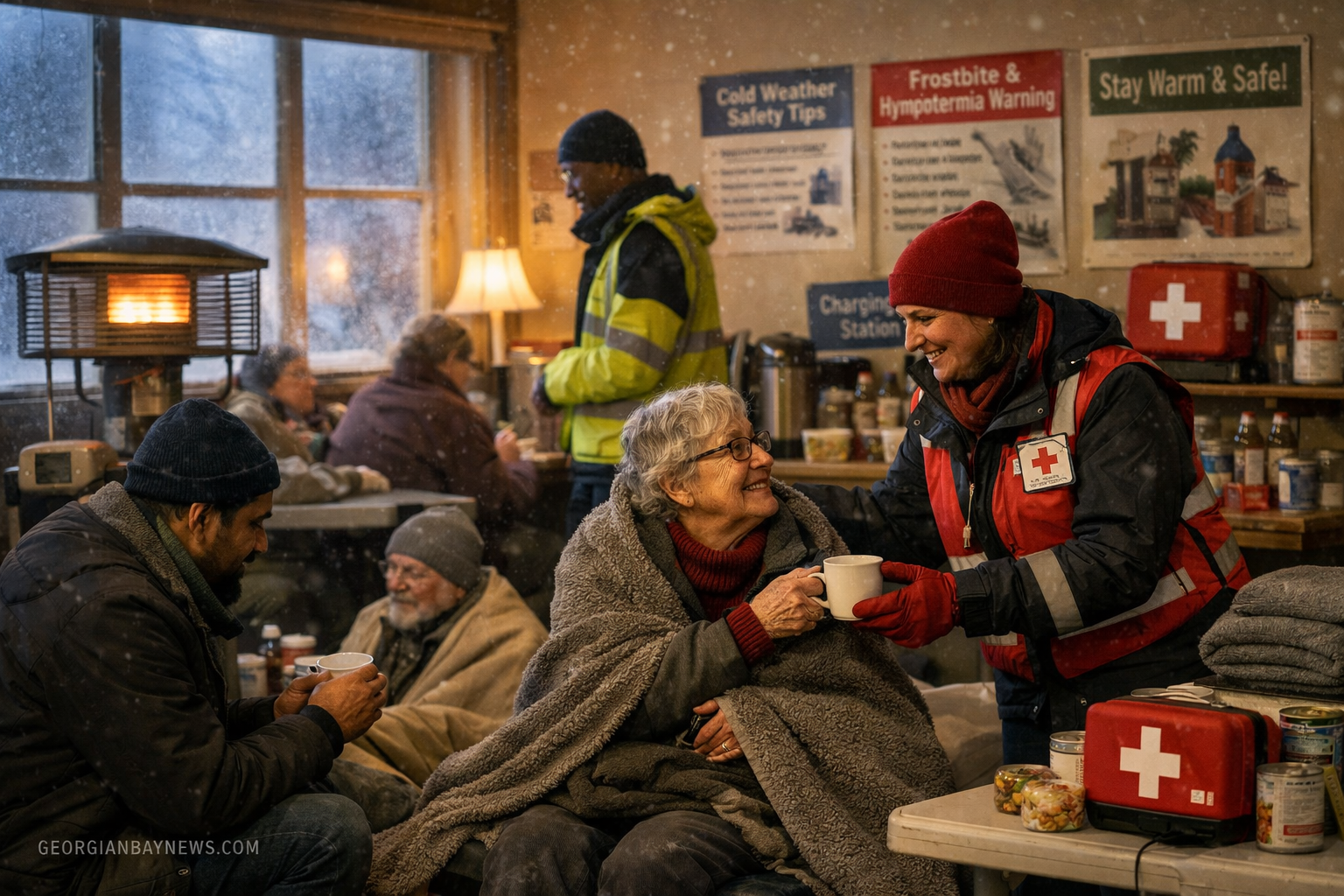
Municipalities across affected regions open warming centers—safe, heated spaces where anyone can seek refuge from the cold.
Thunder Bay warming centers (2026):
- Victoriaville Community Centre: Open 24/7 during extreme cold
- Dease Pool and Fitness Centre: Extended hours
- Port Arthur Stadium: Emergency overnight shelter
- Multiple church basements and community halls
Services provided:
- Warm beverages (coffee, tea, hot chocolate)
- Light meals or snacks
- Blankets and warm clothing
- Phone charging stations
- Information about additional resources
- Transportation assistance
Jennifer Blackwood, coordinator of Thunder Bay’s emergency warming program, explains: “We don’t ask questions. If you’re cold, you’re welcome. We’ve served everyone from homeless individuals to people whose heating failed to travelers stranded by the weather. During an extreme cold warning, our doors are open to everyone.”
Outreach Programs for Homeless Populations
Homeless individuals face the greatest risk during extreme cold events. Many Canadian cities have implemented aggressive outreach programs.
Street outreach teams:
- Mobile units patrol known gathering spots
- Offer transportation to shelters
- Provide warm clothing, blankets, hand warmers
- Conduct wellness checks
- Build trust with individuals reluctant to use shelters
In Winnipeg, the “Code Blue” program activates when temperatures drop below -30°C, deploying teams to locate and assist homeless individuals. Similar programs operate in Thunder Bay, Kenora, and other affected communities.
Emergency Services Strain
Extreme cold events place enormous pressure on emergency services.
Increased call volumes:
- Fire departments respond to heating-related fires and CO incidents
- Police assist stranded motorists and conduct wellness checks
- EMS treats frostbite, hypothermia, and cold-related injuries
- Utility companies address power outages and gas line issues
Paramedic David Chen from Thunder Bay EMS notes: “During extreme cold warnings, our call volume increases by 40-50%. We’re responding to everything from slip-and-falls on ice to cardiac events triggered by cold stress. We urge people to check on elderly neighbors and relatives—a simple phone call can save a life.”
Climate Change and the Future of Extreme Cold Events
While it may seem counterintuitive, climate change is influencing extreme cold events in complex ways.
The Polar Vortex Connection
The polar vortex—a large area of low pressure and cold air surrounding Earth’s poles—normally remains stable. However, climate change is disrupting this system.
How it works:
- Arctic warming occurs faster than mid-latitude warming
- This reduces the temperature difference between the Arctic and mid-latitudes
- A weaker temperature gradient destabilizes the jet stream
- The jet stream develops larger “waves” or meanders
- These waves can dip southward, bringing Arctic air to southern regions
Dr. Jennifer Walsh, climate scientist at the University of Toronto, explains: “We’re seeing more frequent polar vortex disruptions. While overall winters are warming, these disruptions can bring extreme cold to populated areas that aren’t as well-prepared for it. It’s a paradox of climate change—warmer Arctic, but more extreme cold outbreaks in southern Canada.”
Frequency and Intensity Trends
Historical data shows:
- Average winter temperatures in Canada have increased 3°C since 1948
- However, extreme cold events (below -40°C) have become more variable
- Some regions experience fewer extreme cold days overall
- But when they occur, they can be more intense and last longer
- Rapid temperature swings have become more common
Preparing for an Uncertain Future
Communities must adapt to this new reality of more unpredictable extreme weather.
Infrastructure improvements:
- Upgrading electrical grids to handle increased heating demand
- Improving building insulation standards
- Expanding emergency shelter capacity
- Enhancing weather monitoring and early warning systems
Community resilience:
- Developing neighborhood check-in systems
- Training more emergency responders in cold-weather medicine
- Stockpiling emergency supplies
- Educating public about extreme cold risks
Those interested in building personal resilience can apply similar principles to weather preparedness.
Economic Impact of Extreme Cold Warnings
Beyond the human cost, extreme cold events carry significant economic consequences.
Direct Costs
Energy consumption:
- Natural gas and electricity demand spikes 30-50% during extreme cold
- Residential heating costs increase dramatically
- Strain on energy infrastructure can lead to outages
Transportation disruptions:
- Flight cancellations and delays
- Road closures due to dangerous conditions
- Public transit service reductions
- Supply chain interruptions
Property damage:
- Frozen and burst pipes (average repair cost: $5,000-$10,000)
- Ice dam formation causing roof damage
- Heating system failures
- Vehicle damage from extreme cold
Business and Productivity Losses
Many businesses close or operate at reduced capacity during Extreme Cold Warnings:
- Construction sites shut down (concrete won’t cure properly below -10°C)
- Retail foot traffic drops significantly
- Schools close, requiring parents to stay home
- Outdoor events and activities cancelled
The Conference Board of Canada estimates that extreme weather events, including cold snaps, cost the Canadian economy over $1 billion annually in lost productivity.
Long-term Economic Planning
Forward-thinking municipalities are investing in cold-weather resilience:
- Kenora has allocated $2.3 million for emergency shelter improvements
- Thunder Bay is upgrading its district heating system for better reliability
- Provincial programs offer grants for home weatherization and heating system upgrades
For those concerned about managing household budgets during challenging times, extreme cold events add another financial pressure.
Mental Health and Psychological Impacts
The psychological toll of extreme cold warnings often goes unrecognized, but it’s very real.
Isolation and Cabin Fever
When temperatures hit -45°C, people are essentially confined indoors for days. This forced isolation can trigger:
- Increased anxiety and depression
- Disrupted sleep patterns
- Irritability and mood swings
- Feelings of helplessness
- Exacerbation of existing mental health conditions
Dr. Amanda Richardson, a psychologist specializing in seasonal mental health, notes: “Extreme cold events create a perfect storm for mental health challenges. People are isolated, worried about safety and costs, dealing with disrupted routines, and often experiencing reduced sunlight. It’s important to recognize these feelings are normal responses to abnormal circumstances.”
Coping Strategies
Maintaining mental wellness during extreme cold:
✅ Maintain routines as much as possible (regular sleep, meals, exercise)
✅ Stay connected via phone, video calls, social media
✅ Engage in indoor activities (reading, hobbies, online learning)
✅ Practice stress-reduction techniques like meditation or yoga
✅ Limit news consumption if weather coverage increases anxiety
✅ Seek professional help if feelings become overwhelming
Resources like stress-relieving exercises can be particularly helpful during periods of forced indoor confinement.
Community Connection
Even during extreme cold, maintaining social connections is vital. Many communities have developed creative solutions:
- Phone trees where neighbors check on each other daily
- Online community groups sharing updates and support
- Virtual social events to combat isolation
- Delivery services for groceries and medications to vulnerable individuals
Indigenous Communities and Traditional Knowledge
Indigenous communities across Northern Canada have survived extreme cold for thousands of years, developing sophisticated knowledge systems for thriving in harsh conditions.
Traditional Practices and Wisdom
Clothing and materials:
- Caribou and moose hide provides superior insulation
- Fur trim around hoods prevents frostbite by creating warm air pockets
- Layering techniques developed over millennia
- Natural materials that breathe while insulating
Shelter design:
- Traditional structures designed for heat retention
- Strategic use of snow for insulation
- Community-oriented layouts for mutual support
Community care:
- Strong traditions of checking on elders
- Sharing resources during difficult times
- Collective responsibility for vulnerable members
Elder Margaret Kakegamic from Kenora’s Ojibway community shares: “Our ancestors taught us to respect the cold, not fear it. We learned to read the signs—the way snow crystals form, how animals behave, the color of the sky. This knowledge kept us alive. Today, we combine this traditional wisdom with modern technology, but the principles remain the same: preparation, community, and respect for nature’s power.”
Contemporary Challenges
Many remote Indigenous communities face unique vulnerabilities during Extreme Cold Warnings:
- Limited road access for emergency supplies
- Older, poorly insulated housing
- Higher energy costs
- Limited access to emergency services
- Reliance on diesel generators for power
Advocacy and improvements:
- Federal and provincial programs addressing housing quality
- Investment in renewable energy to reduce diesel dependence
- Enhanced emergency response capabilities
- Recognition of traditional knowledge in emergency planning
International Perspective: Extreme Cold Around the World
While Canada faces severe conditions, extreme cold is a global phenomenon affecting millions.
Comparative Cold Events
Notable extreme cold events worldwide:
| Location | Temperature | Year | Impact |
|---|---|---|---|
| Oymyakon, Russia | -67.7°C | 1933 | Coldest inhabited place on Earth |
| Prospect Creek, Alaska | -62.2°C | 1971 | Coldest temperature in North America |
| Texas, USA | -23°C | 2021 | 246 deaths, $195 billion in damage |
| Mongolia | -50°C | 2023 | Dzud (extreme winter) killed millions of livestock |
Lessons from Other Cold-Climate Nations
Finland:
- Comprehensive public education on cold safety from childhood
- Building codes requiring extreme insulation standards
- Extensive network of public warming shelters
- Cultural acceptance of winter conditions
Norway:
- “Friluftsliv” (outdoor life) philosophy embraces winter
- Mandatory winter tire laws
- Excellent public transportation in all weather
- Investment in district heating systems
Russia:
- Sophisticated cold-weather clothing industry
- Extensive experience with extreme cold emergencies
- Robust heating infrastructure in cold regions
- Cultural adaptation to harsh winters
These international examples offer valuable lessons for Canadian communities preparing for future extreme cold events.
Technology and Innovation in Cold Weather Safety
Modern technology is revolutionizing how we prepare for and respond to Extreme Cold Warnings.
Weather Forecasting Advances
Improved prediction capabilities:
- Satellite imagery providing real-time Arctic conditions
- Computer models simulating polar vortex behavior
- Machine learning identifying patterns in extreme weather
- Extended forecast windows (7-10 days advance warning)
Environment Canada’s supercomputers process billions of data points hourly, allowing meteorologists to issue warnings with unprecedented accuracy.
Smart Home Technology
Cold-weather automation:
- Smart thermostats that prevent freezing when away
- Water leak sensors detecting frozen pipe issues
- Remote monitoring of heating systems
- Automated alerts for temperature drops
Wearable Technology
Personal safety devices:
- Smartwatches monitoring body temperature and heart rate
- GPS trackers for outdoor workers
- Emergency alert systems
- Cold exposure warnings based on time outdoors
Emergency Communication
Enhanced warning systems:
- Alert Ready system sends emergency notifications to phones
- Social media integration for rapid information sharing
- Multi-language warnings reaching diverse populations
- Accessibility features for people with disabilities
For those interested in how technology is shaping our future, weather safety represents a critical application.
Practical Action Plan: What to Do Right Now
If you’re currently under an Extreme Cold Warning or want to prepare for the next one, here’s your comprehensive action plan.
Immediate Actions (Next 24 Hours)
For yourself and family:
- ✅ Check current temperature and wind chill
- ✅ Ensure adequate heating fuel (natural gas, oil, propane)
- ✅ Gather emergency supplies (food, water, medications for 72 hours)
- ✅ Charge all electronic devices
- ✅ Locate flashlights, batteries, candles
- ✅ Test carbon monoxide and smoke detectors
- ✅ Identify warmest room in house as emergency shelter
- ✅ Fill bathtubs and containers with water (in case pipes freeze)
For your vehicle:
- ✅ Fill gas tank (prevents fuel line freezing)
- ✅ Check antifreeze levels
- ✅ Ensure winter emergency kit is stocked
- ✅ Park in garage if available
- ✅ Consider block heater if temperature below -30°C
For your home:
- ✅ Let faucets drip in vulnerable areas
- ✅ Open cabinet doors under sinks
- ✅ Close curtains/blinds to retain heat
- ✅ Seal drafts around doors and windows
- ✅ Clear snow from heating vents and exhaust pipes
Community Actions
Check on vulnerable neighbors:
- Elderly individuals living alone
- People with disabilities
- Families with young children
- Anyone who might need assistance
Share resources:
- Offer rides to warming centers
- Share emergency supplies
- Provide temporary shelter if someone’s heating fails
- Coordinate neighborhood check-ins
Long-term Preparedness (This Season and Beyond)
Home improvements:
- Upgrade insulation (attic, walls, basement)
- Install storm windows or window film
- Seal air leaks
- Service heating system annually
- Consider backup heating source
- Install programmable thermostat
Personal preparedness:
- Build comprehensive emergency kit
- Take first aid training including cold-weather injuries
- Learn to recognize frostbite and hypothermia
- Develop family emergency plan
- Maintain adequate winter clothing for all family members
Financial preparedness:
- Budget for increased winter heating costs
- Consider emergency fund for weather-related expenses
- Review home insurance coverage for cold-weather damage
- Investigate energy efficiency rebate programs
Those looking to build overall resilience might benefit from exploring morning habits that improve well-being, which can help maintain mental and physical health during challenging weather.
Conclusion: Respecting the Power of Extreme Cold
The Extreme Cold Warning affecting Kenora, Thunder Bay, and other Canadian regions serves as a powerful reminder of nature’s formidable force. When wind chills plummet to -45°C, the margin between safety and danger narrows to mere minutes. These aren’t conditions to take lightly or face unprepared.
Yet the story of extreme cold in Canada isn’t just about danger—it’s about resilience, community, and adaptation. From Indigenous communities drawing on millennia of traditional knowledge to modern technology providing early warnings, Canadians have developed sophisticated strategies for surviving and even thriving in harsh winter conditions.
The key lessons are clear:
🔹 Preparation saves lives – Having the right clothing, emergency supplies, and knowledge before extreme cold strikes is essential
🔹 Community matters – Checking on neighbors, sharing resources, and supporting vulnerable populations strengthens everyone’s safety
🔹 Respect the cold – Understanding the genuine dangers of extreme temperatures prevents complacency
🔹 Stay informed – Monitoring weather warnings and following official guidance provides critical decision-making information
🔹 Adapt and learn – Each extreme cold event teaches valuable lessons for future preparedness
As climate patterns continue to evolve, bringing both warming trends and paradoxically more extreme cold outbreaks, Canadian communities must remain vigilant and prepared. The Extreme Cold Warning system exists to protect lives—but it only works when people take appropriate action.
Your Next Steps
Today:
- Review your emergency preparedness
- Check on vulnerable friends and family
- Ensure your home and vehicle are winter-ready
This week:
- Assemble or update your emergency kit
- Schedule heating system maintenance if needed
- Learn the locations of warming centers in your community
This season:
- Invest in proper winter clothing
- Consider home weatherization improvements
- Build community connections for mutual support
The extreme cold gripping parts of Canada in 2026 will eventually pass, as all weather systems do. But the lessons learned, the preparations made, and the community bonds strengthened will serve Canadians well for winters to come. Stay warm, stay safe, and look out for one another—that’s the Canadian way.
For more information about weather safety and community resources, visit the Georgian Bay News homepage for ongoing updates and local information.
References
[1] Environment and Climate Change Canada. (2026). “Extreme Cold Warnings and Weather Alerts.” Government of Canada Weather Service.
[2] Canadian Red Cross. (2026). “Cold Weather Safety and Emergency Preparedness Guidelines.”
[3] Health Canada. (2025). “Extreme Cold: Health Risks and Safety Measures.” Public Health Agency of Canada.
[4] Statistics Canada. (2025). “Economic Impact of Extreme Weather Events in Canada.”
[5] Conference Board of Canada. (2025). “Climate Adaptation and Economic Resilience Report.”
[6] Thunder Bay Regional Health Sciences Centre. (2026). “Cold-Related Injury Statistics and Treatment Protocols.”
[7] Indigenous Services Canada. (2025). “Traditional Knowledge and Climate Adaptation in Northern Communities.”
[8] National Oceanic and Atmospheric Administration. (2025). “Polar Vortex Dynamics and Climate Change.”
[9] University of Toronto Climate Research Centre. (2025). “Arctic Warming and Mid-Latitude Weather Patterns.”
[10] City of Thunder Bay Emergency Services. (2026). “Warming Center Locations and Emergency Response Protocols.”
Some content and illustrations on GEORGIANBAYNEWS.COM are created with the assistance of AI tools.