



















BC’s Daylight Saving Time Elimination: Why One Province Is Breaking From the National Pattern
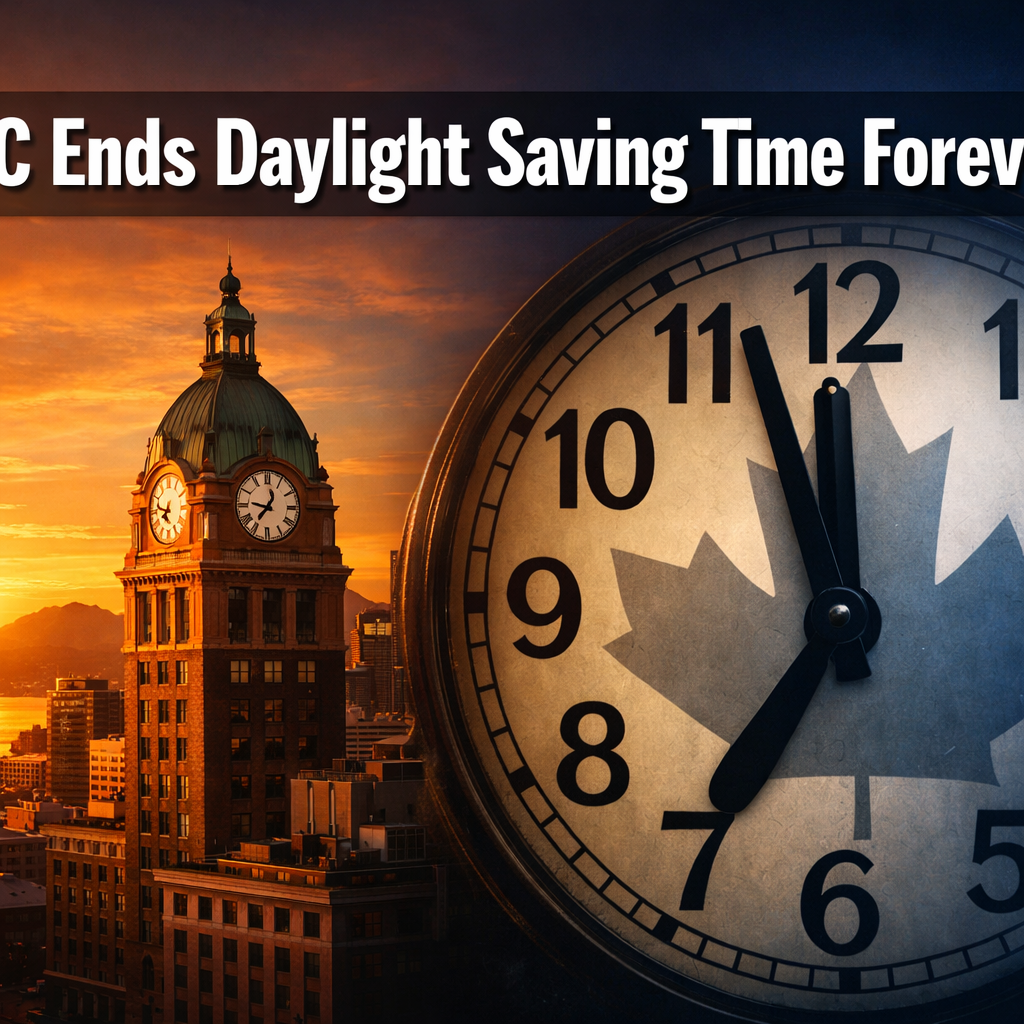
The twice-yearly ritual of changing clocks is about to end for millions of British Columbians. On March 2, 2026, Premier David Eby and Attorney General Niki Sharma announced that BC will permanently adopt daylight saving time, making the province the first in southern Canada to break from the national pattern of biannual clock changes [1]. This bold move on BC’s daylight saving time elimination—why one province is breaking from the national pattern and what it means for Canada—has sparked fresh debate about whether the rest of the country should follow suit.
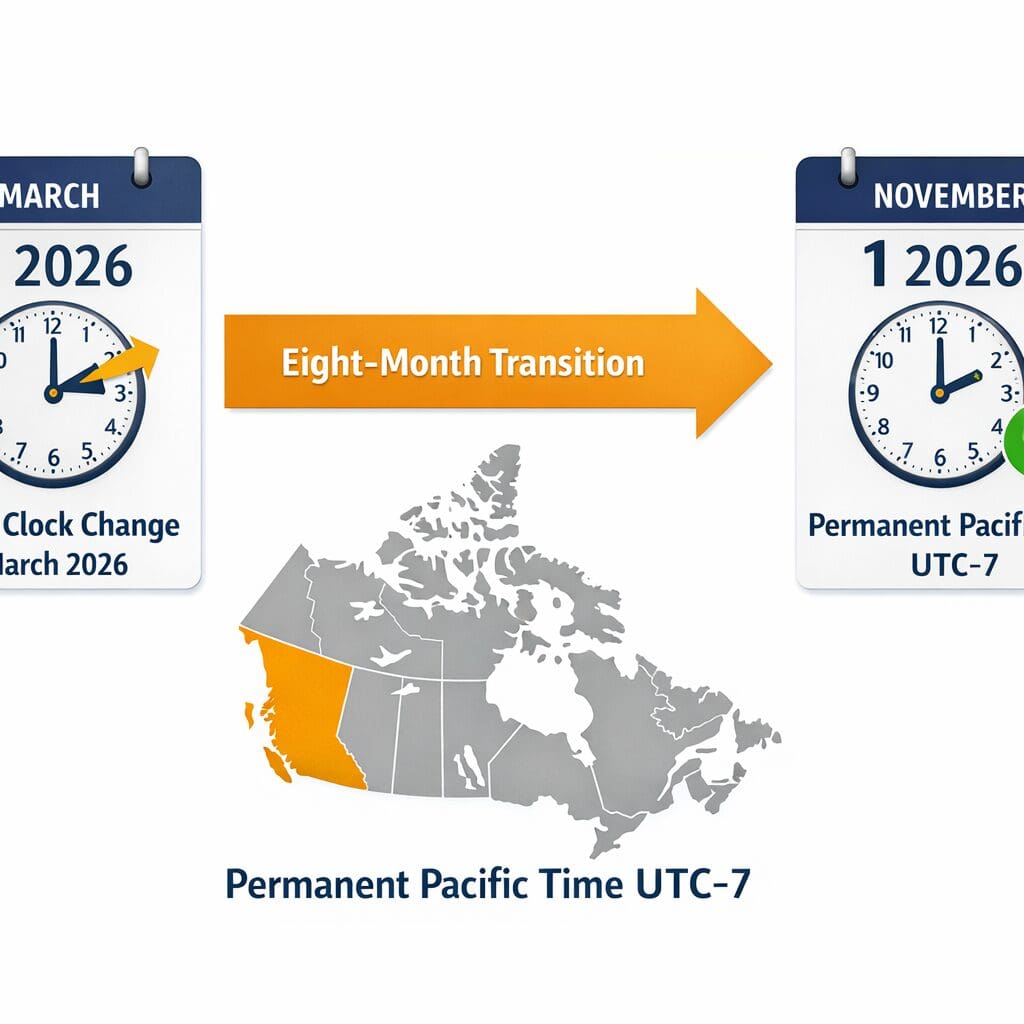
The decision didn’t happen overnight. It builds on legislation passed back in 2019 and draws on growing health science research about the harms of shifting clocks twice a year. With the final spring-forward set for March 8, 2026, and the transition completing on November 1, 2026, BC is charting a new course that could reshape time policy across the nation [1].
Key Takeaways 📌
- BC’s last clock change ever happens on March 8, 2026. After that, clocks stay put permanently.
- The new “Pacific time” zone will be set at UTC-7, matching current daylight saving time year-round [1].
- Eight eastern BC communities (including Golden, Cranbrook, and Fernie) already observe mountain time and are not affected, though they can opt in [1].
- Health benefits include reduced sleep disruption, fewer heart-related incidents tied to clock changes, and more evening daylight in winter.
- U.S. policy developments influenced BC’s decision to act independently rather than wait for federal coordination [2].
How BC’s Daylight Saving Time Elimination Works: The Timeline and Details
The mechanics of BC’s transition are straightforward, but the details matter for residents and businesses alike.
The Final Spring Forward ⏰
On Sunday, March 8, 2026, British Columbians will set their clocks forward one hour for the last time. This marks the beginning of an eight-month preparation period before the change becomes permanent [1].
November 1, 2026: The Permanent Shift
When fall arrives and clocks would normally “fall back,” BC will simply stay put. November 1, 2026, is the date when the transition to permanent Pacific time officially completes [2].
What Is “Pacific Time”?
BC’s new permanent time zone will be called Pacific time, set at UTC-7 (seven hours behind Coordinated Universal Time). This is the same offset currently used during daylight saving time months [1].
Here’s how seasonal alignment will work:
| Season | BC Pacific Time Aligns With |
|---|---|
| November – March | Alberta & Mountain Standard Time |
| March – November | California, Washington, Oregon (Pacific Daylight Time) |
This seasonal alignment is important for cross-border commerce and travel. During winter months, BC will share the same clock as Alberta. During summer months, it will stay in sync with its U.S. Pacific coast neighbours [2].
Communities That Keep Mountain Time
Eight communities in eastern BC already observe mountain time and will not be affected by this change:
- Golden
- Cranbrook
- Fernie
- Sparwood
- Invermere
- Kimberley
- Radium Hot Springs
- Elkford
These communities have the option to join Pacific time if they choose [1].
The Health Science Behind Ending Clock Changes
One of the strongest arguments for BC’s decision comes from health research. The biannual time shift—especially the spring-forward—has been linked to measurable health risks.
Sleep Disruption and Its Ripple Effects 😴
When clocks spring forward, most people lose an hour of sleep. While that sounds minor, research consistently shows that even small sleep disruptions can trigger:
- Increased heart attack risk in the days following the spring change
- Higher rates of workplace injuries
- More traffic accidents due to drowsy driving
- Mood disturbances and worsened mental health symptoms
“This is about reducing the disruption that families experience twice a year.” — Premier David Eby [1]
For those already managing health challenges, the clock change can be especially difficult. The connection between sleep quality and overall wellness is well documented, and spending time in nature can help restore circadian rhythms—but eliminating the disruption altogether is a more systemic solution.
More Evening Light in Winter ☀️
The BC government highlighted extra evening light as a key benefit. During the darkest winter months, permanent daylight saving time means the sun sets roughly an hour later than it would under standard time [1]. This gives families, workers, and outdoor enthusiasts more usable daylight after school and work hours.
That extra hour of light can encourage people to stay active outdoors. Whether it’s going natural in the garden or simply walking the neighbourhood, more evening light supports both physical and mental health.
Why BC Is Breaking From the National Pattern
The U.S. Influence
BC’s decision was directly influenced by recent U.S. policy actions. The U.S. Sunshine Protection Act and related state-level movements in Washington, Oregon, and California created momentum that BC chose to act on independently [2].
Rather than waiting for a coordinated federal Canadian approach, BC moved forward on its own. This mirrors a broader trend where provinces and states take individual action on policies that affect daily life, much like how communities are addressing climate challenges at the local level.
The 2019 Legal Foundation
The legal groundwork was laid years ago. The Interpretation Amendment Act, passed in 2019, gave BC the authority to implement permanent daylight saving time. However, the province held off, hoping for alignment with neighbouring U.S. states. The recent U.S. developments finally prompted action [2].
The Yukon Precedent
BC isn’t the first Canadian jurisdiction to make this leap. Yukon eliminated clock changes in 2020, adopting permanent standard time. Premier Eby acknowledged Yukon’s leadership while noting that BC made its own independent decision [3].
The key difference? Yukon chose permanent standard time (UTC-8), while BC is choosing permanent daylight saving time (UTC-7). This means BC will have later sunsets but also later sunrises in winter.
What This Means for the Rest of Canada 🇨🇦
BC’s move raises an obvious question: will other provinces follow?
Potential Domino Effect
When one province breaks from the national pattern, it creates pressure on neighbours. Alberta, which already shares mountain standard time alignment with BC during winter months, may face growing public demand to end its own clock changes.
Ontario and Quebec have both explored the idea but face a different challenge—they need to coordinate with major U.S. trading partners like New York and Michigan. The situation highlights how Canada’s national identity sometimes bumps up against practical cross-border realities.
Business and Technology Impacts
The eight-month preparation period gives businesses time to update:
- Scheduling software and calendars
- Transportation timetables
- Cross-border meeting coordination
- Payroll and shift-scheduling systems
Small businesses, in particular, benefit from reduced administrative burden. No more updating hours twice a year or dealing with confused customers [2]. The hidden costs of technological transitions are real, but in this case, the long-term simplification outweighs the one-time adjustment.
Travel and Cross-Border Considerations
For travellers and commuters crossing the BC–Alberta border or the BC–Washington border, the impact varies by season:
- Summer: No change. BC stays aligned with the U.S. Pacific coast.
- Winter: BC will be one hour ahead of its current winter time, matching Alberta instead of being one hour behind.
This seasonal shift could affect everything from local transit planning to flight schedules and cross-border shipping logistics.
The Trade-Offs: What Critics Say
Not everyone is celebrating. Critics point to several concerns:
- Darker winter mornings: With permanent daylight saving time, sunrise in Vancouver could be as late as 8:50 a.m. in late December. Children walking to school and early-morning commuters will face darker starts.
- Misalignment with some partners: During winter, BC will be out of sync with U.S. Pacific coast cities still on standard time (unless those states also make the switch).
- Confusion during transition: The eight-month adjustment period may cause scheduling headaches, especially for national companies operating across time zones.
Despite these concerns, polling has consistently shown that a majority of British Columbians support ending clock changes, with most preferring permanent daylight saving time over permanent standard time.
Conclusion: A Signal for National Time Policy Reform
BC’s daylight saving time elimination represents more than a provincial quirk—it’s a signal that Canadians are ready to rethink a century-old practice. Backed by health science, public support, and practical benefits for families and businesses, the decision to adopt permanent Pacific time at UTC-7 is a meaningful step forward.
Here’s what to do next:
- Mark your calendar: March 8, 2026, is BC’s final spring-forward. November 1, 2026, is when the change becomes permanent.
- Update your systems: Businesses should begin reviewing scheduling software, communication protocols, and cross-border coordination plans now.
- Watch for ripple effects: Keep an eye on whether Alberta, Ontario, or other provinces announce similar moves in response.
- Stay informed: Follow official BC government updates for any adjustments affecting your community.
The clock is ticking—literally, for the last time. 🕐
References
[1] 2026AG0013-000209 – https://news.gov.bc.ca/releases/2026AG0013-000209
[2] BC Adopts Permanent Daylight Saving Time Influenced by Recent Actions From the US – https://komonews.com/news/local/bc-adopts-permanent-daylight-saving-time-influenced-by-recent-actions-from-the-us-legislation-clock-spring-forward-family-schedule-work-season-spring-disruption-light-sunshine-america-trump-federalsleep
[3] CPAC Coverage of BC Daylight Saving Time Announcement – https://www.youtube.com/watch?v=0AXIuT54_nk
Content, illustrations, and third-party video appearing on GEORGIANBAYNEWS.COM may be generated or curated with AI assistance or reproduced pursuant to the fair dealing provisions of the Copyright Act, R.S.C. 1985, c. C-42. Attribution and hyperlinks to original sources are provided in acknowledgment of applicable intellectual property rights. Such referencing is intended to direct traffic to and support the original rights holders’ platforms.