






















Canada’s Mental Health Crisis Among Youth: Understanding the Causes, Access to Services, and Innovative Support Programs for the Next Generation

One in five Canadian young people experiences a mental health disorder before turning 25—yet fewer than one in three of those youth ever receives appropriate professional help. This gap between need and care defines Canada’s mental health crisis among youth: understanding the causes, access to services, and innovative support programs for the next generation has never been more urgent than in 2026.
The statistics paint a stark picture. Emergency department visits for youth mental health concerns have surged dramatically over the past decade. Suicide remains the second leading cause of death among Canadians aged 15 to 24. Behind every data point is a young person struggling—and often struggling alone.
This article examines the root causes driving the crisis, evaluates the barriers young Canadians face when seeking help, and spotlights the innovative programs working to close the gap.
Key Takeaways
- 🧠 One in five Canadian youth experiences a mental health challenge, but only a fraction receives timely care.
- 📱 Social media, academic pressure, and economic uncertainty are among the top contributing factors.
- ⏳ Wait times for publicly funded youth mental health services can exceed 12 months in many provinces.
- 💡 Innovative programs like Foundry, Kids Help Phone, and school-based interventions are expanding access.
- 🤝 Early intervention and integrated care models offer the strongest evidence for long-term outcomes.
Understanding the Root Causes of Canada’s Youth Mental Health Crisis
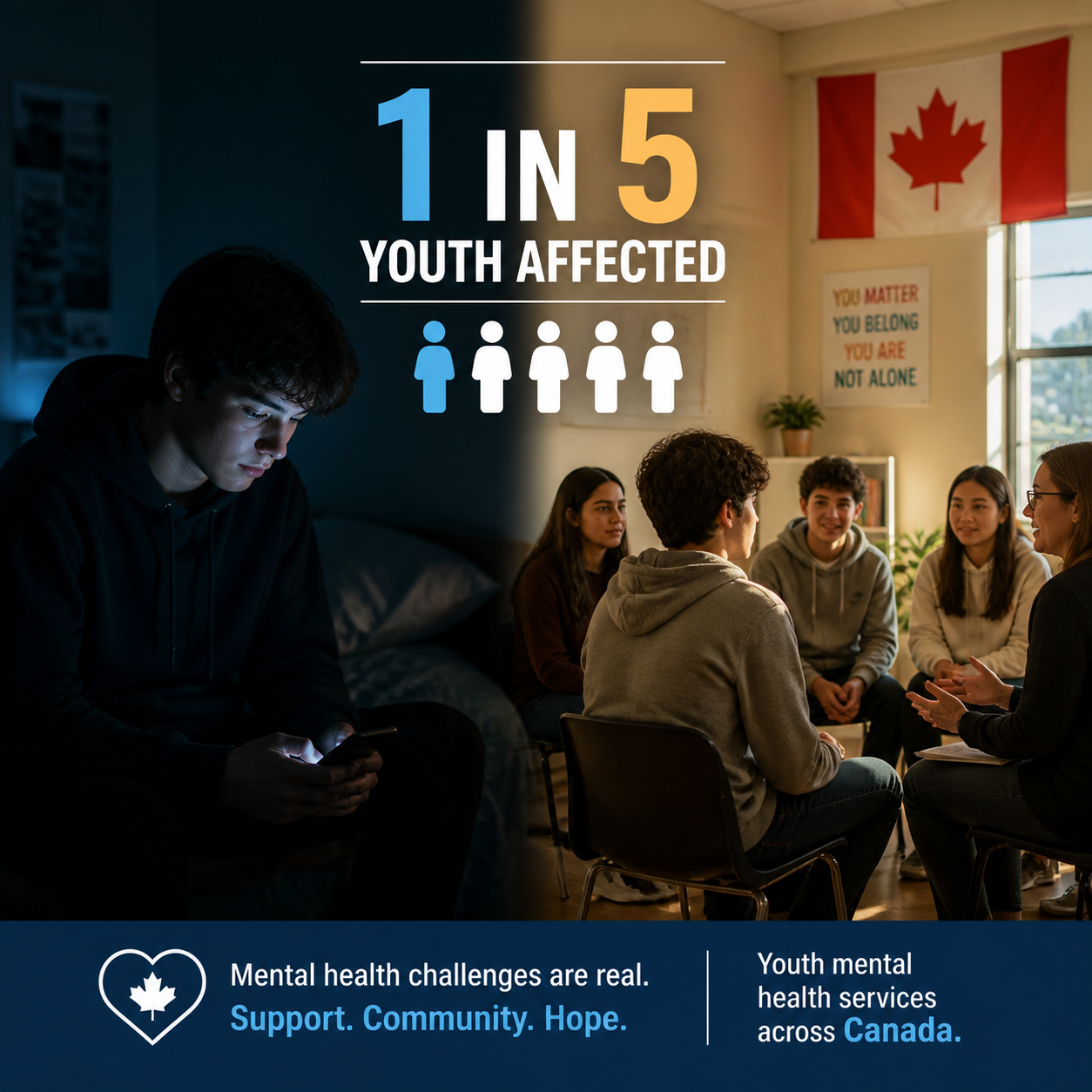
No single factor explains why so many young Canadians are struggling. Instead, a complex web of social, economic, and technological pressures converges during the most vulnerable developmental years.
Social Media and Digital Overload
Canadian youth spend an average of six to seven hours daily on screens outside of school. Research consistently links heavy social media use with increased rates of anxiety, depression, body image issues, and sleep disruption. The constant comparison culture, cyberbullying, and algorithmic feeds designed to maximize engagement create a toxic digital environment for developing minds.
Academic and Economic Pressure
The cost of post-secondary education in Canada continues to climb. Young people face intense pressure to perform academically while navigating an uncertain job market. Housing affordability concerns—once reserved for older adults—now weigh heavily on teenagers contemplating their futures.
Pandemic Aftershocks
The COVID-19 pandemic disrupted critical developmental milestones for an entire generation. Social isolation during formative years, disrupted routines, and family stress created lasting psychological impacts that mental health professionals continue to address in 2026.
Systemic Inequities
Indigenous youth, racialized communities, 2SLGBTQ+ young people, and those living in rural or northern regions face disproportionately higher rates of mental illness. Historical trauma, discrimination, lack of culturally safe services, and geographic isolation compound existing vulnerabilities.
| Contributing Factor | Impact on Youth | Most Affected Groups |
|---|---|---|
| Social media overuse | Anxiety, depression, sleep loss | Ages 12–17 |
| Economic uncertainty | Stress, hopelessness | Low-income families |
| Pandemic disruption | Social anxiety, developmental delays | Ages 8–18 |
| Systemic discrimination | Trauma, identity distress | Indigenous, 2SLGBTQ+, racialized youth |
| Family instability | Attachment issues, behavioral concerns | All demographics |
Evaluating Access to Mental Health Services for Young Canadians
Despite Canada’s universal healthcare system, mental health services remain deeply fragmented and chronically underfunded. Understanding the barriers is essential to addressing Canada’s mental health crisis among youth.
Wait Times and Workforce Shortages
“A young person in crisis shouldn’t have to wait six months to see a counselor. That’s not a healthcare system—that’s a lottery.”
Average wait times for publicly funded child and youth mental health services range from three months to over a year, depending on the province and service type. Canada faces a significant shortage of child psychologists, psychiatrists, and trained counselors, particularly outside major urban centers.
Geographic Disparities
Youth living in rural, remote, and northern communities often have no local mental health professionals available. Travel to urban centers for appointments creates financial and logistical barriers that many families cannot overcome.
Financial Barriers
While hospital-based psychiatric services are covered under provincial health plans, many therapeutic interventions—including psychotherapy, counseling, and specialized programs—require private insurance or out-of-pocket payment. Families without employer benefits face costs of $150 to $250 per session, placing consistent care out of reach.
Stigma and Cultural Barriers
Despite progress in mental health awareness, stigma persists—particularly in certain cultural communities and among young men. Many youth report feeling embarrassed, afraid of judgment, or uncertain about how to access help.
Key Access Challenges at a Glance
- ❌ Long wait lists for publicly funded services
- ❌ Shortage of specialized youth mental health professionals
- ❌ Limited services in rural and northern regions
- ❌ High cost of private therapy
- ❌ Stigma preventing help-seeking behavior
- ❌ Lack of culturally appropriate care options
Innovative Support Programs for the Next Generation
Across Canada, governments, nonprofits, and community organizations are developing creative solutions to bridge the gap. These programs represent the most promising approaches to addressing Canada’s mental health crisis among youth: understanding the causes, access to services, and innovative support programs for the next generation requires acknowledging what works.
Foundry (British Columbia and Beyond)
Foundry offers integrated health and social services for young people aged 12 to 24 under one roof. Services include mental health counseling, substance use support, primary care, peer support, and social services. The model has expanded beyond British Columbia, with other provinces exploring similar integrated youth hubs.
Why it works: Young people can walk in without a referral, reducing barriers and wait times significantly.
Kids Help Phone
Operating 24/7 via phone, text, and live chat, Kids Help Phone provides immediate, anonymous support to youth across Canada. The service has adapted to meet young people where they are—on their devices—and handles millions of interactions annually.
School-Based Mental Health Programs
Several provinces have invested in embedding mental health professionals directly within schools. Programs like MindUP, Go-To Educator training, and school-based wellness hubs ensure that young people can access support in familiar, low-stigma environments.
Indigenous-Led Healing Programs
Organizations like the Thunderbird Partnership Foundation and community-led initiatives prioritize culturally grounded healing approaches. These programs integrate traditional knowledge, land-based healing, Elder guidance, and ceremony alongside clinical supports.
Virtual and Digital Interventions
The rise of e-mental health platforms has expanded access dramatically. Programs like BounceBack, Wellness Together Canada, and various provincial telehealth services allow youth to access evidence-based therapeutic tools from home—critical for those in remote areas.
Peer Support Networks
Trained peer support workers—young people who have navigated their own mental health journeys—provide relatable, non-clinical support. Programs embedding peer workers in schools, community centers, and online platforms show strong engagement rates among youth who might otherwise avoid professional services.
What Needs to Change: Policy Priorities for 2026 and Beyond
Innovative programs alone cannot solve a systemic crisis. Meaningful progress requires coordinated policy action at federal, provincial, and community levels.
Priority areas include:
- Dedicated funding — Establishing a national youth mental health funding stream separate from general healthcare budgets.
- Workforce development — Training and incentivizing mental health professionals to work with youth, particularly in underserved regions.
- Integration — Breaking down silos between education, healthcare, and social services to create seamless pathways for young people.
- Data and accountability — Implementing standardized measurement of wait times, outcomes, and equity indicators across provinces.
- Youth voice — Ensuring young people are meaningfully involved in designing and evaluating the services meant to serve them.
Conclusion
Canada’s mental health crisis among youth demands more than awareness—it demands action. The causes are multifaceted, the barriers to care are real, and the consequences of inaction are measured in lost potential and lost lives.
Yet there is reason for cautious optimism. Innovative programs are proving that accessible, youth-friendly, culturally safe mental health support is achievable. The challenge now is scaling these solutions, sustaining their funding, and ensuring no young Canadian falls through the cracks.
Actionable next steps for readers:
- 📞 Share resources — Save the Kids Help Phone number (1-800-668-6868) and share it with young people in your life.
- 🏫 Advocate locally — Push for mental health supports in schools and community centers.
- 🗳️ Engage politically — Support candidates and policies that prioritize youth mental health funding.
- 💬 Normalize conversations — Talk openly about mental health with the young people around you.
The next generation deserves better. Building that better future starts with understanding the crisis—and committing to solutions that work.
Content, illustrations, and third-party video appearing on GEORGIANBAYNEWS.COM may be generated or curated with AI assistance or reproduced pursuant to the fair dealing provisions of the Copyright Act, R.S.C. 1985, c. C-42. Attribution and hyperlinks to original sources are provided in acknowledgment of applicable intellectual property rights. Such referencing is intended to direct traffic to and support the original rights holders’ platforms.