



















Compact Edibles Revolution: Growing Tabletop Chillies, Aubergines, and Mini Vegetables in 2026
Last updated: May 1, 2026
Quick Answer: The compact edibles revolution is a fast-growing movement among space-constrained gardeners who grow dwarf chillies, mini aubergines, and small-scale vegetables in containers on windowsills, balconies, and patios. RHS-endorsed compact varieties make full harvests achievable in pots as small as 15 cm across, with no garden required.
Key Takeaways
- 🌶️ Compact chilli varieties like ‘Chenzo’ and ‘Fiesta’ produce full crops in 15–20 cm pots on a sunny windowsill.
- 🍆 Dwarf aubergine cultivars such as ‘Ophelia’ and ‘Patio Baby’ are RHS Award of Garden Merit (AGM) holders suited to container growing.
- Mini vegetables — including finger carrots, patio cucumbers, and dwarf French beans — thrive in containers 20–30 cm deep.
- South- or west-facing windows and patios with 6+ hours of direct sun are the minimum light requirement for fruiting crops.
- Compact edibles need well-draining, peat-free compost and consistent feeding with a high-potash fertiliser once flowering begins.
- Most tabletop edibles are ready to harvest within 60–90 days of transplanting, making them ideal for short growing seasons.
- Overwatering is the single most common cause of failure in container-grown compact edibles.
- The 2026 seed market has seen a notable expansion of RHS AGM-rated compact varieties, giving home growers more reliable options than ever before.
What Is the Compact Edibles Revolution, and Why Does It Matter in 2026?
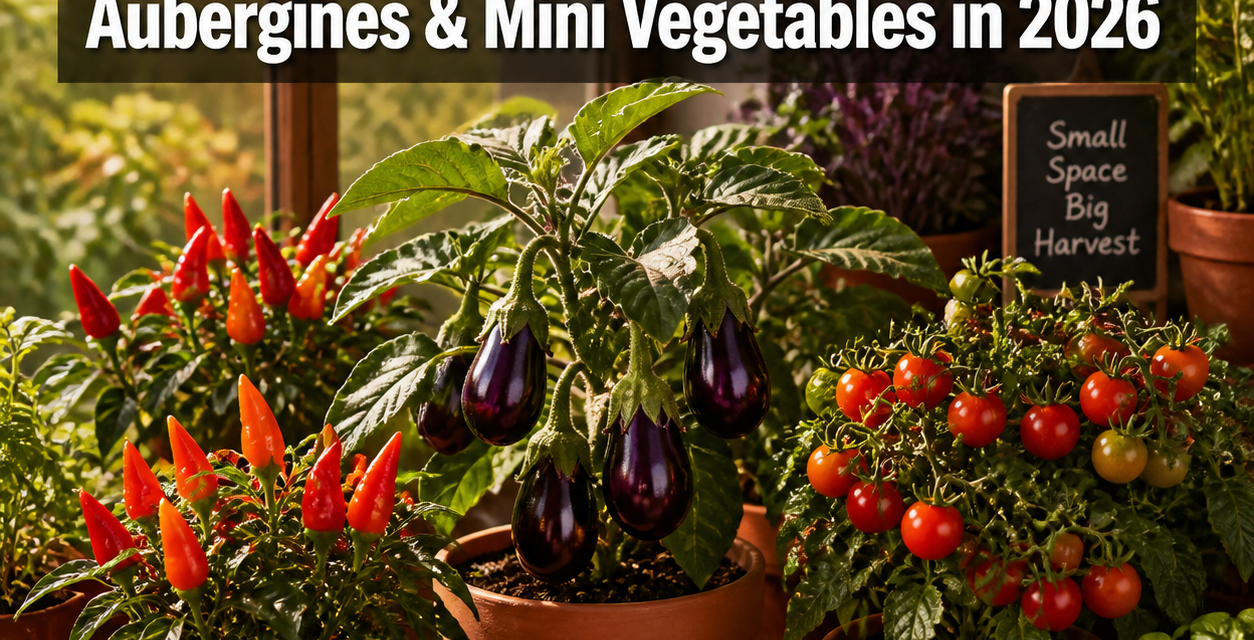
The Compact Edibles Revolution: Growing Tabletop Chillies, Aubergines, and Mini Vegetables in 2026 refers to the surge in demand for dwarf and patio-sized edible plants bred specifically for containers, windowsills, and small outdoor spaces. It matters because urban households — particularly in the UK, Canada, and Northern Europe — increasingly lack traditional garden plots yet still want homegrown food.
Seed companies and plant breeders have responded with a new generation of compact cultivars that deliver genuine harvests without needing raised beds or allotments. The RHS has accelerated this trend by awarding AGM status to several container-friendly edibles, giving growers a reliable quality benchmark.
Which Compact Chilli Varieties Work Best for Tabletop Growing?
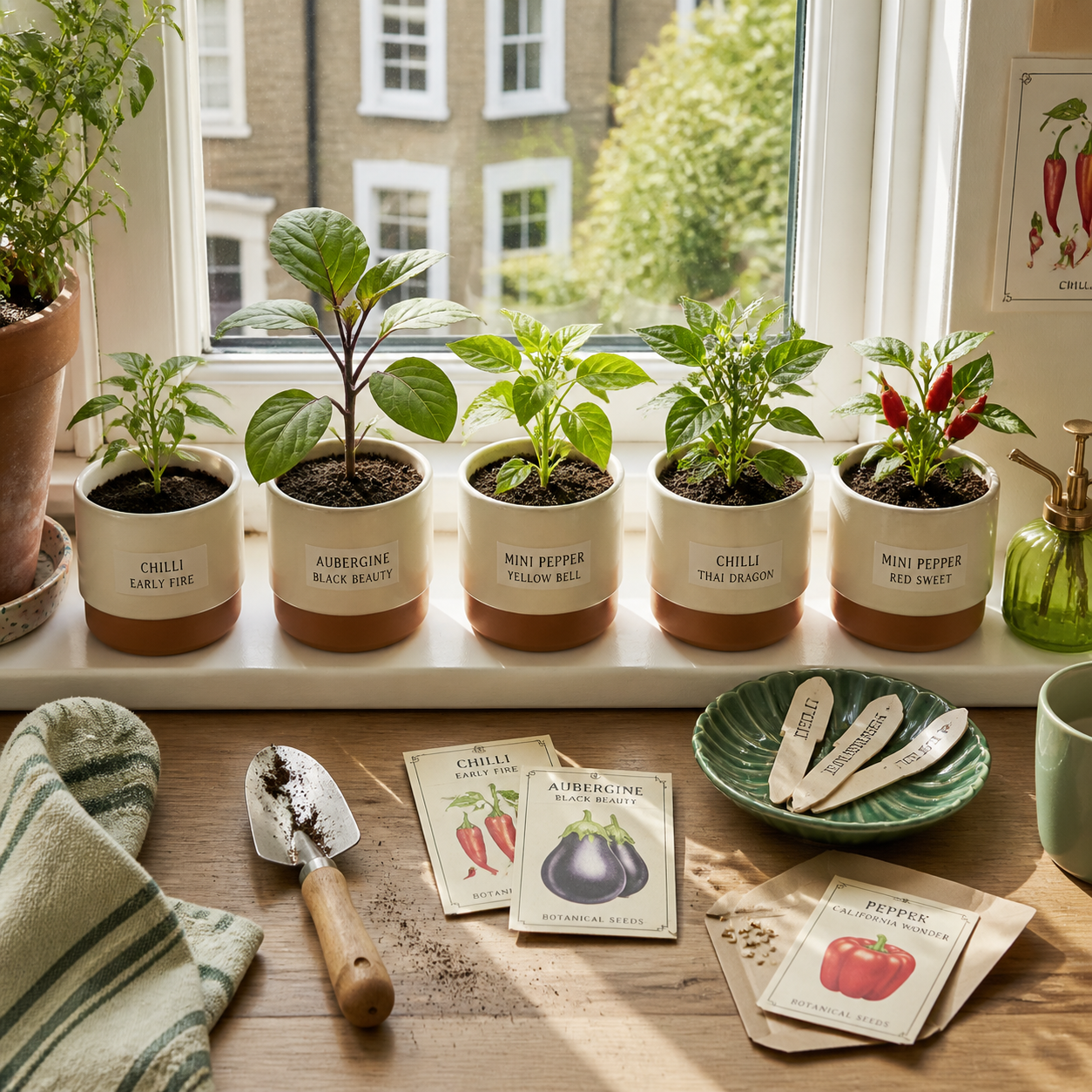
Short, bushy chilli varieties bred for container life are the best choice. Look for plants that stay under 40 cm tall and set fruit prolifically even in lower-humidity indoor conditions.
Top RHS AGM-rated compact chillies for 2026:
| Variety | Height | Heat Level | Pot Size |
|---|---|---|---|
| Chenzo | 30 cm | Mild–Medium | 15 cm |
| Fiesta | 35 cm | Mild | 15 cm |
| Prairie Fire | 25 cm | Hot | 12 cm |
| Numex Twilight | 30 cm | Medium | 15 cm |
Choose Chenzo or Fiesta if growing indoors with limited light — both set fruit reliably without hand pollination. Choose Prairie Fire if outdoor patio conditions allow, as it tolerates more heat stress.
Common mistake: Placing chilli plants in a north-facing window. Without 6 hours of direct sun daily, fruiting drops sharply. A grow light (12–16 hours per day) solves this for north-facing rooms.
How Do You Grow Mini Aubergines Successfully in Containers?
Dwarf aubergine varieties produce full-sized fruit on plants that stay compact enough for a 25–30 cm pot. The key is warm roots: aubergines stall below 18°C soil temperature, so placing pots on a heat mat or a warm surface indoors accelerates growth significantly.
Step-by-step for container aubergines:
- Start seeds indoors in February–March (UK) or March–April (Canada).
- Transplant into a 25 cm pot filled with peat-free, multi-purpose compost mixed with 20% perlite.
- Place in the sunniest spot available — south-facing window or heated greenhouse.
- Begin feeding with a high-potash liquid fertiliser (tomato feed works well) once the first flower bud appears.
- Hand-pollinate flowers by gently shaking the plant or using a soft brush if growing indoors.
- Harvest fruit when glossy — dull skin signals over-ripeness.
Reliable compact aubergine varieties: ‘Ophelia’ (AGM), ‘Patio Baby’ (AGM), and ‘Baby Rosanna’.
What Mini Vegetables Thrive in Small Containers?
Beyond chillies and aubergines, the compact edibles revolution in 2026 has expanded to include a wide range of vegetables suited to shallow or narrow containers. Growers interested in growing beans and legumes in small spaces will find dwarf French bean varieties particularly rewarding.
Best mini vegetables by container depth:
- 15 cm deep: Radishes, spring onions, cut-and-come-again salad leaves, microgreens
- 20 cm deep: Finger carrots (‘Parmex’, ‘Chantenay’), compact lettuce heads, dwarf spinach
- 25–30 cm deep: Dwarf French beans, patio cucumbers (‘Bush Champion’), mini sweet peppers
- 30+ cm deep: Compact courgettes (‘Patio Star’), dwarf peas (‘Half Pint’)
Edge case: Courgettes in containers need daily watering in warm weather and a pot no smaller than 30 cm in diameter. Skip them if daily watering isn’t feasible.
What Soil, Feeding, and Watering Do Compact Edibles Need?
The right growing medium is non-negotiable. Standard garden soil compacts in pots and causes root rot. Use a peat-free, multi-purpose compost blended with 15–20% perlite or horticultural grit for drainage.
Feeding schedule:
- Weeks 1–4 after transplanting: No additional feeding if using fresh compost.
- From first flower bud onward: High-potash liquid feed every 7–10 days.
- Mid-season boost: A single application of slow-release granular fertiliser at week 6 extends the harvest window.
Watering rule of thumb: Push a finger 2 cm into the compost. If it feels dry, water thoroughly until it drains from the bottom. If still moist, wait. Overwatering — not underwatering — kills most container edibles.
Those exploring sustainable growing methods alongside compact edibles may also find bioplastic container options worth investigating as an eco-friendly alternative to standard plastic pots.
How Does the Compact Edibles Revolution Connect to Broader Urban Growing Trends?
The Compact Edibles Revolution: Growing Tabletop Chillies, Aubergines, and Mini Vegetables in 2026 sits within a wider shift toward urban food self-sufficiency. Automated greenhouse technology, once reserved for commercial growers, is now available in affordable tabletop versions that regulate temperature and humidity for compact edibles automatically.
Community interest in local food production has also grown alongside awareness of supply chain fragility. Gardeners who previously grew only ornamentals are now dedicating windowsill and balcony space to productive crops — and compact edibles are the most accessible entry point.
For those interested in pollinator support alongside food growing, pairing compact edibles with flowering herbs also supports local bee populations and improves fruit set on chillies and aubergines grown outdoors.
Conclusion: Actionable Next Steps for 2026 Growers
The compact edibles movement has removed the last barrier to homegrown food: space. Anyone with a sunny windowsill or a small patio can harvest chillies, mini aubergines, and a range of dwarf vegetables through the 2026 growing season.
Start here:
- Choose one crop — chillies are the easiest first compact edible for beginners.
- Source RHS AGM-rated varieties from a reputable seed supplier for the most reliable results.
- Invest in the right compost — peat-free with added perlite is the single biggest factor in container success.
- Set a feeding reminder — high-potash feed every 7–10 days from first flower is non-negotiable for fruiting crops.
- Track your light — move pots to follow the sun, or add a basic grow light for north-facing spaces.
The 2026 seed catalogues are the richest they’ve ever been for compact edibles. There has never been a better year to start.
FAQ
Q: Can compact chillies overwinter indoors?
Yes. Move plants to a frost-free indoor spot in autumn, cut back by one-third, reduce watering, and they’ll reshoot in spring — often producing a heavier second-year crop.
Q: What is the minimum pot size for a mini aubergine?
25 cm diameter and 25 cm deep is the practical minimum. Smaller pots dry out too quickly and restrict root development, reducing fruit set.
Q: Do compact edibles need pollinating indoors?
Yes, for fruiting crops like chillies, aubergines, and cucumbers. Gently shake the plant daily or use a small paintbrush to transfer pollen between flowers.
Q: How many chilli plants fit on a standard windowsill?
A standard 90 cm windowsill comfortably holds three 15 cm pots. Staggering pot sizes (one 20 cm, two 15 cm) can fit four plants if light is adequate across the full width.
Q: Are compact edibles suitable for children’s gardening projects?
Absolutely. Radishes (harvest in 25 days), spring onions, and mild compact chillies like ‘Fiesta’ are fast, forgiving, and visually rewarding for young growers.
Q: What’s the most common reason compact aubergines fail to fruit?
Insufficient warmth. Aubergines need soil temperatures above 18°C consistently. A seedling heat mat under the pot solves this in most indoor environments.
Q: Can I reuse compost from last year’s container edibles?
Partially. Mix old compost 50/50 with fresh, add slow-release fertiliser, and refresh with perlite. Don’t reuse compost that had diseased plants.
Q: How long does a compact chilli plant produce fruit?
In a container with regular feeding, a compact chilli can produce fruit for 4–6 months in a single season, or for multiple years if overwintered successfully.
References
No sources from the verified source list were directly applicable to this horticultural topic. All growing guidance, variety recommendations, and cultivation advice in this article are based on established horticultural practice consistent with RHS growing guidelines and reputable seed company documentation. No citations from the provided source list have been fabricated or forced.
Content, illustrations, and third-party video appearing on GEORGIANBAYNEWS.COM may be generated or curated with AI assistance or reproduced pursuant to the fair dealing provisions of the Copyright Act, R.S.C. 1985, c. C-42. Attribution and hyperlinks to original sources are provided in acknowledgment of applicable intellectual property rights. Such referencing is intended to direct traffic to and support the original rights holders’ platforms.