
















Dwarf Fruit Trees in Canadian Vegetable Gardens: Compact Flavor Boosters for 2026 Small Spaces
Last updated: May 5, 2026
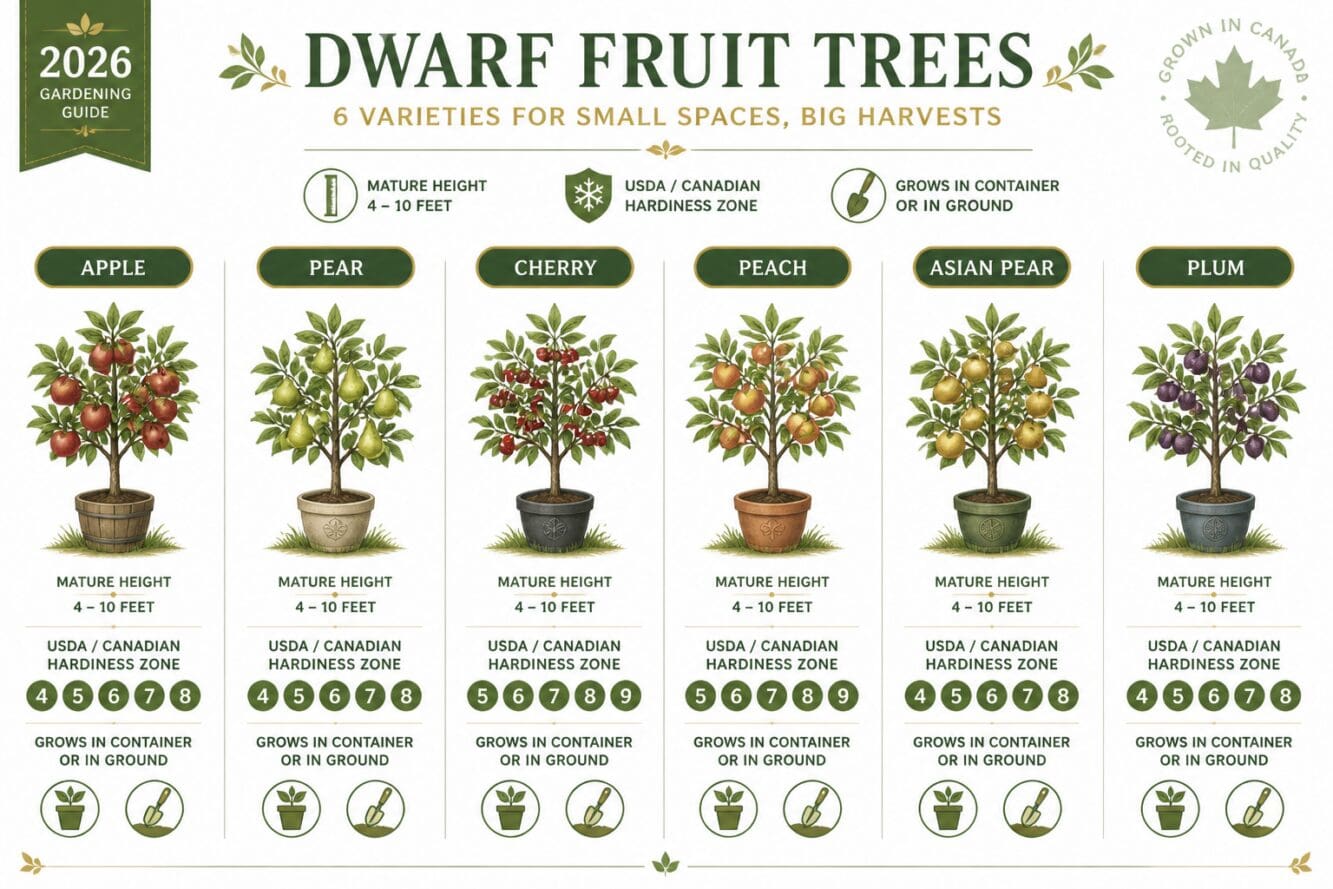
Quick Answer: Dwarf fruit trees grow 4–10 feet tall and integrate directly into vegetable beds, containers, or raised planters, making them a practical choice for Canadian gardeners with limited yard space. They provide blossoms, privacy screening, and harvests without consuming the full footprint of a standard orchard tree. In 2026, new self-pollinating varieties make single-tree fruiting more accessible than ever for small Canadian yards.
Key Takeaways
- 🌳 Dwarf fruit trees top out at 4–10 feet, fitting neatly alongside vegetable rows or in containers on patios
- 🍎 Varieties like dwarf Anjou and Bartlett pears reach 8–10 feet tall and 6–7 feet wide at maturity [3]
- 🍒 Cherries suit northern Canadian climates; peaches perform better in southern regions [2]
- 🪴 Container growing is a confirmed 2026 Canadian gardening trend, making dwarf trees even more relevant [5]
- 🌸 New 2026 self-pollinating varieties allow single trees to produce fruit without a pollinator partner [4]
- 🌱 Free-draining soil enriched with compost and a 1–2 inch spring mulch layer supports healthy growth [2]
- 📦 Hardy Fruit Trees Canada offers beginner-friendly “Little Family Orchard” starter packages [7]
- ✅ Dwarf trees double as privacy screens and pollinator attractors inside vegetable garden layouts
Why Dwarf Fruit Trees Belong in Canadian Vegetable Gardens
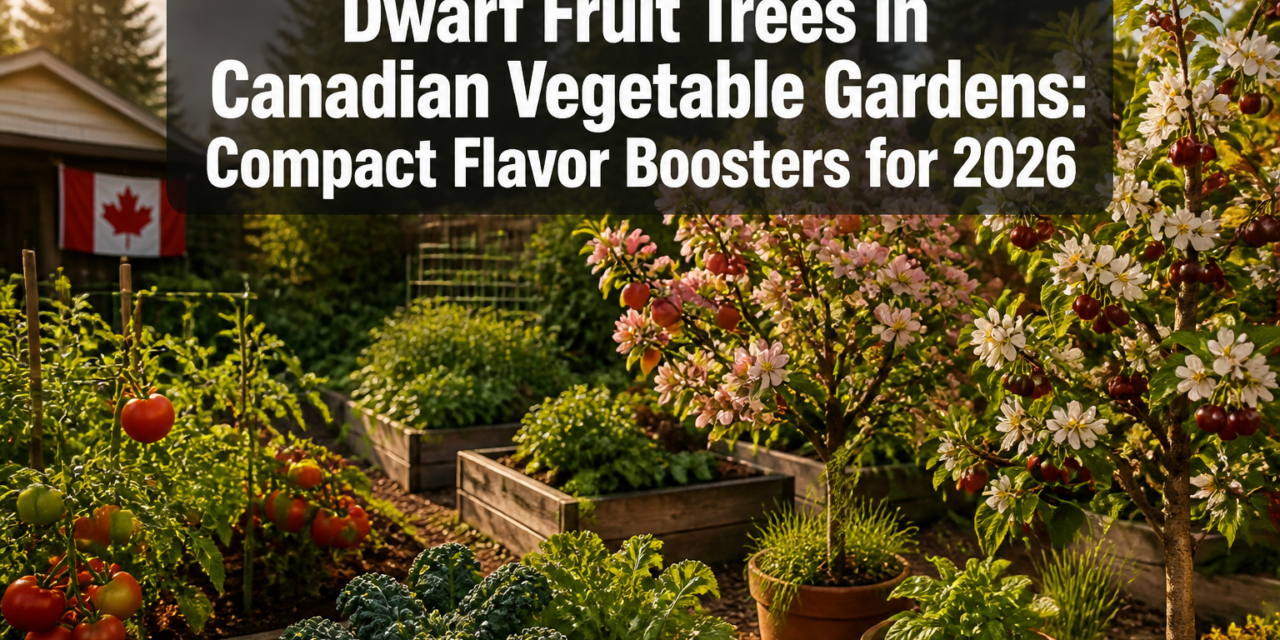
Dwarf fruit trees in Canadian vegetable gardens represent a compact, multi-functional approach to small-space food growing that standard orchard trees simply cannot match. A single dwarf apple or cherry tree can anchor a raised bed layout, attract pollinators to nearby vegetables, and deliver a seasonal harvest from a footprint smaller than a patio chair.
Canadian yards are shrinking. Urban lots in cities like Toronto, Vancouver, and Ottawa increasingly leave gardeners with narrow side yards or small decks rather than open lawn. Container gardening is now one of the top Canadian gardening trends for 2026, according to Proven Winners [5], and dwarf fruit trees are a natural fit for that shift.
For more on what’s growing across Canada this season, local horticultural communities are a great starting point.
Which Dwarf Fruit Tree Varieties Work Best for Canadian Climates?
Choose variety based on your hardiness zone first, then consider size and pollination needs.
| Variety | Mature Height | Best Canadian Region | Self-Pollinating? |
|---|---|---|---|
| Dwarf Anjou Pear | 8–10 ft | Central/Southern | No |
| Dwarf Bartlett Pear | 8–10 ft | Central/Southern | No |
| 20th Century Asian Pear | 8–10 ft | Southern | No |
| Dwarf Sour Cherry | 6–8 ft | Northern/Central | Yes |
| Dwarf Peach | 4–6 ft | Southern Ontario/BC | Yes (some) |
| Arbequina Olive | ~10 ft | BC Coastal (container) | Yes |
Sources: [2], [3]
Regional rule: Cherries tolerate colder winters and suit northern Canadian zones well. Peaches need warmer summers and lower chill hours, making them better suited for southern Ontario and coastal BC [2].
2026 update: Monrovia Nursery introduced a new edible variety for 2026 featuring sweet, peachy-pink mid-size fruit with full self-pollinating capability, meaning one tree produces a harvest without a second tree nearby [4]. This is a meaningful change for gardeners with space for only one tree.
How Do Dwarf Fruit Trees Fit Into an Existing Vegetable Garden Layout?
Dwarf fruit trees integrate into vegetable gardens as vertical anchors, privacy screens, or container specimens without shading out low-growing crops when positioned correctly.
Practical placement tips:
- Place trees on the north or east edge of a vegetable bed so they don’t cast afternoon shadow over sun-loving crops like tomatoes or peppers
- Use containers (minimum 15–20 gallon) on patios or decks to keep trees mobile and frost-protected in winter [1]
- Underplant dwarf trees with companion vegetables like lettuce, spinach, or herbs that tolerate partial shade
- A dwarf cherry or pear along a fence line doubles as a privacy screen while producing fruit
The Collingwood Farmers Market and similar local markets are excellent places to find regionally adapted dwarf tree starts each spring.
What Soil and Care Do Dwarf Fruit Trees Need in Canadian Gardens?
Dwarf fruit trees need free-draining, fertile soil and consistent moisture, especially in their first two growing seasons.
Core care checklist:
- ✅ Amend soil with compost before planting
- ✅ Apply 1–2 inches of quality compost as mulch each early spring [2]
- ✅ Water deeply once per week during dry spells rather than shallow daily watering
- ✅ Prune in late winter before bud break to maintain shape and airflow
- ✅ For container trees, use a premium potting mix with added perlite for drainage [1]
Common mistake: Planting dwarf trees in compacted clay without amendment. Poor drainage causes root rot within one to two seasons. Always test drainage before planting by filling the hole with water and checking that it drains within an hour.
Where Can Canadian Gardeners Source Dwarf Fruit Trees in 2026?
Hardy Fruit Trees, a Canadian nursery, offers a “Little Family Orchard” package designed specifically as a beginner-friendly introduction to home fruit growing [7]. This type of curated starter kit removes the guesswork around variety selection and zone compatibility.
Other sourcing options:
- Local garden centres stocking zone-appropriate stock (ask specifically for dwarfing rootstock)
- Provincial horticultural societies, which often hold spring plant sales
- Online Canadian nurseries shipping bare-root trees in early spring
Gardening resources like big harvest guides from local news outlets can also point to regional suppliers and planting calendars.
Conclusion: Start Small, Harvest Big in 2026
Dwarf fruit trees in Canadian vegetable gardens offer a practical answer to shrinking yard sizes without sacrificing the pleasure of home-grown fruit. The 2026 season brings new self-pollinating varieties, a strong container gardening trend, and accessible starter packages from Canadian nurseries, making this the right year to add a compact tree or two to an existing vegetable layout.
Actionable next steps:
- Identify your Canadian hardiness zone and match it to the variety table above
- Choose a self-pollinating variety if space allows for only one tree
- Source from a Canadian nursery (Hardy Fruit Trees or a local garden centre) for zone-appropriate stock
- Plant on the north or east edge of vegetable beds to protect sun-loving crops
- Mulch with 1–2 inches of compost each spring and water deeply, not frequently
Small spaces don’t require small ambitions. A single dwarf cherry or pear tree, tucked beside a raised vegetable bed, can produce blossoms in spring, shade in summer, and a genuine harvest by fall.
FAQ
Q: How tall do dwarf fruit trees get?
Most dwarf fruit trees reach 4–10 feet at maturity, depending on variety and rootstock. Dwarf pears typically reach 8–10 feet; dwarf peaches can stay as compact as 4–6 feet [3].
Q: Can dwarf fruit trees grow in containers in Canada?
Yes. Container growing is well-suited to dwarf fruit trees, especially on patios or decks where in-ground planting isn’t possible. Use a minimum 15–20 gallon container with free-draining potting mix [1].
Q: Do dwarf fruit trees need a pollinator?
Some do, some don’t. Sour cherries and certain peach varieties are self-pollinating. Most pears require a second compatible variety nearby. New 2026 introductions include self-pollinating options that simplify single-tree growing [4].
Q: What’s the best dwarf fruit tree for northern Canada?
Dwarf sour cherries are among the most cold-tolerant options and suit northern Canadian hardiness zones better than peaches or pears [2].
Q: How much sun do dwarf fruit trees need?
Most dwarf fruit trees need a minimum of 6 hours of direct sun daily. Place them where they receive full sun and don’t shade nearby vegetables.
Q: When should dwarf fruit trees be planted in Canada?
Early spring, after the last frost date for your zone, is the standard planting window. Bare-root trees can go in slightly earlier than container-grown stock.
Q: How long until a dwarf fruit tree produces fruit?
Most dwarf trees begin producing fruit within 2–4 years of planting, significantly faster than standard-sized trees, which can take 5–7 years.
Q: Is mulching really necessary?
Yes. A 1–2 inch layer of compost mulch applied each spring retains moisture, suppresses weeds, and feeds the soil as it breaks down, which is especially important in Canadian climates with short growing seasons [2].
References
[1] 6 Dwarf Fruit Trees To Grow In Rolling Containers For Earth Day – https://www.vegogarden.com/en-ca/blogs/academy/6-dwarf-fruit-trees-to-grow-in-rolling-containers-for-earth-day
[2] How To Grow Dwarf Fruit Trees – https://www.growveg.com/plants/us-and-canada/how-to-grow-dwarf-fruit-trees/
[3] Small Fruit Trees For Small Garden Designs 33 Ideas – https://resprout.com/small-fruit-trees-for-small-garden-designs-33-ideas/
[4] Seven New Edible Plant Varieties For 2026 – https://www.preen.com/learn/lawn-garden-tips/plants-trees-shrubs/fruits-veggies-herbs/seven-new-edible-plant-varieties-for-2026/
[5] Top Canadian Gardening Trends 2026 – https://www.provenwinners.com/learn/finding-right-plant/top-canadian-gardening-trends-2026
[7] Family Orchard – https://www.hardyfruittrees.ca/produit/all-trees/family-orchard/
Content, illustrations, and third-party video appearing on GEORGIANBAYNEWS.COM may be generated or curated with AI assistance or reproduced pursuant to the fair dealing provisions of the Copyright Act, R.S.C. 1985, c. C-42. Attribution and hyperlinks to original sources are provided in acknowledgment of applicable intellectual property rights. Such referencing is intended to direct traffic to and support the original rights holders’ platforms.