





















Counterfeit Currency in Ontario: Fake Money Circulation Across Communities in 2026

When Sarah Chen accepted a crisp $100 bill from a customer at her store last month, she never suspected it was fake. It wasn’t until her bank deposit was rejected that she realized she’d become another victim in Ontario’s growing counterfeit currency problem. Her story, unfortunately, is far from unique across the province in 2026.
Counterfeit currency continues to circulate through Ontario communities, affecting businesses, consumers, and the broader economy. From small-town retailers to major urban centers, fake bills are finding their way into cash registers, wallets, and bank deposits. Understanding this threat has never been more critical for Canadians and visitors alike.
Key Takeaways
- 🚨 Counterfeit currency incidents in Ontario have shown concerning patterns in 2026, particularly affecting small businesses and seniors
- 💵 The most commonly counterfeited Canadian bills are $20, $50, and $100 denominations
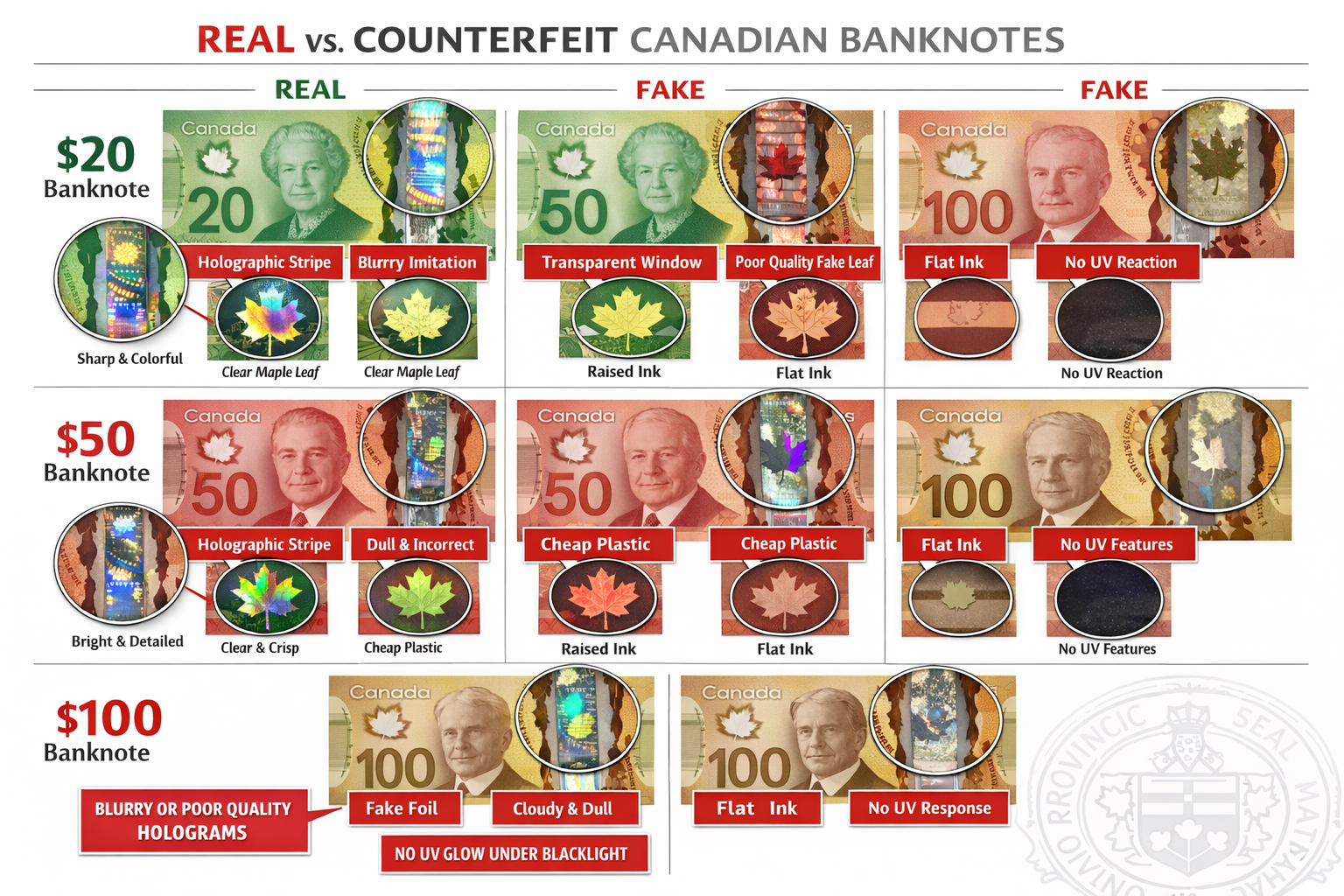
- 🔍 Modern security features on legitimate Canadian currency include transparent windows, holographic stripes, and raised ink
- 🛡️ Businesses and individuals can protect themselves by learning to identify fake bills and using detection tools
- 📞 Reporting suspected counterfeit currency to local police and the Bank of Canada helps protect entire communities
Understanding the Counterfeit Currency Problem in Ontario

The circulation of fake money represents more than just an economic inconvenience—it’s a criminal activity that undermines trust in Canada’s financial system. In 2026, Ontario law enforcement agencies have documented numerous cases where counterfeit currency has appeared in everyday transactions.
What Makes Counterfeit Money Dangerous?
When fake bills enter circulation, they create a ripple effect throughout communities:
- Direct financial losses for businesses and individuals who unknowingly accept them
- Erosion of trust in cash transactions
- Economic impact on local economies
- Legal complications for innocent parties caught with fake bills
The psychological impact shouldn’t be underestimated either. Many victims, like Sarah from Collingwood, report feeling violated and questioning their judgment in future transactions.
Recent Ontario Stories: Where Counterfeit Currency Has Appeared
Across Ontario in 2026, communities have reported various incidents involving fake money. These stories highlight the widespread nature of the problem and the diverse settings where counterfeit currency surfaces.
Counterfeit currency has surged dramatically across Ontario in recent months, with police services throughout the province issuing warnings about nearly $50,000 in counterfeit money reported since the beginning of 2026 CP24 to Toronto Police alone.
- Halton Region received 92 reports involving counterfeit banknotes in 2025 CHCH
- A Mississauga company was scammed out of $6,200 when someone bought a trailer with counterfeit money CP24
- Hamilton Police reported an increase in counterfeit notes circulating in November 2025
- Ottawa Police warned about counterfeit $100 bills in February 2025
- North Bay police warned of counterfeit $50 bills with the same serial number and printed braille dots CTVNews
- Barrie police discovered fake $50 and $100 bills being used at local establishments Soscip
- Northern Ontario reported several incidents
- Brantford received 52 reports of counterfeit bills in 2025, leading to five arrests Smith Investigation Agency
Small Business Vulnerabilities
Local retailers face particular challenges. A Thornbury convenience store owner discovered three counterfeit $50 bills in a single week—representing a significant loss for a small operation. The owner, who wished to remain anonymous, shared that the bills felt “almost right” but failed the pen test.
Similarly, restaurants and cafés report challenges during busy periods when staff have limited time to scrutinize each bill. The pressure to serve customers quickly can create opportunities for counterfeiters to pass fake money undetected.
Community Events and Markets
Seasonal farmers’ markets and community festivals present unique risks. Cash-heavy environments with high transaction volumes and varying lighting conditions make it easier for fake bills to slip through. Several vendors at Georgian Bay area markets have reported accepting counterfeit $20 bills during peak summer months.
Senior Citizens: A Targeted Demographic
Disturbingly, some reports suggest seniors are disproportionately targeted. Scammers may assume older Canadians are less familiar with newer security features or more trusting in face-to-face transactions. Community awareness programs help educate vulnerable populations about this threat.
How to Identify Counterfeit Currency: Essential Security Features
The Bank of Canada has incorporated sophisticated security features into legitimate currency. Learning to recognize these elements is the first line of defense against counterfeit currency.
Primary Security Features on Canadian Bills
| Security Feature | What to Look For | How to Check |
|---|---|---|
| Transparent Window | Clear polymer section with metallic images | Hold to light; should be completely transparent |
| Metallic Portrait | Large metallic image matching the main portrait | Tilt bill; image should show color-shifting effect |
| Raised Ink | Textured areas on shoulders and large numbers | Run fingers over bill; should feel raised |
| Hidden Numbers | Small numbers visible only when held to light | Hold to light at eye level |
| Frosted Maple Leaf Window | Metallic maple leaf in transparent area | Tilt bill; leaf should change from gold to green |
The Touch-Tilt-Look Method
Security experts recommend this three-step approach:
- Touch: Feel for raised ink on the shoulders and large number
- Tilt: Watch for color-shifting metallic images
- Look: Hold to light to see transparent window and hidden numbers
This simple method takes only seconds but can save hundreds of dollars in losses.
Common Counterfeit Indicators
Fake bills often exhibit telltale signs:
- ❌ Blurry or unclear printing
- ❌ Missing or poorly reproduced transparent window
- ❌ Flat texture (no raised ink)
- ❌ Incorrect paper feel (too smooth or too rough)
- ❌ Faded or incorrect colors
- ❌ Misaligned printing or images
Protection Strategies for Businesses and Individuals
Prevention remains the most effective strategy against counterfeit currency losses. Both businesses and individual consumers can take practical steps to minimize risk.
For Business Owners
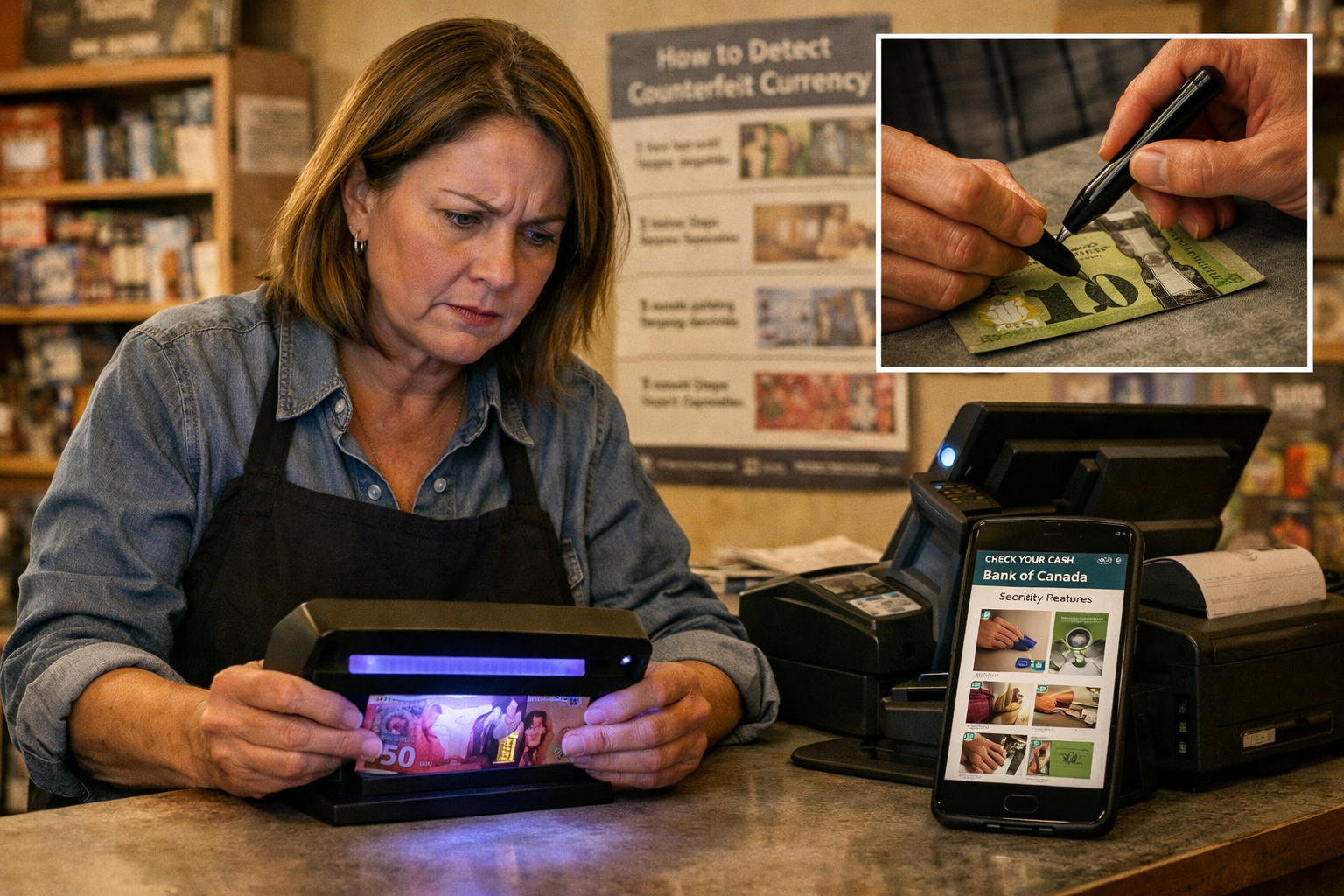
Invest in Detection Tools: UV lights, counterfeit detection pens, and automated bill validators provide affordable protection. While no single tool is foolproof, combining multiple methods increases accuracy.
Train Staff Thoroughly: Regular training sessions ensure all employees know how to check bills properly. Create a clear protocol for handling suspected counterfeits without confronting customers aggressively.
Display Warning Signs: Visible notices that bills will be checked can deter counterfeiters from attempting to pass fake money at your establishment.
Implement Transaction Limits: Some businesses require manager approval for large bills or limit acceptance of $50 and $100 bills during certain hours.
For Individual Consumers
Examine Bills Received as Change: Don’t assume change from legitimate businesses is automatically real. Take a moment to check large bills.
Be Cautious in Private Transactions: Person-to-person sales (online marketplaces, garage sales) carry higher risk. Meet in well-lit public places and examine cash carefully.
Know Your Rights: If you unknowingly receive a counterfeit bill, you’re not legally liable, but you will lose that money. Banks and police will confiscate fake bills without compensation.
Use Digital Payment When Possible: While not always practical, electronic payments eliminate counterfeit risk entirely. Many local businesses now offer multiple payment options.
What to Do If You Encounter Counterfeit Currency
Discovering you’ve received a fake bill can be unsettling, but knowing the proper steps helps protect yourself and your community.
Immediate Actions
Do Not Return It: Never try to pass a suspected counterfeit bill to someone else, even if you received it innocently. Doing so is illegal and could result in criminal charges.
Do Not Handle Excessively: Minimize touching the bill to preserve potential fingerprints or other evidence that could help investigators.
Note Relevant Details: Write down everything you remember about how you received the bill—date, time, location, description of the person who gave it to you, and any vehicle information.
Reporting Procedures
- Contact Local Police: Call your local police department’s non-emergency line to report the incident
- Notify the Bank of Canada: Report counterfeit currency through the Bank of Canada’s official channels
- Provide the Bill to Authorities: Police will confiscate the counterfeit bill as evidence
- File a Report: Complete any necessary paperwork for your records
“Reporting counterfeit currency isn’t just about recovering your loss—it’s about protecting the next potential victim in your community.” – Ontario Provincial Police Financial Crimes Unit
Understanding the Legal Implications
Innocent Recipients: If you unknowingly accepted a counterfeit bill, you’re not criminally liable. However, you won’t receive compensation for the loss.
Attempting to Pass Counterfeit Money: Knowingly using fake currency is a serious criminal offense under the Criminal Code of Canada, carrying potential imprisonment.
Possession of Counterfeiting Equipment: Manufacturing or possessing tools for creating fake money carries severe penalties.
The Broader Impact on Ontario Communities
Counterfeit currency affects more than individual victims—it impacts entire communities and the provincial economy.
Economic Consequences
When businesses lose money to counterfeits, they often compensate by:
- Raising prices to offset losses
- Reducing staff hours or positions
- Limiting cash acceptance
- Investing in expensive detection equipment
These adjustments ultimately affect consumers and employees throughout the community.
Social Trust Erosion
Cash transactions rely on mutual trust. As counterfeiting increases, that trust diminishes. Some businesses have stopped accepting large bills entirely, creating inconvenience for legitimate customers.
The local business community faces ongoing challenges balancing customer service with security concerns.
Law Enforcement Resource Allocation
Investigating counterfeit currency cases requires significant police resources. Each incident demands:
- Initial response and evidence collection
- Forensic analysis of fake bills
- Investigation to trace distribution networks
- Coordination with federal agencies
- Court proceedings when suspects are identified
These demands compete with other community safety priorities.
Technology and the Future of Currency Security
As counterfeiting techniques evolve, so do security measures. Understanding emerging trends helps Ontarians stay ahead of threats.
Advanced Security Features
The Bank of Canada continuously develops new anti-counterfeiting technologies:
- Enhanced polymer substrates that are harder to replicate
- More sophisticated holographic elements requiring specialized equipment to reproduce
- Micro-printing visible only under magnification
- Color-shifting inks with complex optical properties
Digital Payment Trends
The shift toward digital transactions provides inherent protection against counterfeit currency:
- Contactless payment cards
- Mobile payment apps
- E-transfer systems
- Cryptocurrency (though with its own risks)
However, cash remains important for many Ontarians, particularly in rural areas, among seniors, and for those without bank accounts. Maintaining cash security remains essential.
Artificial Intelligence Detection
Some businesses now employ AI-powered systems that analyze bills in real-time, identifying counterfeits with high accuracy. As this technology becomes more affordable, broader adoption may significantly reduce counterfeit circulation.
Education and Community Awareness Initiatives
Combating counterfeit currency requires collective action. Various organizations across Ontario work to educate the public about this threat.
Bank of Canada Programs
The Bank of Canada offers:
- Free educational materials for businesses and schools
- Online training modules about security features
- Mobile apps for checking bills
- Workshops for business associations
Local Police Outreach
Many Ontario police services conduct community presentations, particularly for:
- Small business owners
- Senior citizen groups
- Newcomers to Canada
- Retail employee training programs
Community safety initiatives often include counterfeit awareness components.
Peer-to-Peer Knowledge Sharing
Community members sharing experiences and tips creates informal education networks. Local business associations, neighborhood groups, and online community forums facilitate this knowledge exchange.
Special Considerations for Different Groups
Different populations face unique challenges and require tailored approaches to counterfeit currency protection.
Seniors and Vulnerable Adults
Older Ontarians may benefit from:
- Large-print guides to security features
- Simplified checking procedures
- Trusted family member assistance with large transactions
- Community support programs that include financial safety education
New Canadians
Immigrants and refugees may be unfamiliar with Canadian currency security features. Targeted education in multiple languages helps protect these community members.
Tourists and Visitors
American and international visitors to Ontario may not recognize Canadian security features, making them potential targets. Hotels, tourist information centers, and border crossings should provide educational materials.
Small Business Owners
Independent retailers often lack the resources of larger corporations. Affordable detection solutions and peer support networks help level the playing field.
Regional Variations Across Ontario
Counterfeit currency incidents vary by region, with different patterns emerging across the province.
Urban Centers
Toronto, Ottawa, and other major cities see higher volumes of counterfeit bills but also have more resources for detection and enforcement. The anonymity of large urban areas can facilitate counterfeit distribution.
Rural and Small-Town Ontario
Communities like those around Georgian Bay face different challenges:
- Fewer law enforcement resources
- Closer-knit communities where trust runs higher
- Limited access to advanced detection equipment
- Seasonal population fluctuations affecting vigilance
Border Regions
Areas near the U.S. border experience unique patterns, with some counterfeits originating from cross-border criminal networks. Currency exchange locations require particular vigilance.
The Role of Financial Institutions
Banks and credit unions serve as crucial partners in combating counterfeit currency circulation.
Detection at Deposit
Financial institutions employ sophisticated equipment to detect counterfeits during deposits. When fake bills are discovered:
- The depositor is notified
- Bills are confiscated
- Authorities are contacted
- No compensation is provided to the depositor
Customer Education
Many banks offer:
- Information pamphlets about security features
- Staff assistance in examining suspicious bills
- Referrals to law enforcement when needed
- Business account holders receive specialized training
Reporting Networks
Banks participate in coordinated reporting systems that help identify counterfeit distribution patterns and emerging threats.
Prevention Through Community Vigilance
The most effective defense against counterfeit currency is an informed, vigilant community working together.
Building a Culture of Awareness
Communities can foster protection by:
- Normalizing bill checking: Making it socially acceptable to examine currency carefully
- Sharing information: Alerting neighbors and fellow business owners about local incidents
- Supporting victims: Recognizing that anyone can be deceived
- Promoting education: Encouraging participation in training programs
Neighborhood Watch Programs
Some Ontario communities have expanded traditional neighborhood watch to include economic crimes like counterfeiting. Local safety initiatives demonstrate the power of collective action.
Business Association Collaboration
Retail associations can:
- Pool resources for detection equipment
- Share intelligence about counterfeit incidents
- Coordinate training sessions
- Advocate for law enforcement resources
Looking Ahead: The Future of Currency in Ontario
As 2026 progresses, the landscape of currency and counterfeiting continues to evolve.
Emerging Threats
Counterfeiters constantly adapt, utilizing:
- Improved printing technology
- Better polymer materials
- More sophisticated distribution networks
- Online marketplaces for equipment sales
Evolving Defenses
Authorities and financial institutions respond with:
- Next-generation security features
- Enhanced law enforcement cooperation
- Artificial intelligence detection systems
- Public awareness campaigns
The Digital Transition
While physical currency remains important, the gradual shift toward digital payments may eventually reduce counterfeiting opportunities. However, this transition will take years or decades, making current vigilance essential.
Practical Resources for Ontarians
Numerous resources help residents protect themselves from counterfeit currency:
Official Sources
- Bank of Canada: Comprehensive information about security features and reporting
- Canadian Anti-Fraud Centre: Reporting and prevention resources
- Local Police Services: Community education and incident reporting
- Ontario Provincial Police: Provincial coordination and investigation
Community Resources
- Business improvement associations
- Chamber of Commerce organizations
- Community centers offering financial literacy programs
- Local news sources providing updates on regional incidents
Technology Tools
- Bank of Canada’s mobile app for checking bills
- UV light detectors (available at office supply stores)
- Counterfeit detection pens
- Automated bill validators for businesses
Conclusion: Protecting Yourself and Your Community
The circulation of counterfeit currency in Ontario represents a serious but manageable threat. Through education, vigilance, and community cooperation, residents can significantly reduce their risk of falling victim to fake money.
Remember these key principles:
✅ Learn the security features of Canadian currency and check bills regularly
✅ Use multiple detection methods rather than relying on a single tool
✅ Report suspected counterfeits immediately to protect others
✅ Stay informed about local incidents and emerging patterns
✅ Support community education efforts and share knowledge with others
Take Action Today
Don’t wait until you’re victimized to take counterfeit currency seriously. Implement these steps now:
- Review this guide with family members or employees
- Practice checking bills using the touch-tilt-look method
- Invest in basic detection tools if you handle cash regularly
- Sign up for alerts from local police about counterfeit incidents
- Share this information with friends, neighbors, and colleagues
The stories of Sarah and countless other Ontarians remind us that counterfeiting affects real people in real communities. By staying informed and vigilant, we protect not just ourselves but our neighbors, local businesses, and the economic health of our communities.
For more information about community safety and local news, stay connected with trusted sources and participate in educational opportunities when available.
Together, Ontarians can create a hostile environment for counterfeiters while maintaining the convenience and trust that make cash transactions valuable for our communities.
References
[1] Bank of Canada – Canadian Bank Note Security Features (2026)
[2] Royal Canadian Mounted Police – Counterfeit Currency Statistics (2026)
[3] Ontario Provincial Police – Financial Crimes Division Reports (2026)
[4] Canadian Anti-Fraud Centre – Annual Report on Economic Crime (2026)
[5] Statistics Canada – Cash Transaction Trends in Ontario (2026)
Some content and illustrations on GEORGIANBAYNEWS.COM are created with the assistance of AI tools.
Much Appreciate You Sharing This Post - It Helps MUCH!!!