

















EU and Canada Jointly Condemn Iran Strikes: PM Carney Calls Iran Source of West Asia Instability Post-Tehran Escalations

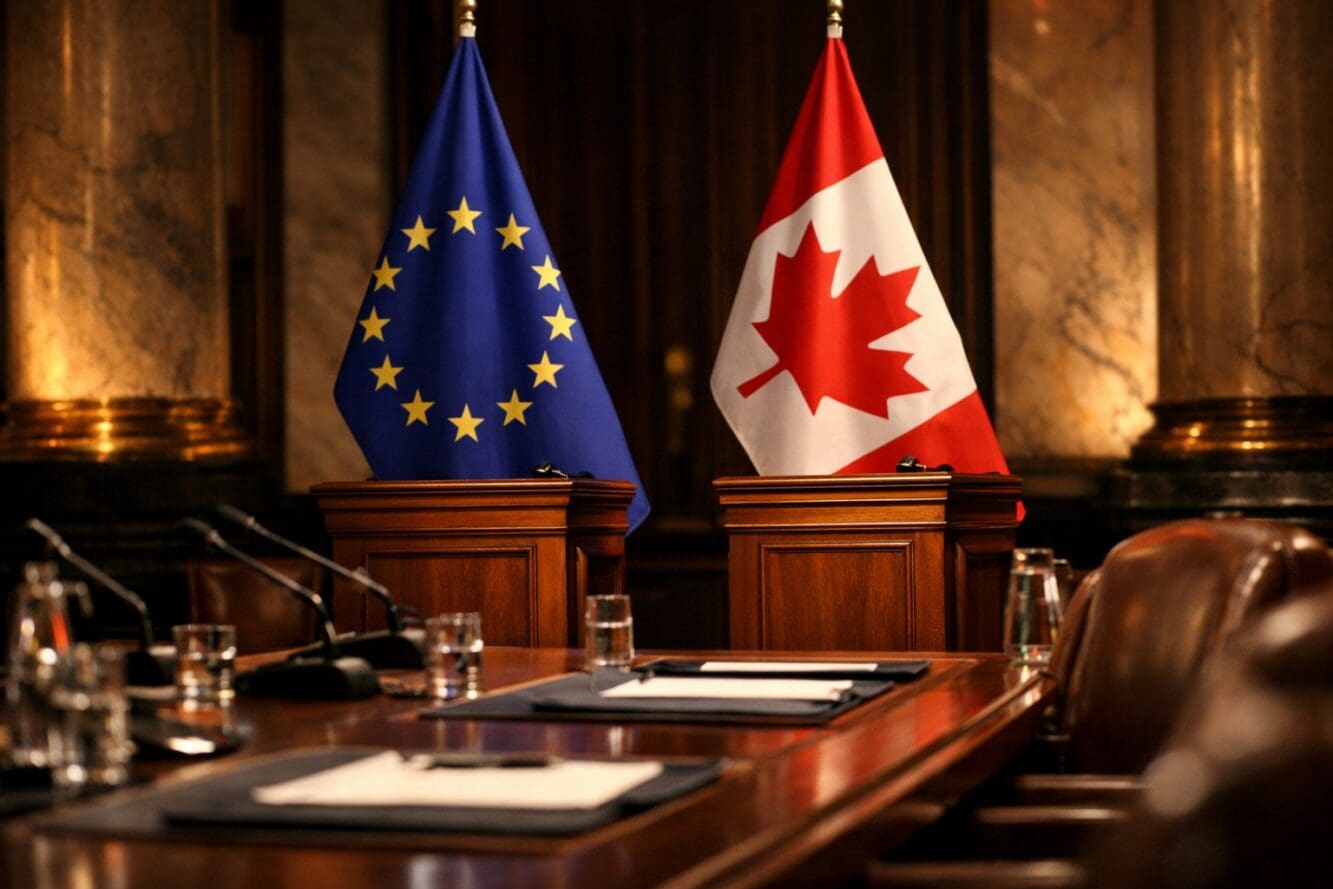
In a powerful display of transatlantic solidarity, the EU and Canada jointly condemn Iran strikes as PM Carney calls Iran a source of West Asia instability post-Tehran escalations. As protests swept through Iranian cities in late December 2025 and into January 2026, the international community responded with a unified voice. Canada, alongside the European Union and Australia, issued a coordinated joint statement on January 9, 2026, condemning Tehran’s violent crackdown on its own citizens [1]. Just days later, the broader G7 bloc amplified these concerns, warning of further sanctions if the regime continued its “brutal repression” [3].

This diplomatic alignment marks a significant moment in Western foreign policy. PM Mark Carney’s firm stance positions Canada as a key player in holding Iran accountable — not just for domestic human rights abuses, but for its broader destabilizing role across West Asia.
Key Takeaways 📌
- Canada, the EU, and Australia issued a joint statement on January 9, 2026, condemning Iran’s violent suppression of protests that killed over 40 people [1].
- The G7 followed on January 14, 2026, describing Iran’s crackdown as “brutal repression” and threatening additional sanctions [3].
- PM Carney identified Iran as a primary source of instability in West Asia, urging coordinated international pressure.
- The IRGC and Basij forces were specifically condemned for using “excessive and lethal force” against peaceful demonstrators [1].
- Canada and the EU have already imposed autonomous sanctions on Iranian individuals and entities and are coordinating further measures [2].
The Joint Statement: How Canada and the EU United Against Iran’s Crackdown
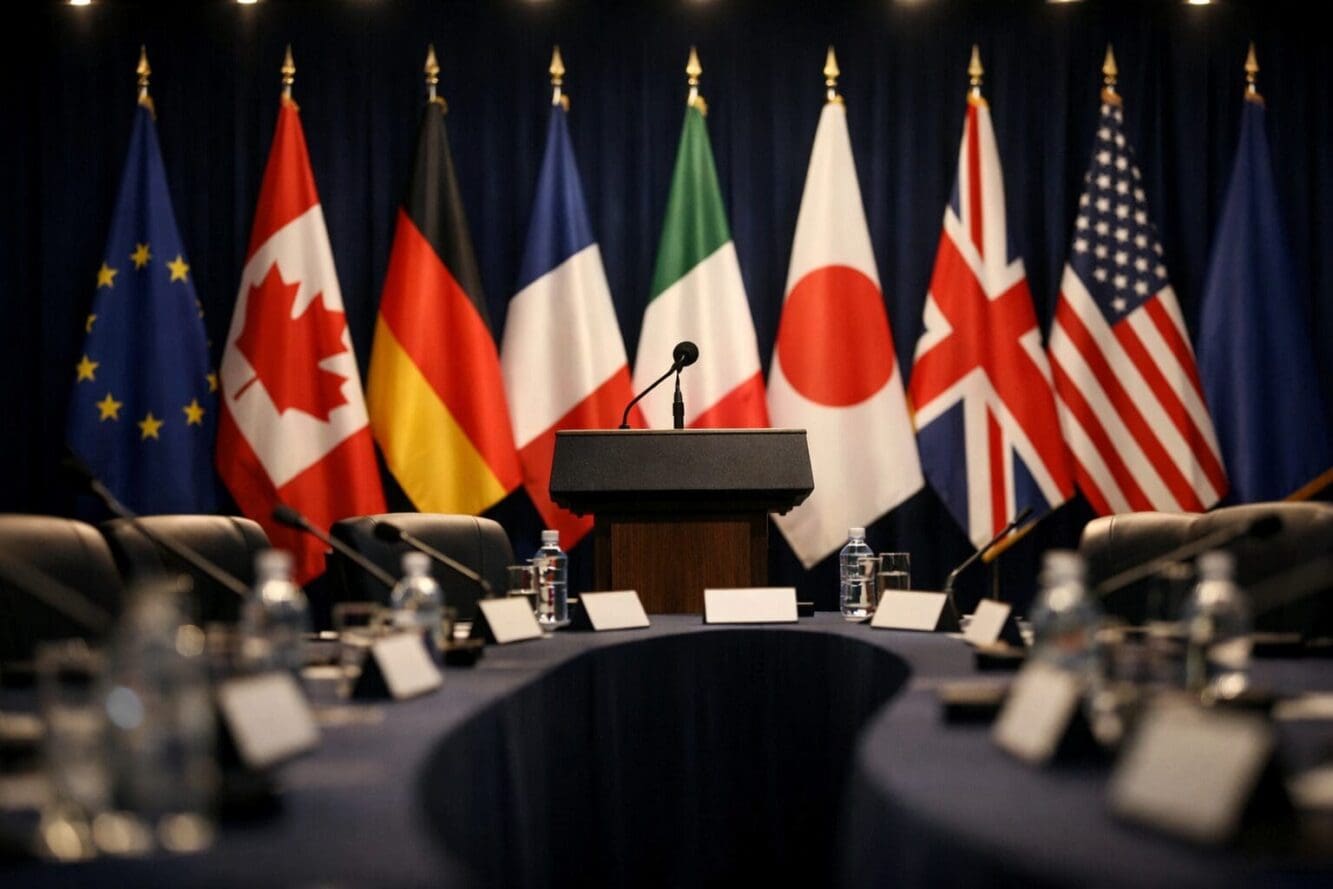
The January 9, 2026, joint statement from the foreign ministers of Australia, Canada, and the European Union represented a carefully coordinated diplomatic effort. The statement directly condemned the Iranian regime’s “killing of protestors, the use of violence, arbitrary arrests, and intimidation tactics” [1].
By the time the statement was released, over 40 deaths had been reported from protests that erupted in late December 2025 [1]. Citizens had taken to the streets to voice what the G7 later described as “legitimate aspirations for a better life, dignity and freedom” [3].
“The international community cannot stand silent while a regime turns its military apparatus against its own people.”
The condemnation specifically named the Islamic Revolutionary Guard Corps (IRGC) and Basij paramilitary forces for deploying excessive and lethal force against unarmed civilians [1]. This level of specificity was notable — it signaled that Western allies were prepared to target these organizations directly through future policy actions.
Canada’s role in this coalition reflects a broader pattern of celebrating national values and identity while standing firm on the international stage. The alignment with the EU demonstrates that democratic nations are increasingly willing to act together when fundamental human rights are at stake.
PM Carney’s Position: Labeling Iran a Source of West Asia Instability
Prime Minister Mark Carney has been unequivocal in his assessment of Iran’s role in the region. His characterization of Iran as a primary source of instability in West Asia goes beyond the immediate protest crackdown. It encompasses Tehran’s support for proxy groups, its nuclear ambitions, and its repeated interference in neighboring states.
Why Carney’s Language Matters
Diplomatic language is chosen carefully. By using the phrase “source of instability,” Carney accomplished several things:
| Diplomatic Signal | Practical Implication |
|---|---|
| Identifies Iran as a systemic threat | Justifies long-term policy coordination |
| Goes beyond a single incident | Opens the door to broader sanctions |
| Aligns Canada with EU and G7 partners | Strengthens multilateral pressure |
| Signals to Tehran directly | Warns of escalating consequences |
This framing also connects domestic repression to regional aggression. When a government is willing to use lethal force against its own citizens, the international community has reason to question its behavior toward neighboring states.
The G7 statement of January 14, 2026, reinforced this position. The foreign ministers of Canada, France, Germany, Italy, Japan, the United Kingdom, the United States, and the EU High Representative expressed “grave concern” about developments in Iran [3]. They stated clearly that they “remain prepared to impose additional restrictive measures if Iran continues to crack down on protests and dissent in violation of international human rights obligations” [3].
For communities across Canada, these geopolitical developments have local resonance. Initiatives like the Week of Welcome across the Simcoe region remind us that Canada’s commitment to human dignity extends from international diplomacy to local community building.
Sanctions and Coordinated Pressure: What’s Already in Place
Canada and the EU have not limited their response to words. Both have imposed autonomous sanctions on Iranian individuals and entities responsible for human rights violations [2]. These measures include:
- 🔒 Asset freezes on officials linked to the crackdown
- 🚫 Travel bans targeting members of the IRGC and Basij
- 📋 Entity listings that restrict financial transactions
- 🤝 Ongoing coordination between Ottawa and Brussels on further measures [2]
The EU-Canada Joint Cooperation Committee (JCC) has been a key mechanism for aligning these sanctions. According to official reports, both parties “continue to discuss further coordination” on restrictive measures [2].
The Threat of Escalation
The G7’s warning about “additional restrictive measures” is significant [3]. It suggests that the current sanctions represent a baseline, not a ceiling. If Tehran continues its crackdown, Western allies have signaled they are ready to:
- Expand sanctions lists to include more officials and organizations
- Target economic sectors that fund the security apparatus
- Coordinate with additional international partners beyond the G7
- Support accountability mechanisms at international institutions
This graduated approach gives Iran a clear off-ramp while maintaining pressure. It also reflects lessons learned from previous diplomatic engagements where truth-telling about systemic problems proved essential to driving change.
The Human Cost: Why This Condemnation Matters
Behind the diplomatic statements and sanctions frameworks are real people. The over 40 deaths reported by January 9, 2026, represent individuals who were exercising their fundamental right to peaceful protest [1].
The G7 statement acknowledged this human dimension directly, noting that Iranians were voicing “legitimate aspirations for a better life, dignity and freedom” [3]. The protests, which began in late December 2025, were driven by:
- 📉 Economic hardship and rising costs of living
- ⚖️ Demands for political reform and greater freedoms
- 🕊️ Calls for an end to repression by security forces
- 🌍 Desire for engagement with the international community
The use of the IRGC and Basij forces against civilians represents a particularly alarming escalation. These are military and paramilitary organizations designed for external defense and internal security — not for suppressing peaceful civic expression [1].
Understanding the broader implications of such crackdowns is important for communities everywhere. As discussions about the future and sustainable development remind us, global stability and human welfare are deeply interconnected.
What Comes Next: The Road Ahead for International Diplomacy
The EU and Canada’s joint condemnation of Iran strikes, with PM Carney calling Iran a source of West Asia instability post-Tehran escalations, sets the stage for several possible developments in 2026:
Short-Term Expectations 🔍
- Expanded sanctions if the crackdown continues
- Further G7 coordination at upcoming ministerial meetings
- Increased monitoring of Iran’s human rights situation by international bodies
- Diplomatic engagement with regional partners in West Asia
Long-Term Implications 🌐
The alignment between Canada and the EU on Iran policy could have lasting effects on:
- Transatlantic cooperation on Middle East security
- The future of the Iran nuclear deal and related negotiations
- Support for Iranian civil society and diaspora communities
- The broader rules-based international order
Canada’s firm stance also sends a message to other authoritarian regimes. When democratic nations coordinate their responses, the diplomatic and economic costs of repression increase significantly.
For those following these developments, staying informed through reliable news and analysis remains essential. The situation in Iran continues to evolve rapidly, and international responses will shape the region’s trajectory for years to come.
Communities that value honoring those who fought for freedom understand why standing up against repression matters — whether at home or abroad.
Conclusion
The coordinated response by Canada, the EU, and the broader G7 to Iran’s violent crackdown on protesters represents a defining moment in 2026 international diplomacy. PM Carney’s characterization of Iran as a source of West Asia instability signals that Canada is prepared for sustained engagement on this issue — not just reactive statements.
Here’s what readers should keep in mind:
- ✅ Stay informed about developments in Iran and the international response
- ✅ Understand the sanctions framework — it directly affects global trade and security
- ✅ Recognize the human dimension — behind every diplomatic statement are real lives at stake
- ✅ Support community initiatives that welcome and support those affected by conflict and repression
The coming months will reveal whether Tehran changes course or whether the international community follows through on its promise of escalating consequences. Either way, the EU and Canada have made their position clear: the violent suppression of peaceful protest is unacceptable, and Iran’s destabilizing behavior in West Asia must end.
References
[1] Joint Statement On The Situation In Iran – https://www.canada.ca/en/global-affairs/news/2026/01/joint-statement-on-the-situation-in-iran.html
[2] Eu Jcc 2023 2025 – https://international.canada.ca/en/global-affairs/corporate/reports/eu-jcc-2023-2025
[3] G7 Iran 2752100 – https://www.auswaertiges-amt.de/en/newsroom/news/g7-iran-2752100
[4] Joint Statement G7 Foreign Ministers Iran And Middle East En – https://www.eeas.europa.eu/eeas/joint-statement-g7-foreign-ministers-iran-and-middle-east_en
[5] Joint Statement Of G7 Foreign Ministers Meeting In Niagara – https://it.usembassy.gov/joint-statement-of-g7-foreign-ministers-meeting-in-niagara/
Content, illustrations, and third-party video appearing on GEORGIANBAYNEWS.COM may be generated or curated with AI assistance or reproduced pursuant to the fair dealing provisions of the Copyright Act, R.S.C. 1985, c. C-42. Attribution and hyperlinks to original sources are provided in acknowledgment of applicable intellectual property rights. Such referencing is intended to direct traffic to and support the original rights holders’ platforms.
Much Appreciate You Sharing This Post - It Helps MUCH!!!