




















Grow-What-You-Eat Planning: Customizing Canadian Kitchen Gardens to Family Recipes and Flavors


Last updated: February 28, 2026
Key Takeaways
- Grow-what-you-eat planning starts with auditing the recipes a household actually cooks, then selecting garden crops to match those ingredients.
- Canadian kitchen gardens work best when plant choices align with local hardiness zones (typically zones 3–8 across populated regions) and the family’s cultural cuisine.
- Herbs deliver the highest return on garden space because most Canadian recipes, from tourtière to butter chicken, rely on fresh herbs that cost $3–$5 per supermarket bunch.
- Succession planting extends harvests across Canada’s short growing season, keeping a steady supply of salad greens, radishes, and beans from June through October.
- Root vegetables like carrots, potatoes, and turnips suit both Canadian climates and comfort-food staples like poutine, stews, and shepherd’s pie.
- Kitchen gardens are expected to surge in popularity in 2026 due to rising grocery prices and growing interest in plant-based meals [5].
- A focused, recipe-driven garden of 6–10 crops outperforms a scattered 30-variety plot in both yield and actual kitchen use.
Quick Answer
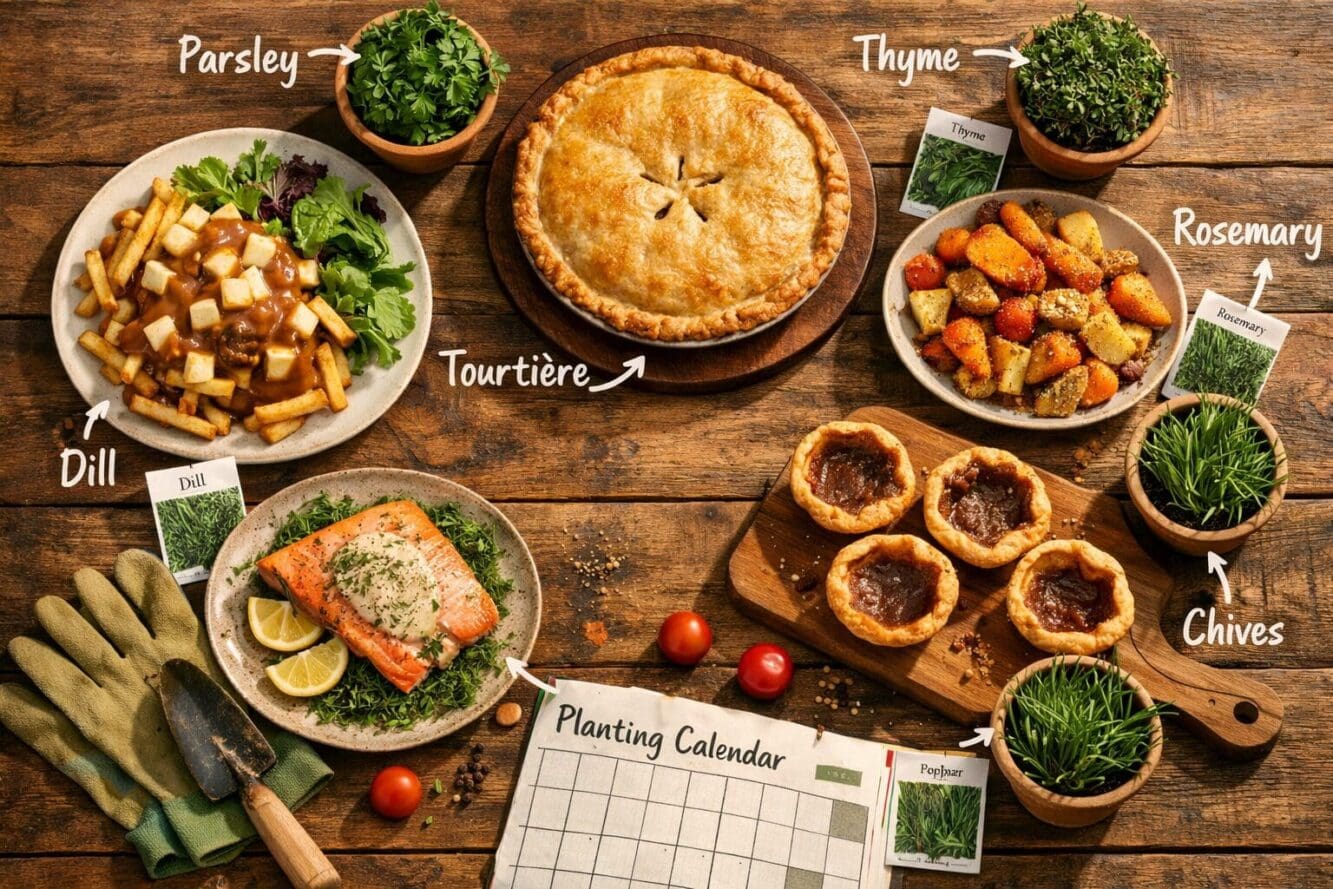
Grow-What-You-Eat Planning: Customizing Canadian Kitchen Gardens to Family Recipes and Flavors means choosing garden crops based on the dishes a family cooks most, rather than planting whatever seeds look interesting at the garden centre. Grow-What-You-Eat Planning for Canadian Kitchen Gardens (2026)
Why Should Canadian Gardeners Plan Around Recipes Instead of Seed Catalogues?
Most home gardeners overbuy seeds and end up with zucchini mountains nobody asked for. Recipe-based planning flips the process: the kitchen drives the garden, not the other way around.
Canadian gardeners are already moving in this direction. The trend toward edible landscaping, where homeowners grow everything from potatoes in containers to raspberries along fences, reflects a desire for healthy, local produce and a response to rising grocery costs [1]. Kitchen gardens are predicted to become even more popular in 2026 as meat prices climb and more households explore plant-based cooking [5].
The practical benefit is simple: a garden built around family favourites produces ingredients that get eaten, not composted.
Common mistake: Planting 12 varieties of hot peppers because the seed catalogue photos looked great, then realizing nobody in the household eats spicy food. Always start with the recipe list.

How to Audit Family Recipes and Match Them to Garden Crops
The first step in grow-what-you-eat planning is a two-week recipe audit. Track every meal cooked at home and note which fresh ingredients appear most often.
Step-by-Step Recipe Audit
- List the household’s 15 most-cooked meals (weeknight dinners, weekend favourites, holiday dishes).
- Circle every fresh produce ingredient in those recipes: herbs, vegetables, fruits, salad greens.
- Tally frequency. Ingredients that appear in five or more recipes get top priority for garden space.
- Flag high-cost items. Fresh herbs, specialty greens, and cherry tomatoes cost the most per gram at Canadian grocery stores.
- Check growability. Cross-reference your list against your USDA/Canadian hardiness zone and frost dates.
Example: Matching Canadian Comfort Food to Garden Crops
| Popular Canadian Dish | Key Fresh Ingredients | Best Garden Crops to Grow |
|---|---|---|
| Poutine (with homemade gravy) | Fresh thyme, parsley, green onions | Thyme, flat-leaf parsley, scallions |
| Tourtière | Onions, celery, thyme, savory | Yellow onions, celery, summer savory, thyme |
| Salmon with dill | Fresh dill, lemon, green beans | Dill, bush beans |
| Butter chicken | Cilantro, ginger, garlic, tomatoes | Cilantro (succession sown), garlic, paste tomatoes |
| Stir-fry | Bok choy, snow peas, green onions, garlic | Bok choy, snow peas, scallions |
| Caesar salad | Romaine lettuce, garlic | Romaine lettuce (succession sown) |
| Shepherd’s pie | Potatoes, carrots, peas, onions | Yukon Gold potatoes, Nantes carrots, shelling peas |
| Pasta with fresh sauce | Basil, tomatoes, garlic, zucchini | Genovese basil, San Marzano tomatoes, zucchini |
Decision rule: If an ingredient appears in three or more family recipes and costs over $2 per bunch at the store, it belongs in the garden.
Which Herbs Give Canadian Kitchen Gardens the Highest Return?
Herbs are the single best investment in a recipe-driven kitchen garden. A $2 herb seedling can replace $40–$60 worth of grocery-store bunches over one growing season.
For Canadian growers, these herbs cover the widest range of cultural cuisines:
- Basil — pasta sauces, Thai curries, caprese salads. Frost-sensitive; start indoors in April, transplant after last frost.
- Cilantro — salsas, butter chicken, pho, tacos. Bolts quickly in heat; succession sow every 2–3 weeks from May through August.
- Dill — salmon, pickles, potato salad, borscht. Direct sow in May; self-seeds freely.
- Flat-leaf parsley — tourtière, tabbouleh, chimichurri, soups. Cold-hardy biennial; one of the first and last herbs in the garden.
- Thyme — poutine gravy, roast chicken, stews. Perennial in zones 4–8; plant once and harvest for years.
- Summer savory — traditional Québécois seasoning for tourtière and baked beans. Annual; direct sow after last frost.
- Chives — baked potatoes, cream cheese, omelets. Perennial; extremely cold-hardy across all Canadian growing zones.
- Mint — teas, raita, tabbouleh, cocktails. Perennial and aggressive; grow in a container to prevent spreading.
Some Canadian gardeners in 2026 are deliberately choosing fewer, more dependable varieties rather than experimenting with dozens of options [3]. For herbs, that means picking the five that match the household’s most-cooked recipes and growing them well, rather than maintaining a sprawling herb spiral that goes mostly unused.
Families interested in understanding the health benefits of what they grow and eat can also consult local naturopathic practitioners for guidance on nutrient-dense garden choices.

How Does Grow-What-You-Eat Planning Work Across Canadian Growing Zones?
Canada’s populated regions span hardiness zones 3 through 8, and the growing season ranges from about 90 frost-free days in zone 3 (parts of the Prairies) to 200+ days in zone 8 (coastal British Columbia). Recipe-driven planning must account for these differences.
Zone-Specific Crop Recommendations
| Hardiness Zone | Frost-Free Days (approx.) | Best Recipe Crops | Challenging Crops |
|---|---|---|---|
| Zone 3 (Prairies, Northern Ontario) | 90–110 | Potatoes, peas, kale, dill, root vegetables, hardy herbs | Long-season tomatoes, peppers, eggplant |
| Zone 4–5 (Southern Prairies, Central Ontario, Québec) | 110–140 | Tomatoes (short-season), beans, zucchini, lettuce, all herbs, carrots | Melons, sweet potatoes |
| Zone 6 (Southern Ontario, parts of Maritimes) | 140–170 | Full tomato varieties, peppers, cucumbers, basil, garlic | Okra, long-season sweet corn |
| Zone 7–8 (Coastal BC, parts of Nova Scotia) | 170–220 | Nearly all vegetables, figs, grapes, overwintering greens | Tropical crops without protection |
Choose short-season varieties if the household lives in zone 3–4 and the recipe list calls for tomatoes. Varieties like ‘Sub-Arctic Plenty’ or ‘Glacier’ mature in 55–65 days.
Choose storage varieties if the family cooks soups and stews through winter. Carrots, beets, potatoes, onions, and winter squash all store well in a cool basement or root cellar.
The broader trend of gardeners weaving edible plants into ornamental spaces, such as blueberry hedges and espaliered apple trees, works particularly well in milder zones where perennial fruits have time to establish [2].
What Does a Succession Planting Schedule Look Like for Recipe Gardens?
Succession planting means sowing the same crop multiple times across the season so there’s always a fresh harvest ready, rather than one overwhelming glut. For recipe-driven gardens, this matters most for fast-growing crops that appear in weekly meals.
Succession Planting Calendar (Zone 5 Example)
| Crop | First Sowing | Second Sowing | Third Sowing | Fourth Sowing | Estimated Yield per Sowing (4-ft row) |
|---|---|---|---|---|---|
| Lettuce | Late April (indoors) | Mid-May | Mid-June | Late August | 2–3 lbs |
| Cilantro | Early May | Late May | Mid-June | Early August | 0.5–1 lb |
| Radishes | Early May | Late May | Mid-June | Early September | 1–2 lbs |
| Bush beans | Late May | Mid-June | Early July | — | 3–5 lbs |
| Spinach | Late April | — | — | Late August | 2–3 lbs |
| Dill | Mid-May | Early June | — | — | 0.5–1 lb |
Yield estimates are approximate and depend on soil quality, watering, and sun exposure. A well-maintained 4×8-foot raised bed can produce roughly 15–25 lbs of mixed vegetables per season when intensively planted.
Edge case: In zone 3, compress this schedule by about three weeks. In zone 7–8, extend it by a month on both ends and add a winter sowing of overwintering spinach and garlic.
For those looking to enjoy the social side of local food culture, community events and festivals across the Georgian Bay region often celebrate locally grown produce and seasonal cooking.
How to Design a Small-Space Recipe Garden (4×8 Raised Bed Example)
Not every household has a large backyard. A single 4×8-foot raised bed, properly planned around family recipes, can supply a surprising amount of fresh produce.
Sample Layout: The Canadian Comfort Food Bed
This layout targets ingredients for poutine gravy, tourtière, salads, and weeknight stir-fries:
- Back row (tallest plants): 3 tomato plants (paste variety for sauces) + 1 pole bean trellis
- Middle row: 4 potato plants (Yukon Gold) + 2 celery plants
- Front row: Succession-sown lettuce + scallions + radishes
- Border edges: Thyme, parsley, chives, summer savory (herbs along all four edges)
Why this works: Every plant in the bed connects to at least two family recipes. The herbs along the edges serve double duty as pest-deterring companion plants and the most-used cooking ingredients.
Common mistake: Planting one of everything. A single basil plant won’t supply enough leaves for weekly pasta sauce. Grow three to five basil plants if the family makes Italian food regularly.
Canadians interested in community-based food initiatives and local seed funding programs may find additional resources for getting started with kitchen gardens in their area.
How to Customize for Cultural Cuisines Common in Canadian Households
Canada’s multicultural population means kitchen gardens should reflect the cuisines families actually cook, not just traditional European vegetable plots.
South Asian Cuisine Garden Additions
- Cilantro (succession sown), fenugreek greens (methi), green chilies, curry leaf plant (container, bring indoors in winter), garlic, ginger (container in zones below 8)
East Asian Cuisine Garden Additions
- Bok choy, snow peas, daikon radish, Thai basil, green onions, shiso/perilla
Mediterranean Cuisine Garden Additions
- Tomatoes (multiple varieties), zucchini, eggplant, oregano, basil, flat-leaf parsley, garlic
Québécois/French-Canadian Cuisine Garden Additions
- Summer savory, thyme, celery, onions, potatoes, carrots, parsnips
Ukrainian/Eastern European Cuisine Garden Additions
- Beets, dill, cabbage, potatoes, garlic, horseradish
The key principle: Grow-what-you-eat planning for customizing Canadian kitchen gardens to family recipes and flavors works best when the garden reflects the household’s actual cultural food traditions, not a generic “beginner vegetable garden” template from a seed company.
The foodscaping movement supports this approach, as gardeners increasingly integrate edible plants into their existing landscape rather than maintaining a separate, traditional vegetable patch [2]. A front-yard herb border of cilantro, basil, and mint can be both attractive and functional.
For families looking to connect with local food culture and celebrations in the Georgian Bay area, seasonal festivals often showcase recipes that pair perfectly with homegrown ingredients.
What Are the Most Common Mistakes in Recipe-Driven Garden Planning?
Even well-intentioned grow-what-you-eat plans can go sideways. Here are the mistakes that waste the most time and garden space:
- Ignoring actual consumption rates. A family of four uses roughly 1–2 lbs of tomatoes per week for sauces. That requires 4–6 plants, not 15.
- Skipping herbs. Herbs are the highest-value, lowest-space crop. Every recipe garden should dedicate at least 15–20% of space to herbs.
- Planting everything at once. Without succession planting, lettuce and cilantro bolt before half the harvest is used.
- Forgetting storage crops. Garlic, onions, potatoes, carrots, and winter squash extend the garden’s value well past the first frost.
- Not accounting for preservation. If the family makes salsa, tomato sauce, or pickles, the garden needs a dedicated canning crop planted in larger quantities.
- Growing crops that are cheap at the store. Onions and standard potatoes are inexpensive to buy. Prioritize garden space for items with higher grocery markups: herbs, salad greens, cherry tomatoes, and specialty peppers.
Decision rule: If a crop costs less than $1/lb at the grocery store and the household has limited garden space, skip it and use that space for herbs or greens instead.
Those interested in how food choices impact broader health outcomes may also want to prioritize growing nutrient-dense greens and cruciferous vegetables.
Conclusion
Grow-what-you-eat planning for customizing Canadian kitchen gardens to family recipes and flavors is a practical, money-saving approach that puts the dinner table at the centre of garden design. Instead of growing whatever’s on sale at the garden centre, start with the recipes the household cooks every week, identify the fresh ingredients those recipes share, and build a focused planting plan around those crops.
Actionable next steps for 2026:
- Spend two weeks tracking every meal cooked at home. List the fresh produce used.
- Identify the 6–10 crops that appear most often and cost the most at the grocery store.
- Check hardiness zone and last frost date. Adjust crop varieties accordingly.
- Build a succession planting calendar for fast crops like lettuce, cilantro, and radishes.
- Dedicate at least 15–20% of garden space to herbs; they deliver the best return per square foot.
- Plant for preservation if the family cans, freezes, or dehydrates. Scale up tomatoes, beans, or peppers accordingly.
With rising grocery prices and growing interest in food security across Canada [1][5], a recipe-driven kitchen garden is one of the most direct ways to put fresh, flavourful, homegrown food on the family table, every night of the growing season and well into winter.
For local events and community gatherings that celebrate food, gardening, and regional culture, check community calendars across the Georgian Bay region.
FAQ
Q: How much space do I need for a recipe-driven kitchen garden?
A: A single 4×8-foot raised bed (32 square feet) can supply a meaningful amount of herbs, salad greens, and a few key vegetables for a family of four. Expand to 100–200 square feet for more variety and preservation crops.
Q: What are the best crops to grow for saving money on groceries?
A: Fresh herbs (basil, cilantro, dill, parsley), salad greens, cherry tomatoes, and specialty peppers offer the highest grocery savings per square foot of garden space.
Q: Can I grow ingredients for butter chicken in a Canadian garden?
A: Yes. Cilantro, garlic, and tomatoes all grow well in zones 4–8. Ginger can be grown in containers and brought indoors before frost. Curry leaf plants also work as indoor-outdoor container plants.
Q: When should I start seeds indoors in Canada?
A: Most warm-season crops (tomatoes, peppers, basil) should be started indoors 6–8 weeks before the last expected frost date, which ranges from late April in zone 7 to early June in zone 3.
Q: How do I prevent cilantro from bolting before I can harvest it?
A: Succession sow cilantro every 2–3 weeks from May through August. Choose slow-bolt varieties like ‘Calypso’ or ‘Santo.’ Plant in partial shade during the hottest weeks of summer.
Q: Is it worth growing potatoes in a small garden?
A: Only if potatoes appear frequently in family recipes and the household values flavour varieties (fingerlings, purple potatoes) not available cheaply at stores. Standard Russet potatoes are inexpensive to buy and take up significant garden space.
Q: What’s the difference between a kitchen garden and a regular vegetable garden?
A: A kitchen garden is specifically designed around the crops a household cooks with regularly, often located close to the kitchen door for easy access. A general vegetable garden may include crops chosen for other reasons, like novelty or appearance.
Q: How many tomato plants does a family of four need?
A: For fresh eating, 2–4 plants. For canning sauce or salsa, 8–12 plants. Paste varieties like San Marzano or Roma produce the most usable flesh per plant for cooking.
Q: Can I grow a recipe garden in containers on a balcony?
A: Yes. Herbs, lettuce, cherry tomatoes, peppers, and green onions all perform well in containers with at least 6 hours of direct sunlight. Use pots that are at least 12 inches deep for tomatoes and peppers.
Q: What crops should I grow if my family eats a lot of stir-fry?
A: Bok choy, snow peas, green onions, garlic, and Thai basil. All grow well in Canadian zones 4–8 and can be succession planted for continuous harvest.
References
[1] 6 Popular Gardening Trends To Embrace In 2026 – https://gardeningwithsharon.com/general/6-popular-gardening-trends-to-embrace-in-2026/
[2] 2026 Sustainable Garden Trends – https://www.gardenalchemist.ca/post/2026-sustainable-garden-trends
[3] My 2026 Garden Plan – https://littlemountainranch.ca/my-2026-garden-plan/
[5] Will 2026 Be The Year Of The Kitchen Garden – https://myepicureankitchen.com/blogs/lets-dish/will-2026-be-the-year-of-the-kitchen-garden
[6] 2026 Garden Trends Report Marks 25 Years Of Forecasting Change For Green Industry – https://www.greenhousecanada.com/2026-garden-trends-report-marks-25-years-of-forecasting-change-for-green-industry/
Content, illustrations, and third-party video appearing on GEORGIANBAYNEWS.COM may be generated or curated with AI assistance or reproduced pursuant to the fair dealing provisions of the Copyright Act, R.S.C. 1985, c. C-42. Attribution and hyperlinks to original sources are provided in acknowledgment of applicable intellectual property rights. Such referencing is intended to direct traffic to and support the original rights holders’ platforms.
Much Appreciate You Sharing This Post - It Helps MUCH!!!