






















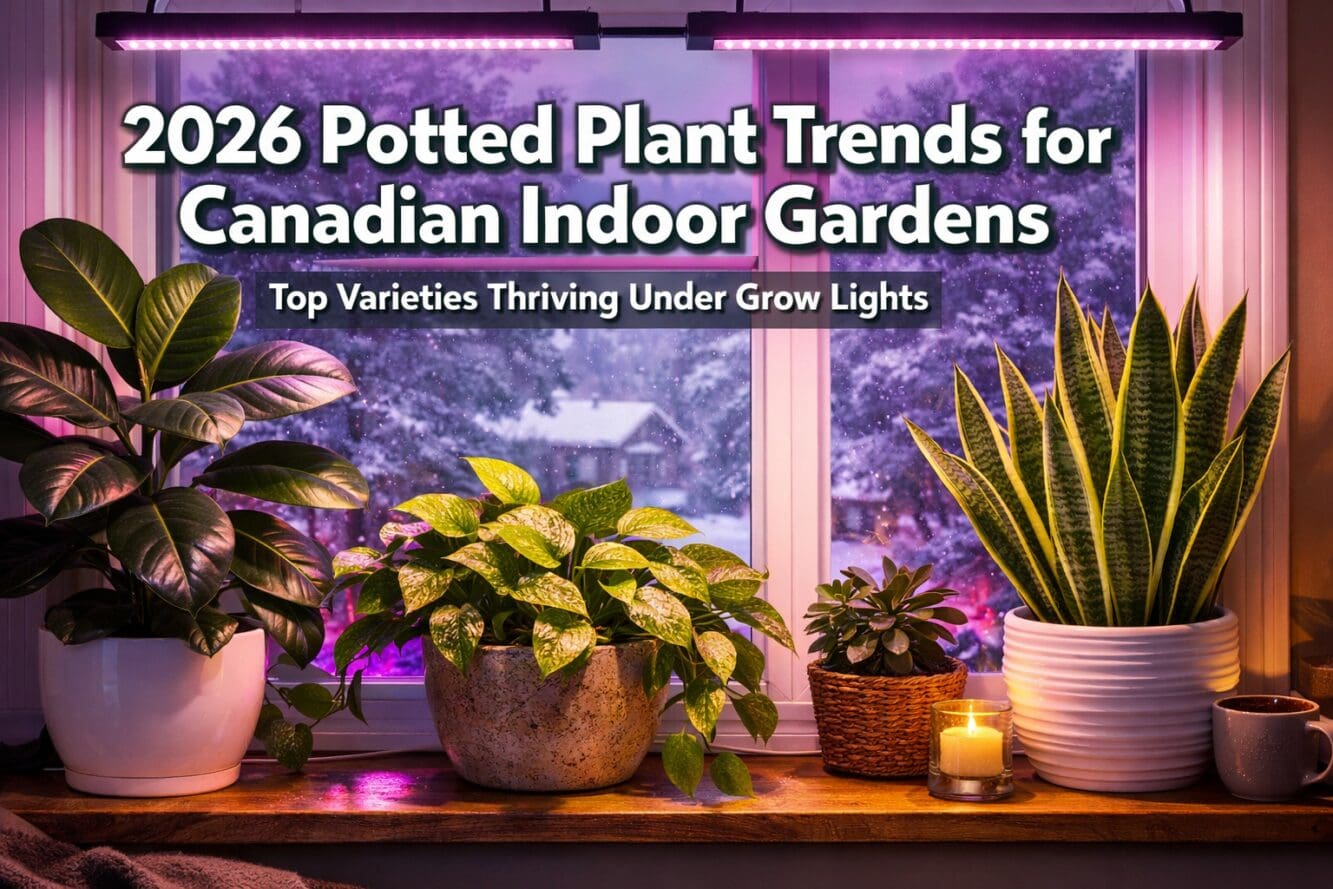
2026 Potted Plant Trends for Canadian Indoor Gardens: Top Varieties Thriving Under Grow Lights

Last updated: February 28, 2026
Canadian winters mean as few as eight hours of weak daylight in December, and for indoor gardeners, that’s the central challenge [1]. The 2026 potted plant trends for Canadian indoor gardens: top varieties thriving under grow lights reflect a shift toward resilient, foliage-forward plants paired with efficient LED technology that makes year-round growing realistic, even in a north-facing Toronto apartment or a basement suite in Edmonton. This guide covers which plant varieties are worth the investment, what grow light specs actually matter, and how to set up an indoor garden that works with Canadian conditions rather than against them.
Key Takeaways
- Ficus varieties are overtaking Fiddle Leaf Figs as the go-to statement plant for 2026, prized for better adaptability to indoor light conditions [6].
- LED panel grow lights using Samsung LM301B/LM301H chips deliver 2.7–2.9 μmol/J efficiency, roughly double what older LEDs produce [1].
- 5000K blue-white spectrum supports vegetative growth for houseplants and herbs; 3000K + 660nm red drives flowering and fruiting [1].
- Container gardening is a confirmed major 2026 trend across Canada, with new compact varieties bred specifically for pots [4].
- Budget-friendly panels like the Mars Hydro TS600 (100W, ~$80–$120 CAD) make entry accessible for beginners [1].
- The “back to green” movement emphasizes simple foliage plants over rare, high-maintenance specimens [6].
- Wellness-focused indoor gardening, including air-purifying plant selections, continues to grow in popularity [8].
- “Lightscaping” treats grow lights as design elements, not eyesores [2].
Quick Answer
The biggest 2026 indoor gardening trends in Canada combine low-maintenance, air-purifying plants (ficus, pothos, ZZ plants, snake plants) with slim LED panel grow lights that compensate for short winter days. Canadian growers are moving away from finicky rare plants and toward reliable varieties that thrive under full-spectrum LEDs rated at 2.7+ μmol/J. The focus is on sustainability, wellness, and making grow light setups look good in living spaces.

Why Are Canadian Indoor Gardens Shifting in 2026?
Canada’s northern latitude creates a genuine growing problem: winter light levels drop dramatically, and many popular houseplants simply stall or decline between November and March [1]. The 2026 response is practical rather than trendy. Growers are choosing plants that tolerate lower light and supplementing with efficient LEDs that don’t spike electricity bills.
Three factors are driving the shift:
- Energy costs: Efficient LED panels use 40–60% less electricity than older grow light technology for the same light output [1].
- Urban living: More Canadians live in condos and apartments where window space is limited and supplemental lighting is the only option.
- Sustainability values: Container gardening and indoor food growing align with broader Canadian interest in reducing food miles and plastic waste [4]. For those exploring sustainable development practices, indoor gardening fits naturally into a lower-impact lifestyle.
The wellness angle matters too. Plants like snake plants and pothos are chosen not just for looks but for their documented ability to filter indoor air pollutants [8].
Which Potted Plant Varieties Are Trending for 2026 Canadian Indoor Gardens?
Ficus varieties lead the 2026 list, replacing the once-dominant Fiddle Leaf Fig with species that handle inconsistent light and dry indoor air more gracefully [6]. The broader “back to green” movement favors reliable foliage plants over rare, Instagram-driven specimens.
Top varieties for Canadian indoor gardens in 2026:
| Plant | Light Needs | Why It’s Trending | Best For |
|---|---|---|---|
| Ficus Audrey | Medium to bright indirect | More forgiving than Fiddle Leaf Fig; tolerates lower humidity [6] | Living rooms, offices |
| Pothos (Golden/Marble Queen) | Low to medium | Nearly indestructible; trails beautifully from shelves | Beginners, low-light spaces |
| ZZ Plant | Low to medium | Thrives on neglect; tolerates dim corners | Apartments, north-facing rooms |
| Snake Plant (Sansevieria) | Low to bright | Air-purifying; handles dry winter air well [8] | Bedrooms, offices |
| Philodendron Brasil | Medium indirect | Fast grower under grow lights; vibrant variegation | Shelving displays |
| Rubber Plant (Ficus elastica) | Medium to bright | Bold foliage; part of the ficus resurgence [6] | Statement plant |
| Herbs (basil, cilantro, mint) | Bright (grow light required) | Food-growing trend; works well under 5000K panels [1] | Kitchen counters |
Choose ficus varieties if the space gets at least some natural light plus supplemental LED. Choose ZZ or snake plants if the room has minimal windows or the grower travels frequently and can’t water consistently.
“The ‘back to green’ movement is about returning to reliable, foliage-forward plants that actually thrive in real home conditions.” — Adapted from 2026 houseplant trend analysis [6]
A common mistake: buying a trending plant without checking its light requirements against the actual conditions in a Canadian home during winter. A Fiddle Leaf Fig that looked great in a bright shop will struggle in a dim condo hallway. The 2026 trend toward hardier alternatives solves this problem directly.

What Grow Light Technology Works Best for Canadian Indoor Gardens in 2026?
LED panel grow lights with Samsung LM301B or LM301H chips are the current standard, delivering 2.7–2.9 μmol/J of efficiency [1]. That’s roughly 50–90% more usable light per watt compared to high-pressure sodium lamps (1.0–1.7 μmol/J) [1].
Key specs to look for:
- Efficacy: 2.5 μmol/J minimum; 2.7+ μmol/J is the sweet spot for 2026 panels [1]
- Spectrum: Full spectrum (400–700nm PAR range) for general houseplants; adjustable spectrum if growing herbs and flowering plants [1]
- Form factor: Ultra-thin panels that mount under shelves or on walls without dominating the room [1]
- Wattage: 100W panels cover roughly a 60×60 cm growing area; scale up for larger setups
Spectrum selection guide:
- 5000K (cool blue-white): Use for seedlings, leafy houseplants, and herbs. Promotes compact growth and dense foliage [1].
- 3000K + 660nm red: Use for flowering plants, fruiting herbs, and any plant where blooms are the goal [1].
The Mars Hydro TS600 is frequently cited as a strong entry-level option: 100 watts, 225 Samsung LED diodes, 27×27 cm panel size [1]. It’s compact enough for a single shelf and draws modest electricity.
Heat matters in Canadian spaces. LED panels produce minimal heat compared to older HPS or fluorescent setups, which means no need for extra ventilation or cooling equipment [1]. In Canadian apartments where HVAC systems already work hard during winter, this is a practical advantage.
How Does “Lightscaping” Change the Way Canadians Display Indoor Plants?
Lightscaping is the 2026 practice of treating grow lights as intentional design elements rather than hiding them [2]. Instead of clipping an ugly shop light to a shelf, Canadian indoor gardeners are integrating sleek LED panels into their decor, using them to highlight plant displays the way accent lighting showcases art.
Practical lightscaping approaches:
- Mount slim panel lights under floating shelves so they illuminate the plants below while staying nearly invisible [1]
- Position soft uplights behind larger plants to cast leaf shadows on walls, creating visual interest even after dark [5]
- Use warm-spectrum (3000K) panels in living areas where cool blue light would feel clinical [1]
- Coordinate fixture finishes (matte black, white, brushed aluminum) with existing decor
This trend connects to the broader Canadian interest in making homes feel warm and intentional during long winters. Finding ways to stay comfortable during extreme weather is a year-round concern, and a well-lit indoor garden contributes to that sense of livability.
The edge case: renters who can’t drill into walls. Freestanding plant shelves with integrated clip-on LED panels solve this without permanent installation.
What Are the Best Container Gardening Strategies for 2026?
Container gardening is confirmed as a major 2026 trend across Canada, driven by urban living constraints and the desire for flexible, movable growing setups [4]. Innovative plant varieties bred specifically for containers are expanding what’s possible indoors.
Container-friendly varieties gaining traction in 2026:
- Supertunia petunias for sunny windowsills or balconies [4]
- Solenia begonias that handle both sunny and shady spots [4]
- Rockapulco double impatiens for shade-dominant spaces [4]
- Compact herb varieties (bush basil, dwarf cilantro) under grow lights
Container setup checklist for Canadian indoor gardens:
- Choose pots with drainage holes (root rot is the number-one killer of indoor plants)
- Use a well-draining potting mix, not garden soil
- Position grow lights 30–45 cm above foliage for most houseplants [1]
- Set a timer for 12–16 hours of light daily during winter months to compensate for short days [1]
- Group plants with similar light and water needs together
- Rotate containers quarterly so growth stays even
A common mistake with containers under grow lights: placing the light too far away. Light intensity drops dramatically with distance. A panel mounted 90 cm above a plant delivers roughly one-quarter the light it would at 45 cm.
Community events like local gatherings and celebrations often feature plant swaps and gardening workshops, which are excellent places to pick up container-grown starter plants from experienced local growers.
How Can Urban Canadian Dwellers Maximize Small Spaces for Indoor Growing?
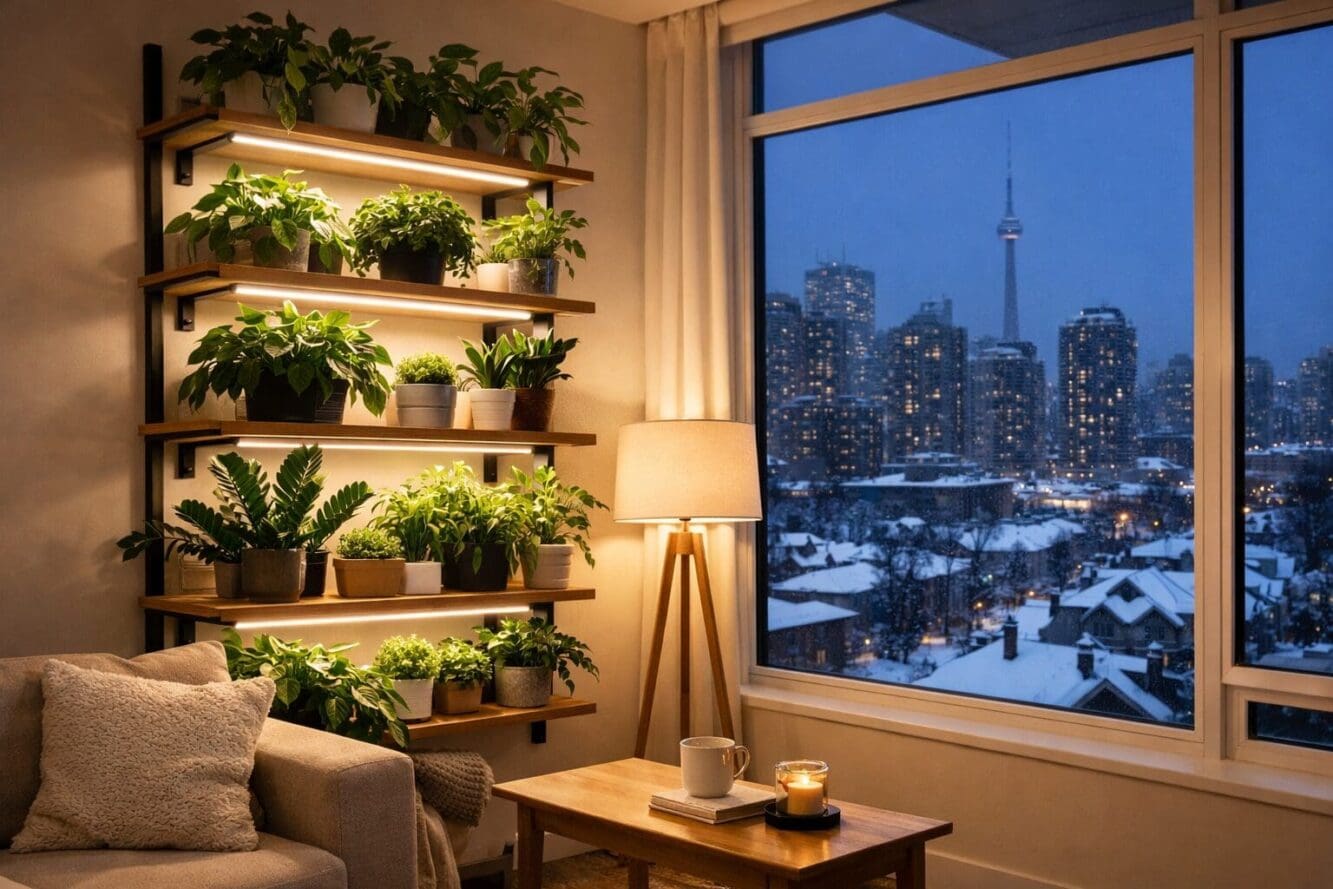
Small-space indoor gardening works best with vertical setups and multi-tier shelving paired with panel grow lights mounted at each level [1]. A single bookshelf converted into a growing station can hold 10–15 potted plants in under one square metre of floor space.
Space-maximizing strategies:
- Vertical shelving units: Metal wire shelving (like baker’s racks) allows light to pass between levels and supports clip-on or mounted LED panels
- Hanging planters: Trailing plants like pothos and string of hearts free up shelf and counter space
- Window-adjacent supplemental lighting: Place a grow light panel beside a window to extend the effective growing zone beyond the sill
- Kitchen herb stations: A single 100W panel above a countertop tray supports basil, mint, and parsley year-round [1]
Choose vertical shelving if floor space is under 50 square feet. Choose a dedicated plant table if there’s a spare corner with at least 90×60 cm available.
For Canadians interested in wellness practices and finding calm, tending a small indoor garden offers a daily mindfulness routine that pairs well with breathing exercises and stress reduction.
What Are the Wellness Benefits of Indoor Plants Under Grow Lights?
Indoor plants contribute to home wellness through air filtration, humidity regulation, and psychological benefits [8]. The 2026 trend explicitly connects plant care to mental health and home environment quality rather than treating plants as purely decorative objects.
Air-purifying plants that perform well under grow lights:
- Snake plant: Converts CO2 to oxygen at night, making it ideal for bedrooms [8]
- Pothos: Filters formaldehyde and other volatile organic compounds
- Spider plant: Removes carbon monoxide and xylene; easy to propagate
- Peace lily: Handles low light; filters benzene and ammonia (note: toxic to pets)
The wellness angle extends beyond air quality. Regular plant care, even five minutes of watering and checking leaves, provides a structured daily routine that supports mental well-being through reduced screen time and connection to living things [8].
An edge case to watch: homes with pets. Many popular houseplants are toxic to cats and dogs. Snake plants, pothos, and peace lilies all pose risks if ingested. Pet owners should choose spider plants, Boston ferns, or calatheas instead, and position toxic plants on high shelves out of reach.
What Mistakes Should Canadian Indoor Gardeners Avoid in 2026?
The most common mistake is overwatering, which kills more houseplants than underwatering, especially in winter when growth slows and soil stays wet longer. Under grow lights, this problem can be deceptive because the lights suggest active growth even when the plant’s roots are dormant.
Top mistakes and fixes:
| Mistake | Why It Happens | Fix |
|---|---|---|
| Overwatering in winter | Reduced evaporation; slower growth | Water only when top 2–3 cm of soil is dry |
| Grow light too far from plants | Assumption that any light is enough | Keep panels 30–45 cm above foliage [1] |
| Wrong spectrum for plant type | Using flowering spectrum on foliage plants | Match 5000K for foliage, 3000K+red for blooms [1] |
| No timer on grow lights | Inconsistent light schedule stresses plants | Use a mechanical or smart timer; 12–16 hours daily [1] |
| Ignoring humidity | Canadian winter air is extremely dry | Group plants together; use pebble trays or a humidifier |
| Buying trending plants without research | Social media hype doesn’t match home conditions | Check light and humidity needs before purchasing [6] |
Another overlooked issue: air quality in the home affects plant health too. Homes near busy roads or with gas appliances may have elevated pollutant levels that stress sensitive plants. Hardier varieties like ZZ plants and snake plants tolerate these conditions better.
FAQ
How many hours of grow light do houseplants need in a Canadian winter?
Most houseplants need 12–16 hours of supplemental light daily during winter months when natural daylight drops to 8 hours or less in much of Canada [1].
Are LED grow lights expensive to run in Canada?
A 100W LED panel running 14 hours daily costs roughly $3–$5 CAD per month at average Canadian electricity rates. Modern panels with Samsung LM301B chips are significantly more efficient than older lighting technology [1].
Can grow lights fully replace sunlight for houseplants?
Yes, full-spectrum LED panels delivering 400–700nm PAR wavelengths can replace natural sunlight for most houseplants when positioned at the correct distance and run for adequate hours [1].
What is the best grow light for beginners in Canada?
The Mars Hydro TS600 is a frequently recommended entry-level option: 100W, Samsung diodes, compact 27×27 cm panel, and typically priced between $80–$120 CAD [1].
Which houseplants are best for Canadian apartments with no south-facing windows?
ZZ plants, snake plants, and pothos are the strongest performers in low-light conditions and respond well to supplemental LED lighting [6] [8].
What does “lightscaping” mean in indoor gardening?
Lightscaping is the practice of integrating grow lights into home decor as design elements, using sleek fixtures and strategic placement to enhance both plant growth and room aesthetics [2].
Are trending 2026 houseplants safe for pets?
Many popular 2026 picks, including pothos, snake plants, and peace lilies, are toxic to cats and dogs. Pet-safe alternatives include spider plants, Boston ferns, and calatheas.
What spectrum should grow lights be for foliage houseplants?
A 5000K blue-white spectrum promotes compact growth and dense foliage in non-flowering houseplants and herbs [1].
How close should a grow light be to plants?
For most houseplants, position LED panels 30–45 cm above the top of the foliage. Seedlings and herbs may benefit from closer placement (20–30 cm) [1].
Is container gardening a real trend or just hype?
Container gardening is an established and growing trend across Canada for 2026, supported by new plant varieties bred specifically for container growing and driven by urban space constraints [4].
Conclusion
The 2026 potted plant trends for Canadian indoor gardens: top varieties thriving under grow lights come down to a practical formula. Pick resilient, foliage-forward plants like ficus varieties, pothos, ZZ plants, and snake plants. Pair them with efficient LED panel grow lights using Samsung LM301B or LM301H chips rated at 2.7+ μmol/J. Set timers for 12–16 hours daily during winter. Use the right spectrum for the right plant type.
Actionable next steps:
- Audit current light conditions in the growing space (measure hours of natural light in winter)
- Start with one 100W LED panel and 3–4 hardy plants from the table above
- Set up a timer and consistent watering schedule
- Expand gradually with vertical shelving as confidence grows
- Join a local plant swap or community event to connect with other Canadian growers
The barrier to entry has never been lower. A $100 LED panel and a few proven plant varieties can turn any Canadian apartment into a productive indoor garden, regardless of what’s happening outside the window.
References
[1] Panel Grow Lights Indoor Garden Canada – https://growexpertcanada.com/panel-grow-lights-indoor-garden-canada/
[2] New Year New Glow The 2026 Guide To Led Grow Lights For Your Indoor Plants – https://www.sansiled.com/blogs/learn/new-year-new-glow-the-2026-guide-to-led-grow-lights-for-your-indoor-plants
[4] Top Canadian Gardening Trends 2026 – https://www.provenwinners.com/learn/finding-right-plant/top-canadian-gardening-trends-2026
[5] Plant Styling Trends For 2026 – https://urbaneeight.com/blogs/news/plant-styling-trends-for-2026
[6] Hottest Houseplant Trends 2026 – https://www.lovethatleaf.co.nz/blogs/plant-care-guides/hottest-houseplant-trends-2026
[8] Indoor Gardening In Focus Houseplant Trends To Watch In 2026 – https://www.bloomingsecrets.com/blog/indoor-gardening-in-focus-houseplant-trends-to-watch-in-2026
Content, illustrations, and third-party video appearing on GEORGIANBAYNEWS.COM may be generated or curated with AI assistance or reproduced pursuant to the fair dealing provisions of the Copyright Act, R.S.C. 1985, c. C-42. Attribution and hyperlinks to original sources are provided in acknowledgment of applicable intellectual property rights. Such referencing is intended to direct traffic to and support the original rights holders’ platforms.
Much Appreciate You Sharing This Post - It Helps MUCH!!!