



















🇨🇦 The Quiet Innovators: Canadian Scientists and Researchers Whose Breakthroughs Are Changing the World

Last updated: May 31, 2026
Quick Answer: Canada produces world-class scientific research across medicine, quantum technology, climate science, and more, yet its researchers rarely receive the global spotlight they deserve. The Quiet Innovators: Canadian Scientists and Researchers Whose Breakthroughs Are Changing the World represent a generation of thinkers whose work is reshaping how we detect cancer, understand the universe, and protect the planet, often with fewer resources and less fanfare than their peers in larger nations.
Key Takeaways
- Canadian researchers are leading globally in quantum photonics, metabolomics, climate science, and medical imaging
- In May 2026, UBC secured $3 million for 12 research projects through the New Frontiers in Research Fund [1]
- The 2026 Governor General’s Innovation Awards recognized breakthroughs in supportive housing, diabetes treatment, and war-affected youth rehabilitation [2]
- Canada’s research funding is competitive but smaller in absolute dollars than U.S. and European counterparts
- Indigenous scientists are contributing vital environmental and community-based research that mainstream science is only beginning to recognize
- Top research universities include UBC, University of Ottawa, University of Toronto, McGill, and Simon Fraser University
- Early-career researchers in Canada often struggle with grant competition and brain drain to the U.S.
- Canadian innovations in small modular reactors and quantum computing are drawing international attention
What Are Some Major Scientific Discoveries Made by Canadians?
Canadian researchers have contributed foundational discoveries across nearly every scientific field. Insulin, the telephone, the pacemaker, and stem cell theory all trace back to Canadian minds. In 2026, that tradition continues.
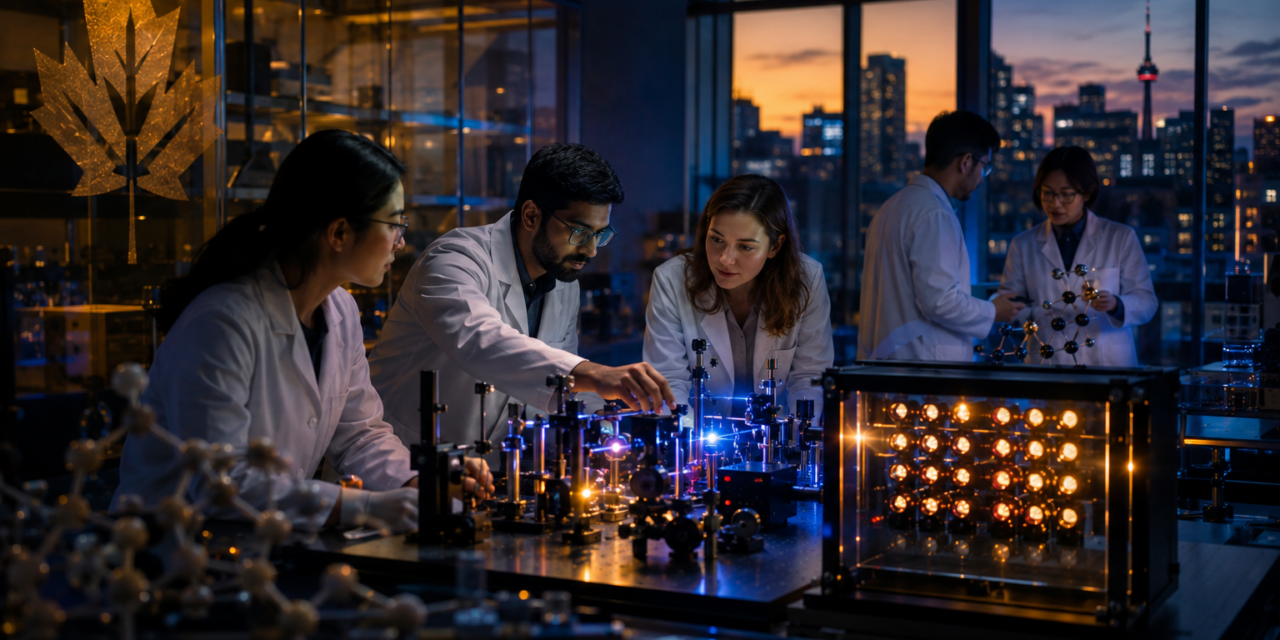
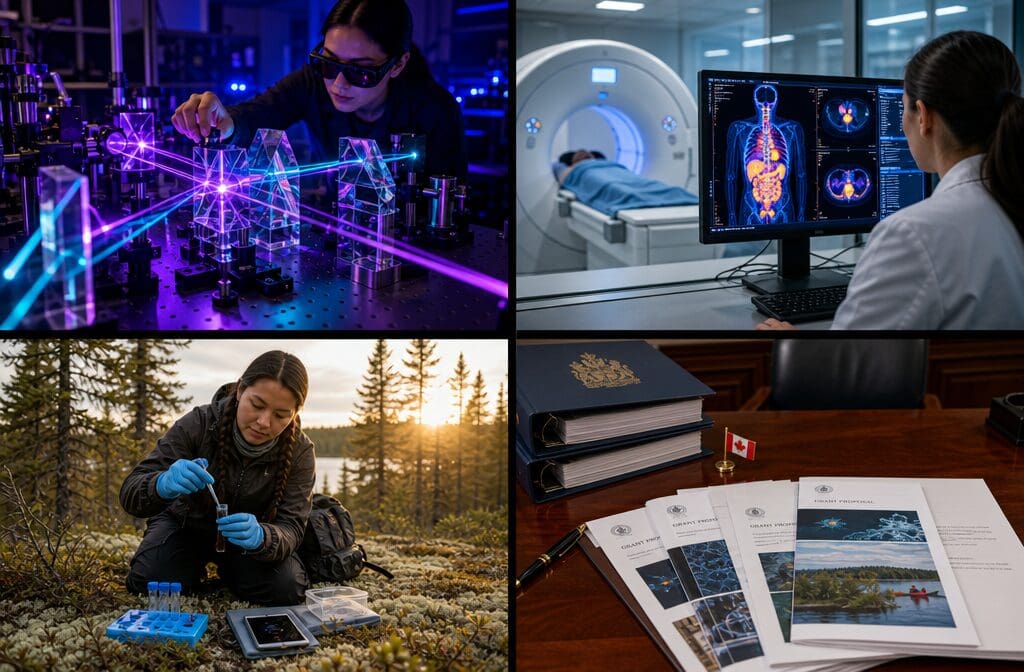
Professor Roberto Morandotti of the Institut national de la recherche scientifique (INRS) became the first Canadian to receive the Max Born Award from Optica in February 2026, recognized for pioneering work in integrated quantum photonics and ultrafast laser science [3]. At Brock University, Professor Travis Dudding is collaborating with Johns Hopkins University to develop molecular imaging agents that make PET scans more precise for early cancer detection [4]. These are not incremental improvements. They are the kind of advances that change clinical practice.
The 2026 Governor General’s Innovation Awards also highlighted Dr. Daniel Drucker’s work on glucagon-like peptides, a field that underpins today’s widely used diabetes and weight-loss medications, and Dr. David Wishart’s contributions to metabolomics, which maps the chemical fingerprints of disease in the human body [2].

Who Are the Top Canadian Researchers Working on Climate Solutions?
Canada’s climate researchers are among the most active in the world, particularly in Arctic science, carbon sequestration, and biodiversity monitoring. Institutions like Environment and Climate Change Canada, Dalhousie University, and UBC run programs that track everything from permafrost thaw to ocean acidification.
UBC’s March 2026 Canada Foundation for Innovation funding included projects targeting dark matter, dark energy, and gravitational waves, fields that inform our understanding of planetary physics and long-term environmental modeling [5]. Researchers studying caribou migration and boreal ecosystems are also contributing data that feeds directly into climate policy decisions.
Fields where Canadian climate researchers are most active:
- Arctic permafrost and sea ice monitoring
- Carbon capture and storage technology
- Freshwater ecosystem health
- Biodiversity loss and species recovery
- Renewable energy grid integration
How Much Funding Do Canadian Scientists Typically Get for Research?
Canadian research funding is meaningful but modest compared to U.S. and European scales. The Natural Sciences and Engineering Research Council (NSERC) is the primary federal funder for basic science. In October 2025, NSERC honored 19 top scientists and nine industry partners for research and innovation contributions [10].
The New Frontiers in Research Fund, which awarded $3 million across 12 UBC-led projects in May 2026, is designed for high-risk, high-reward exploration [1]. By comparison, a single U.S. National Institutes of Health R01 grant can exceed $500,000 per year for a single project. Canadian grants are competitive in quality but smaller in dollar value, which affects the pace and scale of some research programs.
Mitacs, a national research and training organization now in its 15th year of innovation awards, bridges some of that gap by connecting academic researchers with industry partners [9].
What Medical Breakthroughs Have Canadian Researchers Recently Developed?
Canadian medical researchers are producing work that is directly saving lives. Dr. Andrew Boozary launched Canada’s first hospital-led supportive housing project, addressing the intersection of homelessness and health outcomes in a way that has drawn international policy attention [2]. Dr. Daniel Drucker’s glucagon-like peptide research laid groundwork for a class of drugs now used by millions worldwide for diabetes and obesity management [2].
At Brock University, the quantum imaging work targeting cancer detection represents a practical leap forward. By improving how PET scans illuminate biological processes, the research could allow doctors to catch cancers earlier and with greater accuracy [4]. The University of Ottawa’s NexQT Institute, with over 80 researchers and advanced photonics facilities, is also pushing the boundaries of medical imaging through quantum technology [7].
For readers interested in healthy aging and long-term wellness research, Canadian medical science is producing findings with direct everyday relevance.
Why Don’t Canadian Scientists Get as Much Global Recognition?
The Quiet Innovators: Canadian Scientists and Researchers Whose Breakthroughs Are Changing the World often go unnoticed for a few structural reasons. Canada’s population is roughly one-tenth that of the United States, so its research output, while high in quality, is smaller in volume. Media coverage of science tends to follow funding announcements, and U.S. agencies like NIH and DARPA command much larger budgets and generate more press.
There is also a cultural factor. Canadian institutions tend to communicate research findings in understated, technical language rather than through aggressive public relations campaigns. That modesty serves scientific credibility but limits public visibility.
Awards like the Governor General’s Innovation Awards and NSERC prizes are working to change that narrative by elevating Canadian researchers in the public eye [2][10].
Which Canadian Universities Are Best for Scientific Research?
Several Canadian universities rank among the top research institutions globally. Choosing the right one depends on the field.
UniversityResearch StrengthsUniversity of British Columbia (UBC)Quantum materials, environmental science, life sciencesUniversity of OttawaQuantum technologies, photonics, radiation healthUniversity of TorontoMedicine, AI, materials scienceMcGill UniversityNeuroscience, physics, public healthSimon Fraser UniversityInnovation commercialization, applied sciences
Simon Fraser University’s Professor Elicia Maine received the inaugural Innovation Impact Award in October 2025 for her Invention to Innovation (i2I) program, which has trained researchers to move discoveries from lab to market over the past decade [6]. The University of Ottawa’s NexQT Institute is a recognized leader in quantum research, collaborating directly with industry partners in Canada’s largest tech park [7].
For those following space and science developments in Canada, UBC’s astronomy and dark matter projects are particularly worth watching.
What Challenges Do Canadian Researchers Face Compared to U.S. Scientists?
Canadian researchers face real structural disadvantages. Grant competition is intense relative to available funding. Brain drain to the United States remains a persistent problem, as U.S. universities and private labs can offer significantly higher salaries and larger research budgets.
Regulatory timelines for clinical research can also be slower in Canada, which delays some medical breakthroughs from reaching patients. Early-career researchers often face a gap between completing graduate training and securing stable, independent funding.
Common mistakes early-career Canadian researchers make:
- Applying for grants without strong industry or community partnerships, which reviewers increasingly value
- Underestimating the time required to build a publication record before major funding becomes accessible
- Ignoring commercialization pathways, which programs like SFU’s i2I specifically address [6]
- Failing to engage with Mitacs, which funds collaborative industry-academic research and provides a faster route to applied impact [9]
The Canadian Nuclear Laboratories and University of Ottawa partnership on low-dose radiation research, announced in June 2025, is a good model of how collaboration can overcome individual funding limits [8]. Readers navigating bureaucratic challenges in research and public institutions will recognize some of these structural friction points.
Are Canadian Research Grants Competitive Internationally?
Yes, but with important caveats. Canadian grants from NSERC, the Canadian Institutes of Health Research (CIHR), and the New Frontiers in Research Fund are rigorous and peer-reviewed to international standards. The quality of funded research is globally competitive, as demonstrated by citation rates and award recognition.
However, the absolute dollar amounts are lower than what U.S. or German researchers can access. A researcher funded by NSERC may produce equally important work but with a leaner budget, which can affect team size, equipment access, and publication speed.
What Fields Are Canadian Researchers Leading Globally Right Now?
The Quiet Innovators: Canadian Scientists and Researchers Whose Breakthroughs Are Changing the World are most visible in these areas right now:
- Quantum photonics and computing: INRS, University of Ottawa’s NexQT, and UBC are all active in this space [3][5][7]
- Medical metabolomics: Dr. David Wishart’s work has created tools used by researchers worldwide [2]
- Cancer imaging: Brock University’s molecular imaging agents represent a near-term clinical advance [4]
- Nuclear safety and small modular reactors: Canadian Nuclear Laboratories is a global reference point [8]; see also coverage of small nuclear reactors and Canada’s investment strategy
- Environmental and Arctic science: Canada’s geography makes it uniquely positioned for this research
Who Are Some Canadian Indigenous Scientists Doing Groundbreaking Work?
Indigenous scientists in Canada are contributing research that combines traditional ecological knowledge with rigorous scientific methods, producing insights that neither approach could generate alone. Researchers like Dr. Leanne Betasamosake Simpson and scientists affiliated with the First Nations University of Canada are working on land stewardship, water quality, and community health in ways that directly address gaps in mainstream environmental science.
Indigenous-led research on boreal forest health, freshwater systems, and species recovery is increasingly cited in federal policy documents. These scientists often face additional barriers, including limited access to institutional funding and the challenge of having traditional knowledge respected within academic frameworks. Organizations like the Social Sciences and Humanities Research Council (SSHRC) have begun dedicating funding streams specifically for Indigenous-led research, but the field remains underfunded relative to its importance.
How Can I Become a Research Scientist in Canada?
Becoming a research scientist in Canada follows a clear path, though it requires patience and strategic planning.
- Complete an undergraduate degree in a relevant science, engineering, or health field at an accredited Canadian university
- Pursue a master’s degree to develop research skills and build a publication record
- Complete a PhD, ideally with a supervisor who has strong funding and industry connections
- Apply for postdoctoral fellowships through NSERC, CIHR, or Mitacs to gain independent research experience [9]
- Build a grant application portfolio and begin applying for independent funding
- Consider commercialization training through programs like SFU’s i2I if applied research or entrepreneurship is the goal [6]
Choose this path if: You are drawn to long-term, curiosity-driven problem solving and can tolerate a decade-long training pipeline before reaching full independence.
Reconsider if: You need financial stability quickly, as early-career research positions in Canada are competitive and often contract-based.
Conclusion
Canada’s scientific community is doing work that matters deeply, even when the world isn’t watching. From quantum photonics labs in Quebec to cancer imaging research in Ontario to climate science on the Arctic tundra, the quiet innovators are building knowledge that will shape medicine, technology, and environmental policy for decades.
Actionable next steps for readers:
- Follow NSERC, Mitacs, and the Governor General’s Innovation Awards for regular updates on Canadian research breakthroughs [2][9][10]
- If you are a student, explore Mitacs internship and fellowship programs as an entry point into Canadian research careers [9]
- Support science communication organizations that profile Canadian researchers, helping close the recognition gap
- Stay informed about space and science developments and small modular reactor innovation as two fields where Canada is staking a serious global claim
The breakthroughs are happening. The scientists are working. The world is starting to notice.
FAQ
Who are some well-known Canadian scientists active in 2026?
Professor Roberto Morandotti (quantum photonics), Dr. Daniel Drucker (diabetes medication research), Dr. David Wishart (metabolomics), Dr. Andrew Boozary (health and housing), and Professor Travis Dudding (cancer imaging) are among the most recognized Canadian researchers in 2026.
What is Canada’s main federal science funding agency?
The Natural Sciences and Engineering Research Council of Canada (NSERC) is the primary federal funder for basic and applied science research in Canada.
How does Canadian research funding compare to the United States?
Canadian grants are rigorous and internationally competitive in quality, but the absolute dollar amounts are significantly smaller than U.S. equivalents like NIH or NSF grants.
What is the New Frontiers in Research Fund?
It is a Canadian federal program that funds high-risk, interdisciplinary research. In May 2026, it awarded $3 million to 12 UBC-led projects spanning materials engineering and environmental science.
Which Canadian university is best for quantum research?
The University of Ottawa’s NexQT Institute and UBC are both strong choices, with NexQT housing over 80 researchers and direct industry collaboration infrastructure.
Do Indigenous scientists receive adequate funding in Canada?
Not yet. While funding bodies like SSHRC have created dedicated Indigenous research streams, Indigenous-led science remains underfunded relative to its contributions to environmental, health, and community knowledge.
What is the Governor General’s Innovation Award?
It is a Canadian national award that recognizes individuals and teams whose innovations have made a meaningful impact on Canadian society and beyond. The 2026 awards honored researchers in housing, medicine, and youth welfare.
What is Mitacs and how does it help researchers?
Mitacs is a national organization that funds collaborative research between universities and industry partners. Its awards program, now in its 15th year, supports students, professors, and companies working on applied innovation.
Can international students become research scientists in Canada?
Yes. Canadian universities actively recruit international graduate students, and federal programs like NSERC offer some fellowships open to international applicants studying at Canadian institutions.
What is the biggest challenge facing Canadian researchers today?
Brain drain to the United States is the most persistent structural challenge, driven by higher U.S. salaries and larger research budgets that are difficult for Canadian institutions to match.
References
[1] UBC Researchers Leading 12 Projects Awarded 3 Million Through New Frontiers – https://research.ubc.ca/news/may-13-2026/ubc-researchers-leading-12-projects-awarded-3-million-through-new-frontiers
[2] Governor General’s Innovation Awards – https://innovation.gg.ca/
[3] Roberto Morandotti Wins Prestigious Max Born Award For Pioneering Research In Quantum Photonics – https://inrs.ca/en/news/roberto-morandotti-wins-prestigious-max-born-award-for-pioneering-research-in-quantum-photonics/
[4] Brock Researchers Make Quantum Leap To Improve Cancer Care Communications Technologies – https://brocku.ca/media-room/2026/04/16/brock-researchers-make-quantum-leap-to-improve-cancer-care-communications-technologies/
[5] New Investments Advance Quantum Astronomy And Life Sciences Research – https://science.ubc.ca/news/2026-03/new-investments-advance-quantum-astronomy-and-life-sciences-research
[6] Innovation Trailblazer Elicia Maine Awarded Inaugural Innovation Impact Award – https://www.sfu.ca/main/dashboard/faculty-staff/news/2025/10/innovation-trailblazer-elicia-maine-awarded-inaugural-innovation-impact-award.html
[7] University of Ottawa’s NexQT Institute Leads Quantum Innovation – https://www.uottawa.ca/en/news-all/uottawas-nexqt-institute-leads-quantum-innovation
[8] Canadian Nuclear Laboratories And The University Of Ottawa Accelerate Low Dose Radiation Research – https://www.cnl.ca/canadian-nuclear-laboratories-and-the-university-of-ottawa-accelerate-low-dose-radiation-research-and-foster-next-generation-of-scientists/
[9] Mitacs Innovation Awards – https://www.mitacs.ca/about/mitacs-awards/
[10] NSERC Honours Scientists And Engineers Prizes Research And Innovation – https://nserc-crsng.canada.ca/en/news/nserc-honours-scientists-and-engineers-prizes-research-and-innovation
Much Appreciate You Sharing This Post - It Helps MUCH!!!