
























SOURCES: US Military Prepared to Strike Iran as Early as This Weekend

Last updated: February 19, 2026
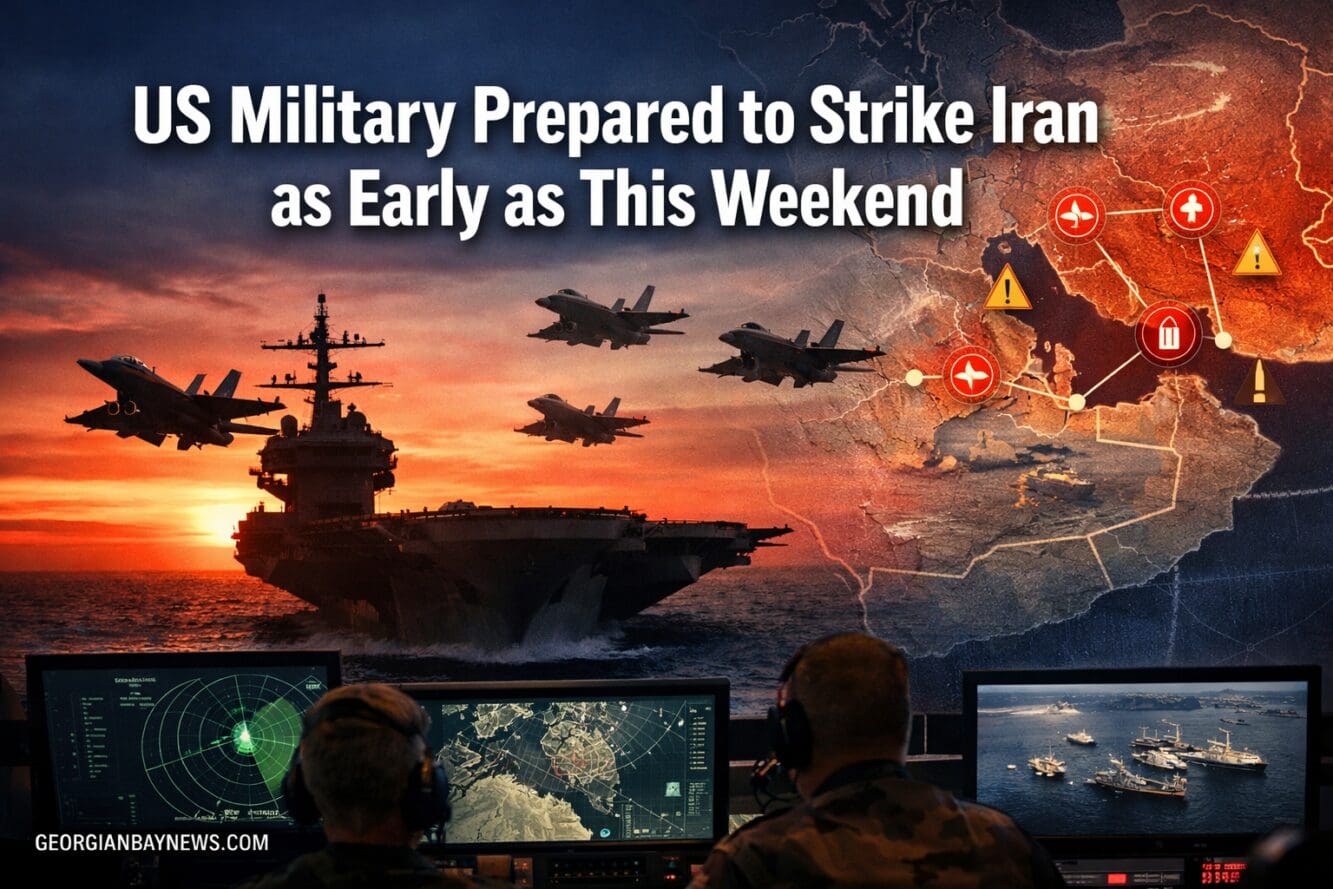
The US military prepared to strike Iran as early as Saturday, February 21, 2026, according to top national security officials, though President Trump has not yet made a final decision on whether to proceed with military action[1]. While the earliest possible strike date is this weekend, the timeline for potential military operations is likely to extend beyond Saturday as diplomatic negotiations continue and additional forces move into position[1].

Key Takeaways
- Military strikes against Iran could begin as early as Saturday, February 21, 2026, though no final decision has been made by President Trump[1]
- Two aircraft carrier strike groups are deploying to the Middle East, with full military readiness expected by mid-March 2026[1]
- The Pentagon is temporarily relocating personnel from the Middle East to Europe and the United States as a precautionary measure[1]
- Nuclear negotiations in Geneva showed limited progress, with the White House stating parties remain “very far apart on some issues”[1]
- Additional Navy ships and advanced warplanes are being deployed to the region as military preparations continue[4]

The US military is positioned to potentially strike Iran starting this weekend (February 21, 2026), but the operation timeline will likely extend into March as forces continue deploying and diplomatic efforts proceed. President Trump has not authorized strikes yet, and negotiations over Iran’s nuclear program are ongoing despite significant disagreements. The Pentagon is taking precautionary measures including personnel relocations while maintaining military readiness for potential action[1].

What Is the Current Timeline for US Military Prepared to Strike Iran?
The earliest possible strike date is Saturday, February 21, 2026, but military operations could extend well beyond this weekend. Top national security officials have confirmed that while forces are being positioned for potential action, the actual timeline depends on presidential authorization and strategic considerations[1].
Key Timeline Milestones:
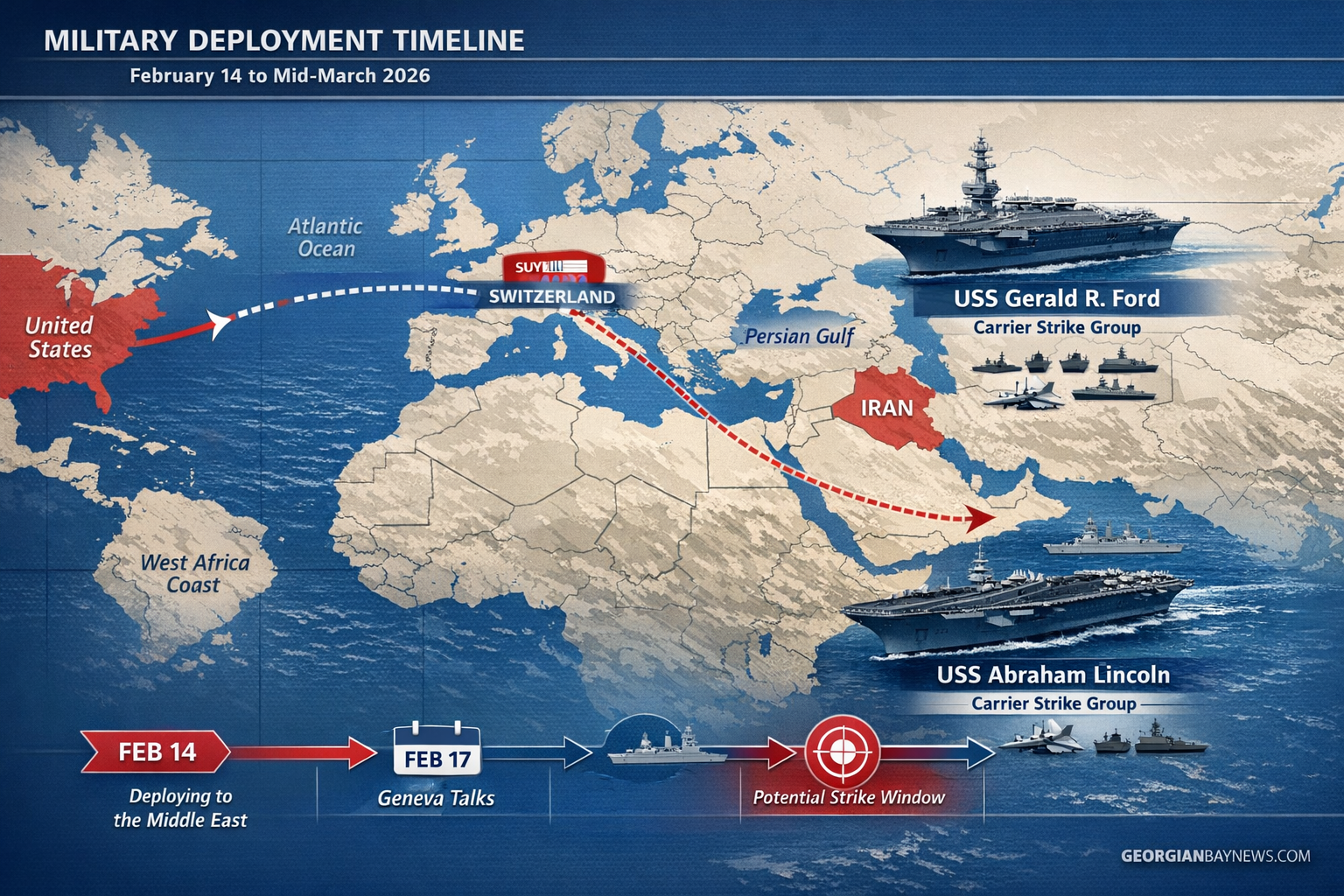
- February 14, 2026: USS Gerald R. Ford carrier strike group dispatched to the Middle East[1]
- February 17, 2026: Iranian and American negotiators held mediated talks in Geneva, Switzerland[1]
- February 18, 2026: USS Gerald R. Ford positioned off the coast of West Africa, continuing eastward transit[1]
- February 21, 2026: Earliest possible strike date (this Saturday)[1]
- Mid-March 2026: All deployed military forces expected to be fully in place[1]
- Approximately two weeks from February 18: Secretary of State Marco Rubio scheduled to visit Israeli Prime Minister Benjamin Netanyahu[1]
The extended timeline reflects both the logistical requirements of moving massive military assets across the globe and the ongoing diplomatic efforts to resolve tensions without military action. Choose to monitor developments closely if you live in the Middle East region, work in international markets sensitive to geopolitical tensions, or have family members serving in the military.
Which Military Assets Are Being Deployed as the US Military Prepared to Strike Iran?
The United States is deploying substantial naval and air power to the Middle East region, representing one of the largest military buildups in recent years. Two aircraft carrier strike groups form the core of this deployment, supported by additional warships and advanced combat aircraft[1][4].
Current Military Deployments:
- USS Abraham Lincoln carrier strike group: Already positioned in the Middle East region[1]
- USS Gerald R. Ford carrier strike group: Dispatched February 14, currently transiting (was off West Africa coast as of February 18)[1]
- Additional Navy ships: Multiple vessels being deployed to enhance strike capabilities[4]
- Advanced warplanes: Increased air power including fighter jets and support aircraft[4]
Each aircraft carrier strike group typically includes the carrier itself (capable of launching 60-90 aircraft), guided-missile cruisers, guided-missile destroyers, and attack submarines. This represents thousands of personnel and billions of dollars in military hardware.
Common mistake: Assuming all forces are already in position. In reality, the USS Gerald R. Ford won’t reach the region for several more days, and full operational readiness isn’t expected until mid-March[1]. This gap between initial capability and full deployment explains why the strike timeline extends beyond this weekend.
Why Is the Pentagon Relocating Personnel Before Potential Strikes?
The Pentagon is temporarily moving personnel out of the Middle East region primarily to Europe and the United States as a protective measure ahead of potential Iranian counterattacks[1]. This relocation is described as standard operating procedure and does not necessarily signal that strikes are imminent.
Reasons for Personnel Relocation:
- Force protection: Reducing personnel in potential Iranian retaliation zones
- Strategic positioning: Moving non-essential staff to safer locations while maintaining operational capability
- Standard protocol: Routine practice before major military operations in hostile regions
- Diplomatic signaling: Demonstrating seriousness while maintaining flexibility for diplomatic solutions
The relocation affects primarily support personnel, contractors, and non-combat staff. Combat forces and essential operational personnel remain in theater to maintain readiness. This approach balances force protection with operational requirements.
Edge case: Some personnel may actually be repositioning closer to potential operational areas rather than leaving the region entirely. Military officials use the term “relocation” broadly to include both protective evacuations and tactical repositioning.
What Progress Has Been Made in Diplomatic Negotiations With Iran?
Limited progress emerged from the February 17, 2026, mediated talks in Geneva, Switzerland, but significant gaps remain between American and Iranian positions on nuclear issues[1]. The Trump administration acknowledges some advancement while emphasizing that parties are “still very far apart on some issues,” according to White House Press Secretary Karoline Leavitt[1].
Negotiation Status:
- Location: Geneva, Switzerland (mediated talks)[1]
- Date: February 17, 2026 (Tuesday)[1]
- Duration: Several hours of discussions[1]
- Topics: Iran’s nuclear program and related compliance issues[1]
- Outcome: Partial progress but major disagreements persist[1]
- Next steps: Iran expected to provide additional details within two weeks[1]
- Follow-up: No date set for next round of nuclear negotiations[1]
Secretary of State Marco Rubio plans to visit Israeli Prime Minister Benjamin Netanyahu in approximately two weeks for further discussions, indicating coordination with regional allies continues[1]. This diplomatic track runs parallel to military preparations, giving both sides options for de-escalation or escalation.
Choose diplomatic monitoring if: You work in international relations, energy markets, or regional security analysis. The two-week window for Iranian responses creates a critical decision point that could determine whether military action proceeds.
How Does This Military Buildup Compare to Previous Iran Tensions?
The current deployment of two carrier strike groups represents a significant show of force, though the United States has deployed similar or larger forces during previous Middle East crises. What makes 2026 different is the combination of military readiness, active nuclear negotiations, and a specific strike timeline being discussed publicly[1][4].
Comparison Table: US Military Posture Toward Iran
| Factor | 2026 Situation | Previous Tensions |
|---|---|---|
| Carrier Groups | 2 (Lincoln, Ford) | Typically 1-2 in region |
| Strike Timeline | Publicly discussed (Feb 21+) | Usually classified |
| Diplomatic Track | Active Geneva negotiations | Varied by administration |
| Personnel Safety | Proactive relocations underway | Reactive to threats |
| Presidential Decision | Not yet authorized | Varied by situation |
| Full Force Readiness | Mid-March 2026 | Typically weeks to months |
The public discussion of potential strike dates is unusual and may serve multiple purposes: deterring Iranian nuclear advancement, reassuring regional allies like Israel, and creating diplomatic pressure for concessions in negotiations.
What Are the Potential Consequences if the US Military Strikes Iran?
Military strikes against Iran would likely trigger a complex chain of regional and global consequences affecting security, economics, and diplomacy. Understanding these potential outcomes helps communities, businesses, and individuals prepare for various scenarios.
Potential Immediate Consequences:
- Iranian retaliation: Attacks on US forces, regional allies, or commercial shipping in the Persian Gulf
- Oil market disruption: Price spikes affecting global energy costs and inflation
- Regional instability: Increased tensions involving Israel, Saudi Arabia, and other Middle East nations
- Diplomatic fallout: Strained relations with European allies preferring diplomatic solutions
- Escalation risk: Possibility of broader military conflict beyond initial strikes
Longer-term Implications:
- Nuclear program impact: Strikes could delay or accelerate Iran’s nuclear ambitions depending on effectiveness
- Regional alliances: Shifts in Middle East power dynamics and alliance structures
- Humanitarian concerns: Civilian casualties and potential refugee flows
- Economic effects: Sustained energy price volatility affecting global markets
- Political consequences: Domestic and international political reactions to military action
Common mistake: Assuming strikes would be a one-time event. Military analysts suggest that initial strikes would likely lead to a cycle of action and retaliation, potentially lasting weeks or months. For those interested in understanding how global events impact regional stability, our coverage of international developments provides additional context.
What Should Americans and Canadians Know About This Situation?
North Americans should understand both the direct and indirect ways this situation could affect daily life, from fuel prices to regional security implications. While the immediate military action would occur thousands of miles away, the consequences would ripple across the global economy and international relations.
Direct Impacts for North Americans:
- Fuel prices: Gas and heating oil costs could spike if Persian Gulf shipping is disrupted
- Investment markets: Stock market volatility, particularly in energy and defense sectors
- Military families: Increased deployments and extended tours for service members
- Travel advisories: Potential restrictions or warnings for Middle East travel
- Economic uncertainty: Broader market instability affecting retirement accounts and employment
What You Can Do:
- Stay informed: Monitor credible news sources for developments (avoid misinformation on social media)
- Financial preparation: Consider how energy price spikes might affect your budget
- Support military families: Recognize that service members and their families face increased stress during deployments
- Avoid panic: Remember that diplomatic solutions remain possible even as military preparations continue
- Engage civically: Contact elected representatives if you have concerns about military action
For seniors specifically: Fixed incomes can be particularly vulnerable to inflation caused by energy price increases. Consider reviewing your budget and discussing potential adjustments with financial advisors if tensions escalate.
What Are the Key Factors That Will Determine Whether Strikes Occur?
Several critical factors will influence President Trump’s decision on whether to authorize military strikes against Iran. Understanding these decision points helps make sense of the complex situation as it develops.
Primary Decision Factors:
1. Nuclear Program Intelligence
- Evidence of Iranian nuclear weapons development progress
- Assessment of how close Iran is to weapons capability
- Effectiveness of potential strikes in setting back the program
2. Diplomatic Progress
- Iranian responses to demands within the two-week window
- Support or opposition from European allies
- Israeli government pressure and coordination
3. Military Readiness
- Full deployment status of carrier strike groups and support assets
- Weather conditions and operational windows
- Force protection measures for personnel in the region
4. Political Considerations
- Domestic political support or opposition
- International coalition building
- Timing relative to other national priorities
5. Risk Assessment
- Probability and severity of Iranian retaliation
- Potential for escalation beyond controlled strikes
- Regional stability implications
Decision rule: If Iran provides substantive concessions on nuclear issues within the next two weeks AND diplomatic progress continues, military strikes become less likely. Conversely, if intelligence shows accelerated nuclear development OR negotiations completely stall, the probability of military action increases significantly.
Frequently Asked Questions
When exactly could US military strikes on Iran begin?
The earliest possible date is Saturday, February 21, 2026, though President Trump has not authorized strikes and the timeline could extend into March as forces continue deploying and diplomatic efforts proceed[1].
Has President Trump decided to strike Iran?
No. As of February 19, 2026, President Trump has not made a final decision on whether to authorize military strikes against Iran[1].
Why are two aircraft carriers being sent to the Middle East?
The USS Abraham Lincoln and USS Gerald R. Ford carrier strike groups provide military options for potential strikes while also serving as deterrence and demonstrating US commitment to regional security[1].
What happened in the Geneva negotiations with Iran?
American and Iranian negotiators held mediated talks on February 17, 2026, in Geneva, Switzerland, focusing on Iran’s nuclear program. Some progress was made, but the White House says parties remain “very far apart on some issues”[1].
Are US military personnel being evacuated from the Middle East?
The Pentagon is temporarily relocating some personnel from the Middle East to Europe and the United States as a precautionary measure, but this is described as standard practice and doesn’t necessarily mean strikes are imminent[1].
When will all US military forces be in position for potential strikes?
All deployed military forces are expected to be fully in place by mid-March 2026[1].
What is Iran’s nuclear program status?
Iran continues to rebuild its nuclear and missile capabilities, with ongoing concerns about progress toward weapons development capability[3]. Specific technical details are classified.
How would Iran likely respond to US military strikes?
Iran would likely retaliate through attacks on US forces in the region, strikes against regional allies like Israel and Saudi Arabia, disruption of Persian Gulf shipping, or proxy attacks through allied militias.
Will this affect gas prices in North America?
Yes, military conflict involving Iran typically causes oil price spikes because Iran is a major oil producer and the Persian Gulf is a critical shipping route for global energy supplies.
What role is Israel playing in this situation?
Israel is closely coordinating with the United States, with Secretary of State Marco Rubio scheduled to visit Prime Minister Netanyahu in approximately two weeks for discussions[1].
Can diplomatic negotiations still prevent military strikes?
Yes. Negotiations continue despite disagreements, and Iran is expected to provide additional details within two weeks that could affect the decision on military action[1].
Where can I find reliable updates on this developing situation?
Monitor established news organizations, official government sources, and credible international relations analysts. Avoid unverified social media claims and conspiracy theories.
Key Takeaways: Understanding the US Military Prepared to Strike Iran Situation
Timeline uncertainty: While Saturday, February 21, 2026, represents the earliest possible strike date, the actual timeline depends on presidential authorization and could extend into March as forces deploy and negotiations continue[1]
Significant military buildup: Two aircraft carrier strike groups plus additional Navy ships and advanced warplanes represent substantial US military power being positioned in the Middle East region[1][4]
Diplomatic efforts ongoing: Despite military preparations, nuclear negotiations continue with Iran expected to provide additional details within two weeks of the February 17 Geneva talks[1]
No final decision made: President Trump has not yet authorized military strikes, maintaining flexibility for both diplomatic and military options[1]
Force protection measures: The Pentagon’s temporary relocation of personnel from the Middle East to Europe and the United States demonstrates serious preparation while following standard protocols[1]
Regional coordination: Secretary of State Marco Rubio’s planned visit to Israeli Prime Minister Netanyahu indicates close coordination with regional allies on both diplomatic and military tracks[1]
Extended deployment timeline: Full military readiness won’t be achieved until mid-March 2026, when all forces are completely in position[1]
Multiple decision factors: Nuclear program intelligence, diplomatic progress, military readiness, political considerations, and risk assessment all influence whether strikes ultimately occur
Broad potential impacts: Military action would affect global energy markets, regional stability, international relations, and economic conditions far beyond the immediate strike zone
Continued monitoring essential: The situation remains fluid with critical decision points approaching in the next two weeks as Iran responds to diplomatic demands and military deployments progress
Conclusion: What Happens Next With the US Military Prepared to Strike Iran
The situation surrounding potential US military strikes against Iran represents one of the most significant geopolitical developments of 2026. While the earliest possible strike date of Saturday, February 21, creates urgency, the extended timeline through mid-March and ongoing diplomatic negotiations mean the situation could still resolve without military action[1].
Critical Dates to Watch:
- February 21, 2026: Earliest possible strike date (this Saturday)
- Next two weeks: Iran expected to provide additional details on nuclear program concessions[1]
- Early March 2026: Secretary of State Rubio’s planned visit to Israeli Prime Minister Netanyahu[1]
- Mid-March 2026: Full US military deployment completion[1]
What You Should Do Now:
Stay informed through credible sources: Monitor developments from established news organizations and official government channels rather than social media speculation
Prepare for economic impacts: Consider how potential energy price increases might affect your household or business budget
Support those affected: Military families face particular stress during deployments; community support makes a difference
Engage in civic discourse: Informed citizens contribute to better policy decisions; contact elected representatives if you have concerns
Avoid panic: Remember that military preparations don’t guarantee military action, and diplomatic solutions remain possible
Plan for contingencies: Businesses with international exposure should review risk management plans; individuals should ensure emergency savings can handle potential economic disruption
The next two weeks will prove critical as Iran responds to diplomatic demands and US military forces continue moving into position. The parallel tracks of diplomacy and military preparation give both sides options, but also create tension as each decision point approaches.
For world leaders, this situation demands careful balancing of deterrence, diplomacy, and defense. For communities in the Middle East region, it requires preparation for potential instability. For Americans, Canadians, and global citizens, it means understanding how regional conflicts affect interconnected modern economies and security structures.
The outcome remains uncertain, but the stakes are clear: decisions made in the coming days and weeks will shape Middle East security, global energy markets, and international relations for years to come. Stay engaged, stay informed, and support thoughtful approaches to this complex challenge.
References
[1] Trump Possible Timeline Iran Strikes – https://www.cbsnews.com/news/trump-possible-timeline-iran-strikes/
[2] 2026 United States–Iran Crisis – https://en.wikipedia.org/wiki/2026_United_States%E2%80%93Iran_crisis
[3] Iran Situation Assessment February 2026 The Race To Rebuild The Nuclear And Missile Array Casual Terror And The Crink – https://israel-alma.org/iran-situation-assessment-february-2026-the-race-to-rebuild-the-nuclear-and-missile-array-casual-terror-and-the-crink/
[4] U S Military Buildup Continues As Iran Faces Possible Strikes – https://www.wlrn.org/2026-02-18/u-s-military-buildup-continues-as-iran-faces-possible-strikes
[5] Iran Update February 17 2026 – https://understandingwar.org/research/middle-east/iran-update-february-17-2026/
Some content and illustrations on GEORGIANBAYNEWS.COM are created with the assistance of AI tools.
GEORGIANBAYNEWS.COM shares video content from YouTube creators under fair use principles. We respect creators’ intellectual property and include direct links to their original videos, channels, and social media platforms whenever we feature their content. This practice supports creators by driving traffic to their platforms.
Much Appreciate You Sharing This Post - It Helps MUCH!!!