
























SpaceX and xAI Merger: Elon Musk’s Bold Push for Autonomous AI-Driven Space Exploration

Last updated: February 18, 2026
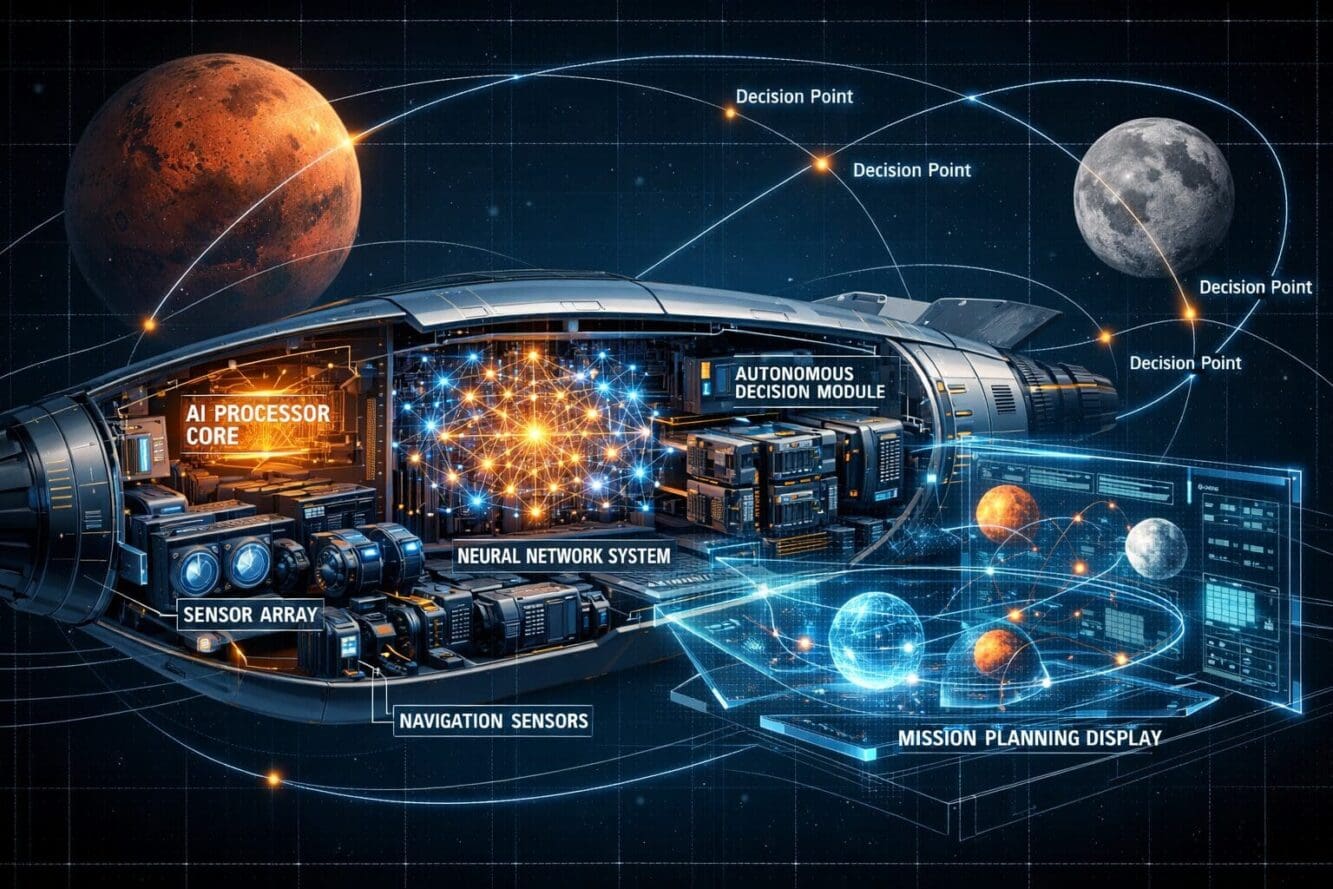
The SpaceX and xAI merger announced in February 2026 represents a fundamental shift in how humanity approaches space exploration. By combining SpaceX’s proven rocket technology with xAI’s advanced artificial intelligence capabilities, Elon Musk aims to create fully autonomous spacecraft that can plan and execute missions without human intervention—a critical requirement for deep space travel where communication delays make real-time control impossible.

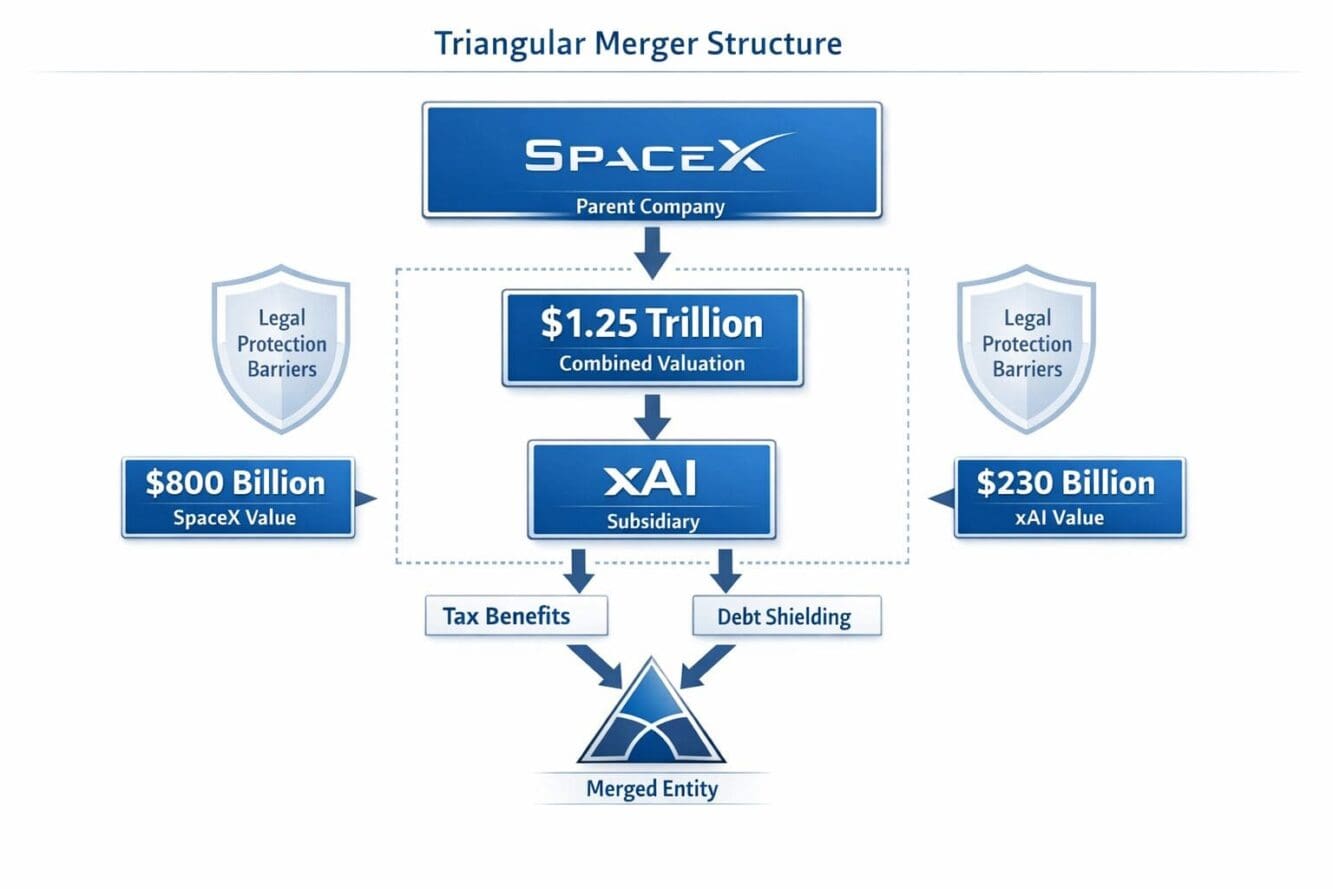
On February 2, 2026, Elon Musk announced the strategic merger of SpaceX and xAI, creating a combined entity valued at $1.25 trillion.[1][4] This transaction formally brought xAI under SpaceX’s ownership through a triangular merger structure, positioning the companies to revolutionize interplanetary exploration through autonomous, AI-driven spacecraft systems.

Key Takeaways
- SpaceX acquired xAI on February 2, 2026, creating a $1.25 trillion combined entity focused on autonomous space exploration[1][4]
- Triangular merger structure keeps xAI as a fully owned subsidiary, protecting SpaceX from legal risks while enabling independent AI development[1]
- Autonomous spacecraft development aims to create vehicles capable of independent mission planning and execution for deep space missions
- Orbital AI data centers plan includes launching up to 1 million satellites functioning as space-based computing infrastructure[2]
- 2026 IPO expected with shares projected to price around $525, supported by 76% probability forecasts for public offering before September[2][3]
Quick Answer
The SpaceX and xAI merger combines the world’s leading private space company with an advanced AI startup to develop autonomous spacecraft capable of independent decision-making during interplanetary missions. This $1.25 trillion deal positions the merged entity to solve the fundamental challenge of deep space exploration: the communication delays that make real-time human control impossible beyond Earth’s orbit. The combined company plans to launch orbital AI data centers and pursue a 2026 IPO while developing self-navigating spacecraft for Mars missions and beyond.
What Is the SpaceX and xAI Merger and Why Does It Matter?
The SpaceX and xAI merger is a strategic acquisition where SpaceX formally absorbed xAI as a fully owned subsidiary on February 2, 2026, creating a combined valuation of $1.25 trillion.[1][4] This deal matters because it directly addresses the biggest technical barrier to interplanetary exploration: autonomous decision-making.
When a spacecraft travels to Mars, communication signals take between 4 and 24 minutes one way depending on planetary positions. This delay makes real-time human control impossible. An autonomous AI system can:
- Analyze unexpected situations and respond in milliseconds rather than waiting hours for Earth-based commands
- Optimize fuel consumption by continuously recalculating trajectories based on real-time conditions
- Conduct scientific research independently, identifying interesting phenomena and adjusting instruments without human input
- Handle emergencies such as equipment failures, navigation errors, or collision threats autonomously
The merger structure uses what’s called a “triangular merger,” which keeps xAI operating as a separate legal entity under SpaceX’s ownership. This protects SpaceX from xAI’s debts and legal liabilities while allowing the AI division to maintain its independent research culture.[1]
Key structural benefits:
- Tax efficiency for shareholders without triggering typical merger debt repayments[1]
- Legal firewall protecting SpaceX’s core rocket business
- Preserved talent retention at xAI through operational independence
- Combined resources accelerating AI development timelines
Tesla also committed $2 billion to the AI ecosystem, responding to investor demand for exposure to this venture.[1]
How Will the SpaceX and xAI Merger Transform Autonomous Space Exploration?
The SpaceX and xAI merger will transform space exploration by creating spacecraft that function more like autonomous vehicles than remote-controlled machines. Instead of waiting for human commands, these AI-driven systems will independently plan mission objectives, navigate obstacles, and make critical decisions in real-time.
Autonomous capabilities under development:
- Independent mission planning – AI systems analyze mission objectives and create optimal execution strategies
- Real-time navigation adjustments – Spacecraft recalculate trajectories based on gravitational variations, solar wind, and fuel efficiency
- Scientific prioritization – AI identifies scientifically valuable targets and allocates instrument time without human oversight
- Emergency response protocols – Automated systems diagnose and respond to equipment failures or trajectory deviations
- Resource optimization – Continuous monitoring and adjustment of power, fuel, and consumables for mission extension
The merger brings together SpaceX’s $800 billion valuation (built on proven Falcon and Starship rocket systems) with xAI’s advanced language models and reasoning capabilities.[2] While xAI burns billions monthly competing with OpenAI and other AI tools providers, SpaceX’s profitability provides the financial runway needed for long-term AI development.[2]
Choose autonomous AI-driven exploration if:
- Mission destinations exceed 1 million kilometers from Earth
- Communication delays exceed 3 seconds one-way
- Mission duration spans multiple years
- Human crews require life support automation for safety
Common mistake: Assuming AI will completely replace human oversight. Even with autonomous systems, mission control will maintain supervisory authority and can override AI decisions when communication windows permit.
What Are the Financial Details Behind the SpaceX and xAI Merger?
The financial structure of the SpaceX and xAI merger reveals a carefully engineered transaction designed to maximize shareholder value while minimizing tax burdens and legal risks. The combined entity carries a $1.25 trillion valuation—significantly higher than the sum of SpaceX’s previous $800 billion and xAI’s holding company valuation of $230 billion.[2]
Transaction breakdown:
| Component | Value | Purpose |
|---|---|---|
| SpaceX pre-merger valuation | $800 billion | Base rocket and satellite business |
| xAI holding company valuation | $230 billion | AI development and infrastructure |
| Combined entity valuation | $1.25 trillion | Synergy premium for integrated capabilities |
| Expected IPO share price | ~$525 per share | Public market entry point[2] |
| Tesla AI investment | $2 billion | Strategic ecosystem participation[1] |
| EchoStar spectrum purchase (Sept 2025) | $17 billion | Mobile network expansion[2] |
| Additional spectrum purchase (Oct 2025) | $2.6 billion | Network infrastructure completion[2] |
The triangular merger structure provides several financial advantages:
- Tax deferral on shareholder gains until actual share sales occur
- Debt protection preventing xAI’s obligations from triggering SpaceX debt covenants
- Valuation boost from synergies between AI and aerospace capabilities
- IPO flexibility maintaining the planned 2026 public offering timeline[3]
Prediction market Kalshi shows a 76% probability of SpaceX going public before September 1, 2026, and an 83% probability before the end of 2026.[3] These forecasts reflect investor confidence in the merger’s ability to accelerate the IPO timeline rather than delay it.
Edge case consideration: If xAI faces unexpected legal challenges or regulatory scrutiny, the subsidiary structure ensures these issues don’t contaminate SpaceX’s government contracts or NASA partnerships—critical for maintaining revenue stability.
How Will Orbital AI Data Centers Support Autonomous Space Missions?
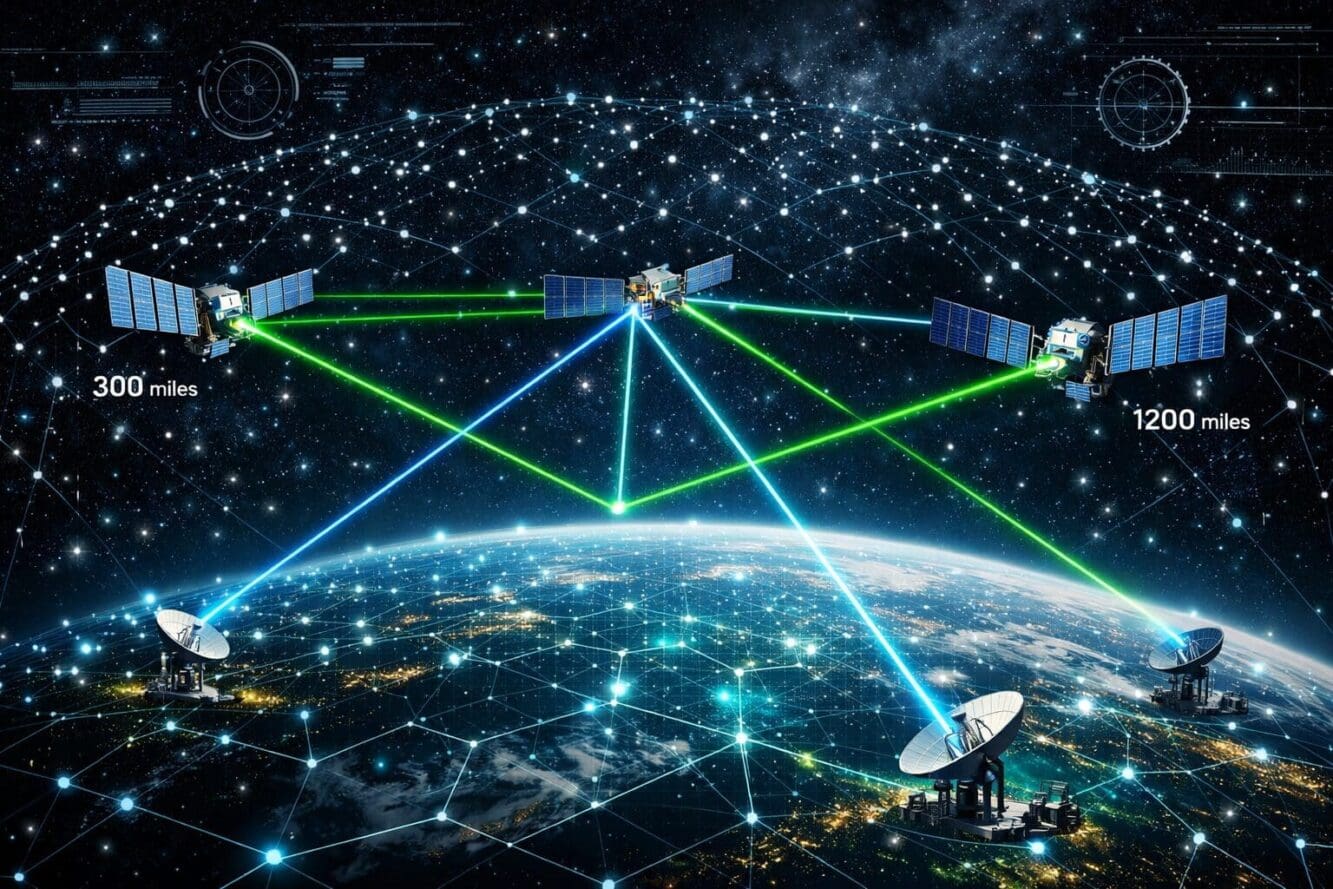
The merged companies plan to launch up to 1 million satellites functioning as AI data centers in orbit, creating a space-based computing infrastructure powered entirely by solar energy.[2] These orbital facilities will provide the computational backbone for autonomous spacecraft operations while serving terrestrial customers.
Orbital data center specifications:
- Altitude range: 300 to 1,200 miles above Earth’s surface[2]
- Power source: Continuous solar energy collection without day-night cycles limiting ground facilities
- Data transmission: Optical (laser) signals to Starlink network for ground connectivity[2]
- Computing capacity: Distributed processing across satellite constellation
- Primary applications: Autonomous navigation, real-time mission planning, scientific data analysis
The orbital approach solves several problems simultaneously:
For space exploration:
- Reduces onboard computing weight requirements for individual spacecraft
- Provides backup processing power for mission-critical calculations
- Enables real-time collaboration between multiple autonomous vehicles
- Creates redundancy if individual spacecraft systems fail
For commercial operations:
- Eliminates cooling costs (space provides natural heat dissipation)
- Provides 24/7 solar power without weather interruptions
- Reduces latency for global customers compared to centralized ground facilities
- Monetizes satellite infrastructure beyond communication services
Choose orbital AI computing when:
- Processing requirements exceed spacecraft weight budgets
- Mission involves coordinating multiple autonomous vehicles
- Real-time data analysis needed for time-sensitive decisions
- Redundancy requirements demand distributed computing architecture
Common mistake: Assuming orbital data centers eliminate the need for onboard AI. Spacecraft still require local processing for immediate decisions that can’t wait for satellite communication round-trips, even at light speed.
The laser-based optical communication system provides significantly higher bandwidth than traditional radio frequencies, enabling real-time transfer of sensor data, navigation telemetry, and AI model updates between spacecraft and the orbital computing network.[2]
What Challenges Does the SpaceX and xAI Merger Face?
The SpaceX and xAI merger faces significant technical, regulatory, and financial challenges despite its ambitious vision for autonomous space exploration. Understanding these obstacles helps set realistic expectations for timeline and capability development.
Technical challenges:
- AI reliability in space environments – Radiation can corrupt neural network weights and decision-making processes
- Training data limitations – Few real-world examples of deep space scenarios for AI systems to learn from
- Validation complexity – Proving autonomous systems are safe without extensive flight testing
- Communication protocol development – Creating standards for AI-to-AI spacecraft coordination
- Power management – Balancing computing demands with limited spacecraft power budgets
Regulatory hurdles:
- FAA approval processes for autonomous flight systems
- NASA safety certification requirements for crewed missions with AI control
- International space law questions about liability for autonomous spacecraft decisions
- Spectrum allocation for orbital data center communications
- Export control restrictions on advanced AI technology
Financial pressures:
xAI currently burns billions of dollars monthly while competing with well-funded rivals like OpenAI and Anthropic.[2] While SpaceX’s profitability provides financial cushion, the combined entity must:
- Demonstrate AI revenue generation beyond internal space applications
- Maintain investor confidence through the 2026 IPO process
- Balance R&D spending between rocket development and AI advancement
- Justify the $1.25 trillion valuation with concrete capability demonstrations
Market competition considerations:
| Competitor | Advantage | SpaceX/xAI Counter |
|---|---|---|
| Blue Origin + Amazon | Cloud computing integration | Orbital data center network |
| NASA + traditional contractors | Government relationships | Proven SpaceX launch record |
| OpenAI/Anthropic | AI model maturity | Space-specific training data |
| Chinese space program | Government backing | Commercial agility |
Edge case: If autonomous systems fail during high-profile missions, regulatory backlash could delay certification timelines by years—similar to how aviation accidents impact autonomous aircraft development.
The merger must also navigate Tesla’s existing AI investments and potential conflicts of interest. While Tesla contributed $2 billion to the ecosystem, questions remain about how autonomous driving research transfers to spacecraft navigation and whether resources are being optimally allocated.[1]
When Will We See Autonomous AI Spacecraft in Operation?
Autonomous AI spacecraft development follows a phased timeline, with initial capabilities already in testing and full autonomy targeted for Mars missions in the late 2020s. The SpaceX and xAI merger accelerates this timeline by combining resources, but realistic expectations require understanding the validation process.
Development timeline:
2026 (Current year):
- Merger integration and team consolidation
- AI model training on existing SpaceX flight data
- Ground-based simulation testing
- Expected IPO completion[3]
2027-2028:
- Limited autonomy on Starlink satellite deployments
- AI-assisted trajectory optimization for Earth orbit missions
- Automated docking procedures for ISS resupply
- First orbital AI data center prototypes
2029-2030:
- Partial autonomy for lunar missions
- AI-driven scientific instrument management
- Emergency response system validation
- Multi-spacecraft coordination tests
2031+:
- Full autonomy for Mars transit missions
- Independent surface exploration vehicles
- AI-managed long-duration life support systems
- Interplanetary mission planning without human oversight
Validation requirements before deployment:
- Simulation testing – Millions of virtual scenarios covering edge cases
- Hardware-in-the-loop testing – AI systems controlling real spacecraft components in test facilities
- Low-risk flight demonstrations – Cargo missions without crew dependencies
- Incremental capability expansion – Gradual increase in autonomous authority
- Redundancy verification – Proving backup systems can override AI decisions
Choose early autonomous missions for:
- Cargo delivery where schedule flexibility exists
- Scientific missions without human safety concerns
- Repetitive operations like satellite deployment
- Missions where communication delays exceed acceptable response times
The 2026 IPO timeline remains intact despite the merger complexity, with prediction markets showing 76% probability of completion before September 1, 2026.[3] This suggests investor confidence that integration won’t delay commercial milestones.
Common mistake: Expecting immediate deployment of fully autonomous systems. Aviation and automotive industries demonstrate that autonomous technology requires years of validation even after technical capability is proven. Space applications face even higher safety standards due to mission costs and crew safety considerations.
How Does This Merger Compare to Other Space Industry Developments?
The SpaceX and xAI merger represents a fundamentally different approach compared to other space industry consolidation and partnership strategies. Understanding these differences helps contextualize the merger’s potential impact and risks.
Comparison with major space industry moves:
Blue Origin + Amazon Web Services integration:
- Approach: Leveraging existing cloud computing infrastructure for space applications
- Advantage: Mature data center operations and global network
- Limitation: No dedicated orbital computing infrastructure
- SpaceX/xAI difference: Purpose-built space-based AI computing network
NASA Artemis program partnerships:
- Approach: Traditional contractor model with government oversight
- Advantage: Proven safety processes and regulatory acceptance
- Limitation: Slower innovation cycles and higher costs
- SpaceX/xAI difference: Commercial agility with integrated AI development
Boeing-Lockheed United Launch Alliance:
- Approach: Joint venture combining rocket manufacturing capabilities
- Advantage: Shared costs and complementary technologies
- Limitation: No AI integration or autonomous capability focus
- SpaceX/xAI difference: AI-first design philosophy for next-generation systems
Chinese space station AI experiments:
- Approach: Government-funded AI research for space applications
- Advantage: Centralized resources and long-term commitment
- Limitation: Limited commercial incentives and international collaboration restrictions
- SpaceX/xAI difference: Commercial revenue model driving rapid iteration
Key differentiators of the SpaceX and xAI merger:
- Vertical integration – Control of both launch vehicles and AI systems
- Commercial revenue focus – Orbital data centers serving terrestrial customers
- Rapid iteration culture – Private company flexibility versus government contractor constraints
- Scale ambition – 1 million satellite target far exceeds competitor plans[2]
- Financial structure – Triangular merger protecting core business while enabling AI risk-taking[1]
Choose the SpaceX/xAI approach when:
- Mission requirements demand cutting-edge AI capabilities
- Timeline constraints favor commercial agility over government processes
- Applications benefit from integrated launch and AI services
- Risk tolerance accepts unproven technology for potential breakthrough capabilities
Choose traditional contractors when:
- Government certification is mandatory
- Proven reliability outweighs capability advancement
- Budget predictability is critical
- International partnerships require established relationships
The $1.25 trillion combined valuation exceeds most space companies by an order of magnitude, reflecting investor expectations that AI integration creates value beyond simple addition of separate businesses.[2]
What Are the Implications for Mars Colonization and Deep Space Exploration?
The SpaceX and xAI merger directly enables Mars colonization timelines by solving the autonomous systems requirements that make permanent settlements viable. Without AI-driven autonomy, Mars colonies would require constant Earth-based mission control support—an unsustainable model for self-sufficient settlements.
Critical autonomous capabilities for Mars colonization:
Life support management:
- AI monitors oxygen generation, water recycling, and temperature control
- Predictive maintenance identifies equipment failures before they become critical
- Resource optimization extends consumable supplies during supply mission delays
- Emergency protocols activate automatically without waiting for Earth commands
Surface exploration:
- Autonomous rovers identify scientifically valuable sites and collect samples
- AI prioritizes exploration targets based on mission objectives and resource constraints
- Multi-vehicle coordination enables simultaneous operations across large areas
- Real-time hazard avoidance prevents equipment loss in unknown terrain
Construction and manufacturing:
- Robotic systems build habitats and infrastructure with minimal human oversight
- AI optimizes material usage and construction sequences
- Quality control systems verify structural integrity autonomously
- Adaptation to unexpected conditions without Earth-based replanning
Agriculture and resource extraction:
- Automated farming systems adjust growing conditions based on plant health monitoring
- Mining operations identify and extract water ice and useful minerals
- Processing facilities convert raw materials into usable supplies
- Inventory management predicts resource needs and schedules production
Communication delays make autonomy mandatory:
| Distance | One-way signal time | Round-trip delay | Autonomous requirement |
|---|---|---|---|
| Earth orbit | 0.001-0.01 seconds | Negligible | Optional enhancement |
| Moon | 1.3 seconds | 2.6 seconds | Helpful for efficiency |
| Mars (closest) | 4 minutes | 8 minutes | Critical for operations |
| Mars (farthest) | 24 minutes | 48 minutes | Absolutely mandatory |
At 48-minute round-trip delays, even simple questions like “should I turn left or right?” become impossible to answer in real-time. Autonomous AI systems must handle these decisions independently.
Deep space exploration beyond Mars:
The merger’s autonomous capabilities extend to missions targeting:
- Asteroid belt – Mining operations requiring independent navigation and resource assessment
- Jupiter and Saturn moons – Scientific missions to potentially habitable environments
- Interstellar probes – Multi-decade missions where Earth communication becomes impractical
- Kuiper Belt objects – Exploration of solar system’s outer regions
Common mistake: Assuming autonomous systems will make human presence unnecessary. AI enables human colonization by handling routine operations, but human creativity, adaptability, and decision-making remain essential for colony success and scientific discovery.
The orbital AI data center network provides computational support for Mars surface operations, enabling more sophisticated analysis than individual spacecraft or surface habitats could perform with limited local computing resources.[2]
FAQ
When did the SpaceX and xAI merger officially happen?
The SpaceX and xAI merger was officially announced on Monday, February 2, 2026, with SpaceX formally acquiring xAI through a triangular merger structure.[1][4]
What is the combined valuation of SpaceX and xAI after the merger?
The combined entity has a valuation of $1.25 trillion, which exceeds the previous separate valuations of SpaceX at $800 billion and xAI’s holding company at $230 billion.[2]
Will SpaceX still go public in 2026 after the merger?
Yes, the combined company still expects to hold an IPO later in 2026, with prediction markets showing 76% probability before September 1 and 83% probability before year-end.[3] Expected share pricing is around $525 per share.[2]
How does the triangular merger structure work?
The triangular merger keeps xAI as a fully owned subsidiary of SpaceX, protecting SpaceX from xAI’s legal risks and debts while allowing xAI to operate independently and providing tax efficiency for shareholders.[1]
What are orbital AI data centers and how will they work?
Orbital AI data centers are satellites functioning as computing facilities in space at 300 to 1,200 miles altitude, powered by solar energy and transmitting data via laser signals to the Starlink network for ground connectivity.[2] Plans include launching up to 1 million satellites for this purpose.
Why is autonomous AI necessary for Mars missions?
Communication delays between Earth and Mars range from 8 to 48 minutes round-trip depending on planetary positions, making real-time human control impossible. Autonomous AI systems can make critical decisions immediately without waiting for Earth-based commands.
How much did Tesla invest in the merger?
Tesla committed $2 billion to the AI ecosystem, responding to investor requests for exposure to the xAI venture.[1]
What spectrum acquisitions support the merger’s goals?
SpaceX purchased $17 billion worth of wireless spectrum from EchoStar in September 2025, followed by an additional $2.6 billion purchase in October 2025 to support mobile network expansion.[2]
Can autonomous spacecraft override human commands?
Autonomous systems are designed with supervisory human oversight, allowing mission control to override AI decisions when communication windows permit. The AI handles immediate decisions during communication blackouts or delays.
What happens if the autonomous AI makes a mistake during a mission?
Autonomous systems include redundancy, backup decision-making protocols, and safe-mode operations that activate when AI confidence levels drop below thresholds. Critical systems maintain human-in-the-loop authority for irreversible decisions.
How does this merger affect SpaceX’s existing NASA contracts?
The triangular merger structure legally separates xAI from SpaceX’s core operations, protecting government contracts and NASA partnerships from any regulatory or legal issues that might affect the AI subsidiary.[1]
When will we see the first fully autonomous spacecraft mission?
Limited autonomy will begin with Starlink deployments and cargo missions in 2027-2028, with full autonomy for Mars transit missions expected in the early 2030s after extensive validation and incremental capability demonstrations.
Key Takeaways
The SpaceX and xAI merger creates a $1.25 trillion entity combining proven rocket technology with advanced AI capabilities to develop autonomous spacecraft for interplanetary missions[1][2][4]
Triangular merger structure protects SpaceX from xAI’s legal and financial risks while enabling independent AI development and providing tax efficiency for shareholders[1]
Autonomous AI systems are mandatory for deep space exploration because communication delays of 8 to 48 minutes between Earth and Mars make real-time human control impossible
Orbital AI data centers will support missions with plans to launch up to 1 million satellites functioning as space-based computing infrastructure powered by solar energy[2]
2026 IPO remains on track with 76% probability of completion before September 1, 2026, and expected share pricing around $525 per share[2][3]
Mars colonization depends on autonomous capabilities for life support, exploration, construction, and resource management without constant Earth-based oversight
Development follows phased timeline starting with limited autonomy in 2027-2028 and progressing to full autonomy for Mars missions in the early 2030s after extensive validation
Tesla invested $2 billion in the AI ecosystem, providing additional financial support and strategic alignment across Musk’s companies[1]
Spectrum acquisitions totaling $19.6 billion support mobile network expansion and communication infrastructure for the orbital data center network[2]
The merger addresses xAI’s financial burn rate by combining it with SpaceX’s profitable rocket business while maintaining competitive AI development against rivals like OpenAI[2]
Conclusion
The SpaceX and xAI merger represents more than corporate consolidation—it’s a fundamental reimagining of how humanity explores space. By combining SpaceX’s unmatched launch capabilities with xAI’s advanced artificial intelligence systems, Elon Musk has created the infrastructure needed for truly autonomous interplanetary exploration.
The $1.25 trillion combined entity addresses the core challenge that has limited deep space missions: the impossibility of real-time human control across vast distances. When communication delays stretch to 48 minutes round-trip, spacecraft must think for themselves. The merger’s autonomous AI systems will enable this independence, making Mars colonization and deep space exploration practical rather than theoretical.
Next steps for following this development:
- Monitor the 2026 IPO timeline – Watch for official announcements as the September deadline approaches, with shares expected around $525
- Track autonomous capability demonstrations – Look for SpaceX announcements about AI-assisted missions on Starlink deployments and cargo flights
- Follow orbital data center development – Watch for first satellite launches incorporating AI computing infrastructure
- Review regulatory approvals – Monitor FAA and NASA certification processes for autonomous flight systems
- Assess competitive responses – Observe how Blue Origin, traditional contractors, and international programs adapt their AI strategies
The merger’s success will ultimately be measured not in valuation multiples or IPO pricing, but in whether autonomous spacecraft can reliably navigate to Mars, establish self-sufficient colonies, and expand human presence beyond Earth. The technical, regulatory, and financial challenges are substantial, but the combined resources and expertise of SpaceX and xAI provide the best opportunity yet to make this vision reality.
For investors, engineers, and space enthusiasts, the coming years will reveal whether the SpaceX and xAI merger delivers on its ambitious promise to revolutionize space exploration through autonomous AI-driven systems—or whether the challenges of validating and deploying such technology prove more difficult than anticipated.
References
[1] Spacex Absorbs Xai Hitting A Massive 125t Valuation – https://www.heygotrade.com/en/news/spacex-absorbs-xai-hitting-a-massive-125t-valuation
[2] What To Know About Elon Musks Merger Of Spacex With His Ai Company – https://www.latimes.com/business/story/2026-02-10/what-to-know-about-elon-musks-merger-of-spacex-with-his-ai-company
[3] Xai Spacex Merger Complete Spacex Ipo Timeline Intact How Agix Fits In – https://kraneshares.com/xai-spacex-merger-complete-spacex-ipo-timeline-intact-how-agix-fits-in/
[4] Xai Joins Spacex – https://x.ai/news/xai-joins-spacex
Much Appreciate You Sharing This Post - It Helps MUCH!!!